

A Star Who Burned Brief and Bright: Jim reviews the life of Raúl Juliá
Robert Liebowitz Celebrates the Great Raúl Juliá in the Old Skool Playwrights’ Festival
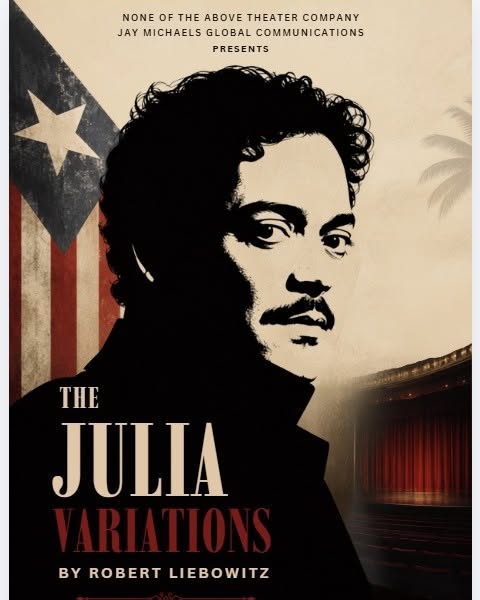
The Julia Variations is a long-overdue celebration of an iconic actor who left us far too soon. Through eight vignettes tracing key moments in Raúl Juliá’s life, playwright Robert Liebowitz presents a journey that is at once triumphant and bittersweet. Even those familiar with Juliá’s story will find the final Variation deeply moving.
Narrator Patrice Battey introduces each chapter of Juliá’s life. The first takes us to Puerto Rico in 1948, where a young Raúl (Giuan Warren) and his friend Pedro (Frank Petrovich) watch The Adventures of Robin Hood on the big screen. The spirit of Errol Flynn (Benjamin Hard) appears before the boy, inspiring the remarkable career to come. Yet Flynn’s own untimely death also serves as an early foreshadowing of Juliá’s tragically brief life.
As the adult Juliá, Pedro Dinavez delivers a dignified and deeply poignant performance that anchors the production. He brings elegance and vulnerability to the role, while sharing excellent chemistry with the many notable figures who cross Juliá’s path.
Tauqeer Paul is Orson Bean, whose encouragement helps set Juliá on the path to New York, while Alan Hasnas portrays Joseph Papp, the legendary producer who discovers the young actor on the city’s theatre scene.
One of the production’s most affecting sequences recreates Juliá’s 1978 performance opposite Meryl Streep (Rachel Marcus) in The Taming of the Shrew at the Delacorte Theatre. Still grieving the loss of her partner John Cazale, Streep tearfully confides, “I begged him to stop smoking!” as Juliá comforts her. Cazale’s premature death becomes another poignant echo of Juliá’s own fate, making it all the more heartbreaking when, only a few Variations later, we find the ailing actor quietly drowning his sorrows from a flask.
The play also captures Juliá’s resilience. After enduring dismissive reviews early in his career, he ultimately triumphs with successes such as Nine in 1982. A scene in which Juliá and his fellow performers furiously read the scathing reviews of John Simon and other critics is one of the evening’s funniest moments. Leia Martin, Brenna Peerbolt, and Bianca Torrente provide excellent support throughout in multiple ensemble roles. Torrente is especially affecting as Ana, the first person to whom Raúl entrusts the devastating news of his terminal illness.
Dinavez is at his finest during the closing Variations, portraying a man whose emotional anguish threatens to overwhelm him even as he remains utterly devoted to his craft.
The final Variation is, unsurprisingly, a tearjerker. A gravely ill Juliá hails a taxi and strikes up a conversation with a driver (Martin) who recognizes him. Presented as one of the last people to see him alive, she unknowingly bears witness to the final moments of an extraordinary life.
Though The Julia Variations offers only a brief glimpse into pivotal moments of Raúl Juliá’s career, it leaves audiences wanting to revisit his remarkable body of work—and to learn even more about the generous, gifted man behind it. More than a tribute to one legendary performer, Liebowitz’s play is a heartfelt celebration of the transformative power of acting itself. By the final curtain, it feels as though Juliá has returned to take one last, well-deserved bow.
The Julia Variations is performed at the American Theatre of Actors through October 18, 2026, as part of the Old Skool Playwrights’ Festival presented by None of the Above Theatre Company.

THIS IS HOW WE RISE: Inside the Launch of TEDxAstorPlace at NYU Kimmel Center
On Friday, November 6, 2026, the historic crossroads of downtown Manhattan becomes the launchpad for a major new forum of ideas, civic momentum, and cultural reinvention. Gathering at New York University’s Kimmel Center for University Life (occupying the 4th Floor Eisner & Lubin Auditorium at 60 Washington Square South), the inaugural TEDxAstorPlace convenes under the galvanizing theme: This Is How We Rise.
Conceived not merely as a single-day conference, but as the cornerstone of an ongoing New York platform for public discourse, the event explores how communities, individuals, and complex systems move forward with elevated courage, intellect, responsibility, and imagination in an era of rapid disruption.
The Vision, Venue & Architecture of the Day
Set against Washington Square Park, the venue architecture is structured to bridge mainstage focus with community activation:
- Curated Mainstage (Eisner & Lubin Auditorium, 4th Floor): A 100-seat mainstage environment hosting 15 concentrated talks and live performances designed to challenge conventional wisdom and advance the public conversation.
- Digital Reach: A concurrent digital program broadcasting the ideas to international audiences in real time.
The four thematic threads anchoring the event’s programming focus on Identity & Belonging, Leadership & Resilience, Systems & Economic Mobility, and AI, Work, and the Future of Possibility.
The Leadership & Production Team
TEDxAstorPlace is steered by a cross-disciplinary team uniting community leadership, executive strategy, and veteran theatrical production:
- Glenyss Puentevella (License Holder & Co-Founder): Brings decades of international entrepreneurial leadership, cross-cultural diplomacy, and strategic relationship-building to anchor the TEDx charter.
- Alvin Puentevella (Founder & Organizer): Drawing on deep roots across downtown Manhattan and civic organizing, Puentevella has spearheaded the platform to convert neighborhood dialogue into measurable societal momentum.
- Jay Michaels (Executive Producer): Leading production logistics, technical run-of-show orchestration, and public relations through Jay Michaels Global Communications (JMGC), ensuring high-caliber staging and broadcast execution.
- Stella Song (Leadership & Strategic Operations): Playing a key executive role in guiding event operations, curation strategy, and community partnerships to expand the platform’s long-term institutional footprint.

The 2026 Mainstage Lineup: 15 Voices on Stage
Culled from an initial pool of over 650 applicant submissions, the fifteen selected speakers represent a dynamic cross-section of enterprise leadership, clinical medicine, technological innovation, civic advocacy, and the performing arts:

- Keith Ferrazzi — Founder and CEO of Ferrazzi Greenlight, globally recognized executive coach, and #1 New York Times bestselling author (Never Eat Alone, Leading Without Authority).
- Natalie Monbiot — Pioneer in generative digital media and artificial intelligence; Co-founder and Chief Strategy Officer at Hour One.
- Kaihan Krippendorff — Renowned business strategist, author, and founder of Outthinker, specializing in growth strategy and agile transformation.
- Alana Stott, MBE — Global humanitarian, human trafficking prevention advocate, author, and founder of the Blue Rose Alliance.
- T. Alexander Puutio — Scholar and Professor of Leadership at Harvard University, examining institutional ethics, public policy, and administrative trust.
- Lily Xu — Global Program Lead at Amazon Web Services (AWS), driving scalable cloud ecosystems, infrastructure resilience, and enterprise tech adoption.
- Nicholas Spiro — Chief Commercial Officer at Viral Nation, addressing digital culture, creator economies, and viral social ecosystems.
- Dr. Briana DeNeal-Findley — Licensed Clinical Social Worker and Doctor of Public Administration, analyzing public safety, systemic trauma, and social equity.
- Donald Summers — Managing Director and founder of Altruist Partners, social venture architect, and author of Scaling Altruism.
- Assata Thomas — Systems strategist, criminal justice reform advocate, author, and leader in social reintegration models.
- Dr. Jennifer Roelands — Double board-certified OB-GYN, integrative medicine practitioner, and health equity advocate.
- Gregg Schoenberg — Financial technology investor, venture consultant, and executive performance coach.
- Taylor Hughes — Acclaimed keynote speaker, author, and master illusionist using the art of storytelling and magic to explore vulnerability and wonder.
- Abigail Doran-Novak — Student researcher, community dialogue advocate, and youth organizer fostering cross-generational debate.
- Sandip Singh & Aarav Singh — Collaborative presentation pairing civic leadership and generational perspective: Sandip Singh (entrepreneur and community organizer) and Aarav Singh (student, writer, and aspiring educator) examining legacy, fatherhood, and shared community stewardship.
Event Summary & Access Coordinates
- Official Event: TEDxAstorPlace 2026 — This Is How We Rise
- Date: Friday, November 6, 2026
- Location: NYU Kimmel Center for University LifeEisner & Lubin Auditorium (4th Fl.) 60 Washington Square South, New York, NY 10012
- Official Digital Hub: tedxastorplace.com
- Media & Production Desk: Jay Michaels Global Communications (info@jaymichaelsarts.com)

Mic’d from the Heart: Jim at the Chain with Adam Bradley
Adam Bradley’s Emotional Is This Thing On? Lights up the Chain
The Philadelphia Fringe Festival treated audiences to Adam Bradley’s dynamic, raw one-person show in a sold-out run earlier this September. Soon afterward, Is This Thing On played to equally enthusiastic crowds at The Chain in New York City.
Bradley wears his heart on his sleeve, inviting us into his world for just over an hour in a performance that is as funny as it is relatable, and as heartbreaking as it is ultimately uplifting. For anyone who has fought to keep artistic dreams alive while struggling to survive in a world that leaves little room for them—in other words, most of us—it is a cathartic experience not to be missed.
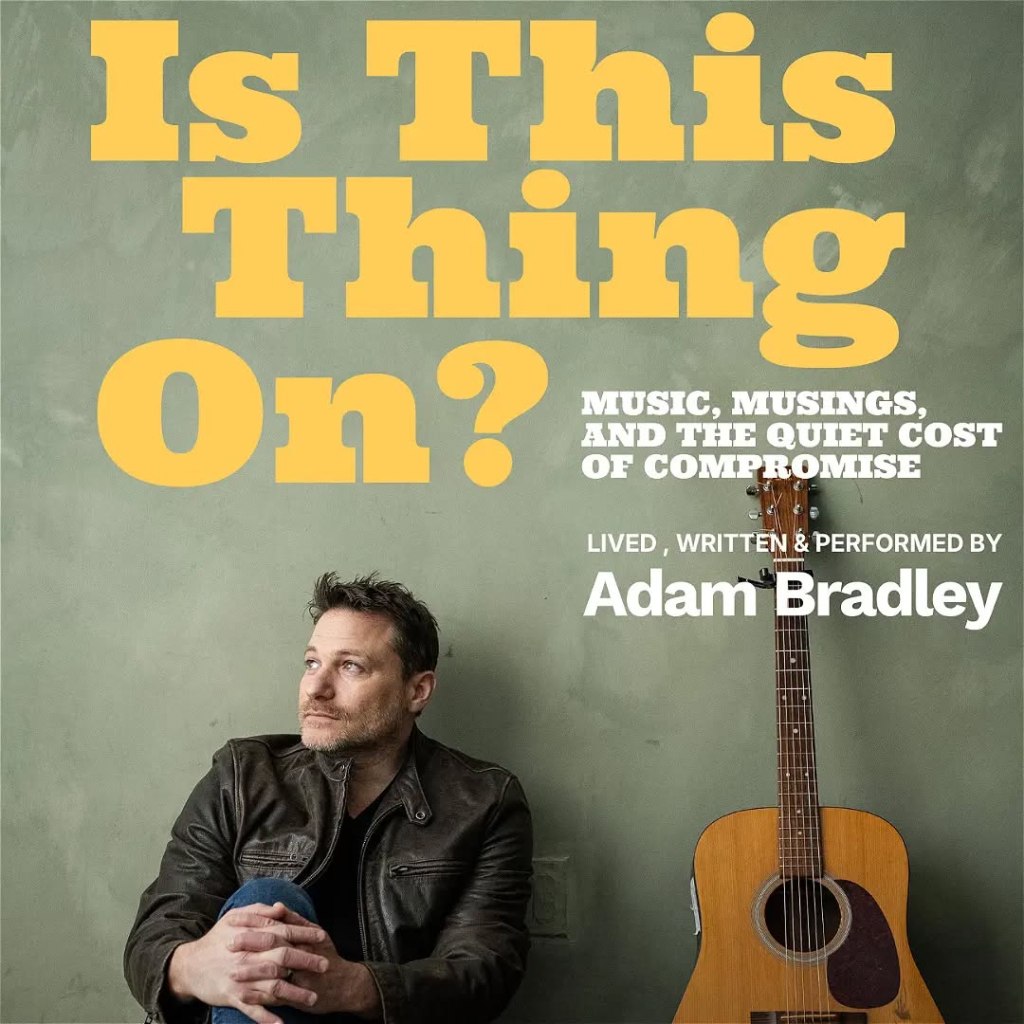
Energetic and charming throughout, Bradley nevertheless cuts a solitary figure in the black-box theater, a visual reminder of the losses he has endured and the difficult choices he has made. His acoustic guitar, resting at the side of the stage, becomes the closest thing the play has to a second character. When he turns it to face the wall—surrendering to corporate life and the weight of familial expectations—the gesture is quietly devastating. It feels as though he is turning his back on the love that has always defined him.
The story moves fluidly but non-linearly between pivotal moments in Bradley’s life. We flash back to the evening his parents first allowed the family to watch television during dinner, when a grainy VHS copy of Oliver! sparked the realization that he wanted to perform. We witness his unexpected triumphs at a high school talent show and a Harlem open mic, his determination to build a career as a singer-songwriter, and the many setbacks along the way—including a drunken-driving near-arrest during one of his darkest periods. As the flashing red and blue lights engulf the stage, we feel as panicked as he does.
“I remember looking down,” he recalls. “And feeling so low, I was jealous of the pain. Being a singer/songwriter, trying to make it in the music industry—that wasn’t romantic. It was soul crushing.”
Believing it is time to let go of his dream, Bradley embraces a corporate career and settles into a more conventional life, only to discover that this compromise is the real soul crusher. Ultimately, profound grief becomes the catalyst that awakens him and leads him back to the person he always knew he was meant to be.
Director Padraic Lillis brings Bradley’s story to life with remarkable immediacy, making each pivotal moment feel as though it is unfolding before us in real time.
Although Is This Thing On? is filled with genuine pathos, Bradley wisely balances the emotional weight with moments of laugh-out-loud humor. These scenes resonate just as deeply because they capture those painfully familiar situations when life becomes so overwhelming that laughter is the only possible response.
Bradley also treats the audience to two Billy Joel ballads on keyboard—”Lullabye (Goodnight, My Angel)” and “She’s Got a Way”—both beautifully suited to his rich, expressive voice, before picking up the guitar for several heartfelt original songs.
By the time the lights come up, you feel as though you’ve truly come to know Bradley. And for those whose lives have followed similar winding paths, Is This Thing On? offers something even more meaningful: the chance to better understand ourselves.
“I got a million choices and a thousand voices and treasure. What about all the things that I will not remember? The Temperature is 73, but you’re so cold. I don’t know how, I don’t know when. But I’ll see you down the road.”
Learn more about Adam and Is This Thing On? at https://www.adambradleystudio
“Is It Better to Rule in Hell?” Jim finds out at the ATA with Anne L. Thompson-Scretching’s “The Fall From Grace”
Anne L. Thompson-Scretching’s The Fall from Grace Explores Paradise—and Innocence—Lost
“I am coming, mortal… enjoy this strange light that illuminates your world. It cannot protect you. I am coming, mortal… wait for me.”
From the powerful and prolific pen of Anne L. Thompson-Scretching comes The Fall from Grace, an epic drama inspired by John Milton’s Paradise Lost. Reimagined for a modern audience, this ambitious play does far more than entertain—it invites viewers to reflect on the nature of good and evil, the consequences of free will, and humanity’s place in an increasingly uncertain world.
The production (directed by the author) opens with a striking narrated video sequence depicting the angels before their fall from Heaven, featuring atmospheric projections by Jake Minter. Once God’s favored angel, Lucifer is consumed by jealousy as the Son is proclaimed the Anointed One. He launches a war he cannot possibly win and is cast into Hell alongside seven fallen colleagues.
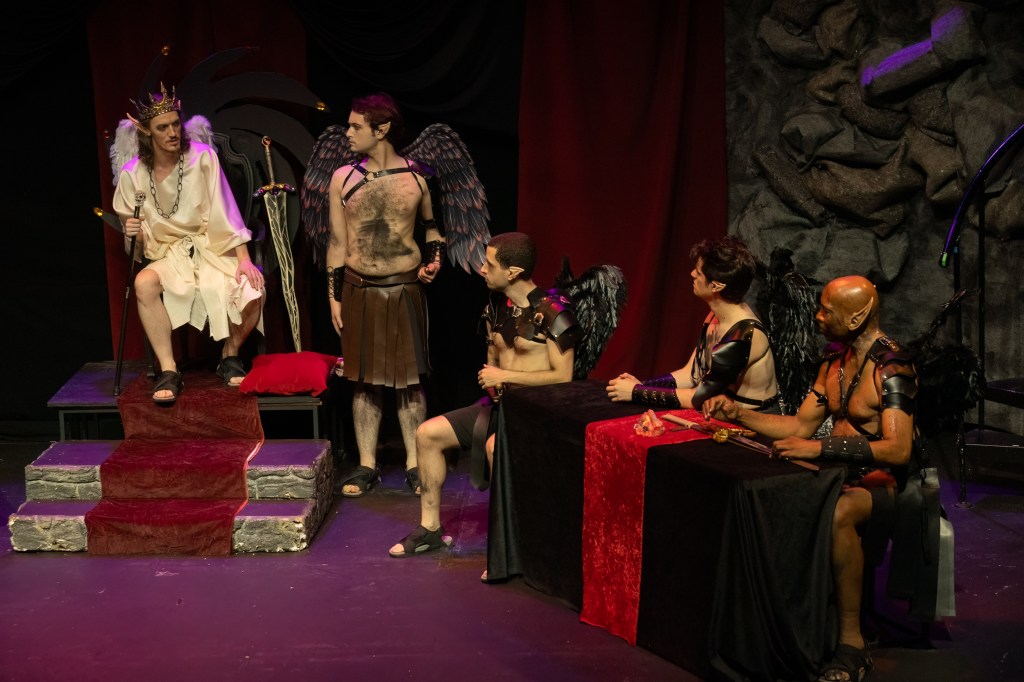
Now ruling the Netherworld, Lucifer presides over a fractured court where the Fallen constantly bicker and erupt into violence. Envious of God’s creation of Earth and humankind, Lucifer agrees with Beelzebub’s suggestion that the surest path to revenge is to corrupt God’s latest invention. Thus begins his journey to Eden, where a certain forbidden tree awaits.
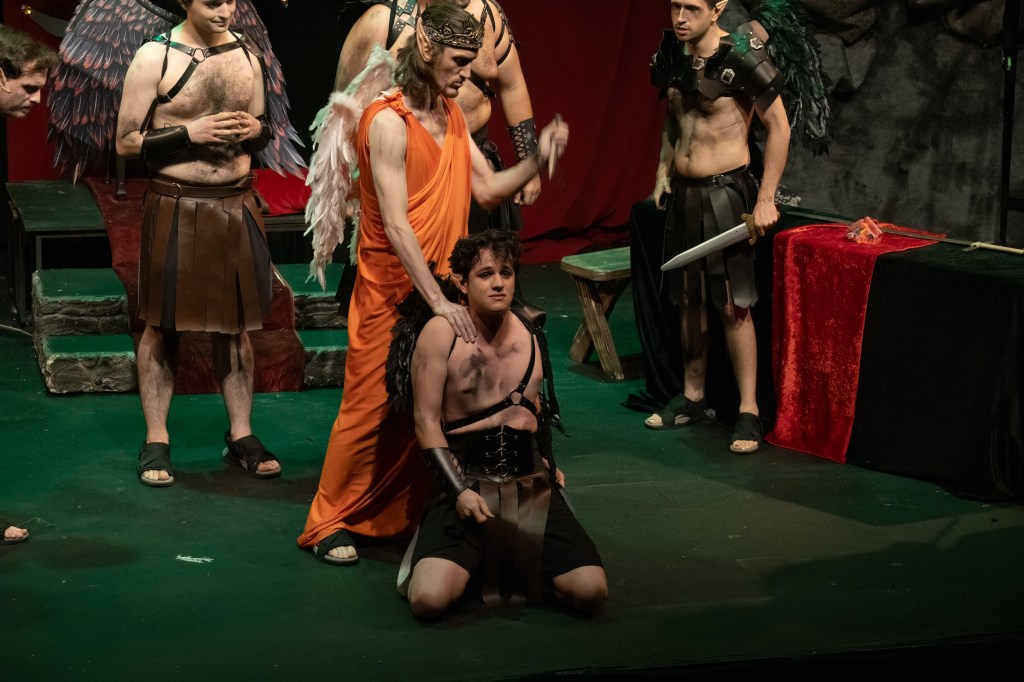
Jake McMichael delivers a commanding performance as the cunning yet despairing Lucifer (alternating in the role with Laquan Hailey). His intensity commands the stage, capturing both the character’s seductive charisma and profound bitterness. Adam Lyons is terrifying as the furiously wrathful Beelzebub, while Courtney Everette brings quiet authority and steely resolve to Moloch. Kevin Leonard is excellent as Astarte—the Grand Duke of Hell—whose growing unease over Lucifer’s leadership provides an effective counterpoint to the Adversary’s ambition. Astarte has claimed to have seen the light of God even as Lucifer has begun his infiltration of His Creation, and realizes that the notion of any demonic plot against Him going unseen is impossible.
“Clearly as I speak to you now, He knows that the Adversary stands at the edge of his world, and stopped him not, as he could not…foolish lord to think He knows not what we do, or our thoughts.”
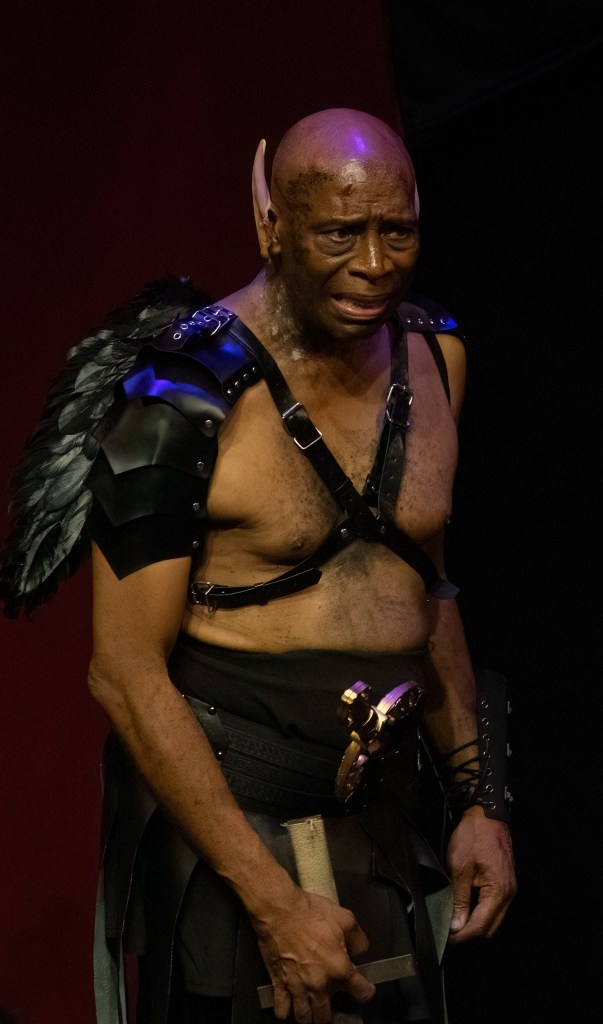
Each of the fallen princes is vividly realized, with every actor creating a distinct and memorable personality. Christian Miranda is Belial; Alex Silverman is Abdiel and the Herald; Jonathan Beebe is Mammon. Beebe also serves as Fight Choreographer, and architect of a pivotal, expertly realized climax that brings Theo Nóbrega’s Thumuzz to the forefront. (Benedict Burgess is Swing for Beelzebub.)
The constant friction among Hell’s rulers adds another fascinating layer to the drama. After witnessing rebellion in Heaven, one begins to wonder whether rebellion in Hell is equally inevitable.
Gia Smith’s scenic design brilliantly transforms the John Cullum Stage into the executive headquarters of Hell. The concept is inspired, blending the fiery depths of Hades with the cold efficiency of a corporate boardroom. Dominated by crimson and black, the set features Lucifer’s imposing throne flanked by the desks of his princes beneath towering projections of roaring flames. Everette Clark’s costumes are equally impressive, dressing the fallen angels in elegant dark robes accented by magnificent, weathered wings that reinforce both their former glory and present damnation.
Far from simply retelling a familiar biblical tale, The Fall from Grace speaks directly to the present moment. Its themes of pride, ambition, corruption, and moral compromise resonate powerfully in the weary landscape of the mid-2020s. The play poses an unsettling question: when we look at today’s world, can we honestly say Lucifer’s plan did not succeed?
The Fall from Grace is another triumph from Anne L. Thompson-Scretching and a shining jewel in the crown of the American Theatre of Actors as it celebrates its 50th anniversary.
The Fall from Grace runs at The American Theatre of Actors through September 6, 2026.
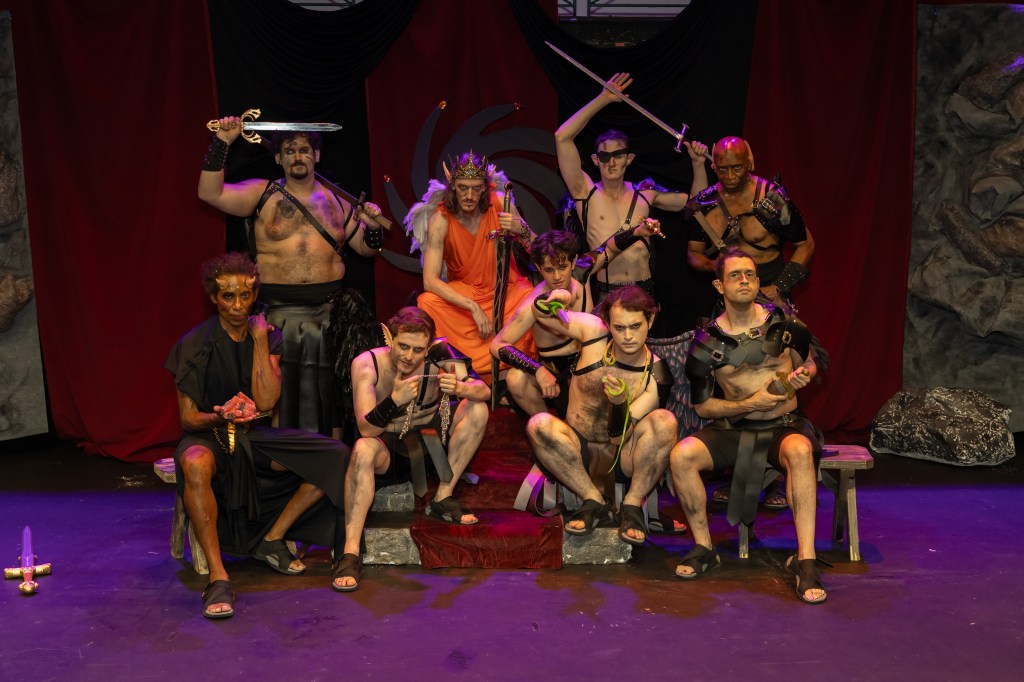
ALL PHOTOS BY DAN LANE WILLIAMS

The Rhythm of Survival: Andy Teirstein on Scoring BROKE and Honoring a Vanished New York
Before Hell’s Kitchen became synonymous with luxury high-rises, it housed St. Clare’s—a haven that was chronically underfunded, defiantly kindhearted, and open to anyone the rest of New York City turned away.
That raw, lost heartbeat of Manhattan takes center stage in BROKE, a genre-defying new musical presented by Animal Stone Productions. Running September 17–20 at Theatre 4 on Theatre Row (410 West 42nd Street), the production bridges a century through the lives of two trailblazing women: Katie Henry (Mother Alice), an Irish immigrant who founded the hospital during the Great Depression, and Nikki Owen, a paramedic who spent 25 years navigating St. Clare’s ambulance through the AIDS crisis, the crack epidemic, and September 11.
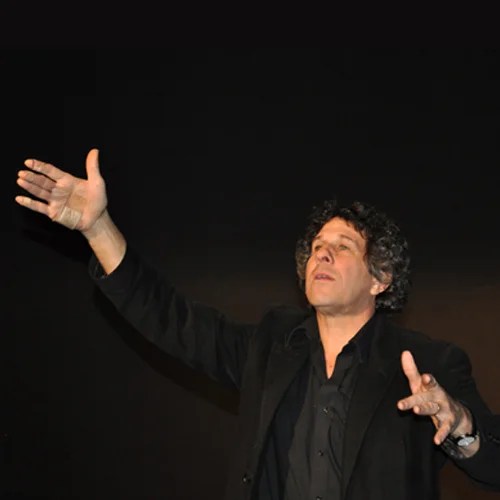
At the center of this world is composer Andy Teirstein. A student of Leonard Bernstein who has shared stages with Pete Seeger and Paul Simon, Teirstein brings an eclectic pedigree to BROKE. Below, the composer discusses mapping a century of New York history through global rhythms, translating trauma into melody, and finding the sonic pulse of survival.
A Century-Long Sonic Architecture
BROKE spans 1896 to the 2000s, shifting between immigrant traditions and urban decay. To reflect this evolution, Teirstein grounded the score in the city’s actual immigrant soundscapes.
- Folk Foundations: Katie’s early scenes feature driving bodhrán rhythms and traditional Irish fiddle tunes learned directly from pubs in Dublin and County Clare, anchoring her journey from rural farm girl to hospital founder.
- Urban Velocity: Contemporary scenes pivot toward sharp, asymmetrical meters, jazz-infused piano lines, and layered percussion inspired by West African and Cuban polyrhythms, capturing the urgency of 1980s emergency calls.
- Generational Dialogue: As fiddle shifts to classical violin and back again, the music bridges Katie and Nikki across time, reflecting how historical actions resonate in the modern metropolis.
Balancing Folk Intimacy with Symphonic Chaos
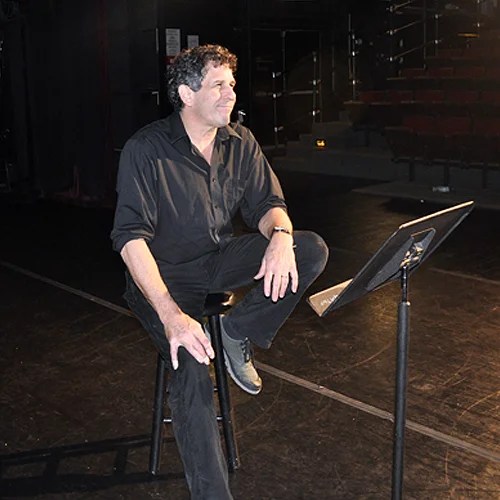
Navigating the transition from an intimate solo ballad to the siren-filled streets of Manhattan requires precise theatrical balance.
“I try to give the singer a melody that reflects who they are, which can be enormously expressive of a character’s inner world,” notes Teirstein. “While I love to give the instrumental ensemble a rich and complex underpinning to reflect the city and the wildness of the hospital world, I’m always mindful of the personal voice within the swirling urgency.”
Teirstein channels the conversational intimacy of Paul Simon alongside classical harmonic structures, framing Nikki’s internal reflections against the chaos of city sirens, crowded ER wards, and street sirens.
The Sound of Memory and Resilience
BROKE charts not only the hospital’s rise, but its eventual closure and conversion into luxury condos. Structurally, Teirstein maps Nikki’s trauma and memory using a “glistening web of notes”—a recurring motif representing thousands of emergency calls and the mental toll of frontline work.
In the wake of 9/11 and the hospital’s final days, the score comes full circle. The Irish motifs return, transformed into an urgent, unifying rhythm passed generationally from Mother Alice to Nikki—a testament to enduring resilience in a constantly shifting city.
Production Details
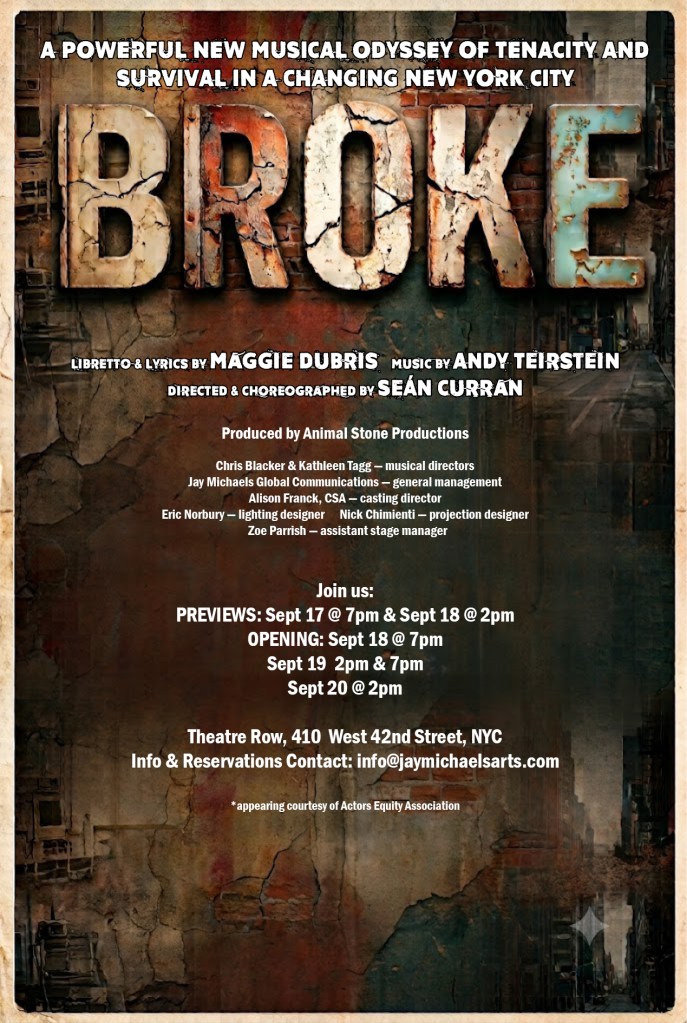
| Detail | Information |
| Production | BROKE (Workshop Presentation) |
| Company | Animal Stone Productions |
| Dates | September 17–20 Tickets available September 1 Contact info@jaymichaelsarts.com for details |
| Venue | Theatre 4 at Theatre Row (410 West 42nd Street, NYC) |
| Book & Lyrics | Maggie Dubris (based on BrokeDown Palace) |
| Music | Andy Teirstein |
| Direction & Choreography | Seán Curran |

Jim Catapano learns “Don’t Die with Your Music Inside You” from The Laros Theatre Company’s My Ghosts
The Laros Theatre Company’s My Ghosts Provides a Fine Haunt at The Manifestival

It’s not easy to create when your inner critics are Christopher (Kit) Marlowe, Jack Wilson, and William Shakespeare. Such is the fate of Cab Curio (Dave Laros), a sequin-jacketed scribe living in his family’s clocktower, and sabotaged by a case of operatic anxiety. His other ever-looming enemy is time itself, a character that is unseen but casts a shadow over us all, and is felt most intensely by the artists who are desperately trying to get their creations seen and appreciated before the curtain falls. And for Curio, we soon learn the urgency is particularly great.

The arrogant Shakespeare (Mundo Ballejos) is fittingly the leader of the tormentors, leading Curio to wonder why he should bother when he could never compete with the output of this particular voice in his head. The bard’s infamous rival Marlowe (Jessie Grimaldo) sports an eyepatch and a tongue of acid. Jack Wilson (Justin Anthony) is a manifestation of the musical component of Curio’s artistry; as Curio is torn between completing his book and pursuing his musical passions (another relatable conundrum for the typical suffering artist).
Another ghost, Lenore (Jillian Soares) also has a strong presence in his psyche, as she is apparently Curio’s mother; she advises him while literally peering from a portrait frame. Sean Andrews expertly accompanies the cast as musical director.
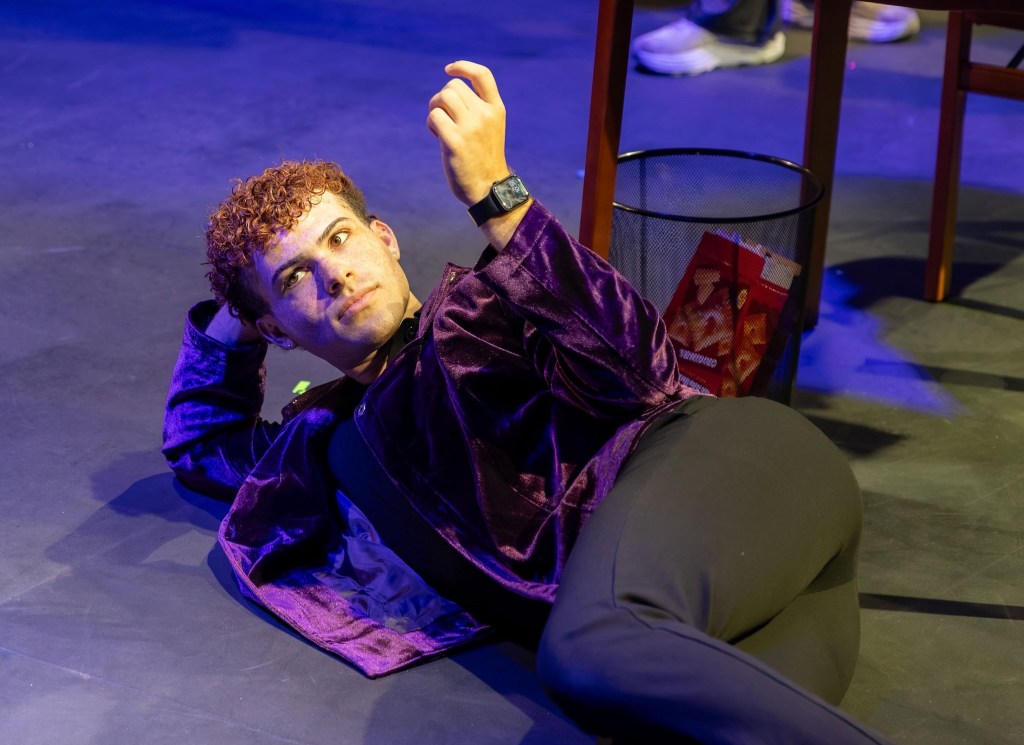
My Ghosts is quite surreal and comedic in all the right places, but also incredibly relatable for any (or maybe every) artist tormented by Imposter Syndrome. The layout of the Paradise Factory theatre allowed one to keenly observe the reactions of the audience to what was happening on stage, and it was clear in their eyes how much they both related to Cab’s dilemma and enjoyed the whimsical way it was dealt with.
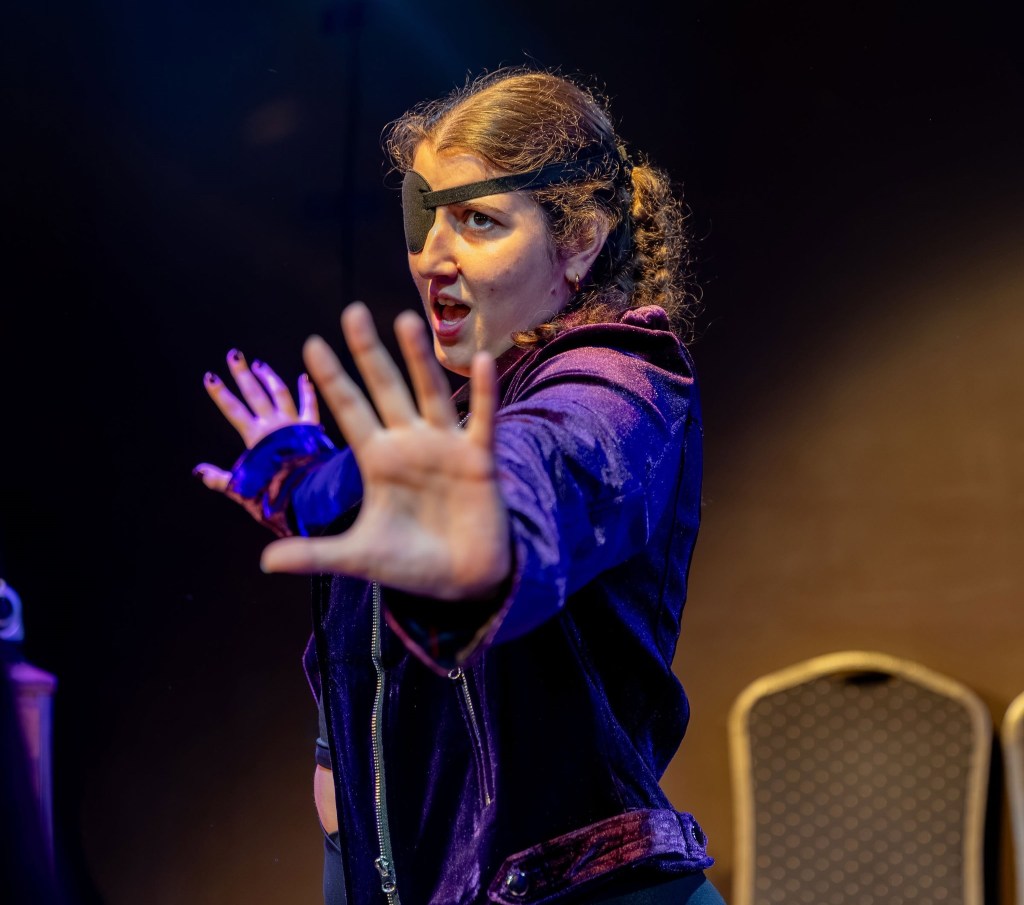
In addition to the universal themes, My Ghosts is notable for its tremendous musical performances. Soares is particularly astonishing, hitting high notes that would break the glass of the frame her character constantly holds. The entire cast performs with a precision and passion that beautifully exemplifies the mantra of the opening song, “Don’t die with your music inside you.”
Dave Laros (music and lyrics), Erica Elsa Laros (Book Writer, Producer, and Costumes) and Rebecca Frazier (Director, Choreographer, Costumes, Lighting) are a team to watch, and those of us with lots of music to share are grateful for the shoutout.
Learn more at https://www.myghostsareinme.com.

Jim attends Sad Stories of the Death of Kings: Richard II kicks off the Classical Initiative at the ATA
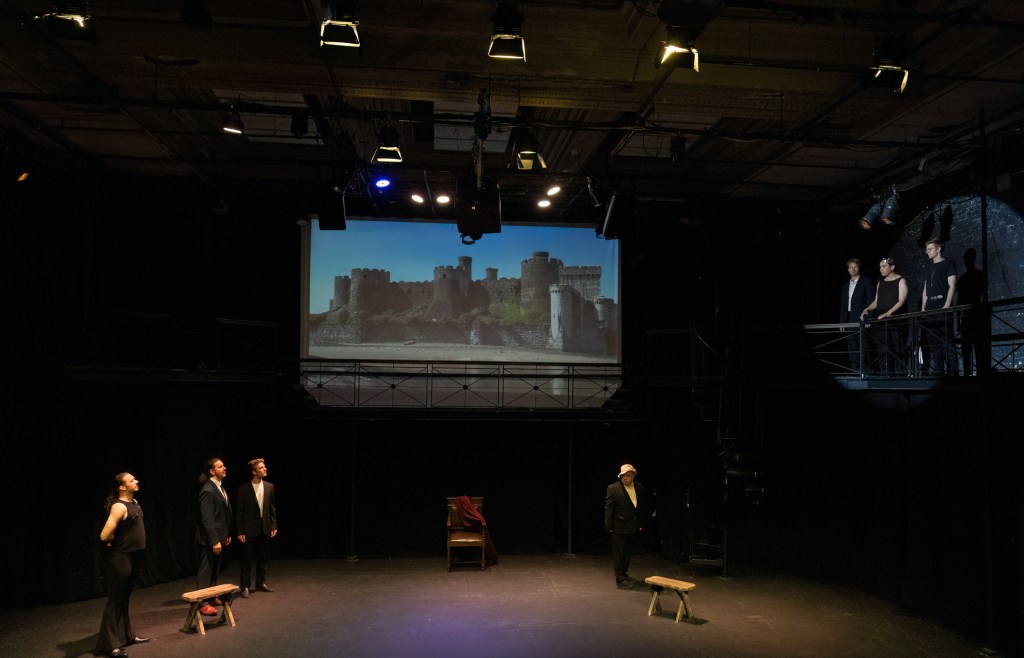
Director James Jennings has gifted American Theatre of Actors aficionados with another successful Shakespeare production at the John Cullum Theatre with this season’s Richard II. The text is word-for-word intact and as the Bard intended, and the play is cast with familiar faces from previous forays into his work, who have the passion and experience to deliver it well.
This production is a Tale of Two Sams: Sam Cruz is perfectly cast as the titular king, and co-producer Sam Hardy is commanding as ever as Bolingbroke, as he fights to seize the crown and become Henry IV. Cruz brings an energy and lightness to the king that is crucial to the portrayal and to the narrative, and makes his downfall all the more tragic. His Richard is arguably the most likable character, so his abdication, imprisonment, and final fate are genuinely heartbreaking; even his successor is saddened—or claims to be. Hardy plays Bolingbroke with a noble elegance tinged with a hint of menace and a layer of steel, perfectly contrasting Cruz’s almost benign Richard. Annie Unger is excellent as the queen, creating a powerful moral presence as she tries to be a beacon in the ever-growing darkness until it can no longer be contained. Her gorgeous gown changes symbolically from white to dark in between acts. (And speaking of costuming, Bolingbroke’s outfit after he takes the crown is suitably fabulous). Shakespearean stalwarts Jane Culley and Emery Lawrence shine in the pivotal roles of the Dutchess of York and John of Gaunt.
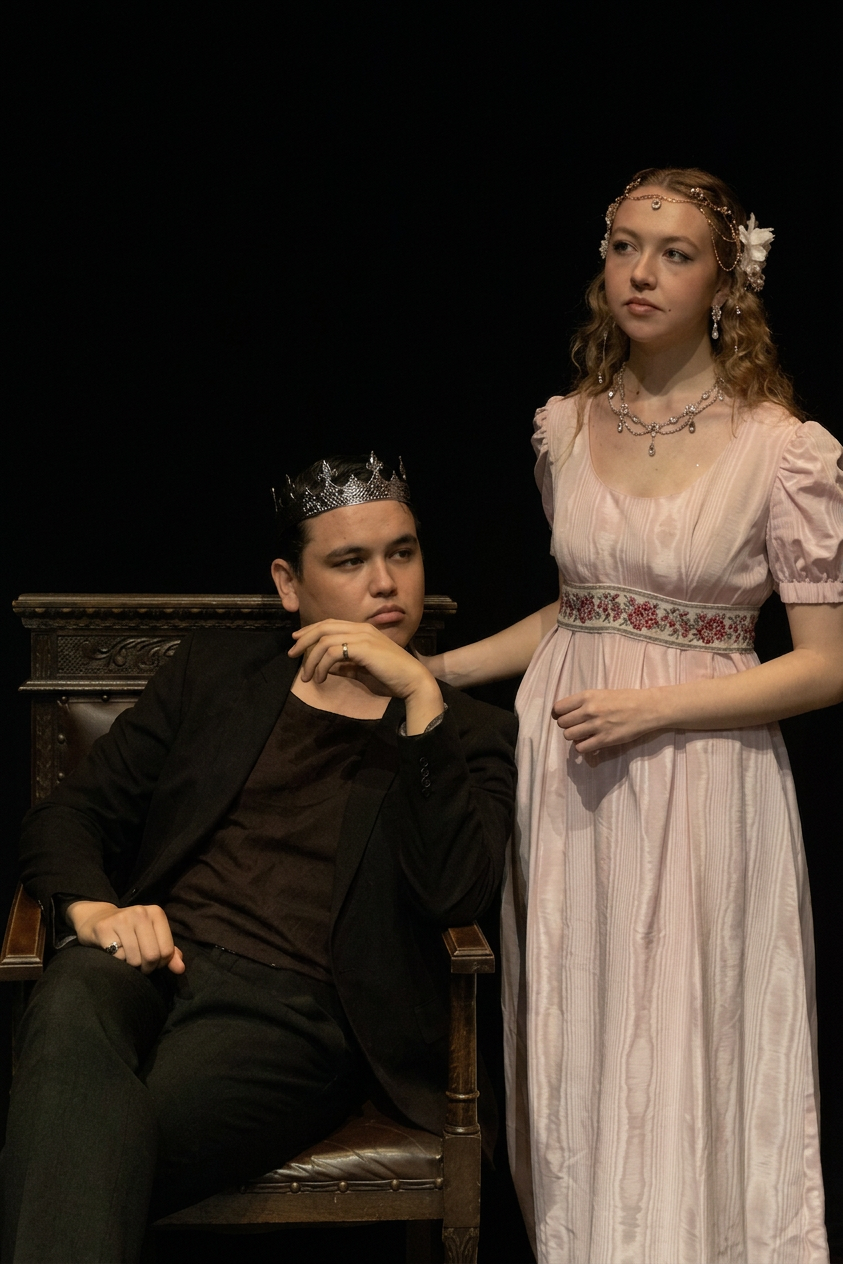
Richard II—a rarely performed part of the canon— is a story of political intrigue, so the physical action is minimal; but when it does occur, it’s impeccably choreographed and well served by the dramatic buildup. At 3 hours it requires patience and concentration from the audience, but the Return on Investment is undeniable. Kudos to producers Hardy and Jennings and the cast and crew for delving into the Shakespeare catalog and bringing us a terrific deep cut.
Richard II is performed at the American Theatre of Actors through August 16, 2026.

Jim Catapano at the Movies with “BLACK BOX”
Joshua Crone’s Compelling Black Box Takes a Compassionate Look at Hurting and Healing After 9/11
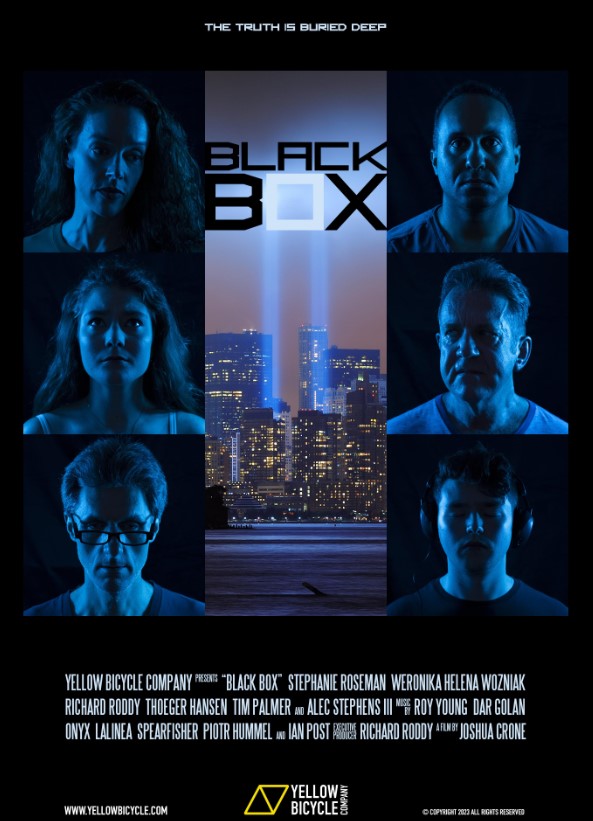
“It’s not the kind of black box that tells you what happened before a crash,” Dante (Alec Stephens III) notes to us, directly. “I want to know what happened after. Who died? Who remarried? Who took pills or went to war? What about that?”
It’s September 2002, and forgetting is not an option. Dante is a fireman who lost his life at the Towers, but nevertheless is here to tell the story of the ones left behind. “Funny where a name can take you,” Dante says, noting the bitter irony of what he is called. “I don’t remember much, just running up the stairs,” he says. “It’s always like that…except this time the stairs ran out.”
He introduces us to his widow Mary (Weronika Helena Wozniak), who pole dances at a New Jersey club called (again ironically) The Fire Station; her stage persona is Magda, created with a blond wig and a Polish accent. Army man Sgt. Dooley, back from Afghanistan, is one of her biggest fans, and Dante announces to us that he will play the “character” of Drew “so he can be close to Mary.”
Mary visits the fire house where he once worked, where his chronically coughing, survivor-guilt ridden boss Frank (Richard Roddy) is beginning his shift. Frank finds her dancing around the firepole, recognizes her, and their roles in Dante’s life do not stop them from connecting in the Biblical sense. Shift to Frank’s confused, often-stoned 18-year-old son Drew (Tim Palmer) spending time with his 9/11 conspiracy theory-obsessed Uncle Nate (Thoeger Hanson), and then cut to Frank’s wife Sarah (Stephanie Roseman), whose instincts tell her Frank is not being faithful, and we get a clear picture of where many people were on that somber anniversary. These are human beings who are all suffering in their own way, and searching for connection and understanding from others who are themselves too traumatized to give it.
The characters continue to intersect, as Drew comes to the recruiting office and meets Dooley, who encourages him to enlist, much to the horror of Sarah who now feels in danger of losing both her husband and son. Mary and Sarah become friends as well (and Nate humorously keeps appearing in unexpected places, first as a café waiter and then a bouncer at the Fire Station). Sarah and Dooley bond as well, over mutual concern for Drew but each of course wanting a different path for him.
Black Box is a moving, gripping and relatable story of people in pain, confused and looking to make connection in any way they can. Some isolate; some make bad choices; some look for answers in the fantastical; some choose to go numb. The film is also beautifully shot, with some scenes looking like a stage play (and fittingly in the “black box” of many theatres), and others taking place in the streets of NYC—then a city still healing. One pivotal scene takes place with the lights of the 9/11 memorial shining in the background, and the effect is stunning; as the 25th anniversary of that tragedy looms, Black Box succeeds in taking us right back there in a way that is painful but necessary. Writer/Director Crone shows an incredible understanding of the human condition following a traumatic event that is brought to life deftly by the talented cast. The narrative threads and the characters come together at the end in a very natural and satisfying way that leaves us with a feeling of hope and an understanding that people just need to be seen and heard, and supported by each other, especially after tragedy—even if getting there is extremely hard to navigate.
Black Box is a production of Yellow Bicycle Theater. To learn more, visit https://yellowbicycle.com/
Jim at “Club 27” — One More Rider on the Storm
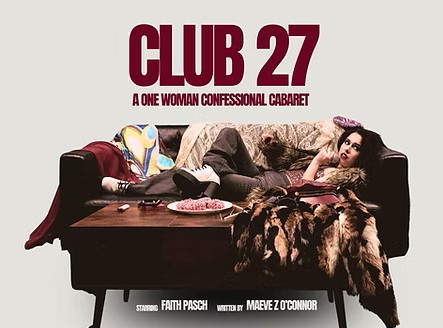
Club 27: A One Woman Confessional Cabaret Triumphs at the Inaugural Manifestival
A figure is slumped over a chair, apparently dozing. The room is filled with dazzling clothes, shoes, and accessories around a chessboard carpet; there is a stack of record albums, one from Amy Winehouse at the top.
Amy was 27. Kurt was 27. Janis was 27. Jimi was 27…
The woman (Faith Pasch) snaps awake at the sound of a ringing telephone, and her Pianist (Alex Parrish) asks, “Are you going to get that?”. The woman herself is, we will learn, a 27-year-old singer, and the significance of that hangs over her like a piano dangling from a high window on a flimsy string. She later muses she has about six months to decide if she’s going to join the club.
“Do I have to?” The Singer asks, re: getting the phone, which they cannot even locate. “Can we make it stop?”
“Why stop it when we can drown it out?” says The Pianist. “Don’t you want to drown?”
“You know I do.”
To the strains of “Paint it Black”, Club 27: A One Woman Confessional Cabaret begins, and it is nothing short of a modern masterwork from author Maeve Z. O’Connor, coupled with a tour de force from Faith Pasch.
Pasch proceeds to give an electrifying performance as she summons the ghosts of rock stars past, and her character wrestles with her own demons as they threaten to pull her into the same abyss. She captivates the audience throughout in a way that both echoes and honors the icons she invokes.
“Audiences like to see their blues singers miserable,” her unnamed character observes. “They like their blues singers to die.”
In addition to his excellent work at the keyboard, Alex Parrish is a compelling second, often contrarian voice, as he admonishes The Singer to set aside her philosophizing and her anecdotes about Janis and Amy.
“Do you hear yourself right now?” he scolds. “…All that waxing poetic, it’s going to catch up to you. You don’t have infinite time—you have here and now. And you’d better do something with it.”
And does she ever—Pasch puts on a tremendous show indeed, her powerhouse vocals perfect for the songs given to us by those much-loved icons. Her earth-rattling renditions of Joplin’s “Move Over” and “Piece of My Heart”, and Winehouse’s “You Know I’m No Good” are spine-tingling and celebratory, as if to balance out—or perhaps add an exclamation point to—the chaos and darkness at the heart of the proceedings. The already haunting “Riders on the Storm” has never felt more ominous than it did on this anonymous rock singer’s clothing-strewn stage.
“It won’t stop unless you stop it,” says The Pianist. “Sing, or tell them another story. Famous…or dead?” The description of Amy Winehouse’s last days that follows this is heartbreaking; and the observation about the possibly inseparable nature of artistry and addiction, chilling.
“You’re going to end up in a ditch,” says The Pianist.
“Doesn’t matter,” says The Singer, as long as you enjoy the ride there.” But as the phone keeps ringing, the singer wonders if there is another option.
Pasch and Parrish aren’t doing a jukebox musical here—they give every bit of themselves to the music, performing it with a passion and a purpose while honoring the ones who first brought these songs to the public conscience. There’s a desperation underneath the pounding of the keyboard and the banging of the tambourine and the searing vocals—a rage against the candle that burns extra bright and extra brief by the artist’s own design.
The unnamed singer chain smokes, chugs from a Jameson bottle, dances wildly and strikes classic rock star poses in an almost ritualistic, deliberate playing out of the rock and roll story that seemingly has only one resolution. Pasch fearlessly commands the stage and inhabits the character fully; and O’Connor makes sure that the very real people who inspired Club 27 are honored and remembered as human beings who lived, loved, and created, rather than just cautionary tales of the ever-more distant past. It is a remarkable tribute to these artists, an insightful look at the price of fame, and an outstanding piece of live theatre that is not to be missed.
Club 27: A One Woman Confessional Cabaret is presented as part of Diamond Mesh Inc.’s Manifestival. It is performed at the Paradise Factory Theatre through August 9, 2026.
Learn more about the Manifestival at diamondmeshinc.com.

Jim Catapano witnesses a Dream of An America for All of Us, Set to Jubilant Music by Kevin Davis
Kevin Davis’ One in a Million Cabaret Electrifies at the MITF

The Sargent Theatre at the American Theatre of Actors was the latest home of the cabaret consisting of highlights of Kevin “KD” Davis’ powerhouse Broadway World-nominated Musical, which has delighted audiences throughout NYC.
“You’re not going to get the beginning, middle or the end,” noted Davis of the Cabaret version. “But what you are going to get are the themes that run throughout the musical.”
And those themes were driven home by the key scenes performed and by the dynamic score, assisted by the fantastic JazzCatz band and a lineup of magnetic singers and dancers giving life to the characters, telling a tale of greed vs giving, and evil vs good. The gist of the story is as relevant as ever, as we see a group of church friends win a shared lottery of $999 million, and quickly learn that happiness is not the result. Their struggles and conflicts are set against the backdrop of life in 2020s America, where the message of Matthew 25:40 appears to have been forgotten: “Whatever you did for one of the least of these brothers and sisters of mine, you did for me.”
Raquel Sciacca is an exuberant Little Red (Red for short), who urges us not to misconstrue her nickname. “No, not that kind of red. I’m so liberal the trees hug me”.
She acts as an observer and commentator for the proceedings, part Jiminy Cricket and part Ghost of Christmas, as she laments the collapse of the protagonists into selfishness and the cruelty of today’s USA.
Valerie Chamberlain reprises her lead role as Wanda, and Jillian Marzziotti dazzles in her spotlight dance sequence as Moriah (“because every show needs a bad girl.”) Karen Vigo, Rayvon Johnson, and J. Singh round out the cast, all tremendous vocalists who give their all to the emotional songs, and depth and humor to their parts.
The narrative yearns for an America that can return to true Christian values through a progressive perspective. It’s a reaction to a conservative movement that has coopted and corrupted the teachings of Jesus for years, literally doing the opposite—not feeding the hungry, not caring for the sick, hating the neighbor and rejecting the immigrant. A screen shows videos of recent incidents of extreme brutality committed in the United States by law enforcement, followed by clips from the film Judgment at Nuremberg, to drive home how far we haven’t come as a society. A disillusioned Red reveals that she is a DACA Dreamer whose parents have been banished from the country and are now missing.
But the sadness gives way to hope, which can be found in the lyrics of the songs and the glorious musicianship of the JazzCatz (Davis on sax and percussion, Hector Rodriguez Jr. on keyboards, Daniel Best on bass and Sound Designer Christopher Velazquez on percussion). It’s a terrific sampler that makes one eager to see the full production of One in a Million, and a great example of how music and theatre—and creation itself—can inspire, teach, and unify.
Directed by Davis, this run of One in a Million was presented as part of the Midtown International Theatre Festival in July 2026.
Latest Posts
-
A Star Who Burned Brief and Bright: Jim reviews the life of Raúl Juliá
Robert Liebowitz Celebrates the Great Raúl Juliá in the Old Skool Playwrights’ Festival The Julia Variations is a long-overdue celebration of an iconic actor who…
-
THIS IS HOW WE RISE: Inside the Launch of TEDxAstorPlace at NYU Kimmel Center
On Friday, November 6, 2026, the historic crossroads of downtown Manhattan becomes the launchpad for a major new forum of ideas, civic momentum, and cultural…
-
Mic’d from the Heart: Jim at the Chain with Adam Bradley
Adam Bradley’s Emotional Is This Thing On? Lights up the Chain The Philadelphia Fringe Festival treated audiences to Adam Bradley’s dynamic, raw one-person show in…
-
“Is It Better to Rule in Hell?” Jim finds out at the ATA with Anne L. Thompson-Scretching’s “The Fall From Grace”
Anne L. Thompson-Scretching’s The Fall from Grace Explores Paradise—and Innocence—Lost “I am coming, mortal… enjoy this strange light that illuminates your world. It cannot protect…

