
Home » 2018 (Page 7)
Yearly Archives: 2018
Reality presented AS IS
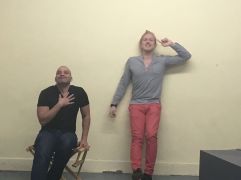
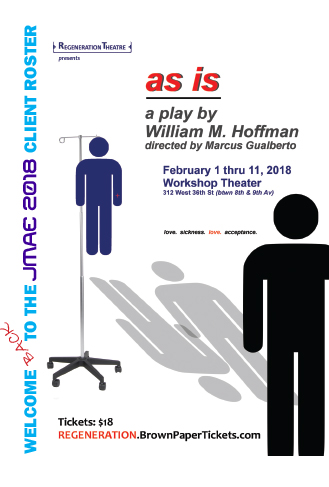
Regeneration Theatre chooses one of the first works exploring AIDS from a personal point of view to open its 2018 season. AS IS asked the question … Imagine being ill with a strange unknown disease … and nobody cared?
 Regeneration Theatre
presents AS IS by William M. Hoffman
February 1-11 (Feb. 1-3, 5, 8-10 @7:30 p.m.;
Feb 4 & 11 @ 2:30 p.m.)
Workshop Theatre, 312 West 36th Street, NYC
Tickets are $18 and available at regeneration.brownpapertickets.com.
In 1985, when As Is first appeared at the Circle Theatre, AIDS was a new moment in time. A pandemic with no cure or reason. AS IS was one of the first plays, and subsequent teleplay, depicting how AIDS was affecting the LGBT Community. Its power was also in that it focused on a small group of friends – and what it did to them. It proceeded Larry Kramer‘s The Normal Heart by about a month.
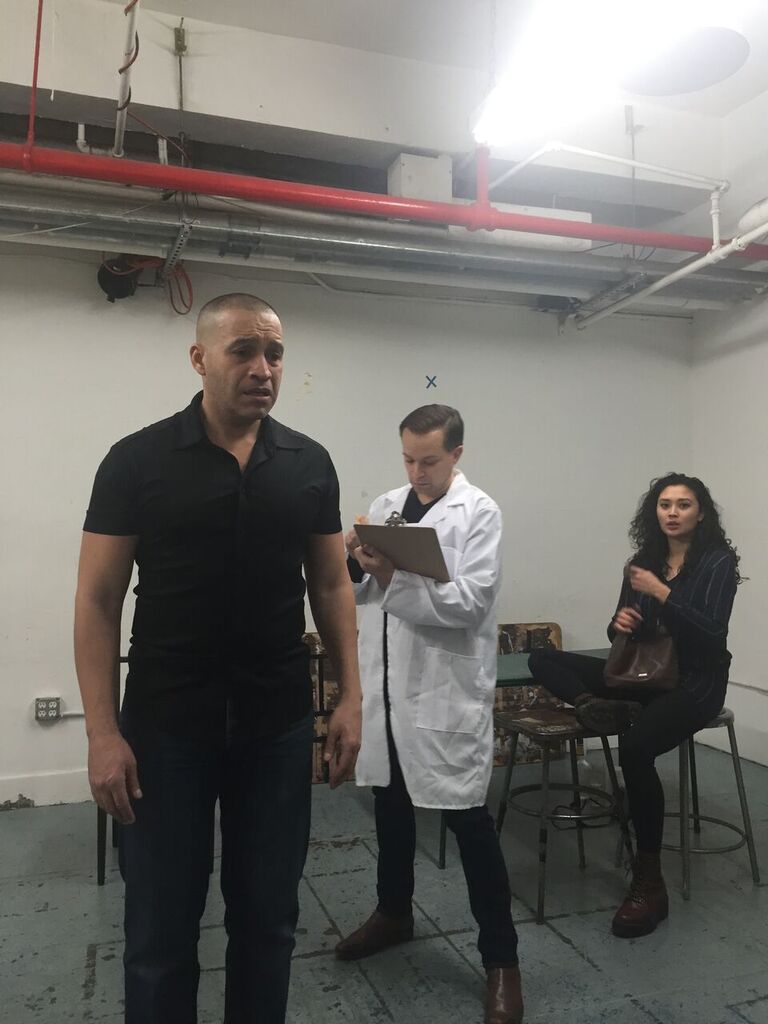
THE PLOT: Saul and Rich are breaking up… but not for long. Rich has contracted the disease ravaging the gay community. Seeking safety back in Saul’s arms, the two stage a play showing how family, doctors, and friends treat those with the disease. The play’s parable shows how important it is to have someone you love by your side – especially in trying times … as that is when you feel most alone.
Featuring Brian Alford, Robert Maisonett, Aury Krebs,* Daniel Colón, Colin Chapin,* Sara Minisquero, Jenne Vath,* Rick Calvo, Mario Claudio
(*Appears courtesy of Actor’s Equity Association)
Directed B. Marcus Gualberto
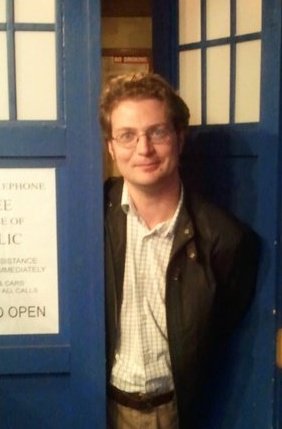
We spoke with members of the company and their fearless leader, Barnaby Edwards. Knowing what a Doctor Who fan he is, calling his company, Regeneration, has two meanings.

Step 1 Theatre Project & Michael Hagins: Making Quality Art with a Vengeance!

Step1 Theatre Project’s mission is to practice and promote artistic freedom.
It’s easy to talk the talk but they walk the walk. Jazmyn Arroyo & Janelle Zapata, while presenting their own bold, meaningful productions, also help make the creative visions of many independent artists in NYC realities. They know that financial challenges and crew needs can make the difference between a show and no show. So these two stage warriors under the guise of S1TP have made a commitment toward new, innovative ways of supporting fellow artists; this includes sharing resources, promoting new works, donation of funds, rehearsal space, and/or performance space–anything within their means–that will result in one more platform an artist did not previously have. They seek to foster and inspire the next generation of artists and encourage them to produce their projects fearlessly, regardless of the challenges.
One of their star-playwrights, Michael Hagins (and not just them as Mr. Hagins’ name appears on many indie theatre playbills these days – not to mention awards), has offered up a suspenseful piece of live theatre ready for viewing. THE VENGEANCE ROOM.
Step1 Theatre Project opens its 2018 season with his gripping thriller about five strangers afflicted with amnesia find themselves in a secluded room with a table and four weapons – and a set of instructions with only one way to leave. Who will survive the deadly guidelines? And who is behind the torturous game? Vengeance Room features Ariel Cohen, Michael Mena, Mateo Moreno, Kat Moreno, and Ashley Rogers. The production, part of the 11th Annual FRIGID Festival (February 14 – March 5) performing at UNDER St. Marks & The Kraine Theater, will have a run of five-showings:
Thursday Feb 15th – 5:30pm; Sunday Feb 18th – 12:00pm; Thursday Feb 22nd – 10:30pm; Saturday Feb 24th – 8:20pm; Sunday March 4th – 1:50pm
Ticket info and venue will be announced shortly. Visit www.step1theatreproject.org for more details.
We met-up with the founding mothers of S1TP, playwright Michael Hagins, and members of their cast to hear what they think of art in NYC.
You – S1TP – are growing in leaps and bounds. What are some constant hurtles and how do you conquer them?
Jazmyn Arroyo: Speaking from my perspective, I’d say my biggest challenge is securing funding and space consistently! I haven’t found the secret formula yet, but so far the solution has been to think outside the box. For instance, our very first fundraising endeavor was a Karaoke Fundraiser, at a karaoke bar that was willing to let us host our event on one of their slower nights in exchange for all bar proceeds. In terms of performance space, we were also once able to produce a Christmas show at a theater that waived rental costs in exchange for a split of the box office. You have to really do some digging, but folks should be encouraged to explore as many different avenues as possible!
How do you choose the works for your seasons?
Jazmyn Arroyo: We have been very open to the types of works we present, so I’m constantly on the look-out for scripts–published, unpublished, production history, unproduced, whatever! My interest as a producer is not only in the work but in the artists themselves, so we tend to lean toward an open submission process. I’m happy and proud to say that we’ve worked with artists of many different backgrounds, races, and gender identities because of it!
So Michael, tell us about this latest work?
Michael Hagins: This work of mine, The Vengeance Room, has been around for a few years. I’ve been trying to improve it little by little and right now I feel very proud of the cast and crew that have brought new life to it. The story focus on 5 strangers with amnesia who are stuck in a room with 4 weapons and only 1 way out. I like the idea of what a situation like that would bring out in people, and have the challenge of not knowing who you are or what you’re capable of.
Your plays pack powerful messages, and this one by you, Michael, is no exception. Do you feel compelled to write on such topics?
Janelle Zapata: I think it is so important to tell interesting stories from a new perspective. We want to give voices that have been underrepresented the chance to connect with an audience that we know exists and is underserved.
Michael Hagins: I am always compelled to write powerful messages and topics. I only wish I could do it more consistently. I have so many ideas but it sometimes takes a while to spit it out and get it on paper. I used to write more about combat and swordplay, but in today’s climate, I can get so angry that I need to let it out and let people hear it. Maybe this work isn’t as political as previous works, but I hope it’ll still keep people riveted.
Give us your thoughts on the importance of Indie Theatre and Film.
Janelle Zapata: There are so many people who believe that art is for the privileged. Money brings you access to art and being an artist is for people who can afford it and that is just not true. With indie Theatre we are able to create an outlet for those who may not have had access before. The community is so strong and so interesting and innovative and necessary that we work hard at Step1 to both support ourselves and the community as a whole!
Michael Hagins: Everyone must start somewhere. There are so many young filmmakers that are doing genius work out there, and their films go unnoticed, so you can only imagine how unknown playwrights and directors and actors there are out there. I hope everyone takes the time to support even ONE indie production out there that you don’t know someone in. Your one ticket and your presence as an audience member could be the difference in a work of art becoming more than just a project. Every award nominee and winner begin in a school or on a small project, and they didn’t stop. Why should any of us?
Actors, you have the task of creating roles – that’s the biggest joy and probably the hardest task in Indie Theater. How do you prepare for your roles?
Kat Moreno: Whenever I begin the rehearsal process, I really enjoy starting by delving into the psychology of the character, picking out clues in the script and analyzing the things and actions my character does and doesn’t do. Once I feel comfortable with her thought process, I then like discovering what she is like physically. How does this character move, how does this character stand, posture, walk, ect. That way as the rehearsal process continues I learn as much as I can about my character, from the inside out, and in turn learn a little bit more about myself.”
Mateo Moreno: “I know that this is such an “actor” way to respond to the question, but I prepare for this role as I do all my roles: by finding the truth. Since The Vengeance Room is an incredibly high tension play, I have to put myself into that scenario and find out what I would do and then ask myself what this character on the page (without any of my characterization) would do. Once I realize that they are two very different reaction there’s then this journey to find something interesting in the middle of those two and that’s where the magic of discovery has been. There’s a lot of room to journey in this piece (some lines feel like you could say them to completely different people and change the way the character would evolve) and I am continuing to find something fresh and rewarding with each rehearsal.”
What’s next?
Jazmyn Arroyo: Step1’s company tagline is “Artists Supporting Artists”, so I really would like to return to that a little more this year. In our first two years we’ve hosted recurring play-reading sessions (aka R&D: Reading & Drinking) that give playwrights the opportunity the chance to hear their unproduced plays read aloud, and actors the chance to discover new roles in a safe & casual environment. We’ve also launched a free educational workshop series (Step it Up!) for our local theatre community. Our last workshop, Creating Trans & Non-Binary Narratives for Performance, hosted by Ashley Rogers (playing G in The Vengeance Room), gave folks the opportunity to learn valuable perspective from a trans activist/educator and playwright on authentic story-telling & representation within a new/developing script. We’re also working on how to coordinate and launch a grassroots grants campaign! But for now, the very next thing is, our 3rd Annual Fundraiser. Stay tuned!
AI celebrates the “serious artist” and that starts with the playwright. What guides their pen?
ArtsIndependent celebrates the playwright and author.
All facets of the arts are of-value but – to us – in the end – they who create the characters and the situations have our undivided attention. Let’s hear about what some authors do to make magic:
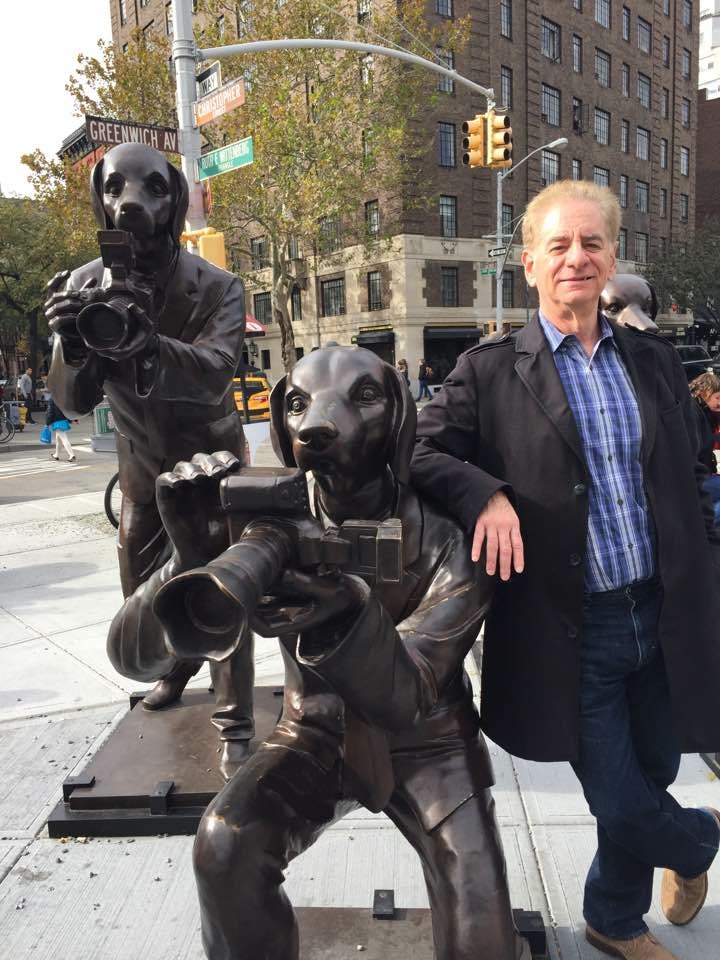
Gary Morgenstein, playwright, author
As William Faulkner said, “a writer must throw away anything that is false no matter how much he might love that page or that paragraph.” My new novel, A Mound Over Hell, clocked in at 800 manuscript pages. I wrote and rewrote, always looking for the honesty in who the characters were, because at the end of the day, the novel belongs to them, not the writer. And then ultimately, it belongs, most of all, to the reader.
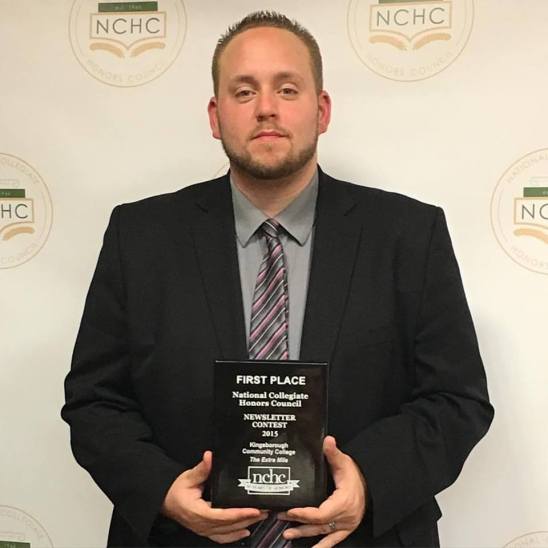 Patrick Hickey, author, journalist, interviewer, professor
My writing process is one that is entirely selfless. What would make someone stay on the page? Why should they care? Those are the things running through my head. It’s a journalistic approach as well since I’m a nonfiction writer. I don’t have the luxury of making things up. Long before my own hits the paper or my hands hit the keyboard, I’ve spent hours with the people and sources needed to write the story. So by that time, I’m invested far more than any fiction writer.
 Kate Gill, playwright
The core inspiration for my writing is usually one small thing that inexplicably stops me and makes me see something in a new light – a newspaper item, a personal story, a scientific fact, or an odd comment – and I begin to imagine a story…then it can be a long time fermenting as I “meet” characters in my story and get to know them. When I sit down to write, I have the story and characters in mind but the process of writing impacts what I ultimately write – things change and evolve. Then I need to hear my work and get input from trusted colleagues as well as audience members. Filtering the feedback is hard work – what do I take and what don’t I take – I don’t always know what’s best right away.
 Anthony J. Piccione, playwright, interviewer, reviewer
 Ilia Volok, playwright, adapter
Dorian Palumbo, playwright, author, reviewer, article and blog writer
Lynn Navarra, playwright
I generally find a subject I’m interested in and see what I can do with it. My plays are all character driven, so my main focus is always on who my characters are and create situations that put them to the test. Once I know who they are, I can begin to see what they would do in a given set of circumstances, how they handle things. What always matters is what’s in the mind of the character, what motivates him or her to move forth the action of the play, what is the path they must take to see their way through the given predicaments put before them and how to make them stay true to themselves, which one can only do by intricately knowing who they are. I am also a linear writer. I begin with Act I, Scene I, and follow through to the end. However, this comes only through numerous drafts, revised scenes and dialogues with constant reading and updating. “Hearing” them is essential to determining whether or not they are reflecting of who they truly are. Whenever I find myself stuck I take a long walk and give it a good think and remain determined to crack the nut that is proving to be difficult at the time. The trick is always to keep them all on track and not allow them to get lost or diluted in conversations nor in the action of the play.
 Jake Lipman, playwright and artistic director
 Doug DeVita, playwright, professor, reviewer, article writer
And THAT’S my writing process, right there.
Powerful Piccione Play
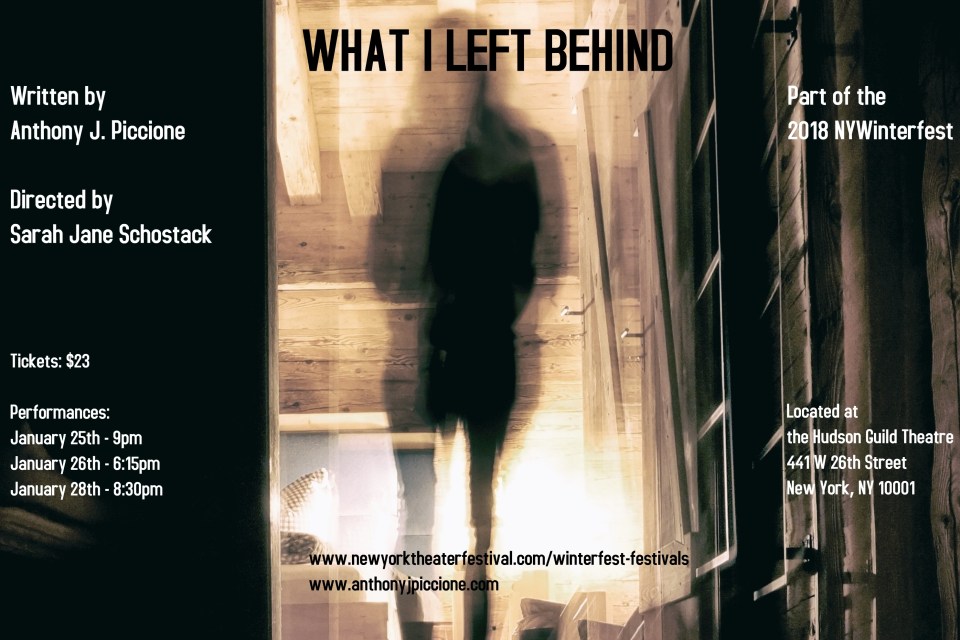
We spoke with Anthony J. Piccione about his latest work, WHAT I LEFT BEHIND.
 The prolific playwright adds another thought-provoking drama to his eclectic canon of works. WHAT I LEFT BEHIND explores teen suicide, its impact, and repercussions it has on those left behind.
THE PLOT: The play focuses on a young high school student, in severe depression brought on by bullying at the hands of classmates, who shocks everyone by taking his own life. In a unique retelling of the events leading up to the decision, we see what – and who – brought him to make this life-ending move … and how they are forced to deal with it.
SEE IT: January 25th @ 9:00 pm; January 26th @ 6:15 pm; January 28th @ 8:30 pm.
Hudson Guild Theatre, 441 West 26th Street, New York City
Tickets cost $23 and can be purchased up to one month prior to opening night by visiting www.newyorktheaterfestival.com/winterfest-festivals.
Click HERE to go to the Direct ticket Link
Tell us about this latest work?
What I Left Behind is a short drama about a young teenager who has committed suicide, and is now forced to exist in a fictional afterlife and reflect on her decision, and the impact it has had on others who she left in her wake. I wrote it with the purpose of starting a conversation about bullying and youth suicide, and also the role that we can play in doing a better job at helping others who are dealing with mental health issues. It’s my 2nd play that I’ve put up at the NYWinterfest, and my 5th overall production in New York, and it’s quite different from most of the other one-acts I’ve put up so far. I’m working on it with a wonderful director, Sarah Jane Schostack, and a relatively large cast – compared to some of my past productions, anyway – of talented actors. I’m intrigued to see what people think of it, and I hope it proves to be a very thought-provoking experience for the Winterfest audience.
Your plays pack powerful messages. Do you feel compelled to write on such topics?
I think it just comes naturally, for me. Early on, when I start work on a play, if it’s dealing with a specific issue or debate topic, then of course, I’m writing about it because it’s something that I feel very strongly about. That said, I will say that I don’t necessarily see it as my role, as a playwright, to lecture or preach. Rather, it’s to start conversations and possibly provide different perspectives about an issue – whether it’s mental health or the environment or media consumption or even the existence of God – that deserves more attention than it may be getting from politicians, pop culture, or the broader society. Many people will have their own strong views on certain subjects, and I don’t pretend that my plays will always be able to get every single person to agree with my own personal views. But if I can get just a small handful of those theatergoers to start thinking seriously about something that they weren’t thinking about before, or maybe even to at least consider a viewpoint other than their own, then I’ll have considered my work a success.
Give us your thoughts on the importance of Indie Theatre and Film?
For starters, it feels like there’s a certain level of creative and artistic freedom that flourishes in independent theatre and film. Unfortunately, that isn’t always available for artists who may be working with a big Broadway producer or a big Hollywood studio. Especially in the case of theatre, the indie scene is where some of the most original and thought-provoking writing is thriving, and I’m not just saying that because I myself am a playwright working in independent theatre. If you look at most commercial art today, either in theatre or film, there’s some good work being put out there, sure. But there’s also a lot of shows and films that are completely unoriginal, and are often made for the purpose of making profits over great storytelling. Furthermore, when there is commercial art that turns out to be great, it’s often when there is a certain level of creative freedom that is granted to the artists. With commercial film, one example I like to use is with the Batman movies, where studio interference on the part of Warner Bros. was a big part of what led to the monstrosity that is Batman and Robin, but after that, they pretty much let Christopher Nolan do whatever he wanted with the franchise, and we got the masterpiece that is The Dark Knight Trilogy. I could throw out other examples, too, but that’s one good example of how allowing artists to have creative freedom – which is far more common in independent art than with commercial art – can make a huge difference, and I think that’s just as true for theatre as it is for film. I hope maybe we’ll eventually get to a point where that’ll change, but for now, even if I am ever lucky enough to have a play produced on Broadway or adapted into a blockbuster movie, I’ll still be putting up new plays in venues and festivals like where my work is being produced today, for those exact reasons.
It Ain’t Just Pac-Man!
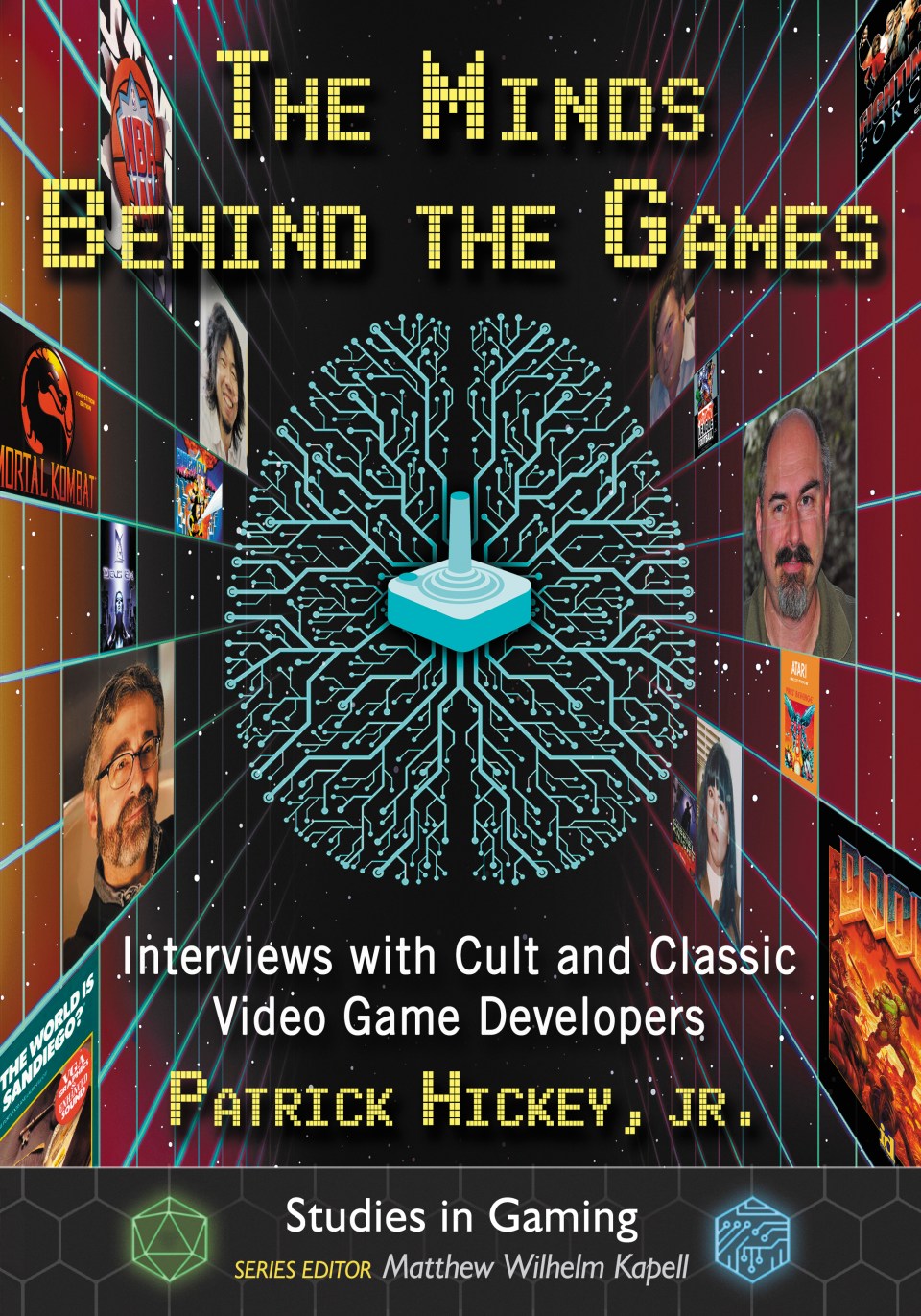
The Minds Behind the Games: Interviews With Cult and Classic Video Game Developers
 Patrick Hickey’s long-awaited and highly praised tome on the evolution and revolution of Games featuring interviews with the creators of 36 popular video games–including Deus Ex, Night Trap, Mortal Kombat, Wasteland and NBA Jam is now on pre-order. This definitive book on they that have helped form the industry that Gaming is today gives a behind-the-scenes look at the creation of some of the most influential and iconic (and sometimes forgotten) games of all time. Recounting endless hours of painstaking development, the challenges of working with mega publishers and the uncertainties of public reception, the interviewees reveal the creative processes that produced some of gaming’s classic titles.
While Mr. Hickey – or rather – Professor Hickey is an accomplished writer and editor, this is his maiden voyage as a book-writer. After a whirlwind tour that included the customary stops like book stores and radio programs and the more colorful stops like conventions and game stores, we wanted to ask Patrick one simple question… how’s it feel?
It’s a great feeling. I’ve been promoting this book just as long as I’ve been writing it and along the way, I’ve gotten so much support from the indie video game community and video game journalists. To be accepted into those fraternities has been huge for me as well and has opened up so many more opportunities. Away from the birth of my daughter and marriage to my wife, I’ve never been so excited for anything in my entire life. This book is without a doubt the most important thing I’ve ever written and something I feel the world needs more of. I hope this plays a part in people understanding just how unique and passionate video game developers and the industry is. It’s so much more than fun and games.
 Pre-Order:
Playwright Kate Gill to the “Rescue”
 Coming off of a triumphant run at TheatreLab of her play, Soundview Summer, playwright Kate Gill goes from scaring us about the all-too-real threat of nuclear radiation to the near-distant future threat of lab life ala science fiction. This focused article writer shared a few comments about art and life and its intersection.
 Tell us about this latest work?
My play, “Rescuing Reagan”, is a comedy in which this government-funded, scientific experiment at a University lab has reached young adulthood – he’s Reagan, the hybrid ape/human aka “Project Gunga Din”. Although he lives in a cage and has never left the lab, he’s moody, difficult and focused mainly on food and sex (not unlike most of the University students.) Now the government wants to claim him for use in medical experiments. Can he be rescued from this fate? Can he find his way in the world? Can people embrace him as one of them.
Your plays pack powerful messages. Do you feel compelled to write on such topics?
The inspiration for this was a rumor years ago that people were seeing these giant chickens running loose in northern Connecticut. It might have very well have been the drugs these people were taking but it did get me thinking about what might be secretly going on in government-funded labs.
There was a so-so sci-fi movie a long time ago called Night Of The Lepus about giant rabbits and then there’s H.G. Wells’ Food of the Gods. Go-on…
It seems likely they have created hybrid humans. Which means we may need to deal with the moral and social issues these “experiments” create. Sometimes it’s easier to laugh about things that scare you so I guess that might be why “Reagan” became a comedy.
Of course these days you don’t need a lab to create an underclass that is not seen as fully human and given the rights and dignity they deserve – including food, house, education, work and freedom to decide how they will be governed and they will worship.
Give us your thoughts on the importance of Indie Theatre and Film.
Indie Theater and Film are on the cusp of being mainstream. If you look online you can see that the advances in technology (and the decrease in its cost) have made film production accessible to almost everyone. And technology is also transforming the theater experience in exciting and cost efficient ways – get a space and a couple of projectors and your play can be anywhere.
 Arts Independent