
Anna Capunay’s Your Silent Face confronts generational tension, alcoholism, mental instability and queer expression, all in just 19 minutes. Aurelia, played by Greta Quispe, is struggling to support and protect her daughter Guada, played by Marie Capunay, whose nonbinary identity and queer relationships are confusing and distressing to her. Guada’s lesbian friend Piura, played by Yessenia Rivas, is staying with Guada in their home, which causes further tension that Aurelia copes with through drinking.
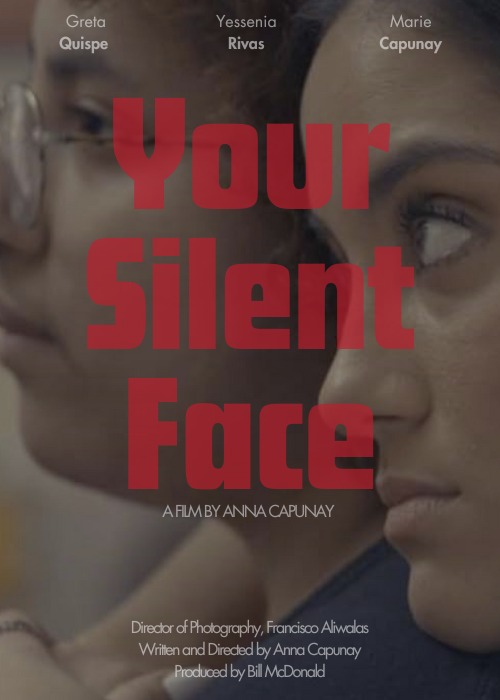
Your Silent Face doesn’t pull any punches. Aurelia is a mean drunk, name-calling and tossing out judgments against Piura and Guada’s “lifestyle” and choices. It’s revealed that the struggle for support and independence comes on the heels of a psychotic break for Guada, who was tackled by police in the family kitchen after their frightened mother called 911. The trust between the two after that moment seems irreparably broken. Aurelia is convinced that Guada will have another episode. She also seems terrified that Guada is now reliant on medication—pills she fears Guada won’t take.
Piura’s presence is an additional strain on the family—yet as a third party she offers Guada an intriguing perspective. She is able to handle Aurelia’s drunken cruelty with ease—she even encourages Guada to see the bright side—that their mother cares about them, even if Aurelia is unsure and still learning how to be supportive. In the end, Piura sneaks her friend out to a concert in Brooklyn, where the two Latines share a kiss in defiance of the heteronormative and cultural demands around them.
At its finest moments, Your Silent Face encourages family to have patience for each other in their darkest moments, particularly in the face of generational expectations. The film’s presentation of these huge arguments can be a bit clumsy—it glosses over Mom’s drinking problems and abusive language. But Rivas’s and Quispe’s performances in particular resonate despite occasionally clunky dialogue.
Yet the story of queerness surviving in hostile homes is deeply important and resonates with today’s reality. It encourages both children and parents to find love and understanding for each other, and reminds queer youth that they can still find, experience, and pursue joy while they and their families learn to understand their identities.




 Arts Independent