
In a Time of Horror, Heroes and Hope Arise
Vilna: a Resistance Story Tells a True Tale of Jewish Freedom Fighters through Song
By Jim Catapano
The Green Room 42 at Yotel in Hell’s Kitchen gave a home to a concert reading of a true—but largely unexplored—story of hope and freedom; one whose time has finally come to be heard.
Vilna: a Resistance Story is a musical depicting the efforts of Jewish resistance fighters against the Nazis in Vilna, Lithuania during WWII. The Germans created “ghettos” in Vilna to confine the Jewish people in the summer of 1941, where they were forced to work and later massacred in mass murder operations. It was in the Vilna ghettos where the seeds of rebellion among the young bohemian crowd of the city were planted.
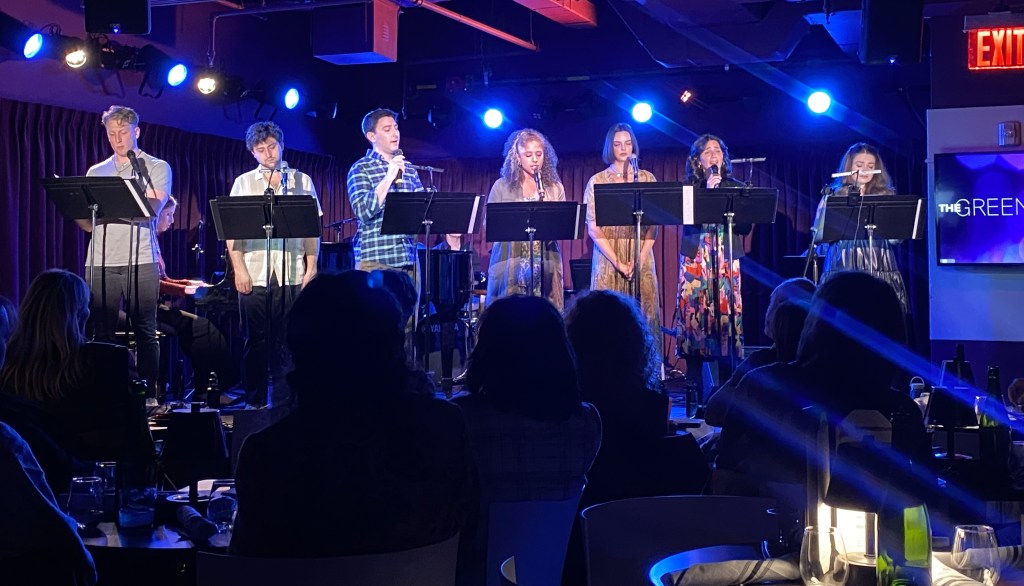
The score, with music and lyrics by Kevin Cloud, is based in modern pop and rock, with nods to the traditional sounds of Klezmer.
The real-life hero at the center of Vilna is Vitka Kempner. Only 19, she had sought refuge from the Nazis in Vilna in September 1939 when it was still a free city. She befriended local artists like the poet Abba Kovner (whom she later married), Hirsh Glick, and Abraham Sutskever.
The opening song, “Vilna My Vilna,” is a rousing tribute to their home as the bohemians show Vitka the still-vibrant town. “It’s a bright shining star turning darkness into light,” they sing.
Vitka, having seen and fled the horror of the Nazis in her own hometown, encourages the group to join the fight in the song “What do You Have to Lose”? When Vilna became occupied two years later, and 80,000 Jewish people were sent to the ghettos, Vitka and her new friends formed the United Partisan Organization. They faced not only the creeping devastation of the Third Reich, but also disapproval from their own elders and peers, who felt that their efforts would only put more of their people in danger. Most famously, local business owner Jakub Gens was appointed by the Nazis to be commander of the ghetto police, and his policy of “give the Nazis what they want, we have no choice” puts him in direct opposition to the resistance (“It’s what me must do to save our people!” he sings. “We will find another way,” the group counters.
The bohemians persevere, bonding and pushing forward with their collective voice and undeterred creativity as motivating factors, despite many setbacks and tragedies. They struggle with cramped living situations, lack of food and supplies, constant fear, and broken dreams. “The line between life and death is thin/it could be the end,” they sing as they desperately and dangerously smuggle supplies into the ghetto.
“I never thought I’d be the star of a tragedy,” laments aspiring songstress/actress Lyube Levitski.
The bohemians are portrayed by Tatiana Wechsler (as Vitka), Ben Fankhauser, Talia Suskauer, Samantha Massell (as the heroic and tragic Lyube), Oliver Prose, Dani Apple, and Eli Mayer.
The songs that bring their story to life are melodic and memorable, ranging from elegiac and melancholy to stirring and triumphant. “We will not go like sheep to the slaughter, they will not take our sons and our daughters,” they vow. “We are ready to die for our honor; we will stand and fight until our last breath.” The group keeps on going in the face of utter horror to ensure that their people and its culture will survive.
The book of Vilna is by Lisa Kenner Grissom, with additional story by Allison Cloud and additional music and lyrics by Greg LaFollette. The casting director is Andrea Grody.
Vilna: a Resistance Story will be back in NYC for an industry reading in Spring 2024.


 Arts Independent