
“It was a long time ago, nobody cares anymore,” is the last thing that all those who have died so far said when the JFK artifact came into their possession. Airline pilot, Hank Larson’s brother Benjamin said the same thing. Now Hank is out to clear his brother’s name of a double homicide. Up to now, Hank couldn’t give two spits about who killed Kennedy. But the powerful merchants of death who are after the item will stop at nothing; they’ve already blown through multiple murders like a speed bump. Can Hank, and the innocent woman who only wanted to help him, avoid becoming just two more mysterious and untimely deaths, and derail their plans to stage a coup again? The action never stops, and the danger never lessens as Hank realizes, too late, that the best way to stay alive is to Ask Not!
Avitabile’s latest is a tome tearing into what arguably is the most pivotal moment of the 20th century — the assassination of President John F. Kennedy.

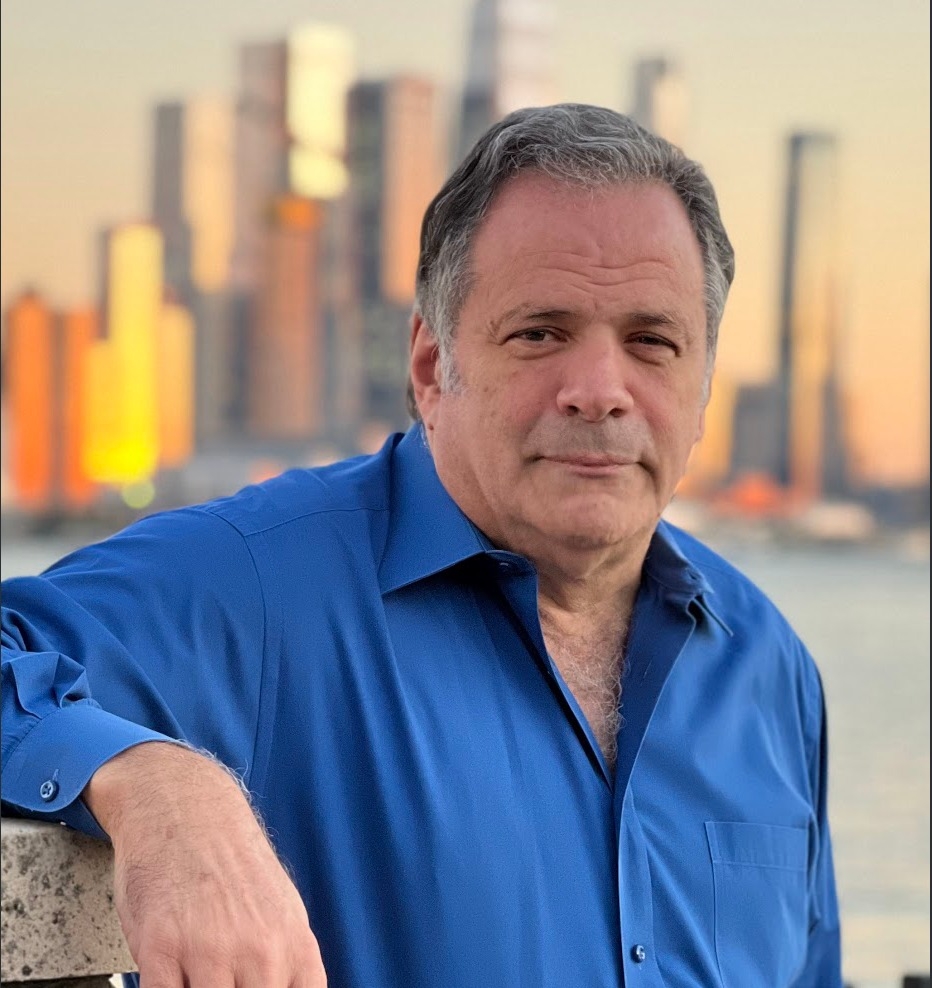
Of course, he would… Tom Avitabile is a renowned writer, director, and producer with numerous film and television credits who seems to specialize in thrilling us. It’s not enough that he wrote a taut adventure about Kennedy but he now travels the podcast-sphere sharing his take on the actual event and the conspiracy around it. His extensive background in computers and engineering led him to work with the House Committee on Science Space and Technology. Tom’s powerful imagination, fed from his experiences in Washington, allowed him to conjure up not only possible security threats, but also real-life scenarios relating to how the government and individuals would respond to the high-tech assaults that are featured prominently in his three book “thrillogy.” These novels chronicle the exploits of Science Advisor to the President, “Wild” Bill Hiccock. The first techno-thriller of this series, The Eighth Day, became a Barnes and Noble #1 bestseller. In his next thriller, The Devil’s Quota, Avitabile departs from the high-tech genre and sheds daylight on an evil international syndicate, a story of sexual deviation, greed, human trafficking, and corruption.
We met with Tom to get a glimpse of the might of a thrill-writer.
What led you to become a writer?
In school, I was classified as functionally illiterate. I didn’t read much. I hated writing. I freaked out over a 200-word composition, I’d break out in a cold sweat. So, naturally, I became an author. Don’t get me wrong, I still hate writing, but I love authoring. So, I am not a writer, I am an author. Lots of people write but only those who know how to author make more publishable manuscripts. How do I know this? I’ve been called the Accidental Author, and rightly so because I’m the last guy on the planet who should ever have a book published, much less 8 and 4 #1 bestsellers. But I sold the first manuscript I ever wrote, pretty much by accident, and it became a number one bestseller. Because I didn’t just write it, I authored it. So, I never became a writer in the traditional sense of being a lover of words, or having taken creative writing courses, being well-read, or even a lover of literature. Instead, I authored to entertain, engage, and then, and only then, Enlighten. I ride and write in the caboose of the literary train, you know, commercial fiction.
What’s your creative process?
Two avenues. One: three of my number-one bestsellers were first screenplays. This is one of the best outlines you can have. I consider a script a skeleton to which I add bones, and sinew and flesh out all the plot points and character nuance. Then two: there’s getting that idea. The one that nags you. Knocks on the door to your brain at all odd hours and never lets you sleep until you commit it to a canvas. Most of the time that’s my inciting instance which I wrap the rest of my story around.
Do you know what’s going to happen all the way through before you sit down to write, or does it happen organically?
If I am not following a screenplay, at first, I am a ‘pantster’ (organic) for around the first half of the manuscript. Then I outline, mostly because I forgot what I wrote but also to make sure the course I lay out goes by all the pretty things and highlights all the human things and goes thrillingly close to the scary stuff. After all that, it is polish time, where I tweak with little dabs of color and brushstrokes to feather out the hard edge or sharpen the blunts.
What is your philosophy on the spoken word vs the written word?
There must be a strong delineation and specific voice(s) differentiating the narrative, in whichever POV the narrator assumes, and each character. “Regular type people just don’t talk right, no how… no ways…ya know what I…” Whereas a well-executed narrative is always correct, fluid, and strives for understandability. It is composed in complete sentences and is a the mortar that holds the story together. In short, characters can be sloppy grammarians and linguistical nightmares, but narration must be beyond reproach – within its tone and voice.
On that note, how much do you take into account the possibility of a stage play or film of your work when you write?
The first novel I ever wrote was the first novel I ever sold and my first #1 Bestseller. When the CEO of the publishing company read it. He called me and asked if I ever thought of making it a movie. He said this because he confessed to me that he could see the movie as he was reading my book. (BTW This review would be a death knell to true literary snobs, but it is a money machine in the commercial fiction world) It wasn’t until we had signed the deal, and I cashed the rather large check that I told him I had written it from a screenplay. (Like 2 of my other #1s.)
I write in a style that lends itself to visualization from having cut my teeth in “long form” writing on screenplays. Screenplays, by the way, are as many million miles away from a literary document as an artist’s rendering of a building is to the blueprints of its steel infrastructure. So, my experience as a film director and screenwriter, and what that taught me about cascading action and the intimate relationship between plot and character, drives me to a writing style that manifests imagery and engagement…just like a movie.
What’s the next project?
I have two just out of the oven. “Wife and Death” is a thriller where one mistake by a 20-year-old, threatens her family 20 years later, puts her grandchildren in harm’s way 40 years later, and her entire world 50 years later. But she finds the strength, tenacity, and wisdom to outsmart the good guys, who are just as bad as the drug cartel bad guys, leaving her alone to protect her family with just her wits…and a gun…and 250 million in diamonds and… Well, you’ll have to read the book.
The other manuscript sitting on the cooling rack is a sci-fi thriller that is really more science ‘faction’ than fiction. It’s about, for lack of a better word, Mermaids. Well, no fins or gills, just super-oxygenated blood. (Try holding your breath for 3 hours.) It’s easy when your blood holds a whopping amount of oxygen due to a genetic anomaly among a certain group of South Pacific people – who are useful, in many ways. Like if you wanted to create a Navy SEAL team that took to the water like… like, mermaids, only with MP5 machine guns, explosive ordinance, and an ability not to have to come up for air for quite a while. I call that one, “Aquasapiens” – The First SEAL Team Zero Adventure.
The one currently in the oven…Mmm can you smell that? Is a sequel to my #1 Bestseller, The Devil’s Quota. Working title, “Stand So Tall.”


 Arts Independent