
Et Atalia Theater Presents Abigail Duclos’ Stunning Experimental New Play
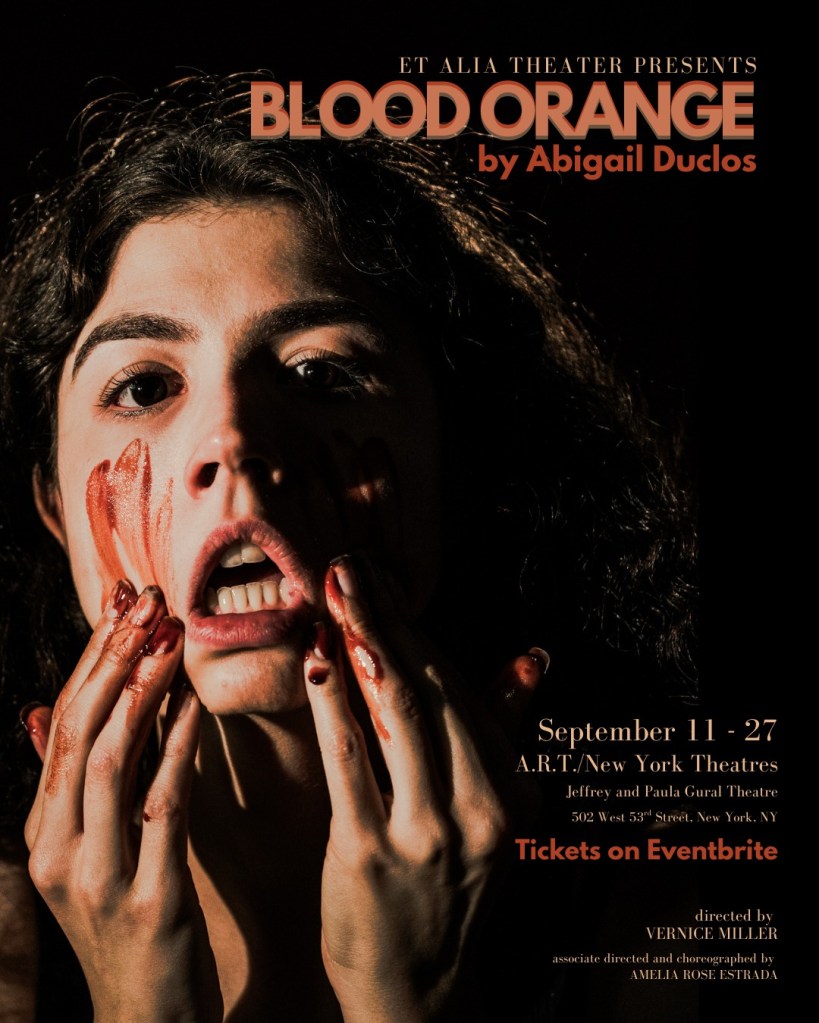
How do adolescents survive when all the grown-ups have disappeared? Blood Orange is like a domestic Lord of The Flies, but the abandonment and isolation on display cuts much deeper. The teenagers here aren’t just separated from their parental figures; they have been utterly failed by them.
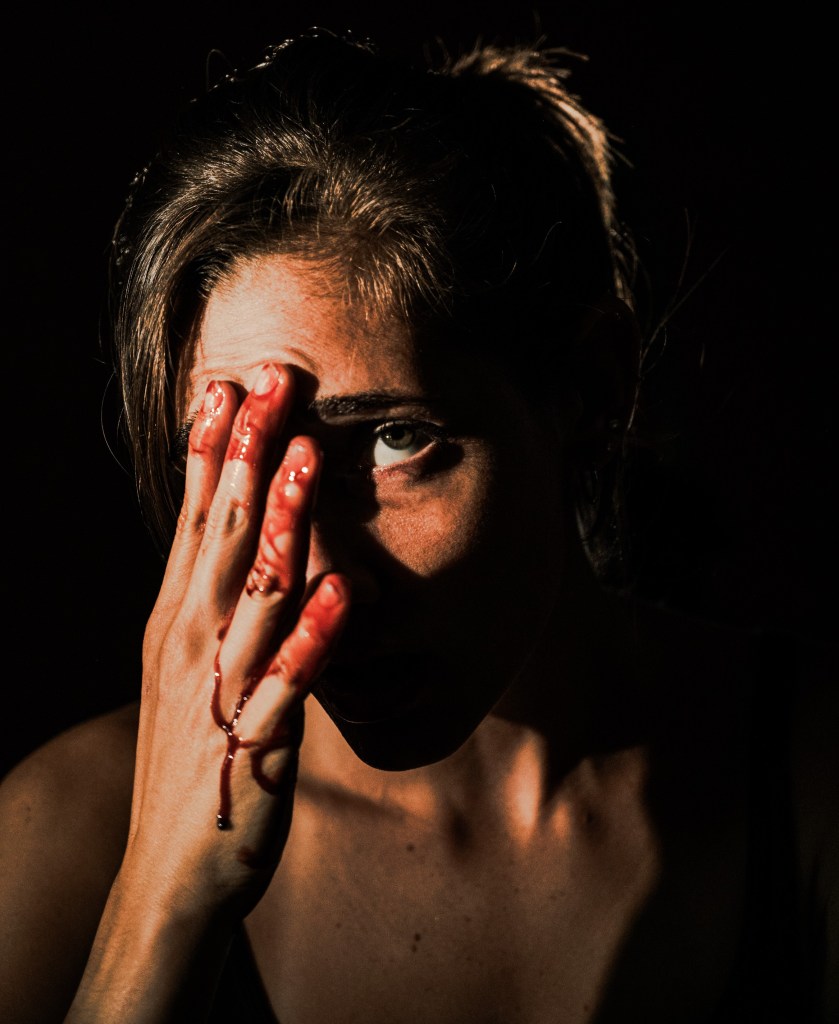
Maria Müller is astonishing as Faye, a North Carolina high schooler whose father died violently a few weeks before the story begins. Faye’s stepmother has retreated to her bedroom, devastated, and extremely physically and emotionally unwell. The suddenly alone Faye brings over her school friend Eden for company; the lonely outcast Eden is happy for the attention but disturbed by Faye’s manic dark humor, a symptom of the trauma she’s been through. Faye keeps begging the appalled Eden to physically assault her (perhaps deep down to “see if she can still feel,” as Nine Inch Nails suggested).
Eden’s unease fades as her attraction strengthens. The two begin to connect on a deeper level, but the situation is disturbed by the arrival of Faye’s friend Georgia, who is the polar opposite of Eden; loud, assertive and hyper-sexual, she strides in and dominates proceedings, flirting with Faye and gazing with disdain upon Eden.
Now without a father and essentially without a mother, Faye feels abandoned by God as well. She devises her own deity out of a dead animal she found on the road and placed in a paper bag in a refrigerator, below her stash of frozen dinners. The creature is so mangled they can’t even tell what kind of animal it was (they decide on probably bunny), but Faye and later Eden are entranced by its appearance and even its stench of decay. They suddenly find a tangerine in the bag with the animal and declare it to be a miracle. The grounded Georgia is of course disgusted and condemns the horrific turn of events; she is also clearly threatened by Faye and Eden’s growing bond, which is now being solidified by Eden’s joining Faye’s new religion. Georgia is a Regina George in “Mean Girls”-type but is realized in three dimensions by Giorgia Valenti. The sassy, cynical Georgia can’t hide her insecurity and jealousy; it’s clear that her insults towards Eden are coming from that place. (The cast rotates throughout the run; Müller alternates as Georgia when Luisa Galatti appears as Faye.)
Ana Moioli charms as the awkward, innocent, appropriately named Eden, searching for connection and for an escape from her abusive father. She shows Faye the beloved stuffed animal her father tried to destroy, which foreshadows a climactic moment with Georgia and the “deity” later in the play. Faye prays to her roadkill god to bring her father back; Eden prays for it to make her own father go away. The two become one over their despair, dancing (literally) around their attraction to each other as they chant and pray to their new savior. It is a striking sequence, enthralling and horrifying at the same time, and speaks to the heart of the matter: these are young women who have been abandoned, abused, and cast adrift, and desperately looking for hope, love, and something to believe in.
One of the play’s most surprising moments is the sudden appearance of Faye’s stepmother Mariah in the flesh. If you have not consulted the playbill beforehand it would be understandable to expect her to remain an unseen character, represented only by the sound of footsteps making floorboards creak. But Doreen Oliver arrives to pull at our heartstrings, the loving mother weakened by illness and grief, desperately trying to regain her strength and faculties to make a simple tomato soup dinner for her daughter. It is a glimmer of hope for Faye, but a brief one; Mariah heartbreakingly collapses back into her desperate state, suddenly unable to even recognize Faye. The tomato soup is spilled onto the floor, a puddle of dark red, again foreshadowing the darkness to come. When Georgia returns to put the situation to an end, events spiral to a horrific conclusion that is deeply unsettling—but also excellently staged and acted.
The production is brought to life with powerful direction by Vernice Miller, and meticulously choreographed by associate director Amelia Rose Estrada, with an exceptional scenic design by Ningning Yang. The sound design by Laura Perreira and lighting by Hayley Garcia Parnell contribute so much that they can almost be considered other characters in the play. The compelling group of actors, whose chemistry is electric, stay completely in character even through the many scene changes, keeping the audience immersed in the world of the play. Duclos and the actors have combined to bring us real people that we get to deeply feel for as we hang on their every word and action.
Blood Orange is an absolute triumph for Duclos and the cast, a masterful work that will stay with you long after the lights in Faye’s apartment go out.
The production of Blood Orange is supported by the Romanian Cultural Institute. It runs through Sept. 17, 2025.



 Arts Independent