
Richard Vetere Brings t His Gripping Zaglada and the Great Len Cariou to the ATA Stage
“How do you judge human behavior when human life is judged to be worthless?”
Zaglada is a polish word meaning “annihilation, or extermination.” The astonishingplay that takes this nameexplores the moral dilemma faced by human beings in the horrific, life-and-death situation that this describes. What would you do to save yourself, or the person you love most? And how far would you go to render justice, even decades later? Should a person in the last days of their life face punishment for the crimes of a near century ago—crimes that to some eyes, they were forced to commit?
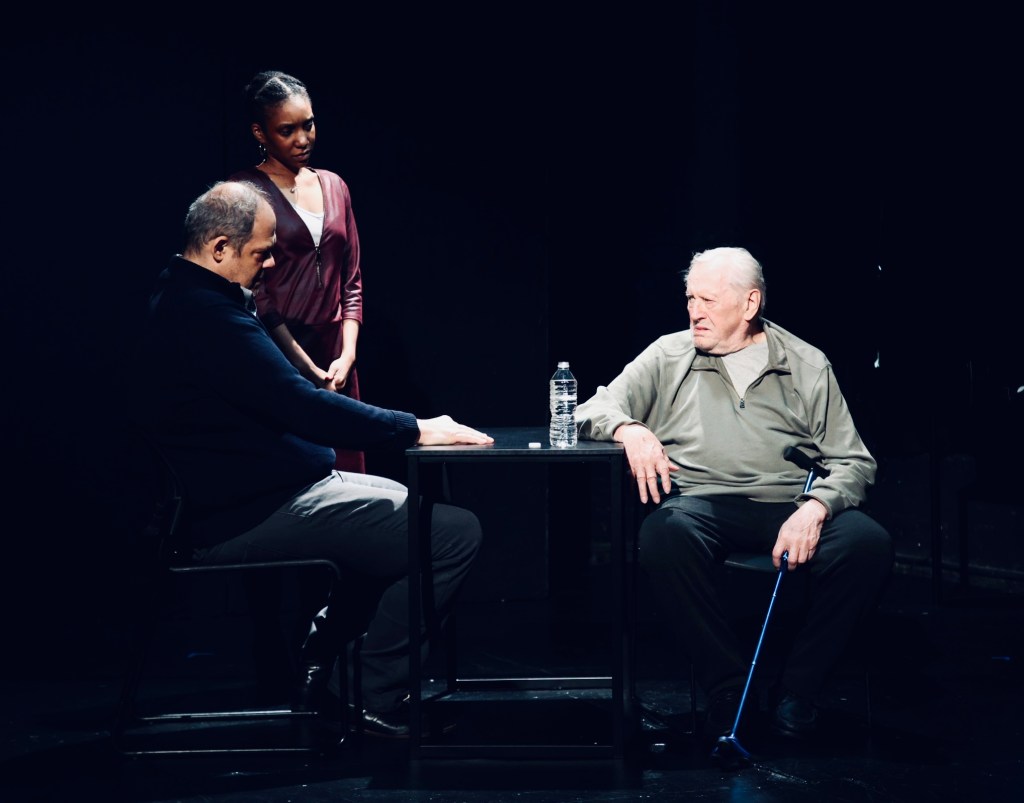
The Marvelous Len Cariou, a 65-year veteran of the stage and a Tony winner renowned for his performance as Sweeney Todd, isJerzy Kozlowski. He is a 93-year-old Polish Queens resident who has been arrested for shooting at Danielle Hooper (Jes Washington), a woman of color and a journalist. Danielle has discovered that Kozlowski was a kapo in a Buchenwald concentration camp in World War II, a prisoner who became an enforcer in the camp in exchange for his own life…and more. The arresting officer Frank Napoli (Salvatore Inzerillo) finds himself in an unexpected conflict with Sonia Sakalow (Maja Wampuszyc), a Homeland Security Officer who is hellbent on finally bringing Kozlowski to justice.
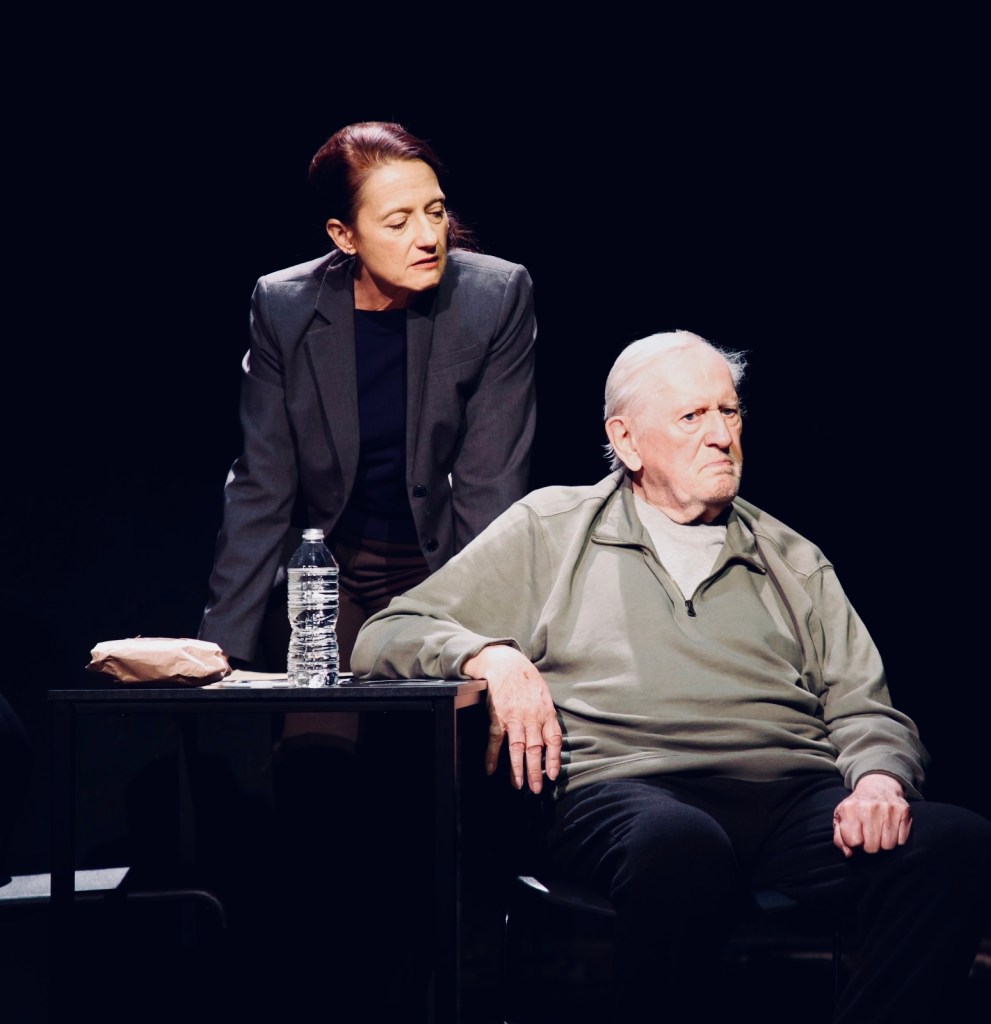
Powerfully directed by Wampuszyc, Zaglada is a fiction based on a very real reality—a history that is in danger of being forgotten, which creates the very real possibility that it will be repeated.
Napoli takes pity on the dying Kozlowski, giving him his pills and making sure he’s comfortable. He appears to be on the side of “moving on” from history.
“We spend most of our time worrying about things, dealing with things that happened when we weren’t even here,” he says to Hooper.
“Like Kozlowski?” she asks.
“Like Christopher Columbus, like Confederate statues, like reparations for slaves,” he replies, adding that his family wasn’t even in the country when the events transpired.
“That is the usual argument,” she notes. “But it is history, isn’t it?”
“Yours, maybe,” he dismisses, “not mine.”
Hooper, who is writing a book getting a PHD in International Human Rights, sees a parallel between the atrocities of the War and the persecution of African Americans, and seeks to make the world see it as well.
“The economy of this country was built on slavery,” reminds Hooper. “Now whether they were here or not, your people certainly benefited by the time they got here. Slavery was also a crime against humanity if you ask me, and there’s no statutory limit on that.”
Wampuszyc also sees no statute of limitations on Kozlowski’s actions in the latter days of WWII. She looks upon the old man with contempt and hatred that feels unusually personal, and is determined to see him be extradited and tried. Napoli is not on board; he sees Kozlowski as having been coerced into his actions.
“An elderly man, forced to work for the SS in a war that nobody thinks about anymore, needs to be punished?” Napoli protests.
“I am well aware that he did not volunteer to be a kapo at Buchenwald,” Wampuszyc retorts, dismissing that aspect as irrelevant. “…He is guilty, those are the facts.”
“I’m not sure that I would survive in a camp,” acknowledged Napoli. “But I know one thing…I would do all I could to survive.”
“You don’t know what you would do, nobody does,” says Wampuszyc. “Not until you are there, and it is real.”
The legendary Cariou is a wonder to behold; the experiences of a near-century are all in his eyes. You can literally see him putting himself back in 1945 as he gazes into the middle distance in agony. His fellow actors are also remarkable in their intensity, each suffering from their own form of PTSD that manifests in their passionate resolve and in the haunted, pained expressions on their weary faces. As circumstances unfold there are revelations that paint a vivid picture of why these particular people have found themselves battling in a small police station in 2018; every moment is riveting as more and more comes to the surface to create deeper shades of gray.
Zaglada is a masterpiece that is a must-see from both a creative standpoint and due to its undeniable relevancy in a time when humanity is at a moral crossroads and is already beginning to repeat the atrocities of the past.
Zaglada is performed at the American Theater of Actors through November 2.


 Arts Independent