
Life Partners Paul (Che Ayende) and Nya (Melissa Roth) were once also partners in activism; their progressive radio show The Social Justice Suicide Hour is a relic of the early 2000s, which now feels like a century ago. It is the one-year anniversary of their son Edmund’s passing by suicide, and My Dying City: Vol II—the name of the radio show, with its tragic now-double meaning, is the subtitle—takes place on the day of the memorial. It’s a day set in the reality of here and now, as the country marches toward a fascism that they find themselves too grief-stricken and too exhausted to fight.
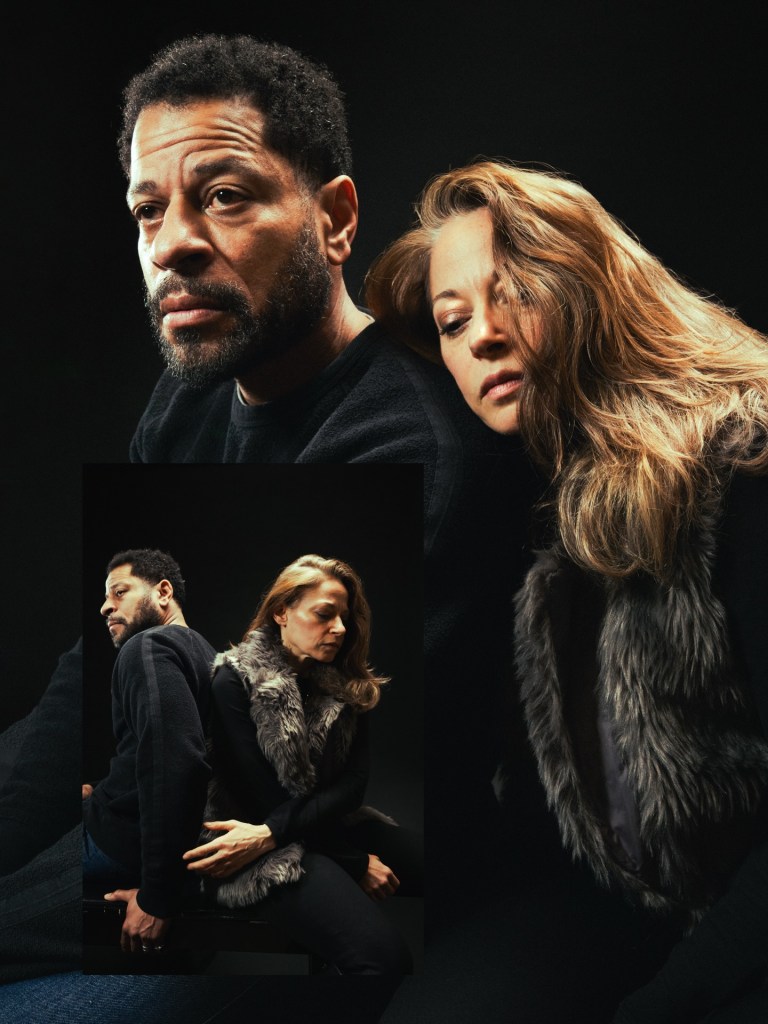
Paul and Nya both mourn, but not in the same way; their inability to agree on how to properly grieve and honor their son is driving them apart. Their respective relationships with Edmund were complicated and often turbulent; his tragic decision and the utter absence of closure is burning them up inside, and is complicated further by the arrival of Hedia (Shannon Mastel), Edmund’s love interest from college, whom the couple had never seen or heard about. Hedia’s experience and description of an Edmund they hardly knew plunges Paul and Nya deeper into bitterness. “He didn’t show it,” grumbles Paul when Hedia states that Edmund was proud of them; and he and Nya chuckle and scoff when she describes her passion as “helping people,” demonstrating how much they’ve changed since the days of the radio show.
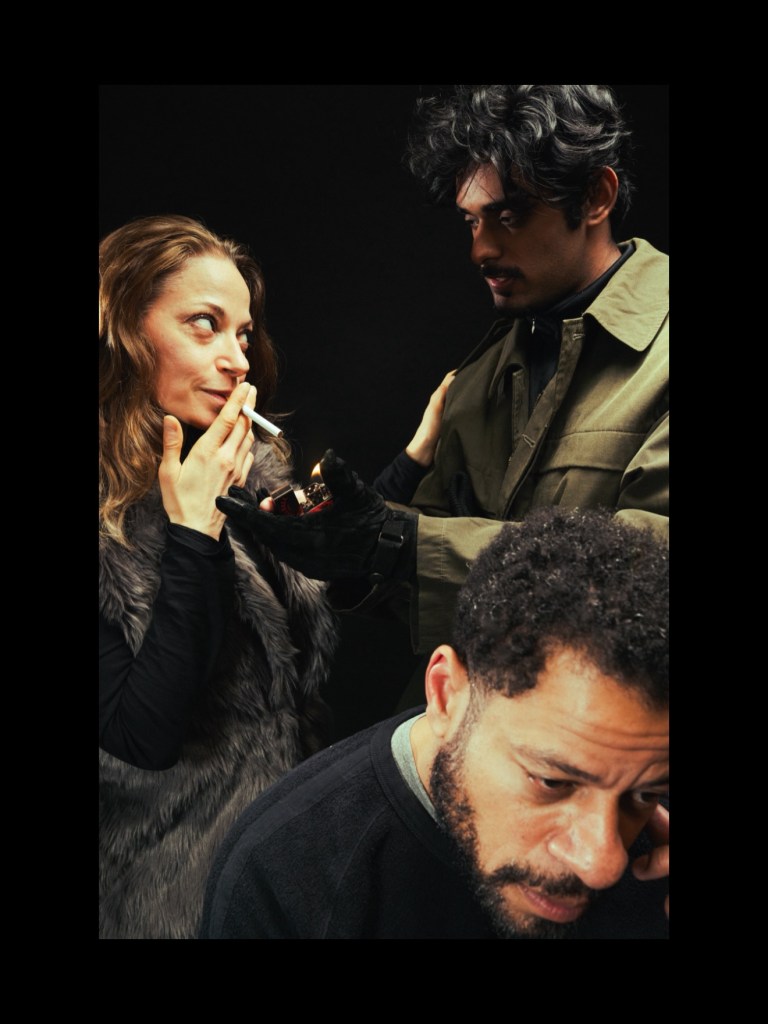
The tension of this sequence is expertly realized, only to be matched by the arrival of Paul and Nya’s friend Barry (Ward Nixon), and Barry’s colleague Moose (Brandon Geer), who as a toddler had lost his father to a hate crime in the aftermath of 9/11. Barry had entered their lives as a radio show caller and joined the couple on the road to revolution, which has now, in 2026, led to a brick wall—one that, in Barry’s view, was inevitable. “We don’t learn from our history,” he laments. “We can barely tie our shoelaces. You’re talking about a country that’s barely glued together by the blood it shed…held together by a string of lies, instigations to repeat the same nonsense every day.”
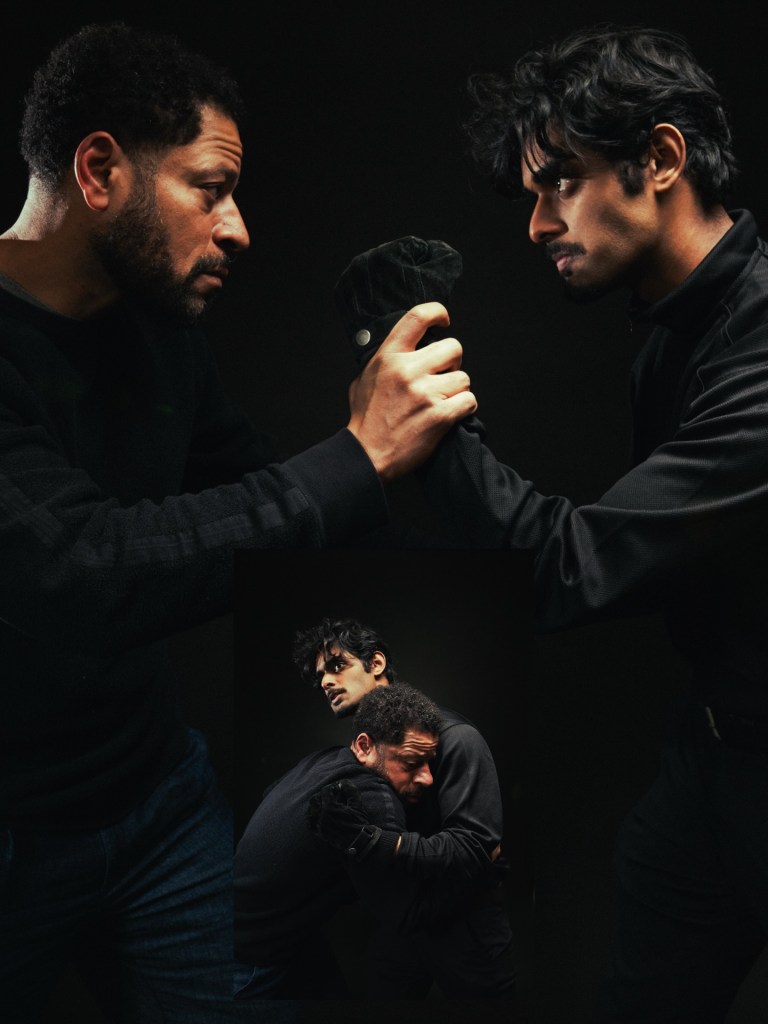
One of the most intriguing aspects of My Dying City Vol. II is that everyone in the room is on the same side of the political divide. This is not left versus right—it’s left verses left; to see these activists fighting among themselves is to recognize how much those conflicts contribute to the destruction of the very progressive ends they had joined forces to bring about. They disagree about how to fight; they debate whether there’s still reason to fight at all.
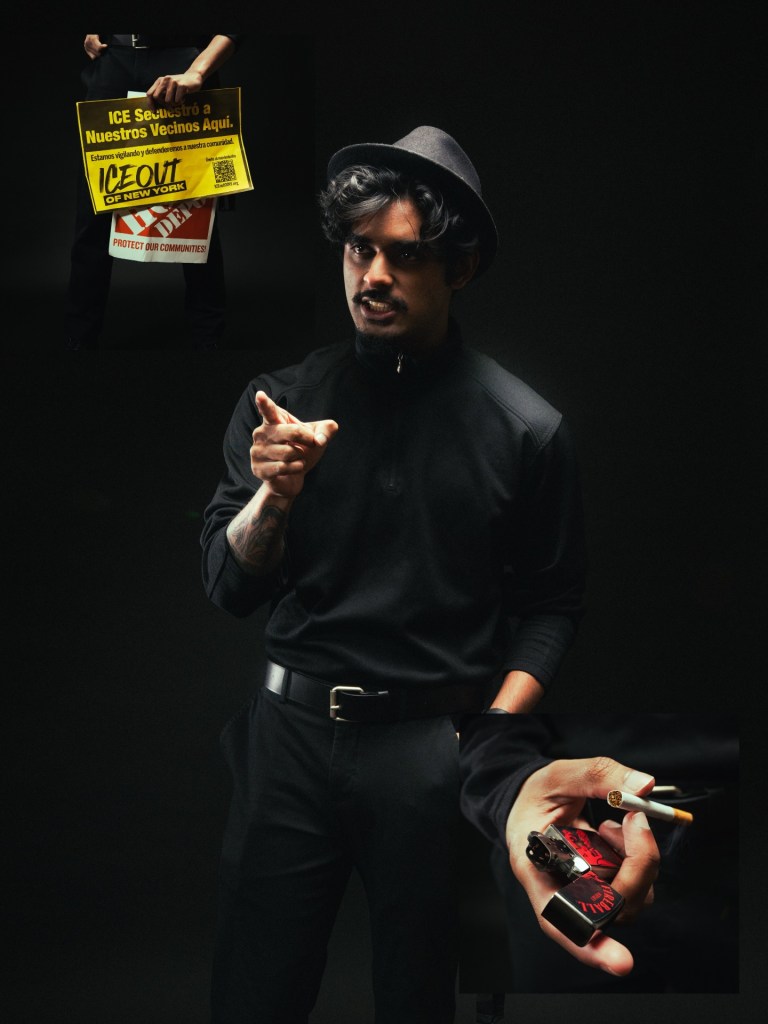
Arguing leads to shouting as an alcohol-fueled rage threatens to consume them. It’s a reminder of a terrible truth; the oppressors can just keep doing what they’re doing, because the rebellion will likely eat itself. The juxtaposition of the inability of the characters to agree on if and how to stay politically engaged parallels Paul and Nya’s conflict on how to “correctly” mourn and move on, making the show a remarkable blend of the personal and the political.
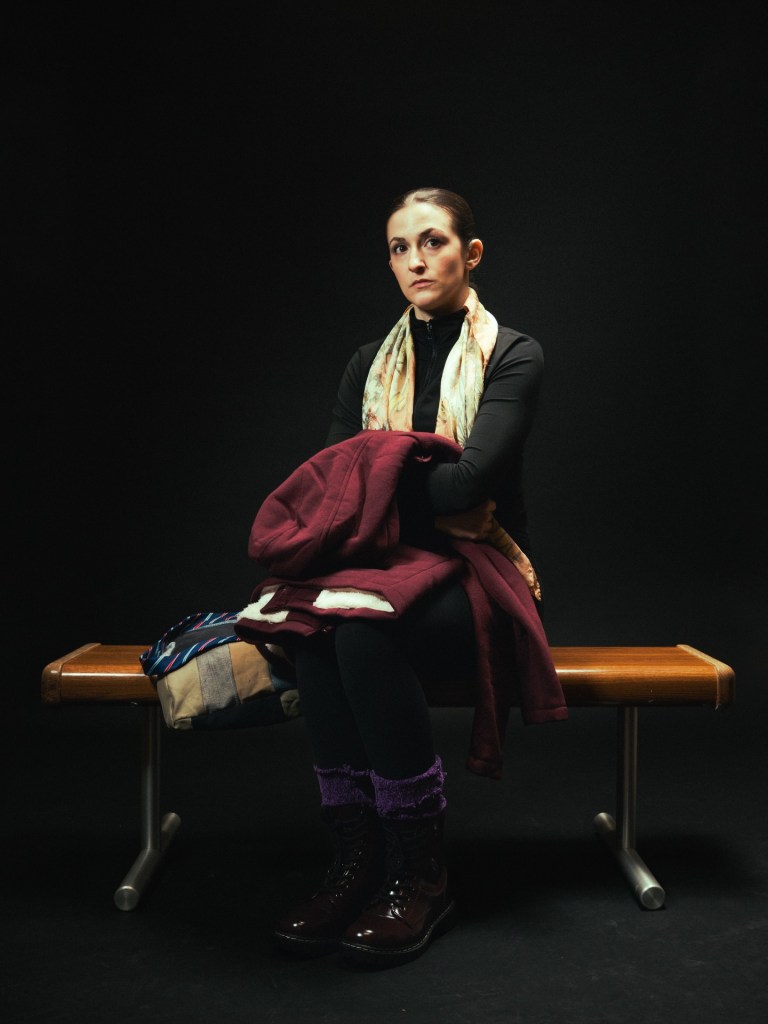
When it is revealed that Edmund was born on Oct 9, 2001, a startling revelation about other events that day leads to a horrifying climax that is devastating to watch but is somewhat inevitable in the aftermath of what we’ve witnessed. It leaves us with a palpable despair that parallels the real-world dread many of us feel outside the confines of the stage in the early days of 2026.
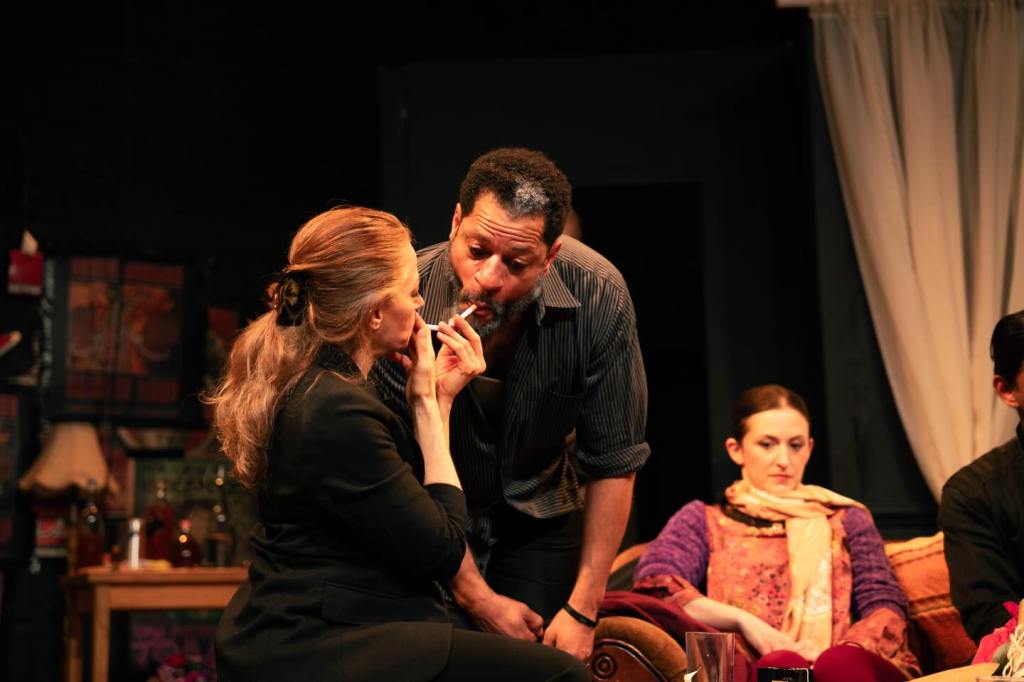
Kangalee’s dialogue is a masterclass in writing that is astonishingly realized by the collective cast, each of whom get an “aria” moment to shine. The words are powerful and poetic. The personal pain and despair of each character is so specific to their own journeys that they are completely unable to connect with each other, thus dissolving any remaining glimmer of hope for the future, both in the country and in their individual lives.
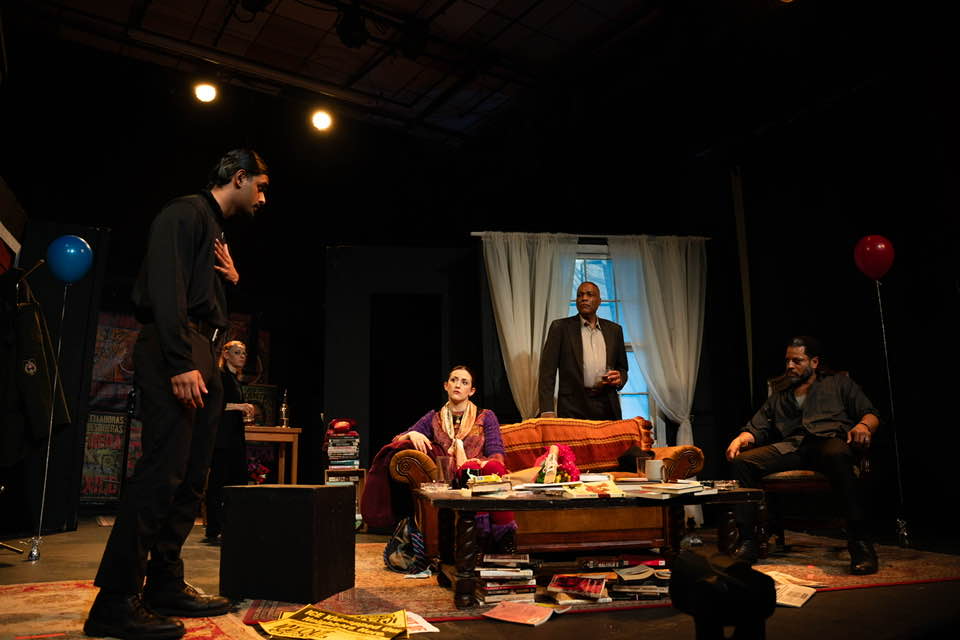
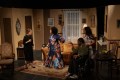
Paul and Nya’s apartment (courtesy of Scenic Designer Nina Pineda) is like another character; the coffee table is strewn with and surrounded by progressive books, magazines and newspapers. A shrine to Edmund, which Nya has decorated with dead flowers, watches over the couple’s record collection. A well-stocked bar that the characters keep returning to as the tension escalates sits near a wall of posters of the once mighty The Social Justice Suicide Hour. The lighting by Nicole E. Lang is masterful, the window depicting day, twilight, and night as events build to a fevered climax. The music also perfectly complements proceedings; the songs of Lauryn Hill, Neil Young & Crazy Horse, and Dead Prez are heard, and the covers of their respective albums visible on stage. Snippets of the Social Justice Suicide Hour are played, a bittersweet reminder of a time when the protagonists were hopeful and determined to change the world. Kangalee supports his script with his own stunning direction, bringing it all together to make My Dying City: Vol II a remarkable theatrical experience and a must-see production for our troubled times.
My Dying City: Vol II is produced by the Kangalee Arts Ensemble. It runs at the American Theater of Actors through Jan 25, 2026.

 Arts Independent