
Home » Articles posted by jaymichaelsae (Page 29)
Author Archives: jaymichaelsae
THE FRESH FRUIT FESTIVAL RETURNS TO LIVE THEATRE!
All Out Arts, Inc. dba the Fresh Fruit Festival, are calling for submissions in all its disciplines: live theatre; indie film; and radio play. What kept this visionary organziation alive during one of theatres darkest times since the medieval era is now something that puts them in thre forerfront of the new theatrical paradigm. For further information, contact Louis Lopardi at Exec@freshfruitfestival.com
Labels: LGBTQ, NYC authors, festival,
Company Website: https://freshfruitfestival.com/
An official part of the 20th Annual Fresh Fruit Festival of LGBTQ Arts
Tags/Labels: festival, full-length plays, LGBTQ, musicals, one-act plays, self-production
Submissions are now OPEN to producing-authors for MAINSTAGE-22, the staged portion of the 2022 Fresh Fruit Festival of LGBTQ arts. Early May 2022. NO-FEE Deadline 12/31/2021. FINAL Deadline 1/24/2022. Apply Early! – we assume all scripts to be “in-revision.”
Categories this season: Full length plays; One-Act or short Plays; Musicals; Opera; Cabaret; all featuring LGBTQ characters or situations.
[For Solo and other works please see our website for the Monologues in Film Development series]
The CREATIVITY is yours; the OVERHEAD is ours. And thanks to the generosity of New York City’s Department of Cultural Affairs and the Mayor’s Office, there are no application fees or participation fees required, and ALL productions earn a box office share.
We provide:
> ADA and AEA approved performance venues following Covid-19 safety guidelines
> AEA approved VENUE Insurance
> TD/Booth, & Front-of-house Staff
> Repertory Lighting Plot & Sound system, with Video available
> On-line, real-time ticketing service with full audit trail
> Color Festival-wide brochures
> Marketing assistance for all shows
> Decades worth of photos, plans, examples, Rep. lighting plots, etc.
> Optional co-production plans for higher box-office shares
Deadlines: NO-FEE Deadline 12/31/2021. FINAL Deadline 1/24/2022.
Please go to our full-season breakout page and choose the Mainstage division:
Download a study copy of the application forms so you can later complete the form in one online session. Note: Your planned production cannot have been produced in the NYC area for 15 months preceding the Spring Festival. If you are an Out-Of-Town producer (20 miles from New York City) be prepared to prove LOCAL contracting and accept one of our co-production plans.
=========================
All Out Arts, Inc. dba the Fresh Fruit Festival, CALL for MONOLOGUES
Labels: LGBTQ, NYC authors only, monologues, contest, films, new media, paid,
Website: https://freshfruitfestival.com/
An official part of the 20th Annual Fresh Fruit Festival of LGBTQ Arts
“The invincible shield of Caring is a weapon from the skies against being dead.” – Lao Tzu
The Fresh Fruit Festival, nearing its 20th consecutive year, is presenting works in the following format for development in filmed virtual presentation: LGBTQ MONOLOGUES, on the THEME: “Caring”
Are you Cared for? Do you Care enough to send the best? Is your character Careful? WHY do you CARE!? What’s in a Care package? Are you Caring for Pets? -Roommates? -Galactic Visitors?
We provide a high degree of hand-holding in the development process of moving your creative vision to film. And thanks to the generosity of New York City’s Department of Cultural Affairs and the Mayor’s Office, there are NO application fees or participation fees, and ALL 3 Finalists receive a $150 author/producer’s stipend.
Works should range from 4 to 8 minutes in performance length, and relate to the LGBTQ experience and the above theme. Eight written monologues will be chosen from applicants, who later resubmitted as short videos for entry into the development program. All of these receive:
> Hosted presentation of 8 finished works as a feature in the All Out Arts Network.
> Full-Series PDF Program, for download.
> Basic Audio Post-processing: Including our own, customized intros; basic sound FX or ambient sound.
> Basic Video post-processing, for titles, continuity & quality.
> Marketing on Social media.
> 1:1 Technical consults: For SOUND (check balance, dynamic range, ambient problems, clarity, mic use) and for VIDEO (placement, ambiance, and setting).
> Last year’s Program Book and video samples available on website.
All participants are also eligible for our equipment purchase/upgrade subsidy program. 8 semi-finalist videos will be hosted on a high-definition platform for a set span of 15 days, during which the public will vote for a later Audience Choice Award. A panel of judges will also vote on more technical criteria to help select 2 more finalists. All 3 Finalists will receive at minimum a $150 cash stipend, and national promotion. All 8 entries are eligible for awards in several categories at our future awards ceremony, and remain fully hosted for 2 seasons.
Please go to our full-season breakout page and choose the Monologues division:
Note: All dates subject to extension. Submissions are accepted on a rolling basis, with more complex projects postponed to Spring. Anticipated schedule for 1st wave: Semi-Finalist scripts chosen by 11/24. Revised scripts by 12/15. First video tests by 12/29. Public Voting 1/17-1/31 2022.
=========================
===== START AD =====
All Out Arts, Inc. dba the Fresh Fruit Festival, CALL for SHORT RADIO PLAYS
Labels: LGBTQ, NYC authors only, short plays, 1-acts, paid, self-produced, no fees
Website: https://freshfruitfestival.com/
An official part of the 20th Annual Fresh Fruit Festival of LGBTQ Arts
It’s that “Old Time Radio” time again . . .
All Out Arts is accepting script applications for a new series of RadioPlays, to be presented this winter, as part of the Fresh Fruit Radio podcast. January – April 2022.
These can be original drafts for radio, or adapted for Radio from your existing works.
The play must have a running time of 25 to 55 minutes, in either a 1 or 2-act format, and involve a cast of 2 to 6 principals.
> 3 to 4 Accepted plays will be given a $250 producing-author stipend upon broadcast, and All NYC artists involved will be eligible for our Equipment Purchase/upgrade Subsidy program.
> The Festival provides technical rehearsal, and performance recording on a high-quality audio channel if desired, plus technical guidance and audio post-processing for your recorded tracks.
> We can work with YOUR sound designer to enhance movement or ambiance cues.
> The schedule allows for roughly one play monthly, for January to April of 2022. We provide a full program book which expands to cover the entire RadioPlay series as above.
Note: Rolling Deadlines – End December, Mid January, Mid February. But Please apply as early as possible; you can always revise scripts later.
Last year’s Program Book and RadioPlay podcasts are available on our website. We provide a high degree of hand-holding in the development process of moving your creative vision to a Radio format. And thanks to the generosity of New York City’s Department of Cultural Affairs and the Mayor’s Office, there are NO application fees or participation fees, and ALL accepted producers receive the $250 author/producer’s stipend.
Your team MUST include a Director, Sound Designer, and Stage Manager (see website for details).
Apply for “Early Decision” if you can be ready for a late January broadcast premier. Please go to our full-season breakout page and choose the RADIOPLAYS division:
https://freshfruitfestival.com/all-entry-fy22/

Experience Kaitana Magno (Part I): Variety [is the spice of] Life
It’s been a while since someone with such abundant imagination and creativity stepped onto the independent theatre stage. Kaitana Magno, who descibes herself as a classically trained ballet dancer and nightlife creatrix, who presents dazzling, experiential productions for folks who think they’ve seen it all, but ain’t seen nothing yet. What’s great about this monger is … it’s correct.
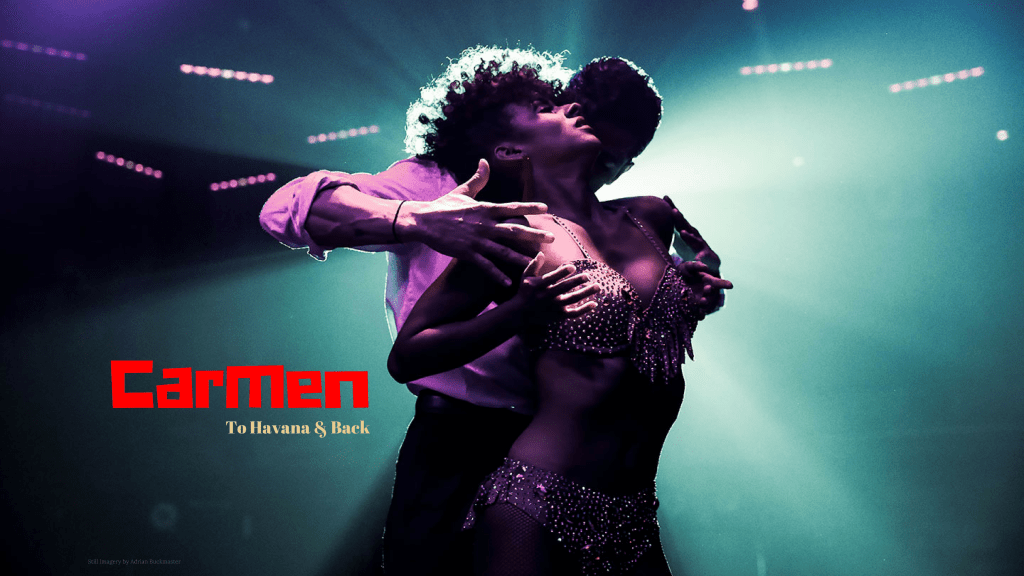
Kaitana Magno helms Variety Life Productions, a dynamic new NYC-based experiential theatre company, driven by the belief that art is essential. Kaitana is also driven by an insatiable desire to illuminate the human condition and challenge audiences psychologically, emotionally, and spiritually so that they will ultimately leave genuinely moved.. Kaitana and VLP productions marry live music, dance, nightlife, variety, circus, and immersive entertainment in spectacular site-specifc performances. Their maiden voyage: Carmen: To Havana & Back, a Cuban-infused re-imagining of the opera, Carmen, premiered in 2018 to critical acclaim and sold out performances until its necessary closing due to Covid in March, 2020. Forbes magazine called it “… a tremendous combination of concept, music and choreography that makes for an incredible evening.”
Now, Kaitana and partner, James Sutherland, join Broadway in the greatest live entertainment comeback in recent history, with a fantastical re-imagining of Shakespeare’s own “rom-com” called Midsummer: A Shakespearience.
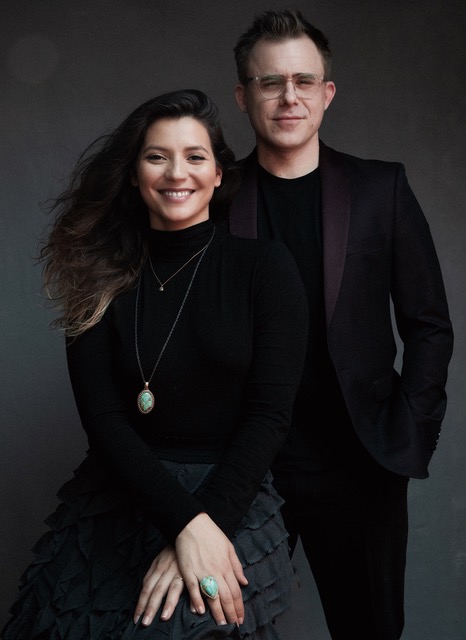
Again, music, magic, vaudeville, spectacle and artistic innovation, marinate – this time – in a souffle of Shakespearean prose.
Magno & Sutherland both come from strict & rigorous – and highly disciplined – dance backgrounds, and have performed professionally for around the world for more than two decades and were mentored by prolific innovators in the field. It was the inspiration gelaned from these artists that laid the foundation that today is their path.
Ai: Tell us about the genesis of Midsummer a Shakespearience.
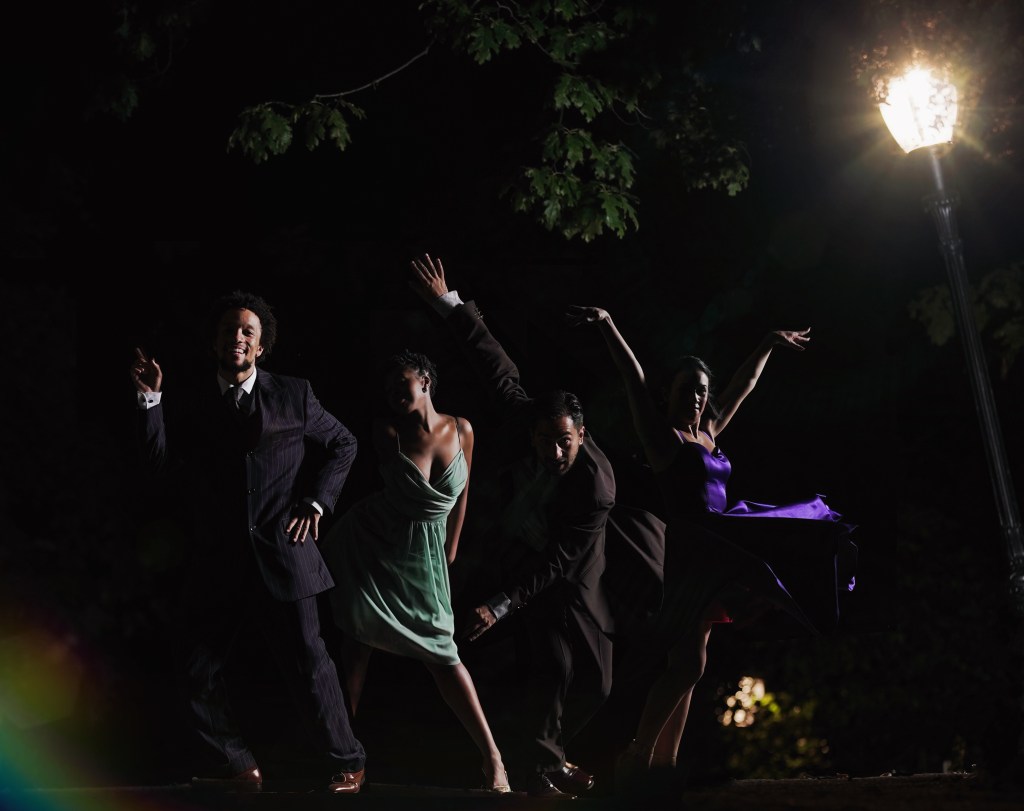
Kaitana: Several synchronistic events came together as magically as the characters and the circumstances in the play itself. During the pandemic, we moved near family to a little town in northern Georgia that sits in a national forest. To keep ourselves connected to our love and sanity, we hosted a weekly virtual gathering of actors where we read full plays, one of which was A Midsummer Night’s Dream. Not long after, I was outside on my porch as this summer storm rolled through. I listened to the sounds of the birds as they quieted with the dimming sky and the sound of thunder in the distance. I was reminded of the suspenseful feeling of being in a theater and hearing the orchestra warm up before the lights dim and the curtain opens. I saw this hazy clearing within the forest, the sounds of nature becoming sweet melodies of a saxophone, with thunderous rhythms of drums, and a singer crooning effortlessly. I saw fairies dancing, aerialists dangling within the trees, and a jazz band swinging hard. I just started seeing it. The characters and the whimsical plot lines unfolding.
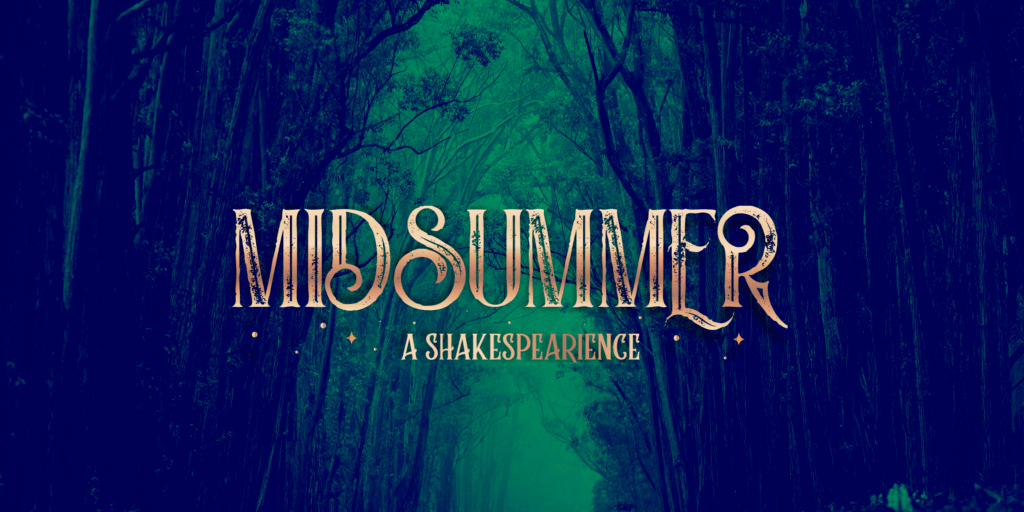
MIDSUMMER: A SHAKESPEARIENCE presented by Variety Life Productions
OPENING OCTOBER 13 (Wednesdays thru Sundays at 8:00pm)
CASA 51 located at 625 W 51st Street, NYC
Tickets start at $99
Tickets: www.midsummershakespearience.com
More Info: www.varietylifeprodutions.com
THIS IS PART I OF A SERIES OF INTERVIEWS WITH KAITANA MAGNO ON HER SHOWS AND HER CAREER. Look for Part II in ShowTones next week.
INSIDE IRTE: The Return of Improv’s Innovator
Edited by Natasha Dawsen

Theatre closing for more than 18 months was a devastation to NYC and to the industry itself. Many artists and organizations rallied and produced zoom readings and showings; symposium online; and even resurrected old recordings of plays and showings. But what if your ENTIRE business required the audience to be right there in your laps – like Improvisation?
The art of improv was slowly fading prior to the pandemic with several companies leaving NYC or leaving completely. One stayed strong and became one of the leaders of that industry. The Improvisational Repertory Theatre Ensemble.
IRTE, the Improvisational Repertory Theatre Ensemble, LLC, is an award-winning collective of comedy actors and writers who develop, produce and perform a season of original themed improvisational shows, following the basic model of traditional repertory theatre. What made them distinctive is that they are a theatre company wrapped in an improv troupe – of visa versa. Inspired by the Theatre of the Ridiculous movement, the work of Viola Spolin, and the indie comedy scene of turn-of-this-century’s NYC, they create – before your eyes – full plays. Incorporating simple costumes, dollar store props, and broad (irreverent) characters, IRTE manages to take audience suggestions and their own clever memories (usually of pop-culture) and create a new play – every night.
Staying a float with workshops and videos of past shows, IRTE held on tight for a year and a half and now – ready with a favorite of audiences – returns to NYC’s Producer’s Club for a longer run of a longer production.
The Marvelous Mrs. McCluskey (yes, a take-off of the Amazon hit show)
FRIDAYS & SATURDAYS: October 22, 23, 29 & 30 ; November 5, 6, 12 & 13, 2021
8:00pm – 9:30pm
Tickets $20 Online / $25 Cash Only at the Door
The Producers Club
358 West 44th Street, NYC
We begin a four-part series, interviewing the power-players of the company and what it feels like to return to being “live from New York.”
Robert Baumgardner is one of the founders and one of the lead-directors and writers of the company.

Tell us about IRTE
IRTE stands for the Improvisational Repertory Theatre Ensemble, and it was founded by Nannette Deasy ten years ago. Over the years we’ve developed a style of improvisational theatre where the players develop a story right before your eyes with characters they’ve developed in rehearsals, and suggestions from the audience, too.
Your company is a hybrid of theatrical technique and long form improv. How do you create material?
For me personally, I start with a very small idea. It’s often a phrase that sounds like a show title just popping into my head. Then I ask myself what is that show about. From there, I start building an initial structure which guides players in a very general way in building a story. As rehearsals progress, and even sometimes during the run, the structure, and certain other items, like character backstory solidifies, but not to the extent where we have a scripted play. Often, I see our shows as TV episodes where we have the same characters from night to night, but something different happens to them each time. So, it goes from one person’s idea to a collaboration with a bunch of improvisers and sometimes designers. Everybody’s individual experiences lend a uniqueness to each performance. We’ve had the opportunity to remount shows at festivals, sometimes with different cast members, and something new and different is always developed.

You are very visible across the country. How’s it look outside of NYC?
For this year, we’re not planning any performances outside of NYC. As much as we love going to festivals, there’s more research to do, and more responsibility to bear, when considering a location to perform in. Of course, I’m talking about the whole Covid thing. Some areas of the country just aren’t taking it seriously enough, and major outbreaks are still occurring in many states. I don’t think it’s that wise to ask an entire cast and crew to put themselves at undue risk. Next year, I hope, the world will start looking like a different place, and we can start performing in other places. I’ve loved being a part of many of the Fringe Festivals around the country.

Will you still be doing audience participation? Have you augmented that?
Audience participation will always be an important part of our work. It may come in different forms. Sometimes audience is up on stage, sometimes we’re just asking them for suggestions in the middle of the show. Sometimes, we just ask them to write suggestions down before the show, and we grab the suggestions out of a bowl during the performance. Covid isn’t going to stop any of that. We may ask people to wear masks. We are definitely telling people they have to be fully vaccinated before they enter the theater.
Audience participation and connection is important for us, and I think it always will be.
PART II will appear NEXT WEEK in https://outerstage.wordpress.com/
S.U.N. in the U.S.A.
Review by Edward B. Marlowe
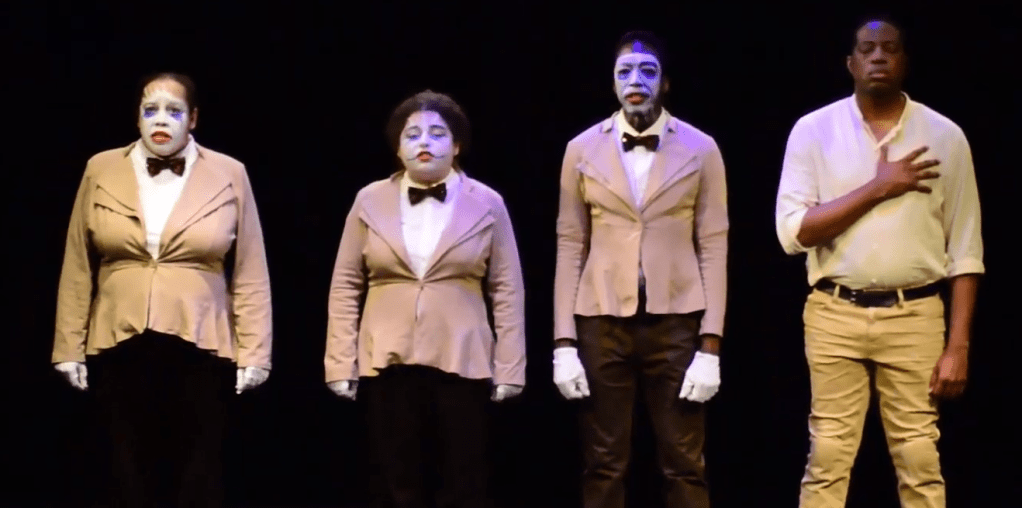
Michael Hagins has created the literary version of a wake-up slap in the face.
S.U.N (Shut Up Negro) in the U.S.A. is a stunning one-act work serving us the rhetoric Africans have heard and felt on the road to becoming an American, molded into a powerful closed-fist punch in our deserving faces. Each scene – interludes of the words and thoughts of each time period from the dawn of slavery until modern time – is marinated in a host of dogma about freedom and equality in America – well sorta. It is made abundantly clear that African-Americans contributed to it every step of the way, putting their lives in jeopardy but – in clever twists and turns in dialogue – don’t get to be part of it. It was this irony that distinctifies this from other works of its kind. In each sequence, they salute this country as a bastion of freedom, but Hagins deftly shows us how the African American’s exclusion in that freedom was allowed to be made justifiable – that we soothed ourselves by blaming African-Americans themselves. Interspersed with spiritual music as well as jazz and blues, the play became a parable – one we need to heed.
Hagins built in numerous history lessons by offering up speeches (quoted and created) from notable figures in bigotry to total stereotypes like three bloated buffoon KKK members, an hysterical “Karen,” and even a totally ignorant “liberal.” He also played the surreal card by putting the African American cast in white (including a bold touch of white face) and the caucasian players in black.
Stephanie Cox-Connelly staged the play with the same blunt-force for which Hagins offered up the words, allowing us to feel the impact of each scenario. Duane Ferguson uttered maybe a half-dozen words in the entire piece but his countenance – each grimace, frown, pain – registered like an earthquake when juxtaposed with the threatening, condescending, and always shocking dialogue.
The ensemble cast of actors and singers including Alex D, Kofi Mills, Gigi Principe, Michael Pichardo, Jeremy Goren, Michael Joseph Whitten, Tiffany Knight, Aaron David Kapner, Beth Griffith, Mary Sheridan, Alaina Hammond and Tucker Dally Johnston should be collectively lauded for holding the mirror up to nature so clearly. In this minefield era of cancel-culture, their bravery is exemplary.
This powerful work seems to have been designed to be a parable as – beyond its chronical content – there is no basic plotline. This does not negate its impact and – if anything, enhances – its message.
No one – repeat – no one should leave this theater without regretting every time they thought the world was a better place.
The piece was presented by the Broadway Bound Theatre Festival and stage managed by Sara Minisquero and Adam Sherwin.
Art[ists] Coaching Life
Article by Amy M. Frateo
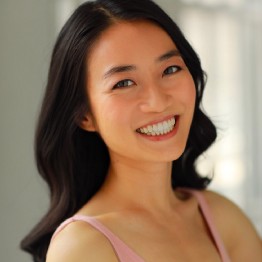
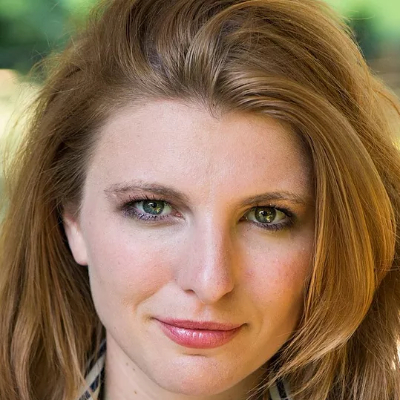
The Persian poet, Rumi, stated, “The wound is the place where the Light enters you.” These words are used as an opening remark on Jessie Fahay’s page of Healing Arts Collective.
“What would it be like to claim and harness your innate magical power and transform into your higher self?” is a rhetorical question uttered by Yiqing Zhao. No, she is not a philosopher per se – well, she might be – but she in actuality is a dynamic actress and filmmaker. Fahay might be a scholar, hence her adherence to the Rumi quote, but, in actuality, she, too, is an actress and stage and filmmaker.
These two arts professionals have another duty in life as well. They are both life coaches. They use their own life experience as artists to help and heal others – in and out of their professions.

Zhao’s original aspirations were that of medical. “…no formula, just guts. I trusted the road-map would appear and it did,” she said in an article, belying her trademark exuberance. As a medical student in China, she performed … in two surgeries on real people as an assistant. Ironically, during a depression study on rats that made her depressed instead, she reconsidered her path. It wasn’t the physical bodies that attracted her as a doctor, it was the pain … in one’s mind that got her attention. She traveled to the United States alone to solidify this new aspiration. Ironically, this new path changed yet again. Now it was about embodying what the mind has to offer. Well, we, in the biz call that “creating a character.”
Yiquing Zhao became a working actor in New York.
Just like that.
During pandemic, when the venues of her now thriving profession were closed or on hiatus, she turned again to her medical training. There, she pivoted into life coaching – but with a twist. Her forte is coaching actors – on life.
Now, with coaching certification in hand, she set out to make life better for the New York artists.
She has written extensively on the topic of acting being more than reacting but also being proactive. Basically to grab that seat on the subway before others do. How acting exercises can help writers block; and – combining her stories of being an immigrant in NYC provides many life lessons for all people. She tackled a touchy topic of losing passion for one’s passion and how to build confidence in the face of anxiety by welcoming uncertainty. This is a philosphy shared by Einstein who once said “The most beautiful thing we can experience is the mysterious. It is the source of all true art and science.”
Maybe Yiqing is a philosopher afterall. Or at least in good company in her concepts.
Incidentally, all things in her life come full circle. This all began with her not having the heart to sadden rats and now she also fosters dogs.
Look for her on MEDIUM and on numerous industry sites and she is also a member of America’s oldest theatrical club, The Lambs. And be sure to visit her WEBSITE and get a sense of her dynanic presence on YouTube
She is not alone.
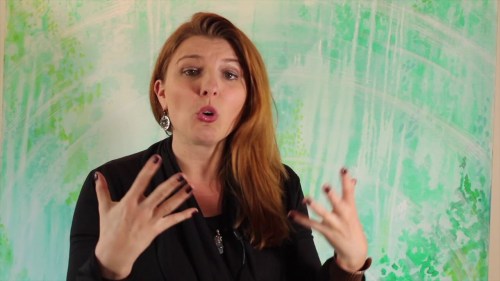
Jessie Fahay is a celebrated author and arts professional. Her organization, Ripple Effect Artists, is known across the globe for using art to help heal. Each season they premiere a new production or a new interpenetration of an established work that reflects a situation still be faced in the world today. They tackled immigration, hunger, unemployment and sex trafficking in just a few years. As its leader, Fahay walks the walk in her own life.
As a recovery coach (ARCS/NAADP certified) she has channeled her own experiences facing emotional abuse – which included being a caretaker to addicts – into a practice as a Recovery Counselor and coach. There is the Jungian philosophy of the wounded healer. With origins in Greek mythology, the centaur, Chiron, was just such a creature, possessing an incurable wound from one of Hercules’s arrows. While Jung connects this to chronic introversion, some allow their inherent bravery to take this wound and make is a salve for others. Fahay spent hours doing mindful healing and growth for herself and now, as she understands her own recovery, she loves to bring her compassion, wisdom, and coaching to those going through their own Chiron-ic journey.
Fahay’s book can be found HERE; her work as a healer can be found HERE and her theatrical company is found HERE
If that be the case, one must consider going to life coaches who understand the human condition enough to embody it. Working in the arts is not a hindrance but an added value. Seems when they say they “understand” it carries that much more weight.
Michael Hagins and Social Justice
Playwright & Social Justice Advocate, Michael Hagins, once again uses art to influence life with S.U.N. (Shut Up, Negro) in the U.S.A. (United States of America) presented by C.A.G.E. Theatre Company.
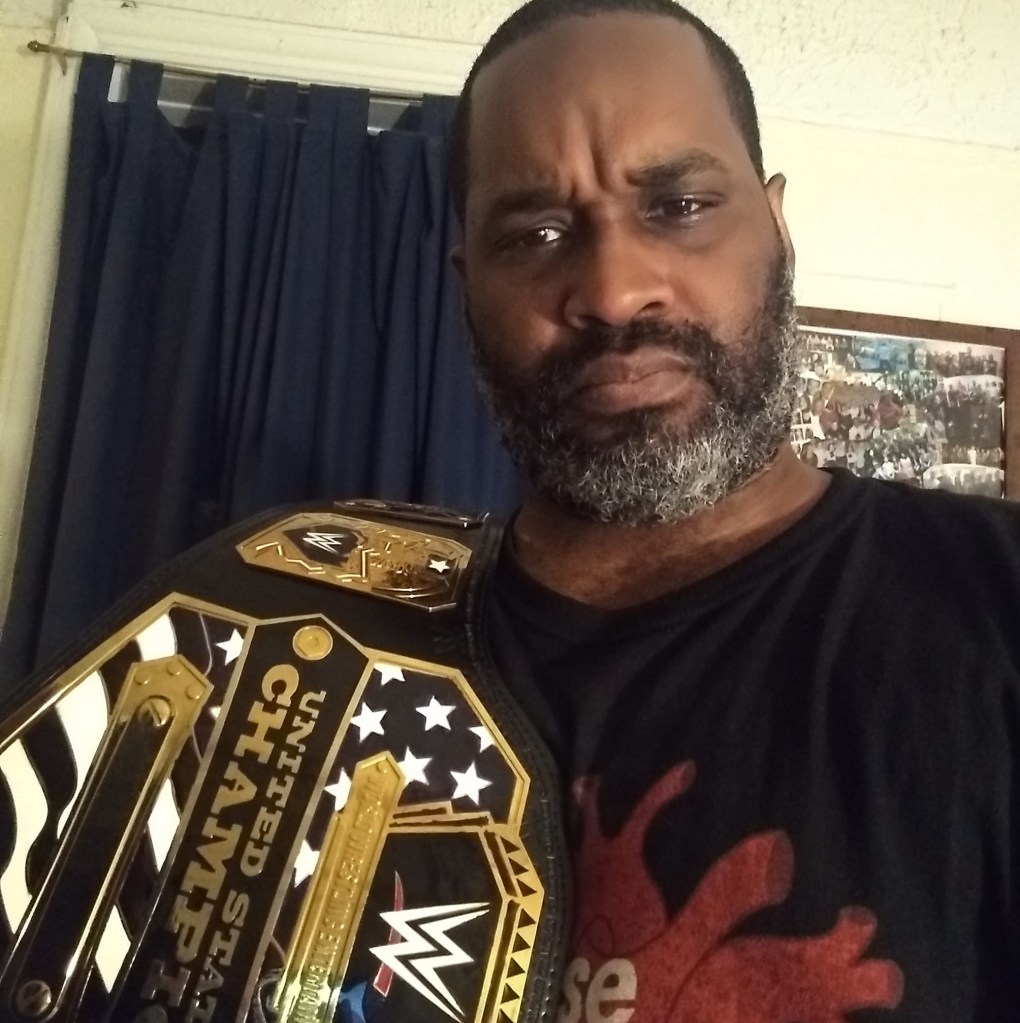
MICHAEL HAGINS is an African-American Playwright, Director, Fight Director, Actor, and Producer, and member of Dramatists Guild as well as an Advanced Actor-Combatant for the Society of American Fight Directors. Born in Brooklyn, New York, but raised in a small town in Florida, he has used the racism and prejudice but allowed it to fuel his writing – which he has done since age 9. Michael, an avid lover of Shakespeare, boasts having done (acted, directed, choreographed – or any combination thereof) every play in the Shakespeare Canon. While the Bard might be his “day-job,” it is always bringing to light inhumanity within humanity that powers his pen.
Performing Wednesday, September 8th at 8 pm.; Thursday, September 9th at 5 pm; Friday, September 10th at 8 pm. at Theatre Row Studios, Theatre 2, 410 W. 42nd Street, S.U.N. in the U.S.A. is a story that explores American history through the eyes of EVERYMAN BLACK – a solitary African-American man – who, through a series of events, is “kindly” reminded just how he has it in his time in the United States of America. This powerful tome reflects upon African slavery, from its origin to today’s culture.
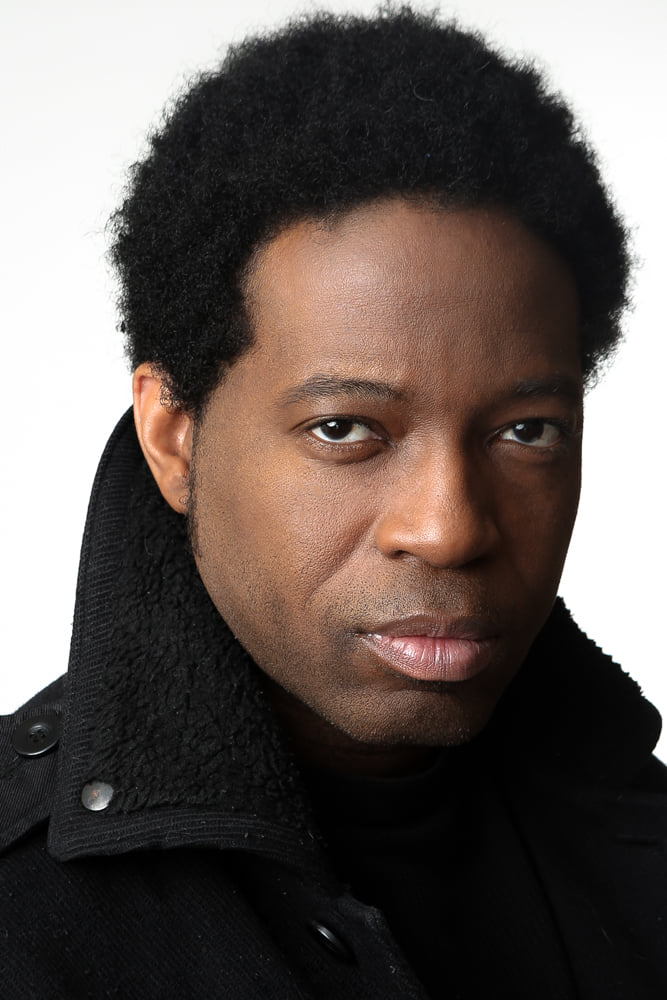
The production is directed by Stephanie Cox-Connelly
and stars Duane Ferguson
with Alex D, Kofi Mills, Gigi Principe, Michael Pichardo, Jeremy Goren, Michael Joseph Whitten, Tiffany Knight, Aaron David Kapner, Beth Griffith, Mary Sheridan, Alaina Hammond and Tucker Dally JohnstonStage Managers: Sara Minisquero and Adam Sherwin
Tickets available at
https://bfany.org/theatre-row/shows/s-u-n-in-the-u-s-a/
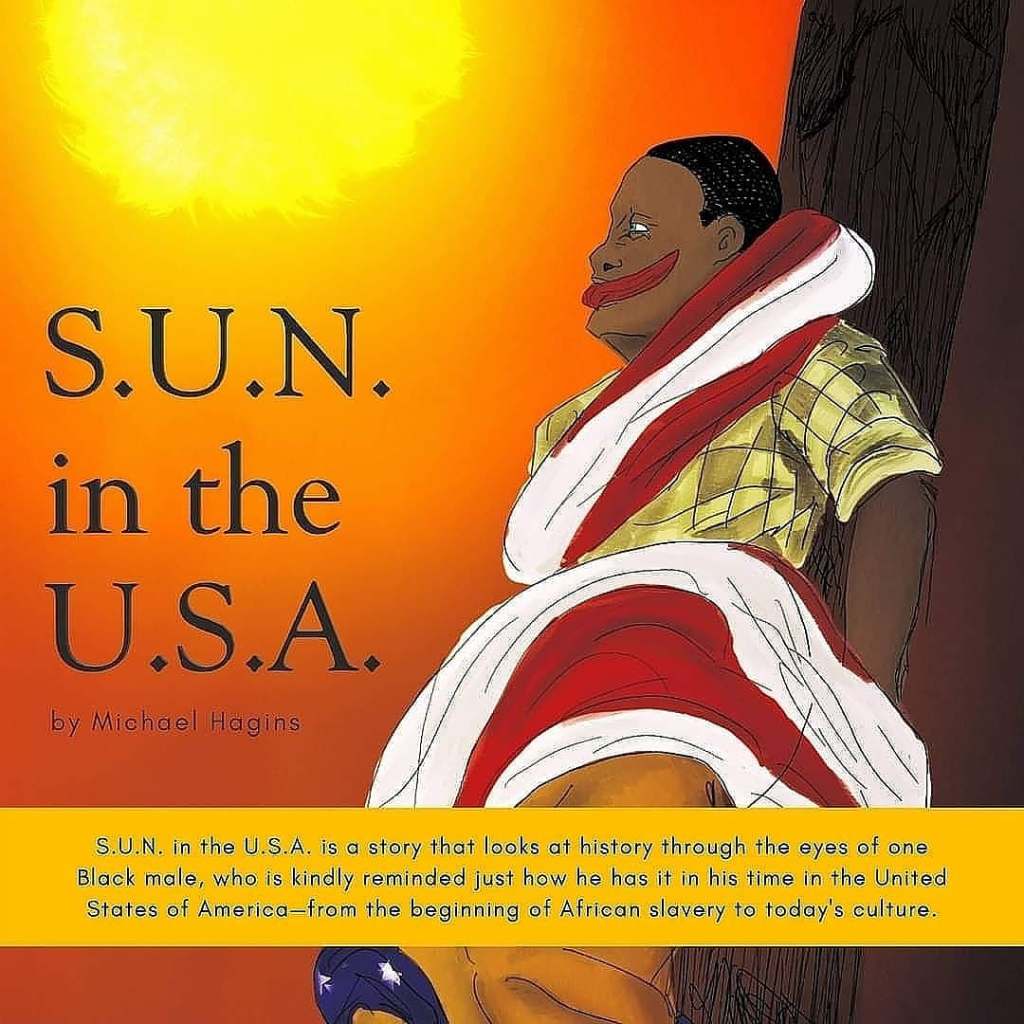
Poster Design: Eliko Aharon
MICHAEL HAGINS canon of work includes Off-Broadway: The Long Rail North (Soho Rep, FringeNYC). New York Productions: Basement (Roly Poly Productions); Michael is Black (Planet Connections Theatre Festivity); The Renaissance Dueling Plays (Planet Connections Theatre Festivity); The Vengeance Room (FRIGID Festival). Regional/Other: Hit and Match (Chicago Fringe, Johannesburg Fringe). Outstanding Playwriting – Hit and Match, 2013; Outstanding Overall Production of a Solo Show – Michael is Black; Winner of Best Playwriting, Best Director and Best Overall Production of NEPTA Awards for As You Wish It or The Bride Princess or What You Will, 2020. Artistic Director, C.A.G.E. Theatre Company
Celeste Mancinelli: a veteran artist takes a journey.
Stage performer, Celeste Mancinelli has an extremely funny and deeply moving story to tell.
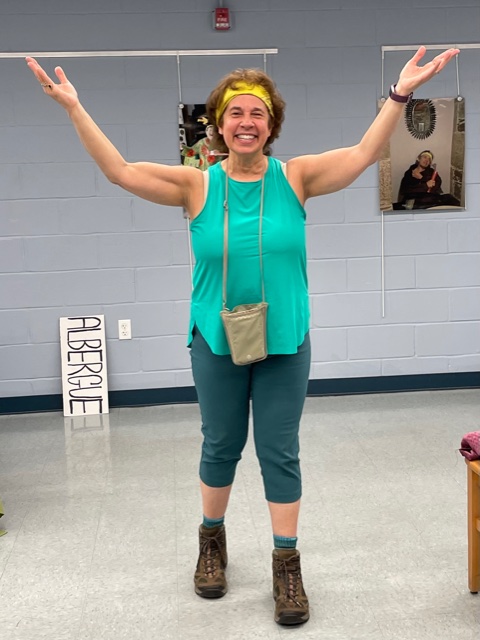
After successful regional performances, actor/singer Celeste Mancinelli now brings her compelling mix of humor and poignancy Off-Broadway. This special one-night performance of “Crying on the Camino” willl be presented at the newly renovated Theater 555. This NYC debut performance will benefit the American Pilgrims on the Camino, a non-profit association for people interested in the Camino de Santiago,a network of ancient pilgrimage routes leading to Santiago de Compostela in northwest Spain.
Special Benefit Performance: Thursday, October 7 at 7:30 p.m. at Theatre 555, 555 West 42nd Street between Tenth and Eleventh avenues, NYC.
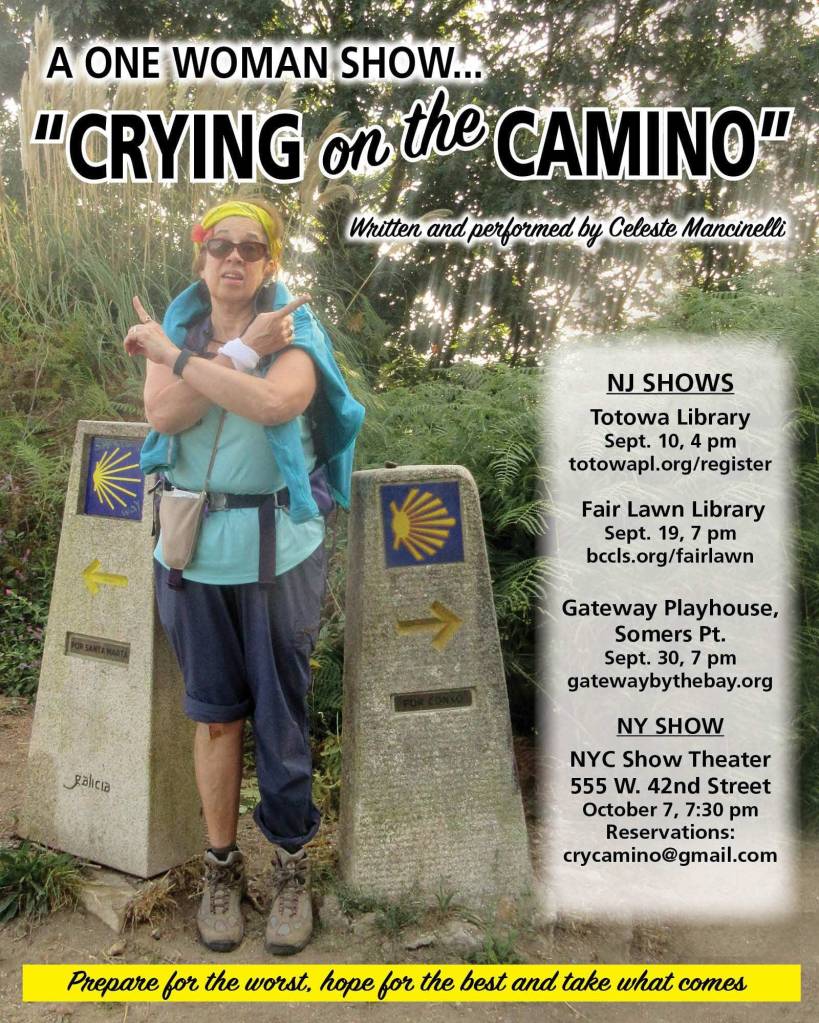
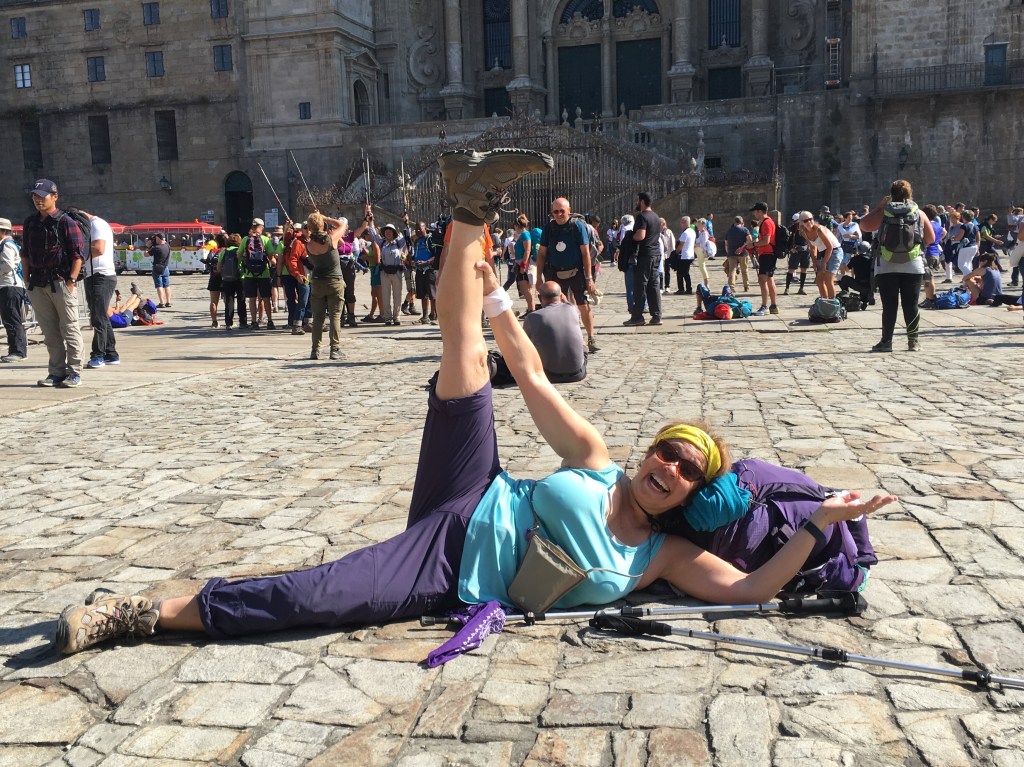
Celeste’s show recounts her 200-mile walk on the Portuguese Route to Santiago de Compostela. Her desire to share this experience brought her to the legendary teacher/director Wynn Handman, who helped her develop the show at his NYC studio.
Now Celeste embarks on a new “Camino,” bringing this true account of her walk to the stage. “This piece is about minimalism and simplicity, self-reflection and honesty,” says Mancinelli, a veteran stage actress. “In sharing this piece my goal is to inspire others to take their own journey – to fully live their own Caminos”
Celeste Mancinelli has been performing professionally since the early 80’s. Her NYC credits include the hit show “Nunsense” at the Douglas Fairbanks Theater, Cynthia Heimel’s long-running play “A Girl’s Guide to Chaos” at the American Place Theater (originating the character of Lurene) and Larry Gelbart‘s “1-2-3-4-5” at the Manhattan Theater Club. She has appeared as Mama in “My Big Fat Gay Italian Wedding” and its sequel (Funeral) at the St Luke’s Theatre. Celeste has worked in numerous Off-Broadway, cabaret, stock, regional and national touring productions throughout the United States. Her most recent appearance was as Edith Frank in “The Diary of Anne Frank” at the Greenbrier Valley Theatre in West Virginia. Celeste has proudly enjoyed a second career as an ASHA certified Speech/Language Pathologist and earned the NJSHA Distinguished Clinical Achievement Award. In that capacity, she developed a unique program at Spectra Academy in Montclair, New Jersey. This program targeted children/adolescents with Asperger’s/Autism/ADHD assisting them with the development of comedy scenes and scripts resulting in two full-scale stage and four film performances, all conceived by her students. This rewarding opportunity allowed her to mesh her two professional careers at the same time for the first time. During the COVID outbreak Celeste began writing/developing and performing her original, one-woman show, “Crying on the Camino” based on her 200 mile hike through Spain.
Celeste is thrilled to share this experience with all of you.
Ai sat with Ms. Mancinelli, who shared some deep thoughts with us.
Tell us about yourself as an artist. –
I am a born performer. I’ve always enjoyed acting, singing and trying to make people laugh. But once I started studying theater in college my interest in acting and performance deepened. (Thank you, Rutgers University Theater program!) I realized that I was fascinated by the simple act of using all of my training to tell a story. Of course, the stories I was telling were written by other people. I never really thought about using theater to tell a story of my own.
What made you decide to take the Camino journey?
I had two wonderful friends, sisters, who had walked various paths of the Camino over the years and who were scheduled to walk it again. I asked them if I could go along. They became my guardian angels. I had just retired from my second career as a Speech Pathologist, so I was at a turning point in my life. I believe I was summoned to the Camino as an unknown. I chose to do something hard to prepare for the hard ahead of me – walking for 200 miles in a foreign land versus walking back to a theatre career in NYC. Both choices seemed beyond reach but here I am.
What made you decide to turn it into a play?
I had a mentor in my life, the great acting teacher Wynn Handman, with whom I had been studying for many years. Through him I began to explore not just acting in theater but creating it. Still, I had never seriously considered writing an entire evening of theater myself.
But almost as soon as we began our walk, I started recording brief updates on my cellphone about my daily struggles. The sheer improbability of the experience, and the developing beauty of our walk along the path, were unforgettable; but without a written record, details of the unforgettable can still be forgotten. I wanted to remember as much as I could. And I wanted to remember it as it really happened, as the authentic experience it was. I didn’t want to remember platitudes. I wanted to remember what really happened to me. I knew I wanted to share this story with others.
What made you decide to be a Speech Pathologist?
I had a degree in Theater Arts but my parents insisted that I had to get a degree in something practical too. I received a Masters in Communicative Disorders, and I chose well. Most of my work was with children who are on what is now called the Autism Spectrum, and I loved it. It became a second passion of mine. And it connected with acting too. To help improve communication skills you have to analyze and teach the underlying emotional content of a message. Just like acting! As I taught I learned and as I learned I taught better.
Do you look at this as some form of a “comeback” to the stage?
Not at all. I never left acting. Theater is in my soul. It’s something I was meant to do.
What’s next? Auditions and doing my work just like all of my fellow actors.
Face to Face with Tennessee Williams
Anthony Laura and Face to Face Films embarked a journey artistically when we were no longer allowed to do so physically. His reading series, THEATRE INTERRUPTED began during lockdown and explored classic American drama by imbuing it with fresh energy by offering “dream roles” to young artists, allowing them to tackle plays by Albee, Miller, and Williams and other great playwrights in a safe environment while proving quality virtual, entertainment to audiences all across the world.
July’s entry:
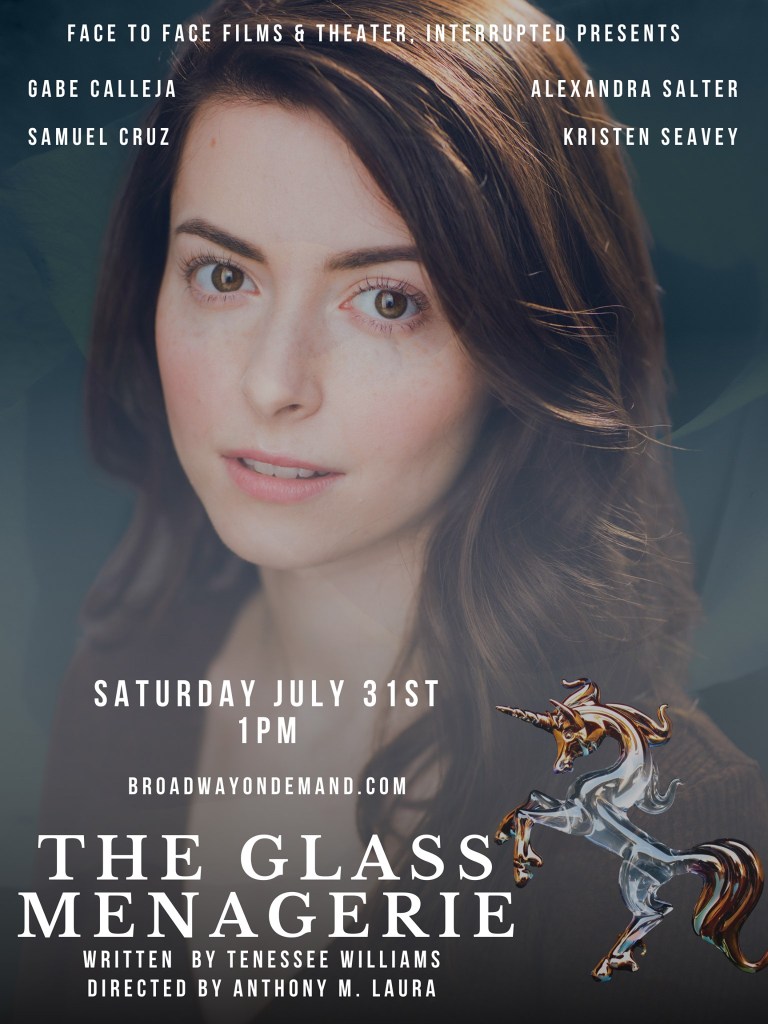
THE GLASS MENAGERIE
JULY 31ST 1:00 PM BROADWAY ON DEMAND
KRISTEN SEAVEY: AMANDA WINGFIELDALEXANDRA SALTER: LAURA WINGFIELDSAMUEL CRUZ: TOM WINGFIELDGABE CALLEJA: JIM, THE GENTLEMAN CALLER
Ai spoke with Laura and company about climbing thr mountain of Tennessee Williams … again.
What sparked your decision to direct THE GLASS MENAGERIE?
ANTHONY M. LAURA: The Glass Menagerie has been on my radar more than normally the past two years. One of the themes I deal with in my work very heavily is illusion, and Menagerie was seminal in conquering that theme. I found myself rediscovering the play as I approached it and was enthralled with every aspect of it again, as if I was reading it for the first time. It is remarkably specific and haunting. I wanted new audiences to experience the magic of the Wingfield’s. My goal is putting it on a virtual platform was to allow everyone who watched to experience the words, the pain and the humanity that the play captures. These characters are etched in our memories for a reason. It was so exciting working with this remarkable cast and exploring the truth of this world. I was able to also see the effect that Tennessee Williams had on me as a writer with my work and how grateful I have been to further learn from his gifts.
What was your prior experience with the play?
GABE CALLEJA: I came across Glass Menagerie quite often in scene study classes before, but I had never seen it from start to finish in its entirety. So for the most part, I was coming in pretty fresh with just a basic understanding of the events of the play.
ALEXANDRA SALTER: I had very little experience with the play, I had only read it once before.
KRISTEN SEAVEY: I worked on a scene in high school and that’s about it. Very limited and barely knew what the play is about. The only memory I had was a line that Laura says with peculiar punctuation: “My Glass! – Menagerie”. I can confirm that this is a line that 15-year-olds working on scenes from a play they didn’t understand thought was hilarious. With characters like Amanda there’s a fine balance. Amanda is theatrical. Out of all of the characters in the play, she’s the one who is the most over the top. On one hand, I think Amanda is a character that is easier to be too “over the top” with and not connect with the humanity and with the fears and insecurities she has—the things a modern audience can still connect with in a story set almost a century ago. We worked on pushing those boundaries and finding a balance of bringing out Amanda’s theatrics while keeping it honed in to her reality and the natural realism I bring to my own work. Really understanding each moment and each line and the motivations behind them to clearly tell the story with the right balance of theatrics and realism.Also trusting myself that I’m capable of tackling such a famous and delicate role.
SAMUEL CRUZ: I saw the play the first time I went to New York with Cherry Jones and Zachary Quinto. It was the first time I had seen a play that made me feel depressed after watching it. I thought that was so cool and raw as a high school drama kid. I then performed the gentleman caller scene in class where I copied exactly what I saw on broadway.
What did you and Anthony work on in rehearsals?
GABE CALLEJA: We focused on Jim’s vulnerability and specificity with each character that he interacts with or talks about throughout the play.
ALEXANDRA SALTER: Anthony and I worked a lot on Laura’s injury; how it looked and what it felt like. We also focused on what her driving need is in the play. She needs to feel loved and seen. And we specified what that would be like coming from Amanda, Tom, and someone outside the family (like a gentleman caller), and how it would feel to have that all ripped away.
KRISTEN SEAVEY: Tennesse Williams is a tough cookie, and there are two camps actors can fall into when working on his writing. The first is not connecting with the heart of the material and going so theatrical it’s borderline caricature, and the second is too understated where you’re missing important parts of the character’s personality out of fear of “going too big”.
SAMUEL CRUZ: Obviously everything that you normally work on when producing a play, but I think a lot of work and focus was put on the relationship between the family. It plays a huge role in the circumstances of the story, and is what ends up being so poignant. He personally worked with me on the two places we see Tom in the play; the present and the memory which opened up my view and my further appreciation for the play.
What does the play mean to you?
GABE CALLEJA: After the table read, I was quite taken aback at how much I was able to relate to the play and these characters. It has quickly become one of my favorites and I would love another crack at this play on the stage one day. It’s a story that is so simple yet highly compelling. Every thought and action seemes deliberate and reveals so much more than is on the page.
ALEXANDRA SALTER: It means so much to me to be playing this iconic role. It is an honor to tell Laura’s story and to bring Tennessee Williams words to life.
KRISTEN SEAVEY: I have a special place for the classics from the early to mid twentieth century and it’s always a special time when I get the rare opportunity to work on them.
SAMUEL CRUZ: Honestly, I don’t think I have an answer to this quite yet. Working in general after such a long time has meant the world to me. Getting back into doing what I love has been invigorating. As for how this play will effect me, I couldn’t tell you yet. I’m still deep into this process. I’m sure it’s going to stick with me for awhile. Tom is unlike any character I have been given the opportunity to explore.
What did you discover about the play while working on it?
GABE CALLEJA: I discovered that the best written characters are those that are trying to justify their flaws in their thoughts and actions. No one is complete and we are all doing the best we can. Sometimes that leads to miscommunications that can blossom into captivating and compelling conflict. This play executes this notion perfectly.
ALEXANDRA SALTER: Throughout this process I discovered how important Laura’s glass menagerie really is. It is a representation of her, and as we go along in the play, we see how the glass reflects what Laura is feeling and how she is changing.
KRISTEN SEAVEY: Tennessee Williams’ writing has everything you need right there, you just have to peel back the layers and work together to understand it both emotionally and physically.
SAMUEL CRUZ: For me, this play has been a lot about rediscovering. Feeling again what’s it’s like to live with a character for a couple weeks and really get to know them in me. I’ve discovered a lot of things about myself throughout. I think I realized this play is a lot more sad than I initially thought. I’ve also learned a great amount about Tennessee’s life and how it parallels this play. Thats been the real heartbreak in the process for me. But also discovering that the play really seems like a ‘what if’ scenario.
What would you say to someone who isn’t familiar with the play?
GABE CALLEJA: There is a beautiful rawness to this play. You constantly feel like you want to save the characters from themselves but they are all stuck in their situations, some looking to escape, some without the means to. This creates such a palpable tension that is relatable and engaging to watch.
ALEXANDRA SALTER: This is the first memory play ever produced. This new style opened up a whole new way to explore a character’s experiences. The Glass Menagerie is told told through Tom’s perspective, a character based off Williams himself.
How has working on the play changed the way you hear the name Tennessee Williams?
GABE CALLEJA: There is good reason as to why Tennessee Williams is a household name to even non theater-goers. His reputation and work speaks for themselves. I’ve had the pleasure of working or watching a few of his plays in the last year, and, suffice to say, he has become one of my favorite playwrights. I expected his work to be impressive, but there’s such a deep and full characterization in his style that you can’t help but relate and fall in love with his characters.
ALEXANDRA SALTER: I have always had the utmost respect for Tennessee Williams. That respect has only grown after working on this play, knowing the characters are based off him and his family. I have been given the opportunity to look through a window to his past, and I am so grateful to him for sharing his story, no matter how difficult it may have been to tell.
KRISTEN SEAVEY: This is my second Tennessee Williams play with Face to Face and certainly! First that something so big can be told clearly in a virtual format and second that younger actors are capable of working on roles they might not yet be cast in.
SAMUEL CRUZ: It has just furthered my appreciation for him. I’ve always known him the be one of the best playwrights to exist. When you live with work for awhile you will of course have more of an understanding of the artist. I feel like I got a little more close to him. Maybe understood a little more what it was like to be him.
What do you want people to come away with after seeing this?
GABE CALLEJA: The play works hard to create the circumstances that leave you feeling a mix of hopefulness and hopelessness by the end. It is a rich, paradoxical feeling that is provocative and leaves you wondering about the fate of the characters in the play. If we can achieve that for our audiences, I would call that a success!
ALEXANDRA SALTER: I want people to come away from the play understanding that we all need the same thing in life. We all want to be accepted and loved no matter who we are. At the end of the day, everyone wants to feel like they belong.
KRISTEN SEAVEY: A better understanding of classic writing like Tennesse Williams and of The Glass Menagerie itself, especially if their only experience is reading it once in high school.
SAMUEL CRUZ: I would say that my high school self was right in some way. I think in life you inevitably have to make tough decisions, and you might not always make the right decision. But you just have to keep trying and keep living. Memory is a helpful stepping stone but we are only given one direction. Forward.
Life According to Akshata Honnavar
Review by Bob Greene
Akshata Honnavar, in her short piece, A Story Called Life, found a way to offer us a new take on an age old theme.
This brief interlude shares a day in the life of everyone. Snippets of every everyday existence swathed in lovely background music and well-spoken, well-written poetry.
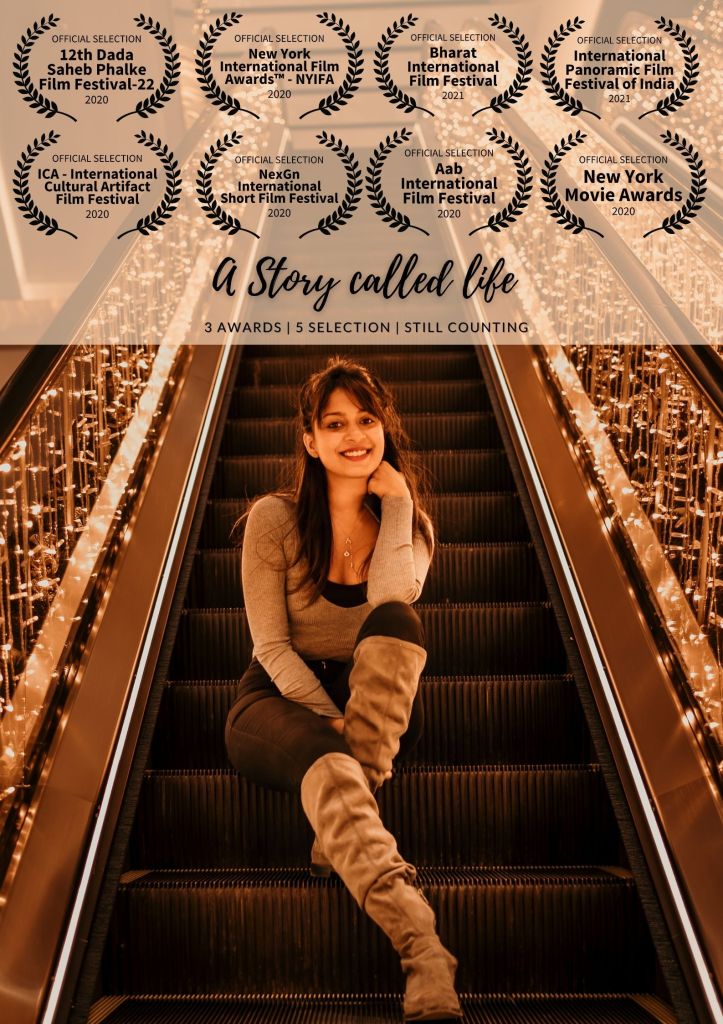
While this them has certainly been explored, most entries present in a presentational form – allowing camera effects to frame attractive faces who are – like any Sunday New York Times cover story – staring directly into the lens, prompting us to say “oh they’re like me.”
This doesn’t always work.
Akshata Honnavar hands us stories in each face. Not looking at the camera, not all contented, not all pretty, but we meet the world. Some summon sad imagery, other troubling, other whimsical, we meet a true melting pot. The location allows us to imagine “big city” with even the more rural locales inferring a getaway more than a neighborhood. We are placed on a journey of emotions more than people and the poetry, while well-written and spoken, also lends to the same concept. Inferring life can be tragic and joyous – sometimes simultaneously, the story tells us that life is not easily explained as it is all things at the same time. The voice is not a perfect announcer voice but an accented oration. Enough of an accent that – again – we see that everybody means everybody.
Ms. Honnavar ends her piece by having everyone then look directly into the camera. Saving this usual feature for the end, we get the same feeling we would get watching the final sequence of Fellini’s Nights of Cabiria, when the title character – following hardship after hardship – smiles as if to say “oh well, this is the story called life.”
Ms. Honnovar has a promising future as an empathetic filmmaker. Here’s looking forward to more elaborate expressions of her creativity.
HAMLET returns!
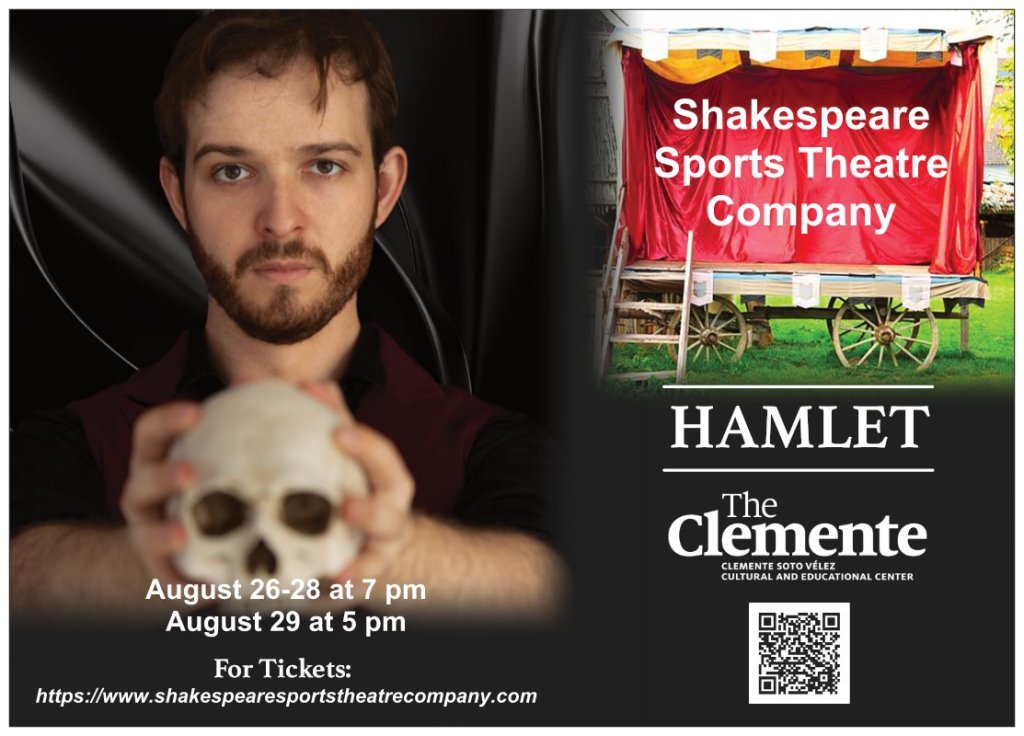
Shakespeare Sports Theatre Company brings its acclaimed production back – for a LIVE run at The Clemente, 107 Suffolk St, New York City, August 26-29. Contact ShakespeareSportsTheatreCompany.com for further info and or visit: www.eventbrite.com/e/hamlet-tickets-158244322027?aff=efbneb for tickets.
Shakespeare’s most enigmatic play was scheduled to be presented in August 2020 at downtown’s cutting-edge Clemente by Shakespeare Sports. Working quickly, producer Carrie Isaacman and director Michael Hagins reworked the production to appear virtually. That production won accolades. Now, the same teams join together to bring back their Hamlet, LIVE, at the same place, same dates, just one year later.
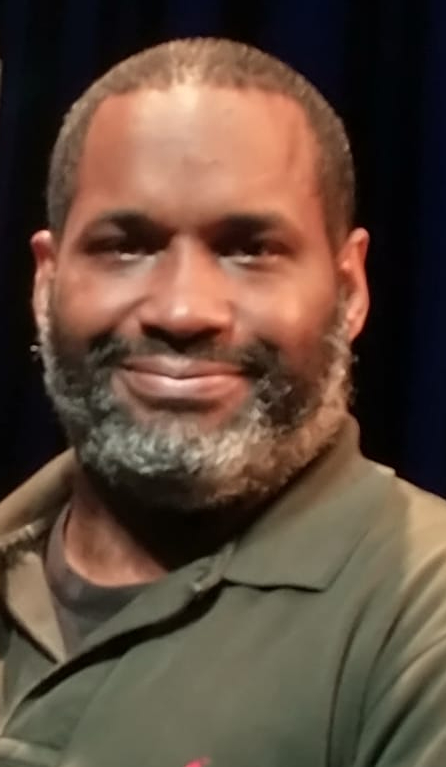
Michael Hagins returns as director of the production. Hagins is synonymous with innovative physicality in his classical productions as well as writer of plays dealing in social justice.
Returning to the role of Prince Hamlet is Matthew Tiemstra. Jan Ewing of Hi Drama said “His energy and enthusiasm was evident, and his descent into madness particularly effective.” Joining him again is Mary Sheridan who – in the same review – was cited as “convincingly play[ing] Gertrude, Hamlet’s mother, with love and an uneasy concern as she watched her son self-destruct” and Aaron David Kapner who was called “a stitch” with “great charm and subtle humor” as Guildenstern and Osric. Mr. Kapner will be assuming the role of Polonius in this new production.
The company is completed by returning members, Brad Summer, Charlie M. Alemán, Gigi Principe, Tucker Dally Johnston, with Benny Acevedo joining the company.
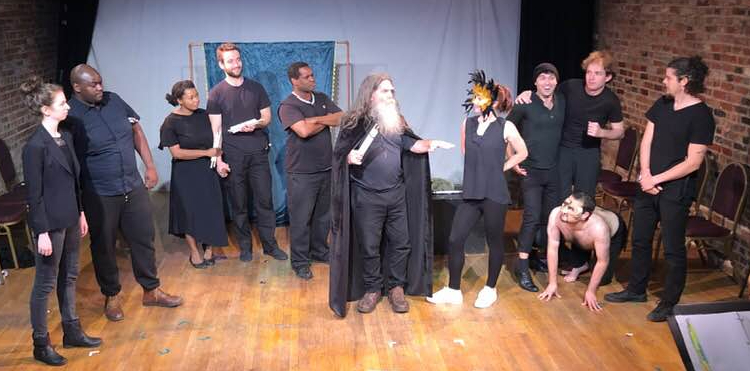
The Off-Off-Broadway Review Award winning Shakespeare Sports Theatre’s mission is to carry through Shakespeare’s works to the current times of how we, as Americans, view what Shakespeare saw from his life and times by creating theatre on the other side of the rainbow of our ancestors who created America.
 Arts Independent