
Home » Articles posted by jaymichaelsae (Page 34)
Author Archives: jaymichaelsae
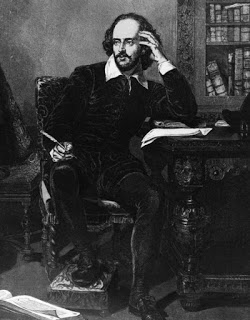
Domenick Danza’s Shakespeare from the American Point of View
Shakespeare from the American Point of View
A discussion of the book, Shakespeare in a Divided America written by James Shapiro, published by Penguin Press, 2020
Article reprinted by permission from its author, Domenick Danza, from his blog, https://morethantheplay.blogspot.com/
I have not written a blog post since March 7, before the pandemic became our norm. It was a strange day when theatres in New York closed. We all know the bad luck associated with using the work “closed” or “shutdown” when talking about theatre. We say the theatre is “dark.” And it is definitely a dark period. I enjoy writing for my blog because I share my experiences. Live theatre, which I miss terribly, is all about the experience. I usually attend alone, meaning I go by myself, but I have a shared experience with anywhere from two hundred to two thousand people. We commune. Then, when I share that experience here on this blog, I commune again. That is what I most value in about live theatre.
What I’ve been doing these past few weeks, aside from teaching remotely, is reading. I’ve been reading fiction, which is rare for me, as well as plays and non-fiction, which, as a grad student in the Goddard MFA Creative Writing low residency program with a focus on playwriting, is where most of my time is spent. Sharing books and thoughts about what I’ve been reading is much more a personal/intellectual conversation than sharing a communal theatre experience, but I’d like to give it a try. I will keep the topics focused on theatre. Let’s start with Shakespeare in a Divided America by James Shapiro. It is a truly fascinating read.
I am a late bloomer to Shakespeare. Reading his works have always been difficult for me. My experience seeing numerous productions of the Drilling Company’s Shakespeare in the Parking Lot, which I have written about on this blog, opened the door for me to understand and enjoy the world of William Shakespeare. Mr. Shapiro’s many books have provided me a frame for Shakespeare’s work, both historically and socially. His latest book, Shakespeare in a Divided America, focuses this frame directly on our American culture, right up to the present day. He writes about John Quincy Adams’ documented response to the character of Desdemona in Othello, illustrating how this well-known abolitionist harbored a racist perspective. This reinforces what we have come to know about the detrimental effects of implicit bias today. Mr. Shapiro also takes a very close look at how Prospero’s treatment and attempt at educating Caliban in The Tempest heightened the debate around the immigrant experience in the early 20th century, and carries forward to the present. And yes, there are some very steamy chapters about marriage, adultery, and same sex love as reflected in the The Taming of the Shrew and the development of the 1999 Academy Award winning movie, Shakespeare in Love.


My favorite chapter was about Macbeth and the connection between Abraham Lincoln and John Wilkes Booth’s knowledge and understanding of this tragic character. Since I teach this play with my 5th Grades classes, it is the Shakespeare work that is most familiar to me. The complexity of the characters and the subtlety in Shakespeare’s political commentary on England under the reign of King James are brilliant and fascinating. Finding out how these complexities were appreciated and quoted by both Lincoln and Booth illuminate the magnitude and universality in Shakespeare’s writing.
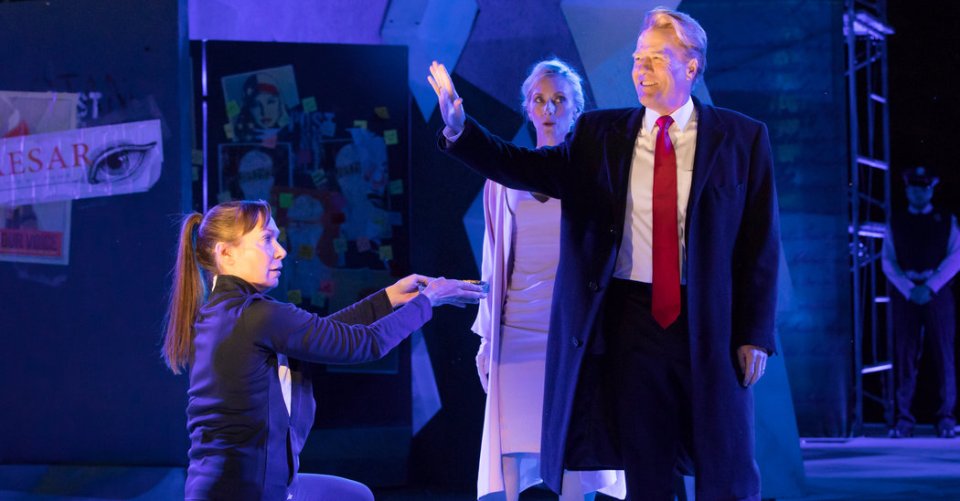 These historic debates become relevant as Mr. Shapiro writes from this personal experience of the political and threatening response to The Public Theater’s Shakespeare in the Park 2017 production of Julius Caesar. These stories all link together to reveal how the responses to Shakespeare in this country illustrates how we have been a very divided nation throughout our history. Whether you are a Shakespeare fan or a history buff, this book is an enlightening read.
Domenick Danza
Nellie Bly and the Haunted House, Singing Puppets, Hi-Tech Women of Blackwell
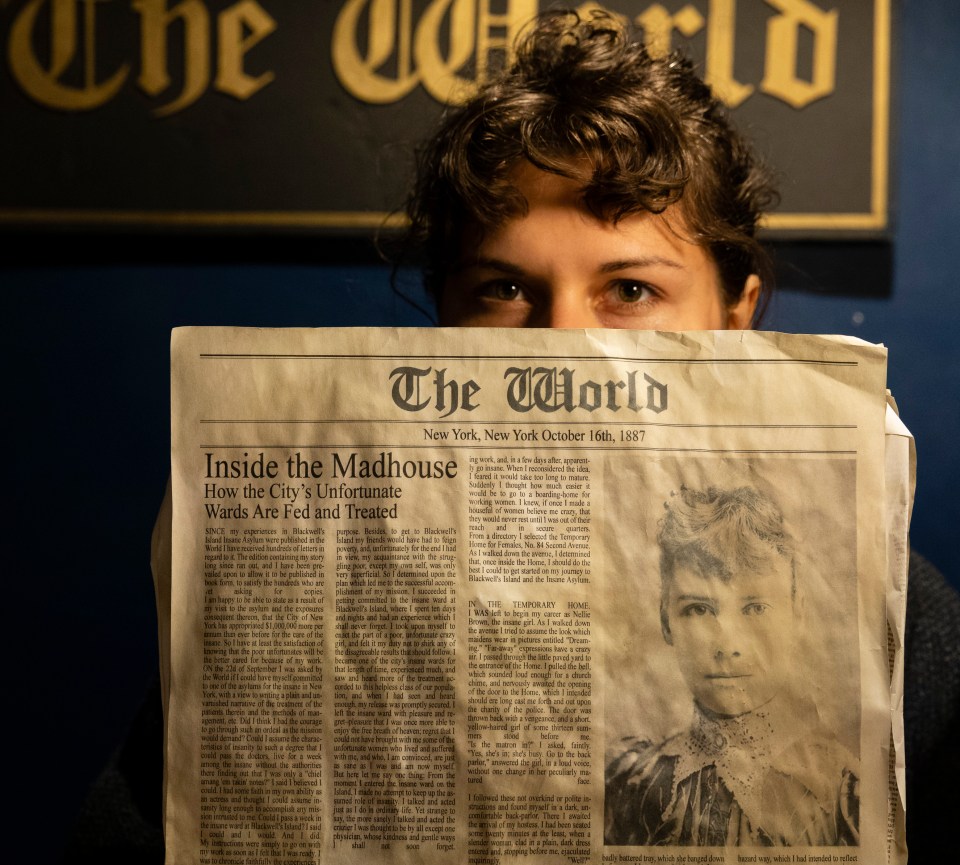
Infinite Variety Productions broke new ground earlier this year with Nellie and the Women of Blackwell. This immersive piece based on the true story of a reporter going undercover to expose the truth behind 19th Century mental institutions, garnered great reviews and visibility from TimeOutNY and others for its new style and unusual – but timely topic.
Now immersive is a bad word.
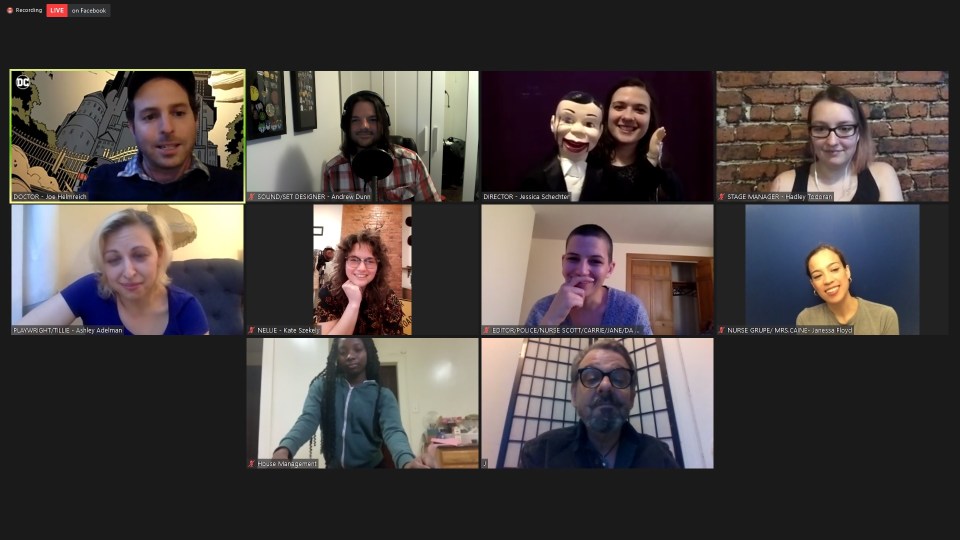
Infinite Variety Productions presented a video of the trip around the building turned asylum and then created an engaging Q&A for all those that saw it and wanted to learn more and those that didn’t get the chance as it ended abruptly for reasons known around the world.
The engaging hour, hosted by Jay Michaels, featured commentary by Jessica Schechter (Director); Ashley Adelman (Playwright, Tillie, Mrs. Standard); Kate Szekely (Nellie); Janessa Floyd (Mrs. Caine, Nurse Grupe); Nicole Orabona (Editor, Police Officer, Nurse Scott, Carrie, Jane, and DA Vernon); Joe Helmreich (The Doctor voiceover); Andrew Dunn(voice overs, sound, and scenic design); Cassandra Jeffries(House Manager); Hadley Katherine David Todoran (Stage Manager).
The realistic trip through what famed reporter Nellie Bly went through to uncover the truth about how women, the mentally challenged and even immigrants were treated in the late 19th century was filled with stunning theatrical touches. Andrew Dunn constructed then deconstructed a haunted house for the setting, allowing for unsettling effects to become real in a unique way while the concept of the doctors being puppets of the nurses was handled by the doctor – ready for this – being played by a puppet with a creepy and humorous voiceover by Joe Helmreich. Jessica Schechter, Ashley Adelman, and star, Kate Szekely, gave stunning accounts of the creation of this piece. One can easily grasp their fount of knowledge on, not only, the topic, but the art of theatre as well. Nicole Orabona brough great wisdom to the technique being a veretan of the burgeoning immersive theatre. And one could only open their heart to stage manager Hadley Todoran as they described being in a box with endless equipment operating the multitude of rooms and effects the immersive building offered. All artists came away from the experience with a deeper dimension of being an actor as each night brought another audience that was as alien to the setting as Nellie Bly may have been herself. One night, a patron decided to assuage his fears by heckling. He was quieted without the rest of the crowd figuring it wasn’t part of the show.
IVP tells true stories. It’s original work and even revivals are human exploitation. The open discussion – no matter how electronic – was just as much a human experience.
Follow them on Facebook and view the video and talkback
Essential Nonessential – Spring Awakening
Jay Michaels continues his exploration through the current uncertainty of the arts.
Spring is a time of rebirth and renewal. A time when you step outside in your finest and – if you are an stage or film artists – a time to present your wares at festivals and production houses.
Well, this year looks a lot different.
In speaking with many artists, I’ve heard joyous “I’m getting ready to burst [back] on the scene” to “I’m going to tread lightly” to “I’m speaking to you from my parents’ home … where I shall stay.”
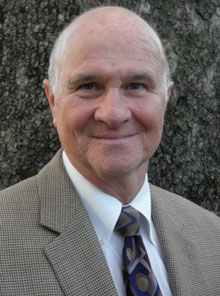 Granville Wyche Burgess has been a member of the stage, screen, and television universe for half a century. Award-winning and recognized, Granville was promoting his new musical, COMMON GROUND when the ground was pulled out from under him. Maybe it was his many years in the biz, but he is looking at the newbies before himself:
“I can’t imagine a vaccine being ready before at least one year, and that seems to mean that people may not gather together before then. I write that sentence well-knowing that I can’t imagine what that world would look like. I am at the back end of my career. I keep thinking about those who are just starting their careers or are currently in theatre programs.” In terms of health, he’s family first, “I wake up every morning praying for the health of all those I love and thanking God for those who are on the front lines, praying that they can be safe.”
Finally, when looking at the other side of change, it is here that his faith takes the wheel again, “Humans are adaptable: once we have the vaccine we will be able to resume a life that looks almost like it did before coronavirus. The fear will fade. If there is a silver lining in all this, it will be that leaders will understand that we must cooperate across nationalities in upgrading our public health readiness or we will suffer more pandemics, more deaths, more disruption, and more despair.”
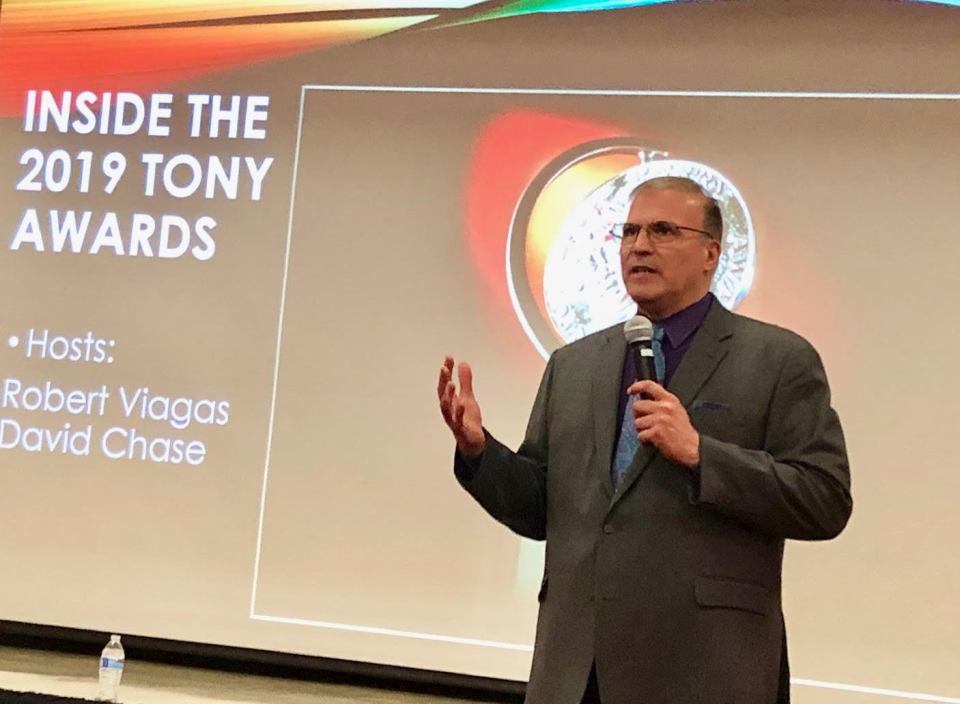
In a career of equal length, writer/reviewer Robert Viagas is holding on tight, “I was on the verge of bringing four major projects to fruition, one of which included a contract that was supposed to be signed the day they closed all the theatres. Conversely, there was a book project that I had set aside when all these other projects cropped up. I’m now deep into work on finishing that one. Perhaps all will come through.”
He sees both sides of the future and again, will simply wait-in-the-wings, “Live theatre has been in a wonderful Renaissance over the last two decades. I’m worried that the world economy will crawl out of this plague only to plunge into an economic Depression.”
That brought up in him his own great fear, “I’m concerned that people will have gotten so used to separation and so fearful of gathering together that the love of community so necessary to live theatre will be lost or compromised.”
But again, both sides are there in Mr. Viagas’ mind, “On the other hand, perhaps people will miss it so much that they will flock together again—but protected by vaccines and effective treatments that are being developed. I fear the former scenario and hope for the latter.”
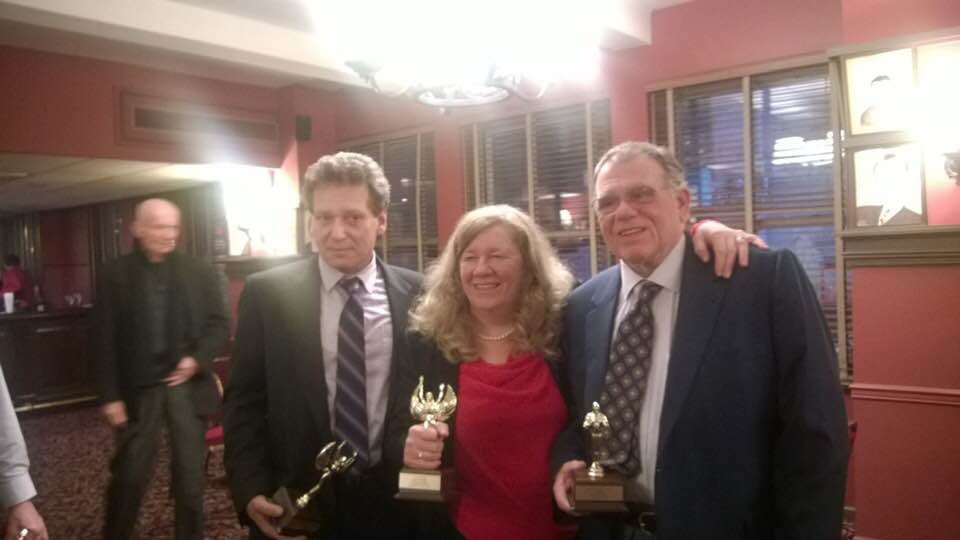
Laurie (center) with the last Steve Silver and Thomas J. Kane at Sardis
“I am not changing my career as a Director. If I plan to change anything, I may consider acting more in the future. I recently had a very challenging experience acting in a play called AFTER THE HANGING. The play took place in the South in 1927 and the subject matter was rather difficult and disturbing to me personally. I had to do research into that time period. Another avenue I would like to explore next is playwriting.” Laurie Rae Waugh, one of the leading directors at the American Theatre of Actors, is looking at this like Robert Viagas. She has time, so she will fill her arsenal with art and be ready to explore all new avenues when we can again, walk the avenues. She is doing this to help her friends and to be part of a new off-off Broadway movement.
“Because many actors work in these fields to pay the rent and make ends meet, this may stop some truly gifted actors from pursuing their passion which is acting” she says wearily, but she imagines indie being in charge when this all ends … at least for a little while, “I believe that due to social distancing and the current economic climate we are in, theatre goers are going to flock and embrace smaller and more affordable theater companies in the future.”
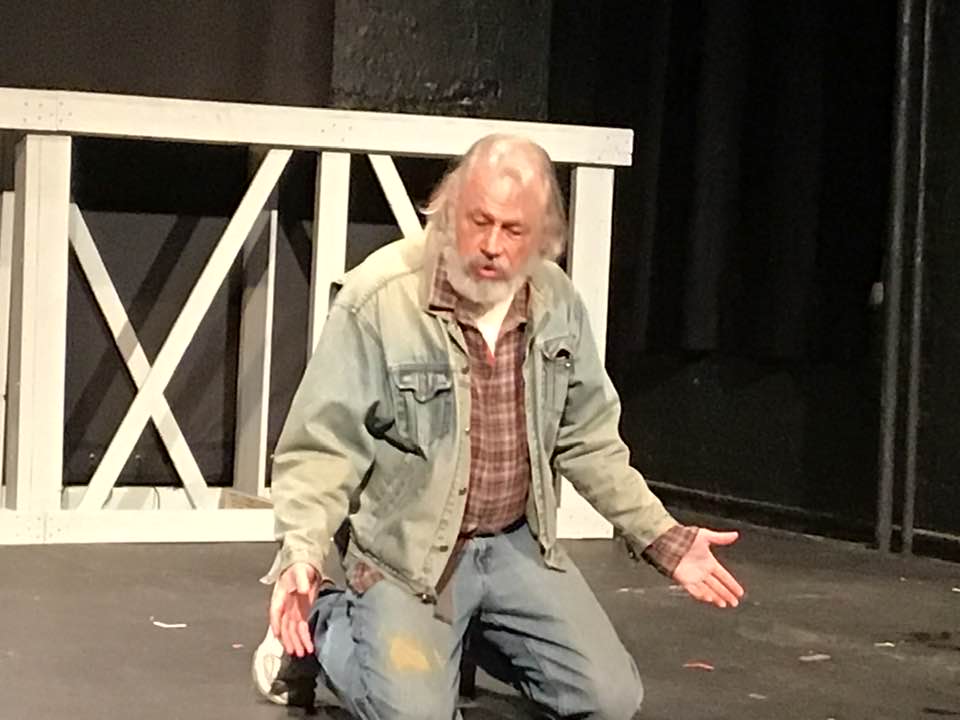
And speaking of the ATA, “I plan to continue acting, directing, designing sets, sound & lights, and playing music,” said Ken Coughlin a repertory member of Laurie Rae Waugh and technical director of the landmark American Theater of Actors, but, I hear a “but” … “BUT I’m most afraid of the affect this will have on others. I have already lost several friends, with the unfortunate expectation of losing others. I also know some who will not recover financially. In addition, I’m afraid of the affect this will have on the children, how their family units will be affected, and how this interruption will change their education.” Ken is hopeful thanks to open hearts around him but cynical due to closed minds, “While I see some evidence of good will and charity during this crisis, which I sincerely hope will continue, I see little evidence of a closing of the Left – Right political divide.”
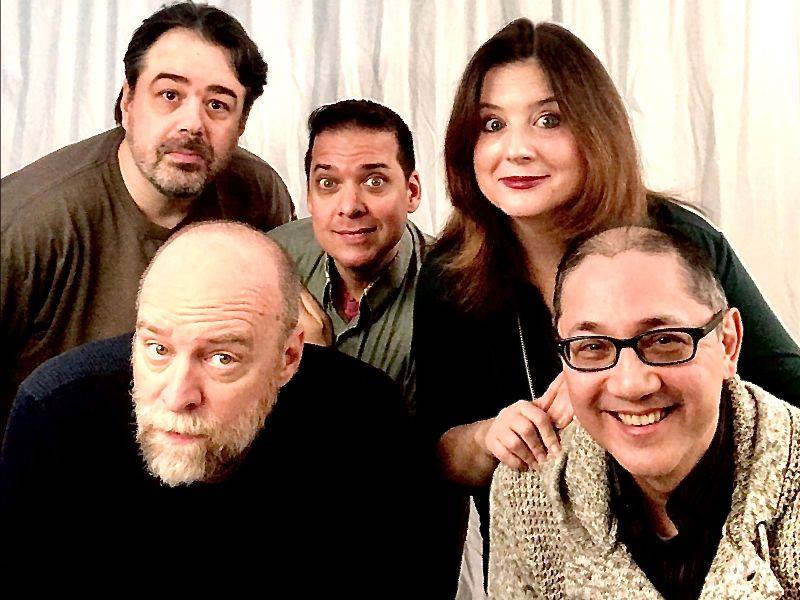
Nannette (second from the right, just above husband and fellow improv’r, Robert Baumgardner) with her IRTE-TEAM
For nearly a decade, the Improvisational Repertory Theatre Ensemble has led the charge bringing quality entertainment to audiences hungry for imaginative and unique products. Combining theatrical structure with improvisational skilling has made them a household name, but now, Nannette Deasy, the artistic director is in a quandary – how do you lead a charge when you are sheltering in place?
“We have a very supportive community that really came through during our recent fundraiser,” Nannette said enthusiastically, “Because of their support, we hope to pick back up again when we’re given the all clear and resume the season in September or October or ?” She fears what Robert feared and, in a way, even Granville expressed the same concern, although this counters Laurie’s bright(er) hopes.
“I’m afraid that a lot of the smaller indie theatre companies may not be able to afford to produce at the level they were used to and that the ones who do manage to weather the storm, may not find available spaces. Affordable theater rentals and entertainment venues in NYC were at risk before the current crisis. Many more will probably disappear in the year to come. I’m also afraid that many of our artists may no longer be able to afford living and creating in New York.”
Remember the guy who called me from his parents’ home?
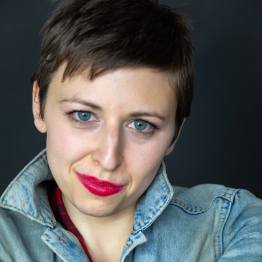
Ashley Adelman of Infinite Variety Productions allowed inspiration to take her over instead of depression. And speaking of the depression … “there was a great article I read that mentioned the Federal Theatre Project. I started a thesis about them. After the Great Depression this was funded by the WPA. It led to so many great pieces of art. And even though the government eventually shut it down, it pushed the limits and gave artists money that was needed. And is how we ended up with regional theatre.”
It also was the unofficial birth place of off and off-off Broadway thanks to “the Cradle will Rock.”
“The arts will be needed when this is over. And like the Federal Theatre – it should be ‘free, adult and uncensored” she said with great enthusiasm.
Known for her immersive works, Ashley is looking below for her next event,
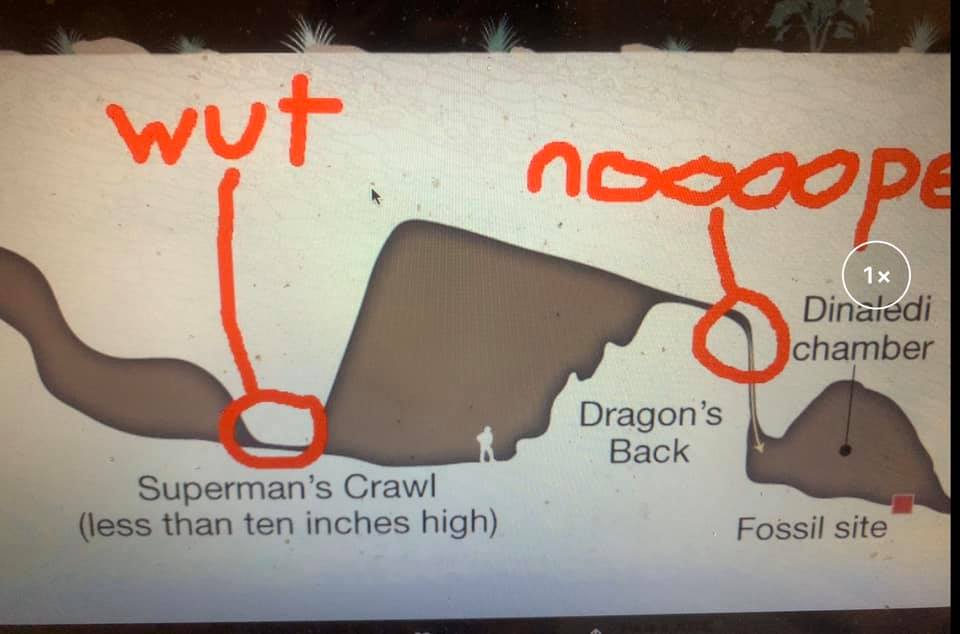
“I am interviewing the underground astronauts. I have two interviews and will be working on my third. This was to be a documentary immersive piece, but I am now rethinking. I still want to do documentary immersive theatre. However, the immersive part will have to be rethought. The type of theatre I was looking to took away the 4th wall from actor and artist and since it was based on actual events and people – it placed people nowadays in that time period and given circumstances. History could come out of a book. An audience member could walk in person’s shoes and have a better understanding of someone else from another time, place or circumstance.
 The last show IVP did before Covid- 19 was an immersive documentary piece based on the expose Nellie Bly wrote. Audience members got to see what it was like to be called “insane” when you were simply, different, acts out against the establishment or without family and resources. It led to further conversations of how this relates to institutions nowadays, journalism in the present and other conversations of how things have or have not changed since Nellie’s time. It was inspiring. Then the world changed. I am not sure how to proceed as I still want people to feel for each other, to understand each other. To take the hand of a patient from the late 1800s and be able to ask them questions. But how? And will we be able to bring theatre back to a place of a small black box there? To intimate settings? I do not know.”
“I do want to help the theatre community. That I know,” she said, “What we are seeing with Covid is how important the arts are during these hard times. Not just to divert our attention to happier times or even to absorb oneself in a great piece of art but to make sure artists are treated with the respect they deserve. When this is over, and artists are able to convene again – we should not go back to fighting for theatre space. We should be helping each other to convert any space into an environment for art. To work on petitions that treat artists as workers and not unpaid interns. But as I sit on my computer and type this up, I am unsure of how to do that. Until the world opens again, I can only talk to other artists and see how I can help from behind a screen.”
Seems Ashley, like Nannette is ready to lead the charge – once she can simply move!
Like Ken, Ashley looks at the future with hope but a bit of fear, “…once we are allowed to be out in the world again we won’t come together in taking steps forward but instead let competition or fear pave the way.”
An indie resurgence? An artistic evacuation from NYC? More plays, less spaces, more money to pay but less money to give?
Lots of articles, lots of opinions and only one things is for sure …
We know nothing for sure.
See you on the other side.
School’s Out
Faculty Portrait by Sean David DeMers
Reviewed by Robert Viagas
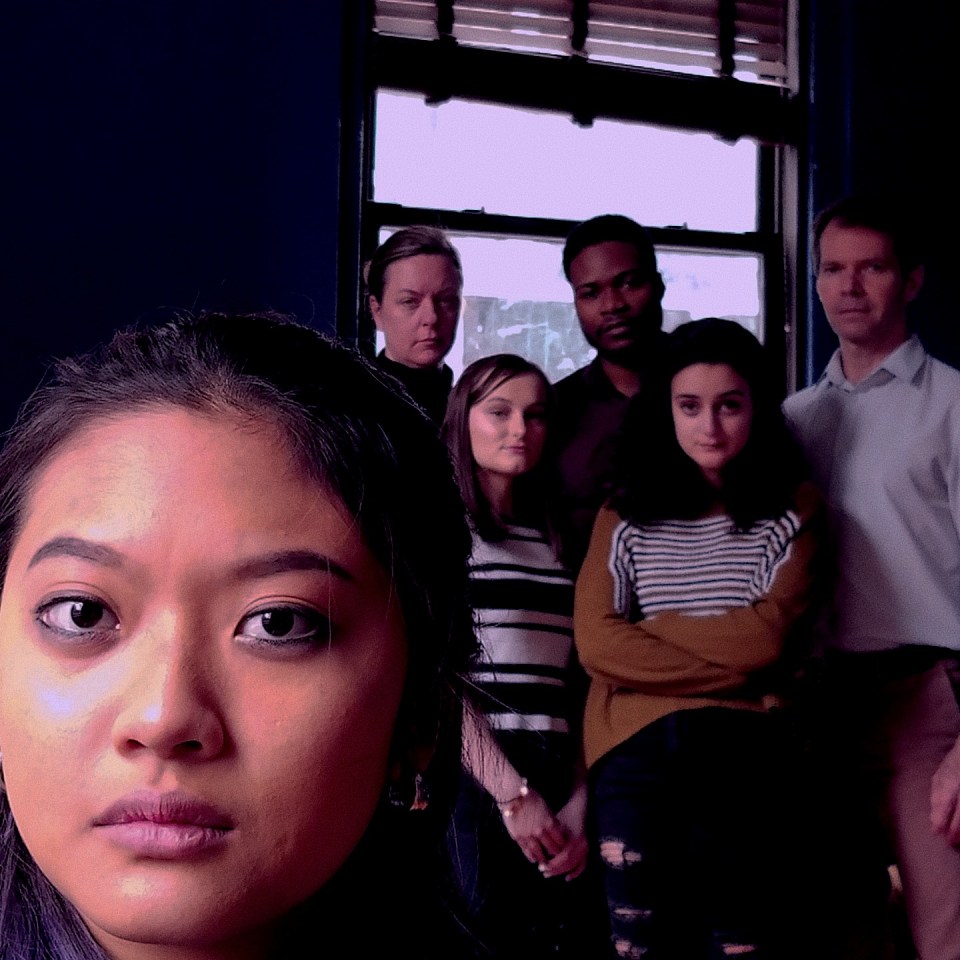
In light of the coronavirus epidemic that has erupted into everyone’s day-to-day, it shouldn’t be forgotten that mass shootings, especially at schools, have presented a different kind of horrifying epidemic disrupting American life for years now. Sean David DeMers’ new drama Faculty Portraittries to show the effect of just such a shooting calamity has on the lives of a small group of friends and teachers at a small high school.
The play focuses on three relationships: a lesbian teen couple (Phoebe Holden and Jessic Nesi), an interracial couple (Shammah “Speed” Waller and Molly Schenkenberger), and two married teachers (Russ Cusick, whose wife is one of the shooting victims, referred to but never seen).
Also not seen is the shooter himself, though he is constantly referred to as a troubled young man who has invited one of the lesbian girls to accompany him to the prom, but is refused. Is this what triggers the shooter? Possibly. Probably. But DeMers seems less interested in the whys of his story as he is in how the whole experience rocks the worlds of his characters.
The story jumps backward and forward in time, showing the days and even the moments leading up to the shooting, and then chronicling the aftermath as it affects the rest of their days. This fragmented, scrambled, introspective approach proves mildly interesting rather than dramatically compelling. Scenes with Julie Thaxter-Gourlay as a traumatized custodian who witnesses the shooting don’t add as much as they should. It’s left to Holden, as the other victim, and Nesi as her thoughtful and emotional girlfriend, to carry the dramatic weight of the story. They are well up to the challenge, but without understanding something of the crazed passion that drives the killer who disrupts their universe, Faculty Portrait is left with a black hole at its center.
Directed by Ariel Francoeur and produced by Prime Number Productions as part of the 3B Development series, Faculty Portrait, played a limited run Off-Off-Broadway originally scheduled through March 21 at the IRT Theatre in Manhattan.

Jay Michaels speaks with Bree O’Connor on PLAYFUL SUBSTANCE
Playful Substance celebrates lots of anniversaries.
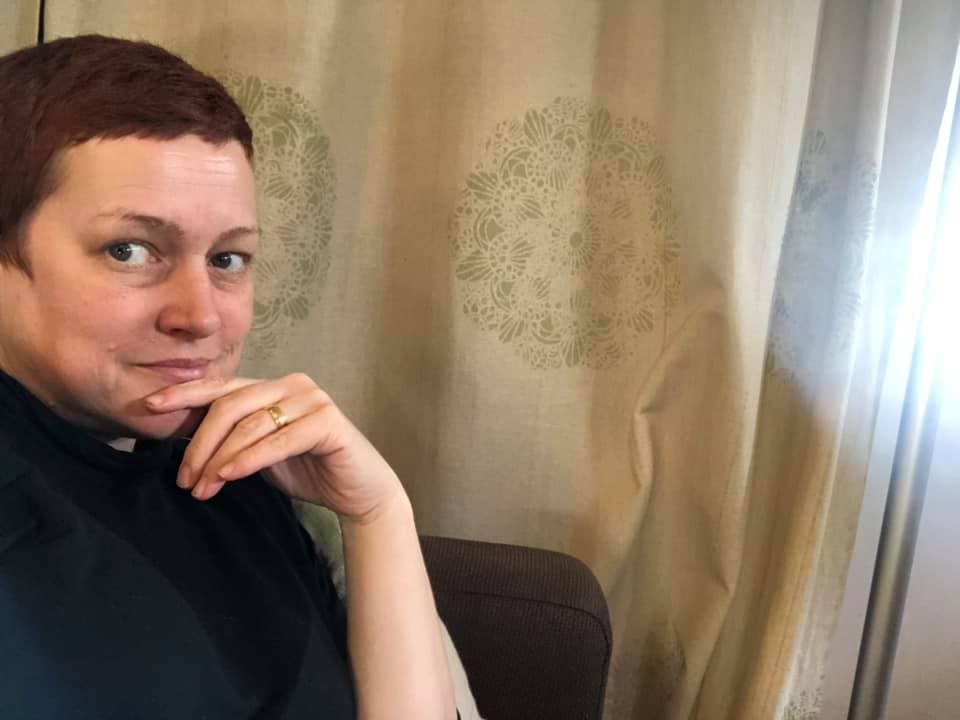 Let’s start with a 13th anniversary as it essentially began when Minneapolis comedian, Joseph Scrimshaw, needed a producing organization for his choose-your-own-adventure style play, “Adventures in Mating.” Bree O’Connor and Ben Perry formed the company to produce the show – which ended up running nearly a year!
Not to shabby.
Then there’s a fourth anniversary, when Grant Harris, a sweet and shockingly twisted playwright grabbed Ms. O’Connor to direct his new play, “Frank,” a teenage re-imagining of the Frankenstein mythology. Playful Substance re-emerged as a producing entity for that show in October of 2016 and then again for Ms. O’Connor’s own original one act, “SAHM’s Club,” a farce about the stressors of being a Mom in Park Slope (somewhat autobiographical as Ms. O’Connor is now the proud mother of three) that debuted at 2017 Frigid Festival, directed by Jill DeArmon and won the Staff Favorite Award that year.
“People started sending me their scripts for feedback and I started meeting with people regularly to consult on practical narrative matters as well as share my knowledge of low-budget producing,” says Ms. O’Connor on how she got here. “By the summer of 2017 I was having so many meetings that it occurred to me that Playful Substance could benefit from cultivating writers and new works and that my own artistry would grow by having to work those muscles on the regular. With the support of Frigid NYC and Erez Ziv, we were able to find a home for weekly meetings and things started to take off.”
In the fall of 2017 The PC Writers’ Group first met consisting of O’Connor, Raphael Perahia, Astrid Cook, Lauren Lindsey White and Foster Stevenson. “You could not find a group of writers with more varied styles or interests,” she said exuberantly.
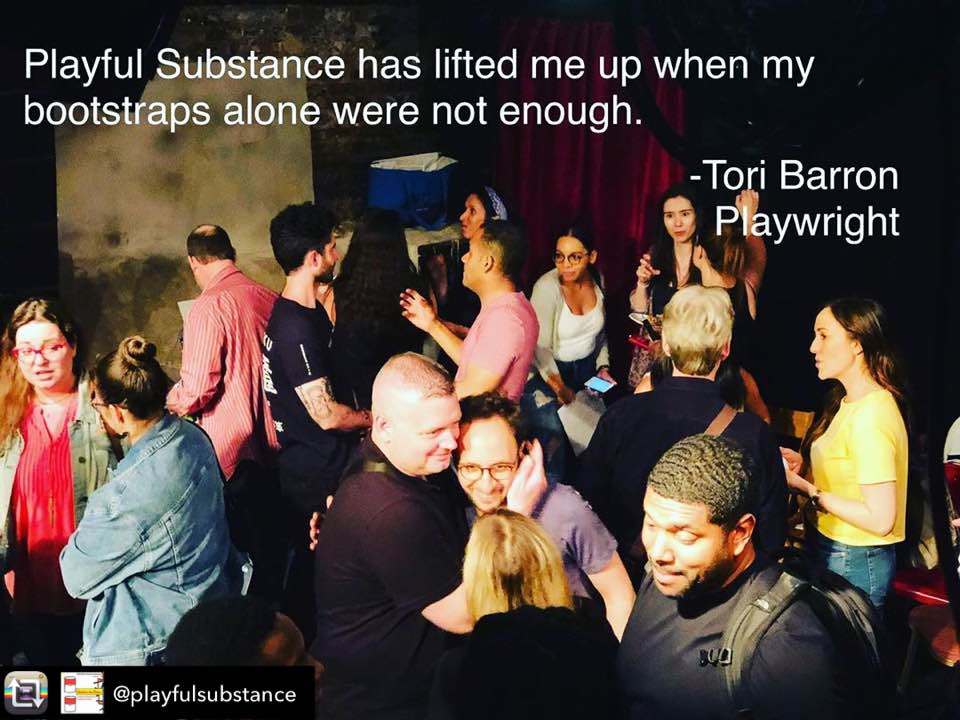
So, the formation of their now-celebrated Writers Group makes their third anniversary. Ironically a three-year anniversary.
“As scripts grew and changed, the needs of the writers changed. It is at this point when we started to bring in actors and organized private readings,” noting the momentous moment when the group became an incubator of produceable works.
In early 2018, with two groups creating works, an annual works-in-progress reading party called Pithy Party was formed. (Yup, in their second year so…) Pithy is now an annual June event – a free event featuring 10-minute pieces from things our writers are working on; “a piano recital for writers” says O’Connor whimsically.
The event now includes industry, colleagues, and even schwag! “Our first year everyone got a vial of slime – y’know …a “playful substance.”
So when it all began, Bree O’Connor was an artist retained to shepherd a colleague’s play to NYC. Now, she juggles three kids and a company with an immense reputation.
PC has championed new works and autonomy for its storytellers. Notably, they created an immersive project to benefit Lifeway Network, a local organization that provides educational outreach and transitional housing for survivors of human trafficking. This project, Still We Grow, involved six writers, one director, over a dozen actors and [no kidding] over a thousand feet of twine, a dozen hand-painted panels and 400 yards of fabric to create a one of a kind, guided experience through several interwoven stories of human trafficking. The largest number was what was raised. Nearly $2000 for Lifeway Network and unlimited knowledge to the audience about the heinous coercive tactics used by traffickers and exposed the systemic problems that contribute to the exploitation of human beings.
What’s left … our yeah … Last summer they produced their first festival.
July, 2019 brought three solo shows written by women including Mama’s 19 by Javana F. Mundy, You Hold a Pole Every Day by Laura Sisskin Fernández and I Hope You Have Fun at My Mom’s Death by Bree O’Connor. You Hold a Pole Every Day earned Laura Sisskin Fernández a Best Performer in a Solo Show nomination at last year’s NY Innovative Theater Awards and a new production of You Hold a Pole Every Day will be going to the DC Fringe this summer!
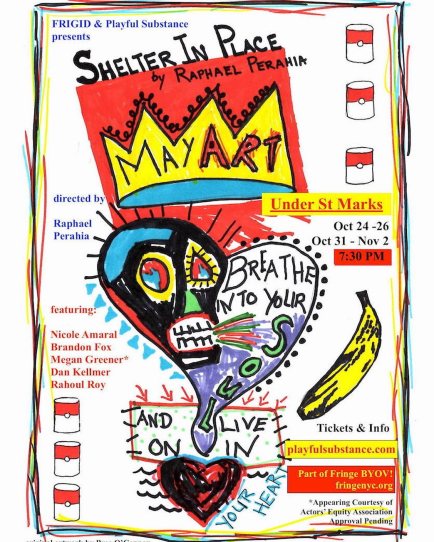 The best of companies easily become a springboard for their members. Raphael Perahia has two productions under his belt: Merchants – a one-act – and a full-length (making his directorial debut as well), “Shelter In Place.” This play won great praise in the press and is one of the Notable productions in Jan Ewing’s Book series EWING REVIEWING. Raphael is finishing a new play about a WWII Spanish spy and his marital issues (based on a shockingly true story) and getting ready to start on his next idea.
Their next opus, “Tell Me” by Lauren Lindsey White, is a project that was originally a solo show when it came to the group in 2017. “Lauren had a vision for expanding the play and used our group meetings to rework the narrative to fit into a new concept that walks the viewer through the aspects of trauma recovery that we rarely discuss in public,” O’Connor elaborated. As Elle deals with the aftermath of a traumatic event, she begins to question everything about her life that has led to this moment. Past, present and future worlds collide, in this experimental memory play that explores identity, beauty and loss. This deeply moving piece premieres on March 19 at Access gallery, downtown. Tickets available at https://www.artful.ly/store/events/19980

Season three – already in the works – has a memoir-style play, Under the Bridge by Jackie Reason, about a young Afro-Caribbean girl adjusting to life in an affluent, White section of the Bronx during the 1970’s when the rest of the borough was literally on fire.
Me, personally, I look forward to this play. I lived in the burning Bronx in the 70s – just outside that affluent section.
Tori Barron brings us a unique, episodic-style narrative about the journey of a Transwoman living in Hawaii in Passing and Failing in Paradise.
Wistfully, O’Connor concluded our chat with “It is only a matter of time when we will be ready to announce that another play is ready for production. Some will stay with Playful Substance. Some will go to other companies. Some Writers will want to self- produce. And still others will set pieces aside and start new ones, or get distracted by other opportunities, and maybe they will get back to it and maybe they won’t. Hopefully, we can keep going and keep providing support for artists’ development. I am proud of the home we are building for artists. Everyone gets out what they put in and those that put in the work, they tend to stick around. I think that says a lot more about them than it does about anything I’ve done. The one thing that DOES make me feel good, though, is when a person comes into the group identifying as an actor or a director or just a person who likes stories but definitely NOT a writer, finally gets convinced that they ARE a writer, that they CAN write… that is enormously satisfying to me. When people immerse themselves in the work and they start to listen to others’ work and ultimately their OWN work as an artist of competence and value… yeah. THAT is satisfying to me. I hope I get to do this for a long, long time.”
Ms. O’Connor oozes love and respect for her artists and seems genuinely thrilled at everything that happens – whatever the time or the costs. Maybe that ooze of love is the real playful substance.
More to come.
More anniversaries.

Sean DeMers, Ariel Francoeur & FACULTY PORTRAIT: After the shooting stops
- Compiled and edited by Natasha Dawsen
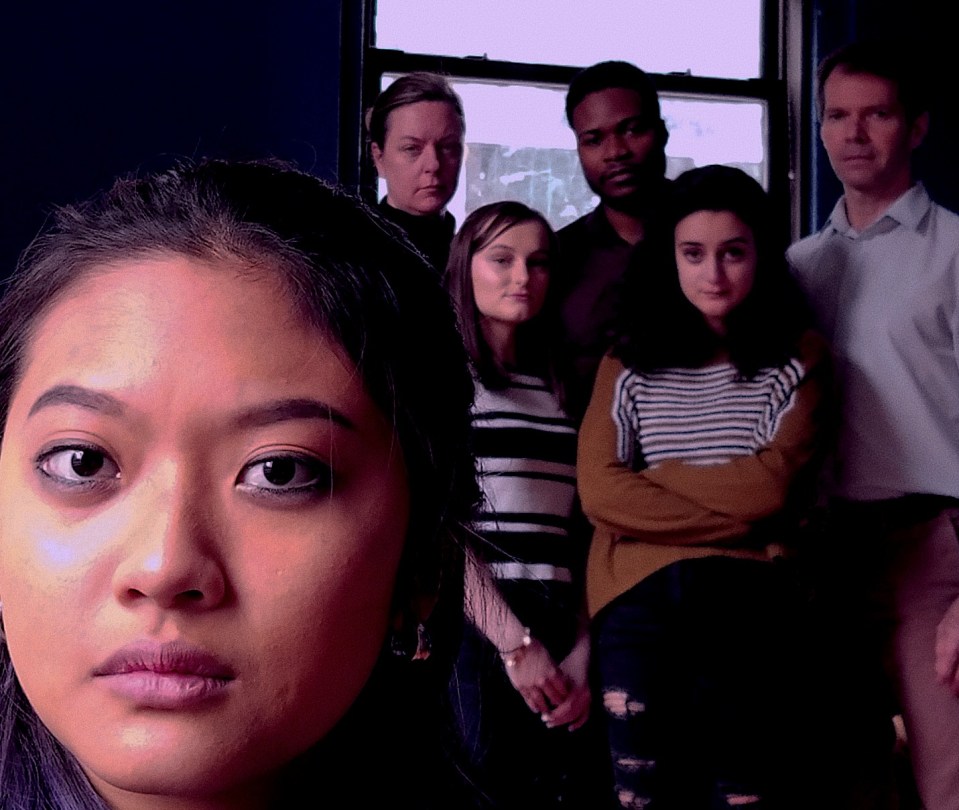
the cast of FACULTY PORTRAIT
“Faculty Portrait is mostly about strength – strength in the face of disaster, strength to be optimistic after a tragedy – and it’s this strength we can all tap into, but it’s hard to talk about the why’s and how’s which is why I wanted the discussion. The story of the play follows a group of students, a teacher, and a custodian before and after a school shooting,” remarked Sean DeMers about his play, FACULTY PORTRAIT, opening this week at IRT Theatre. Ariel Francoeur, the production’s director, says it’s a story that must be told. She quoted “Dr. Joe Dispenza, as saying “…stories serve a great purpose: to reinforce information in a practical manner. Hearing about someone else’s experience makes it more real for us,” shr them elaborated. “It’s one thing to read or watch the news, but to see a real issue unfold in the life of a character in whom we’ve become invested – this drives the real issue home. Theater, documentary, film, and television have the power to grab our attention through our hearts.”
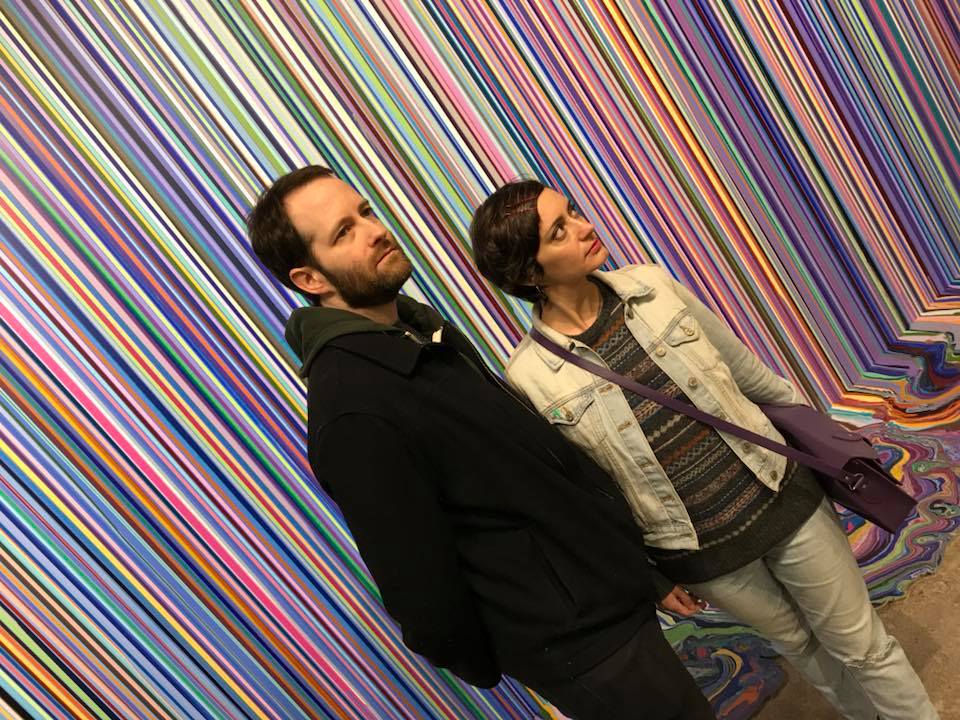
DeMers and Francoeur
While Sean has never had a family member involved in such a tragedy, he does note that the shadows of such a tragedy are very long and “there but for the grace” as he mentions his own daughter. “I taught in a building where there had been a shooting and I thought quite a lot about how to exit the classroom–which was actually a large lecture hall–and how vulnerable we all are when we don’t expect the unexpected. When I was writing the play, my daughter was in high school and as more shootings were reported the reality set in that I could absolutely receive a phone call someday.”
His play is not about the gunman but about the “absolutely selfless courage it takes to stay and try to rebuild a community after a devastating tragedy.”
This prompted Ariel to elaborate on the surreal accessibility of inappropriate firearms. “First, we need more regulation of firearms because currently access to high powered weapons is a complete joke–making the ‘well-regulated’ part of the Constitutional Amendment stick would be a start. We also need to help people. People are desperate for help and attention. We have the means to take care of everyone so why can’t we do it?”
Her passion was infectious as heads nodded and there was visible electricity in the air.
Focusing on the production-at-hand, Ariel further spoke about what was needed to bring this to reality: “A show containing this subject matter requires more mindfulness at all levels of production. In rehearsal it’s important to create a secure space, take the time to explore the subject matter and not rush through it, and allow for some levity and positivity when wrapping up the intense scenes. It’s also important to have an intent for the show – a specific message the audience is leaving with. In this case, we want to show that violence leaves ripple effects of trauma that are too numerous to be measured, but most importantly, recovery can happen by reaching out a hand for help, or to help, another person.”
 Again, the connecting energy was very strong. Jessica Nesi, a member of the company, a prominent film actress, she was thrilled to return to live theatre with such a piece. She complimented Sean’s writing by mentioning that what her character (Amy) says things that she would find herself saying in reality. She too feels the burden of playing such a role. “Whenever dealing with heavy content, especially when it is a prevalent issue in society, there is a bit of trepidation. The last thing any actor wants to do is undermine someone’s experiences by making light of incomprehensibly tragic events. However, this play refuses to fall into any of the tropes you might expect from exploring this type of content. Instead, it focuses on the lesser discussed parts of gun violence, which are so important. The audience gets to see what it’s like for the people who survived, but are forever changed, and are actively working each day to keep surviving-while never forgetting the people who were robbed of their lives. I think everyone in America has been impacted by gun violence, to some degree. Many of us, thankfully, don’t know what it feels like to be directly affected, but it seems now like it is no longer if, but when. And frankly, that needs to change.”
 Russ Cusick, a working actor, found this play deeply moving – as he has three children. “From the first time I read this script, I wanted passionately to do this role. The writing is deeply rich and honest. So, in FACULTY PORTRAIT, my creative process is in Sean DeMer’s text. If I remain true to the text and lift it honestly, I think I will do the script justice and deliver the words as intended. Ariel, the director, is an Actors’ director, so her guidance makes sense to me, and the whole process is very organic. I have a lot in common with Mr. Y, so his truth is easy for me to touch. I too have survived tragedy, been deeply in love, and felt the responsibility of loss. It is a gift to make the journey of this character in this play,” he then contunied. “I feel the responsibility to be honest on a basic human level, and to not sensationalize the subject of the shooting. The horrific event speaks for itself, so I can trust that. Also, I feel responsible to listen during the show, to the text, and to be a humble “everyman” in my responses.”
Just as this play explores the aftermath, what, I asked, do these two actors hope the aftermath of the show will bring. Jessica chimed first with “I am hopeful that they [the audience] will take part in the lighter, more joyful moments as well. So much of this is expressed through the lens of children, and it highlights the unique bond these kids and teachers have, having lived through an event no one should ever have to experience. Overall, I hope the audience is able to tap into the strength and sense of community that is woven throughout the entirety of this play. If we can get people thinking about this major issue in a way they haven’t before, even if it is just for the 90 minutes we share with them, I think we will have done our jobs” she said with a deep smile. Russ cited his character as what should happen after the the curtain falls. “Mr. Y says, “It’s okay to feel bad. We all feel bad.” When he says this, it is not self-indulgent or self-pitying, it is reassuring and comforting. I hope audiences walk away with a sense that the only way through pain is through it. 9/11, school shootings, catastrophic weather, the death of a loved one, the violent attack of a loved one… one day at a time, we get through them, and hopefully are of service to one another in the process.”
“I worked for a philanthropy for over a decade and one of things I would write often about the work was that we need to stop thinking everything is far away,” replied Jay Michaels after the interview. “Just because there is a tragedy in another country or even state, that is don’t affect us. That is simply not true. We are all connected and when one of us falls, we all fall. Looking through a brighter lens, when one of rises we all rise. Maybe sitting in the theater and seeing this play will connect the audience to the actors, to each other to the subject and eventually to a solution,” he concluded as we left.
Can’t do it if you ain’t there.
Prime Number Productions – as part of the 3B Development series at IRT Theatre presents a powerful new play by Sean David DeMers about a school shooting. Faculty Portrait; running March 6 – 23, 2020.
A year after a school shooting claimed the life of his wife, Mr. Y finds himself teaching in the same classroom where the tragedy occurred. As he is interviewed for the school yearbook, Mr. Y and his students revisit the memories of life before and after the shooting. Faculty Portrait examines the strength it takes to face tragedy and pick up the pieces for the good of the community.
“While being emotionally moved by the gun violence and tragedies occurring at an alarming rate, I became fascinated by those people who stay in a community and take a stand against fear,” says the emerging playwright. “With Faculty Portrait, I wanted to create a story that talked more about that strength as opposed to sensationalizing violence or anyone’s specific experience.”
This production is directed by Ariel Francoeur and features a cast that includes Phoebe Holden, Julie Thaxter-Gourlay, Russ Cusick, Shammah Speed Waller, Molly Schenkenberger, and Jessica Nesi.
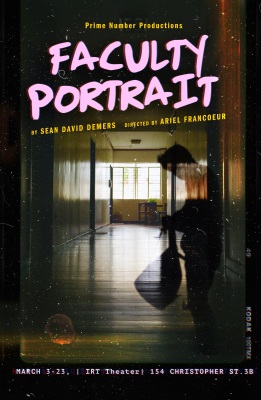
At IRT theatre, 154 Christopher Street; NYC #3B (third floor). Tickets $15 SHOWTIMES:
Opening March 6th, 730pm with a run that includes: 3/7 – 730pm, 3/8 – 3pm, 3/11 – 730pm, 3/12 – 730pm, 3/13 – 730pm, 3/14 – 730pm, 3/15 – 3pm, 3/18 – 730pm, 3/19 – 730pm, 3/20 – 730pm, 3/21 – 3pm , 3/21 – 730pm, 3/22 – 3pm
Tickets: www.brownpapertickets.com/event/4518376
High Quality
The Journey
A Review by Jen Bush
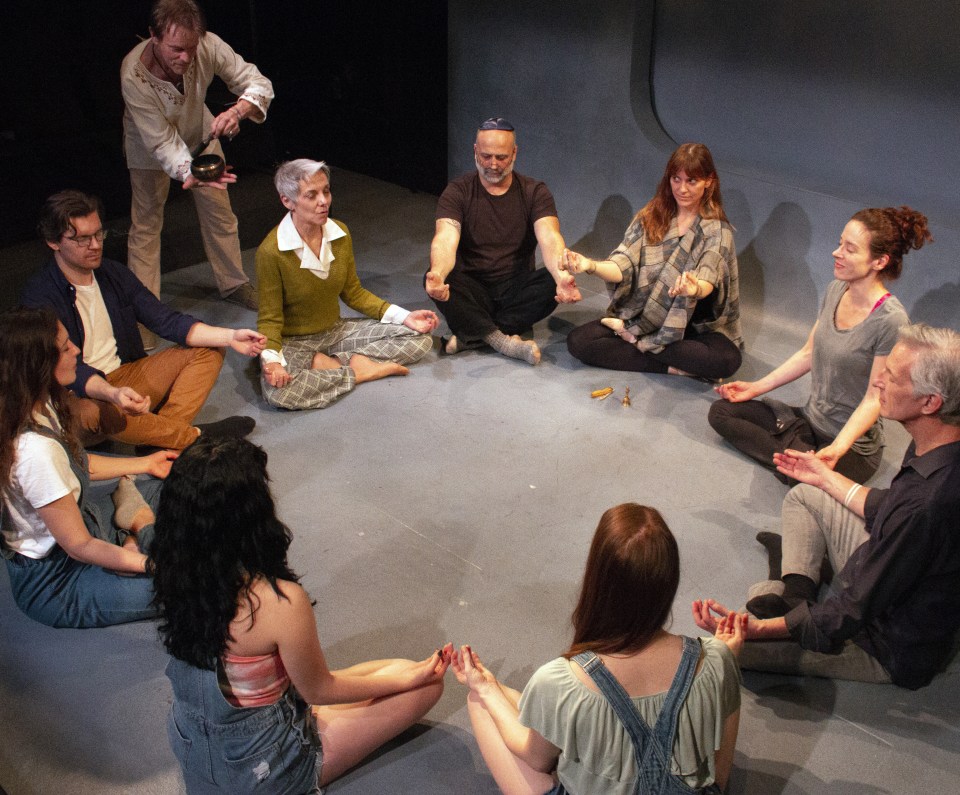
When I read the description of The Journey, I was both intrigued and skeptical. According to the description, this show was going to include a family who likes taking drugs together, a pet psychologist, a budding pop singer, a rookie cop with a blushing problem, a retired Elvis impersonator/mafia money runner and a dog named Tom Petty possessed by the ghost of Tom Petty. That’s quite a packed agenda. This had high potential for eye rolling corniness, especially when you put a human in a dog costume. I must say, I was pleasantly surprised and really enjoyed it. The cast was a mix of actors who were early on in their careers and seasoned actors with some impressive stage, screen and television credits. They took great care to convey the Joshua Crone’s well-crafted material with respect and an ideal balance of emotions to ensure a quality production.
Nick and Luna, a young couple in love, desire to be married. Nick is well liked by Luna’s family but in order to secure the patriarch’s blessing, Nick must go on a “journey”. There is no need to pack socks and sundries for this journey. This is a drug trip. Set in psychedelic California, this family bonds by taking a drug called ayahuasca in the form of heart shaped chocolate. They refer to it as medicine and it’s doled out by the family shaman/therapist and her partner. Clearly the “Say no to Drugs” campaign didn’t impact them. Nick is squeaky clean and has not dabbled in drugs hence his hesitation to obtain the blessing. Obviously, a lot of hilarity ensues but this show is not without some side plots and heftier themes such as jealousy and insecurity.
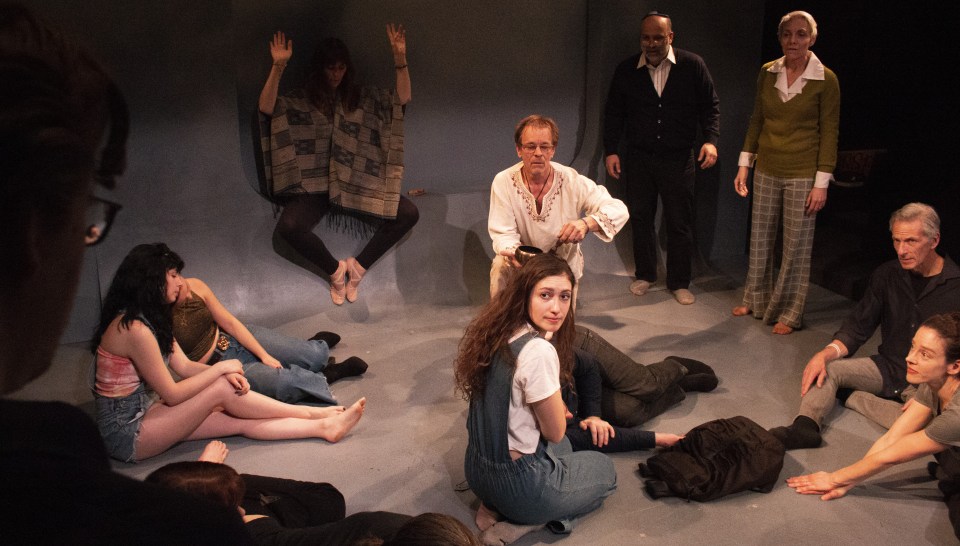 The set was black box with a few props and some special effects. A proper set was not necessary for this sturdy play. Clever lighting effects with some bubbles thrown in did a good job of including the audience in the drug trip. There was some audience interaction in the form of hugs and Tom Petty, the dog, very much acting like a dog eliciting scratches behind the ears and head pats. All audience members were invited to have a heart shaped goody. I’m sure it was just chocolate…I think.
The cast was iron clad and all well suited to their craft and their roles. Kelsey Susino and Jordan Theodore charmingly play the happy couple. Jeffrey Grover and Stephanie Roseman did a fantastic job played the hip loving yet conflicted mom and dad, Mr. and Mrs. Liebman. Katie Housely and Sami Petrucci were delightful as Luna’s sisters with boyfriend troubles. Their chemistry was wonderful. Tim Palmer had a short but funny and memorable role as Officer Anderson. Annabelle Fox was awesome as Zuzu, one hot mess of a rising pop star. Jessica Van Niel was outstanding as Shanti Marsh, the family Shaman. She played the role with conviction and was totally believable. Equally outstanding was Leif Riddell who played Brad Marsh, Shanti’s husband and co-guru. His experience in the industry was evident. There was a sort of intensity to his performance that commanded attention. Ben Jaeger-Thomas was great as Burt Becker, the flirtatious dog trainer. His facial expressions were priceless. Desiree Baxter and Marco Greco as the grandparents making a surprise visit to the family to celebrate the Jewish sabbath, absolutely stole the show. They just ran amok with the funny material that they were given. At last we get to Tom Petty, both the name of the dog and the ghost played flawlessly by Thoeger Hansen. This character was actually the least conflicted and was the voice of reason in the show. Among the other human characters, he played a sweet friendly dog. In the absence of humans, he had some substantial monologues weaving the material together. Thoeger Hansen did a wonderful job of drawing the audience into this likeable character.
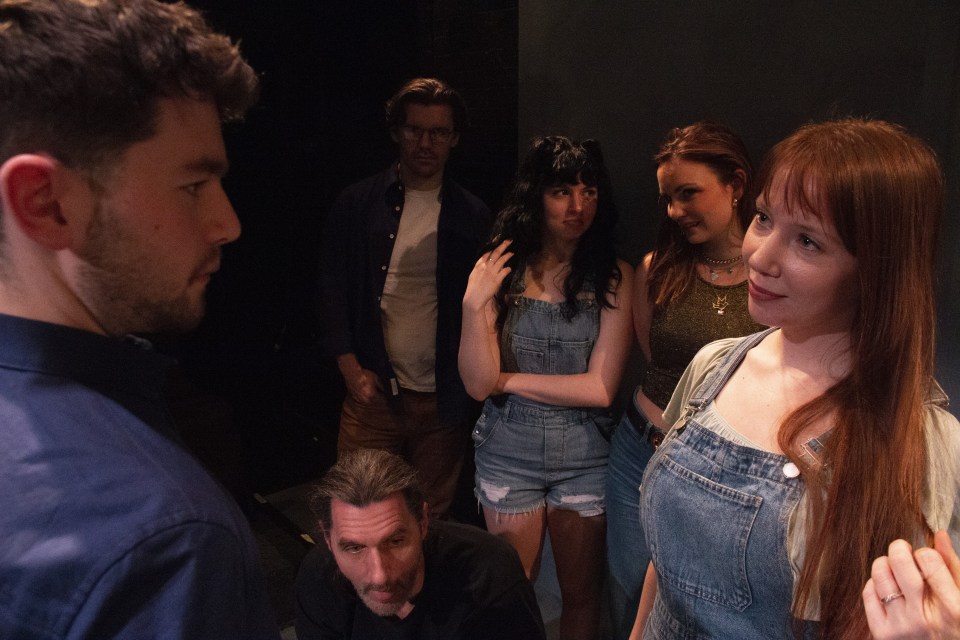 Despite the seemingly cluttered plot, the show flowed very well. It was a very sweet ending, especially if you are a Tom Petty Fan. It was ambitious material that was done right and done well. It’s worth the journey to Manhattan to see this show.
The PaperKids answer: What is this thing called LOVE.
A conclave of talented energetic artists has burst on the scene. They suffer from one defect … they are genuinely humble!
In it for the joy of sharing their art with others, the PaperKids Theatre Company announces their take on love, thanks to playwright John Cariani. LOVE/SICK takes the sonnet out of romance and allows us to see what it really means to love and be loved.
Love/Sick sounds like a Netflix series – and that’s a good thing. It’s nine short plays in one ranging from love-at-first-sight to long-time marriage. “The audience watches as couples in realistic situations are disrupted by absurdist impulses, acts of confession, and devilish desires. Rife with insecurity, notions of what “should be,” misunderstandings, and more. Basically, LOVE/SICK explores the rise and fall … and rise again… of love,” says Tory Delahunt, a member of PaperKids Theater.
Leaving it all up to the talents of the talented casts, the minimalist production features¨
“Obsessive Impulsive” featuring Jeff Brackett & Tory Delahunt;
“The Singing Telegram” featuring Kristi Donna Ng & Sudheer Gaddam;
“Uh-Oh” featuring Lucia Bellini & Jeremy Rafal;
and “What?!” featuring Shawn Zylberberg & Joseph Segot
All directed by Carlos Moreno Henninger.
“Lunch and Dinner” featuring Sudheer Gaddam & Tory Delahunt;
“Forgot” featuring Jaimie Wallace & Shawn Zylberberg;
and “Where Was I?” featuring Leah Serinksy & Kristi Donna Ng,
All in the able hands of Eric Holgerson as director.
Ruben Vellekoop will handle directing duties for “Destiny” featuring Lucia Bellini & Joseph Segot and “The Answer” featuring Jaimie Wallace and Jeff Brackett.
Love/Sick, a 90-minute production, will be at the Hudson Gild Theatre, 441 W 26th St, New York City, with performances on February 24 @ 9pm; February 26 @ 9pm; and February 29 @ 6:45pm
Tickets at: https://www.paperkidstheatre.com/love-sick
Ai chatted with the directors about their vision and that of love.
 “Thinking of myself as an artist isn’t something I’m all that familiar with- mostly the art I create feels like a sort of inevitable overflow of an interest I have in some story or concept rather than a formal and cohesive artistic statement- but in as far as I AM an artist, I’m interested in shamelessness,” says Carlos Moreno Henninger, citing that humility that I mentioned that ruins throughout the company. “In both art and life, I love it when the veneer of public image gives way to people’s real, raw, ugly, embarrassing insides. The movies you’d never admit you watch when you’re alone, the childhood embarrassments that keep you up at night, the resentment building between you and your lovely roommate, the saccharine Instagram quote that secretly moved you to tears- when these things force their way to the surface, that’s when I get interested. When people are shamelessly themselves, almost anything is art.”
The collaborative nature of PaperKids also came through in his interview.
“Speaking of trusting actors, Lu Bellini and Jeff Bracket brought me to these plays! We had a large group of theatre friends that all wanted to be working, and at our first meeting, these guys brought Love/Sick forward for its huge potential cast of characters. That was enough to consider it, and then the play spoke for itself. It’s lonely without being bitter in a way that I think our generation is pretty familiar with; it’s funny and sweet but also deeply weird in a way that speaks to being young-but-not-that-young in our current moment.”

Eric Holgerson chimed in similarly. “I am a collaborator first. I believe that everyone has an artistic voice that should be heard. My job as the director is to have a structural vision that can be pushed, pulled and stretched in order to fit the unique talent of the writer as well as the artists that will perform the piece. I need to lead us to the goal of telling the story in a realistic way that will touch our audience.” He elaborated, mentioning his own style of directing, “I love what improvisation and listening can bring. I’m influenced by everything that I have ever studied as both an actor and director. Sanford Meisner Technique as well as Seth Barrish strategies for actors have very much influenced my approach to the work. I also like Scene Study and Improvisation work in order to help the actors get comfortable with each other as well as the piece. What drew me to this project was two things. One was the idea of being able to show the different stages of relationship, with the key being how we communicate (or don’t) within those relationships. Second was to opportunity to work with this pool of talented artists. This group of directors and actors are some of the most talented that I have worked with to date.”

Ruben Vellekoop jumped into the conversation – again in the collaborative sense but also something else that this company has a lot of: “As an artist, I aim to celebrate the ugliness of truth by beautifying it on stage. Honesty can be ugly – from the rolls my mirror shows to crying alone in the living room. My thinking is that I’m not the only one who has those moments and if I – as a director, choreographer, or designer – can portray those as beautifully as possible, my audience will go along with me. I hope that audiences will connect in those ugly moments because what we internally judge as ugly (see aforementioned rolls and cries), others can experience as beautiful.”
When asked why these plays, he reiterated “The chance to celebrate ugly love and to collaborate with friends and colleagues.”
These directors aren’t just that – they are also poets. I found this ironic. Doing a show that shines realism on love is being heled by those whose words show the abundance of love in their hearts! One has to imagine that this production will be like Shakespeare’s Sonnet 130.
No, I won’t tell you why … treat yourself on Valentine’s Day and read it.
https://www.poetryfoundation.org/poems/45108/sonnet-130-my-mistress-eyes-are-nothing-like-the-sun
These guys are keeping it real and warming our hearts.
That’s rare.
Happy Valentine’s Day

Robert Viagas in Blackwell Asylum
Nellie and the Women of Blackwell
By Ashley Adelman
Reviewed by Robert Viagas
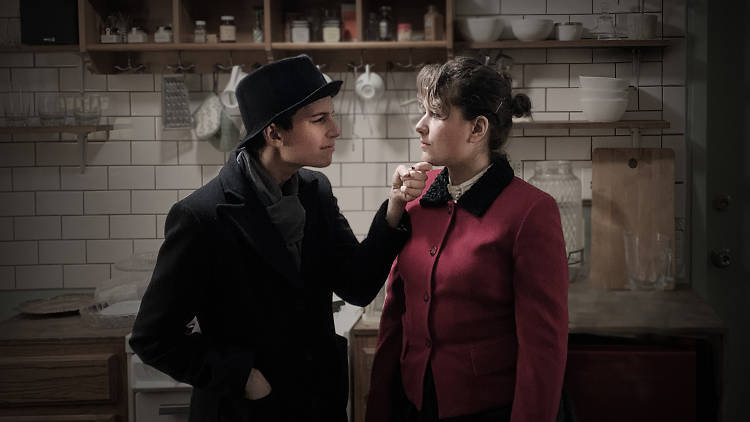
In 1887, an investigative reporter named Nellie Bly faked insanity so she could be committed to a notorious New York City lunatic asylum, as they were called in those days. Bly planned to report on what she had heard were appalling abuses of the mentally ill there.
In the new play Nellie and the Women of Blackwell, billed as a “terrifying immersive theatrical experience,” audiences join her and undergo some of the horrors she found there.
Staged by Jessica Schechter in a claustrophobic cluster of too-dark or harshly-lit rooms in the basement of an old building on the Lower East Side, Nellie and the Women of Blackwell, asks small groups of audience members—16 at most—to adopt the names and personas of actual women who endured “treatment” at the facility. We accompany Nellie (Kate Szekely) as she subjects herself to recreations of the mental and physical anguish suffered by the inmates there: bathed in filthy ice water bath, fed scraps of bread infested with cockroaches, strapped to a metal cot, beaten, bullied, insulted, and gaslighted by a nightmarish pair of sadistic nurses (Nicole Orabona and Janessa Floyd).
The experience proves very harrowing in spots. Audience members are given a safe word to be released if the experience gets too intense.
In a prelude to the play, we are shown a list of reasons women could be declared a lunatic, including excess sexual desire and a bump on the head. Many were imprisoned because they didn’t speak English and were assumed to be mentally deficient. Representing the hundreds of such inmates who passed through the bowels of Blackwell is a pitiful young blonde woman named Tillie, who responds to the asylum’s ministrations by falling deeper and deeper into actual insanity. She gives the most heartrending performance of the evening, and it’s perhaps not surprising to learn that she is played by the author of Nellie and the Women of Blackwell, Ashley Adelman.
At the performance reviewed, the actors stayed resolutely in character despite one audience member who resisted immersing himself in the performance and kept trying to make a joke of it all.
Though aspiring to the tradition of immersive theatre landmark, Sleep No More, this show has been produced on a shoestring, but uses its low budget to suggest the ugliness and sparseness of the Blackwell Asylum’s environment.
Lessons of the play’s experience will not be lost on New Yorkers who see how a contemporary group of “outsiders”—illegal immigrants—are treated today.

A co-production of Infinite Variety Productions and Wildrence, Nellie and the Women of Blackwell is playing a limited run through March 7 at Off-Off-Broadway’s Wildrence performing space on the Lower East Side of Manhattan.
Jay Michaels takes Ten with Lenny, Desi, Monica, and Drew
A cavalcade of acclaimed Playwrights offer-up a plethora of playlets looking at the world through less-than rose-colored glasses in Planet Connections New Short Play Festival “DARK PLANET: Not Your Mother’s Valentine’s Day” at the Theater at the 14th Street Y, 344 E 14th St, New York City.
The evening is broken up into two sets of works and each is short enough that you can attend both. Like a box of candy … ten great pieces in one great night. Planet Connections New Short Play Festival “DARK PLANET: Not Your Mother’s Valentine’s Day” at the Theater at the 14th Street Y, 344 E 14th St, New York City. Showtimes:
Thursday, February 6: 7:00 PM & 8:30 PM; Friday, February 7: 7:00 PM & 8:30 PM; Thursday, February 13: 7:00 PM & 8:30 PM; Friday, February 14: 7:00 PM & 8:30 PM; Thursday, February 20: 7:00 PM & 8:30 PM; Friday, February 21: 7:00 PM & 8:30 PM
7:00 PM SHOWS:
PLAY WITH ME Written by Lenny Schwartz
THREE MEN WITH GUNS Written by Monica Bauer
RECONCILE, BITCH Written by Desi Moreno-Penson
SHADOW DANCE Written by Jake Brasch
ALL 8:30 PM SHOWS:
SUPERSTARS Written by Glory Kadigan
TEXT ANGEL Written by Drew Larimore
FIEVEL DRIDGE, THE GREAT ORATOR OF FISHINGSTILL Written by Erik Champney
THE SECOND COMING Written by Gabrielle Fox
PLAYTHINGS Written by Jan Rosenberg
A DAY AT THE BEACH Written by Quincy Long
Some very funny, some brutal, all engaging.
Ai spoke to three of the playwrights in the 7:00 p.m. slot and one in the later part of the night about their work and the impending premieres.
 Lenny Schwartz, a writer/director of such plays as Subject 62, Kung-Fu Babies, The Inside of His Severed Head, Ben Minus Zoe Minus Ben, The Social Avenger and Co-Creator amongst many others, is also an accomplished screenwriter of such films as Murder University, Normal, Accidental Incest and the upcoming The Haunted and The Hunted, Codename: Dynastud (Scorpio Films Releasing) Long Night in a Dead City (Scorpio Film Releasing) and Higher Methods (IM Filmworks) among others. Schwartz, with a flair for the fantastic, contributed a work called PLAY WITH ME. “My Initial idea for it was to have a romance set in a fetish club,” says the whimsical scribe, “And to be raw and honest with the language. I had originally thought that nobody would ever produce this but – lo and behold – here we are!” His clever retort is indicative of his faith and confidence he has in Planet Connections. Making sure we are “turned on” by the salacious settings, he interjected “It is a short play that Is designed for laughs and acceptance for all no matter who you are and what your proclivities or lifestyles are.”

Enter a caption
The second writer is Desi Moreno-Penson, a New York City-based playwright and actor. Her plays have been developed and produced at a vast array of recognizable venues: Ensemble Studio Theater (EST), The 14th Annual Women’s Playwriting Festival in Providence, RI, Urban Theater Company in Chicago, Teatro Coribantes in San Juan, PR, the SPF-Summer Play Festival, Henry Street Settlement, terraNOVA Collective, and The Downtown Urban Theater Festival (DUTF) @the Cherry Lane in New York City, among others. RECONCILE, BITCH, her entry in this short-play fest, is about a pair of passionate, overly dramatic hipsters that love each other and struggle to get back together. Although for the sake of the universe, they probably should not be together and should probably be in separate mental institutions! This piece was originally commissioned by Tiny Rhino, based out in Brooklyn. With only love and romance to go by, she went dark – even twisted. “I don’t care for rom-coms at all,” says Moreno-Penson, “so I took my inspiration from Shakespeare’s A Midsummer Night’s Dream, and specifically, the scene between Helena and Demetrius (“And even for that do I love you the more. I am your spaniel. And, Demetrius, the more you beat me, I will fawn on you.”)”
 Finally, Monica Bauer boasts a litany of works that were internationally produced. Her most recent full-length play, Vivian’s Music, 1969 (directed by Glory Kadigan) was seen Off Broadway at 59E59 Theaters, and is being published by Original Works. She has won awards like the Emerging Playwright Award from Urban Stages, and a Planet award for Best Script of a Comedy Award for Anne Frank and the Gaza Strip.
Her respect for the mission of Ms. Kadigan and Planet Connections was all the impetus she needed to pen a play just for this festival. “I wrote it specifically for Dark Planet, and for three of my favorite actors, John Fico, Randall Rodriguez, and Russell Jordan,” said the international produced playwright, “Two gay men with guns, and a future professor of African American studies, participate in what may or may not be a legitimate drug deal, potentially foiled by a comic flurry of accusations and explanations. May the person with the best story win!” Yes, this festival is designed to be packed with love stories but as Ms. Bauer put it: “it’s a twisted little play that doesn’t seem at all like a love story … and it isn’t. Except for the turn it takes that I hope takes the audience by surprise!”

Produced widely in both the United States and Australia, Drew Larimore made his Off-Broadway premiere of his new play OUT OF ICELAND in the spring of 2012 starring Lea Delaria at Walker Space. He has been a semi-finalist at the O’Neill Theatre Conference, The Lark Playwrights’ Week, the Heidman Award, the P73 Playwriting Fellowship, a writing residency at Hawthornden Castle in Scotland and former EVVY award-winnder. His short play, THE ANNIVERSARY, after receiving a world premiere in Australia and a U.S. premiere in New York, is published in Vintage Anthology’s recent SHORTER, FASTER, FUNNIER. His new play, THE CANNIBALS OF MCGOWER COUNTY was featured in Asolo Repertory’s Unplugged Festival of New Work, an O’Neill Finalist in 2016 and workshopped at Denizen Theatre in 2019.
His entry is awash in irony. TEXT ANGEL is a solo show about Bonnie, an entrepreneur/motivational text angel, who accidentally sends the wrong motivational text to the wrong person, thus resulting in tragedy. Drew offers up a piece that seems to echo the old phrase of the road to hell is paved with good intentions. “TEXT ANGEL is actually a part of a collection of inter connected monologues about a death-by-sexting, where people struggle with their own responsibility in the situation writ large,” says Larimore, who most recently, served as a writer-in-residence at the Studios of Key West, the Key West Literary Seminar, and the Djerassi Artist Residency Program in California.
The meat of this written matter was a question posed about short-form works. The ten-minute play is making a name for itself across the New York theatrical skyline. With so many larger festivals disappearing, there seems to be bigger space for little plays, but how do authors feel about it?
Ms. Moreno-Penson was most vocal: “Some stories can be easily told within the ten-minute parameter. Other stories need a little more time. As a playwright, I feel that I have a lot to say, so I much prefer the formats of the one-act play (15 to 25 minutes), or the full-length (45 to 90 minutes). However, one really great thing about writing within such tightly constrained limitations is that it forces you to be very specific in all your choices. Every word, idea, and nuance have to be very carefully chosen and decided upon. As challenging as that is, it can also be a very positive learning experience. And I’m all for learning new stuff!”
Mr. Larimore seemed the most exuberant: “Short form is great!” he said, “I started writing with short plays, and I still think there is a succinctness to them like nothing else.” One would imagine Ms. Bauer felt the same – being able to form a piece for her favorite actors and for her trusted colleague, Glory Kadigan. “If they’re good, they end before you feel it’s really over,” he concluded.
Mr. Schwartz agreed and summed it up in true ten-minute play style … one sentence: “get to the point and get the Hell out!”
With these being only one-third of what the bill-of-fare is on this valentine of vociferous verses … it looks to be a great night.
 Arts Independent