
Home » Articles posted by jaymichaelsae (Page 39)
Author Archives: jaymichaelsae
William Considine and The Greeks
Women’s Mysteries
Review by S. A. Holland
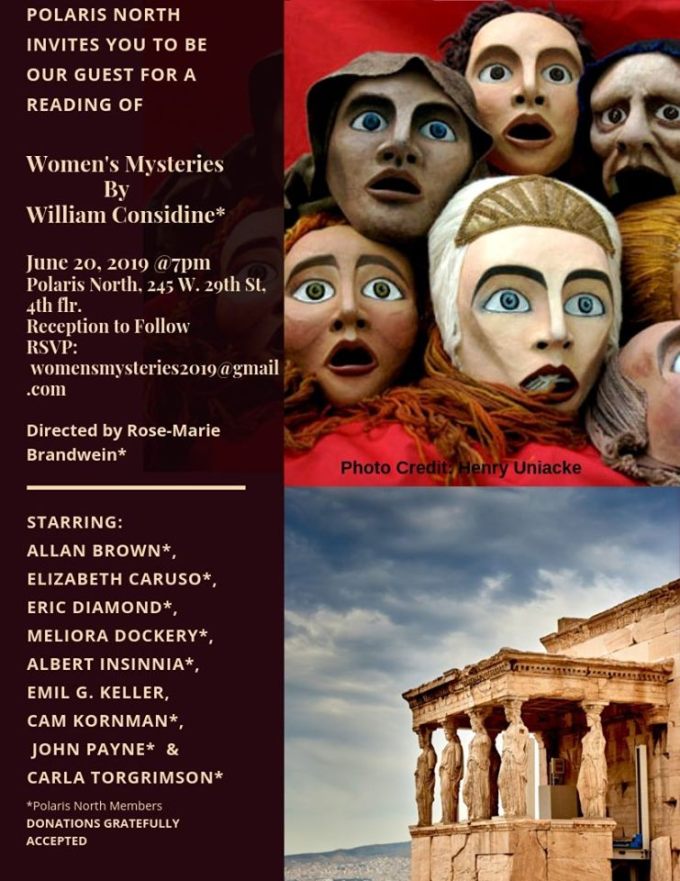
When I first heard that William Considine was going to have a reading of his play, Women’s Mysteries I was more than a little intrigued.
As a classics aficionado, with a long-standing interest in ancient Greek religion, I wondered how he would be able to pull it off, given that, to this day, the Eleusinian Mysteries remain enveloped by an impenetrable shroud of secrecy that all initiates, ever, adhered to rigorously. My other reaction was a minor twinge of jealousy, as the displacement of chthonic matriarchal goddesses, has been a topic of active research for me for the past year or so. However, eventually I found out that this project has been in gestation in the writer’s mind and on paper for almost three decades. William Considine also wrote The Furies, a trilogy of verse plays, published by The Operating System, 2017, as well as the contemporary play about family dynamics, Moral Support, which was produced this year at the Medicine Show Theatre.
Prior to attending the reading, given at Polaris North, I had been advised by William Considine to revisit Plutarch’s story of Solon, the Athenian lawgiver. And indeed, that was how William Considine solves the problem of writing about the unknowable Eleusinian Mysteries – he focuses on an historical figure – Solon – who had contact with the cult initiates. He does not pretend to reconstruct or confabulate the ceremonial rites for twenty-first century eyes. Instead, he ingeniously structures scenes around the Mysteries while incorporating only certain known elements: such as the sacrifice of pigs, the execution of men who were foolish enough to stray into the sacred precincts, and the use of a barley and mint drink, the kykeon, which may or may not have included an hallucinogenic drug. Rather than risk potentially inaccurate speculation about the Mysteries, he instead shows the female characters attempting to re-establish the rites after a twenty year hiatus.
Women’s Mysteries, was performed at a staged reading Thursday night, June 20th, 2019, 7 pm, at Polaris North, 245 West 29th Street, New York, N.Y. The reading was expertly directed by Rose-Marie Brandwein, and the cast was composed of Polaris North members, most of whom took on multiple roles in the production.
Very little has come down to us about what actually occurred at these rites at Eleusis – the initiates, after days of purification and preparation, would make their way from Athens to the sanctuary building, or Telestarion, on foot, a 14 mile journey from Athens undertaken both in the spring (Lesser Mysteries) and the fall (Greater Mysteries). The initiates, who came from all classes, (even slaves), were sworn to secrecy, and nothing of what was shown in the sacred precincts is known to us. References to the experience were deemed both forbidden and unspeakable. The participants in these profound spiritual experiences , which had two stages of initiation, myesis and epopteia, seemed to have emerged from their experiences with a profound sense of personal connection to the goddesses, and henceforth lacked a fear of death. The religious experience was transformational – eventually, men were allowed to take part in the Mysteries. Socrates, Plato, and Augustus were all initiates. Despite intensive efforts to reconstruct these rites, we have only an outline and informed scholarly speculation.
As noted above, the focus of the play is on Solon. Solon lived in Archaic Greece around the time of Hesiod, a time, as the playwright puts it, which was “prior to the classical period. It’s a poor, primitive world.” Not only was this world primitive, but there were temporary restraining ordinances: talk of war was verboten, punishable by penalty of death. And yet Solon, following the dictates of the oracle of Apollo, a comparatively “new” god whose oracle at Delphi he pledged to protect, yet simultaneously viewed with deep skepticism, managed to find a way around this restriction. In the play, he risks death, pretending to be mad so that he will not be penalized, and recites an incendiary poem entitled Salamis, designed to foment war between the Athenians and Megarions.
For those who are unfamiliar with Solon, or need a quick refresher, he was an Athenian statesman, lawgiver, and poet. His life’s work prepared ancient Greece for democracy. As portrayed in Women’s Mysteries, he is boundlessly curious, eager to make money, and wants to rectify disparities between the wealthy and the poor. (Prior to his reforms, those who owed money could literally be taken off and enslaved for their debts.) He successfully restructured debt in Athenian society, and moreover was able to accomplish this in a way that the economy of Athens did not crash and burn.
According to the director, Rose-Marie Brandwein, the actors in the play all have backgrounds in Shakespearean productions, which explains the ease and aplomb with which they handled this verse play. Many of them undertook several roles, although Eric Diamond (Pisistratus), John Payne (Solon), and Carla Torgrimson (Chorus) all had solo parts. Cam Kornman was extraordinarily enthusiastic and commanding in each of her roles, as Basilinna, Python, and the Chorus.
In staging the reading, the director incorporated certain understated elements that made it simple yet extremely effective: the men, the war-fomenters, wore dark clothing, and the women wore white or light clothing, to emphasize their purity and devotion to spirituality. No masks were used in the production, which is just as well, since the actors were reading from the scripts, and the costumes were limited to wreaths and scarves for the Oracle of Pythian Apollo and the female worshippers of the Double Goddess.
As Considine writes of Demeter, goddess and mother in mourning for her daughter, Persephone, brutally abducted by Hades:
“Only Hecate, stirrer of witches, heard
A startled cry from the girl pulled to hell…
Persephone, a child, was stranded
In eternal darkness, at the side of death.”
The poetry of the play is by turns beautiful, stark, and evocative, particularly in the scenes that depict the worshippers trying to revive the cult at Eleusis, and it is in these scenes that William Considine manages to evoke the cadence and gravitas of ancient poetic funeral inscriptions found on steles at the sites of Eleusis and Delphi. There are also moments of humor and absurdity, and at times the character of Solon displays a sort of meta-consciousness about his situation and that of his companions and/or detractors. This made the reading absorbing to watch, especially in the moments when the language and acting attained a solemnity that allowed the audience an immersive experience in the ancient world of the play.
To my knowledge, there is no extant play, ancient or modern, that depicts Solon. An account of the Eleusinian Mysteries is recorded in a chapter of Apuleius’ The Golden Ass, and there are numerous scholarly books that painstakingly aggregate and analyze what is known about the cult, from the literary fragments, relics, and archeological remains throughout the ancient world, such as Carl Kerenyi’s Eleusis or the works of Walter Burkert. This makes William Considine’s play a novel and interesting experiment that tries to convey a sense of what was a profound religious experience for many in the ancient world, one which endured for well over two thousand years.
This is not to say that there are no issues with the play in its current form.
While the attempts of the women to revive the Eleusinian Mysteries contains some of the most moving parts of the play, its focus is nonetheless on Solon, specifically his transformation from itinerant poet and trader to an Odysseus-like schemer who devises an elaborate ruse to make war on the Megarions in order to reclaim Salamis for Athens, despite the stringent prohibitions against war talk in Athens. The transition from dreamy poet to war-monger needs somewhat more delineation, because we are never shown anything, other than Solon’s desire to follow the oracle of Apollo, that would impel him to risk his life to abet a war. We lack an understanding of the elements of his personality which would allow for the radical turnaround from ardent wandering poet to deceitful determined warrior. Further exploration by the playwright would be beneficial.
Leaving aside the character development of Solon, the women in this play are portrayed as resolute, dedicated to serving the Double Goddess, diligently working to revive the cult of the Mysteries after the too-long hiatus brought on by the disruptions of an exhausting war. They are so focused on this mission, that they tend to be mostly archetypal. The cult of the mother Goddess is disparaged by the men, as well as by the female Python, Oracle of Apollo:
“I won’t do the snake dance again.
I’m clean of the snake. It’s a goddess rite,
As old as the women’s mysteries.
It’s a lie to people of clear mind.”
Despite the machinations and maneuvers of Solon, the last word is given to a woman, in the persona of the goddess Persephone, daughter of Demeter and Queen of the Underworld. The ending is oracular and devastating. I would love to see a full scale production of this play – the verse flowed well from scene to scene, alternating smoothly between lyricism, discourse, and action and the subject matter is well-handled and inherently fascinating.
Guest reviewer, S. A. Holland lives in the Hudson Valley. She studied ancient Greek language, literature and history while at Princeton. During her time there she was the producer of Euripides’ “The Bacchae,” in ancient Greek. She worked in publishing for several years as an editor, and then began to work in the computer industry as a consultant and technical writer. Currently she writes poetry in Filip Marinovich’s writing group “Motley College” at Page Poetry Parlor in Chelsea and regularly keeps up with scholarly works on ancient Greek religion, in addition to running her own business full-time.

Robert Viagas and Two Crazy Broke Asians
The American Dream: a Story of Two Crazy Broke Asians
By Yanzi Ding, Grace Shih, Kui-Fang Tseng and Maya Avisar
Reviewed by Robert Viagas
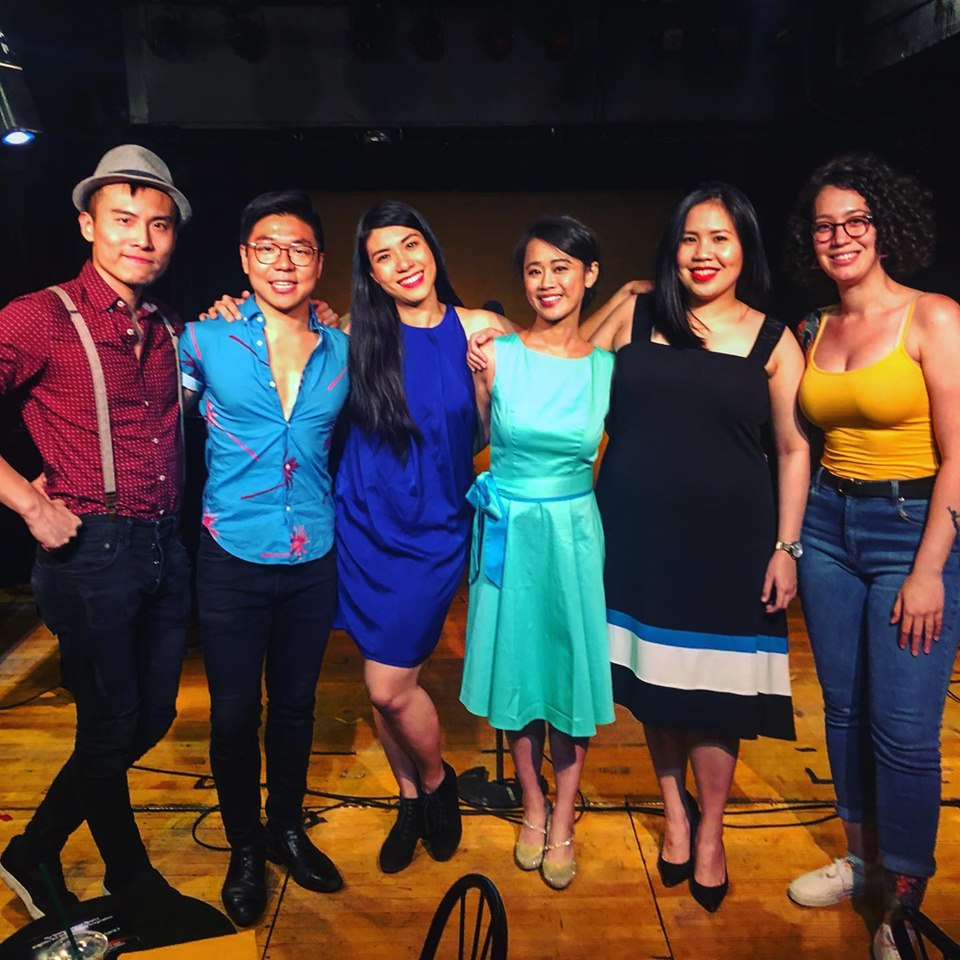
It’s a timeless New York story, celebrated on stage in Wonderful Town and told countless times before and since: penniless newcomers arrive in the big city, looking for love, fortune and fame. Hearts are broken, dreams are dashed—but new dreams take their place and love is found in the least likely of places.
The twist in the latest incarnation, the 50-minute musical cabaret show The American Dream: a Story of Two Crazy Broke Asians, is that the newcomers are East Asian: Grace Shih and Yanzi Ding. They present their wry romantic story as the flipside of the hit movie comedy Crazy Rich Asians
Shih arrived first and knows the ways of the city a little better. She acts as a big sister and confidante to Ding, an ingenue who steps off the plane in a Miss Saigon-like pursuit of an American boy she met back home. Ding gets a tough lesson in the ways of love in New York, but eventually learns to love the city, and her “sister” on their own terms.
American Dream features pre-existing songs, many with new lyrics, mostly from Broadway shows and musical films. One of the funnier conceits of the show is that Ding has learned English from Disney musicals and speaks extremely well—as long as she’s saying something from one of the Mouse House classics.
As the highlight of this show, Ding lends her lovely soprano to “Part of His World” from The Little Mermaid, does her own sprightly vegetarian take on “Happy Working Song” from Enchanted, and breaks hearts with “Another Suitcase, Another Hall” from Evita.
Among Shih’s contributions include sturdy versions of “I Get a Kick Out of You” from Anything Goes and “Simple Little Things” from 110 in the Shade. The two women cement their friendship with “For Good” from Wicked.
Leo Chang appears as a heartthrob interest for Grace, and adds his leading man stamp to “Almost Like Being in Love” from Brigadoon. Diversely inspired musical accompaniment is supplied by Ming-Hsueh (Mitch) Lin on the piano.
Directed by Kui-Fang Tseng, produced by Maya Avisar and supported by the Alliance of Alien Artists, The American Dream: a Story of Two Crazy Broke Asians played a single scheduled performance at The Duplex cabaret in Greenwich Village.
Standing with Jazmyn & Janelle is Step 1
No celebration of indie artists would be complete without raving the inexhaustible energy and engaging talents of Jazmyn Arroyo & Janelle Zapata Castellano, the brains, the muscle, the wit, and so much behind Step1 Theatre Project. Step1 Theatre Project is an NYC-based indie theatre company whose mission is to present professional works presented by underrepresented artists while providing accessible support to members of the local indie theatre community.
Their next piece is a deception in a deception: A noir mystery that looks like a Frank Miller comic book but packs a devastating conclusion: Mahogany Brown and the Case of the Disappearing Kid.

Janelle & Jazmyn make youth outreach a major facet of Step1
Step1 has made a commitment toward creating new, innovative ways of supporting fellow artists. They seek to be a company of #ArtistsSupportingArtists–to foster growth and inspire the next generation of theatre makers; to encourage them to present their projects fearlessly, regardless of financial and social barriers. With every artist support initiative and every story Step 1 tells, they encourage all who have a vision to start and keep moving forward, one step at a time. Well, hooray, ladies, A.i. is here to support you.
We were sworn to secrecy over the twists and turns in their current show so we took this opportunity to hear what NYC arts look like from their vantage point.
Tell us about your journey as producer/directors in New York
Janelle:
 It has been a journey! It has not been easy because we don’t come from a background where art is ever an option. We both are very similar where we have family that moved here from Puerto Rico, and worked very hard for their children to have it easier than they did. My parents always told me they worked hard so I can do anything that I wanted. Being the first generation that is more established, and has the space to follow their dreams and passions as opposed to being concerned about survival can only be described as a gift. We are very aware our lives are a product of generations of hard work, and that informs everything we do. This is the reason we choose to produce work, and create platforms for people like us, the people who do not have the traditional story. The amazing thing about this ‘not traditional’ story is that it is not only the two of us who share it, but there are so many others who have grown up in a space where art is not centered in their lives, but they found art and realized that that is what they were made for, that it is essential to their lives and the way they experience and communicate with the world. We want to celebrate those differences, and highlight how these experiences actually make us the same.
Jazmyn:
 It’s hard to follow up Janelle’s answer, but it’s worth reiterating that our awareness and appreciation of those who came before us really does inform everything we do. I had big dreams as a kid, but things surrounding me taught me that life was about survival. It took me some time to accept that I am allowed to think beyond survival, that I can grant myself permission to create. However in high school and college, even though I was constantly surrounded by other people of color, I personally did not see myself represented much in the work we were being taught. That was another thing I had to work through–not simply accept the lack of representation and giving myself permission to create platforms for the works we needed to see through those formative years. When it comes to producing in New York, I’ve found this strange, often unspoken assumption that legitimate, professional theatre exists only in Off Broadway and Broadway spaces. We’re here to show folks that diverse voices can be presented and shine on a small stage, maintain their magic and legitimacy, and hopefully get their work one step closer to those larger, aspirational spaces.
Tell us how you formed Step1?
Janelle:
Jazmyn came to me one day with an idea. I had no clue how much this idea would come to change and shape my life. Let’s make art. Let’s tell the stories we always wanted to see. Let’s connect to the people that have not traditionally been connected to. Let’s celebrate artists, and center them and their experiences and their needs. Since then we have been trying to figure out how to create an experience for our artists and audiences where everyone can connect to one another. We truth think of theatre as a community, and building this community is what is most important to us.
Jazmyn:
Summer of 2015 I had what I called my “quarter-life crisis”, working at my hourly job that had no room for growth and nagging feelings of inadequacy. I knew I wanted to start a theatre company, but I felt too young, too inexperienced, that I would get it going “someday”. When I verbalized this to a friend, he asked me, why not just start the company now? Once I realized I didn’t actually have an answer for that, I allowed myself to honestly entertain the idea of founding a company. That night I opened a notebook and wrote out pages and pages of ideas, and I called Janelle right away asking if she was down to take the risk and just go for it. Our hope is that other artists can feel this experience, too–if they feel underprepared or inadequate in any way, every journey starts with that first step. Step1 Theatre Project aims to be an accessible space for underrepresented indie artists to “get started”, so if you feel that drive in you, just start!
Obviously, you wear many hats. How’s the juggling going? Difficult? fun? necessary? desired? etc…
Janelle:
We work really hard to support one another. Sometimes one of us has more time, ability, or just brain space to help the other when they are overwhelmed. We really work hard to be transparent with each other and with everyone we work with so they know they can be transparent with us. No one is perfect and if we are honest with each other in that way, we can hold each other up. When we work with artists, we try to check and give them avenues to let us know how they are feeling at any point in the process. Everyone wants to work hard and do a good job, and in this business it is often that you take on a lot and have to be supported. We try hard to support one another and everyone on our team.
Jazmyn:
I think about this a lot! At first I assumed that it was part of the territory of being an indie theatre producer, but what I have found is that folks are often forced to wear many hats, whether they want to or not. For our first season our titles were “Co-Directors of Everything” because we had to do it all on our own! Season one we operated on the grace of unpaid volunteers because they believed in us, they loved the work, and wanted to be a part of it. We have gradually been able to elevate our productions, pay our team members, and hopefully we will soon be able to start hiring more admin team members! Growth of the team means we don’t have to spread ourselves so thin so we can be of better service to our artists. (Shout out to Ashley Rogers and Benjamin-Ernest Abraham, without their hard work I’m not sure I would have gotten through these past couple of months with my sanity intact!)
As an artist, and a woman, how has “reality” of working in New York differed from your original expectations?
Janelle:
I had very few expectations coming in. I knew that I had no choice, I had to be in theatre. I often get asked by young people about doing theatre in New York and I tell them that they should only do it if they can’t ever see themselves being happy doing anything else. Sometimes it is surprising how small the community really is. You come in expecting the biggest theatre community in the world, but it is much smaller than many expect. I feel lucky every day to get to do what I do, but I have only ever expected it to be difficult, and boy was I right!
Jazmyn:
I’m not sure I had any specific expectations going in. My driving force was the desire to be in service of indie/early career artists, especially those who have been disadvantaged in some way. The reality I found was, it’s much more difficult than I originally thought to find viable funding opportunities when you are a very small company with a small budget. It seems like most grant opportunities are reserved for more established companies, so it’s been tricky navigating the catch-22 of needing to increase spending in order to be eligible for more funding. (Shout out to groups like A.R.T./New York and the League of Independent Theatre for offering real support to small companies like ours!) As a woman, well—maybe this is a cop-out answer but I’m just happy to be existing in this community as a woman of color in a leadership position! That’s what I want to see more of.
What are future plans?
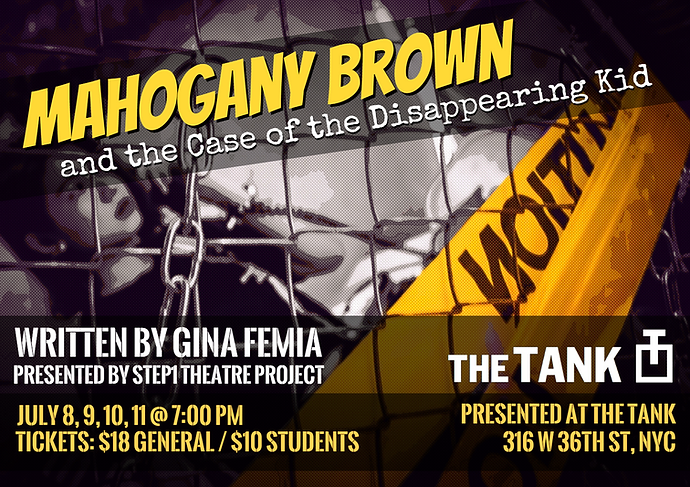
Growth! We are really in transition and are growing as a theatre company. Fundraising, adding to our team, and learning about the ins and outs of really establishing the organization is really at the forefront of our minds right now. Our reading series, where we give playwrights with work early in development a space, actors, and an audience of other theatre artists to develop their work in an open, loving, relaxed environment has been a great way to connect and service our community. Our upcoming show, Mahogany Brown and the Case of the Disappearing Kid by Gina Femia is absolutely the most ambitious work we have ever done, and showing what we can really do without the restrictions of being a ‘young company’ has been an amazing experience. I cannot wait to continue to grow, to continue to service artists and to connect more people to art and our community!
Jazmyn:
What Janelle said: growth, growth, growth. Even if it’s incremental, every level-up for us means we can be of better service to the artists who find and work with us. Right now, we provide free public cold readings for early draft / developing works, then we elevate those pieces further by producing ticketed staged readings with design elements, and next we are looking to elevate those works even further with full productions. We also offer free workshops, and with more resources we can offer higher quality (free!) resources that artists need for their own development. Step1’s tagline is Artists Supporting Artists, we want to be those supportive artists, and we want to create spaces where artists show up to support one another as a community. Committing myself to this effort has been the most rewarding decision of my life.
Viagas is Down-Under with Hofmann
What the Fandango?!
written by and starring Robert Hofmann
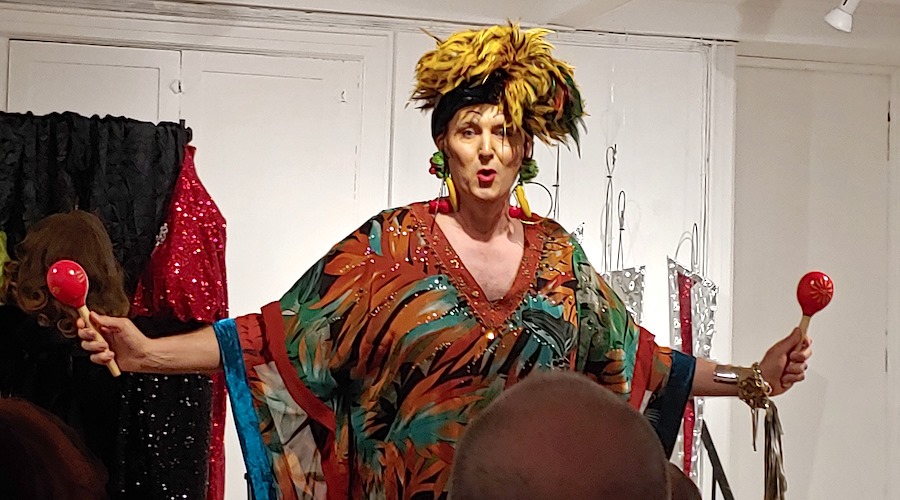
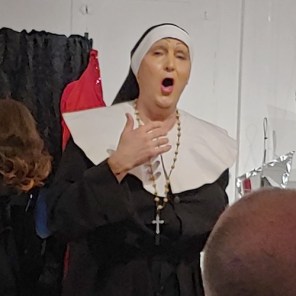
Just in time for Pride Month, Australian opera singer and cabaret star Robert Hofmann brings his abundant talent and saucy attitude to New York City in his intimate club show, What the Fandango?!
His watchcry is “The opposite of courage is conformity,” and to polish his non-conforming credentials, he adopts five different characters involving costume, wig and voice changes without leaving the stage during this one-hour cabaret. Call him New York’s latest “slow change” artist. Tall, with an owlish face and big eyes, Hofmann speaks with a quivery voice, accompanying his delivery with fluttering hands and sly, sidewise glances at the audience.
 For this, his American debut, Hofmann applies his baritone to a Whitman Sampler of songs, some familiar, some original and new, all accompanied by master accordionist Will Holshouser, billed for the evening as “Ben Dover.”They share their versions of the Stephen Sondheim standard “Losing My Mind,” and his novelty song “The Boy From….” Also, Cole Porter’s “Too Darn Hot,” which Hofmann certainly earns, having departed the just-ending Aussie summer to run smack into the just-starting Manhattan summer.
Among the delightful and less predictable choices: Noel Coward’s “Nina,” about a Latina who finds nothing romantic about Latin America.

Hofmann also includes several of his original songs, including the tango-flavored title number, which offers an alternate rhyme for the likes of luck, buck, and duck.
His patter is only mildly naughty, consisting of gentle, nougat-centered jokes about gay life that would be familiar to the fans of Bert Savoy. If he wants to make a splash with the West Village crowd, he’s going to need to concoct material with more of a wicked edge.

What the Fandango?!
plays through June 29 at
the Revelation Gallery
at St. John’s in the Village,
in Greenwich Village.
Finding Yourself On Stage
A Therapy Session With Myself
By Anthony J. Piccione
Reviewed by Robert Viagas
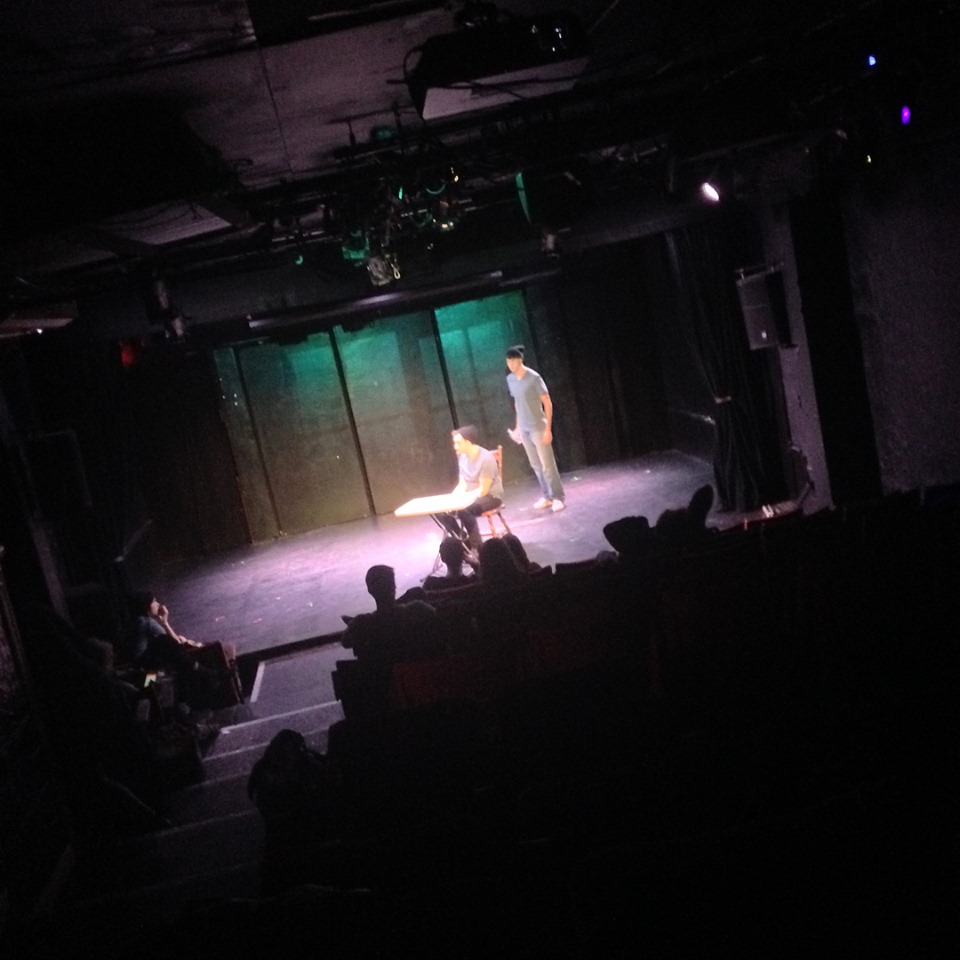
A young man who suffers from crippling social anxiety and depression splits into multiple selves as part of a journey of self-discovery in Anthony J. Piccione’s drama, A Therapy Session With Myself, being presented Off-Off-Broadway.
Recent college graduate Alex (Nick Roy) sits cloistered in his apartment drinking beer after beer and pot after pot of coffee, trying to write a script for an unnamed play, and trying to resist the notion that he is devolving into a recluse.
His obsession with the mess he’s making of his life causes Alex’s mind to splinter off a whole other self , named You (Shane Zimmerman), a relentless nooge, who hectors Alex to take a hard his life and figure out what he needs to do to get back on track.
In flashbacks, yet a third Alex, named Me (Nathan Cusson) is shown being a successful student in college, a promising actor, working as a volunteer in a soup kitchen, surrounded by friends, half of a love relationship. Yet Alex persists in the belief that he is a failure at all these things and that somehow all of them are now beyond his reach. It is stated that Alex suffers from Asperger’s Syndrome, but his secondary self seems to feel that Alex could heal himself simply by trying a little harder to engage with other people.
The promising premise takes ninety intermissionless minutes to work itself through. Dialogue between Alex and You gets repetitive after the first few flashbacks. Without some sort of dramatic modulation in the second half, it could benefit from trimming.
The dour script rises to humor only once, when two of the Alexes have a fight, and one says, “You shouldn’t beat yourself up about this.” The play would benefit from more of that kind of self-awareness.
In most real-life therapy, the patient is asked to dig deeply and confront who they really are. Alex needs to move past glib, obvious answers and bring himself to a more profound catharsis.
Also featuring Emma Romeo, Louise Heller, Tony Bozanich, Sonya Sagiev, Travis Martin, Alexander Pepper, Rosie Coursey, Lizzy Moreno, and Nicholas Capriotti, A Therapy Session With Myself is playing an unusual schedule—the third Saturday of every month at 2 PM only—at the Kraine Theater in Manhattan’s East Village.
Mime Time
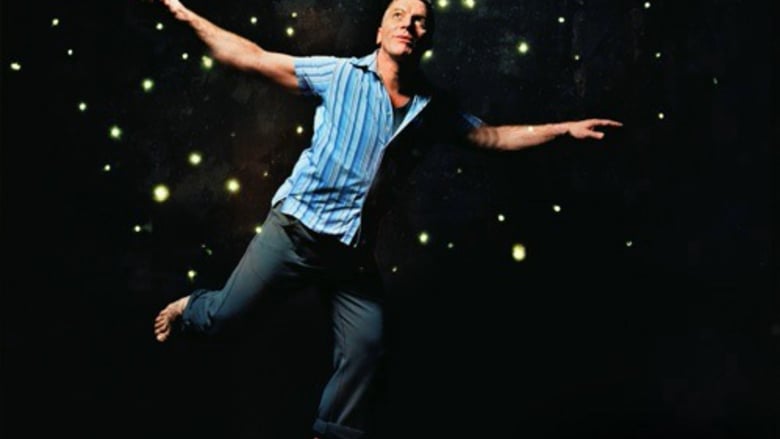
Bill Bowers is a mime … who talks … about his adventures … around the world, ALL OVER THE MAP. This is a featured event of the special Stonewall50 Fresh Fruit Festival, at The WILD Project 195 East 3rd Street (between Aves. A & B) New York City. Limited Engagement: Wednesday 7/10 @ 8:30 pm and Sunday 7/14 @ 2:30 pm. https://web.ovationtix.com/trs/cal/527
For a mime, Bill Bowers has a lot to say. He’s studied with the legendary Marcel Marceau; performed on and off Broadway; at the Kennedy Center, for the president (a different one) at the White House; throughout Europe and Asia; and in-between, at some of the finest grade school cafetoriums in America. In All Over the Map, Bill brings us to 50 states and 25 countries, where we get to share some of his more memorable moments over a 30 year career on the road. Powerful stories that will make you laugh and cry – and even gasp as Bill takes you places so unbelievable they could only be TRUE! Did we mention the hookers and the bunny? Bill’s indelible memories and characters will stay with you long after lights come up.
We took this rare chance to chat with a mime.
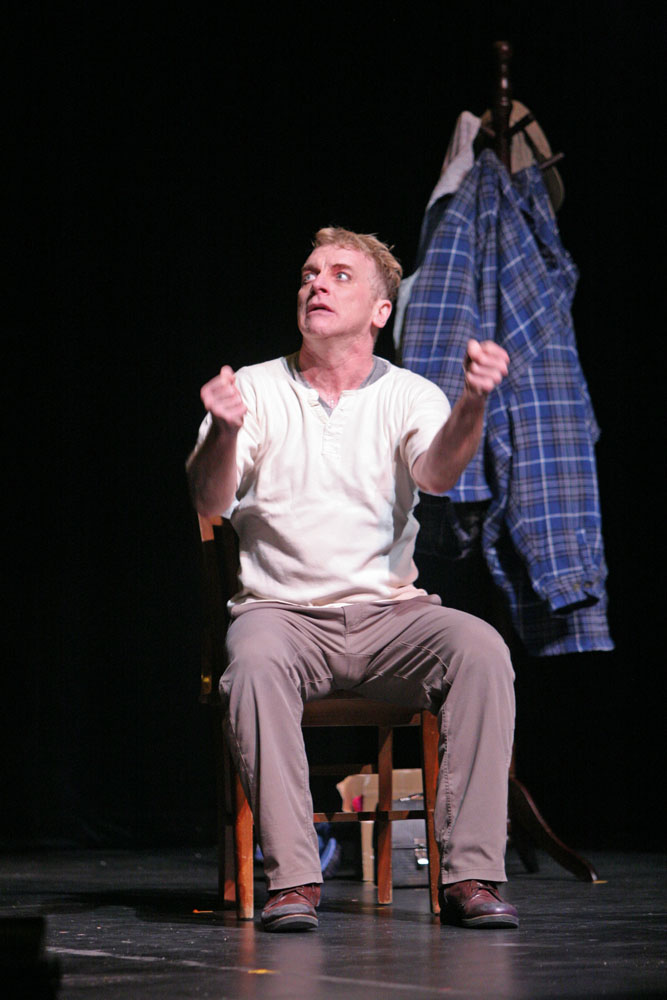
Tell us about yourself.
I am a mime and actor, based in NYC. I perform autobiographical solo plays. Originally Montana, much of what I write about is inspired by growing up as a gay kid in the 60’s-70’s in a small western town.
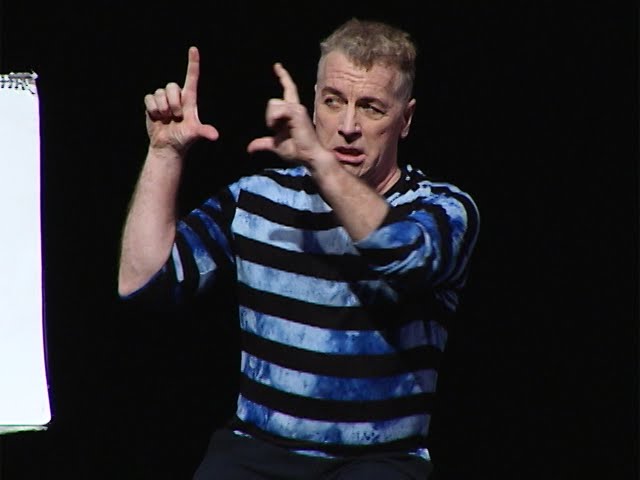
What inspired you to create this unique autobiography?
I have been touring my solo plays around the world for the last 20 years. As of now I have traveled to 35 countries and all 50 states. I have had extraordinary experiences, some of them unbelievable. I keep a journal, and decided to make a solo show about touring a solo show.
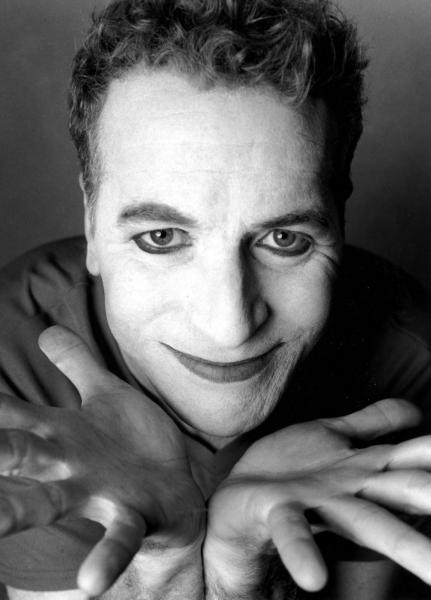 In terms of that, once the idea is there … what’s the creative process?
I work with an amazing director named Martha Banta, who has a great ability to hear the overarching story in my stories. She keeps me honest, concise, and basically doesn’t like mime!
You’ve done this many times. What realizations or epiphanies (if any) did it give to you?
I have performed ALL OVER THE MAP all over the map, and I am continually struck with how similar we all are as human beings.
What will your audience take away from this?
I hope the audience will have some great laughs, and I hope they see themselves in the stories I share.
What’s next?
I have been commissioned to make a new solo play, with no words. A true MIME play. I have been working on it for a year so far, and hope to premiere it in 2020.

Robert Viagas @ Sleep At Your Own Risk
Sleep at Your Own Risk by Matthew Ethan Davis
Reviewed by Robert Viagas
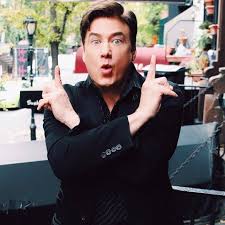
Cabaret and theatre artist Rick Skye plays a man whose nightly journeys to dreamland are full of terror and violence in the surprisingly comic solo show, Sleep at Your Own Risk.
His problem is that he sleepwalks. Did I say “sleepwalks”? I mean he sleep-sings, sleep-messes his apartment, sleep-relocates houseplants to his refrigerator, sleep-wanders the halls of his co-op, sleep-pees on computer equipment, sleep-chokes his lover Dan, and sometimes, in a terpsichorean mood, sleep-performs the choreography toWest Side Story.
Dan is endearingly patient with all this (including the choking) but urges his somnambulant sweetie that it may be time to get some professional help. The bulk of the play chronicles the resulting odyssey through the world of therapists and sleep specialists with wildly varying degrees of helpfulness and effectiveness. “Enchantingly,” he narrates at one point, “things get worse.
Skye, a winner of MAC and Bistro awards for his cabaret work, presents a high-strung, quaveringly nervous stage persona, characterized by persistently shaking his hands to illustrate his anecdotes. But he brings the his character’s chiaroscuro midnight misadventures to life, and vividly portrays how very much he loves Dan and wants to get better to save his relationship—and Dan’s life.
Sleep at Your Own Risk runs a brisk 50 minutes and treats a potentially serious affliction with gentle humor and a great deal of love.
Presented as part of the Queerly Festival 2019 during Pride Month, Sleep at Your Own Risk completed a limited run at the Kraine Theater in Manhattan’s East Village.
Robert Viagas says “There’s Much Ado at the Delacorte”
Much Ado About Nothing
By William Shakespeare
Director Kenny Leon fills the Delacorte Theater in Central Park with energy and laughter in his new all-African-American production of Shakespeare’s romantic comedy, Much Ado About Nothing, set in the American South in 2020.
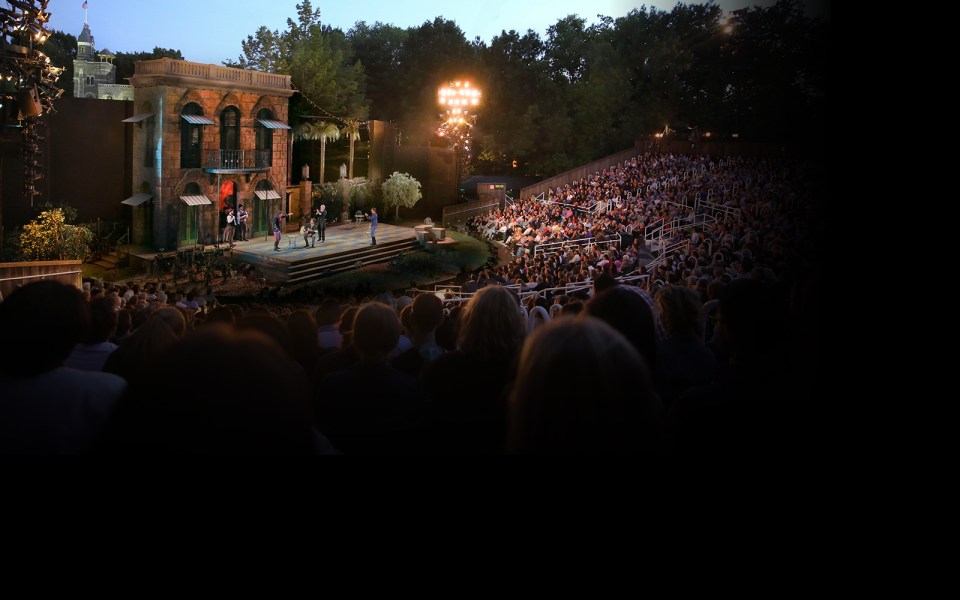
The first of two summer 2019 free Shakespeare in the park productions, Much Ado is the Bard’s story of several crisscrossed love stories that play themselves out at a country estate. Central to the plot is the relationship of Beatrice and Benedick, two sharp-tongued combatants who troll each other with witty insults, when it is clear to everyone around them that they are actually in love. Strategems to trick them into finally avowing their true hearts occupies much of the action of the play.
It’s not easy to steal a Shakespeare production, especially one likeMuch Adothat boasts a half dozen major characters, but The Color Purple Tony nominee and “Orange Is the New Black” TV star Danielle Brooks doesn’t just walk away with the production in the role of Beatrice, she struts away with it, like a princess showing off her crown. She delivers her sick burns with evil delight, making them sound like they’d been invented on the spot rather than 400 years ago. Grantham Coleman is an adorable Benedick, and does his best to keep up with Brooks.
They and the supporting cast deliver the Bard’s lines with wonderful clarity, wisdom and humor. High on the list are Chuck Cooper as Leonato, Billy Eugene Jones as Don Pedro, Tiffany Denise Hobbs as Ursula, and Lateefah Holder as the malaprop-plagued (and gender reversed) police chief Dogberry.
The gallivant across Tony Award-winner Beowulf Boritt’s elegant outdoor country manor set that only gets more beautiful at evening performances as the sun sinks and lights come on in the windows (courtesy of another Tony winner, Peter Kaczorowski).
The program states “Our modern-dress production in set in the near future, 2020, on the eve of the election, in the American South,” but there is no reference to that premise (except in some of the costuming) anywhere in the show, except for a prominent poster reading “Stacey Abrams 2020” (a reference to the Georgia House minority leader who lost a hard-fought race for governor of that state in 2018). Despite the sign, it’s all backstory that doesn’t change the play’s many references to princes, dukes and other European royalty/nobility. Oddly, given its prominence, poster is never alluded to in the show.
Nevertheless, given its high fun level, this production would make a great first Shakespeare for audiences who may never have tried one before.
Much Ado About Nothing is playing a limited run at the Delacorte Theater in Central Park. Admission is free.
נמרוד דנישמן שובר את הקירות ב׳בורדרס׳ (Nimrod Danishman breaks down walls in BORDERS)

Dirty Laundry Theatre opens its door with the inaugural showing of BORDERS premiering at the Hudson Guild Theatre and running June 25, 26, and 29. the play is written by international playwright Nimrod Danishman. Acclaimed actors Eli M Schoenfeld and Adrian Rifat, appear in this love story for the online age directed by Michael R. Piazza.
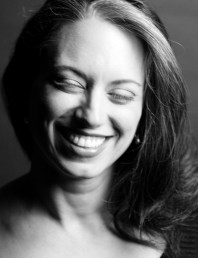 “We start with Israel,” says Founding Artistic Director, Maera Daniel Hagage. “Airing Israel’s ‘dirty laundry’ allows us to create a mosaic based on the less familiar perspective of day-to-day Israeli life, allowing us to overcome cultural differences and prejudice. The Israeli stories, very much like “Borders”, are both personal and universal. We invite our audience to open their minds and hearts and experience a new narrative that might be, surprisingly, more familiar than they expect.”
Boaz and George meet on Grindr. They are attracted to one another instantly and want to meet in person, but something prevents them from doing so. One lives in Israel, the other- in Lebanon. Will history and its prejudices prevent this union?
Nimrod Danishman has crafted an intriguing and timely drama about love in the 21st century. Danishman shows us the two worlds in which we exist – fantasy and reality – each containing its own set of “borders” governing love and tolerance.
Israeli Playwright, Nimrod Danishman, discussed the play, the players and world affairs with us briefly.
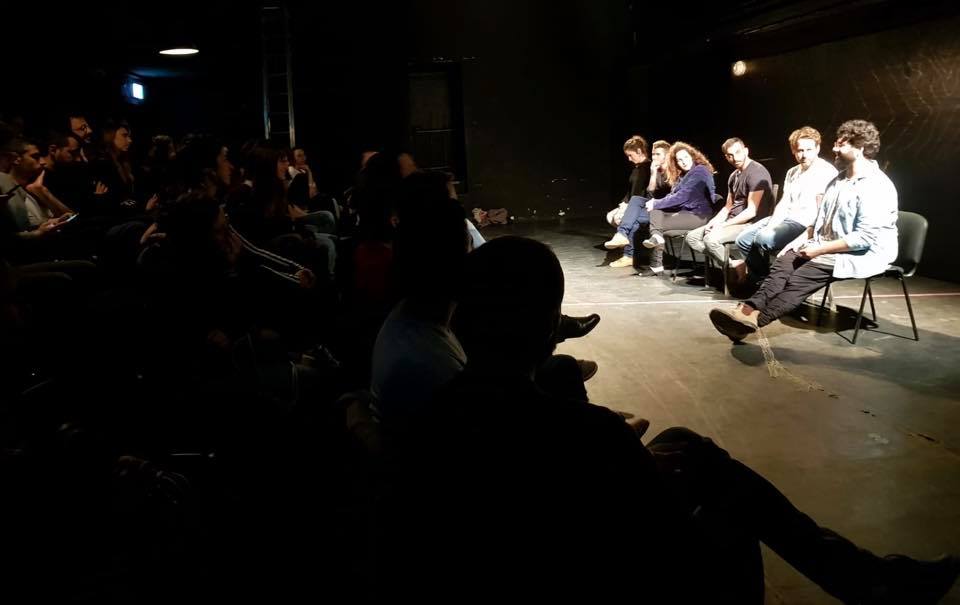
Tell us about yourself.
Shalom 🙂 My name is Nimrod Danishman, and I am a theater director, playwright and teacher from Tel Aviv, Israel. I grew up in a kibbutz in the north of the country, to a single mother who came from an ultra-Orthodox home.
“Borders” is my first play. Since then I have written 2 more plays and another 2 in the development process, and I notice that so far the characters in all my plays are characters from the LGBT community. I was not going to be a gay playwright, but I try to write about things I can understand and imagine myself, and because I’m gay, so are my characters.
Tell us about this play … where do you get your inspirations? Is it just from life or do you have a “plan?”
I wrote the first scene of (what then was called) “The Wall” following a conversation I had with a guy from Lebanon on Grindr. I visited a friend who lives on a kibbutz by the border with Lebanon, and because the app shows men who are close to you, suddenly the physical border was breached through the virtual space. The first scene in the play is very similar to the original conversation we had.
I returned to the same scene at the end of my studies at the School of Performing Arts without a final project. I wanted to direct a play by my favorite Israeli playwright, Hanoch Levin, dealing with refugees, but I couldn’t get the rights for the play. When I looked for another play, I remembered that scene and decided to develop it for the play. In the process I tried to explore the life of gay men in Lebanon – not very successfully. Suddenly it was very difficult to communicate with people from Lebanon. When they heard that I was an Israeli, the talks suddenly stopped. Some claimed it might harm them in Lebanon. Some did not give reason. I understood that, of course. In the reality I grew up in, the person on the other side of the fence was a monster. But it was also disappointing, I wrote a play about the ability of people to connect even if they are defined as “enemies,” but in reality it didn’t work.
Apart from that conversation with the guy from Lebanon, another inspiration for the play was a relationship with my partner. It was a long- distant relationship, since he is Italian from Rome and I am in Israel. Despite the distance, we were able to meet many times, nevertheless, most of this relationship took place in the written space of WhatsApp and Facebook Messenger. When I wrote the play, I understood that it makes sense to us, but apparently many relationships exist like this, even when the couple lives in the same house. We live in an age where most of our communication is paved and arranged in an endless dialogue. It’s as threatening as it’s amazingly shown in the Black Mirror series, but I chose to tell a different story about this written dialogue.
In terms of that, once the idea is there, how do you write … what’s the creative process?
So part of the answer is already in answer to the previous question. I can add that the process itself is light years away from the romantic image of the playwright writing into the night. To create a model of work rather than a hobby, I created a routine for writing. I read about writers and playwrights that I admire and discovered that they organize their day very well, so I imitated them: I woke up early in the morning, ate well, wrote, went out for an afternoon walk and then went back to writing until evening. I wrote a lot. I say in conversations after the show in Israel that the final play has almost 4000 words. The file in which I kept all the dialogues I chose to delete from the play has 25,000 words. I had the privilege of doing it because at the time, a play I was supposed to direct fell through. Nowadays I pray for such an opportunity, to allow myself to just sit and write.
Who do you feel is your “audience?”
I think the Y generation I’m part of is my first target audience. It’s true that this is a love story for two men, but I think my Y-generation friends will be able to see the story behind sexual orientation and geographical location. The story of the dating app, of a relationship in correspondence, of falling in love with a guy who is in a place I can not reach, and the only place we can meet at is online.
In a way that is perhaps not surprising, we see that many adults come to the show in Israel. I think there is such a great thirst for LGBT characters in the Israeli theatre that they are not the same ole’ type you see in musicals.
What’s next?
I’m very happy about the connection with the Dirty Laundry Theatre. They create a cultural bridge in the United States to the culture of a strong local community, and through it opens to a geographical area that attracts a lot of attention. I am very excited that they chose my play as the theatre’s first play, and I hope that this cooperation will produce new projects.
This year I wrote two other LGBT plays: the first about the relationship between a high school teacher and the student, the second about a group of Tel Aviv gays that goes from the bachelor stage full of parties and drugs to the stage of institutionalization and the desire for children. In Israel, we still gay marriage are still illegal, same as adoption. I felt that I had to make another voice in the community’s struggle.
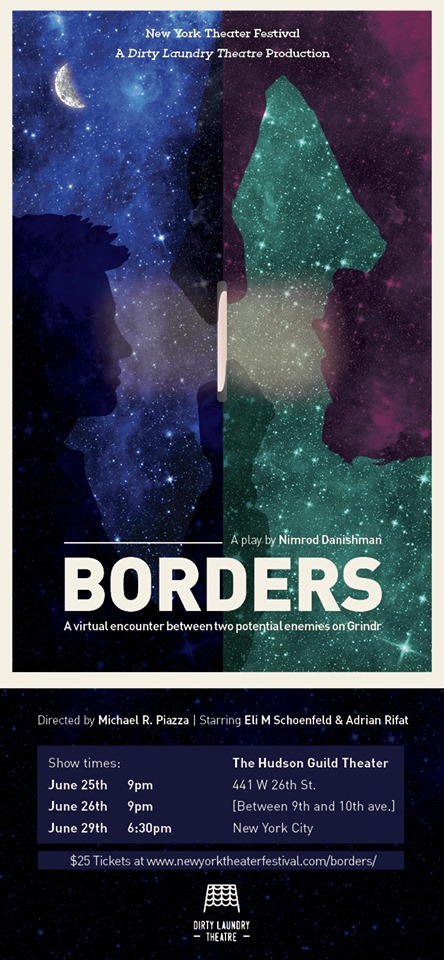
Tickets are $25 and available online at www.newyorktheaterfestival.com/borders/ or at the door. Performances take place at the Hudson Guild Theater, 441 W 26th St, NYC, between. 9th and 10th ave. Additional information can be found online at https://www.dirtylaundrytheatre.org/show/borders/”
Viagas Views pre-TONYs
ArtsIndependent goes to Broadway with Robert Viagas.
The sage of the stage shares his thoughts on four powerhouse musicals currently gracing the boards. As founding editor-in-chief of Playbill online for a quarter century,
Mr. Viagas knows a couple’a things about musical theatre.
Starting with the classics…
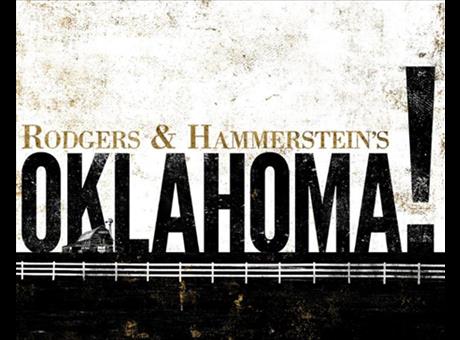
Oklahoma!
Music by Richard Rodgers, book and lyrics by Oscar Hammerstein II,
directed by Daniel Fish.
Among the saddest carnage created by developments in politics and news in the last few years is the damage done to America’s image in the world, and the self-image in our hearts. We were the clean, noble, honest, open-hearted people of the world—the “good guys.”
The outlook today is very different from the early months of World War II when American freedom shone like a beacon in the fascist darkness, the time when Oscar Hammerstein II and Richard Rodgers wrote the groundbreaking musical Oklahoma! as a celebration of all good things American.
In many ways, that vision been replaced with a national image of angry cowboys addicted to guns and bloodshed, of broken race relations, and of powerful people’s ability to press their thumbs on the scales of justice. The new Broadway revival of Oklahoma!has been reconceived by director Daniel Fish as a reflection of that new self-image. Not a word of the original Hammerstein book or lyrics has been changed (though a few added). The reinterpretation is all in the staging of the beloved cowboy musical. More accurately, he found the darkness that was already lurking in the corners of the story, just as it was already lurking in the nation in the 1940s.
As entertainment it is often startling; the familiar songs appear like old friends in sometimes alarming new costumes. As commentary the revival is as searing as the chili they cook on stage during Act I and dish up to the audience free at intermission. Not everyone will like it, but credit is due for boldness and imagination.
The story begins innocently enough, with and pretty farm girl named Laurie (Rebecca Naomi Jones) trying to decide who will take her to the town’s “box social”: the handsome cowboy Curly (Damon Daunno) or brooding farm hand Jud Fry (Patrick Vaill). But their rivalry darkens, and throws its shadow over the scene in which Curly tries to get Jud to kill himself to gain the sympathy of townsfolk who “treat him bad.” The scene is played almost entirely in literal pitch darkness.
The most sobering moment comes at the end, after poor Jud is really dead, shot by Curly for threatening Laurie on their wedding day. Their white formalwear spattered with Jud’s blood, the wedding party sings the grimmest version of the show’s bouncy title song you’re ever heard.
Daunno plays his own guitar and sweetly sings “Oh What a Beautiful Mornin’” and “Surrey With the Fringe on Top,” but his performance of Curly come off more like a kid wearing his dad’s cowboy boots. Jones is a tough tomboy of a Laurie, and Mary Testa is an authoritative Aunt Eller. But the breakout performance of this production is Ali Stroker as wheelchair using Ado Annie. Her lusty, country-flavored performance of “I Cain’t Say No” brings down the house.
Speaking of the house, the show has been staged at Broadway’s most unusual playhouse, the in-the-round Circle in the Square. Lara Jellinek’s set includes raw wood planking with a spare number of chairs and tables that are rearranged to as needed to suggest the various locations in the story. Orchestrator Daniel Kluger has reduced Robert Russell Bennet’s lush original full orchestra down to a seven-piece virtual jug band that ably reflects the new interpretation while still cherishing Rodgers’ musical genius.
Amid the darkness of this production, there is a ray of light. It should be noted by fans of musical theatre that we are living in a time when classics My Fair Lady; Kiss Me, Kate; and now Oklahoma! are all playing on Broadway simultaneously. Maybe there’s hope after all.
Oklahoma! is scheduled to run through January 19, 2020 at the Circle in the Square Theatre on Broadway.
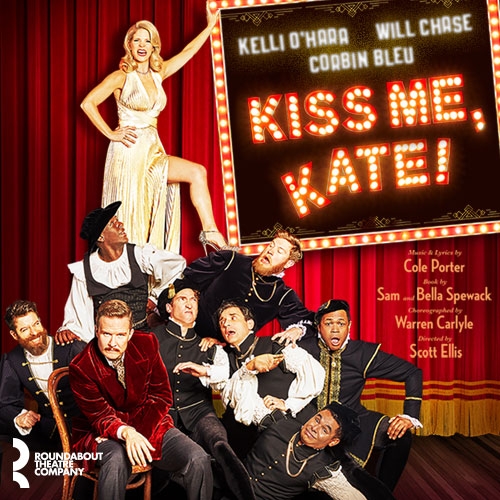
Kiss Me, Kate
Music and lyrics by Cole Porter, book by Bella and Sam Spewack
There are certain shows which, by virtue of the classic scores, funny librettos, or sheer dramatic brio ought to be kept in revival on Broadway all the time. Kiss Me, Kate would be high on that list if it weren’t for one problem: its sometimes musty attitude toward women, especially in the #MeToo era. The show is built around Shakespeare’s The Taming of the Shrew, and the original production ended with the leading lady singing “I Am Ashamed That Women Are So Simple,” based on the Bard’s original final speech. Is she being serious, sarcastic, or just telling her husband what he wants to hear?
Roundabout Theatre Company’s high-energy current revival, starring Kelli O’Hara and Will Chase, gets around the latter problem by editing Shakespeare slightly, changing the lyric to “I Am Ashamed That PEOPLE Are So Simple,” but the uncomfortable woman “taming” issues manage to peek through.
And that’s really saying something because director Scott Ellis has mounted an otherwise joyous production, crowded with fun—especially from the lithe members of the dancing chorus, as choreographed by Warren Carlyle. Among the high points are the virtuosic acrobatics of “Tom, Dick or Harry” as performed by Will Burton, Rick Faugno and the show’s limber co-star Corbin Bleu. Bleu later flips himself over and begin tapping upside down and an overhang.
O’Hara is extremely talented and deserving of the many lead roles she has gotten in recent years. That said, she seemed to lack the world-weariness the role longtime stage veteran and divorcee Lilli Vanessi requires. She and Chase sometimes seemed like kids play-acting in their parents’ clothes.
Still, it’s great to hear them, and the rest of the cast, once again singing Cole Porter standards like “So in Love,” “Wonderbar,” “Too Darn Hot,” and “Another Op’nin, Another Show” back where they belong, on Broadway.
Kiss Me, Kate is playing a limited run through June 30 at Studio 54.
Engaging in pop-culture…
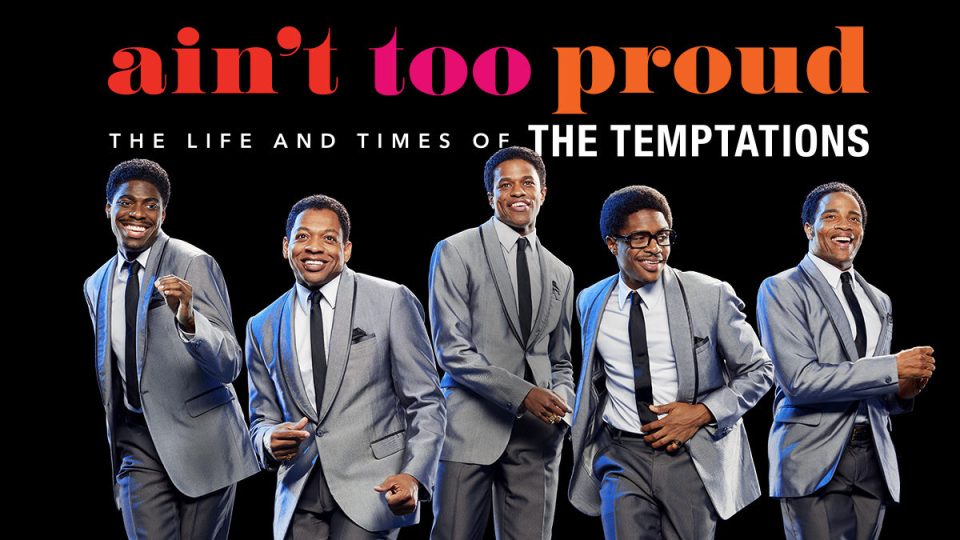
Ain’t Too Proud: The Life and Times of The Temptations
Book by Dominique Morisseau, based on “The Temptations” by Otis Williams. Music and lyrics by various composers.
We all connect certain songs with special events in our lives. Hearing the music can evoke a long-vanished person, place or activity. This phenomenon accounts for the popularity of so-called “jukebox musicals”—ones that celebrate the songbook of a particular performer, songwriter or group.
The backstage, onstage, and offstage story of the 1960s Motown superstars The Temptations is told in the latest jukebox biomusical Ain’t Too Proud, now on Broadway at the Imperial Theatre.
If you love the Temptations and have fond memories that spring to life when you hear their hits “My Girl,” “Papa Was a Rolling Stone,” “If You Don’t Know Me By Now,” “I’m Gonna Make You Love Me,” and more than two dozen other chart-climbers, you will also likely love this show.
Slickly and professionally done, with Sergio Trujillo’s loving recreations of the group’s signature choreography, plus lighting, costumes and even hair design that subtly guide the audience from the early 1960s through the mid 1970s.
Librettist Dominique Morisseau shows she learned the lessons of previous jukebox smashes like Jersey Boys and Beautiful: The Carole King Musical in showing the ups and downs of the artists while using their hit songs more or less like showtunes to comment on the action.
The story is narrated by Otis Williams (Derrick Baskin), who is credited as the group’s founder and captain as it navigates through the storms of politics, history, tangling with the juggernaut of Motown Records, boss Berry Gordy, and especially drug abuse among the group’s members. He is depicted as having personal failings: his marriage breaks up and he neglects his only son. The one constant is his single-minded devotion to The Temptations, which, by the way, he still leads in 2019 as it goes on touring forever with the latest lineup of singers.
The other characters tend to blur together, given little more than a verbal tic or a favorite piece of clothing to pass as character development.
It’s a fun, entertaining, skin-deep show, very much in the style of Jersey Boys, and depending on the same well of nostalgia and happy personal associations with the group’s catchy close-harmony tunes.
Ain’t Too Proud is playing an open-ended run at the Imperial Theatre on Broadway.
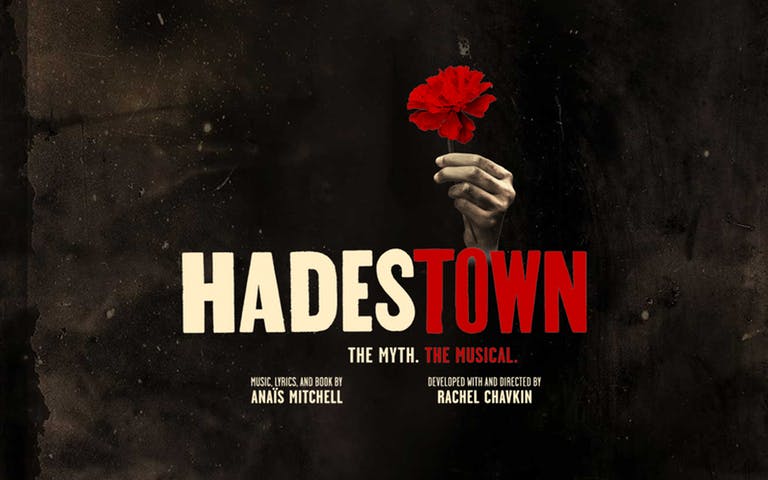
Hadestown
Music, lyrics and book by Anaïs Mitchell
When I first heard they were doing a musical based on the Orpheus legend, I was skeptical. But then I read it again and was reminded that Orpheus believes he can charm Hades, lord of the Underworld, because of the supernatural beauty of his voice. Now that’s a musical idea!
The classical Greek legend of the gods-touched musician Orpheus and his quest to retrieve his love Eurydice from the grip of Death itself is given fresh currency in the thrilling new Broadway musical Hadestown. Directed by Rachel Chavkin, the musical transforms one of Western Civilization’s oldest stories into one of its newest and freshest.
Set in an ancient Greece that looks and sounds like Depression-era New Orleans, Hadestown benefits from a Cajun-flavored score by rock singer and songwriter Anaïs Mitchell that is full of darkly brilliant music. In a bid for contemporary relevance, she has Hades sing a number called “Why We Build the Wall,” which includes the lyric, “Because we have and they have not!/Because they want what we have got!”
Not all the lyrics are that pointed. And way too many are just sloppily rhymed. In song after song we hear the likes of “rut” rhymed with “up,” “crave” with “days,” “down” with “ground”—and those examples were from just one number. It’s especially annoying in a show that is otherwise so good.
The show is anchored by performances from two cool, wicked old-timers: slick André De Shields as Hermes, who narrates and knowingly comments on the proceedings; and Broadway’s favorite villain, Patrick Page, deploying his foundation-shaking basso as Hades. Page once again plays nemesis to his Spider-Man co-star Reeve Carney as Orpheus. And if Carney’s voice doesn’t quite measure up to Page’s (ironically, in this story of a magical vocal cords), he lets his burning desire to reunite with his love Eurydice (Eva Noblezada, recently on Broadway in the title role of Miss Saigon) shine through the stygian darkness (lighting designed by Bradley King).
Among the younger cast members, the standout is Amber Grey as Hades’ slinky unstable wife, Persephone, who somehow loves her icy husband even though he forces her to spend half of each year in hell. She sees in Orpheus and Eurydice an echo of her own story, and, in the song “How Long?” she begs Hades to give Orpheus one chance. Hermes sings that even though we all know how the tragedy ends, we relive it again and again, hoping that one day it will turn out differently.
This one-of-a-kind show is new only to Broadway. It was developed in Vermont starting in 2006, earned a concept album that developed a cult following, and debuted in 2016 at Off-Broadway’s New York Theatre Workshopthat led to this production, which has some four dozen names above the title as producers. Though there are funny moments, Hadestown is clearly the serious entry in this season’s lineup of musical comedies. It’s a grown-up theatre piece that does the most of all the shows to open this season to advance the musical theatre form.
Hadestown is playing an open-ended run at the Walter Kerr Theatre Broadway.
And now, from screen to scene…
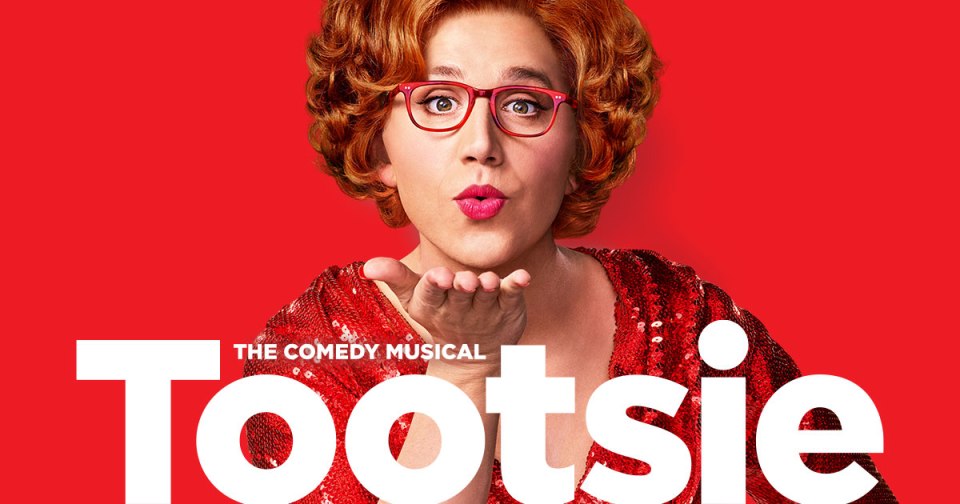
Tootsie
Music and lyrics by David Yazbek, book by Robert Horn,
based on the film by Don McGuire and Larry Gelbart
Several things set Tootsie apart from the recent spate of Broadway musicals based on popular Hollywood movies.
Most importantly, its creators understood that a stage musical is more than just a movie script with a bunch of songs jammed in willy-nilly. A musical tells a story that requires music and dance in order to live, populated with characters who burst with emotions that demand to be sung.
The 1982 film comedy starred Dustin Hoffman as Michael Dorsey, a male actor whose diva behavior has gotten him blacklisted by every director in town. To escape his poisoned reputation, he disguises himself as a woman, whom he names Dorothy Michaels. Not only is his drag act convincing to casting directors, but Michael finds that by playing a woman, his whole attitude begins to evolve and mature. He finds that he’s actually a better person as a woman than as a man. He also becomes the star of a hit soap opera. But how long can he keep the façade from falling?
To make that story musical, songwriter David Yazbek and librettist Robert Horn changed its whole show-biz milieu, with strong results. Instead of trying to get a job in a TV soap opera, Dorothy now wants to be the star of a Broadway musical. This gives them lots of room to fill the script with witty Broadway jokes and allows characters to more naturally break into song.
And instead of trying to find an actor who looks and sounds like Dustin Hoffman (who won an Oscar in the role), they went with the talented Santino Fontana, who played the prince in Rodgers + Hammerstein’s Cinderella, and played the singing love interest on the TV series Crazy Ex-Girlfriend. He’s brilliant in the role, and creates his own idea of what Dorothy looks and sounds like. His head voice, often a stumbling block for male drag performers, is lovely and convincingly feminine.
The authors also wisely took 21stcentury feminist objections head-on by writing the objections into the show, and making the issues of oppressive patriarchy and the celebration of female identity central to the story.
Yazbek’s score sounds nothing like his Tony-winning score to 2018’s The Band’s Visit, but often echoes his lesser-known 2010 musical adaptation of another film, Women on the Verge of a Nervous Breakdown. His showstoppingly zany patter number “What’s Gonna Happen” (a tour de force for Tony-nominated featured actress Sarah Stiles) is the sister of the Laura Benanti marathon “Model Behavior” in the earlier show. As leading lady Julie Nichols, Lilli Cooper is a little too supportive of Dorothy taking over the lead in her show, and allows herself to be elbowed out of the spotlight.
Master comedian Michael McGrath also has far too little to do as the on-again off-again agent Stan Fields, but he gets one great memorable moment, performing one of the longest and funniest slow-burns (from behind a close door yet) in recent stage history.
Side note: Tootsie seems to follow the same basic plot as another Broadway musical hit, Dear Evan Hansen: an outcast makes himself the center of attention by creating a false story about his life that delights everyone around him for a while, but eventually gets uncovered, with calamitous results. Why does this story hold such audience appeal?
Another side note: Thank you, Tootsie creators, for calling your show not Tootsie: The Musical or David Yazbek’s Tootsie, but simply and straightforwardly Tootsie.
Tootsie is playing an open-ended run at the Marquis Theatre on Broadway.
 Arts Independent