
Home » Uncategorized (Page 11)
Category Archives: Uncategorized
Jim Catapano, ZORA, and The Harlem Renaissance
The Life of a Literary Legend
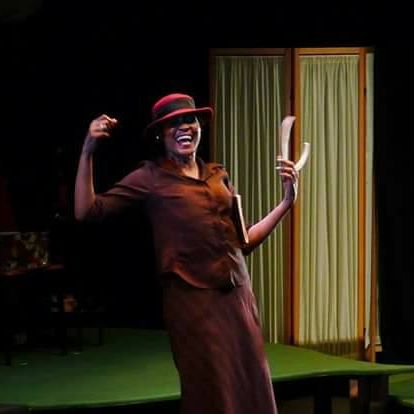
Actor Antonia Badón and Director Greg Freelon join forces to bring us the triumphant Zora!, a new staging of Laurence Holder’s play, realized as a one-woman show. It’s a love letter to not only the brilliant author, folklorist and anthropologist Zora Neale Hurston, but to a pivotal, landmark time in history.
Badón is astonishing as Hurston, “A Genius of the South” as novelist Alice Walker’s epitaph proclaimed. She embodies the author at various stages of her life, growing from a young hopeful to an accomplished elder with stunning realism, changing body language and the pitch of her voice dramatically to fit the time period. Hurston adventures from her home of Eatonville Florida, the first incorporated all-black town in America, winning a scholarship to Barnard college and launching herself into becoming a prominent force in the Harlem Renaissance. The most popular of her novels, Their Eyes Were Watching God, is published in 1937, and her essays, short stories and plays made her an essential voice in the black community of the time and well beyond.
In between (and often during) Badón’s monologues, a film projection of scenes from the early 20th century accompanies Zora’s story. Vivid images of New York City, and of the great icons of the era (such as Langston Hughes, James Van Der Zee, and Duke Ellington) flash by as we are treated to a soundtrack of the jazz classics of the age. The film interludes, while allowing us to delight in wistful time travel to another era, also allow Badón to change into one of her many fabulous outfits.
Armed with her powerful pen (and typewriter), Hurston’s voice holds tremendous power, brutal honesty, and necessary skepticism and criticism of the norms of the era. “I will jump up to support this democracy as soon as all those Jim Crow laws are gone,” she proclaims. “…But I am not selling out for no cheap, itchy suits!”
The most poignant sequence depicts Hurston as weary and ill in the late 1940s. She has written several acclaimed novels but with little money to show for it; she is now without a publisher but determined to raise her voice up and write again. After looking frail and spent she suddenly rises from her chair, stands up tall, and returns to her typewriter, stoic and strong once more, in a foreshadowing of her enduring legacy.
“Don’t worry about me,” she smiles.” Go down to your neighborhood bookstore. I’ll be there.”
Zora! is at the Sargent Theatre at the American Theater of Actors through Oct. 20, 2024.

Jim Catapano faces Demons in the Darkness
A Comedic Queer Horror Play Shines at The Days of the Dead Theater Festival
Riverside, California, 2010: Friends and co-workers Pablo (Sergio Caetano) and Owen (Hraban Luyat) are in a pickup truck by the woods. They are waiting for their gummies to kick in and for their dates to arrive. But they might as well be waiting for Godot—because due to a secret sabotage, the women are not going to show. And now the pair have their own complicated feelings for each other to confront—as well as, eventually, a very real monstrous entity lurking in the shadows (design by Coyote Caliente).

Goat Blood is the brainchild of Mark-Eugene Garcia, centering around the Latin folk tale of the chupacabra, a vampire-like creature said to have terrorized Puerto Rico in a series of livestock murders where the animals were found drained of blood. The story then worked its way across Latin America and the southern states in the late 90s. Owen tells a taco-devouring Pablo about the time he fell and broke his ankle on a hiking trail; immobile and scared, he warded off animal predators by warbling “God Bless The USA.” It is then that Pablo references the legend of the chupacabra. With the monster on their minds (and as we learn, lurking among the trees), the two continue to banter and philosophize, and begin to tentatively flirt. Owen mentions a game he played as a teen, where one “dude” runs his hand slowly up the other’s inner thigh, waiting for the other to get nervous and put a stop to it (or, not). Pablo incredulously dubs the game “Gay Chicken.”
“What, your high school friendships never had homo-erotic undertones?” counters Owen, before Pablo agrees to giving the game a go.
They are anxiously but playfully taking their first steps in exploring feelings that neither had wanted to admit to before. But before they can fully embrace the elephant in the room (or in this case, field), we come to realize that not only is the chupacabra in their midst, but that Pablo’s prior experience with it goes far beyond familiarity with the folklore. The creature makes its move, and we are now in a full-on horror story.
Suddenly, we flash back to 1998 and Pablo’s first encounter with the demon, which leads to a terrible tragedy that haunts Pablo to the present day. Gabriel Rosario appears here as the mysterious and intense Mr. Sanchez, who knows everything about the threat and allies with Pablo to try and combat it, using “fear as a weapon”. (Rosario also serves as Fight and Intimacy Director.) We cut backwards and forwards in time in a series of thrilling and dynamic sequences that roller coaster to a nightmare climax (but not without some more romantic exploration and soul-searching along the way).
The production is at turns atmospheric and creepy, insightful and witty. It is not only a gripping tale of terror, but also a relatable, astute look at the complexity of modern-day relationships in the queer community and beyond. The actors, as deftly directed by Rodrigo Ernesto Bolaños, throw themselves into the narrative and imbue their characters with a reality that plays beautifully alongside the old-school horror movie tropes—making them sparkle like the Twilight vampires that Owen jokingly alludes to. It all comes together to make Goat Blood an unmissable addition to The Days of the Dead Festival and to Frigid NY.
Goat Blood runs at Under St. Mark’s through Oct. 26, 2024.
Jim Catapano on how they died.
Anne L. Thompson-Scretching’s Poignant and Essential Reminder of a People Destroyed by Hate

Everyone in the District of Greenwood in Tulsa Oklahoma is dead—brutally murdered by the Ku Klux Klan. The White Supremacists in the area took advantage of a lie to justify destroying the town and everyone in it. This is not fiction—this was the reality on the days of May 31st and June 1, 2021, in what came to be known as the Tulsa Race Massacre. It is widely considered to be the worst incident of racial violence in Unites States history. But this atrocity has been often relegated to a footnote in the decades that followed, out of shame; and to perpetuate the often-false narrative of progressive unity and equality in 20th Century America and beyond.
Anne L. Thompson-Scretching’s Resurrection is a fictional account based on the very real massacre, taking place during and after that horrific 48 hours of bloodshed. We meet the people of Greenwood in a limbo world after they have perished, furious that their lives have been extinguished over a lie, prejudice, and envy. A white woman’s claims of rape by a man of color were dismissed from court after her testimony held no merit—prompting the KKK to seek revenge by murdering everyone in the town. But the incident was merely an excuse to do what they always wanted—the supremacists of Tulsa were jealous of the prosperous district, which Booker T. Washington had nicknamed “Negro Wall Street.” As many of the white characters freely admit, they couldn’t tolerate the possibility of people of color doing better in life than they were.
In this afterlife we meet Alan (Courtney Everette), the town doctor who treated many of his white neighbors, only to be shot and killed by one of them; Bess (Sabyne Santiago), who was doused in gasoline and set on fire, her baby still in her arms—what happened next will stay with you forever. Kevin Leonard is charming and heartbreaking as the mash liquor salesman Pete, humiliated and slaughtered by one of his own customers, the revolting yet pathetic Blue (Travis Bergmann). Dave Hummel is Percy, an amiable townsman of mixed parentage brutally attacked by the Klansmen’s dogs in his own school. Ron (Moses Sesay) is the man falsely accused of rape simply because he happened to be in the wrong place at the wrong time; although charges were dismissed—or in truth, because they were—he is mutilated and hanged.
Each person in the doomed town gets an Aria to tell the harrowing story of what happened to them on those tragic two days. Thompson-Scretching makes sure that we remember that these were human beings with hopes and dreams, and the impact is appropriately devastating. We get to know and love these people over the course of the play, which makes their graphic, horrific murders all the more heartbreaking. No detail is spared, nor should it be. If we forget we repeat, an undeniable fact that looms ominously just a century later.
The cast’s performance is individually and collectively stunning, from Everette’s Alan, who also narrates from beginning to end; to Katie Trubetsky as Lula Noble, the desperate girl we meet in the closing moments, whose panicked false accusation brought death to an entire town. Santiago as Bess and Sesay as Ron will have you in tears as they describe how they died. Rommell Sermons is the cigar-puffing, stoic and steely lawyer Oliver Porter; Daniel Kornegay is the entrepreneur Marcus, furious that his dream to have a successful restaurant ended in getting shot to death. “Am I supposed to be thankful that I didn’t suffer?” he protests after hearing the stories of the others. Dan Brown is Carl, whose affair and ultimate rejection of elevator operator Lula was the catalyst for her heinous lie. Andrew Boszhardt is Alan’s murderer Ethan, whose jealous father basically ordered him to murder the town doctor; Harry Cooke is Poke, Blue’s associate who was in love with a woman of color; and Ashley Vigo is Bird in Flight, also known as Molly Brightwater, the Native-American teen who just wanted to be loved and seen. Boszhardt returns in Act II as Wille Poole, another companion of Blue who ends up dying and asking for help from the person of color he himself had just shot.
Every character gets a chance to tell their story, even the “villains.” Every actor shines, bringing so much emotion and anguish to their performances it’s as if they are guided by the spirits of the doomed people of a century ago. It is a triumph of Thompson-Scretching’s magnificent writing to incorporate such complexity and nuance to every single character—we get to know each and every one of them, and leave with the reminder that everyone we have met and will meet was someone’s child, parent, lover, friend; and that they all deserve to be seen and heard.
Resurrection is a masterpiece—a suitably uncomfortable, disturbing, heartbreaking, and rewarding watch; one that demands we face a reality that we simply must not turn away from. The play is must-see that goes a long way in reminding us that we have a lot of work to do and a lot of life to live, in honor of those who never got the chance.
Resurrection runs at the John Cullum Theatre at the American Theatre of Actors through Oct. 27, 2024.
Jim Catapano reviews the revival of “The Buffalo Hero”
Flying on Angel Wings
The Powerful, Poignant The Buffalo Hero of WWI: The Wayne Minor Story Is Revisited and Reimagined at the ATA
Playwright and Director Kenthedo Robinson’s masterwork telling the story of the African American Buffalo Soldiers of the Great War has had several acclaimed NY runs over the years. Its latest incarnation at the John Cullen theatre might well be the definitive version.

Alton Ray returns to his signature role of Private Wayne Minor of Kansas City, imbuing the doomed legend with dignity and depth. He is re-joined by Nicholas Dodge as the revolting, over-the-top but still true to reality Captain Blu. Zsay Moore and the returning Ms D. alternate as Mama Minor, the emotional heart of the show. Wayne and Mama exchange letters throughout, and thus we get to know her, building up to a heart-shattering moment of stoicism and strength late in the story. Sharrell Williams is the effervescent and aptly named Angelica, the Florence Nightingale figure by day and singer/dancer by night, who provides needed lightheartedness but also displays flashes of steel. She is Red Cross “adjacent”, as she is not allowed official membership due to her skin color. Angelica dispenses the protective Angel Wing necklaces that all the men hold tight. The two women symbolize warmth and hope in the face of horror, both in war and at home, where other battles await.
The mistreatment of the soldiers is portrayed even more sharply in this production, mirroring the suppression and degradation of people of color that has been perpetuated for centuries in civilian life. They get no training, no proper uniforms, no decent food; when the dismissive Blu finally acquiesces, he gives them out-of-date training manuals with pages torn out. The racist Blu is obsessed with delusions of grandeur and notions of glory, and freely admits that all he cares is about to ascending to the rank of major. He openly mourns the “social structures that are crumbling before my eyes” and the norms of yesteryear (i.e. white supremacy). Blu is the enemy for most of the story, until the men go to France and are faced with a new nightmare that they were deliberately sabotaged from being prepared for.
The differing personalities and approaches of the three soldiers are vivid in this production, deftly realized by the incredible actors. Ray’s Wayne is doing his best in a horrific situation, wanting to do right by his Mama, by his partner Belle and by the version of himself he aspires to be. He is dedicated to fighting for the America he wants to see emerge. “Deeds not words” is the mantra he upholds to his dying breath. Shatique E. Brown returns as the heartbreaking Rucker. Missing his family and humiliated by Blu, the sensitive Rucker’s monologue about the fate of his beloved daddy is utterly devastating. James Oliver provides intensity as the justifiably raging Seymoure, a Howard University graduate who lost his whole family in the Camp Logan tragedy of 1917. His conflicts with Blu are electrifyingly depicted. Christopher W. Clayton is their firm but compassionate leader Lieutenant Clark, and his devotion to the men is particularly moving in this rendition, as he is torn between getting them under control and putting their monster of a Captain in his place. A sequence where Blu goes too far by surprising the men with a tear gas attack as a “training” is harrowingly staged, and one can feel the anger and disgust across the entire theatre.
Blu’s treatment of the men has tragic consequences when the regiment finally ships out to France after a year of essentially no preparation. Minor’s climactic moment of fateful heroism in the face of everything collapsing around him is beautifully depicted and leaves very few dry eyes in the house. It’s a magnificent tribute to a man and a time that should never be forgotten. Because over a century later, many of the same battles are still being fought.
Jim Catapano and the Well-Mannered Wife Swap
A Stylish Adaptation of Shaw’s Slick Comedy Comes to the American Theatre of Actors
Way back in 1912, George Bernard Shaw, a master at depicting the complexity of human relationships and behavior, crafted Overruled, a farcical look at polygamy. Over a century later we get to examine this not-uncommon occurrence through modern eyes, and with the benefit of his evergreen legendary wit.
On paper, the circumstances of the story are akin to a screwball TV sitcom plot: a man and a woman meet on a boat trip and fall in love; they are each shocked to learn that the other is already married to someone else. Then, their respective spouses actually show up—also having fallen for each other. Fortunately, the brilliant writing of the iconic playwright, realized at the ATA by four exceptional actors, elevates the story to a more sophisticated level.
We first meet Mr. Lunn and Mrs. Juno, played by Sam Hardy and Natasha Sahs, fresh from their romantic voyage.
“Promise me you won’t be horrid,” she requests, standing on the precipice of infidelity.
“I’m not being horrid, I love you,” he declares. “Don’t be alarmed, I like wanting you.”
This declaration speaks to the heart of the matter as it unfolds; the adventure is too enjoyable to not pursue. The excitement of the situation is literally overruling any question of immorality. They flirt, they philosophize, they justify their actions and intentions; they circle the chairs of the hotel lobby they’re meeting in, sizing each other up as if in a choreographed dance, and trying to make sense of the inconvenient but inescapable feelings they have developed for each other. Suddenly the voices of their now less significant others are heard through the door, and we meet Mrs. Lunn and Mr. Juno (Kate Jergensen and Jonathan Beebe). This new team of Lunn and Juno is as smitten with each other as the first pair. Mr. Lunn, whose first name we have learned is Gregory (“which sounds like a powder”, he admits), and Mr. Juno (whose first name is oddly “Sibthorpe”), immediately go into alpha mode. Each of the men clearly wants the best of both worlds, but initially only for themselves.
“I’m her prospective husband,” says Sibthorpe to Gregory. “You’re only her actual one. I’m the anticipation: you’re the disappointment.” It’s the perfect “dis” and leads to an attempt at fisticuffs, which hysterically, neither is very good at.
Mrs. Juno is disappointed that her husband isn’t the proficient boxer he had professed to be. “You spoke with the greatest contempt of men who didn’t kick other men downstairs,” she notes.
“Well, I can’t kick Mr. Lunn downstairs,” Sibthorpe retorts. “We’re on the ground floor.”
As with all of Shaw’s works, the play is absolutely loaded with quotable lines like these that stay with you; the dialogue is either hilarious or makes a profound statement on the fickleness of humanity (and often, it’s both). The play neither justifies nor condemns the actions of its characters, simply allowing them to accept the situation as it is and embracing ambiguity; ultimately, everyone gets on board.
Overruled packs a lot of thought and humor into its 50-minute runtime and makes for the perfect Shavian appetitizer. The actors deliver it with relish, and are guided deftly by director John Benedetto.
Overruled runs at the American Theater of Actors through October 13, 2024.

Jim Catapano is Living, Lying, Leaving and Loving in Corporate America
“Is there even such a thing as a One-Third Life Crisis?”
Aaron is a 29-year-old company troubleshooter who has fallen into a rut in what astrology buffs would call his “Saturn Return” year. “I haven’t done anything I set out to do,” he laments in the song “Lost.” “This isn’t how things are supposed to be…is this what it feels like to lose your way?” He spends his days held prisoner by the system, doing meaningless work for people who would get rid of him in a heartbeat. Just getting a long-enough lunch break to be able to leave the office is a victory. (“Can’t you just bring crackers to your desk?” is the vile suggestion from the higher-ups). Aaron’s only respite is Tuesday Pub Trivia over IPAs with the colleagues he does connect with, like his bubbly buddy Charlie.

Into this existential crisis comes Penny, a new management trainee full of cheer and optimism (“We Can Have It All Someday”). Penny and Aaron connect meaningfully and seem on the verge of romance—but she’s also a determined go-getter, and the corporate ladder threatens to take her away to become just another crushed soul. Can Aaron and Penny ride the corporate waves back to each other? It’s a fun journey either way.
Finding Aaron is a smart, funny new musical populated with familiar personalities. Though it sheds a black light on the epidemic of the career path that leads nowhere, it does so with charm and hope. The archetypes abound and are cleverly drawn—Mark Ross, the disconnected supervisor; Ted, the power-hungry, duplicitous predator; Chad and Brad, the cackling, clueless “Bros”; And Lois, the over-it-all employee on auto-pilot. Corporate stooges Mark and Ted have plans for the company that threaten all our heroes, who are just struggling to not only survive, but to live and work with purpose and connection. The result is an intriguing chess match between the “suits and the blue jeans.”
At a reading held through at the Emerging Artist’s Theatre’s Spark Theatre Festival in September, the scene was set with the song “Corporate America,” performed by most of the talented cast. The songs verge from witty to poignant to hilarious, including Aaron’s expletive-filled takedown of Ted when he finds out the truth about him. The corporate mover/sleazeball threatens to take Penny away from Aaron both romantically and physically. He wants to send her to the corporate office in Singapore, where he promises to visit occasionally in the pretense of continuing their relationship. Penny’s dilemma, to either sacrifice who she is and the people she cares about for career success, or resign and face an uncertain future, is one that resonates deeply. She tries to fit in with Ted’s crowd but her true self resists; she even makes a Doctor Who reference, giving us rebellious bohemians a clue as to where her heart (hearts?) lie. (She also reveals during a pub trivia session that she has a black belt in jiu jitsu, and we just know that will come in handy later in the show.) Her internal struggle is depicted in several poignant musical moments, including “A Part of Me I Didn’t Know Before.” The journey back for Aaron and Penny is moving and memorable, and very funny.
Finding Aaron is a fun, brisk show and its songs drive the narrative forward with deftness. When fully realized it will be a must-see, for everyone (to paraphrase Rent) living in America at the beginning of the millennium.
Finding Aaron’s book is by Kris Maloy and Jolie Beth Boudreaux, with Music and Lyrics by Maloy. The director is Sujin Moon.
15 minutes with Jim
Jim Catapano is the lead reviewer at Five Star Arts Journals and has covered everything from Shakespeare to Hard Rock. He himself is a world class musician, writer and performer. ArtsIndependent, the site which carries his editorials, would like to pay a brief tribute to Jim by chatting with him about … HIM.

So when I research you to see what category to put your work as an artist in, I come up with every category to put your artistry in. Musician, writer, performer, commentator, and the list goes on. What kind of artist do you consider yourself?
JIM: I guess I’m a Jim-of-All-Trades! A friend very sweetly referred to me as a “Renaissance Guy” which is very flattering, but really just a grand way of saying that I’m interested in everything. Which I think is important, it makes someone well-rounded and gives them a lot to talk about! I rarely need to discuss the weather or last night’s game, which helps keep the conversation exciting. And I’m always very interested in what other people are doing!
I often find, with artists like you, that you can’t be called a musician or a writer, you have to be called an artist because you’re so diverse. What makes you so diverse? What is it that gives you the desire to put out so many different kinds of art?

JIM: I’m very grateful to say that to a large extent I’ve been able to make a creative contribution to everything that intrigued me as a kid. Which is all kinds of creative expression – writing, performing, drawing, acting, and also the tech side of things like audio engineering, mixing and mastering. I feel like I don’t exist if I’m not creating, which I think is a drive that fuels many artists. I love expressing my unique comedic perspective through my online comic character “Dave”, (The Dave Dimension) which my brother and I actually created when we were kids and then brought to our University Humor Magazine—we both collaborate on ideas for it.
JIM: Music will always be my next love after that, but I appreciate any opportunity to not only express myself creatively, but also promote other artists and friends in the Community who I believe in and often collaborate with. I’m also extremely blessed to have worked with so many inspiring and encouraging creative people who really helped me learn and grow. Recently I even did some singing and dancing in a musical for the first time, with some absolutely wonderful and encouraging talented people and a very appreciative audience, so that’s another check on my list!
Does each of your work feed others? Meaning does your writings fuel your compositions, does your blogs feed your more public writings, etc. Or is everything a simple moment of creation?
JIM: I do think that my different interests complement each other. I bring a lot of humor to the projects I’m involved in, and people have been very kind to say that I contribute to the morale of all the group projects I’m involved in. I like to help maintain a positive, optimistic atmosphere, and having experience in so many different kinds of creative endeavors, problem-solving, troubleshooting, and riding out the rough waves has really helped me do that.

What’s next for the great Jim in terms of artistry?
JIM: I’m working with two bands right now, chiefly The Opposition, and we’ve been consistently posting new original music on Social Media. I’d like to play live more often and help jumpstart the live music scene in NYC. My favorite thing after performing live is seeing other people perform. I’m also going to continue being very active as a reviewer and have an ongoing Voiceover collaboration with two authors. And squeezing everything else in between! (I’ve heard of sleep but have personally never tried it.)

Jim Catapano Review: A New Musical Casts the Spotlight on a 20th Century Legend

The tragic story of British mathematical genius Alan Turing (1912-1954), who is considered by many to be the father of theoretical computer science, was long overdue a modern retelling. And what better way than in lovingly crafted song?
TURING is the brainchild of Timothy L. Michuda and Benjamin Ward (Book, Music and Lyrics). They provide a soaring soundtrack to the short but brilliant life and work of the titular subject. Turing was lauded as a hero for cracking the Nazi’s Enigma Code during World War II—and then the world turned on him, vilifying and prosecuting him as a criminal, simply for being gay.
Alan is played as a teenager by Angelo Bravos; as a 28-year-old by Kevin Soto; and finally at 40 by Dominick Rincker (who does quadruple duty as co-Music Director with Eddie Nicholson, co-Assistant Producer with Director Anna Maria D’Ortenzio, and Sound Designer).
The three eras of Turing’s life unfold simultaneously, as foreshadowed in the opening song, “Three Stories, One Man.” Emma Gordon plays Joan Clarke, the cryptologist who participated in the Enigma Project and became romantically involved with Turing. “There’s so little joy in the world, and I think we’d make a fantastic pair—a balanced equation,” she quips (and sings “The Perfect Equation”). Clarke, his eventual fiancée, becomes aware of Alan’s homosexuality after witnessing him “acting very familiar” with another man, but remains loyal (“What Is Love”). Eric Lewis is Christopher Morcom, Alan’s schoolmate and early close confidant (as portrayed in the spirited “That’s What Friends Do”). A tragic turn of events involving Christopher then spurs Turing to throw himself into the work that became his legacy. Gael Rojas is the older Turing’s young love Arnold Murray, whose relationship with the mathematician in 1952 leads to devastating consequences. “If it’s a crime to love and be loved…” protests Alan, but his lawyer can only concede that “in the courtroom, love is not the law.” Turing is convinced to plead guilty to avoid prison time (“Damned”), but this leads to an even darker and more horrifically unfair fate. “All I once knew crumbles to dust…is there a soul that I can trust?” he laments in the heartbreaking “Which Way Is Up?”
The three narratives are held skillfully together by the memorable, moving and poignant score. The music blends classic orchestral elements with modern jazz and contemporary pop, all sung and harmonized to impeccably by the talented cast. It all makes for an entertaining, fitting and emotional tribute to a man who was a victim of the age he lived in, and now stands as a celebrated icon of the LGBTQ+ community.
TURING ran at the Greenhouse Theater Center in Chicago in August as a Production of Blue Demon Theatre, and is due soon for a New York run.

Jim Catapano Music Review: In It to Win It!: Atti Juhasz Brings Old School Anthem Rock Roaring into the Modern Day

“Gotta Win It” just might be pumping through the sound system at stadiums and arenas all over the world very soon. This is two minutes and 15 seconds of adrenalin-rushing, fist-pumping hard rock bliss, recalling the best of ACDC, Queen, and Guns and Roses. The lyrical content is confined solely to the title, creating a mantra-like chant that is tailor-made for a rally cry. Juhasz provides lead and rhythm guitars as well as bass; He is complemented on guitar by the legendary Tribe of Gypsies Founder Roy Z (Bruce Dickinson, Judas Priest), who also provides a punchy mix that dares you not to crank the volume up to 11. The combination of Juhasz and Roy Z on the axe is a wonder to behold, both providing crunchy and memorable riffs and licks. Sean “Sako” Kenesie provides the soaring vocals. The track was mastered by Grammy and Juno Award-winner Maor Appelbaum. Get ready to blast this the next time you need a pick-me-up.
Jim Catapano reviews The Meeting: The Interpreter
An Historic Moment Captured Through a Surreal Lens
Catherine Gropper Crafts a Gripping and Innovative Look at Events Leading up to the 2016 Election

The Meeting: The Interpreter is a Tour De Force of modern theater—what at first seems like a traditional two-hander becomes something far more unique and spectacular. It is centered around a notorious meeting at Trump Tower in 2016 that may have been the smoking gun in alleged collusion between the Trump Campaign and Russia, and the Congressional Hearings that followed. A large screen completely covers the stage as actors Frank Wood (Tony winner, Side Man) and Kelly Curran (HBO’s “The Gilded Age”) take their places; they appear first as images, with the backdrop of a Senate hearing room to introduce themselves and the setting in a blisteringly fast round of dialogue. The screen projection then slowly moves to the audience’s right, revealing the actors and stage crew behind it. Two crew members operate the camera on a railroad track that winds around the stage, zooming in on the actor’s faces, hands, and unexplored aspects of the set that all play a part in the unfolding story.
Wood is the International Interpreter of the title, a Russian-born man who sees himself as an American; he is the key witness in the events of the day who just wants to live in peace and quiet. Curran is a journalist, the Russian lawyer Natalia Veselnitskaya (believed to have had a dossier on alleged Clinton shenanigans), and many other pivotal players in the world-changing event. (Note: a quick review of the actual historical events prior to attending will greatly enrich any theatre-goers experience of the production. And be sure to study up on the Magnitsky Act of 2012.)
The set by Jim Findlay is like a third character in the production; it is full of surprises that the tracking camera slowly reveals—a sound booth in the back, an open locker filled with paraphernalia around a hidden corner. Puppets by Julian Crouch depict the players involved in the Trump Tower meeting (including the infamous Paul Manafort); their large, somewhat grotesque heads plopped on tiny naked bodies. There is interpretive dance (choreography by Orlando Pabotoy); many bizarre turns, such as Curran nailing her many neckties to a block of wood; there are even snippets of singing. It all paints a vivid and unforgettable look of a fateful moment in time that haunts our country and the world to this very day.
Wood and Curran are astonishingly good in what is a very challenging production —switching characters, accents, and even wigs at a feverish pace—and using every device in the theatrical playbook to command the stage and tell the tale. Added power is provided by the lighting by Barbara Samuels and sound by Daniel Baker and Co., and it is all held together by the brilliant direction of Brian Mertes.
The Meeting: The Interpreter runs at the St. Clements’ Theater through August 25, 2024.
 Arts Independent