
Home » Uncategorized (Page 15)
Category Archives: Uncategorized
Brian Mertes to helm Catherine Gropper’s drama based on actual events: THE MEETING: THE INTERPRETER
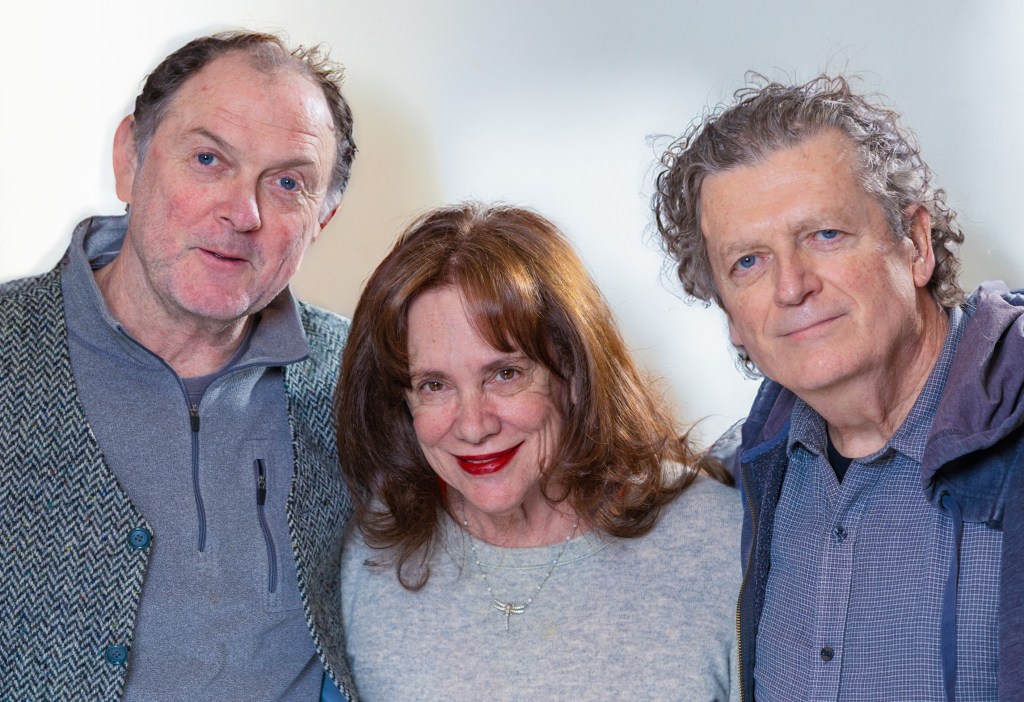
This Summer at Theater at St. Clements, 423 West 46th Street, New York City. Contact Jay Michaels at info@jaymichaelsarts.com or 347-497-4814 for further details or visit meetinginterpreterplay.com
The NEWS you heard. The STORY that has never been told. UNTIL NOW.
Catherine Gropper, an international playwright, documentary filmmaker, and fine artist, had a chance meeting with an actual global government interpreter.
What was discussed there could have changed the course of history.

Brian Mertes is a director whose body of work spans theater, television and film, and is the master storyteller this show so richly deserves. He directed the world premiere of many new plays including David Greenspan’s The Myopia for the Foundry Theater at the Atlantic and Jose Rivera’s Massacre at Rattlestick Playwrights Theater in NYC. He has developed new work at Ensemble Studio Theater, Manhattan Class Company, Soho Rep, Naked Angels, Manhattan Theater Club, The Public, PS 122, Actors Theater of Louisville, Playwrights Center Minneapolis, Playmakers Rep, New Dramatists, Ars Nova, PlayPenn, and BACA.
Mertes regularly directs at Juilliard where he recently created a multimedia theater work based on Sam Shepard’s Paris, Texas with alt-country rocker, Jim White.
Mertes has directed television for ABC, CBS, NBC and Fox, garnering three Emmy and three DGA nominations, and an Emmy for directing. He is currently Head of the MFA Directing Program at Brown University/Trinity Rep.
“We are excited to have a visionary like Brian in the director’s chair,” says playwright Catherine Gropper; “and we are energized by the presence of Boris,” she continued. The cast is led by veteran character actor, Boris McGiver, who will create the titular role of “The Interpreter,” an innocent translator who gets caught in a web of intrigue involving world affairs. “This necessary story,” she concluded.
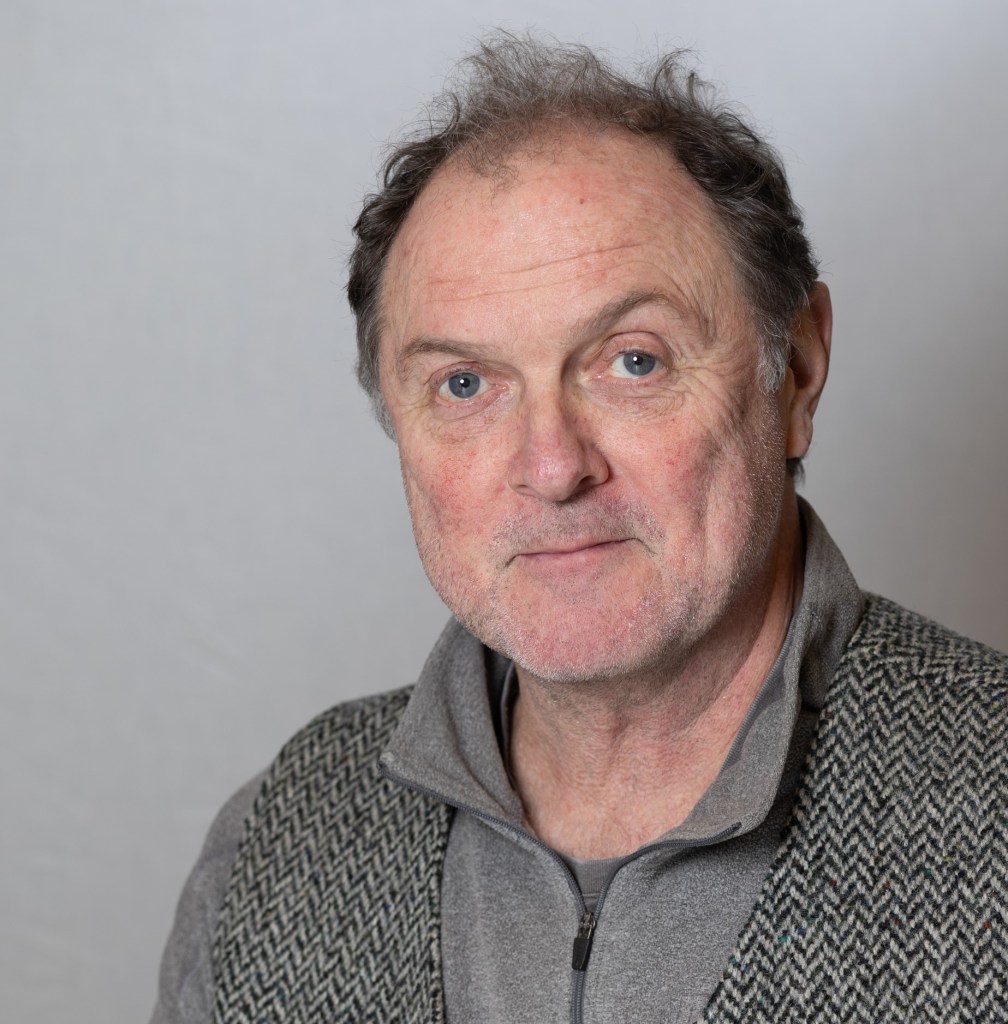
Boris McGiver is a familiar face to TV and film audiences for decades. In addition to his long-recurring role on CBS’s Evil as Monsignor Matthew Korecki, recent work includes M. Knight Shyamalan’s SERVANT (Apple TV), Taika Waititi’s Our Flag Means Death, and D.A. Glen Maskings on ABC’s For Life. He also turned in a commanding performance as Tom Hammerschmidt, Editor-in-Chief of The Washington Herald, on NETFLIX’S House of Cards (Beau Willimon, David Fincher). He is also a familar face on stage wth credits that include New York Theater Workshop (Lydie Breeze, The Devils); Theatre for New Audience (Cymbaline, Andorra), and appearing in nine Shakespeare productions at the historic Public Theater to name a few.
Catherine Gropper, acclaimed for her work as a painter, sculptor, and playwright, boasts accolades from Scotland’s national newspaper, the Scotsman at the Edinburgh Fringe (four-star review) and a rave from Anita Gates in the New York Times – both for her play, Embers (which enjoyed an extended run in NYC); and great praise in DC Theatre Scene for her play, Miss Crandall’s Classes, which explored racism in the education system.
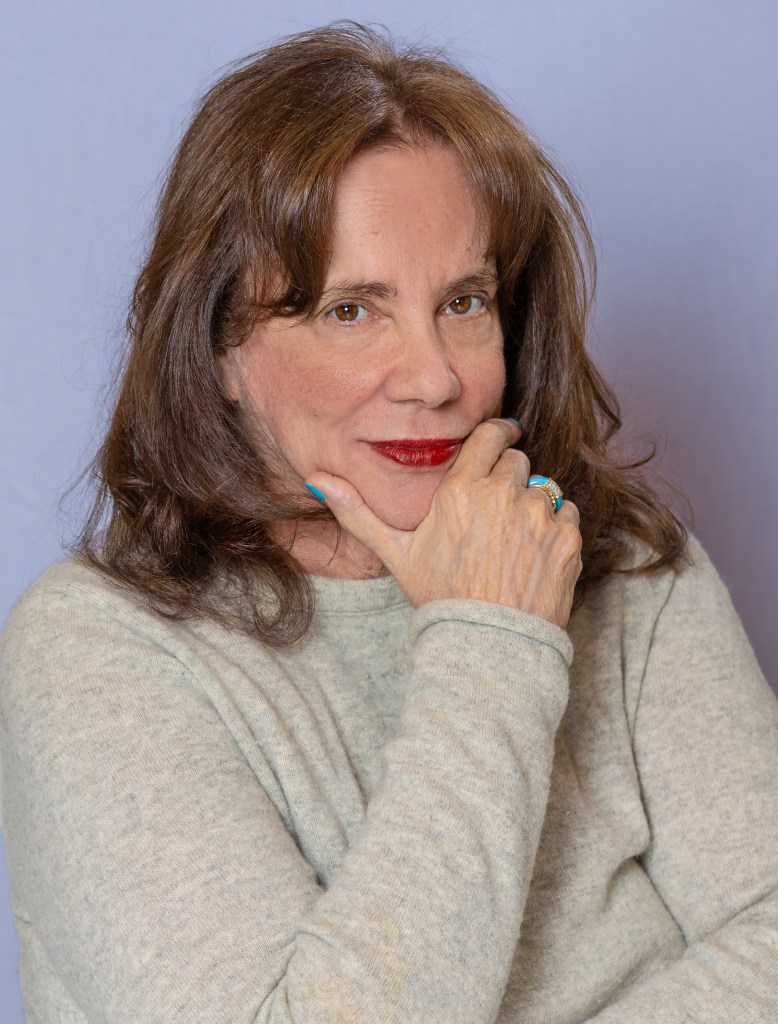
Ms. Gropper is also the author of several short stories and a book of poetry. She is an international award-winning filmmaker and a member of the Dramatists Guild.
photo by Dan Lane Williams/dlwphotographynyc.com/
Callie Stribling sheds light on “Until Dark”
Sometimes even when a show is clearly born out of a specific moment in time, a specific movement in the collective culture, the themes it touches on remain eternally relevant. Until Dark is such a piece. While clearly rooted in time in the midst of the Me Too movement, specifically dated as taking place in 2017, its discussions around yes sexual assault and consent but also past trauma and how it continues to impact our lives and how much it shapes our actions and how we take accountability for them is are bigger than one movement.

The script by Federica Borlenghi focuses on three sisters; Cass, Jackie, and Lisa. When one of Cass’ students from the yoga classes she teaches presses criminal charges against her following an incident, Jackie steps forward to act as her attorney. Most of the action takes place in the time leading up to Cass’ trial, an with all three sisters staying in Cass’ apartment, it becomes a breeding ground for tensions and unspoken resentments.
It’s a tightly written show with a fairly short run time that still manages to give a good idea of who these three people are and deliver a lot of information without it ever feeling rushed or cramped. Since much of the show is conversations between characters about past or off stage events, the script ran a risk of falling into telling too much and showing too little. Whether because of Borglenghi’s writing, her staging in her role as the show’s director, compelling performances by the cast, or a combination of the three, watching it never feels like it’s not showing you enough. The descriptions of specific events are appropriately evocative without needing to be overly detailed. The personalities and relationships of these sisters are clear and present.
As the youngest sister, Lisa, Luísa Galatti brings a frenetic energy that fits the youngest sibling role perfectly. She is caring and hopeful, almost naively so. Giorgia Valenti plays a Jackie who is so used to being the caregiver, the problem solver, and is feeling the weight of years of trying to handle everyone else’s problems. It’s clear that she cares, but it’s also easy to see her exasperation and exhaustion. Rounding out the cast is Maria Müller as Cass. Her performance is incredibly powerful, and she manages to capture a lot of complexity. All three shine in their respective roles.
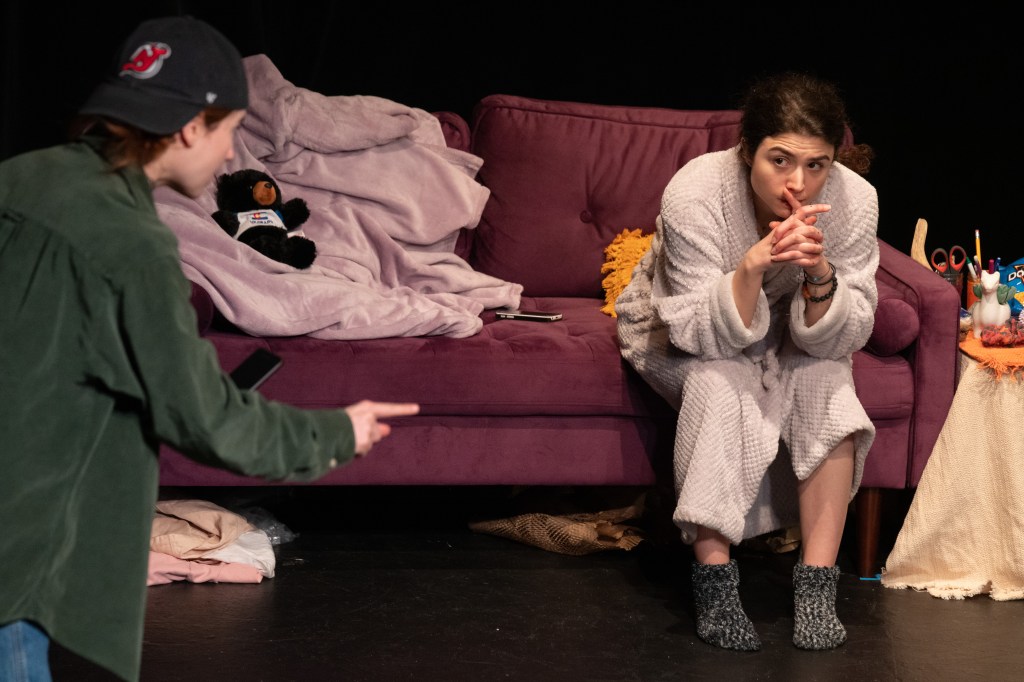
The show features set and props by Andrés López-Alicea. For a simple space, López-Alicea added a lot of detail to really create a detailed and fleshed out design that made for a lived-in world. The sound design by Stephanie L. Carlin was simple in that the show had simple needs when it came to diegetic sound, but her music composed for the show to underscore transitions and similar moments added a perfect amount of unease. Adrian Yuen’s lighting design was instrumental in helping shape the space and complimented the set perfectly. The whole design team (including costumes also by Borglenghi) did a great job creating a full and beautiful piece that filled but never felt too large for the venue.
A complex piece that handles difficult subject matter skillfully and delicately, talking about explanations for behavior without ever making excuses, Until Dark is a powerful show. And it manages to be on in a way that doesn’t lecture the audience or try and hit them over the head with a message. It simply presents three people amid a difficult situation without judgement. That sort of presentation is the best way to create a full picture of a complicated subject. For its compact run time, Until Dark manages to do that quite well.

OPENING NIGHT PRESS & INDUSTRY EVENT scheduled for the FEDERICA BORLENGHI’S UNTIL DARK
OPENING NIGHT PRESS EVENT
FEDERICA BORLENGHI’S UNTIL DARK
Thursday, February 15 @ 7:00 pm 154 Christopher Street #1E New York City
Et Alia Theater is proud to present Until Dark by Federica Borlenghi, a new play that reflects consent and the intricacies of sisterhood, while testing its ties and boundaries.
To celebrate this, the Et Alia Company will host a small gathering after the performance. Refreshments and a chance to meet the cast and other creatives to discuss the play. Please contact Matt at info@jaymichaelsarts.com for further details and reservations.

When Cass is accused of a heinous crime, her sister Jackie – a promising criminal defense attorney – decides to take over the case. But when Lisa, their other sister, shows up in town for solidarity, she realizes there is more to the allegations than what she was told.
Thursday, February 15 @ 7:00 pm — PRESS & INDUSTRY EVENT After Show
The run continues: Friday, February 16 @ 7:00 pm; Saturday, February, 17 @ 7:00 pm; Sunday, February 18 @ 7:00 pm; Thursday, February 22 @ 7:00 pm; Friday, February 23 @ 7:00 pm; Saturday, February, 24 @ 7:00 pm; Sunday, February 25 @ 3:00 pm; Thursday, February 29 @ 7:00pm; Friday, March 1 @ 7:00 pm; Saturday, March 2 @ 7:00 pm; Sunday, March 3 @ 3:00 pm at Out of the Box Theatrics, 154 Christopher Street #1E, New York City TICKETS
Cast features Maria Müller as Cass; Giorgia Valenti as Jackie; and Luísa Galatti as Lisa (Covi Loveridge Brannan and Ana Moioli, alternates)
Production written & directed by Federica Borlenghi (winner, Et Alia Theater Lab, 2023)
Produced by Et Alia Theater
Co-Produced by Mo Shah & Kavita Shah; Dramaturg & Associate Producer: Covi Loveridge Brannan; Stage Manager: Skye Pallo Ross; Associate Director: Isabel Criado; Set & Properties Designer: Andrés López-Alicea; Assistant Set & Properties Designer: Gabriel G. Díaz Flores; Lighting Designer: Adrian Yuen; Assistant Lighting Designer: Em Stripling; Costume Designer: Federica Borlenghi; Deck Manager: Julia D’Angelo
Founded by international women in New York, Et Alia Theater champions multicultural, women-centered storytelling in the performing arts and fosters a community of mutual support. By providing performance programs and artistic opportunities that welcome, support, and showcase international women artists in New York, Et Alia offers an empathetic creative space for people adapting to a new social environment.
A Director’s Memoir: Laurie Rae Waugh remembers Irving Greenfield on the eve of premiering another of his plays.
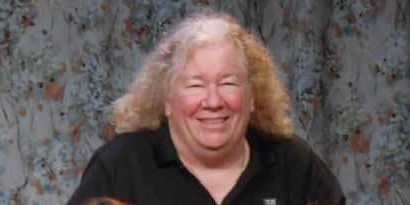
I first met Irving A. Greenfield in 2015 during rehearsal for the first of many of his plays that I directed at the American Theatre of Actors. Each play Irving wrote incorporated a piece of his own life in it. The play was called “One More Time.” Irving came to a few rehearsals to answer questions the cast had about the play and its characters. The lead character, who was divorced three times, was a successful romance novelist writing under a woman’s name. Irving himself wrote romance novels under the pseudonym Alicia Grace, in honor of his wife, Anita G. Greenfield. At the last performance, Irving told me that he loved how I brought his play to fruition, and then handed me his next play to direct, “Family Matters.”
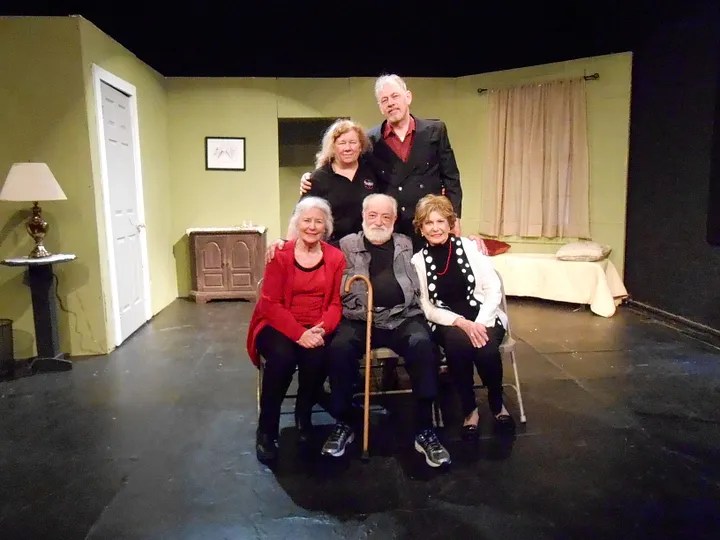
“Family Matters” was produced in 2016 and the play again had parts of Irving’s life scattered throughout. Irving visited us during the rehearsal process, and it was wonderful having him stop by and share stories about his life. This play dealt with family relationships and the clearing of the air on past matters that were never resolved. The play was a unique directing challenge because two actresses alternated in the lead role of Rose.
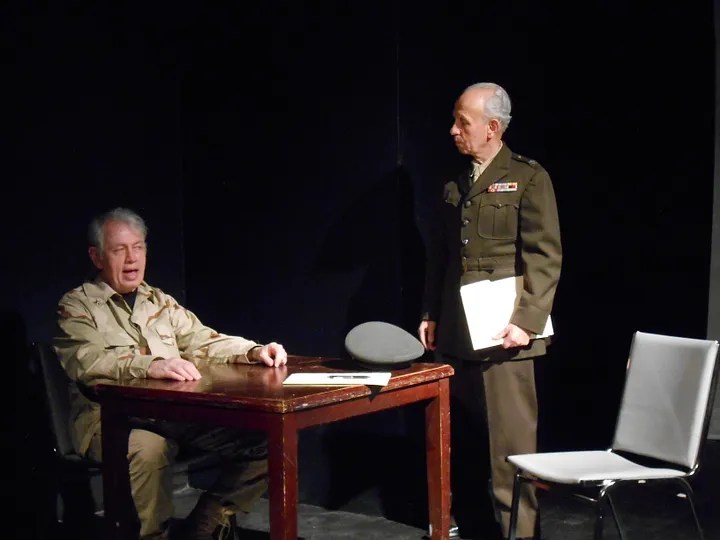
In 2017, I directed his play, “P.O.W.” This play was based on a true-life experience that Irving had as a soldier during the Korean War. I loved when Irving came to rehearsals and shared little snippets of his life that pertained to the plot. In order to make the play more contemporary, I thought that it was a stroke of genius for Irving to change the story from the Korean War to Vietnam. He moved it to a time of turmoil in our country when people had very strong emotions about the Vietnam War. What helped in directing this play is that two of my actors were Vietnam Veterans who served in the Navy. One of the actors served two tours of duty in Vietnam. Also, the husband of one of my actresses served in Vietnam as well. These three actors were able to add a rawness and an added layer of truth to the play. At the end of every performance, we had a talk back with the audience. The audience was asked to decide if the main character was guilty or innocent based upon his actions in the play. The last performance was dedicated to Irving’s son who had passed away earlier that year. We sold out that performance. Half of the audience was comprised of Irving’s family and friends who had traveled from different parts of the U.S. and Japan to attend the show. This was a true testament to who Irving was and how he touched so many people, including myself. When sending out draft press releases and emails about this play, I shared with Irving what I had written. His response was, “I am humbled by your reaction to my work.”
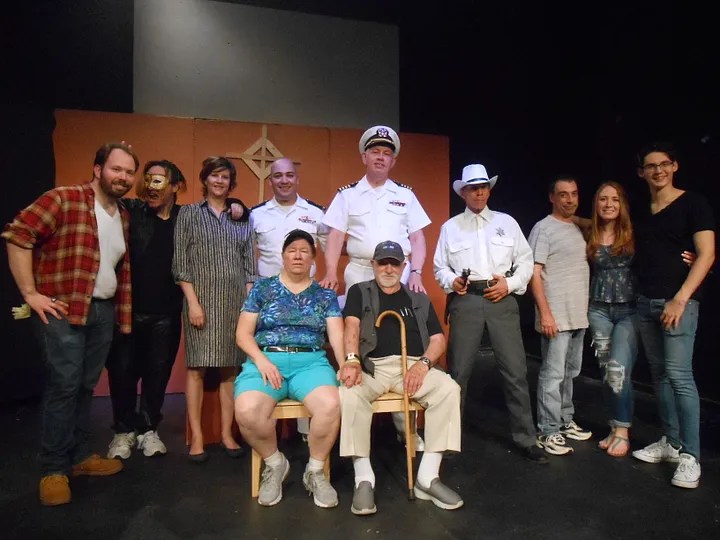
The next play I directed in 2018 was “Banned in Bisbee.” This play was based on another true story. Irving’s series of Depth Force books were actually banned by the town of Bisbee, AZ. During one of the rehearsals, Irving told us about receiving a letter and a copy of a local news article from the librarian in Bisbee informing him that his books and his Depth Forth series were banned from the library due to their sexual content. The letter and article inspired Irving to write the play. Irving had a wonderful way of telling a story. In the play, a couple of characters from his books step out of the pages and appear in the dreams of the Mayor of Bisbee and his wife. Irving even wrote a part for himself in the play. Irving and his wife came in during one of our rehearsals so we could film his role. That was a fun day for all. I got to direct Irving in his own play and everyone who interacted with his character added a little flair to the taping. I always enjoyed spending time with Irving and his wife. We would often chat on the phone, share an email, or I would pick them up at their home in Staten Island and we’d all go out for dinner. Those special times were the ones I miss the most, when both Irving and his wife Anita shared personal stories with me.

In 2022, I got to direct Irving’s play, “What Do We Do About Walter?” This one was set on a college campus and was about an English professor who was a successful author. Irving was a college English professor himself as well as a prolific and successful writer.
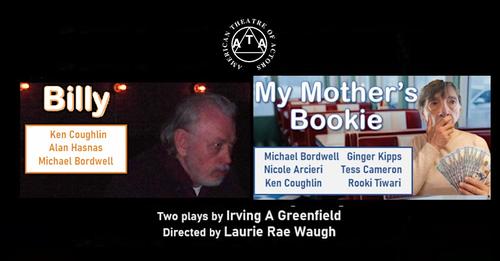
Irving was always sending me works of his. He wrote over 300 short stories and books. He sent me a screenplay that I liked but I thought it might be tough turning it into a play. He also gave me one of his novels and a book of his short stories. I found two short stories that I asked him to turn into plays. He completed one of them, “My Mother’s Bookie.” It will premiere from January 31st to February 11th at the American Theater of Actors. It’s paired with another one of Irving’s plays, “Billy,” which won a Yukon Pacific Playwriting Award when it was produced for Public Access TV, and a NOVA Award for the most original play on CTV (Community Access TV). It also ran off-off-Broadway at the Theatre Studio in NYC.
Irving once said to me in an email, “You have a real feel for the way I write, and you communicate that to the actors.” I am sad that Irving is no longer with us, but audiences will continue to know him through his plays. I am grateful that I had the opportunity to know this wonderful and talented man. He is sorely missed!

Eight First Ladies … Live(?) on Stage.
The most famous [deceased] First Ladies are having a hard time accepting the Trump presidency.
Why should they be any different than the rest of us?
But what can they do about it?
After all, they’re dead!

If you think that world affairs stop being important after you shake off this mortal coil, you would be wrong. Janine Sternlieb and Lennie Dean masterfully tell us otherwise with their new play, First Ladies and the Big White Lie.
The disturbing and unprecedented events unfolding in DC, in Charlottesville, and at the border, have reached the great beyond and now the spirits of the powers behind the American “throne” must confront the secrets and deceptions that have hindered America’s march toward a truly democratic society.
This intriguing new play — directed by stage artist and political commentator, Marcello Rollando — will have a special industry presentation, March 7 @ 2:00 p.m. and March 8 @ 6:00 p.m. at one of New York’s arts epicenters, Open Jar Studios, 1601 Broadway 11th floor, New York City. Contact info@jaymichaelsarts.com for reservations or further info.
We had our own “congressional hearing” with the authors of this envelope pushing piece to learn more about them and their work.
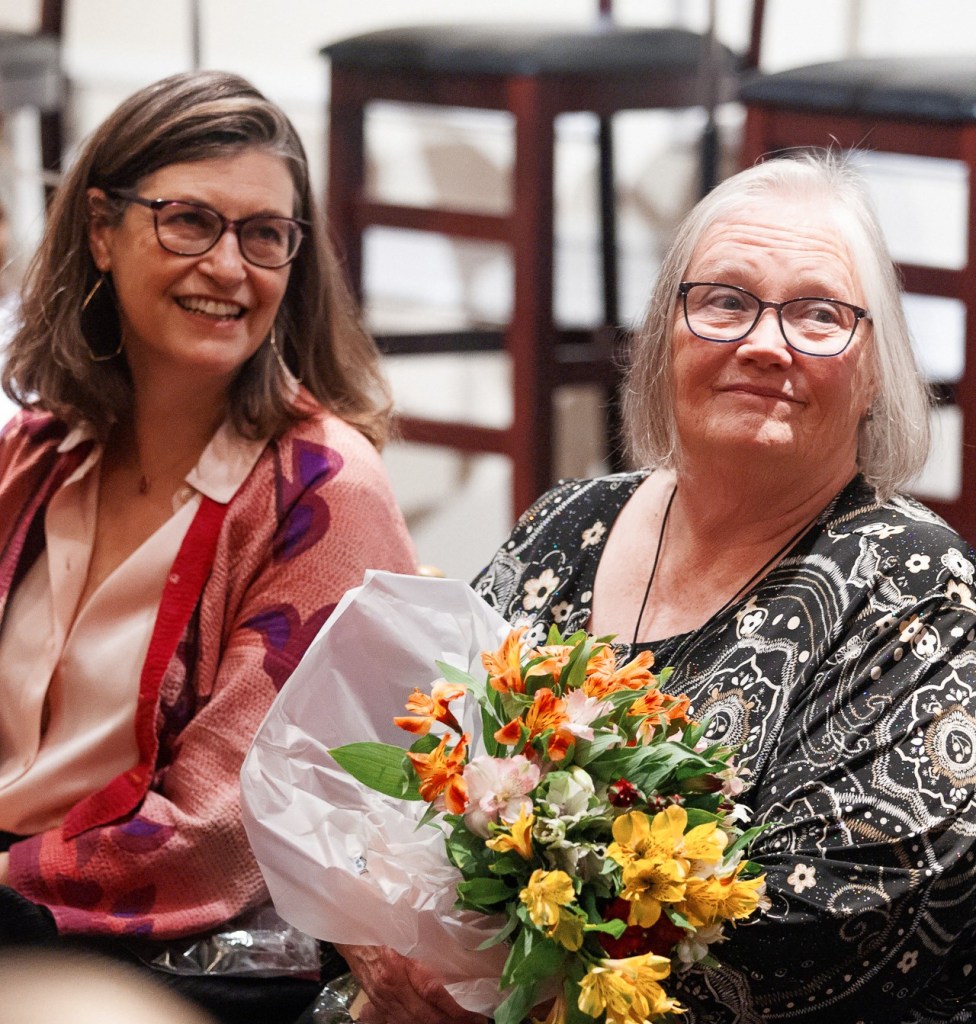
Janine Sternlieb has been an assistant director in Bay Area productions at theatres such as San Francisco Playhouse, Main Stage West, and Santa Rosa Jr. College. Previous writing work includes The Four Sisters or Time’s Up!: a Chekhovian Guide to Climate Change. When Covid closed the theatres, she began to imagine what the Founding Families would think of the Trump administration. So here she is! Lennie Dean, after receiving her MFA in Acting from the Temple University Advanced Actor Training Program in Philadelphia, taught, acted, directed, worked as dramaturge and produced for several theater companies and schools in New York, San Francisco and Sonoma County for over forty years. She is authorized by master acting teacher Eric Morris to teach his technique, The Eric Morris System. She is working to form Vintage Voices, a “scripts onstage” acting group with actors 55+ years.
What inspired you to write this play?
Janine: When white supremacists descended on Charlottesville, I wondered what the previous residents of that town (the Hemings and Jefferson families) would think. What might Mary Lincoln, who sacrificed so much for the Union, think about protests over protecting a monument to Robert E. Lee–in 2017! And what has happened to the party of Lincoln?
Do you enjoy using fantastical elements like you have here?
Lennie Dean: Magical realism is my favorite kind of theatre. It isn’t an intellectual experience. It calls upon different parts of our brain to react to what is seemingly untethered from reality. In First Ladies, the characters have a hard time accepting that the God-like Jefferson enslaved his own children. So the cold hard facts, in the form of a biography of the Hemings family, drops from the sky and lights up on the shelf. The old adage that we, who refuse to learn our history are doomed to repeat it, takes physical form.
The theatre has the power to educate and elucidate… Do you agree and if so, what do you hope the audience takes away from seeing your play?
Janine: Theatre is uniquely positioned to illuminate history, create characters that audiences relate to, and create a space for empathy. By creating dialogue for 9 historical women, who continue to “live” on into our own time, we show that our history is a living and breathing phenomenon. It’s not an artifact and it’s not set in stone. Our understanding of history necessarily changes as we see it from a variety of perspectives, wrestle with it, and engage it. There is nothing that can’t be discussed, especially the horrors and injustices of slavery. We hope that the audience will be inspired to take action so that “All men are created equal” is a reality, not just a promise.
What have you learned about yourself from this work?
Janine: I was terribly naive about what it would take to write a full-length play about 9 historical women (one needs to read a LOT of books). I also realized that America is filled with interesting historical characters, so my dance card is full for decades!
What’s next?
Janine: A play about James Henry Hammond, a governor of South Carolina in the 1840s. It’s a play–surprise!– about race and gender. I’m also writing a dystopian play about librarians set in New York City.

“Untitled 1970,” amid powerhouse reviews and sold-out crowds, extends its run.
John Gould Rubin writes:

“Untitled, 1970” blew my mind, The first time I’ve seen a play in Bushwick, but much more than a play; half play, half movie but a movie as an extension and maybe, added dimension to the play. That’s what I mean about it blowing my mind. The acting was great, but then it wasn’t acting entirely, but just living, like we went into the apartment where the show took place and suddenly we were voyeurs observing things we really shouldn’t be seeing; dirty/scary – made me feel like maybe I shouldn’t be watching. Just the kind of theater I love. It makes me wonder who I am and why I’m here.
John Gould Rubin is Artistic Director of The Private Theatre and former co Artistic Director (with Phillip Seymour Hoffman and John Ortiz) and Executive Director of LAByrinth Theater Company.


ORDER TICKETS:
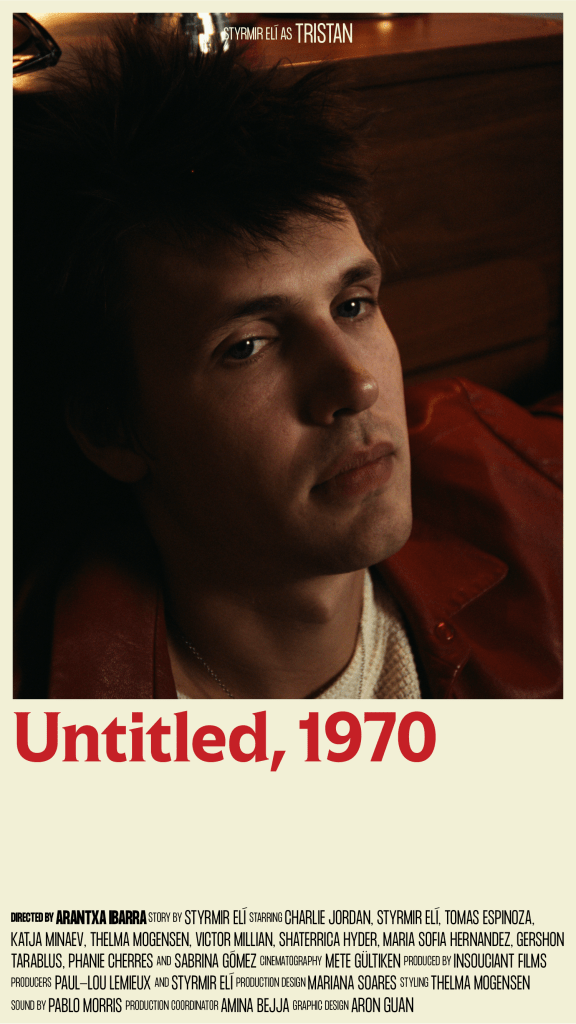

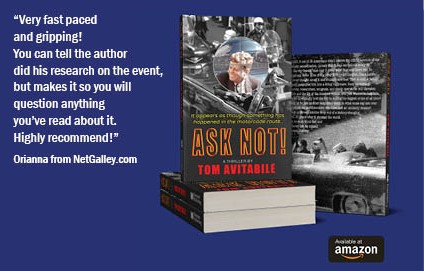
PROFILE on the PROLIFIC: Acclaimed author, Tom Avitabile takes a shot at Kennedy … conspiracy, that is.
“It was a long time ago, nobody cares anymore,” is the last thing that all those who have died so far said when the JFK artifact came into their possession. Airline pilot, Hank Larson’s brother Benjamin said the same thing. Now Hank is out to clear his brother’s name of a double homicide. Up to now, Hank couldn’t give two spits about who killed Kennedy. But the powerful merchants of death who are after the item will stop at nothing; they’ve already blown through multiple murders like a speed bump. Can Hank, and the innocent woman who only wanted to help him, avoid becoming just two more mysterious and untimely deaths, and derail their plans to stage a coup again? The action never stops, and the danger never lessens as Hank realizes, too late, that the best way to stay alive is to Ask Not!
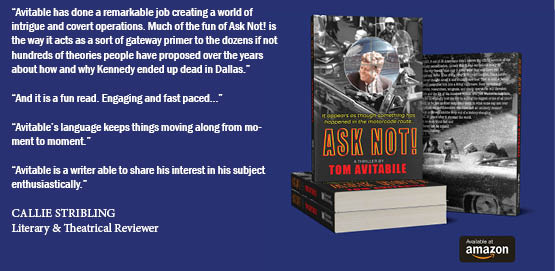
Avitabile’s latest is a tome tearing into what arguably is the most pivotal moment of the 20th century — the assassination of President John F. Kennedy.

Of course, he would… Tom Avitabile is a renowned writer, director, and producer with numerous film and television credits who seems to specialize in thrilling us. It’s not enough that he wrote a taut adventure about Kennedy but he now travels the podcast-sphere sharing his take on the actual event and the conspiracy around it. His extensive background in computers and engineering led him to work with the House Committee on Science Space and Technology. Tom’s powerful imagination, fed from his experiences in Washington, allowed him to conjure up not only possible security threats, but also real-life scenarios relating to how the government and individuals would respond to the high-tech assaults that are featured prominently in his three book “thrillogy.” These novels chronicle the exploits of Science Advisor to the President, “Wild” Bill Hiccock. The first techno-thriller of this series, The Eighth Day, became a Barnes and Noble #1 bestseller. In his next thriller, The Devil’s Quota, Avitabile departs from the high-tech genre and sheds daylight on an evil international syndicate, a story of sexual deviation, greed, human trafficking, and corruption.
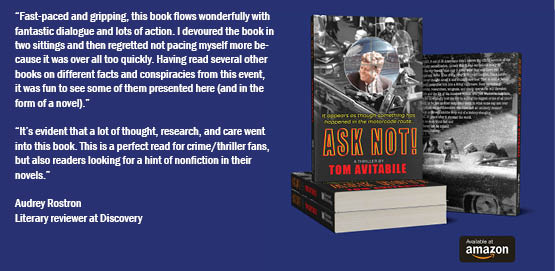
We met with Tom to get a glimpse of the might of a thrill-writer.
What led you to become a writer?
In school, I was classified as functionally illiterate. I didn’t read much. I hated writing. I freaked out over a 200-word composition, I’d break out in a cold sweat. So, naturally, I became an author. Don’t get me wrong, I still hate writing, but I love authoring. So, I am not a writer, I am an author. Lots of people write but only those who know how to author make more publishable manuscripts. How do I know this? I’ve been called the Accidental Author, and rightly so because I’m the last guy on the planet who should ever have a book published, much less 8 and 4 #1 bestsellers. But I sold the first manuscript I ever wrote, pretty much by accident, and it became a number one bestseller. Because I didn’t just write it, I authored it. So, I never became a writer in the traditional sense of being a lover of words, or having taken creative writing courses, being well-read, or even a lover of literature. Instead, I authored to entertain, engage, and then, and only then, Enlighten. I ride and write in the caboose of the literary train, you know, commercial fiction.
What’s your creative process?
Two avenues. One: three of my number-one bestsellers were first screenplays. This is one of the best outlines you can have. I consider a script a skeleton to which I add bones, and sinew and flesh out all the plot points and character nuance. Then two: there’s getting that idea. The one that nags you. Knocks on the door to your brain at all odd hours and never lets you sleep until you commit it to a canvas. Most of the time that’s my inciting instance which I wrap the rest of my story around.
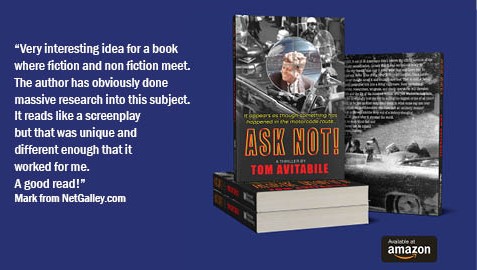
Do you know what’s going to happen all the way through before you sit down to write, or does it happen organically?
If I am not following a screenplay, at first, I am a ‘pantster’ (organic) for around the first half of the manuscript. Then I outline, mostly because I forgot what I wrote but also to make sure the course I lay out goes by all the pretty things and highlights all the human things and goes thrillingly close to the scary stuff. After all that, it is polish time, where I tweak with little dabs of color and brushstrokes to feather out the hard edge or sharpen the blunts.
What is your philosophy on the spoken word vs the written word?
There must be a strong delineation and specific voice(s) differentiating the narrative, in whichever POV the narrator assumes, and each character. “Regular type people just don’t talk right, no how… no ways…ya know what I…” Whereas a well-executed narrative is always correct, fluid, and strives for understandability. It is composed in complete sentences and is a the mortar that holds the story together. In short, characters can be sloppy grammarians and linguistical nightmares, but narration must be beyond reproach – within its tone and voice.
On that note, how much do you take into account the possibility of a stage play or film of your work when you write?
The first novel I ever wrote was the first novel I ever sold and my first #1 Bestseller. When the CEO of the publishing company read it. He called me and asked if I ever thought of making it a movie. He said this because he confessed to me that he could see the movie as he was reading my book. (BTW This review would be a death knell to true literary snobs, but it is a money machine in the commercial fiction world) It wasn’t until we had signed the deal, and I cashed the rather large check that I told him I had written it from a screenplay. (Like 2 of my other #1s.)
I write in a style that lends itself to visualization from having cut my teeth in “long form” writing on screenplays. Screenplays, by the way, are as many million miles away from a literary document as an artist’s rendering of a building is to the blueprints of its steel infrastructure. So, my experience as a film director and screenwriter, and what that taught me about cascading action and the intimate relationship between plot and character, drives me to a writing style that manifests imagery and engagement…just like a movie.
What’s the next project?
I have two just out of the oven. “Wife and Death” is a thriller where one mistake by a 20-year-old, threatens her family 20 years later, puts her grandchildren in harm’s way 40 years later, and her entire world 50 years later. But she finds the strength, tenacity, and wisdom to outsmart the good guys, who are just as bad as the drug cartel bad guys, leaving her alone to protect her family with just her wits…and a gun…and 250 million in diamonds and… Well, you’ll have to read the book.
The other manuscript sitting on the cooling rack is a sci-fi thriller that is really more science ‘faction’ than fiction. It’s about, for lack of a better word, Mermaids. Well, no fins or gills, just super-oxygenated blood. (Try holding your breath for 3 hours.) It’s easy when your blood holds a whopping amount of oxygen due to a genetic anomaly among a certain group of South Pacific people – who are useful, in many ways. Like if you wanted to create a Navy SEAL team that took to the water like… like, mermaids, only with MP5 machine guns, explosive ordinance, and an ability not to have to come up for air for quite a while. I call that one, “Aquasapiens” – The First SEAL Team Zero Adventure.
The one currently in the oven…Mmm can you smell that? Is a sequel to my #1 Bestseller, The Devil’s Quota. Working title, “Stand So Tall.”


FIRST LADIES AND THE BIG WHITE LIE comes to New York
Maybe Broadway has SIX Queens but Off-Broadway has EIGHT First Ladies!
Janine Sternlieb and Lennie Dean’s new play, FIRST LADIES AND THE BIG WHITE LIE, directed by Marcello Rollando comes to New York for a special industry presentation on March 7 @ 2:00 p.m. and March 8 @ 6:00 p.m. at OPEN JAR STUDIOS, 1601 Broadway 11th floor, New York City. Contact Matt at info@jaymichaelsarts.com for further details.

The most famous deceased First Ladies are having a hard time accepting the Trump presidency. But what can they do about it? After all, they’re dead!
Disturbing and unprecedented events are unfolding in DC, in Charlottesville, and at the border, and their predictable “existence” is thrown into chaos. They must confront the secrets and deceptions that have hindered America’s march toward a truly democratic society.

Hell’s Kitchen Roars Again: Jim Catapano is at Fifth Avenue, a Jazz Musical Comedy
A rousing new musical brings the 1920s into the 2020s
The famed Don’t Tell Mama Theater is host to Fifth Avenue, a Jazz Musical Comedy, a tune-filled time portal to a revered chapter of American history.
(PHOTO CREDIT: Dan Lane Williams/DLW PHOTOGRAPHY)
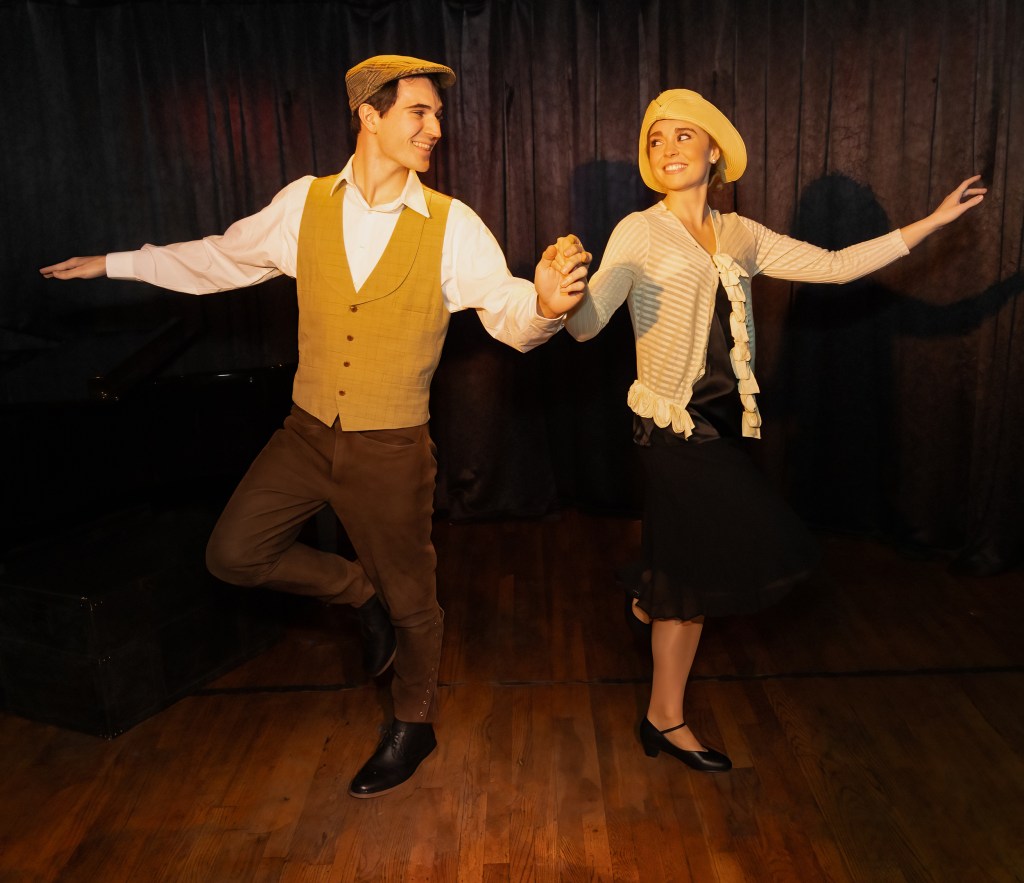
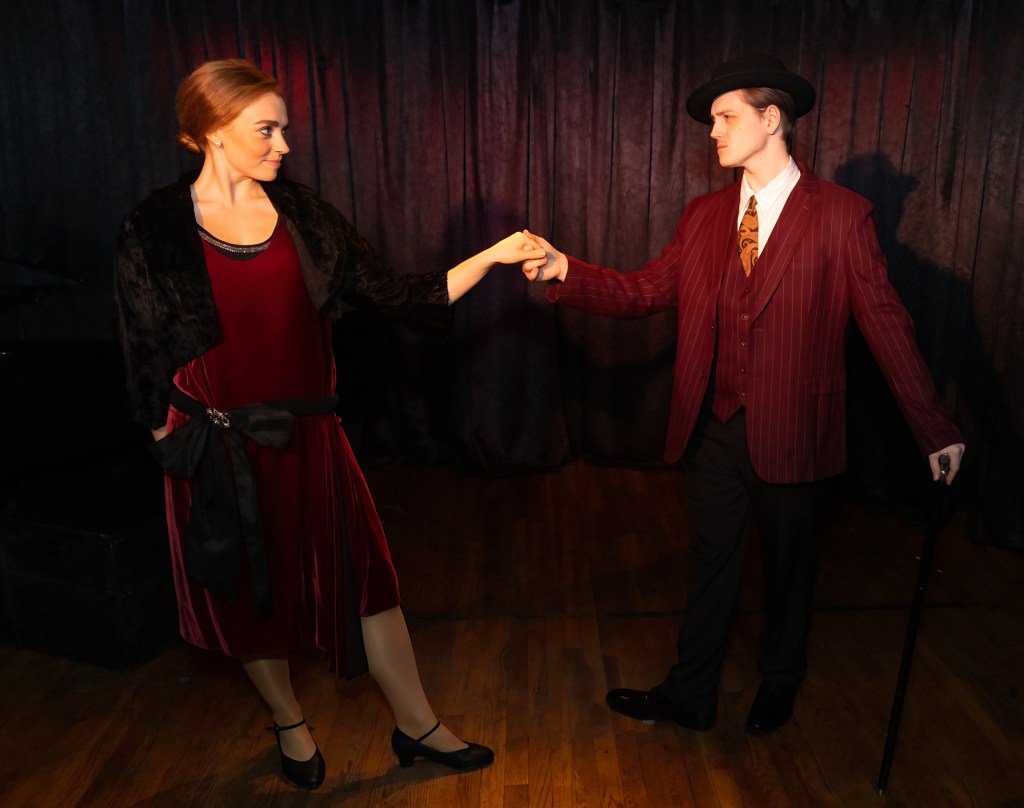
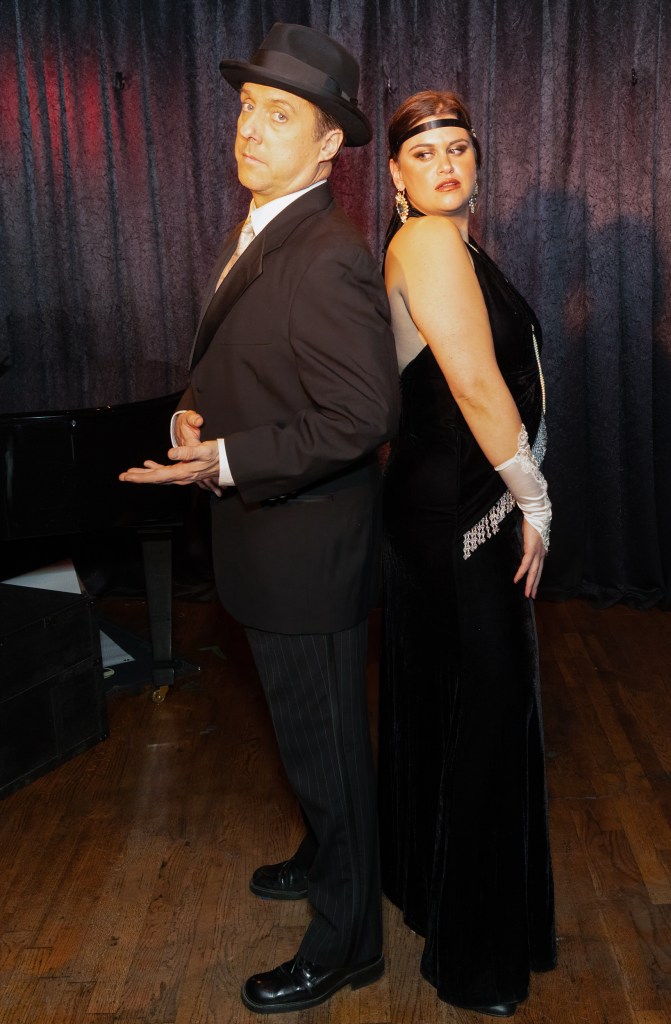
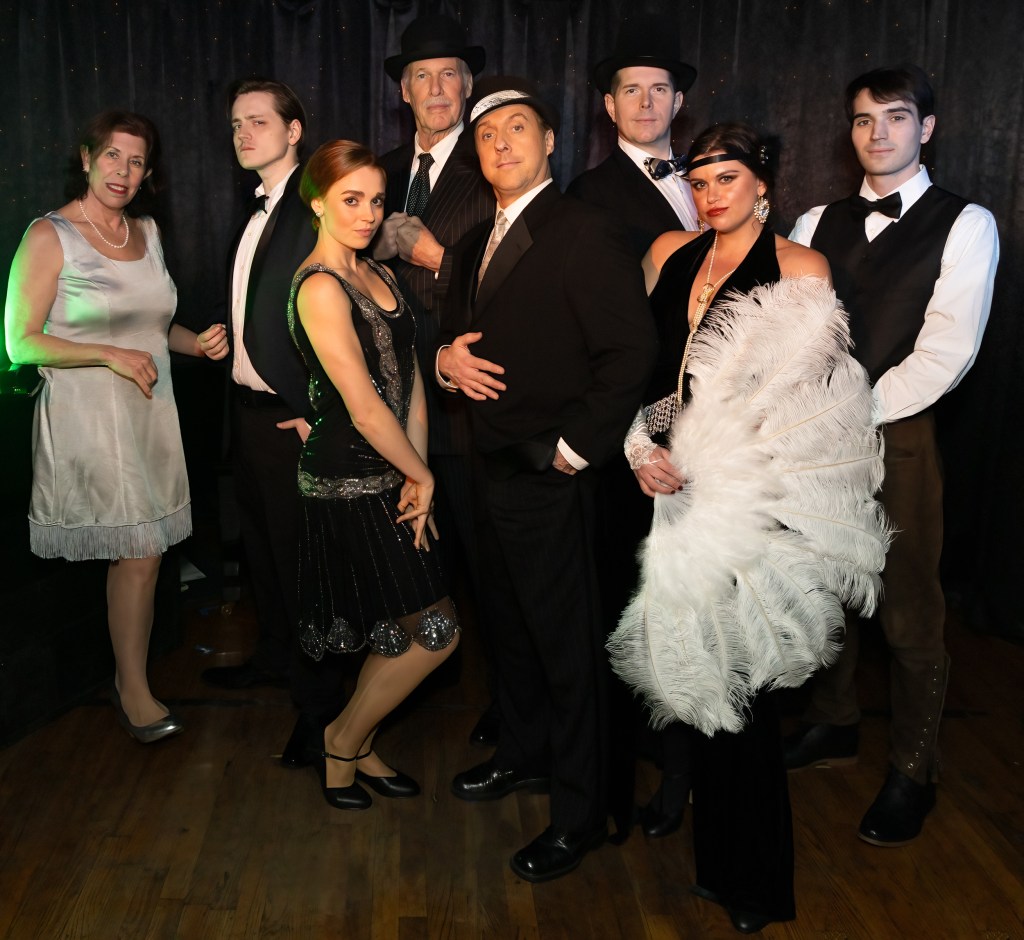
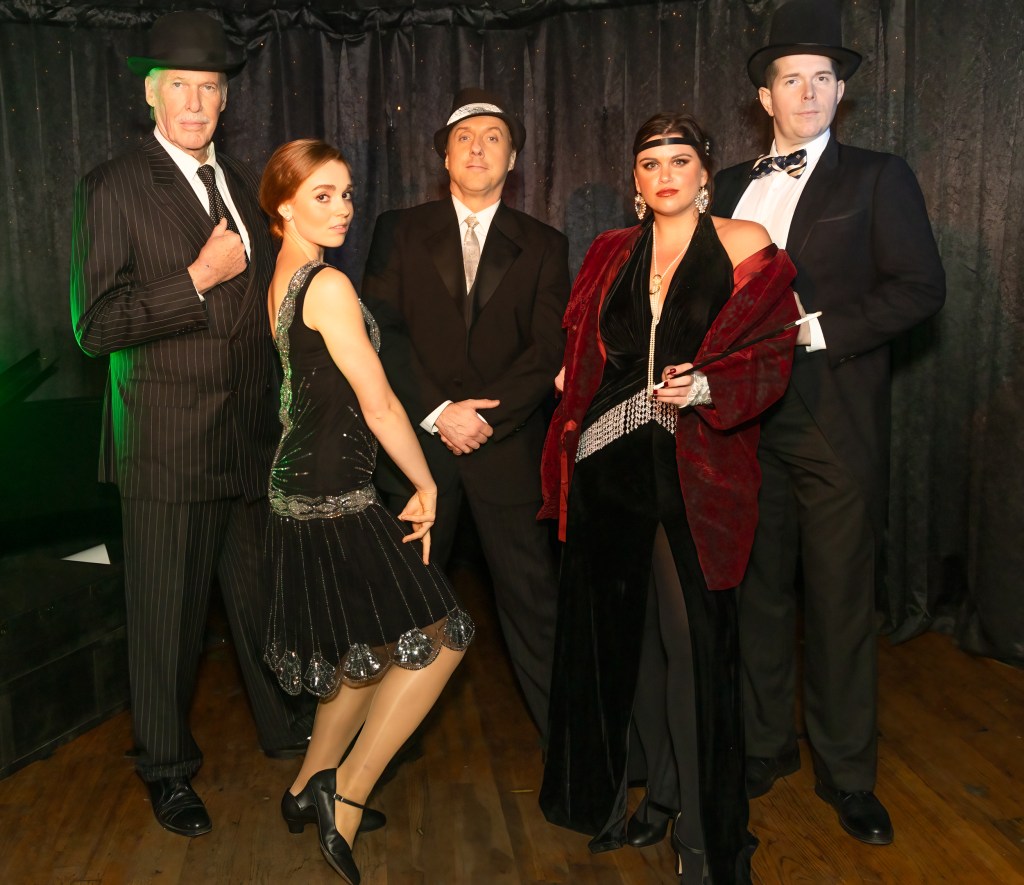
It’s 1928, and the economy is booming (for the moment). With Prohibition still a thing, entrepreneurs are finding ways to be creative, clever, and compensated.
Buddies and business partners Maxwell (Christopher Sutton) and Willy (Joseph Peterson) have a plan to open a nightclub, The Crescent Moon, in the largely overlooked west 40s of Manhattan—essentially bringing the east 50s vibe to Hell’s Kitchen. (It’s important to note that this is their 11th business venture in 10 years.) They get the cash from Tommy Grace (Beau Allen) and the three mark the occasion by singing that they’re “All-In.”
But this being America in 1928, the club must be dry. “Anti-saloon league says enforce laws on the book. Round up all the bootleggers and jail all the crooks,” proclaim the lawmakers of the day, as related by Willy, Grace, and newsboy Neal (James Lynch) in “That’s the News.”
“A saloon-less nation will live longer, they say,” they sing. “But it’s the price of liquor that will kill you today!”
Meanwhile, Maxwell’s 22-year-old daughter Rachel (Adriana Vicinanzo) has returned from Europe. She shows off her new-found woman-of-the-worldness to her friend-zoned childhood pal Neal in “The Grand Tour.” Rachel later meets for lunch with shady suitor Donald P. Brentwood the 4th (Kevin Arnold), a lawyer with lofty real-estate aspirations that he lays out in the bouncy, future-predicting “Fifth Avenue.”
“Corporate heads will be the ruling class,” he says with a smile, threatening to turn “every street into Fifth Avenue.” There won’t be much left that’s fun to do,” warns Rachel. “What about all those who can’t afford Fifth Avenue?”
“Let them move to the Bronx!” snarks Donald.
The club opens on New Year’s Eve, appearing to serve nothing stronger than ginger ale. But Grace has more sinister plans for the “operation”, and despite Willy and Maxwell’s desire to be legit, their grand plan is nearly over before it begins.
As the Crescent Moon rises, nightclub singer Gloria (played by Eurovision finalist Davinia) gives a powerhouse performance of “Life Is Fine”. The mood soon changes for “Shana Madela,” a gorgeous lullaby sung by Rachel and Maxwell after the latter gets into accidental but inevitable booze-related legal trouble. Our “spirited” heroes resolve to rally to keep their respective versions of the American Dream alive.
The music by Daniel Seidman (with lyrics by Seidman and Librettist Susan Crawford)
is a perfect blend of Broadway elegance and 1920s cool. Each number is a catchy and melodic plot-mover that will get you swaying and singing along. (“Shana Madela” is a songwriting contribution from Seidman’s father Murray).
The songs are delivered magnificently by the entire talented cast. Claire Cooper (Music Director), also in period dress, provides deft accompaniment on the piano. The production is expertly directed and choreographed by Andrea Andresakis, and the gorgeous and authentic costumes of the era are designed by Yuka Silvera.
From beginning to end (fittingly as the calendar turns to 1929), Fifth Avenue is a must-see delightful tribute to a halcyon age. The show is so charming, and the actors so engaging, you’ll wish it would never end (and that the current 20s would roar as hard as the previous ones!).
Fifth Avenue, a Jazz Musical Comedy is playing at Don’t Tell Mama on Mondays at 7 pm through February 12, 2024. For more information (and a song medley!) visit fifthavenuemusical.com/.

Industry events at Open Jar Studios
Jay Michaels Global Communications, LLC (JMGC) will be managing several industry events at one of New York’s largest and most sought-after arts venues – Open Jar Studios at 1601 BROADWAY, 11th Floor, NYC, (Broadway & 48th Street – Enter on 48th)
Creating visibility for independent theater, film, music, and literature has been the battle-cry of this boutique production and promotional firm for more than 20 years. Through a diverse internal multi-media platform, this communications organization can supply guaranteed coverage to hundreds of emerging artists and their productions while growing its external network of promotional sites and groups.
This spring, JMGC will present the following industry events:
First Ladies and the Big White Lie, a new play by Janine Sternlieb and Lennie Dean; directed by Marcello Rollando on March 7 & 8
Ocean in a Tea Cup, a musical, by Joel Krantz on April 4
Two Thousand Miles, a musical by Alyssa M. Williams on March 15
Four, a musical, by Clé Holly — April 10 & 12
Finding Helena by Alexandra Conroy and Ray Hoese and produced by Shavonne Conroy on April 11

FIRST LADIES AND THE BIG WHITE LIE
The most famous deceased First Ladies are having a hard time accepting the Trump presidency. But what can they do about it? After all, they’re dead! Disturbing and unprecedented events are unfolding in DC, in Charlottesville, and at the border, and their predictable “existence” is thrown into chaos. They must confront the secrets and deceptions that have hindered America’s march toward a truly democratic society.
TWO THOUSAND MILES
Amid the backdrop of illness, resilience, and life-altering experiences, we follow Davis, a former business student turned playwright courageously battling Lupus, and his devoted boyfriend Nate, an accomplished composer learning the intricacies of caregiving. “Two Thousand Miles” illustrates the profound power of love, acceptance, and the unbreakable bonds of friendship in overcoming personal strife and illness. The musical features a book by Alyssa M. Williams, music & lyrics by Hans Zanger, and direction by Monica Toro Lisciandro. The musical also features additional music & lyrics by Taylor Guttadauro and Jaclyn Nash.

Clé Holly’s FOUR
In this poignant and compelling new work, an ambitious manager – hoping to breathe life into an established string quartet with an uncertain future – introduces the group to a new first violinist. This new addition forces the team to explore more than just the music. Clé Holly — the award-winning playwright of FOUR — is herself a violinist, supplying a healthy dose of verisimilitude to this acutely written drama with live music. Clé draws upon her unique and creative background to write musicals which feature smart, complex female characters.

OCEAN IN A TEACUP
BASED ON A TRUE STORY: Into the tumultuous world of Bengal India in the 1940’s, comes an American pacifist and idealist. Ray Hauserman is a conscientious objector during World War Two. He becomes a Red Cross medic so he can be saving lives and not taking them, but in the horrific jungle war in Burma, Ray betrays his pacifist vow never to kill. Ray cannot bring himself to return home to the woman he loves, his fiancé Julia, waiting anxiously in Ohio. He meets a charismatic Indian doctor and spiritual teacher. Doctor Thakur tries to inspire a reawakening of the compassionate heart that once beat in Ray. He invites Ray to join him in his humanitarian work of caring for the sick and hungry during the “Great Famine of Bengal” in 1943. To follow Doctor Thakur’s path of service, Ray will have to leave behind the world he knew. When Julia shockingly arrives in India to try to bring him back to The States, they are both challenged to learn great lessons of sacrifice and unconditional love.
FINDING HELENA
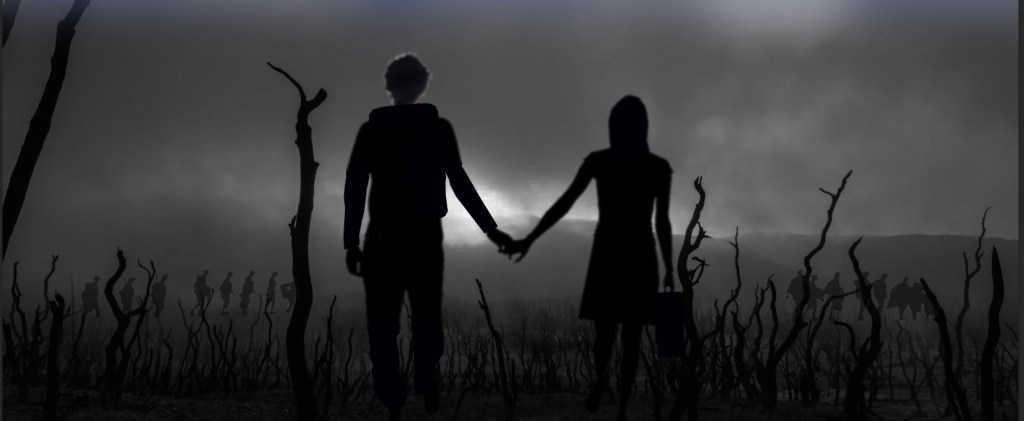
After sold-out presentations in San Antonio, FINDING HELENA, a new musical by Alexandra Conroy and Ray Hoese will come to New York in 2024. This Romeo & Juliet love story that crosses cultures, beliefs … and enemy lines. Helena, the daughter of a Nazi officer, falls in love with Ari, a Jewish resistance fighter. Her affection for Ari helps break down the wall of hate she was taught, allowing the couple to create the deepest bond of love.
For further information on these projects, please contact Matt at info@jaymichaelsarts.com
 Arts Independent