
Scrambled Emotions … Brilliant Performance: Nicholas Kennedy’s EGG FRAME
Egg Frame Review by Jen Bush
Written by Nicholas Kennedy and Jim Grant
Directed by Lauren McAuliffe and Nicholas Kennedy
Cast: Joshua Koehn, Dayna Michelle Kurtz, Brian Mendoza, Jim Grant, Sara McAuliffe, Gillian Britt, Madelyn Stewich, Abhishek Ojha, Brendan Roque

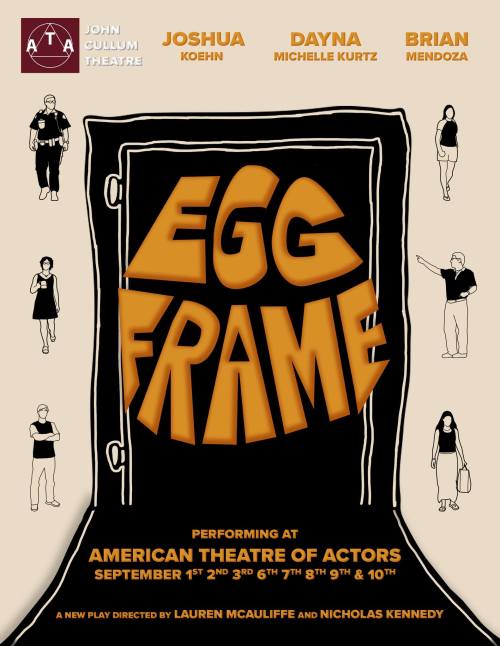
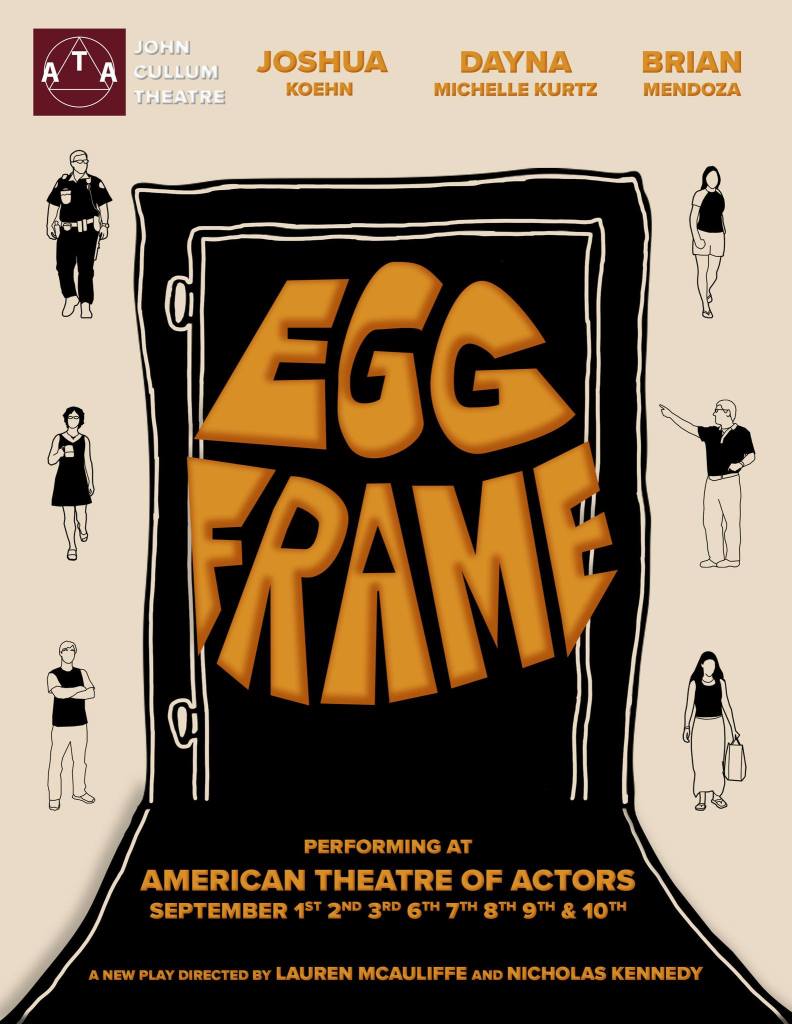
Nicholas Kennedy is a talented New York based theatre artist and filmmaker. His latest play Egg Frame had its world premiere at the esteemed American Theatre of Actors.
The ATA describes Egg Frame in this way: A surreal fragmented comedy about memories and losing the ones you love. Egg Frame is told as if it was like listening to a broken record.
In Egg Frame we meet the main character, Allen. Allen is a locksmith. There is a particularly troublesome door in the building where he lives. He can’t seem to get it closed, even with the help of his son-in-law to be and protégé, Jack. His wife Delores who is suffering from early onset dementia is at home working on her Great Barrier Reef puzzle. Allen’s daughter Janey will soon be deployed to Afghanistan which the whole family is dealing with in their own way. Allen’s friend Michael, a drunk police detective with a crumbling marriage comes to investigate a possible break in at the building. Allen also interacts with the smart mouthed teenage neighbor, Elaine. During the course of the play, multiple characters face adversity.
It’s important to take heed of the description. The first half of Egg Frame is linear and straightforward. The second half was slightly murky and went off the rails a bit. That’s ok because you won’t be able to connect the dots with every piece of theatre you see. Theatre is an artform. Visual art runs the gamut from realistic portraiture to the abstract. We can think of Egg Frame as a little abstract.
You’ll go on a roller coaster ride with Egg Frame. It’s emotionally moving. There’s a lot of humor and a lot of sadness. There’s even a little bit of Science Fiction thrown in via the Time Door. There are themes of love, loss, and illness. What you might find fractured and confusing could be construed as an artistic manifestation of tragedy. When there’s a tragedy, life doesn’t make sense. Everything is out of sorts and gray areas become grayer. We see this during the course of the play.
There are plenty of opportunities to laugh. Some characters broke the fourth wall and had some lighthearted interactions with the audience. Out of nowhere there was a very well-choreographed group disco dance number which was incredibly fun and gave us a break from the heaviness.
The skilled and talented cast worked well together to bring the story to life. Having seen Joshua Koehn in a short film, I was already exposed to his acting expertise. He was simply brilliant in the role of Allen. He carried the burden of several long monologues and pulled them off without a hitch. He deftly conveyed a wide spectrum of emotions while possessing a gift for comedy. Dayna Michelle Kurtz was both endearing and heartbreaking as Delores. She had a strong ability to connect with the audience on a deep level. Brian Mendoza gave a comical yet very powerful portrayal of the detective Michael. His performance was impactful especially in scenes where he was faced with his own demons. Real life couple, Gillian Britt and Jim Grant had wonderful chemistry for obvious reasons. Gillian Britt was skilled at conveying emotion in the absence of dialogue for some scenes. Jim Grant did well balancing humor with pathos. He displayed great empathy in his portrayal. Kudos to Madelyn Stewich who pulled double duty as the sassy neighbor Lexi and as the mysterious Time Door complete with a Russian accent. Time Door acted as a portal for the characters to move about through time. The two characters could not have been more different from each other, and she distinguished them perfectly. Her comedic timing is also spot on. You would never know that this is Sara McAuliffe’s first professional role and her Off-Broadway debut as Elaine. She was just as skilled as everyone else up on stage. If this is what she’s capable of now, she’s got a bright future ahead of her on stage and screen. Rounding out the cast were Abhishek Ojha and Brendan Roque as the death messengers. Just like the soldiers they were portraying; they were in perfect unison with one another. They were very intense, and they both busted some great moves during the dance sequence.
Under the expert direction of Lauren McAuliffe and Nicholas Kennedy, Egg Frame was a unique and compelling production. They brought the best out of their actors and successfully executed their vision of the piece.
A really nice touch was having the super enthusiastic writer/director Nicholas Kennedy address the audience before AND after the show. He expressed a deep appreciation toward his cast, crew and the audience. He put us in the right “frame” of mind!
TV Series Review: Play It By Ear
Play It By Ear Web Series Review by Jen Bush
Karen Twins Productions presents Play It By Ear. This web series examines the challenges of a long-distance relationship. Mila and Lukas are college sweethearts. Their plans to move in together after graduation are upended when their respective careers take precedence. They try to make things work from afar before they will be permanently reunited in a year.




Play It By Ear is a 6-part romantic comedy web series consisting of short episodes no longer than 19 minutes. The series is shot somewhat out of sequence. Episode two takes place six months before episode one. Mila, who is a native Californian, was planning to move to Amsterdam with Lukas who secured a position as a writer for a magazine there. He was born in Amsterdam but raised in the U.S. At the last minute before the planned move, Mila was offered a spot in a prestigious screenwriting program based in her hometown for a year. The couple agreed to try to make it work on separate continents. This web series was filmed both in California and Amsterdam. Some scenes have the actors speaking in Dutch with subtitles.
In episode 1 (Mis Je, Mean It) Mila and Lukas have been apart for several months and both have busy work schedules. They also have healthy libido! Folks, if you like masturbation and dirty talk, this is the episode for you! Right out of the gate after the opening credits the two main characters are engaging in bi-continental mutual masturbation over the phone. Of course they injected plenty of humor into it like when Lukas’s mother calls in the middle of the pleasure fest. This scene might be a little jarring for the prudes of the world but it’s a realistic way couples keep the drive alive when they’re miles apart.
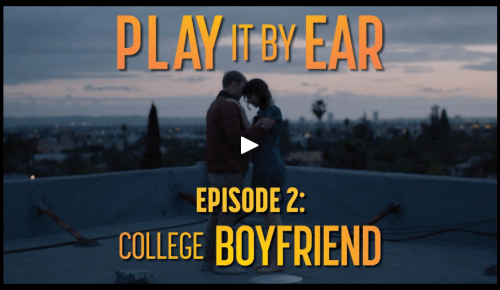
Episode 2 (College Boyfriend) goes back in time six months. Friends and family gather to celebrate Mila’s college graduation. Mila is questioned about moving to Amsterdam which makes for some awkwardness. Apparently these two can’t keep their hands off each other. In another scene, they’re kissing and touching heavily in person when Mila tells Lukas about her screenwriting program.
In episode 3 (Crush) there’s trouble in Paradise. In Amsterdam, sparks fly between Lukas and his co-worker Fenne while in California, Mila is open to exploring her bi-sexual side with Ridley who is crushing hard on her. The couple agree to date other people, but they don’t want to be told about it.
In Episode 4 (Crushed) Mila and Lukas date and get intimate with Ridley and Fenne. While they both have fun, they’ve got each other on their minds.
In episode 5 (College Girlfriend) we witness a huge fight between the couple. Nothing gets resolved.
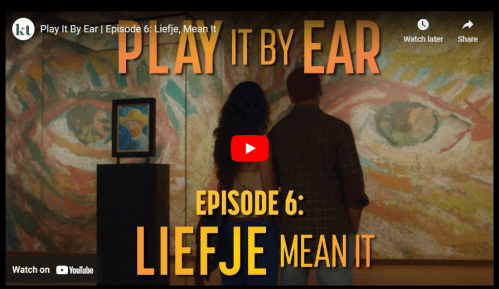
In episode 6, the finale, (Liefje, Mean It) Lukas has an epiphany and Mila gets a big surprise when she returns home from another date with Ridley.
Play It By Ear is a fun look at aspects of the modern dating world. Given the plethora of technology that exists today helping people stay connected, long-distance relationships seem more viable now than ever.
The cinematography was stunning. There was a delightful merging of artistic vision and technical skill resulting in a flawless visual translation of the script. Probably the most beautiful visual moment of all was a dream sequence in which Mila and Lukas were on a candlelit boat for two sailing down a canal in Amsterdam. The lovely, picturesque backdrop of Amsterdam enhanced the ambience of the film. The production value was so high, it was hard to believe this was an indie film. It had the look and feel of a generously budgeted studio project. Producers Brian Reilly and Dillon Bentlage were meticulous in the execution of putting this series together. Every episode even had a short behind the scenes video where many of the cast and creatives involved discussed the process and experience of making this series.
Something that came as a huge surprise to me was that the actors playing the leads were not professional actors. Dillon Bentlage who produced the series and contributed to the writing and editing played Lukas. Emily Ann Zisko who contributed to the writing and the directing played Mila. At no point did I feel that the acting was subpar. Quite the contrary, I thought they both were rock solid, credible and completely competent. Everybody else in the cast did a fine job of breathing life into these interesting characters.
The soundtrack was a significant aspect of the film’s identity that complimented the narrative beautifully.
This web series would be appealing to anyone trying to navigate a relationship, long distance or not. The series deals with themes of monogamy, jealousy, open relationships, sexuality, and bisexuality. All the hard work everyone involved put into the series is more than evident. Play It By Ear is AmsterDAMN good!
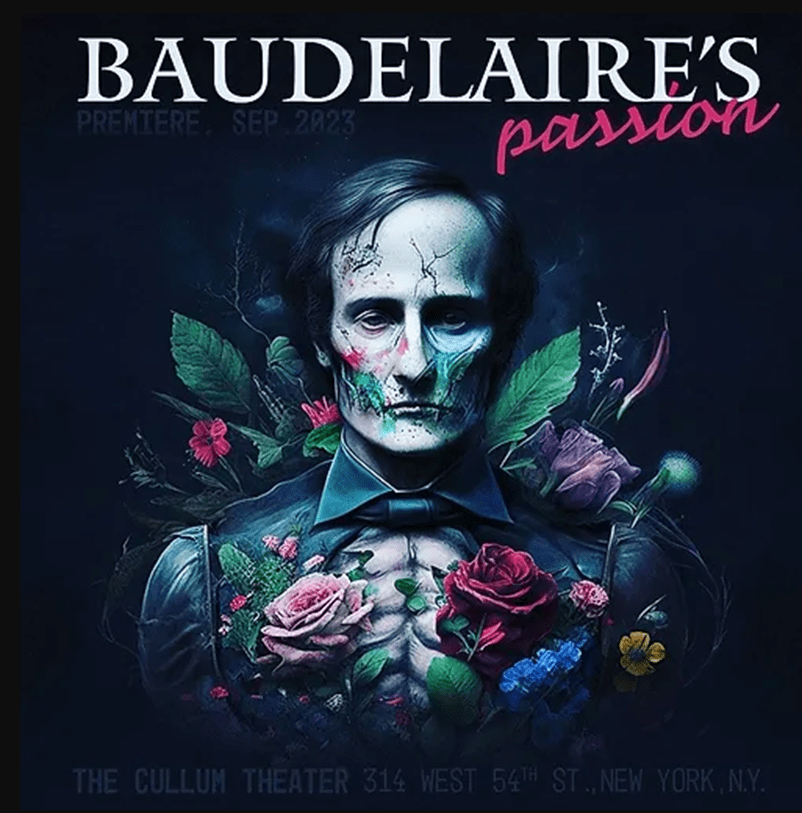
An artist in Purgatory: Baudelaire’s Passion by Henry Keen
New Wave Arts presents Baudelaire’s Passion by Henry Keen for a Special Limited Run: September 21-30, 2023, at The John Cullum Theatre of the American Theatre of Actors
314 West 54th Street, NYC.
An international cast brings Keen’s soaring surreal tale to life in a clever and timely way.
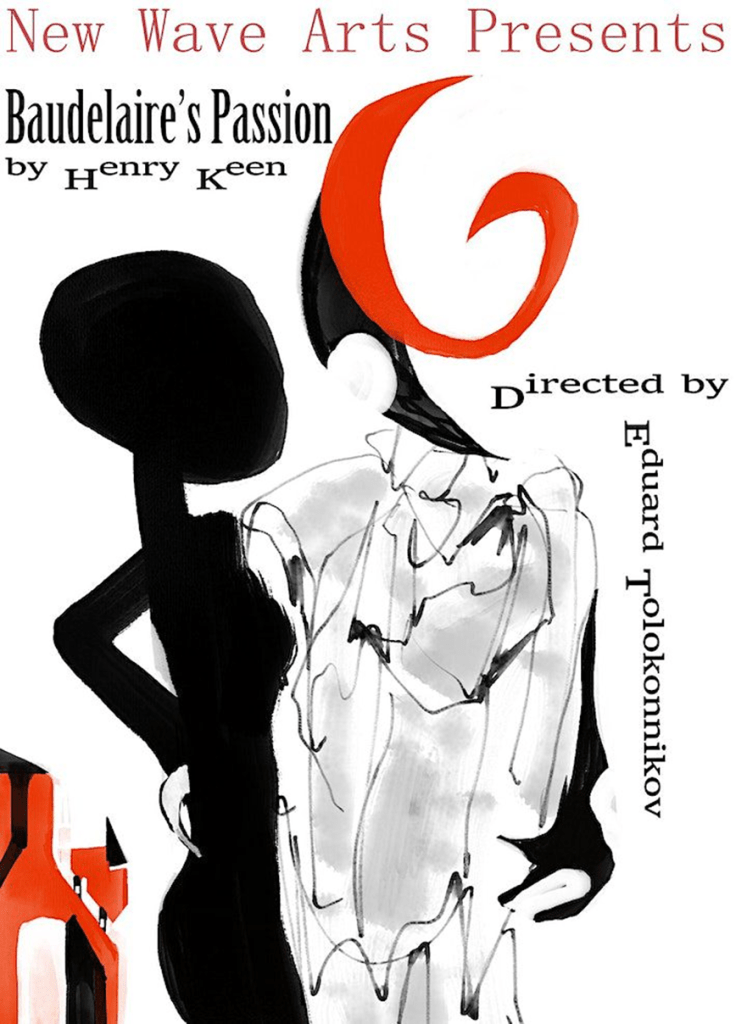
The story – taking a page out of Dante – focuses on Charles Baudelaire, 19th-Century French poet, now suffering in Purgatory.
Saint Peter and Satan do battle over the soul of this “enfant terrible,” and – with the aid of a series of flashbacks – examines Charles’ virtues … and vices. Specters from his life, love, and art, pervade their deliberations. Will darkness or light prevail?
This world premiere directed by Eduard Tolokonnikov with choreography by Eryc Taylor, with an original score by Nate Sassoon and original artwork by Alfred Rechester, is performed in Russian with English supertitles. The cast includes artists from Ukraine, Georgia, Russia, Siberia, Armenia, and the United States. Ukrainian actor, Eugene Beltukov, plays Baudelaire in his American stage debut. Beltukov fled the Russia/Ukraine conflict to protect his family in 2022. The cast includes Anna Nesterova, Elena Ouspenskaia, Gala Orlovskaya, Roman Freud, Lev Grzhonko, Badimir, Iryna Malygina, Zeyna Gagne, Karen Hakobian, and Konstantin Mischtschenko.
The design team includes Alyona Mak (costumes); Lev Chesnov (lighting); Alfred Rechester (art direction and poster design) with Mark Rabinovich serving as technical director. Elena Che is assistant director; Victoria Zharova, general manager; Taniya Kot, movement director; Lilly Sassoon is production assistant and set decorator is Maria Miller. Videos by Anzi Debenedetto.
Tickets are $65 for general admission and $100 for the VIP experience, which includes a special meeting with the cast, additional live performances, invitations to art exhibitions and poetry readings, as well as joining us for a champagne toast, hors d’oeuvres, and more. A portion of the play’s proceeds will go to charities supporting Ukrainian children. For more information, visit www.baudelairespassion.com
watch the TRAILER
learn about the AUTHOR in UKRAINE
Play- and Filmmaker Nicholas Kennedy hatches a new stage play tackling dark topics
Nicholas Kennedy Interview by Jen Bush
I just saw a cleverly humorous short film by Nicholas Kennedy called Hands On about a down on his luck hand model. It was well done on all counts. Mr. Kennedy is a talented filmmaker and theatre artist who is having a world premiere of his new play Egg Frame at the landmarked theatrical institution, the American Theatre of Actors. Egg Frame is a surreal dramedy about a locksmith who has trouble opening a mysterious door and his wife who is suffering from early onset dementia. We were honored to get to speak with Mr. Kennedy about this compelling new work and his life as an artist.

Mr. Kennedy’s inspiration is to weave interesting tales. “Telling stories is one of the most fulfilling journeys a person can go on. I’m glad I can create a fictional world while using elements from my own personal experience in life, to create a play like Egg Frame is inspiring for myself, I get to watch a story that is therapeutic to my soul.”
Mr. Kennedy has a most interesting creative process…cheers! “Typically, for writing, I like to drink whatever my favorite character ends up drinking throughout the story. It gives me a creative boost when writing once I have the character flushed out. In the past it has been Rosé, Pinot Noir, Champagne and now Whiskey. For this script too I got a lot of help from Jim Grant.”
Being in the arts is a constant and wonderful learning experience. “I am always learning, I love learning. It is so important to keep learning. It’s not always in the classroom, a lot or almost all can be learned from listening to others who have experience.”
It’s not unreasonable to think that combining Alzheimer’s disease with Afghanistan might mean that the playwright is trying to make a statement. Mr. Kennedy gives his take on that subject. “Only that they are two words that can hit anyone’s core in an instant.”
This play presents real topics in a surreal way. You can’t argue with Mr. Kennedy’s iron clad logic on the matter. “If there is no real topic, how can you make anything surreal.”
This play is accessible to a wide range of audience members. “Who should see this play? Anyone who wants to be moved emotionally in an honest thought-provoking way.”
Mr. Kennedy works in film as well as theatre. He recognizes that for theatre, the Big Apple is the place to be. “There is a strong Theatre community that exists in New York, and I love it immensely.”
The magic of a filmmaker who also works in theatre is that he can seamlessly transition his works from the stage to the screen. “Yes, Egg Frame could totally could be a movie and I would love to make one of my original plays into a film.
Mr. Kennedy is doing exactly what he is meant to do and is getting immense enjoyment from it. “I get to keep making silly sad little plays for the rest of my life.”
After Mr. Kennedy cracks this egg, he is on to more artistry. “I’m making a film in October and also writing a new play “Under The Ice” which is about ice
fishing and a small little button shop in New York City.”
I’m egging you on to go see Egg Frame
American Theatre of Actors
314 W. 54th St. New York City
LIMITED ENGAGEMENT: September 1 – 10

Controversial New Play in Development
Acclaimed activist/artist CATHERINE GROPPER begins workshopping her next – and highly controversial – work. International playwright, documentary filmmaker, and fine artist, Catherine Gropper, had a chance meeting with an actual global government interpreter. What he divulged to her could have changed the course of history.
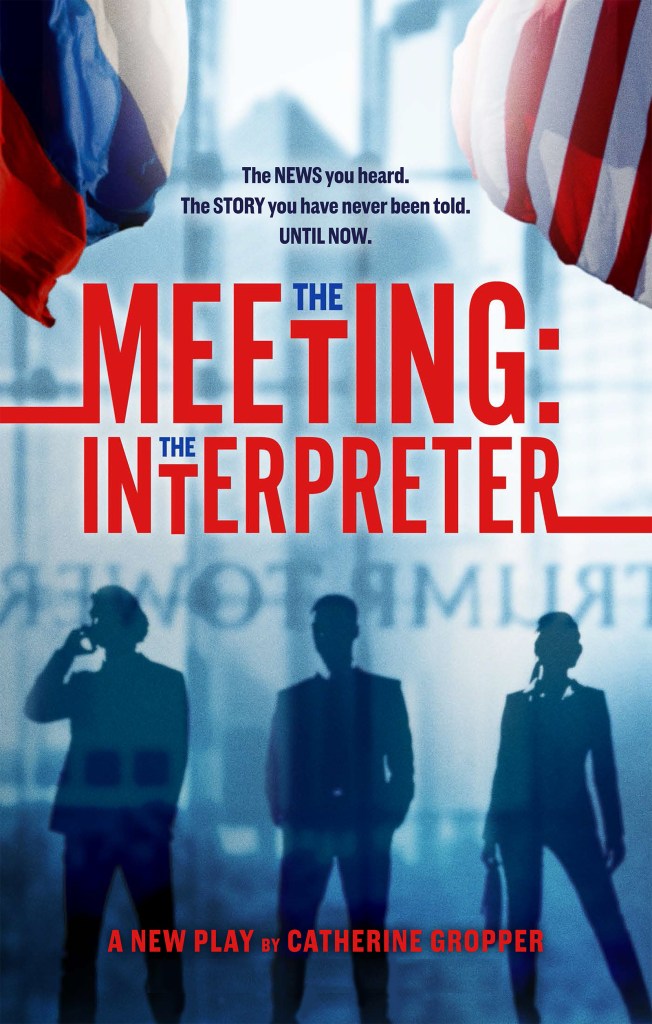
The Meeting: The Interpreter, a new play based on true accounts shared with her, is a political drama that cuts down to the bone of truth. It is the story of the infamous meeting in Trump Tower prior to the 2016 Election with – among others – Russian nationals, and Don, Jr., told by someone who was there.
“The play is currently in development for a run Off-Broadway,” says playwright Catherine Gropper; “we are currently negotiating with a prominent television personality to help us bring this necessary story to life before it’s too late,” Catherine Gropper added – possibly alluding to next year’s presidential election.
Cast and performance information on her new work will be announced shortly.
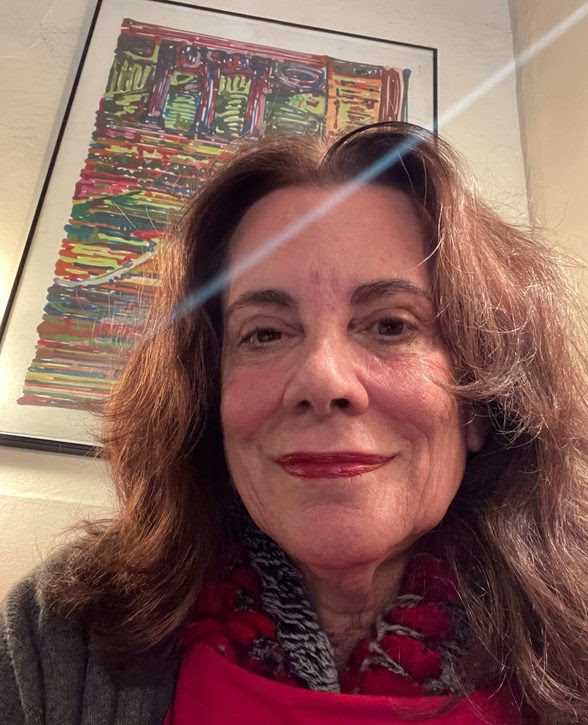
Catherine Gropper, acclaimed for her work as a painter, sculptor, and playwright, boasts accolades from Scotland’s national newspaper, the Scotsman (four-star review) and a rave from Anita Gates in the New York Times – both for her play, Embers; and great praise in DC Theatre Scene for her play, Miss Crandall’s Classes, which explored racism in the education system. Ms. Gropper is also the author of several short stories, a book of poetry, and is also working on a pair of comedies – both having a controversial bent. She is also an international award-winning filmmaker.
Resurrecting a Phenominal Play
Reflections by Robert Liebowitz
‘The world is a small place’, Steven Wright tells us,’but I wouldn’t want to paint it’.
Indeed. He is correct on both fronts.
In 2016–suddenly 7 years ago–I was being feted with a theater award for Excellence in Playwriting at a ceremony at Sardi’s, a famous restaurant known to all theater people. A nice theatrical memory, in a lifetime of theatrical memories.
Suddenly, this very tall person appeared on the horizon; at the end of the bar would be a more apt description. Blessed with a decent memory, I recognized him immediately. Of all the folks that have passed through the doors of my life–both theater people and regular ‘civilians’–Courtney has always been known to have the largest, illuminating-an-entire-room smile ever. Between that, and his frame at 6′ or more, there was no mistaking him. I hadn’t seen him since our college days in 1978, an astounding lapse of 38 years.
The theater world is a small world, and within minutes we were hugging and laughing and smiling, and doing all the things that two people do when reunited after a passing of some substantial time. Of course, in the theater, there is always this caveat–let me know when your next show is. Of course; you do the same. And so, it’s that carrot that carries us through our days.
No empty gesture here. He has since seen my work, and I have seen his. There we were, facing off on a college stage in the previous century, when we were still in our teens, and the world that awaited was ahead of us. Now, all these years later, we are again two peas in a pod, visiting each other in the lobby or backstage in a dressing room. So much had changed, and yet nothing had changed.
My dear friend and college classmate Courtney Everette is starring in a revival of ‘Resurrection’, a play about the 1921 Tulsa Massacre, at the American Theater of Actors…and it is Must-See-TV.
Ever since the George Floyd Execution–he didn’t die, he wasn’t murdered, he wasn’t even assassinated in anonymity, he was executed in the town square–there has been a profound shift in the Theater Landscape, and with good reason: Things Must Change. It is no coincidence that the two most fertile times for theatrical production in American History took place in the 1930s, and the 1960s–both decades filled with a real, justified anger and rage, and a fervent attempt for positive change in the immediate future.
There is no question that this rage spilled out into our theaters–or was it the other way around?–and made day-to-day living, in a general way, better for most people. The 1930s gave us The Group Theater, and Clifford Odets, and a host of A-List actors and actresses, plus the Omnipotent Presence of Orson Wells and the Mercury Theater. The 1960s gave us Ellen Stewart and La Mama, Sam Shepard, The Living Theater, and too many more theatricians to list here. Just now, in 2023, they are our grandparents, as we continue to exist in the stream that they created and nourished.
In the three subsequent years, there has been a ‘tsunami’ of stories that attempt to depict a truer, more complete picture of real American History, and how traditionally disenfranchised minorities fit into that narrative. This is proper. This is correct. This is just. If it means stepping on a few toes, then that is what it means. Finally–finally–these other voices will be given their chance to be heard.
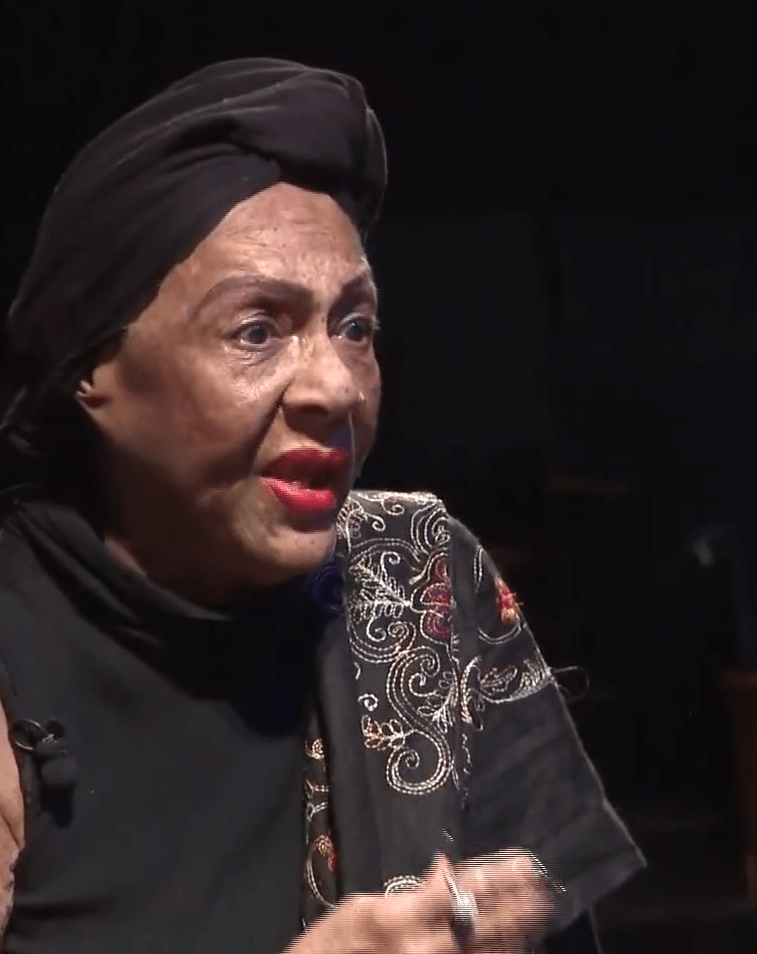
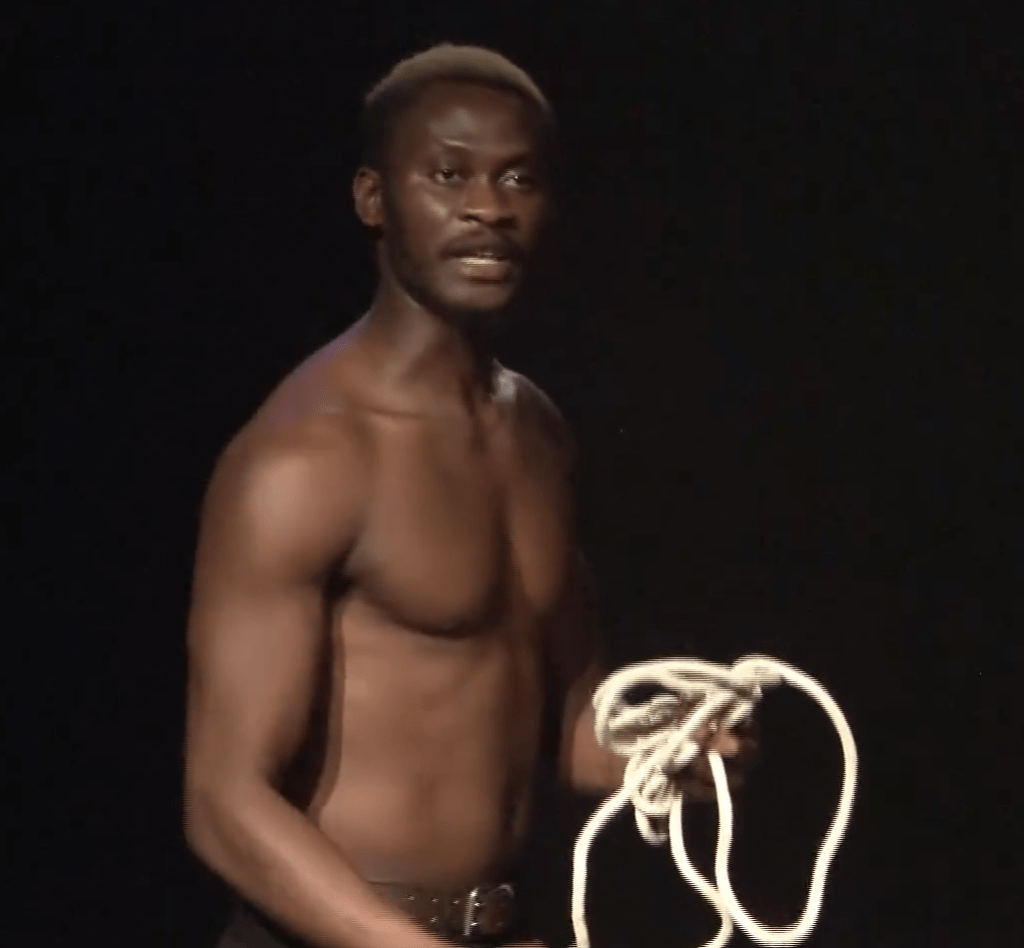


‘Resurrection’, by Ms. Anne L. Thompson–Scretching, is one such worthy venture. Too many times, modern, novice playwrights set out to tell a story about a particular element of Americana, through the prism of the African-American Community, or the LBGTQ+ Community, with mixed and often times unsuccessful results. Why? Because it is easy to confuse a play with a history lesson. History lessons are fun; knowledge– in a general way–is always a wonderful thing when imparted. But, a history lesson is not a play. The trick is to disguise the history lesson, while attempting to depict a play…a play, which has its own by-laws that governs it, impervious to other art forms.
‘Resurrection’ is a fantastic play, while being well acted and stylishly directed. You will learn much–as you would at any college lecture hall about any subject–but at play’s end you will feel that you went somewhere. That you’ve been somewhere. At the end of the day, that is the point of mounting a play in the first place.
Marcello at the Movies: PREET
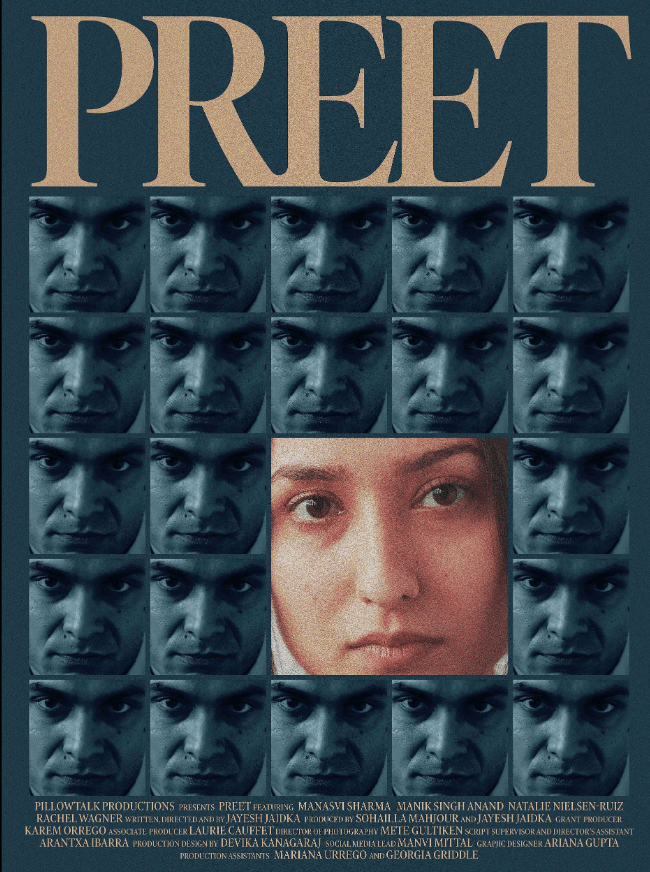
Siddharth Sethi Weds Preet Kaur – Reviewed by Marcello Rollando
Freedom and Peace Come to Those Who Listen
In less than three minutes, this Pillow Talk Productions, Siddharth Sethi Weds Preet Kaur with subtitles even when speaking English, exposes revealing exposition with recent bride voiceover accompanied by silent mood transition close ups – and darkness immaculately skewed to keep us craving to see the light, of what’s lit, and why.
This is no American fast paced action flick with sex and gunplay guaranteed every third scene between car chases, murder, and mayhem – but it is wisely set in NYC where one can selectively admire Manhattan from across the East River in Brooklyn.
Yet clearly director Jayesh Jaidka and DP Mete Gaultiken keep us in the dark so we can, with our mind’s eye perhaps – see that something has been snuffed out by dehumanization twisting exhilaration into fragmentation.
Preet Kaur (Manasvi Sharma) is a bride from India now in New York seeking the friendship from perhaps her only friend now, Jugal (Manik Singh Anand), who can’t imagine Preet’s perception of Manhattan as a place of restorative peace.
The edit talent of director Jayesh Jaidka gracefully reminds us that film is at its best when, moving pictures – if only we listen with more than our ears.
After an opening tease of what’s not to come: airport visuals where people are but silhouettes, before we are completely immersed in the darkness that, which by its very nature, brightens the light we have in common with this earthbound pupa, – puncturing externals, without touch, for a way to finish life’s sentence:
Now I am…
JMGC and IFT Network form partnership.

It was only a matter of time. Jay Michaels Global Communication, a worldwide service creating visibility for all forms of independent artists has formed a partnership with IFT Network, Inc. an integrated community of programs and professionals whose purpose is the development, marketing, and distribution of independent film and the creation of opportunities for independent theater, and live events.

executive director. JMGC
Jay Michaels Communications and its media partners have been creating visibility for independent theater, film, music, and literature for more than two decades. Through a diverse internal multi-media platform and diverse group of media partners including Stage Whisper Podcast, ReviewFix.com, Music Makers New York., YouTube Channel I, Five Star Arts Journals, Next Stage Press, and now IFT Network, this communications organization is able to supply guaranteed coverage to hundreds of emerging artists and their productions while growing its external network of promotional sites and groups.

CEO, IFT Network
IFT Network offers powerful and unique services to its membership: The IFT Network Writing Room – a FREE, SAFE, virtual development space for writers to hear their scripts read; the IFT Network Agency – their marketing arm works to enhance the brand and image of independent filmmakers, theater producers, and their projects; and its flagship program: the IFT Network itself – Available now on the App and Play Stores, IFT Network streams dozens of Award Winning Independent Films, Theater & Musicals, Original Series & Shows, as well as live tapings of compelling theatrical projects.
Currently the new collaboration is in development to create a new paradigm for theatre and film festivals.
Jen Bush sheds light on Denise Flemming’s darkness.
Denise B. Flemming Interview
WINTERKILL is an engrossing one-woman mystery written and performed by Denise B. Flemming. It tells the tale of the dubious past of a successful professor.

Denise B. Flemming is a Chicago native. She began her artistic career at Hull House Theater. After completing her B.A she attended the University of Iowa where she studied stage lighting. Her passion was play writing and acting but she wanted to be VERY aware of the technical aspects around her. After completing her studies, she attended the University of Southern California for an MFA in acting. She is a member of the League of Professional Theater of Women, N.A.C.A and P.O.W.E.R.
Every artist has a mission for their artistic endeavors. Ms. Flemming’s mission is reflective. “My mission as an artist is to reflect humanity. I am a mirror. I want to show you where we are, so that the audience can arrive at their own truth.”
It was Ms. Flemming’s interest in crime and criminal justice that sparked the writing of this play. “The inspiration of WINTERKILL came from my interest in the MANSON murders, The Belly of the Beast, and several newspaper articles.”
Ms. Flemming tackles difficult and uncomfortable topics in her writing. Addressing these issues through art can sometimes be thought provoking and can lead to enacting positive change. “I write about topics that BOTHER me. And my other scripts such as ECLIPSE is about discrimination and racism, and HEADLINE focuses on senior abuse and loneliness.”

Ms. Flemming relates to and internalizes the characters that she creates. “I learn about myself by creating and writing my characters. I feel their pain, their addictions, how society views them. Also, I alone have to feed, protect and provide for myself as these characters.”
Ms. Flemming would like to raise awareness of the topic that is presented in WINTERKILL. “My hope for WINTERKILL is that audiences realize this topic remains in our newspapers, television and society. It cannot be overlooked or forgotten. It continues to happen. Therefore, it BOTHERS me. I must continuously remind/reflect this topic.”
Liann Herder and Twenty Minutes of Turning Points, courtesy of Anna Capunay
Anna Capunay’s Your Silent Face confronts generational tension, alcoholism, mental instability and queer expression, all in just 19 minutes. Aurelia, played by Greta Quispe, is struggling to support and protect her daughter Guada, played by Marie Capunay, whose nonbinary identity and queer relationships are confusing and distressing to her. Guada’s lesbian friend Piura, played by Yessenia Rivas, is staying with Guada in their home, which causes further tension that Aurelia copes with through drinking.

Your Silent Face doesn’t pull any punches. Aurelia is a mean drunk, name-calling and tossing out judgments against Piura and Guada’s “lifestyle” and choices. It’s revealed that the struggle for support and independence comes on the heels of a psychotic break for Guada, who was tackled by police in the family kitchen after their frightened mother called 911. The trust between the two after that moment seems irreparably broken. Aurelia is convinced that Guada will have another episode. She also seems terrified that Guada is now reliant on medication—pills she fears Guada won’t take.
Piura’s presence is an additional strain on the family—yet as a third party she offers Guada an intriguing perspective. She is able to handle Aurelia’s drunken cruelty with ease—she even encourages Guada to see the bright side—that their mother cares about them, even if Aurelia is unsure and still learning how to be supportive. In the end, Piura sneaks her friend out to a concert in Brooklyn, where the two Latines share a kiss in defiance of the heteronormative and cultural demands around them.
At its finest moments, Your Silent Face encourages family to have patience for each other in their darkest moments, particularly in the face of generational expectations. The film’s presentation of these huge arguments can be a bit clumsy—it glosses over Mom’s drinking problems and abusive language. But Rivas’s and Quispe’s performances in particular resonate despite occasionally clunky dialogue.
Yet the story of queerness surviving in hostile homes is deeply important and resonates with today’s reality. It encourages both children and parents to find love and understanding for each other, and reminds queer youth that they can still find, experience, and pursue joy while they and their families learn to understand their identities.
Latest Posts
-

Jim Catapano reviews Anne L. Thompson-Scretching’s Home Is Sweet Sorrow: “A Masterful Conclusion to a Momentous Family Saga”
The War That Never Ends Home Is Sweet Sorrow is a must-see and a devastatingly powerful third chapter in the Blood trilogy, which also includes…
-

THE BARD TAKES BROADWAY: SIXTH ANNUAL NEW YORK SHAKESPEARE AWARDS CELEBRATES RECORD-BREAKING 2025 SEASON
THE BARD TAKES BROADWAY: SIXTH ANNUAL NEW YORK SHAKESPEARE AWARDS CELEBRATES RECORD-BREAKING 2025 SEASON The New York Shakespeare Awards has officially unveiled its list of…
-

American Theatre of Actors Announces 50th Anniversary Gala; Playwright LYLE KESSLER and TONY-winning actor, LEN CARIOU to Receive Lifetime Achievement Honors.
NEW YORK, NY — The American Theatre of Actors (ATA), a cornerstone of the New York theatrical landscape since 1976, is proud to announce ATA 50, a…
-

Music Among the Tumbleweeds: Jim Catapano reviews James Jennings’ New Dancing in the Meadow.
James Jennings’ New Dancing in the Meadow Brings Feel Good Vibes to the ATA James Jennings, legendary Founder of the American Theatre of Actors, brings…
 Arts Independent