
RETRACTION by David Gutierrez: What are the costs behind seeking the “truth?”
David Gutierrez’ shocking new play explores what happens when investigative journalists get “too close.” RETRACTION by David Gutierrez will have a limited run on Theatre Row on May 5 @ 8:00 p.m.; May 7 & 8 @ 3;00 p.m.; May 10 @ 7:00 p.m.; May 11 & 13 @ 8:00 p.m. Theatre Four on Theatre Row, 410 W 42nd St, New York City, Tickets: https://newworksfest.org/event/retraction/
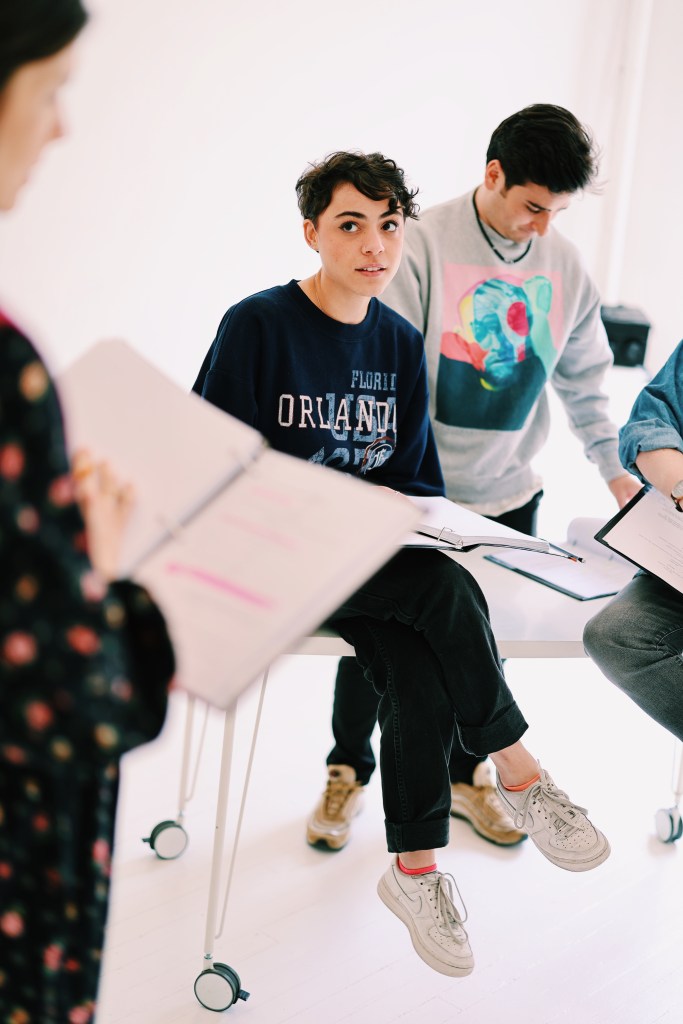
A celebrated journalist travels to Carolina Atlantic University to begin writing a story about sexual assault for the pop culture magazine Heart Rhythm. There she meets an undergrad who says that, two years earlier, she was gang raped at a fraternity party. Moved by the story, the journalist uses the student’s story as the center of her expose on campus sexual assault. The article sends shockwaves throughout the university and college campuses across the country. But questionable reporting methods and inconsistencies are found in the article. And when another reporter digs deeper, he finds out something that will rock the university, the student, the reporter, and the entire movement against rape and sexual assault.
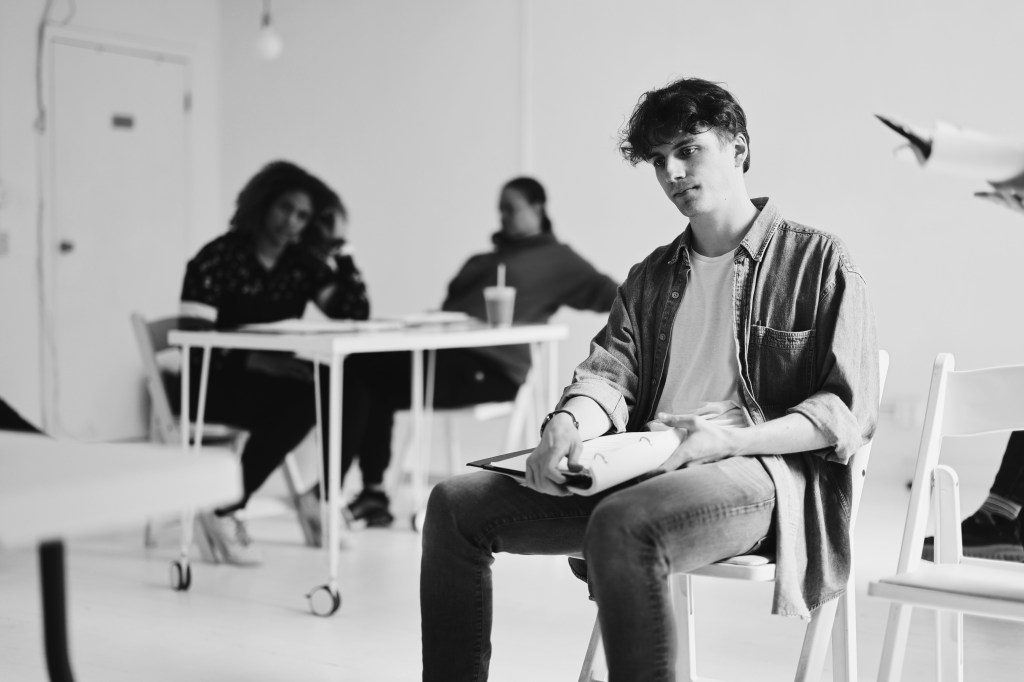
Adapted from a true story, Retraction uses the hot-button topic of sexual assault to show how careless journalistic failure can ruin people’s lives, damage a movement, and destroy careers.
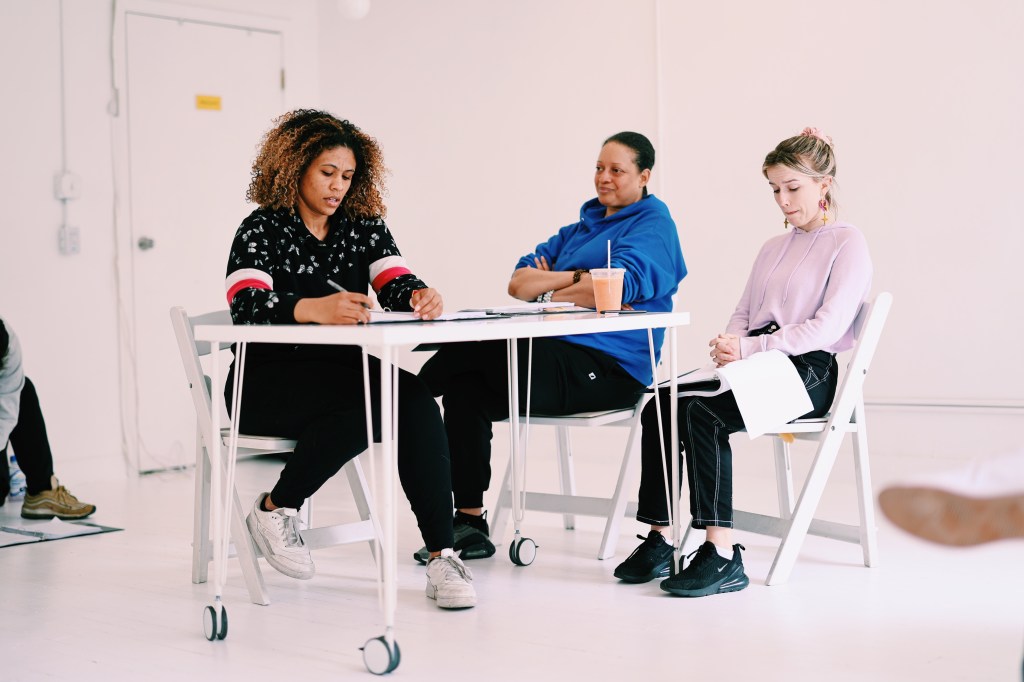
Jen Wineman directs a cast including Roya Shanks,* Aurora O’Greenfield, Yeauxlanda Kay,* Tait Ruppert,* Gabby Policano, Joseph Dardano, Vanessa Cozart, Austin Weyant, Sam Pickart, and Aida Leguizamón (*appearing courtesy of Actors Equity Association)
Heidi Hanson, costume design; Emma Wilk, sound design; stage manager: Shino Frances; assistant stage manager, Brenna Bishop.
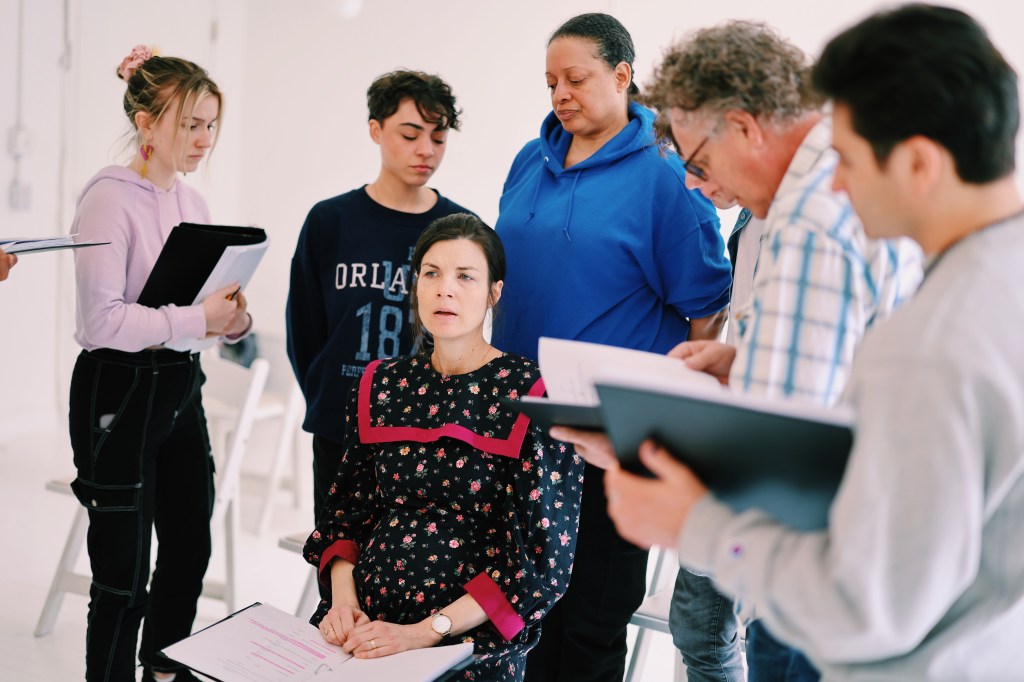
The production is part of the CreateTheater New Works Festival, produced in association with Prism Stage Company. Executive Producer: Cate Cammarata. Production Manager: Matt Hohmann, Lighting Design: Zach Pizza, Set Design: Tyler Herald, Properties: Daniel Brothers assisted by Brittany Daggett.
David Zaragoza Gutierrez is author of the short plays, Wandering Blvd. and Red Roses All Over Me. Selected credits include: Director: Crossroads, Hotel De Fools (world premieres, McKinney Repertory Theatre), Don Nigro’s Glamorgan (Zero Untitled); Assistant Director: Oedipus El Rey (Dallas Theater Center), Blue Roses (world premiere, Lyric Stage, Irving, TX), With Blood, With Ink (professional world premiere, Fort Worth Opera Festival). He currently practices law in Houston, TX.
Jen Wineman (Director) SelectedNYC credits include: Dog Man: The Musical (Lucille Lortel Theatre/TheatreworksUSA); Less Than 50% (59E59); Surfer Girl (Animus); My Heart is in the East(La Mama); Fable(NYMF), The King’s Whore(Walkerspace); F#%king Up Everything(Elektra Theater). Selected regional credits include: Tiny Beautiful Things (Merrimack Rep); Game On (Pittsburgh CLO); Shakespeare in Love(Virginia Rep); Into the West(Tantrum Theater); Baskerville(Dorset Theatre Festival); The Elaborate Entrance of Chad Deity(Asolo Rep & Miami New Drama); Sweeney Todd (Playmakers Rep); The 39 Steps, Shipwrecked(Triad Stage). M.F.A. Yale School of Drama. jenwineman.com
===================================
The production is part of the CreateTheater New Works Festival, produced
in association with Prism Stage Company. Executive Producer: Cate Cammarata
Cate Cammarata (Executive Producer)) is an Off-Broadway producer, director and dramaturg in NYC, dedicated to the development of new plays and musicals. She is the Founder and Executive Producer of CreateTheater’s New Works Fest, the Associate Artistic Director for Rhymes Over Beats Hip Hop Theater Collective and has been the Literary Manager for Theater Resources Unlimited (TRU) for ten years. Her Off-Broadway producing credits include The Assignment and My Father’s Daughter, and a regional credit in My Life Is a Musical (Bay Street Theater). Cate holds a BFA in Acting/Directing from Syracuse University and an MFA in Dramaturgy at SUNY Stony Brook, and is Associate Professor of Theatre Arts at CUNY Baruch College. Her company, CreateTheater, has been helping writers develop and produce their work since the company was launched in 2016. During the shutdown of 2020-2022 CreateTheater developed and/or produced more than 70 shows with online readings, workshops and dramaturgical guidance. For this work Theater Resources Unlimited (TRU) has honored her with the TRU Entrepreneur of the Year award in 2022. www.CateCammarata.com www.CreateTheater.com
ABOUT CREATETHEATER
CreateTheater has been helping writers develop and produce their work since the company was launched in 2016 by Cate Cammarata, an Off-Broadway producer, director and dramaturg. During the shutdown of 2020-2022 CreateTheater developed and/or produced more than 70 shows with online readings, workshops and dramaturgical guidance. For this work Theater Resources Unlimited (TRU) has honored her with the TRU Entrepreneur of the Year award in 2022
ABOUT PRISM STAGE COMPANY
Prism Stage Company was created to promote the work of theater artists over forty. Developing both new and classic works, PSC’s abiding principle is that talent has no expiration date. https://www.prismstagecompany.com/
ABOUT THE NEW WORKS FESTIVAL
In 2020 CreateTheater created a resident company, The Expert’s Theater Company, to work with a smaller group of writers to develop their scripts and then to guide them through to production.
The New Works Festival is a collaborative series produced by CreateTheater, in association with Prism Stage Company, with CreateTheater ETC members whose shows are ready for their first developmental production in NYC. www.CreateTheater.com , www.NewWorksFest.org
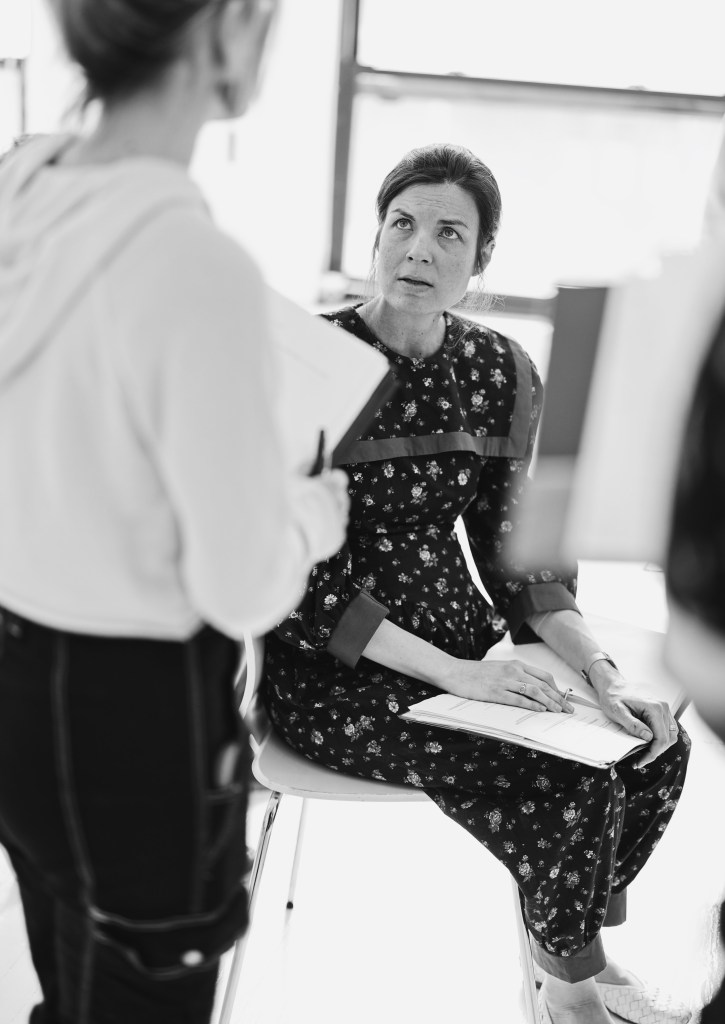
photo credit: Sam Pickart.
Skipping through the Horror of Karaoke
Doppelbanger Review by Jen Bush
A film by John Skipp
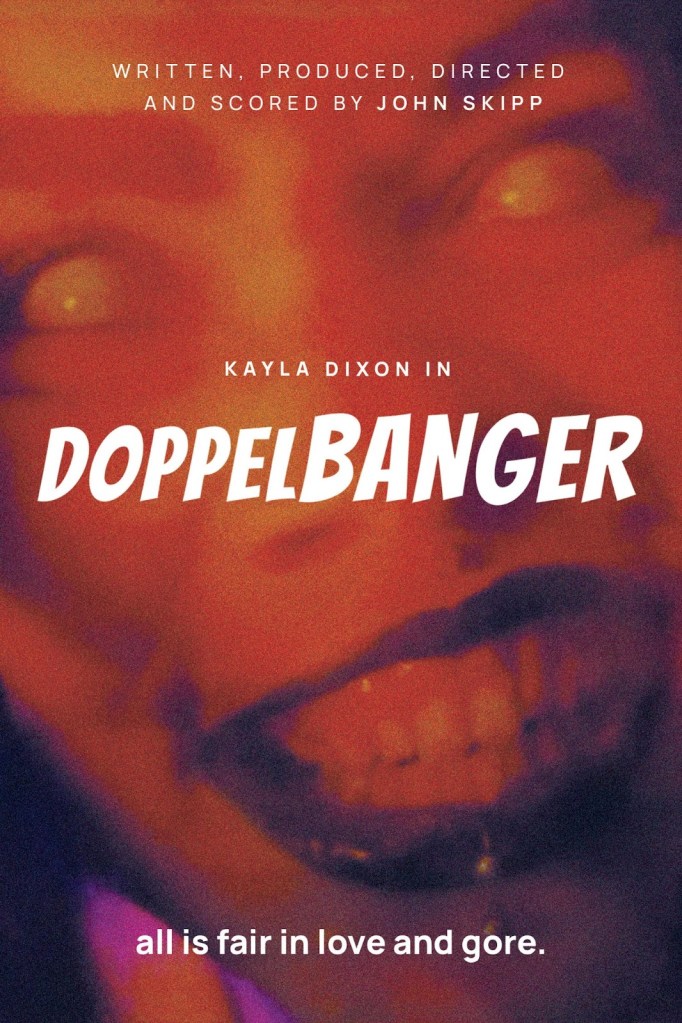
Karaoke can be like a horror movie. Doppelbanger is a horror movie about karaoke. Belle is an out of town drifter who decides to make a pitstop at a karaoke bar. Most of the other singers are as awful as expected. Belle’s singing is a slow burn and then she knocks it out of the park. She is quickly befriended by Brandi and her boyfriend Randy who own the bar. Drinks are free flowing till Belle becomes very drunk and disoriented. Brandi and Randy offer Belle a helping hand but their intentions seem nefarious. Will the belle of the karaoke ball get her bell rung? You’ll have to “tune in” yourself to find out.
Legendary horror master, John Skipp, pulled quadruple duty as writer, producer, director, and scorer of the film… and succeeded on all counts. Your brain will try to trick you and make you think you’re listening to songs typically sung at karaoke establishments. If you listen more closely, you’ll hear how cleverly Skipp emulated the music and lyrics of karaoke songs. The songs also have great titles like Tiparillo Ghost and Don’t Fight the Civil War Again (my Friend).
The artsy freaky fantasy opening of the film definitely establishes that it’s a horror film. The cinematography was spot-on with accurately portraying the atmospheric and lighting aspects of a karaoke bar. Kayla Dixon with her outstanding vocal prowess was a strong lead as Belle. Ashley Song and Timothy Krahill as Brandi and Randi were ideal for the characters they portrayed. A standout quirky performance was given by Cody Goodfellow as Cowboy Rusty.
The audiences are sure to sing the praises of this short and effective horror film.
Alice Jamal: Sassafras’ Dominant Force
Interview by Jen Bush
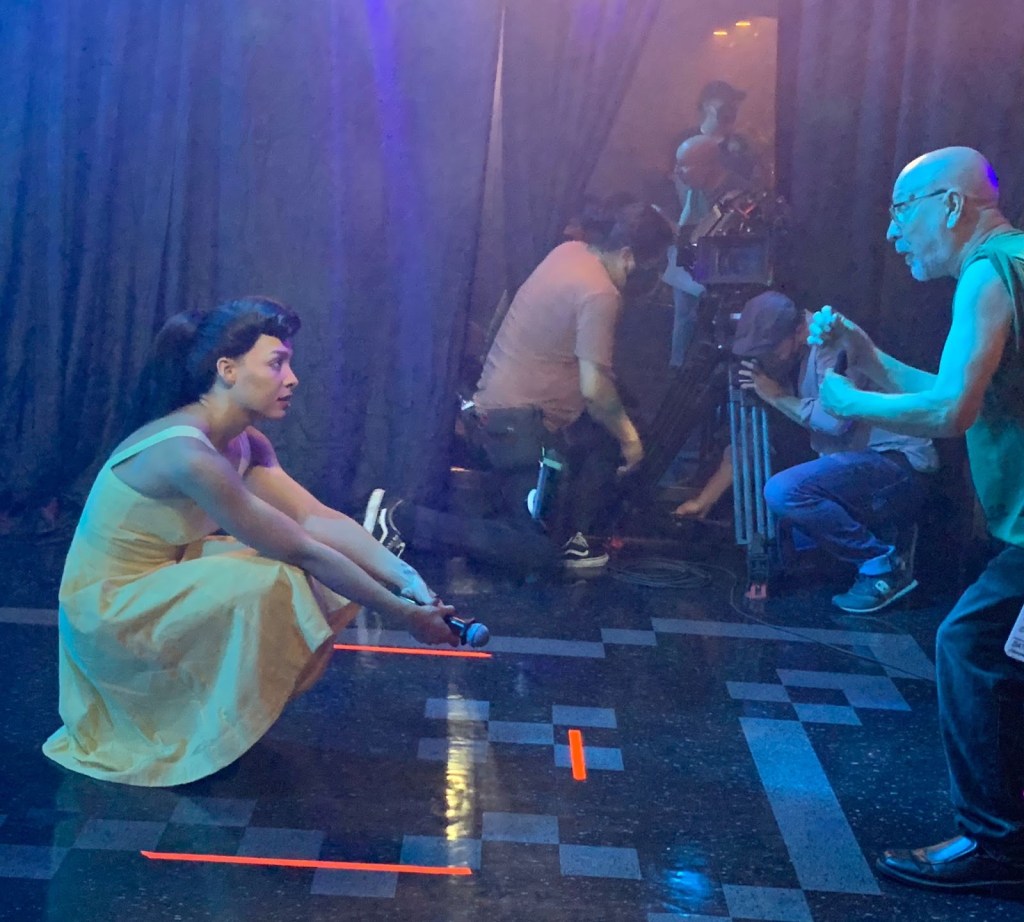
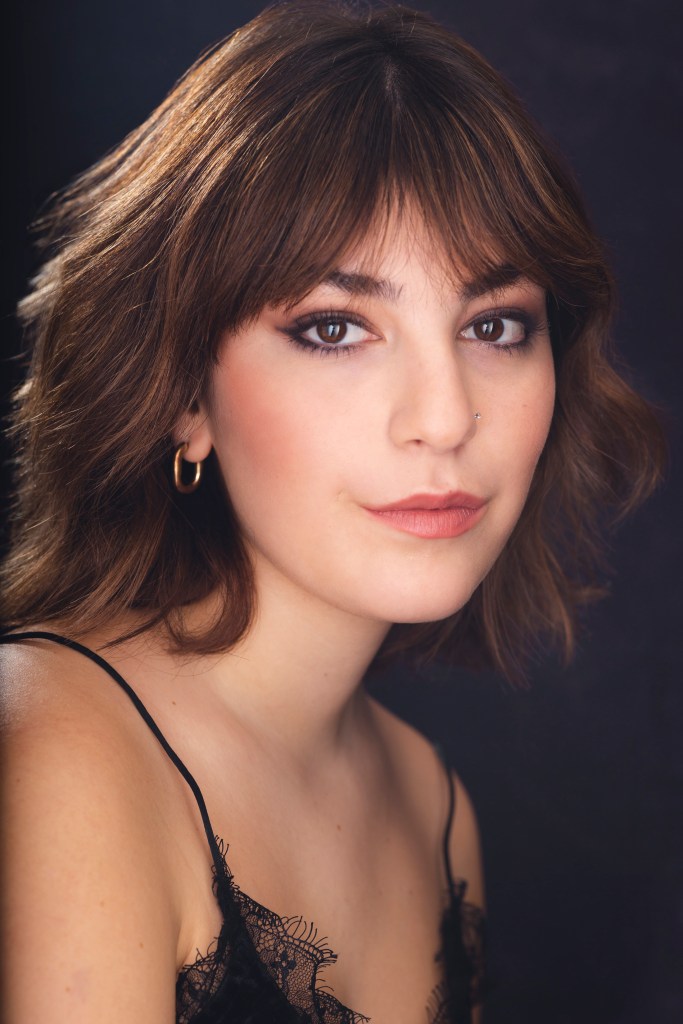
Alice Jamal plays Mistress Chelsea in Sassafras & The Captain. She caught the acting bug early in life. “This all started with countless one-woman retellings of High School Music which I would subject my family to and if they didn’t succumb my stuffed animals were my back up audience.” Her school experience informed her future on the stage. “Throughout my time at school I continued to act and sing and generally prance around on stage and each show was euphoric to me and I knew that there was absolutely nothing else in this world that I wanted to do.” Through her craft she seeks to deeply connect to her audience. “As I got older, I also started to realize and appreciate how clearly art reflects life – I feel it provides a mirror to us – and the idea that my storytelling could impact just one person in the audience and resonate deeply with them or make them question what they thought they knew is such a beautiful and poignant thing. We truly are all so interconnected and my aim as an artist is to shine a light on that connectivity and collectivity of human beings.”
Sarah Elisabeth Brown’s send-up of S&M mores, Sassafras & The Captain, is revived as part of the 2022 Fresh Fruit “Return to Live” Theatre Festival. Three performance run: Thursday May 5 @ 6:00 p.m.; Friday, May 6 @ 8:45 p.m.; Sunday, May 8 @ 1:00 p.m.; at The WILD PROJECT, 195 East 3rd Street, NYC. For further info: freshfruitfestival.com
When Sassafras, a role-playing submissive femme dyke, decides she wants to become a top, she upends her steady relationship with teddy-bear butch Captain Lou, and brings an old flame, the roguishly handsome boundary-pushing masochist Micky Penny, into the mix for an experiment in non-monogamy. Chaos ensues as Sassafras practices new skills of dominance, faces competition from the unassuming southern belle 50’s housewife next door, and gets schooled by the supreme Goddess of been-there-done-that, Mistress Chelsea. Can this young couple grow their love big enough to include these new elements? Or will they be shipwrecked on the sea of dyke drama? It remains – to be seen!
Sarah Brown’s uproarious play has been reworked for this new production. Sassafras was made into the award-winning 2004 film, Mango Kiss
I had a chat with Alice Jamal to find out about her career and this exciting project she’s a part of.
What drew you to this project?
A friend of mine shared it with me and immediately I knew this was exactly the type of project that I gravitate towards as it holds space for the frolicsome and the sincere. It is also very unique to me as an actor as I have never had the pleasure of working with such wonderfully frisky and fun material before.
What is your creative process?
It always starts with me buying a new notebook – hopefully with a very cute cover – and from there creating my character’s whole life through vision boards, mind-maps, Spotify playlists, scrap booking. I also refer back to my training at the American Academy of Dramatic Arts and do my Uta Hagen questions, some animal work etc. Combining the creative with the academic for me crafts a fully fleshed out, realized and truthful character.
Do you find a sense of added responsibility when dealing with plays that tackle serious, mature, or timely subject matter?
Absolutely, especially as I am entering this space in a position of privilege and it is paramount that I acknowledge that. I feel an immense sense of gratitude to be included in this project and my role as an actor, an ally and a human is to share and hold space for a story like this that celebrates the joy of queer love. Especially as we are living through horrendous set backs to our progressions for LGBTQIA+ rights with the recent signing of the ‘Don’t Say Gay’ bill which bans classroom instruction on sexual orientation or gender identity in kindergarten through third grade. This bill further demonizes and perpetuates harmful narratives against LGBTQIA+ folks. It is vital that we, especially those of us who hold privilege, do anything and everything we can to fight against this. I believe the creative world is a beautiful place to start flipping that narrative and opening doors for those who deserve love, respect and joy.
What’s so good about off-off Broadway/indie theatre?
Off-off Broadway and indie theatre is where I feel creative, eccentric and thought provoking theatre lives and breathes. It is the dynamic and vivacious core of emerging projects which is just simply so exciting. It’s that energy that makes it so good!
It’s obvious the world is steadily reopening. What do you feel is different now than before pandemic? Another thought: what should be different now than before pandemic?
This ties in to both thoughts but I feel we have seen so much change in the world throughout the course of the pandemic. So many social justice issues were finally brought to light and it is up to us, the collective, to do what we can to restructure and rebuild antiquated and harmful systems to allow space for inclusivity, equity and justice. I know the phrase ‘new normal’ was at first almost causing a sour taste in my mouth because I had no idea what to anticipate, the change was frankly a little terrifying! However, as the world is steadily reopening this ‘new normal’ has opened a pathway of progression in many aspects. We still have a long way to go but I truly believe the fire lit inside of us during the pandemic and most pandemic is going to pave a way forward.
What’s next for you?
I am really fortunate to be working on some short films alongside this project which is incredibly exciting! In general, I am hoping to establish myself as an actor over here in the US! If you would like to stay updated with me, my social media and websites are the best place to look; I always want to stay connected with creative hearts and brains!
A Moment with arts-journeyman, JOE MOE
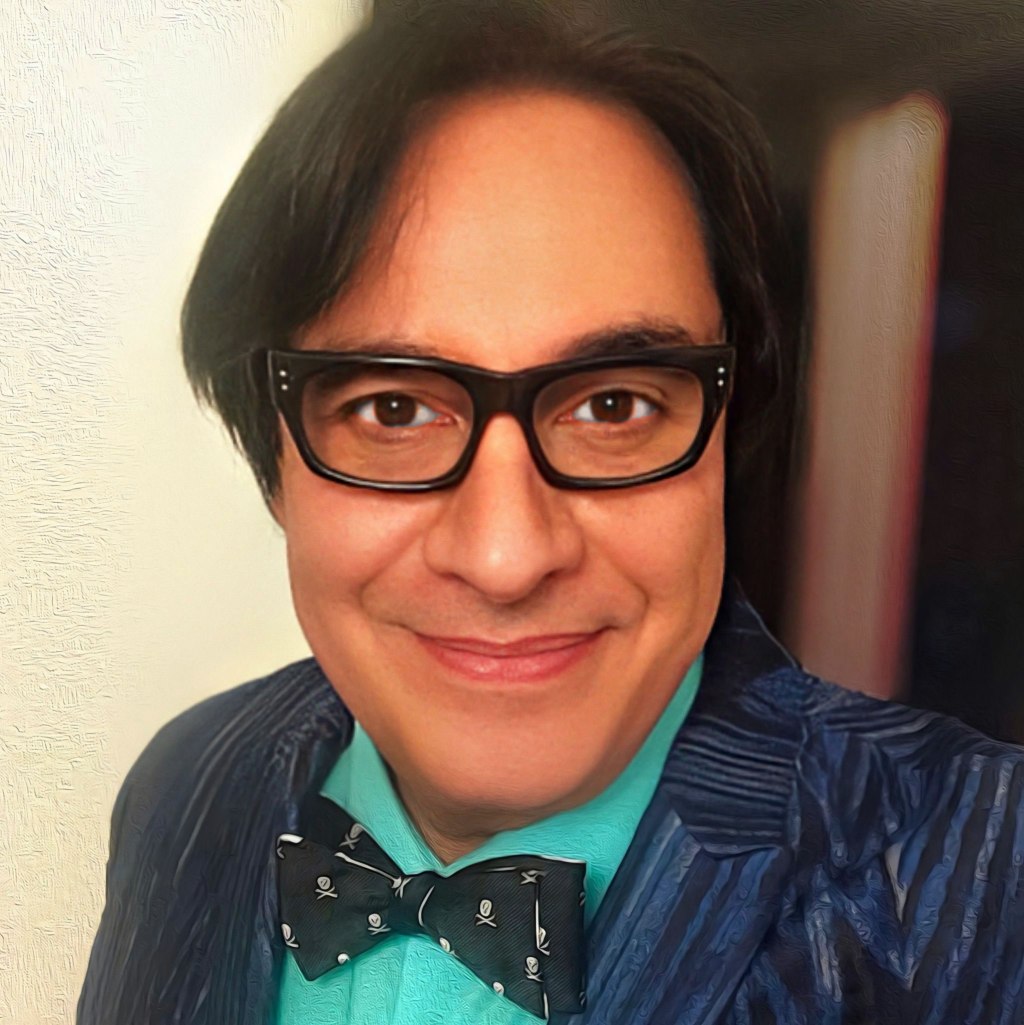
“I was born and raised in Hawaii to Grandparents who travelled the world sharing Polynesian music and dance in Vaudeville and a dad who was an artist and well-known knife dancer for luaus at Waikiki hotels. Mom was a psychiatric specialist and RN. I grew up an entertainer, fell in love with stage and film, studied theater, where all my slapstick instincts were dismantled to be replaced by Mr. Stanislavski to make me a “serious artist,” Arts journeyman, Joe Moe, said in one breath. All this – in his DNA – has given Joe the superpower of being a brilliant storyteller. Ironically, it also turned his curiousity in the arts into something herculean, as he also worked in Makeup, Special FX, Production design, Music, and Performance, but it was the pen that became his sword of choice. “It was the one thing I could start and finish alone,” he said with an exuberance that has become his trademark. “I wrote prose and lyrics, drifted into screenwriting (Ray Bradbury said, “Oh, Joe! You better have no ego. Nobody will know your name”), light journalism, published short stories, then returned to the stage writing books for musicals and finally, dramas,” which is where our story of the storyteller begins.
We spoke with Joe about his new play, currently in rehearsal for its New York premiere, DENY WE WERE.
His play deals with an often obscured section of the LGBTQ community.
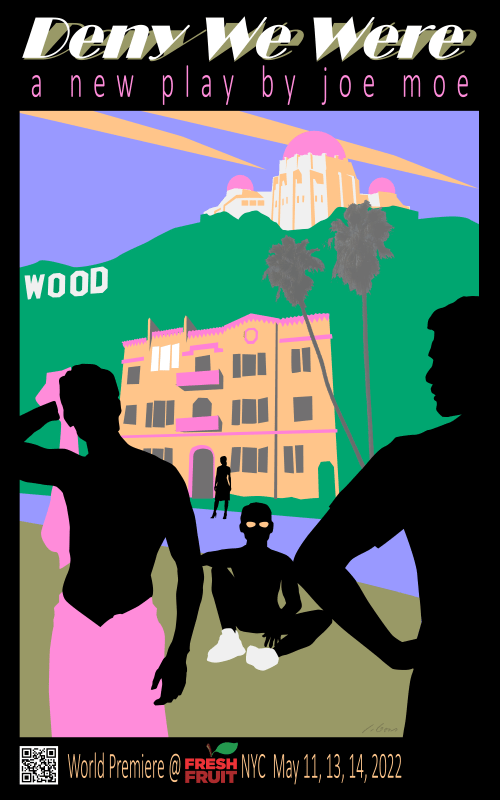
It’s all LA sunshine and fun until a handsome teenage inquisitor shows up with a chip on his shoulder. When precocious 17-year old Jonah McCabe bunks with adopted “Guncle” Dean Vela, raging hormones take a backseat to burning resentment of his controlling, ex-model dad, Jimmy, and a sneaking suspicion Uncle Dean and dad have been “more than just friends.” Dean deflects. Jonah’s mom, Carrie, vents her issues with partner Jimmy, who she supports financially and who, in return, enjoys it. Who is this gorgeous villain that has everyone eating off of his abs? When Jimmy finally appears in the charismatic flesh, thirsty secrets unravel in the narcissistic centrifuge that spins around an unsqueezable love-sponge. Desire and deceit, all suspended in a soap bubble of wicked humor.
What was the inspiration for the play?
Reactionism. But until “Deny We Were,” I wrote from outside myself. I was a sculptor working from the surface inward, keeping my distance. With Deny We Were, I reverse-engineered my process. I built the internal armature and heaped guts and clay on it. I had written the premise as a therapy for 20-years of obsession over a “best friend” whose disorienting ebb and flow of seduction and detachment had been the perfect drug to keep me coming back for two decades. When this friend shockingly kicked me to the curb last year, rubbing salt into my abandonment issues on the way out, it freed me to share the story I’d set down. Not as retribution, but as an exploration of my enabling and acceptance of such emotional negligence. Ha! Even now I’m afraid to use the word “malice!”
Writers are often told to write what they know. What’s inside of this play that speaks about YOU?
The play asks critical questions I haven’t been able to answer to repair myself. Why do we love people who are incapable of returning the favor? Once we’ve dared to tell the truth of our desires, and the answer comes back, “no,” why do we run at the same wall, at a different angle, over and over, knowing we’ll just break different body parts? Once we’re in the groove of denial, deceit, and manipulation, what and who are we willing to sacrifice for the impossible love we’re chasing?
You have some great credentials. What or when was the moment you decided to be a playwright?
The moment? Probably as a kid in the 70’s when ACT came through Hawaii performing Sam Shepard’s “Buried Child.” It was macabre, exotic (well, the Midwest was exotic to this island kid) and had all of my favorite flavors in it! I was creeped-out and inspired. I love the living, breathing theater. Where else is there such an active dialogue between artist and audience? The quote, “Art is never finished, only abandoned” is attributed to DaVinci. I relate to that. I work and rework until a draft is slapped out of my hands. I submitted the current draft of the play, two drafts short of my desired rewrites. But I know I would have just been polishing the polish. My high school art teacher, Jean Noguchi’s quote becomes apt at this point, “Keep it fresh, don’t overwork it, don’t get muddy.”
What happens with this play from here?
This festival will tell me how far I have to go in refining it. To me a play is like a dramaturgical crème brûlée. A cheesy metaphor, but I like cheese and I LOVE crème brûlée! There’s a sweet seductive, sugar crust of expectation that must seduce an audience into putting their spoon through it. Once they do, they commit themselves to whatever they find beneath it. Custard or crap. Does the audience leave having experienced an enlightening, nuanced confection, or have they only learned they wish they never picked up a spoon? I feel responsible for the success or failure of that experience. For me, that is where entertainment meets storytelling. I feel obligated as a good citizen of the universe to reveal something, anything, that could help another earthling avoid some heartache (getting or giving it), or at least understand it a bit more? This festival will tell me if I’ve come anywhere near accomplishing that, or how I might get there.
Why Fresh Fruit Festival?
My good friend Jay Michaels made the introduction, so I was starting from a place of trust. I’d done a few Zoom readings and a couple of acting turns with FFF last year during the pandemic. Coming from Asian Pacific culture, I do business by relationship. I liked the vision and process of the organization. I appreciated and respected the people running the show. The legacy and track record of FFF and their stated goals sealed it for me. I didn’t even bother submitting the play to anyone else.
What’s next for you?
I’m developing a one act musical with prolific composer/lyricist Brian Woodbury, who I’ve collaborated with for over 30+ years. It’s a behind-the-scenes, Hollywood golden age, moviestar comedy with enough charm songs, beautiful ballads and theatrical one-upmanship to make a Barrymore of Carradine cringe. Many of my most discriminating friends have said they think its the best thing I’ve written so far. To me, it’s just the last thing I’ve written so far.
“Deny We Were” by Joe Moe
Directed by Marcus Gualberto
Produced by Jay Michaels in association with Fresh Fruit Festival
Ida Nau-DeLuke, executive producer
Production Design by John Gross
Lighting Design by Maarten Cornelis with Adam Hamdy
Wednesday 5/11 at 6:00 pm
Friday 5/13 at 8:00 pm
Saturday 5/14 at 5:00 pm
at The WILD PROJECT, 195 East 3rd Street, NYC
For further info: freshfruitfestival.com
Andrea Andresakis: Always Engaging
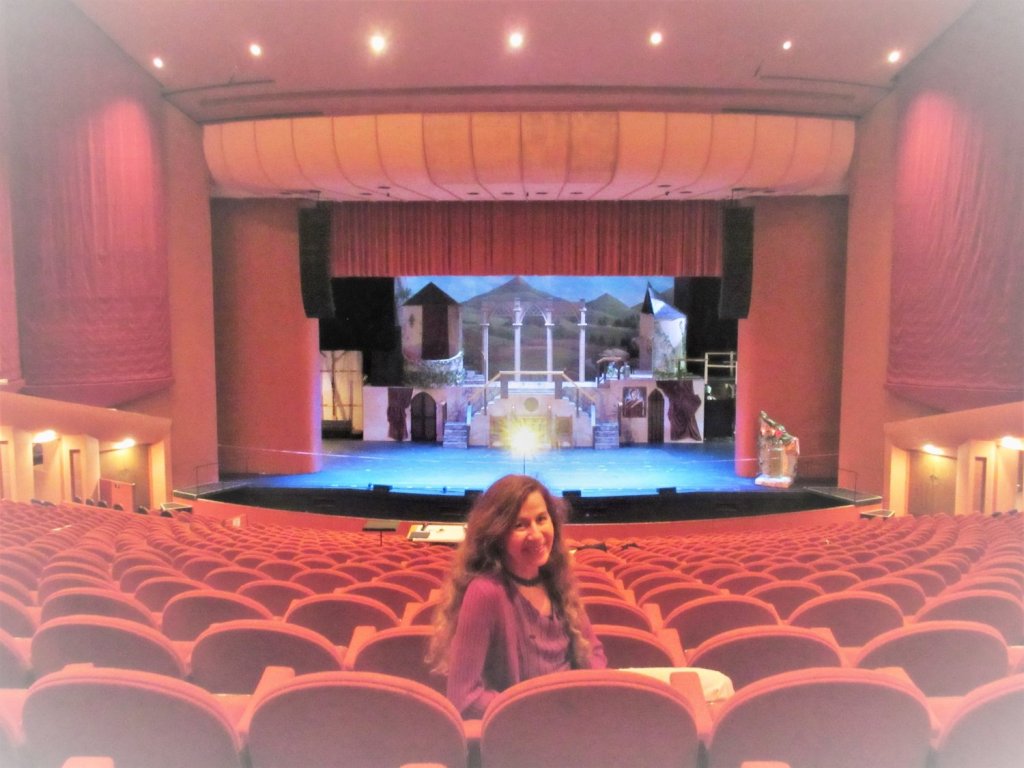
SURVIVING THE ROSENTHALS, directed & choreographed by Andrea Andresakis,
introduces us to songwriter Sammy, who enters therapy to heal himself and break free of the childhood shackles, brought on by his overbearing father, that still stifle him as an adult. The musical takes a surreal twist as Sammy meets – Sammy! Adult Sam meets 10-year-old Sammy in a battle to save himself.
We spoke with Andrea Andresakis, who shared some fascinating stories of her journey in the arts.
“My Mother is a pianist. When she played Chopin or Gershwin, I would dance around the living room,” says director/choreographer, Andrea Andresakis. Living in the historic Ansonia Hotel, known for its denizens immersed in the arts, Andrea – from a young age – was equally immersed including a Rockette who taught ballet down the hall. It’s no wonder that she was on her path as early as age 5. She began at the School of American Ballet at 7; performed ballets by George Balanchine and Jerome Robbins at Lincoln Center at age 9 and then on to the High School of Performing Arts “Fame” school, where it was suggested she go to Alvin Ailey. “I did … and performed with Ailey’s third company,” she said with a great smile. “All 3 companies performed Memoria together, choreographed by Mr. Ailey at City Center,” she continued. “I also danced with the Metropolitan Opera Ballet, where [this is one of her favorite memories] she stopped the show (literally) during the Bacchanal in Samson and Delilah at the Met. Of course she was the Sugar Plum Fairy in the Nutcracker (after humble beginning as a soldier and an angel).”
With such an auspicious beginning we wanted to learn more about Ms. Andresakis’ rise.
Your credentials as a director/choreographer are quite impressive. How was the transition to director/choreographer from dancer?
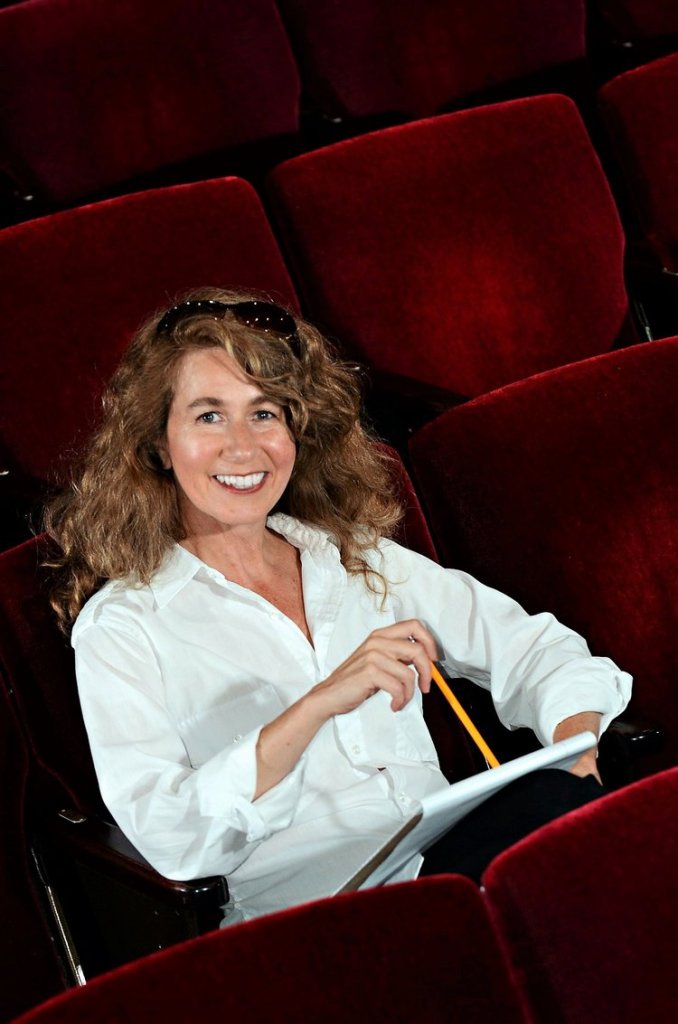
It was an organic transition. Dance captain, choreographer, then director. Michael Haney had hired me as a performer/dance captain at the Allenberry Playhouse and we had a good rapport. The next summer they needed someone to do the musical staging for two shows that aren’t big dance shows: Secret Garden and Big River. The producer didn’t want to hire a choreographer, so they wanted someone in the cast to do it. I had choreographed solos for myself, but never anything for anyone else. Michael, I guess, saw that I could run a room from my work as dance captain and asked me to do it. He was mostly a play director, so he turned the scenes over to me the minute the music started. I had to make decisions about how the story was being told and work with the actors on their intentions, etc. It was then that I realized that I could direct. I had been a drama major at Performing Arts (I transferred from dance after Freshman year) and that background in acting, script analysis, etc. really served me. My Mom had taught me to read music, so that enabled me to communicate with music directors. My father is a trained actor and, I didn’t realize it at the time, but he had started grooming me as director from a very early age. We went to see theatre weekly and he always critiqued and, as my Mother says “re-directed” the productions. (He still does). Even when watching TV, he would point out when an actor was “indicating”. I had the privilege of working with some amazing artists. (Besides Balanchine, Robbins and Ailey, also Franco Zefferelli, Onna White, Leonard Bernstein, Jacques d’Amboise…) and those experiences have shaped my aesthetics and approach. What I wasn’t that aware of as a performer are the technical aspects of a production – what happens during production meetings, for example. So I took jobs as an Assistant Stage Manager and Assistant Director. Gary John La Rosa taught me a lot about the nuts and bolts of putting a production together – scheduling, giving notes, working with designers, running tech rehearsals, dealing with different personalities, crisis management, etc.
What obstacles have you faced in your career?
For me, theatre is a craft that I’ve learn by apprenticing. I don’t have a “terminal degree” as they call it in academia, so that prohibits me from taking on a full time position at a university. I have been invited to direct, choreograph and teach at seven universities. I received a grant from the Stage Directors and Choreographers Foundation to direct Arms and the Man, by George Bernard Shaw at Eastern Mennonite University and my production of Spring Awakening at Whitman College garnered a Kennedy Center award. Even with that experience as a teacher combined with a lifetime in professional theatre, I wouldn’t be considered for a tenure track position without a degree.
There’s also the gender bias. Being a 5’4”, 115 lb., former ballerina, working with men twice my size in a shop where scenery is being built, for example, can sometimes be challenging. I can’t come in authoritatively as I might be able to do if I was a man. Sometimes, in the best interest of time and in order to get things accomplished, I’ve had to play little games, tiptoeing around, when I knew all the while how to solve the problem at hand. You have to put your ego aside and put the needs of the production first.
What is your “mission” as a director/choreographer?
It’s unfashionable to say this, but I honestly don’t have an agenda as a director. When I’m choreographing an original dance piece, yes, it’s my creation, so I’m writing the narrative. But as a director, working on a piece that’s been written, I am more of a facilitator to the author. I don’t try to put my stamp on it. If people are noticing the direction, then I’ve failed. The direction should be invisible. They should be talking about the story. My “mission” is to tell the story in such a way that keeps the audience engaged on many levels intellectually and sensorily. Everyone has a different way of experiencing an event, some more with their eyes, some more with their ears, some with their brains, others with their hearts. It’s my job to hone an authentic production that speaks to the audience on all of these levels. I also try my best to make it enjoyable for all of those involved. Back in the day, when I was a dance student, the culture was abusive. There was a lot of negative feedback coming at you. One of my ballet teachers yelled at me one day, when I was nine, to “go in the back, you look like spaghetti!” I personally don’t think that people give their best while being terrified. So I do my best to create an environment that is safe, freeing and encourages creativity.
Is there one project that stands out as a “turning point” for you? Good or bad?
I’ve learned something from all of my productions, everyone is a turning point in some way. What first comes to mind is a production of The Pearl Diver, a Japanese fable, which was also part of the NY Theatre Festival. I answered an ad and was sent the script. After reading it I thought, “this is impossible to do on stage, especially with minimal resources”. There was a shipwreck, an underwater sequence, sea creatures, etc. I took the job (which I’m apt to do), not having the slightest idea of how to proceed. Fortunately, I found Mary Hamrick, a set designer who was working as an assistant on Broadway and who now has many impressive credits as a set designer. Mary said “there doesn’t need to be a boat. The actor will hold a wooden bowl – that will be the boat.” We kept suggesting effects, such as projections, to achieve the various underwater scenes and the like and Mary kept saying, “no, we don’t need it” and she was right. She created magic with some bamboo poles, fabric, a few wooden bowls, etc. The sea creatures’ gills were fans that they stuck into their headbands. The Dragons claws were chopsticks. To this day, people remember that production and rave about it. We’re streaming it as a fundraiser for Asian Americans Advancing Justice. Asian Americans Advancing Justice – Los Angeles – The Pearl Diver Fundraiser (networkforgood.com)
I learned a few things: 1. Just how important designers are and, when you have the right person, how to trust them; 2. The audience’s imagination is more powerful than any high tech affects you can attempt; 3. There’s beauty in simplicity; and 4. Limitations can be your friend.
Look for Part II of our series on Andrea Andresakis in DramaQueensReviews
Someone please tell her how great she is!
Review of Rebecca Codas at Hugh’s Room LIVE by Evan Meena
Rebecca Codas enthralled a diverse audience at Hugh’s Room Live with her natural effervescence and boffola voice. Rocketing to notoriety as one of the top 20 on a reality series called Over the Rainbow, Codas now enthralls audiences with a voice that needs no amplification and if she keeps going on this track, she wiull need no introduction!
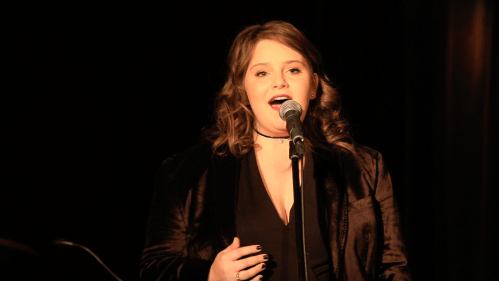
Her joyous stint at the cabaret club, Hugh’s Room, begins with Codas, in an elegant black shimmery blazer sharing stories of her emergence into the “Biz.” Rapid-fire chats about her weight, her time with Andrew Lloyd Webber, plus struggles, ambitions, and insecurity, pepper a belter voice that electrified the room – each time. The stereotypical schpiel-line of “every song a showstopper” was pertinent here.
Accompanied by Madeline Smith, conductor of Waitress on Broadway, Rebecca was yes, she fabulous, and yes, her pianist (whose own humility in giving so much room for Rebecca to shine) was fabulous, but what made this show so endearing is that the only person who didn’t know how brilliant Rebecca is … is Rebecca. Self-effacing, gracious, and grateful – complete with nervous smile through stories both joyous and heartbreaking – she would thank someone, from the audience to her education, to the bottle of water she was given and then she would – without taking a preparatory breath – launch into powerful tunes covering multiple genres and styles that would leave us filled with excitement.
Rebecca serenaded with standards like the obligatory “Cabaret” from Cabaret to a clever musical journey from Waitress (of course, considering her pianist) to Adele tunes, which segued into an hilarious tune comparing being overweight to being pregnant, which ended up sounding like a parable about how women are forced to look at themselves these days.
One entry in the program, the song “All I Ask” was particularly touching as Rebecca gave us a whiff of autobiography in the rendition and while the tune offered a colossal range, her trademark belt was beautifully evident.
After the tour-de-force “Only the Strong Survive” ending in a killer final note, she – without a breath – gives herself a B+. Seemed the crowd reaction tilted toured A+. She then ended her show with a group of singers whose own voices were stunning but as back-up to Rebecca made the finale extra joyous. Her encore was ironic. Now, a rising star in the Big Apple, her rendition of New York State of Mind brought tears.
Cabaret performing can be a slippery slope. It’s easy to fall it camp or stereotype of the Grande Dame thus bringing the show to a superficial level. That is NOT the case with Rebecca Codas at all. Her openhearted humility coupled with an extraordinary voice makes her one to watch in the future.

Arts Influencer, WENDY STUART, on MANDELA
“Mandela” at The American Theatre of Actors
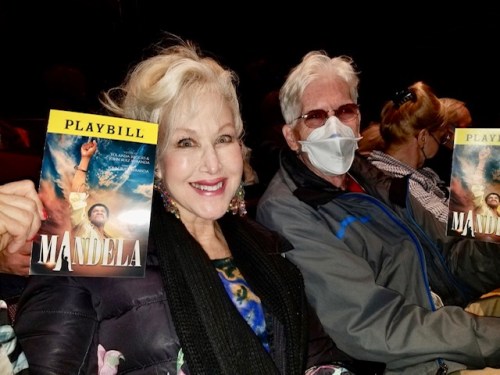
I wonder if Director/Writer, John Ruiz Miranda and Writer/Producer, Yolanda Brooks, sitting at their dining room table and writing this show, knew the impact their play would have on the audiences who came to see it, the schools where it would be presented: and the relevance of telling this story now.
Many know the story of South African activist Nelson Mandela, leader of the South African anti Apartheid Movement. It is the story of an activist who never gave up and couldn’t be broken. He was jailed for 27 years often in horrific conditions, many of which were in solitary confinement and sent to work in a rock quarry, with the light from the limestone rock he toiled over, permanently damaging his eyes. 23 hours a day in isolation with only insects to talk to. After much campaigning by his wife Winnie and outside international economic pressure, apartheid as it existed in South Africa came to an end and Nelson Mandela went on to become President of South Africa 1994 to 1999.
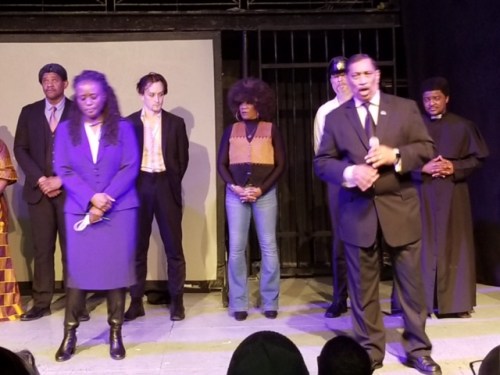
This incredible cast brought the passion and essence of those characters into real time, with Mandela authentically channeled, by the performance of Robert Greene, from the genuine loyalty and camaraderie of Mandela’s team, to the unstoppable determination of wife Winnie Mandela, fiercely played by Malika Nzinga, to the brutally cruel prison warden, John Shortt. And as a person who loves interesting backstories, here are a few. There was an actual tank that was supposed to be used in the production, driven by director John Ruiz Miranda that never made it onstage being an inch too big to make it through the theatre’s doorway. And then when my friend sitting next to me exclaimed “that guy on the stage is my neighbor” I was of course riveted from that point on to actor Lamine Thiam a multi dimensional performer, originally from Senegal. And then there was a cameo played by our our New York State Senator Cordell Cleare, who was at the original ceremony in 1990 when Mayor Dinkens gave Mandela the key to the city. It took me a bit to realize she was an actual senator and not an actor.
Although we say art imitates life imitates art,I was not ready for Mandela’s story to be running such a parallel to the times we are in now. Although this is Black History Month, Black History is American History and right now in places one hour from NYC, school boards are challenging Critical Race Theory being taught in their schools and they are banning books. In Texas that list, which deals with books on race and lgbtq+ people is over 300. They are actually denying what has happened in history. Which is why this production of Mandela is so important. Because what actually happened was performed on that stage. And the archival footage used in this production was actual news clips from that time of Martin Luther King and the Civil Rights Movement here in America.
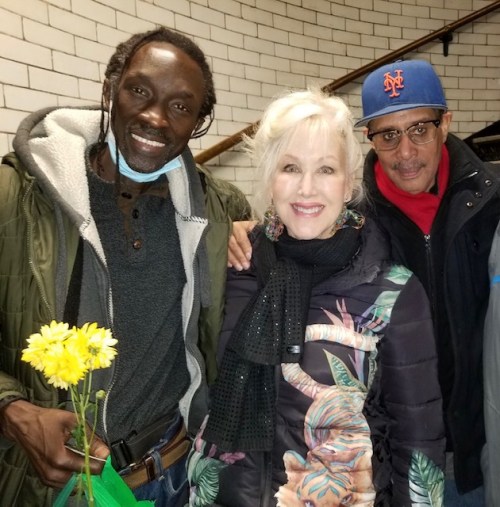
Although this was the last performance, the show will run again sometime in the spring. Definitely watch for it. Learn from it. Because they say history repeats itself. And that is unacceptable.
Dennis Yueh-Yeh Li on the theatre and the theatre of war.
An all Asian cast brings to life TIANANMEN REQUIEM, a deeply moving tale of a young gay couple trying to survive the Tiananmen Square crackdown and how it affects their family – for decades.
This is truly a play that the Chinese government does not want you to see. TIANANMEN REQUIEM has had its share of obstacles already. Dennis Yueh Yeh Li has courageously taken-over the position of stage director after the original director left. The production company also chose to no longer be involved and even actors resigned refusing to cite reasons. Many simply quit without offering a reason. Even a university professor, a mentor to the playwright, refused to be involved – even as dramaturg.
Toney A. Brown & Marc Levine have taken over the role of producers with sponsors Wang Dan (Dialog China) and Rod Lathim joining the team. Dialog China is an organization founded by famed Tiananmen student leader Wang Dan, who was China’s “Most Wanted Man,” was imprisoned twice, and is spending his exile in America as an indefatigable human rights activist. In his endorsement of the play, he wrote on Twitter in Chinese “Seeing those who were not born during the Tiananmen Massacre dedicating themselves to preserving history, makes me incredibly thrilled. Looking at the younger generation, I no longer feel lonely.”
The author of the play, due to danger he and his family might encounter, has decided to stay anonymous.
“[This play] is my only way of dealing with the trauma,” he said.
TIANANMEN REQUIEM
March 10 – 27
The Players Theatre
115 MacDougal St, NYC.
Regular Tickets HERE
25% off promo code
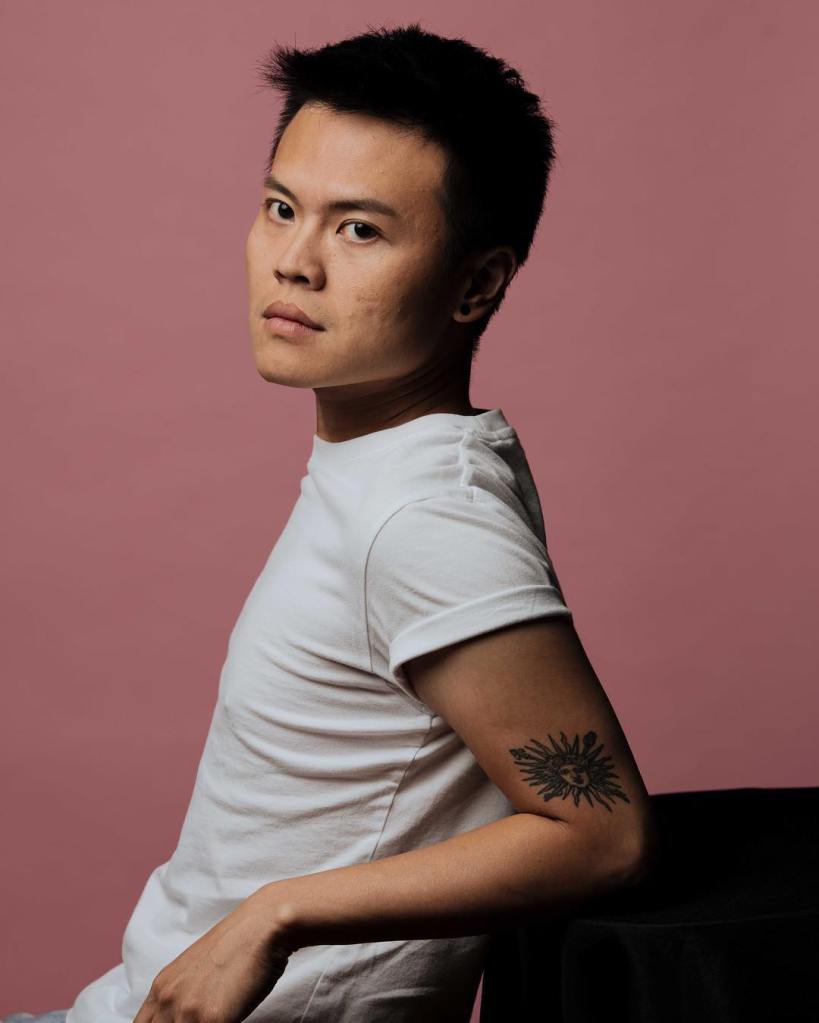
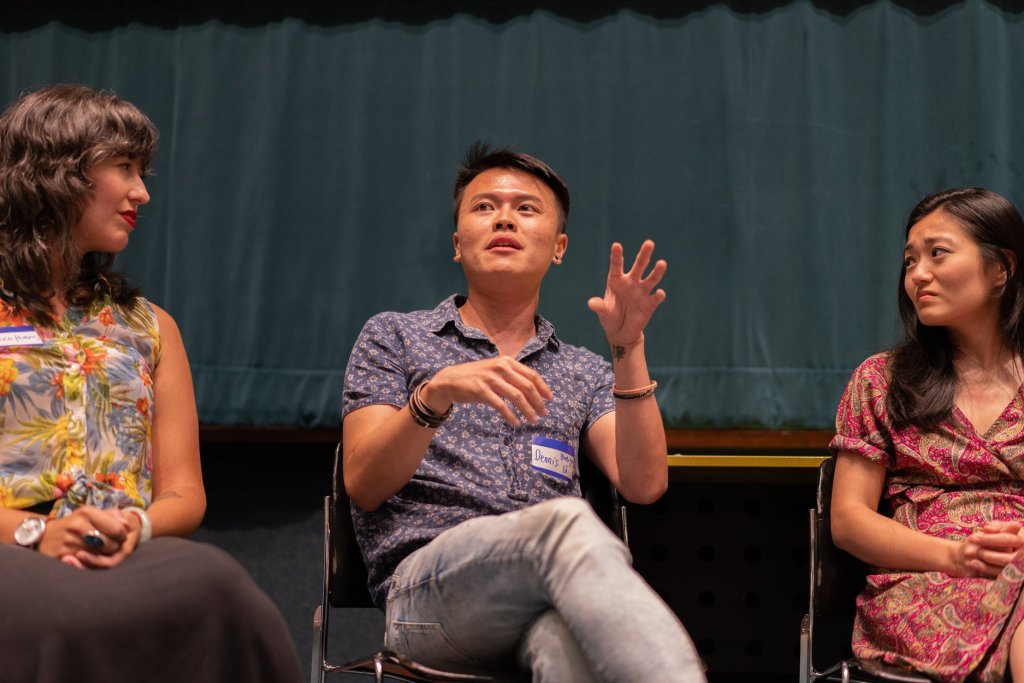
We spoke with director Dennis Yueh-Yeh Li about this experience.
I find theatre extremely fascinating because it is a space that’s so personal and intimate, yet a space that you welcome the audience to be part of it,” says the Taiwanese artist who came here 10 years ago to persue a career in the theatre. “And because of this ephemeral connection with the audience, possibilities are unlimited. That’s why it excites me, and that’s what keeps me going.
We asked Dennis what insipred him to take on such a challenging piece.
I used to work with The Living Theatre, and now I am in a collective called Al Límite, which is founded by many of the former members of the Living Theatre, including myself. Throughout that time, Judith Malina has really taught me what it means to make theatre, and inspired me to find my own path, connecting my passion for theatre to the world we live in. Along that journey, I am definitely no stranger to political theatre. In fact, by doing political theatre, I learned to humble myself, and learned to be compassionate, because that’s what really brings people together. Doing theatre like this then allows me to dream, dream for a better future that eventually I can also benefit from. And to be able to dream is to face the history, especially the history that’s censored. Tiananmen Requiem tells just that—the aspiration to break free, politically and sexually. Being Taiwanese, I know how precious that is. After witnessing what happened to Hong Kong these last few years, it makes me feel more obligated to confront the tyranny. Only to tell these censored stories again and again can people finally get inspired. That’s why those students who sacrificed their lives during the Tiananmen Square Crackdown were there. Freedom is earned. And this is the way I do to help earn that freedom.
What obstacles do you foresee encountering?
That we might enjoy the moment of encouragement because we are doing this play, but the reality is there is a long way to go before what we are dreaming for comes to realize. We will get disappointed and helpless, and we might not overcome it. We might not even live long enough to see change.
Plays seems to be a faster go-to source for historical records. Do you think your play will be looked upon that way in 10/20/50/100 years?
Theatre is fictional. I don’t necessarily think this is a play only about the Tiananmen Square Protests. There’s something in it very timely and timeless. And it will certainly intrigue the curious crowds to dig deeper. That’s what I’m hoping for.
Do you think this should be a Broadway play or an off-Broadway play? Why?
Broadway or off Broadway, they are the same to me. This play goes beyond that. It should be done anywhere possible because that’s the meaning of this play.

What’s next for you and for the play?
Aside from being a director, I am also a playwright. I am writing stories of being an immigrant here in the United States. I want to shed light on how an immigrant navigate in between two cultures. As for the play, I certainly want that more people who have the capacity would want to put it on stage again.
Do you feel a stronger responsibility when working on such historic and pivotal work?
Definitely. That’s what I learned from Judith, and from The Living Theatre.
What’s your creative process like?
We had a discussion about the play, and about the Tiananmen Square Protests. As a director, it’s my job to bring the cast back to that moment to feel what it was like for those students. After that, we worked to create an autonomous world where this story takes place. From there, we begin to figure out and focus on the relationships among these characters and with the time and space.
What makes this different or special?
Many of the cast members are Asian Americans. They didn’t necessarily know what Tiananmen Square Protests is or the significance of it. So we spent quite sometime to relate that incident to the other incidents that are happening around the world, from Hong Kong to Myanmar, from Black Lives Matter to Anti-Asian Hate. It was particularly different and special for me, different because this is the first time that I work with a group that don’t share political knowledge with, and special because I feel more obligated and honored to share that knowledge to enlighten.
What are your ultimate goals for this production and for the future?
Take this play to Asia.

A Rae of Sunshine: Laurie Rae Waugh returns to the ATA
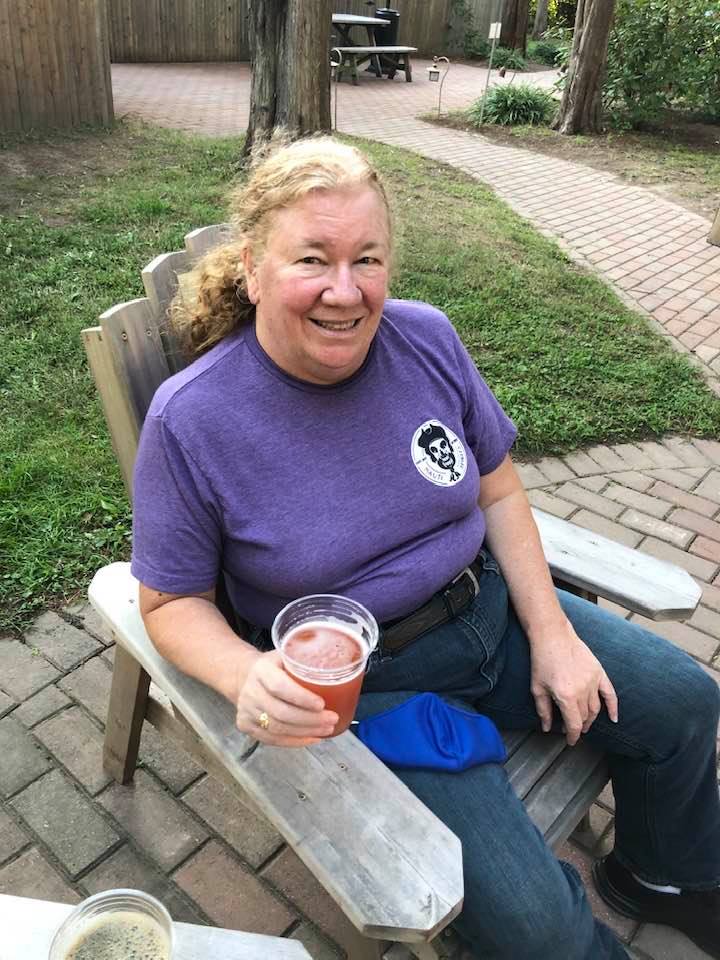
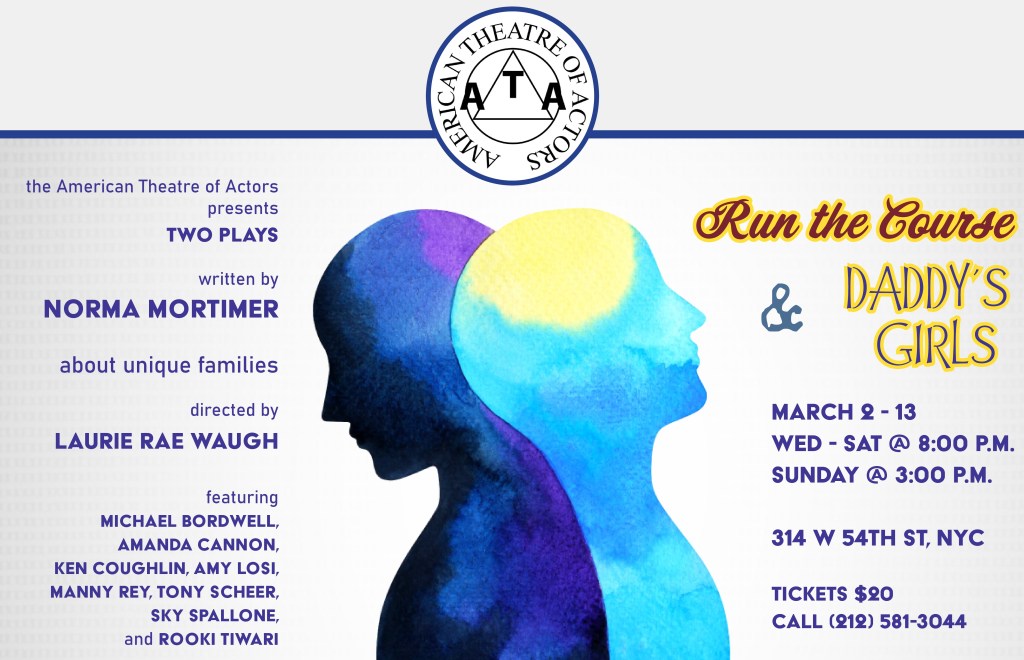
“These past 2 years have been interesting. I watched a couple of plays on zoom and realized that I did not want to direct in that form, so I decided to wait until things improved,” says Laurie Rae Waugh, one of the leading directors of the landmark American Theatre of Actors, “I am a people person and I prefer to work in person,” She concluded with a definitive aire. This did not stop her from being an actor – in October of 2021 – in an event celebrating the life of playwright James Crafford who passed in October of 2020. James Crafford Times 10 compiled ten of the profound playwright’s one-acts as a tribute to him. Shortly after that she received a play from producer James Jennings. “He had me read the play DADDY’S GIRLS which was written by Ms. Norma Mortimer. I enjoyed the script very much but realized that the play was only an hour long. I reached out to Mr. Jennings to see if there was another one-act that I could pair it with that had a similar setting. Mr. Jennings put me in contact with Ms. Mortimer who sent me another one-act and we now have an evening of one act plays by Norma Mortimer.”
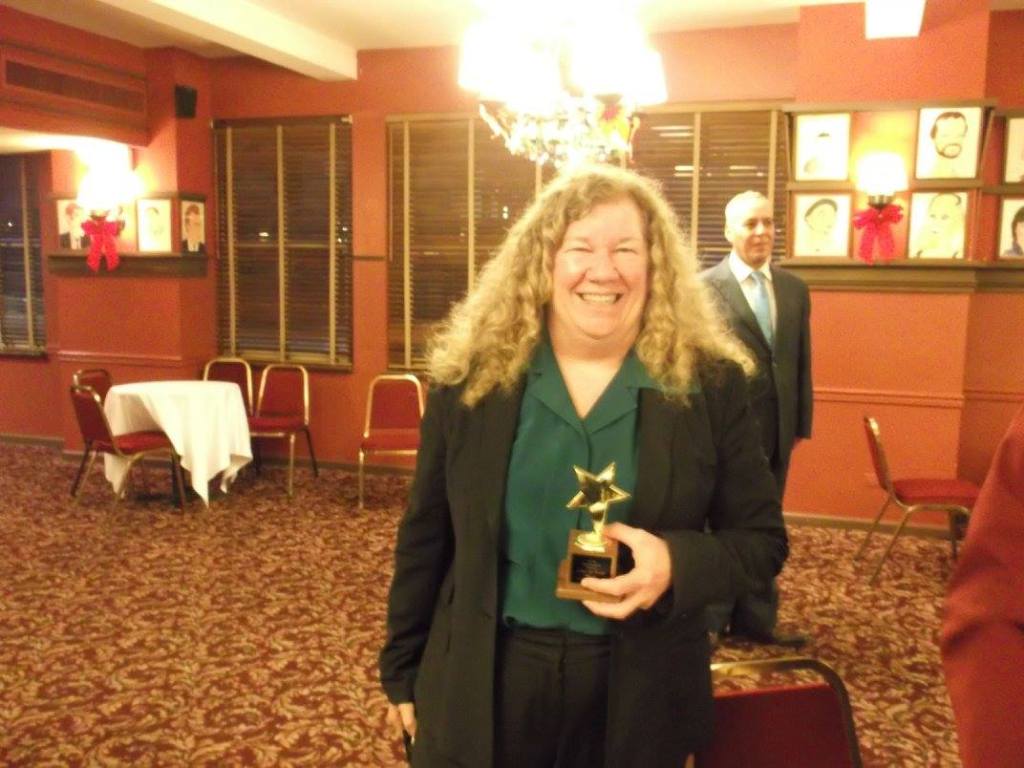
These two family dramas or drama within the family, open March 2 at the ATA putting Waugh, an expert at initimate relationship plays back in the directors chair. We grabbed a few minutes with her before she started a rehearsal:
What obstacles are you expecting to face now?
First, finding actors who were willing to get back into the theater while following COVID protocols. Most importantly I wanted to keep everyone in the cast safe. Since both casts have 4 actors, I have been rehearsing them separately until we run the shows together to get a sense of just how long the evening will run. I also had to make sure that everyone was vaccinated to be a part of this production.
How are you different from pre-pandemic in terms of your theatrical style or passion or creative process?
I don’t think I am different at all. I still go in with the same passion as I would any play I am directing. The only difference here is that I am working with a new playwright. I am looking forward to hearing her thoughts after she sees the play for the first time,
Do you think this should be a Broadway play or an off-Broadway play? Why?
Yes. Each play has its own rhythm, flair, and drama. We are only doing part of the play RUN THE COURSE as the play was also written as a full length. The longer version of RUN THE COURSE has the making in itself as an off-Broadway play.
The first one act play RUN THE COURSE is a drama filled with several twists and turns along the way. What I like about the play is that I didn’t see them coming and neither will an audience. The second one act play, DADDY’S GIRLS, is also a drama with some funny and touching moments throughout. If you’re paying attention, you will see early where this one is going. If not, then enjoy the ride.
What’s next?
I am not sure. I have 3 full length plays that have been approved for production however the cast sizes range from 8 to 12 actors, with one play having all the actors on the stage at once. I am waiting to see where COVID will be later this year and whether we will get back to some kind of normal. The 3 plays are written by two members of the same family. The late Irving A. Greenfield with WHAT DO WE DO ABOUT WALTER? And MY MOTHER’S BOOKIE and his son Nathan Greenfield with Poznan, Poland: 23 May 1943.
“Shalom” Means Hello, Peace, Wholeness… and Lisa

As an artform, Spoken Word is a catch-all term that includes standup comedy and monologues, but most often refers to poetry recited out loud. Unlike the written word, the execution of the piece aloud before an audience is a crucial aspect of the spoken word form. Voicing and being seen in one’s truth, rather than simply hiding behind written text is what makes spoken word at once a vulnerable, naked- and medicinal craft.
The word medicine has its roots in “to take appropriate measures.” During times of uncertainty, a global pandemic, isolation, economic instability and environmental crisis, cultivating an immunity and a healthy response to the stress, worry and fear that inevitably come creeping in is crucial. The impacts of sustained stress are visible, rampant and growing in our rapid- paced context. Poet and humanitarian, Lisa Shalom uses the spoken word artform to slow down and generate health and wellbeing- for herself, through her own work and performances. She also shares her tools with participants in the program she founded called, “Spoken Wordicine; Your Words are a Powerful Medicine.”

Taking the time to dive in and really examine what we might be carrying and turning our stories into art expressed in a safe container is a process that allows Shalom to perform heart surgery – not with a scalpel – but through truth-telling with compassion. Her work bridges the heart with the mind to create a deeper understanding of the internal landscape and it also connects one human to another. “When people are really in touch with themselves, they are less likely to harm themselves, others or the planet, and they are more inspired to breathe life into their bodies and surroundings.” Shalom visits educational organizations, corporate offices, conferences and seminars, offering Spoken Wordicine to diverse demographics, all similar at the core.
Using her “procedure,” Lisa Shalom creates avenues of safe vulnerability for those who could use a tune up on the insides, which actually turns out to be- everyone. She deftly creates an intentional platform where folks can air thoughts and buried secrets, creating personal catharsis while inspiring others with their words. Over her years of teaching, Shalom has collected stories of those whose worlds have been changed through her powerful technique.
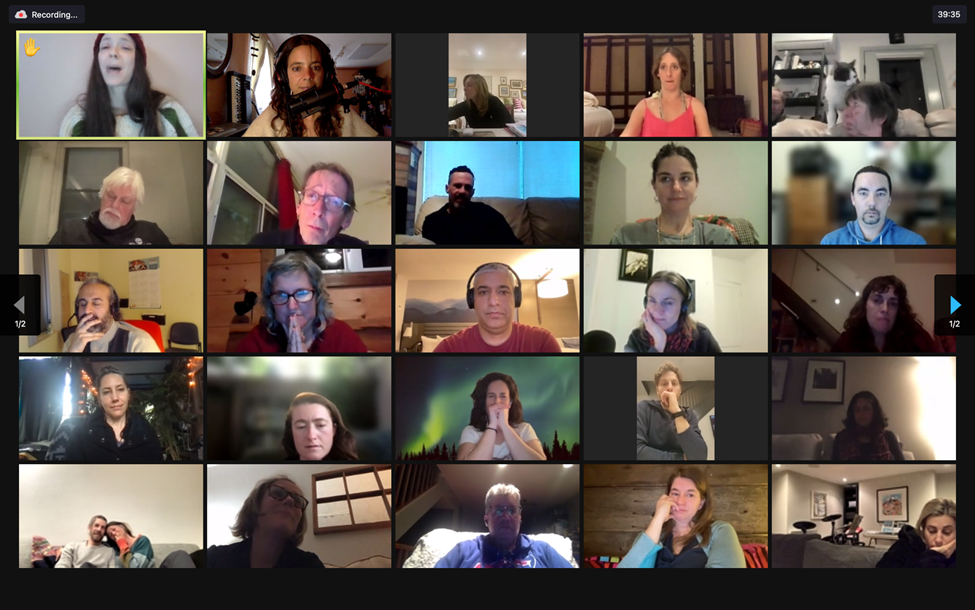
She shares the story of a girl who had gone voluntarily mute due to severe alcoholism at home. By the time the girl encountered Lisa in a Spoken Wordicine workshop, she had been silent for weeks. “I was instructed never to address this girl directly so as not to put her on the spot,” she says, recounting the experience. While the girl still did not speak, it was obvious to Lisa that she was observing- and absorbing- everything going on in the workshop. During the sixth session, her fellow participants shared their pieces on various subjects that tend to arise in this work. They rapped about everything from saying final goodbyes to their grandparents, addiction, immigration, and facing bullying and harassment for being somehow “other than”. As is the case during most performance shares near the end of the workshop, the room filled with tears, laughter and a deeper understanding of each other. Lisa discreetly asked the young girl who had been silently watching the proceedings if she would like to take the chance to get up and say something. “She got up and artfully roared her truth like I have not seen a student in a classroom or a seasoned professional at a nightclub do- before or since. I get chills whenever I think about her. The air changed to the degree that she was willing to let the rawness of her truth lay itself bare, and so did her relationship to her sense of her own power.”
The young girl, no longer mute, continues to write and she sends Shalom her poetry until today.
“One boy had Crohn’s Disease and he presented a piece on how badly it hurt him to be made fun of for the odors he sometimes produced,” Lisa added about another student. “He disclosed that he had a colostomy bag, (a plastic bag that collects fecal matter outside his body,) that nobody knew was there. His poetry was a glimpse into his late-night hospital visits, physical pain and his desire to be like everyone else.” The students who made fun of him became his biggest supporters overnight. All it took was sharing his story. “The courageous authenticity, or “vulnerabravery” we must summon in order to share our stories is the real work of this process. It can be terrifying to lean in, but relief, freedom and magic lie just on the other side of the comfort zone.”

Shalom shared the story of a young girl with a hearing disorder who revealed that she smiled and nodded so often not because she was stupid, but because she couldn’t hear what was being said. Another young girl shared how her family’s home and car had been spray-painted with religious slurs. Another girl spoke of how she felt too white to fit in with the black kids and too black to fit in with the white kids. One boy used his poetry to come out as gay. When Shalom works with adults, it often results in very similar shares, only with stories that may have been buried for longer. “When we don’t own our stories, they can end up owning us,” says Shalom.
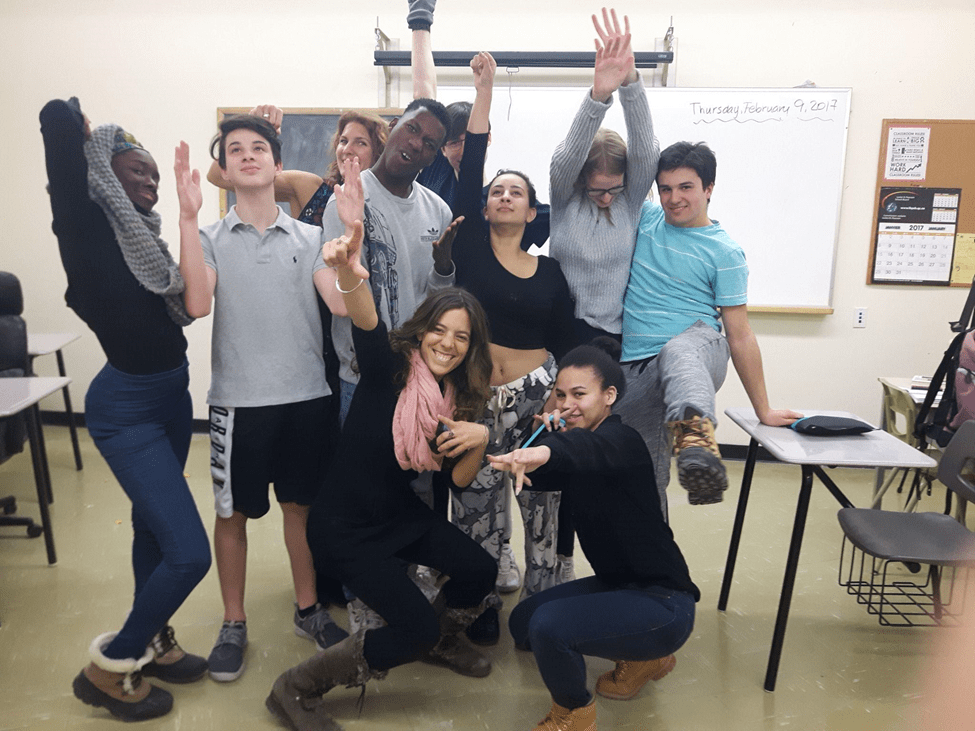
“Many participants speak on being targeted for their race, sexual orientation, weight, body type, skin tone, religion, heritage, or mother tongue. They unmask health issues, loneliness or whatever is really going on beneath the surface. On occasion, intimation of suicide or abuse come up, and the teachers and I take measures to provide support and counseling resources and we also take the time to offer love, attention and human connection to the kids,” says Lisa.
Spoken Wordicine is a method of personal or individual healing within community using art as the medium. Its potential for generating health is as great as its potential for preventing crises.
There is a perennial paradox one finds in teens in particular. Today’s teens carry a sizable amount of burden for their tender years, yet they are lacking sufficient life experience to address the slings and arrows they face. Educational systems at once demand teens to comply like adults in terms of dates and procedures, but do not often supply the knowledge or proper breathing room to first get a handle on their life situations. Lisa’s message is clear: “If poetry can become an outlet for naming the situation and letting off steam before drugs, alcohol, sex or video games become the go-to addiction, I consider my work productive preventative medicine!”
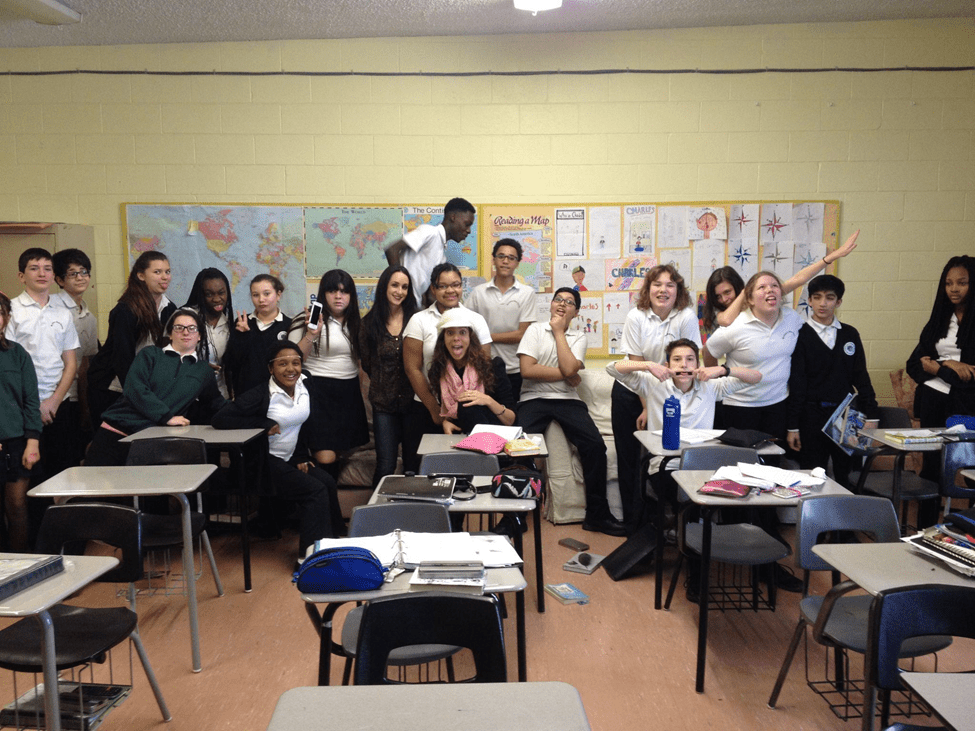
Lisa enjoys receiving poetry from former students who kept writing after their time with her has ended. “I love hearing from teachers who are incredulous that the “outcasts” or kids on the fringes who trust the process end up earning respect, developing confidence, and finding their place in the community. Maya Angelou says that there is no agony greater than the burden of an untold story. We use Spoken Wordicine as a means to lighten the load and claim our power.”
While each workshop is designed to be a safe space for all, Lisa offers a precaution. “When I teach Spoken Wordicine in high schools, I ask the kids to check-in with themselves before bringing their most vulnerable stories to the table. School can be a brutal environment and while they may wish to write poetry pieces about their deepest trauma to help them to process it, I ask them only to share aloud what they feel they could withstand having thrown back at them as a worst-case scenario.” Despite the word of warning, she finds that, “teens are thirsty for a platform to vent their innermost. Since I do encourage them to take a step out of their comfort zone, they often choose to bring their most profound challenges to the table despite the potential risk involved given the setting. And when they do, it’s because they are ready for mountains to move.”
Lisa maintains that the oral tradition is the original Wordicine. Storytelling around a campfire is one of the foundations of how we generate connection and empathy. It is the sharing of stories that builds personal confidence, appreciation and acceptance, of others and ourselves. “It should come as no surprise that walking a mile in someone’s shoes often amounts to loving them. So, it’s a natural byproduct of the Spoken Wordicine process that group dynamics should improve and that bonding and healing should occur,” she says definitively.
In watching Lisa Shalom perform live or online, we come to see how Lisa’s students are inspired to share of themselves. It’s clear that Shalom is able to provide the material she teaches as a result of a personal investment in her own Spoken Wordicine process.
Find out more about Lisa Shalom and her Spoken Wordicine Methodology and check out her work on www.shalomtoyou.com. Reach Lisa for bookings on shalom.home@yahoo.ca or on her socials: FB- www.facebook.com/lisababashalom or IG- @shalomlisa
Latest Posts
-
Jim Catapano reviews Anne L. Thompson-Scretching’s Home Is Sweet Sorrow: “A Masterful Conclusion to a Momentous Family Saga”
The War That Never Ends Home Is Sweet Sorrow is a must-see and a devastatingly powerful third chapter in the Blood trilogy, which also includes…
-

THE BARD TAKES BROADWAY: SIXTH ANNUAL NEW YORK SHAKESPEARE AWARDS CELEBRATES RECORD-BREAKING 2025 SEASON
THE BARD TAKES BROADWAY: SIXTH ANNUAL NEW YORK SHAKESPEARE AWARDS CELEBRATES RECORD-BREAKING 2025 SEASON The New York Shakespeare Awards has officially unveiled its list of…
-

American Theatre of Actors Announces 50th Anniversary Gala; Playwright LYLE KESSLER and TONY-winning actor, LEN CARIOU to Receive Lifetime Achievement Honors.
NEW YORK, NY — The American Theatre of Actors (ATA), a cornerstone of the New York theatrical landscape since 1976, is proud to announce ATA 50, a…
-

Music Among the Tumbleweeds: Jim Catapano reviews James Jennings’ New Dancing in the Meadow.
James Jennings’ New Dancing in the Meadow Brings Feel Good Vibes to the ATA James Jennings, legendary Founder of the American Theatre of Actors, brings…
 Arts Independent