
Does Improv need actors or is it just an act?
New York’s premier improv troupe, THE IMPROVISATIONAL REPERTORY THEATRE ENSEMBLE boasts being well-trained actors as well as hilarity-makers. But is that important … I guess so … and so do they. We grabbed them in-between their second show this season, The DIABOLICAL DR. FIEND, currently running at The Producers Club. (visit http://www.irteinfo.com for info and tickets).
So … guys … quick thinking and natural talent are surely on an improvisational actor’s grocery list. How about theatrical training. How has established acting methods helped in Improv?
 From Artistic Director, Nannette Deasy:
Theatre training is very important for anyone who steps on a stage. Improvisational acting is acting. You may not have a script, but it is still theatre. Talent and natural comic ability are wonderful – but you had better develop the skills to be heard, seen, and connect with your fellow actors and yourself. Otherwise, you can quickly get lost. A “traditional” acting method and scene study class will help any improvisational actor to develop better focus and listening skills. It will also provide him or her better access to one’s own emotional well to create characters grounded in some truth, no matter how broad or ridiculous they may be – not always an easy task when in the very artificial reality of being on a lit stage facing an audience of strangers.
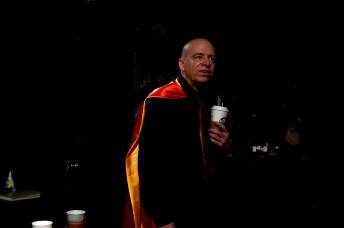 From Curt Dixon
The first thing that comes to mind is physicality and portraying emotions. Learning how your character moves and how they express themselves is important so that your performance is believable. You have to learn how to show the audience that you are that person. And you also have to be able to pay attention and react to the world that you are in. Being in character and in the moment at all times is paramount to making any scene work.


From Heather Johnson
Hmm, hard question since I do not have theatrical training, unless you count high school. The method I like to follow is the “does this make ME laugh” method, I wonder if someone has coined that. Because before I even care about an audience, I selfishly just want to make myself laugh and tug on the line of comfort/appropriateness levels. It is kind of like when you’re walking down the street and you think of something and laugh hysterically to yourself and don’t care that you look like an idiot because you’re having a grand time. I’m pretty sure that’s most people in comedy though.
Wow, this was actually a very awkward question for me to answer. Yep, I’m going to stop now.
From Cheryl Pickett
Taking things moment to moment and listening to your scene partner.
From Connie Perry
Scene study work comes to my mind. Even though you are not working with written material, you develop the skills to pay attention and listen to your scene partner as you learn to be in the moment. That can translate well into improvisational scene work.
From Izzy Church
I’ve studied numerous acting methods and they all contribute to the work I do as an improviser. Meisner technique teaches acting students to listen and respond, while paying careful attention that they are working moment to moment and living truthfully under imaginary circumstances. The same rules apply when you’re improvising. You have to be in the moment, and respond to whatever your fellow improviser(s) are offering. Method Acting teaches sense memory, where you recall on the sensory impressions stored in your subconscious and apply them to the space or the scene, which is also useful for improvisation. These techniques, any many other methods are useful tools when you’re improvising. Most importantly, remember to have fun! Your body and brain are very intuitive and if you tense up, you’re sending a signal to your body and brain that what you’re doing is difficult or stressful. I suggest warming up first. I believe all acting schools teach the importance of movement work. We also warm up as improvisers and work to ground ourselves before we begin to play.
Kim Yaged tells YOU who you are
DOWNTOWN URBAN ARTS FESTIVAL
“The Vast Mystery of Who You Are: Part One”
Reviewed by Robert Viagas
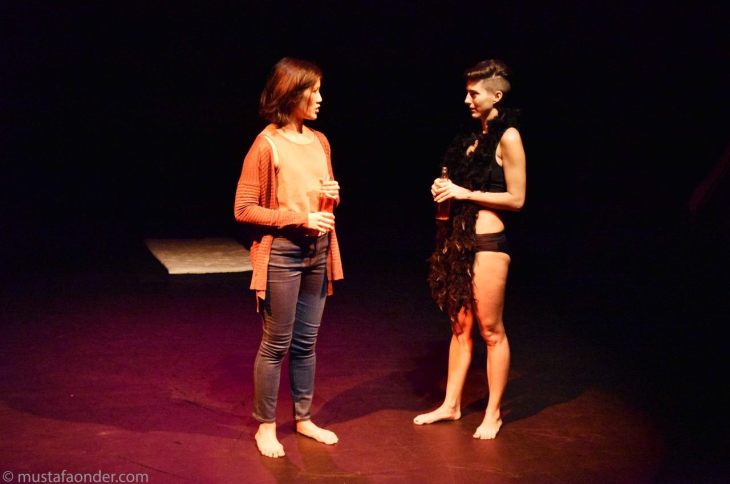
The central character of Kim Yaged’s sharp new drama, The Vast Mystery of Who You Are: Part One, indulges in sex parties, she says, just to satisfy her primal urges. But it becomes apparent that something else is prowling inside her that is more complicated, though just as fierce.
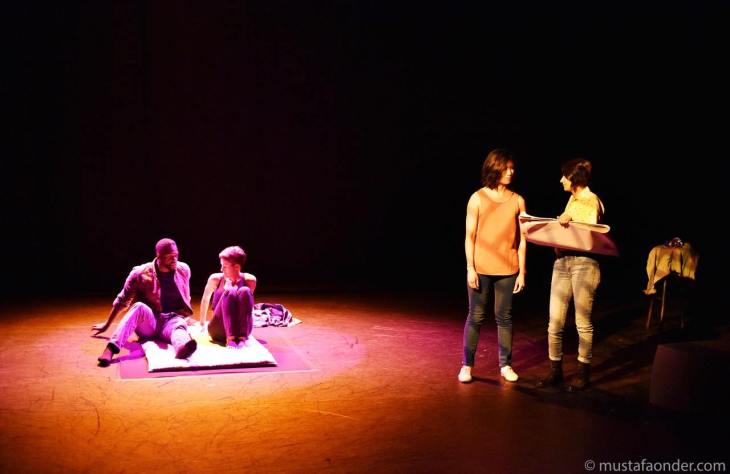
Yaged, the prolific and provocative author of the award winning Hypocrites & Strippers, Mates and Never Said, tears open her characters through language. Named “You” (Marissa Carpio), her central character is relentlessly articulate, though it gradually becomes apparent that her mastery of contemporary buzzwords and politically correct catchphrases actually serves as a kind of armor. They shield her, but also separate her from people she professes to care for.
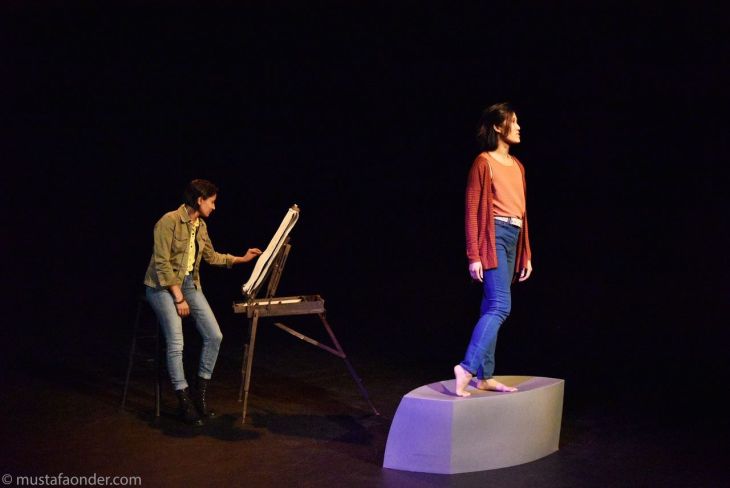
And she is not alone in her loneliness. Her intergender would-be lover “Dritte” (Bridget Ori) actually refuses to be touched. And this is the first play in memory that lists a separate Intimacy Director (Claire Warden).
As the play’s title suggests, sometimes the most “woke” among us are actually asleep to what’s going on inside their own heads and hearts.
As “You,” Carpio seemed a little tentative on opening night, but the confusion and frustration from her would-be male partner “First” (Gareth E. Lawson), her female buddy “Two” (Gulshan Mia), and) was palpable.
Director Rebecca Cunningham staged the show on a nearly empty stage, with three alternating playing areas designed by Omayra Garriga Casiano and lit by Karim Rivera Rosado.
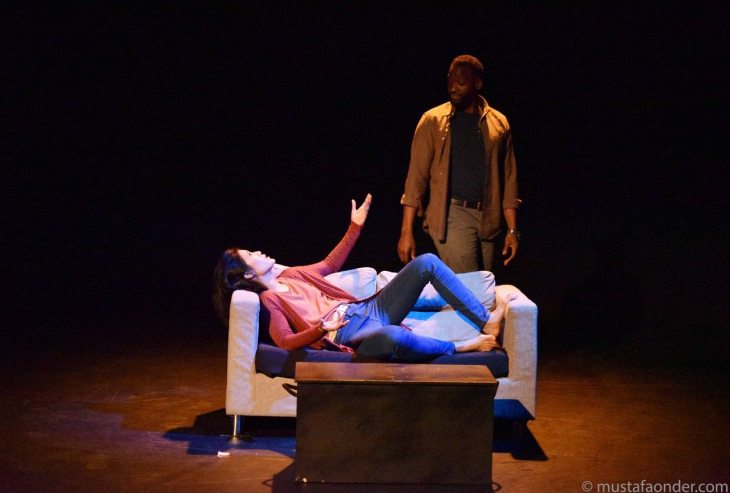
When You is finally ready to seriously question her own presumptions, she finds her coldness has driven the others away. She makes a breakthrough in the final line of the 55-minute play, leaving the audience eager to learn what Part Two has in store.
The Vast Mystery of Who You Are: Part One was presented on April 13 as part of the Downtown Urban Arts Festival.
STEVE SILVER: ” I saw a different side of New York.”
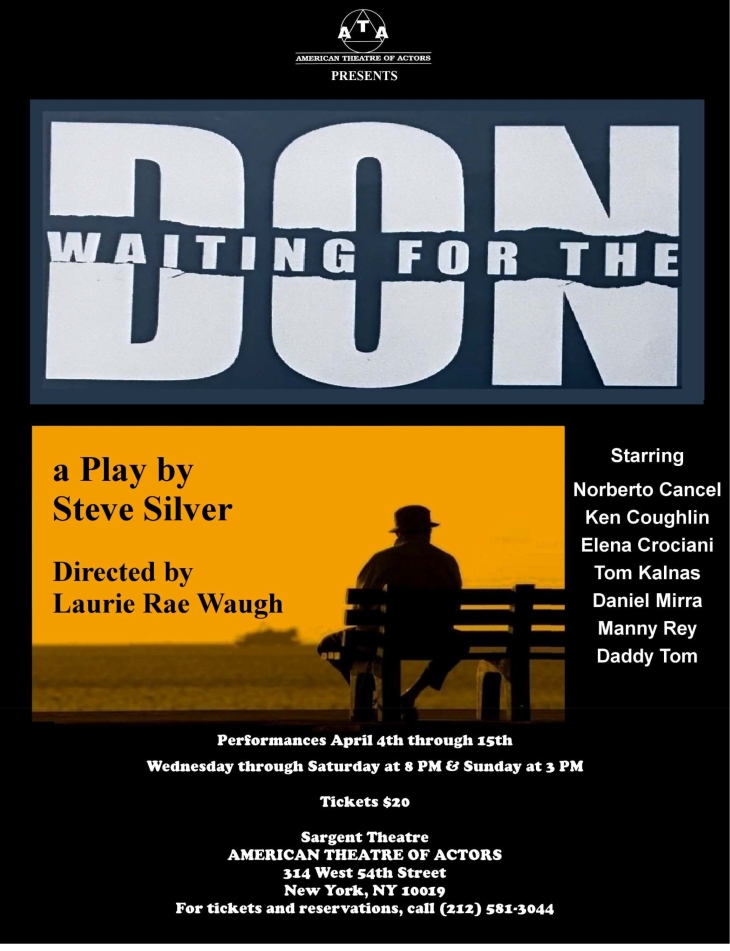
 Steve Silver, a playwright and actor whose star was rising at an amazing rate, passed away suddenly on March 16, 2018. His final work, WAITING FOR THE DON opens tonight, April 4, at the American Theatre of Actors.
Stage and film director, Laurie Rae Waugh will be helming this final work. An artist who was ‘there” and wrote about it. Ms. Waugh directed much of the gritty play- and screen-writer’s canon.
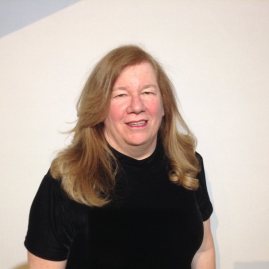
“I enjoyed not only the wonderful working relationship we had but more importantly, the friendship we developed over the past 8 years” said the prolific director, celebrated for her subtle depth-of-the-character style of direction.
Ms. Waugh earned accolades for her and Mr. Silver. She received the 2016 Jean Dalrymple Award for Best Director for Silver’s play(s), Mirrors; the same honor the previous year for A Spanish Harlem Story. She also won in 2010 for Jerry J. Pollock’s Code Name Daniel.
“Steve was not just a friend but became my theater brother,” Ms. Waugh said in an interview.
She and Silver had a long and joyous working relationship on Silver’s plays, Born in the USA and Waiting for THE DON, The Tiger of Greenwich Village, and The Prince of Hell’s Kitchen.
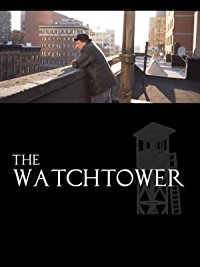
Ms. Waugh was part of Steve Silver’s magnum opus, The Watchtower, which began as a one-act; was rewritten as a full-length; and finally became a major motion picture winning numerous honors across the country. DON was in negotiation to become another film after its run at the landmark American Theatre of Actors in NYC.
“Thank you Steve for giving me the distinct honor and pleasure to have brought your plays to life. I would also like to thank James Jennings, my cast, family and friends for their support.”
Steve Silver remembered by the industry.
“We’ve lost a voice that gave us many enjoyable times in the theater.”
Stephanie Schwartz
“He was a quiet man with a loud message!
He was a reserved man, who had a talent for telling stories.
He will be missed; I will miss the plays that he would have written.”
Francesca Devito
“Steve wrote the truth and he gave it to the people.
That alone put him above so many.”
Jay Michaels
“Steve wrote raw, gritty and compelling dramas about
life in New York City.
He will be sorely missed.”
Laurie Rae Waugh
J.E. Robinson is a STRONG MAN at DUAF
This year marks the Season Sweet 16 for the powerful Downtown Urban Arts Festival. The five-week art & culture showcase supplying audiences with live stage works, independent film, cutting-edge music and envelope-pushing poetry, will take up residence in some of lower Manhattan’s most thrilling and celebrated spaces. Running from April 7 through May 12, artists with their finger on the pulse of what the city is thinking will present their works at Theatre 80 St. Marks, Tribeca Film Center, New York Live Arts, Joe’s Pub at The Public Theater, and Nuyorican Poets Café.
ArtsIndependent will be doing a series of interviews with some of the stage artists prior to showtime. At THEATRE 80 ST. MARKS, 80 ST MARKS PLACE, NEW YORK CITY, a powerful, literate, and engrossing piece goes up by an author who is the same.
 The articulate J.E. Robinson shared some brilliance with us recently …
FRIDAY, APRIL 20 @ 8:00 PM
THE STRONG MAN BY J.E. Robinson
Decades ago, at the head of his gang, Pearl Crabtree was strong enough to kill any man. Is he now strong enough to kill one of his own?
Also featured: CORPORATESTHENICS BY Baindu Dafina Kalokoh
Tell us about yourself as an artist.
 My aesthetics believes strongly that, in order for the work to live for the audience, it must live for the artist. Without this predicate, the work fails to become art. In every medium in which I have worked (fiction, poetry, essays, plays, history, even within the classroom), I strive to see my audiences sit wide-mouthed, and to hear them say “it’s not just like I met these people; it is like I was actually there!” Perhaps this impact leads them to consider my work “historical,” or even “autobiographical.” Whatever. My audiences, however, do see dimensions beyond the moments I present. Their visions vindicate my trust in them in telling these stories. The gone are not gone if we remember them, if only as parts of a fiction.
Where did you get the idea—the inspiration—for the play?
Perhaps I could explain THE STRONG MAN as being set in my ancestral home in South Carolina, from which my great-grandfather moved around the turn of the twentieth century, or I could explain that the governor of South Carolina who incited and failed to arrest the Honea race riot in the early 1900s shares his birthday with me, but those would elude the true inspiration of a play about how men die.
At fifty-two, I find myself approaching the end of my life. How shall I be remembered? How will I die? Each of us asks those questions. In THE STRONG MAN, Victor has started answering them, and he has resolved not to die cheaply, with the life of yet another person on his head. Perhaps a person arriving at that conclusion serves as the real inspiration for this play. Perhaps I sought to see it represented as religious allegory. That sounds good! “Perhaps so.”
Are you an historian or a history buff—I ask as the play has element of events of decades ago.
That is an odd question. In it, might you reference my profession or my material?
What are your hopes for this play…and goals in general?
For THE STRONG MAN, I should hope an appreciative audience would see it well. I should hope that it inspires thought for someone. I should hope someone seeks to redeem themselves. After all, ever since the time of Aeschylus, drama has been a most redemptive art.
Any ideas for a full length play?
Currently circulating is a longer play, set in Ashante country, in Ghana, between the 1500s and the twenty-first century. In it, Mother Ashante sends storms across the ocean to regain her stolen children, and she rejoices when her children return. It is called MOTHER ASHANTE GATHERS THE WAR CLOUDS FOR HER CHILDREN. I would wish it be seen somewhere beyond my flash drive.
What’s next?
My current project is a screenplay set in the 1930s, featuring a trouser-chasing director forced into a relationship with a starlet to save his job at the studio. Its title remains in flux. Who knows? Perhaps it would interest Kevin Spacey…
Dan: One-on-one about his one-man show
This year marks the Season Sweet 16 for the powerful Downtown Urban Arts Festival. The five-week art & culture showcase supplying audiences with live stage works, independent film, cutting-edge music and envelope-pushing poetry, will take up residence in some of lower Manhattan’s most thrilling and celebrated spaces. Running from April 7 through May 12, artists with their finger on the pulse of what the city is thinking will present their works at Theatre 80 St. Marks, Tribeca Film Center, New York Live Arts, Joe’s Pub at The Public Theater, and Nuyorican Poets Café.

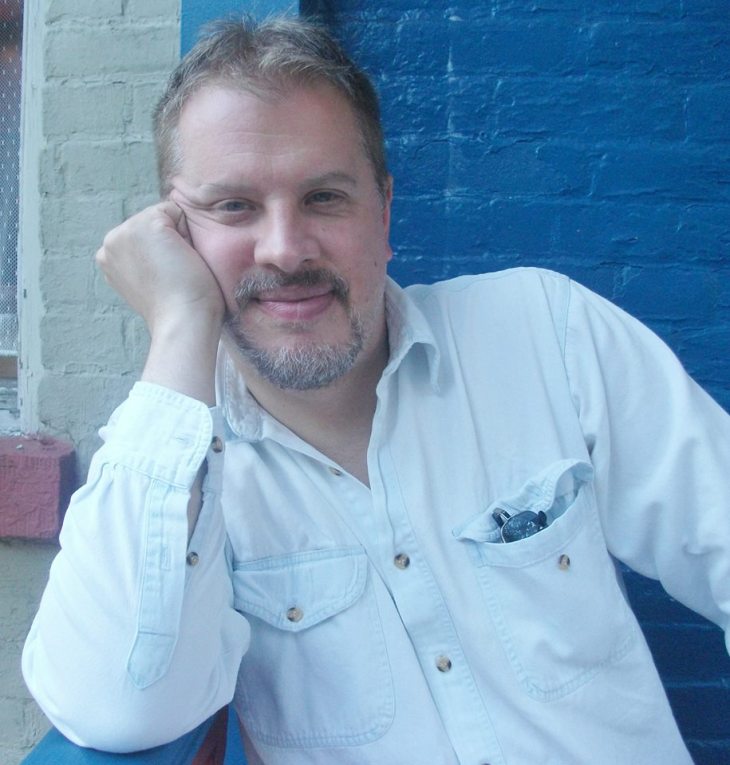
ArtsIndependent will be doing a series of interviews with some of the stage artists prior to showtime. At THEATRE 80 ST. MARKS, 80 ST MARKS PLACE, NEW YORK CITY, a one-man show featuring actor, writer, renaissance man, Daniel Damiano, will premiere entitled AMERICAN TRANQUILITY. We took a few moments of his precious time to hear about Daniel, his play, and the art of storytelling.
WEDNESDAY, APRIL 18 @ 8:00 PM
AMERICAN TRANQUILITY BY Daniel Damiano
A southern retiree, an Iranian subway station poet and percussionist, a talk-radio show host and a Brooklyn existentialist reflect on the human divide in 21st century America.
Also featured that night: SUBLET BY Alisa Zhulina
Tell us about yourself as an artist.
I’m an Actor, Playwright and Poet based in Brooklyn, NY. As an Actor, I’ve played a wide array of lead and character roles and have always relished the opportunity of doing different things in different styles and playing a variety of roles, and working with nice, creative people. As a Playwright, the same holds true, pretty much. Stylistically, I do not marry myself to a specific genre or style, but really savor the opportunity of telling stories about different types of people in different parts of the world that I have a personal connection to, somehow.
Where did you get the idea – the inspiration – for the play?
I wrote AMERICAN TRANQUILITY over the course of a couple of months in the late Winter/Spring of 2017. It was born out of a combination of my desperation to get back on the stage and not wanting to wait for someone to hire me combined with the post-election climate that fed into some of the themes in the piece, along with other themes that I thought meshed well in terms of how they relate to modern America.
The one-person show is gaining GREAT notoriety. What do you consider yourself … an actor or a playwright first?
Very much both. Admittedly, I’ve often kept both very separate in that I love writing plays for other actors – not for myself. However, I’ve fused the two together when I wanted to create a performance opportunity for myself, as I did with my first solo show, THE HYENAS GOT IT DOWN, and my new one, AMERICAN TRANQUILITY. But I love being an Actor (and need to be doing it much more) as I love being a Playwright.
What are your hopes for this play … and goals in general?
For AMERICAN TRANQUILITY, having my druthers, I would love to perform this for a few weeks at a single venue. I think it’ll be timely for a while, and would just love to have the opportunity to share this with more people. I’ve done this a few times already, but just for 1 or 2 night stints. But the thrill of doing this show and having the audience with me in this particular piece is deeply thrilling, so I hope there can be some interest generated by it so that it can have other lives. As far as myself, the goal is always for the opportunities to come a little more easily, both in terms of finding homes for my plays and working as an actor. Anyone who does one, the other or both will tell you that that’s often the biggest challenge because it’s the one thing you can’t control – UNLESS you create your own opportunities, which I’ve done. But it’s certainly nice to have more people know of your work and who will give you opportunities as well, and so making my work known is always something I have to keep at because it simply helps your career.
Any ideas for a full length play? Or at least one with more characters
 Most of what I have written has been multi-character plays, of which I’ve written a lot, and I’ve had plays done throughout many parts of the U.S., as well as London, England and Sydney & Melbourne, Australia. And I always look forward to what the next one will be, what will inspire it, how do I connect with it, etc.
What’s next?
My play HARMONY PARK will receive it’s World Premier with Detroit Repertory Theatre in late March and will be running through May 20th. I’m also continuing to work on my first (and probably only) novel, called BUBONIC PEG. There are some other up-in-the air projects that may or may not come to be, so we’ll just see what happens.
Getting to the meat of Anghus
![IMG_E0328[1]](https://artsindependent.com/wp-content/uploads/2018/03/img_e03281.jpg?w=730)
Personable, powerful, and pulsating with ideas. Anghus Houvouras is displaying his playwright skills at the DOWNTOWN URBAN ARTS FESTIVAL next month.
AI caught up with Anghus for a quick rap-session on his views and works.
Tell us about yourself as an artist.
I used to be extremely skeptical of the word ‘artist’. At one point in my life i found it pretentious to apply that label to yourself, but i think it was actually because i didn’t understand what being an artist was. I started writing and had some success, but a lot of my motivation and inspiration came from seeking success and validation. The work wasn’t coming for a place of artistry. It’s not to say that all the work was bad, but it was lacking something. It took me about 10 years to figure out the voices in my head and what they were trying to say. I stopped writing and i started listening, and that’s when i think i transitioned from a guy who makes stuff to someone pursuing artistic endeavors.
I think if you look at my body of work, there are a few themes that consistently emerge. First is a fascination with society and our perpetual hypocrisy. How no one ever thinks of themselves of the villain or will take even a fraction of responsibility for the horrors happening in the world around us. We are a species obsessed with self and have created this amazing, opulent society that is a living visage to our narcisissm. We create institutions to bring structure to our beliefs and then forego any sense of responsibilty for the terrors they unleash upon the world. I suppose that’s a very verbose way of saying I enjoy exploring the cracks and fissures in the foundations of everything we hold dear. These dark areas are where i find inspiration and its where the best characters are usually hiding.
SATURDAY, APRIL 21 @ 8:00 PM
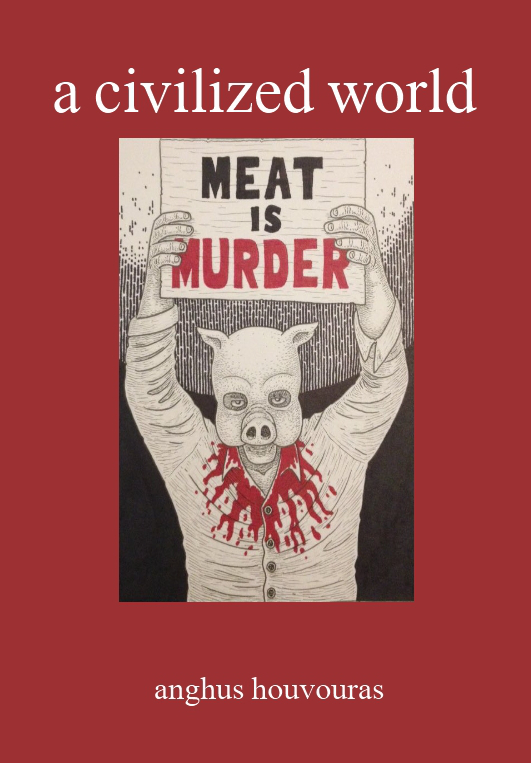
A CIVILIZED WORLD BY ANGHUS HOUVOURAS
An opioid addict is sentenced to death in the near future where being an unproductive member of society is a capital offense. The play centers on the condemned, Eleanor Reed, and her final conversation with Andrew Goodman, a life long government shill tasked with explaining the value of her sacrifice.
Also on the program: HELP ME GET OVER YOU BY ROLLIN JEWETT
Where did you get the idea – the inspiration – for the play?
I’ve always been disturbed by how comfortable we, as a society, are with the suffering of others, so long as it doesn’t impact our day to day lives. You can walk down the street and pass a dozen homeless people, many of whom probably suffer from mental illness, and it won’t even register. Or we can sit back and hear ghastly statistics of the number of innocent people killed by a drone strike and it doesn’t even register as upsetting. Most people put more thought into their daily lunch order than the plight of the disenfranchised. I find that equally disturbing and fascinating. At some point in our lives we accept that human suffering is ultimately tolerable as long as it isn’t happening to us.
Then i started thinking about the divide between those living in polite society and those who are deemed as ‘uncivilized’, i.e. anyone we are comfortable with being abused and destroyed as long as it doesn’t interfere with the trappings of a civilized world. I wanted to see these horrors play out in a very simple way; A conversation between someone whose job involves invoking death sentences and someone who has just been sentenced to die. How would it work? What it would be like being told you no longer have a place in this world. That your life holds almost no meaning. And it all kind of started flowing from there.
For the characters, I was inspired by some of the circumstances around places i’ve lived in recent years. I went to college at Marshall University in Huntington, WV which has the highest rate of opioid addicts in the nation. From there i moved to Wilmington, NC which also ranks in the top five nationally for opioid abuse. The idea of making the unproductive member of society an opioid addict felt perfect. And her punishment isn’t based on being an opioid addict, it’s that she’s stealing people’s medication. In my near-future dystopian scenario, you can be addicted to opioids, you just can’t steal them. Much like today, we’re fine with addiction so long as its done through a Doctor’s office and a prescription pad. You can be strung out as you want, as long as its done legally. God bless America.
Futuristic? Are you a sci-fi fan or
Absolutely a sci-fi fan. There’s a lot of A Civilized World that feels rooted in Orwell and Huxley. The idea that someone can be deemed as an unproductive member of society and be sentenced to death felt like a good, dystopian sci-fi premise.
The longer i developed it the more it felt like it was something from a very plausible, very near future. We already live in a world where the disenfranchised are cast off. Where we watch people die needlessly and do nothing to help. We watch kids getting gunned down in schools and nothing changes. We are ambivalent about suffering so long as we are spared the impact. The idea that one day we could begin to push these pour souls off the edge rather than wait for them to step off themselves doesn’t feel like too much of a stretch.
What are your hopes for this play … and goals in general?
I hope the play makes an impact on people. That at the end you have to swallow a little sadness and realize that at times in are life, we are both characters in the play. There are days where we are the young, idealistic person who believes things can change for the better. And there are times when we grow older and become more accustomed to how the world works, and we become less empathetic to those in need and more tolerant of terrible things being done and become comfortably complicit. And it’s as true of me as anyone else. I am the vapid, self-absorbed consumer who understands that every day people suffer and die because of my ignorance, my tolerance and my inability to find the strength to be better to my fellow man.
There are brutal truths in this story and i hope audiences walk away with a little more perspective.
For me, the goal is always the same; continue writing honest work, find cool people to collaborate with and find an opportunities to get the work out there for people to see. I’ve been fortunate to be able to work with the Downtown Urban Arts Festival twice now and a number of other festivals who have showcased my work. There’s no better motivator for creativity than finding people who appreciate the stories you’re trying to tell. I had my first festival showcase at DUAF in 2016 and it has led to a number of other opportunities.
Any ideas for a full length play?
I’ve been working on a full-length play called Beard, about an actor trying to rehabilitate his career after being outed as gay at a time when it was a career death sentence. His plan involves getting an actress pregnant to quell rumors of his homosexuality. It’s a very intimate story about someone so obsessed with what other people think of him that he’s willing to forego his personal happiness to maintain a certain public image. As their relationship develops, she becomes intent on helping him become honest about who he is, but the harder she pulls the further into the closet he recedes. It plays with similar themes in A Civilized World, the examination of how we define ourselves in a society and the pressures of living within certain boundaries of acceptance and the lies we tell ourselves to maintain our sanity.
What’s next?
I’m hell-bent on getting A Civilized World onto more stages. I think the story is ridiculously relevant today and brings something new to the conversation.
I’ve also been meddling in a lot of different mediums lately. I have a novel that should be out later this year called The Fence Mender. I haven’t made a film in a few years, so i’m looking at dusting off the cameras and filming something soon. I’m one of these horribly obsessive creative types. There’s always an idea bouncing around my head and i don’t feel right until I find the best medium for it and get it done.
Spotlight On: RICHARD SKIPPER by Anthony J. Piccione
 Richard Skipper takes his guests seriously.
 One might think lightly of cabaret, but don’t be deceived. Richard Skipper has elevated the art into a monthly ritual of celebration and total abundant joy. Richard Skipper Celebrates is currently in the middle of an amazing season honoring such names as Carol Channing and — on March 18 — John Kander. Skipper invites talented leaders of music and art to share stories and tunes with an enthusiastic audience in a lavish theater (the Laurie Beechman in Times Square).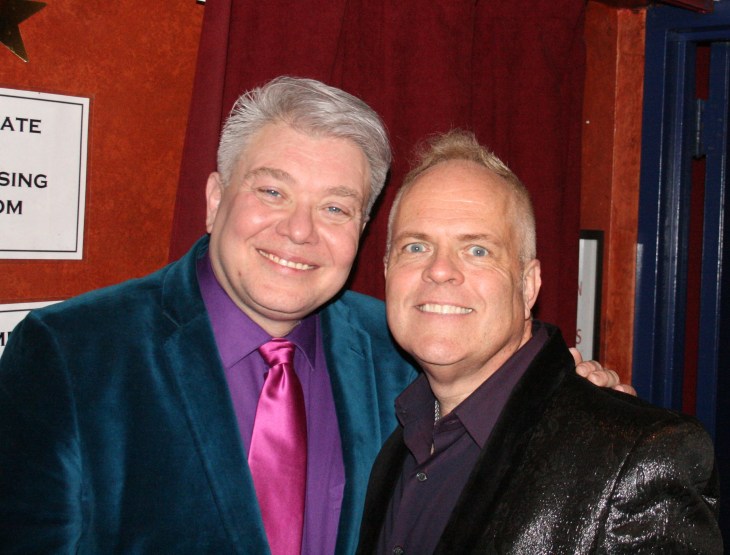
Richard and his producer, the charismatic Russ Woolley make magic at the Laurie Beechman Theater every month
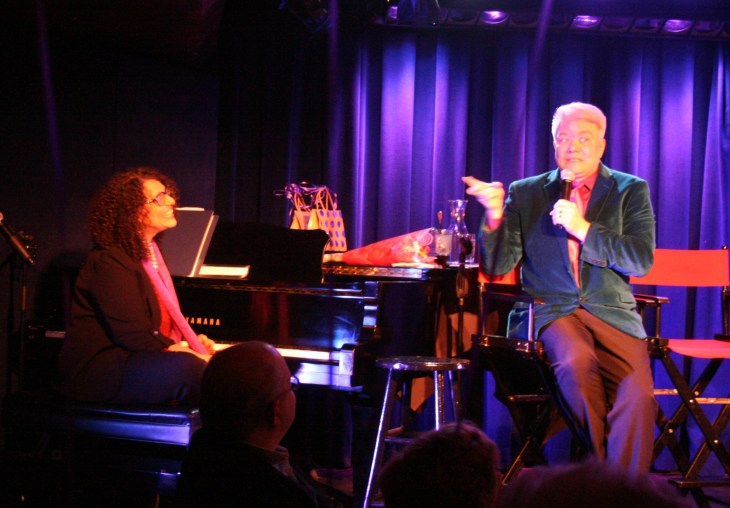
Skipper’s comic banter with guests and musicians are as joyous as the musical numbers themselves
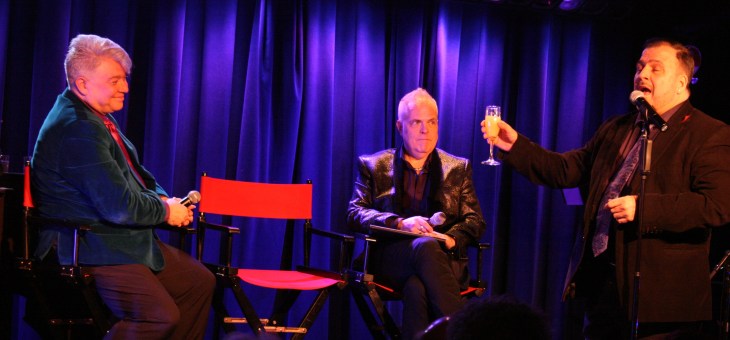
A toast of Broadway toasts the 21st century Toastmaster: David Sabella, from the original company of the current Broadway production of Chicago, raises a glass to Skipper as producer Russ Woolley looks-on with pride.
All photos courtesy of Jay Michaels Arts & Entertainment
Reality presented AS IS
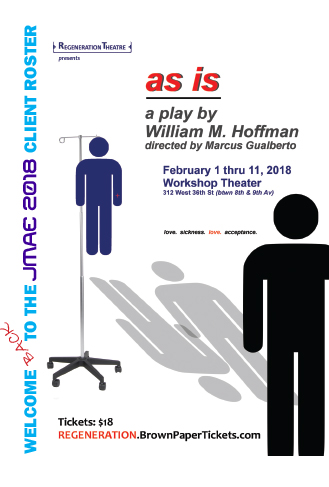
Regeneration Theatre chooses one of the first works exploring AIDS from a personal point of view to open its 2018 season. AS IS asked the question … Imagine being ill with a strange unknown disease … and nobody cared?
 Regeneration Theatre
presents AS IS by William M. Hoffman
February 1-11 (Feb. 1-3, 5, 8-10 @7:30 p.m.;
Feb 4 & 11 @ 2:30 p.m.)
Workshop Theatre, 312 West 36th Street, NYC
Tickets are $18 and available at regeneration.brownpapertickets.com.
In 1985, when As Is first appeared at the Circle Theatre, AIDS was a new moment in time. A pandemic with no cure or reason. AS IS was one of the first plays, and subsequent teleplay, depicting how AIDS was affecting the LGBT Community. Its power was also in that it focused on a small group of friends – and what it did to them. It proceeded Larry Kramer‘s The Normal Heart by about a month.
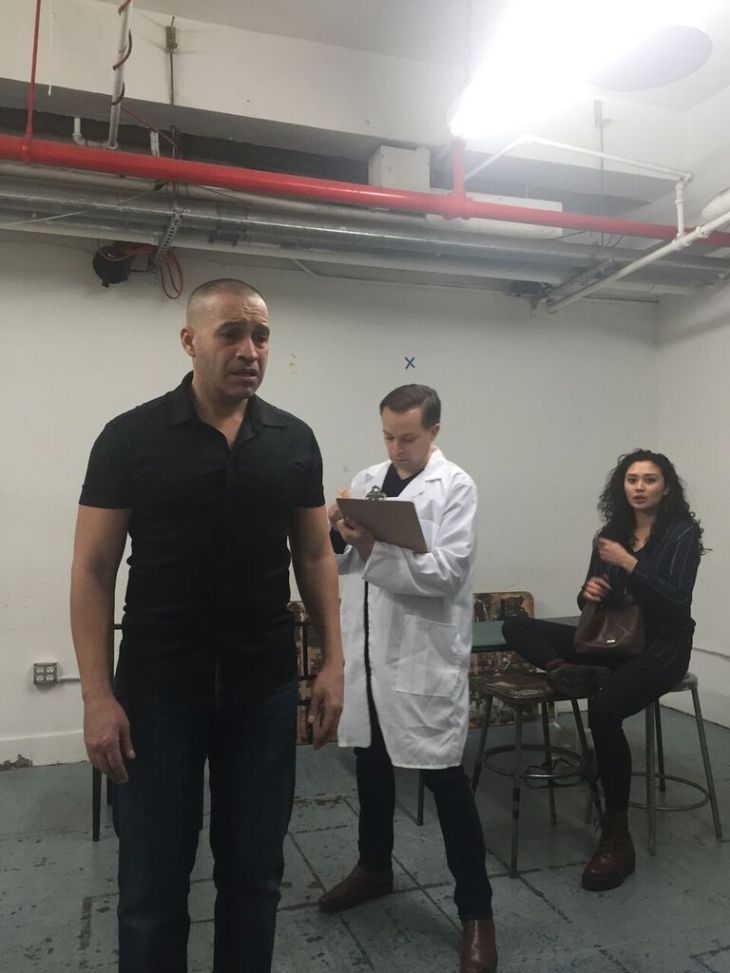
THE PLOT: Saul and Rich are breaking up… but not for long. Rich has contracted the disease ravaging the gay community. Seeking safety back in Saul’s arms, the two stage a play showing how family, doctors, and friends treat those with the disease. The play’s parable shows how important it is to have someone you love by your side – especially in trying times … as that is when you feel most alone.
Featuring Brian Alford, Robert Maisonett, Aury Krebs,* Daniel Colón, Colin Chapin,* Sara Minisquero, Jenne Vath,* Rick Calvo, Mario Claudio
(*Appears courtesy of Actor’s Equity Association)
Directed B. Marcus Gualberto
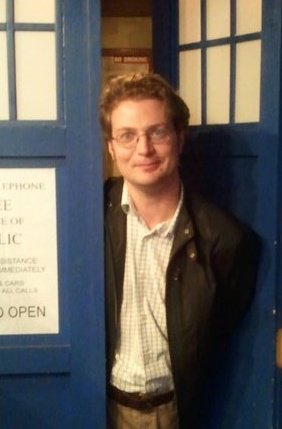
We spoke with members of the company and their fearless leader, Barnaby Edwards. Knowing what a Doctor Who fan he is, calling his company, Regeneration, has two meanings.

Step 1 Theatre Project & Michael Hagins: Making Quality Art with a Vengeance!

Step1 Theatre Project’s mission is to practice and promote artistic freedom.
It’s easy to talk the talk but they walk the walk. Jazmyn Arroyo & Janelle Zapata, while presenting their own bold, meaningful productions, also help make the creative visions of many independent artists in NYC realities. They know that financial challenges and crew needs can make the difference between a show and no show. So these two stage warriors under the guise of S1TP have made a commitment toward new, innovative ways of supporting fellow artists; this includes sharing resources, promoting new works, donation of funds, rehearsal space, and/or performance space–anything within their means–that will result in one more platform an artist did not previously have. They seek to foster and inspire the next generation of artists and encourage them to produce their projects fearlessly, regardless of the challenges.
One of their star-playwrights, Michael Hagins (and not just them as Mr. Hagins’ name appears on many indie theatre playbills these days – not to mention awards), has offered up a suspenseful piece of live theatre ready for viewing. THE VENGEANCE ROOM.
Step1 Theatre Project opens its 2018 season with his gripping thriller about five strangers afflicted with amnesia find themselves in a secluded room with a table and four weapons – and a set of instructions with only one way to leave. Who will survive the deadly guidelines? And who is behind the torturous game? Vengeance Room features Ariel Cohen, Michael Mena, Mateo Moreno, Kat Moreno, and Ashley Rogers. The production, part of the 11th Annual FRIGID Festival (February 14 – March 5) performing at UNDER St. Marks & The Kraine Theater, will have a run of five-showings:
Thursday Feb 15th – 5:30pm; Sunday Feb 18th – 12:00pm; Thursday Feb 22nd – 10:30pm; Saturday Feb 24th – 8:20pm; Sunday March 4th – 1:50pm
Ticket info and venue will be announced shortly. Visit www.step1theatreproject.org for more details.
We met-up with the founding mothers of S1TP, playwright Michael Hagins, and members of their cast to hear what they think of art in NYC.
You – S1TP – are growing in leaps and bounds. What are some constant hurtles and how do you conquer them?
Jazmyn Arroyo: Speaking from my perspective, I’d say my biggest challenge is securing funding and space consistently! I haven’t found the secret formula yet, but so far the solution has been to think outside the box. For instance, our very first fundraising endeavor was a Karaoke Fundraiser, at a karaoke bar that was willing to let us host our event on one of their slower nights in exchange for all bar proceeds. In terms of performance space, we were also once able to produce a Christmas show at a theater that waived rental costs in exchange for a split of the box office. You have to really do some digging, but folks should be encouraged to explore as many different avenues as possible!
How do you choose the works for your seasons?
Jazmyn Arroyo: We have been very open to the types of works we present, so I’m constantly on the look-out for scripts–published, unpublished, production history, unproduced, whatever! My interest as a producer is not only in the work but in the artists themselves, so we tend to lean toward an open submission process. I’m happy and proud to say that we’ve worked with artists of many different backgrounds, races, and gender identities because of it!
So Michael, tell us about this latest work?
Michael Hagins: This work of mine, The Vengeance Room, has been around for a few years. I’ve been trying to improve it little by little and right now I feel very proud of the cast and crew that have brought new life to it. The story focus on 5 strangers with amnesia who are stuck in a room with 4 weapons and only 1 way out. I like the idea of what a situation like that would bring out in people, and have the challenge of not knowing who you are or what you’re capable of.
Your plays pack powerful messages, and this one by you, Michael, is no exception. Do you feel compelled to write on such topics?
Janelle Zapata: I think it is so important to tell interesting stories from a new perspective. We want to give voices that have been underrepresented the chance to connect with an audience that we know exists and is underserved.
Michael Hagins: I am always compelled to write powerful messages and topics. I only wish I could do it more consistently. I have so many ideas but it sometimes takes a while to spit it out and get it on paper. I used to write more about combat and swordplay, but in today’s climate, I can get so angry that I need to let it out and let people hear it. Maybe this work isn’t as political as previous works, but I hope it’ll still keep people riveted.
Give us your thoughts on the importance of Indie Theatre and Film.
Janelle Zapata: There are so many people who believe that art is for the privileged. Money brings you access to art and being an artist is for people who can afford it and that is just not true. With indie Theatre we are able to create an outlet for those who may not have had access before. The community is so strong and so interesting and innovative and necessary that we work hard at Step1 to both support ourselves and the community as a whole!
Michael Hagins: Everyone must start somewhere. There are so many young filmmakers that are doing genius work out there, and their films go unnoticed, so you can only imagine how unknown playwrights and directors and actors there are out there. I hope everyone takes the time to support even ONE indie production out there that you don’t know someone in. Your one ticket and your presence as an audience member could be the difference in a work of art becoming more than just a project. Every award nominee and winner begin in a school or on a small project, and they didn’t stop. Why should any of us?
Actors, you have the task of creating roles – that’s the biggest joy and probably the hardest task in Indie Theater. How do you prepare for your roles?
Kat Moreno: Whenever I begin the rehearsal process, I really enjoy starting by delving into the psychology of the character, picking out clues in the script and analyzing the things and actions my character does and doesn’t do. Once I feel comfortable with her thought process, I then like discovering what she is like physically. How does this character move, how does this character stand, posture, walk, ect. That way as the rehearsal process continues I learn as much as I can about my character, from the inside out, and in turn learn a little bit more about myself.”
Mateo Moreno: “I know that this is such an “actor” way to respond to the question, but I prepare for this role as I do all my roles: by finding the truth. Since The Vengeance Room is an incredibly high tension play, I have to put myself into that scenario and find out what I would do and then ask myself what this character on the page (without any of my characterization) would do. Once I realize that they are two very different reaction there’s then this journey to find something interesting in the middle of those two and that’s where the magic of discovery has been. There’s a lot of room to journey in this piece (some lines feel like you could say them to completely different people and change the way the character would evolve) and I am continuing to find something fresh and rewarding with each rehearsal.”
What’s next?
Jazmyn Arroyo: Step1’s company tagline is “Artists Supporting Artists”, so I really would like to return to that a little more this year. In our first two years we’ve hosted recurring play-reading sessions (aka R&D: Reading & Drinking) that give playwrights the opportunity the chance to hear their unproduced plays read aloud, and actors the chance to discover new roles in a safe & casual environment. We’ve also launched a free educational workshop series (Step it Up!) for our local theatre community. Our last workshop, Creating Trans & Non-Binary Narratives for Performance, hosted by Ashley Rogers (playing G in The Vengeance Room), gave folks the opportunity to learn valuable perspective from a trans activist/educator and playwright on authentic story-telling & representation within a new/developing script. We’re also working on how to coordinate and launch a grassroots grants campaign! But for now, the very next thing is, our 3rd Annual Fundraiser. Stay tuned!

AI celebrates the “serious artist” and that starts with the playwright. What guides their pen?
ArtsIndependent celebrates the playwright and author.
All facets of the arts are of-value but – to us – in the end – they who create the characters and the situations have our undivided attention. Let’s hear about what some authors do to make magic:
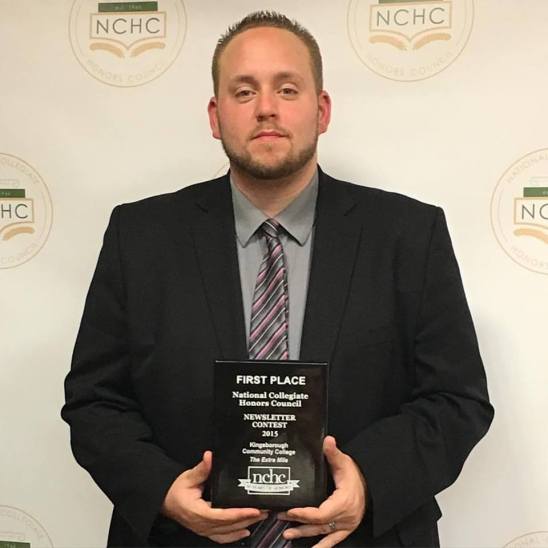
Gary Morgenstein, playwright, author
As William Faulkner said, “a writer must throw away anything that is false no matter how much he might love that page or that paragraph.” My new novel, A Mound Over Hell, clocked in at 800 manuscript pages. I wrote and rewrote, always looking for the honesty in who the characters were, because at the end of the day, the novel belongs to them, not the writer. And then ultimately, it belongs, most of all, to the reader.
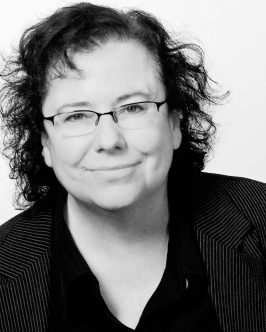
 Patrick Hickey, author, journalist, interviewer, professor
My writing process is one that is entirely selfless. What would make someone stay on the page? Why should they care? Those are the things running through my head. It’s a journalistic approach as well since I’m a nonfiction writer. I don’t have the luxury of making things up. Long before my own hits the paper or my hands hit the keyboard, I’ve spent hours with the people and sources needed to write the story. So by that time, I’m invested far more than any fiction writer.
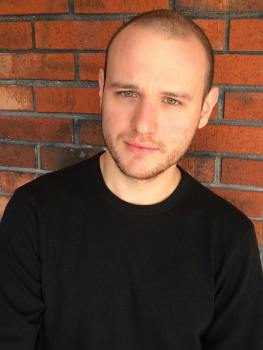
 Kate Gill, playwright
The core inspiration for my writing is usually one small thing that inexplicably stops me and makes me see something in a new light – a newspaper item, a personal story, a scientific fact, or an odd comment – and I begin to imagine a story…then it can be a long time fermenting as I “meet” characters in my story and get to know them. When I sit down to write, I have the story and characters in mind but the process of writing impacts what I ultimately write – things change and evolve. Then I need to hear my work and get input from trusted colleagues as well as audience members. Filtering the feedback is hard work – what do I take and what don’t I take – I don’t always know what’s best right away.
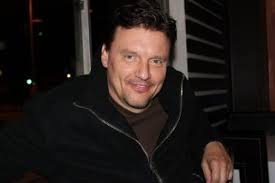
 Anthony J. Piccione, playwright, interviewer, reviewer
 Ilia Volok, playwright, adapter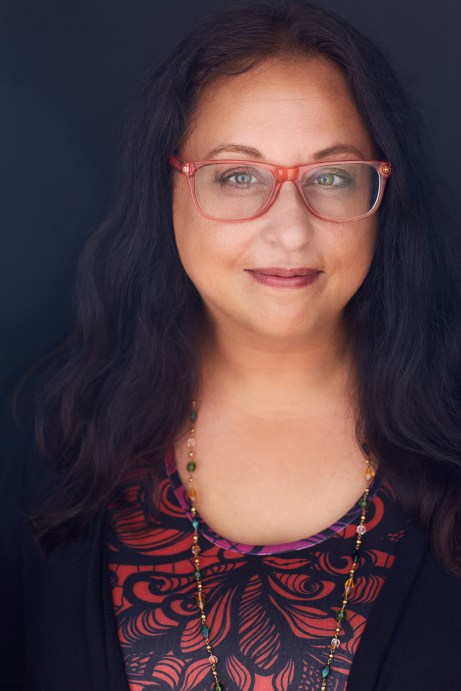
Dorian Palumbo, playwright, author, reviewer, article and blog writer
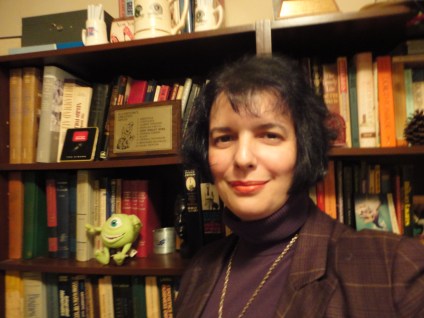
Lynn Navarra, playwright
I generally find a subject I’m interested in and see what I can do with it. My plays are all character driven, so my main focus is always on who my characters are and create situations that put them to the test. Once I know who they are, I can begin to see what they would do in a given set of circumstances, how they handle things. What always matters is what’s in the mind of the character, what motivates him or her to move forth the action of the play, what is the path they must take to see their way through the given predicaments put before them and how to make them stay true to themselves, which one can only do by intricately knowing who they are. I am also a linear writer. I begin with Act I, Scene I, and follow through to the end. However, this comes only through numerous drafts, revised scenes and dialogues with constant reading and updating. “Hearing” them is essential to determining whether or not they are reflecting of who they truly are. Whenever I find myself stuck I take a long walk and give it a good think and remain determined to crack the nut that is proving to be difficult at the time. The trick is always to keep them all on track and not allow them to get lost or diluted in conversations nor in the action of the play.
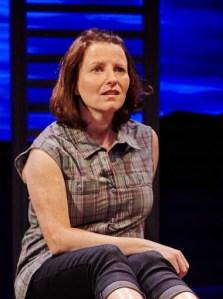 Jake Lipman, playwright and artistic director
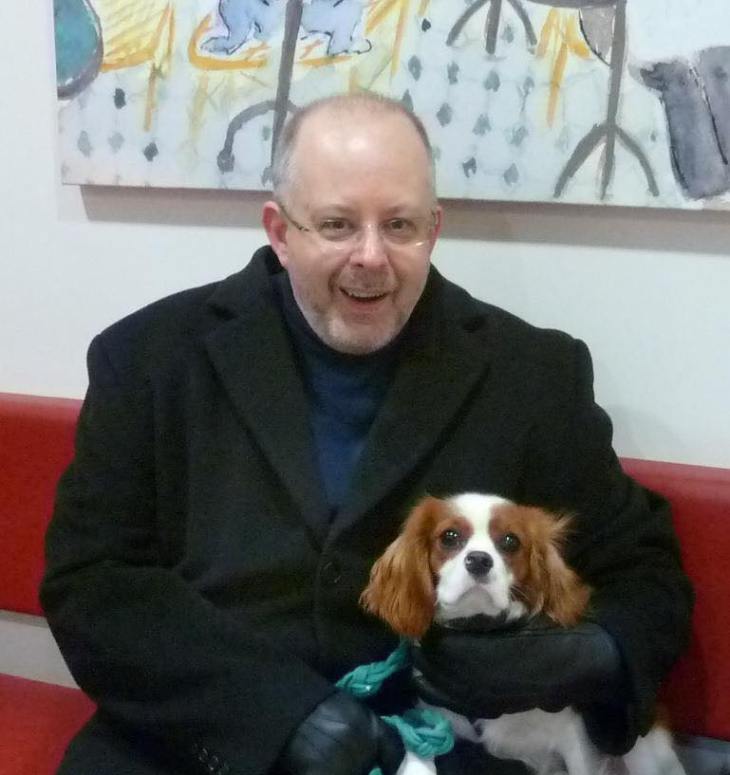 Doug DeVita, playwright, professor, reviewer, article writer
And THAT’S my writing process, right there.
Latest Posts
-

Jim Catapano reviews Anne L. Thompson-Scretching’s Home Is Sweet Sorrow: “A Masterful Conclusion to a Momentous Family Saga”
The War That Never Ends Home Is Sweet Sorrow is a must-see and a devastatingly powerful third chapter in the Blood trilogy, which also includes…
-

THE BARD TAKES BROADWAY: SIXTH ANNUAL NEW YORK SHAKESPEARE AWARDS CELEBRATES RECORD-BREAKING 2025 SEASON
THE BARD TAKES BROADWAY: SIXTH ANNUAL NEW YORK SHAKESPEARE AWARDS CELEBRATES RECORD-BREAKING 2025 SEASON The New York Shakespeare Awards has officially unveiled its list of…
-

American Theatre of Actors Announces 50th Anniversary Gala; Playwright LYLE KESSLER and TONY-winning actor, LEN CARIOU to Receive Lifetime Achievement Honors.
NEW YORK, NY — The American Theatre of Actors (ATA), a cornerstone of the New York theatrical landscape since 1976, is proud to announce ATA 50, a…
-

Music Among the Tumbleweeds: Jim Catapano reviews James Jennings’ New Dancing in the Meadow.
James Jennings’ New Dancing in the Meadow Brings Feel Good Vibes to the ATA James Jennings, legendary Founder of the American Theatre of Actors, brings…
 Arts Independent