

Spotlight on Authors Domnica Radulescu and Carol Campbell
Domnica Radulescu and Carol Campbell are the creative duo behind the play Sappho’s Garden. Radulescu is a highly accomplished Romanian-American novelist, playwright, and educator, with numerous awards and accolades to her name, including three acclaimed novels and two volumes of original plays. She is also a two-time Fulbright scholar and the founding Director of the National Symposium of Theater in Academe.
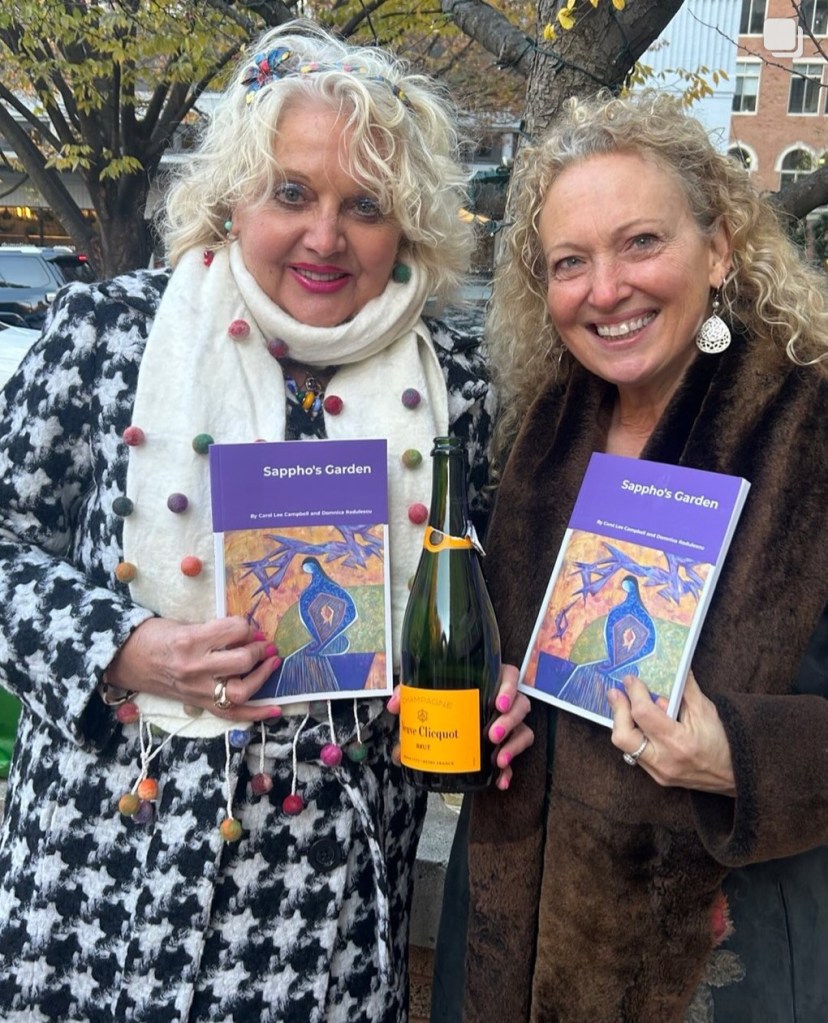
Their partnership began over a decade ago when Campbell directed one of Radulescu’s plays. The collaboration deepened through a shared passion for feminist theater, ancient goddess culture, and eco-feminism. Their “riveting marriage of minds” has produced several theatrical works, with Sappho’s Garden being their “most luminous and accomplished.”
The Book: Sappho’s Garden
The play Sappho’s Garden was born during the COVID-19 pandemic after the authors received a collaborative art grant. The project was inspired by their rediscovery of the verses of the ancient poet Sappho and a shared obsession with ancient goddesses. The work tackles the intersection of violence against women and the destruction of Mother Earth.
The central message of the play is to “Cultivate your garden” in both a literal and a metaphorical sense. This means taking care of the Earth and believing in the power of art, poetry, and imagination to offer “intimations of a better world.” The authors hope the play will inspire audiences to strive for a more sustainable, peaceful, and just world.
Looking ahead, the authors plan to continue developing the play, with a staged reading scheduled in Virginia and the ultimate goal of a full production.
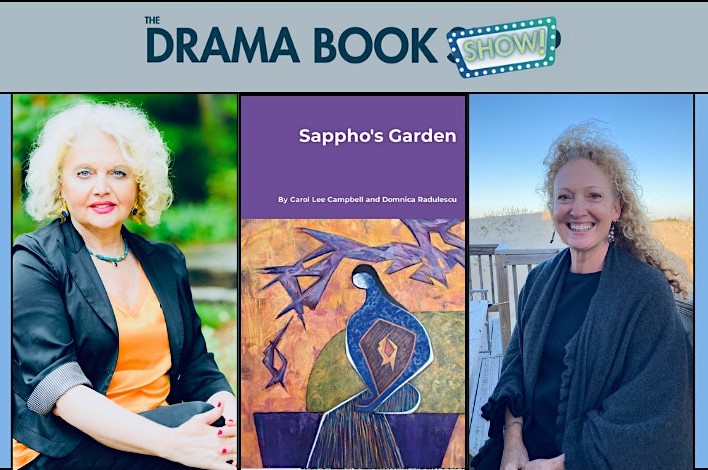
Carol Lee Campbell and Domnica Radulescu
A talkback, signing, and live podcast recording
Thursday, October 16 · 7:30 – 8:30pm EDT
The Drama Book Shop266 West 39th Street New York, NY 10018Get directions
The Drama Book Shop presents, in association with Jay Michaels Global Communications, “Sappho’s Garden” A talkback, signing, and live podcast recording.
An expansive, poetic play about the legendary poet, Sappho. A startling evocation of a feminist ethos.
This Eventbrite ticket is your reservation for the event. Please note that the purchase of “ Sappho’s Garden” ($10.00) is required for entry. Upon arrival, our team will direct you to the register to obtain your copy and complete your admission. The store will begin welcoming guests at 7:15 pm.

BRAVO to Parmeet Singh in Sense & Sensibility

Parmeet Singh delivers a charismatic and nuanced performance as John Willoughby in Hudson Classical Theatre Company’s adaptation of “Sense and Sensibility.” Singh’s portrayal stands out for its depth and complexity, successfully transforming the widely known villain of Jane Austen’s novel into a “grey antihero.” His performance is described as charismatic, intelligent, and electric, capturing the audience’s attention from his “bombastic and robust” entrance.
A Masterclass in Character Transformation
What distinguishes Singh’s performance is his ability to create a fully realized human being, rather than a one-dimensional character. He moves beyond the archetype of a villain, crafting a version of Willoughby that we initially want to love but ultimately end up despising, though not without a hint of pity. This depth is a testament to his artistry and his philosophy of acting, where he aims to have “abundant discoveries with limitless exploration and complete surrender.”
Versatility and Craft
Singh’s talent is further highlighted by his impeccable command of received pronunciation (a British accent), which adds authenticity to his classical performance. The provided text also emphasizes his versatility, noting his seamless transitions between vastly different roles. His recent work includes playing Romeo in “Romeo and Juliet” and Lysander in “A Midsummer Night’s Dream” with The Shakespeare Theatre of New Jersey, as well as a lead role in the premier of “Haunt Me” and an indie film. His diverse background, which includes training at both The American Musical and Dramatic Academy and the National School of Drama, India, and work in both classical Western and contemporary Indian productions, underscores his commitment to nurturing his artistry as a whole.
___________________________________________________________________________
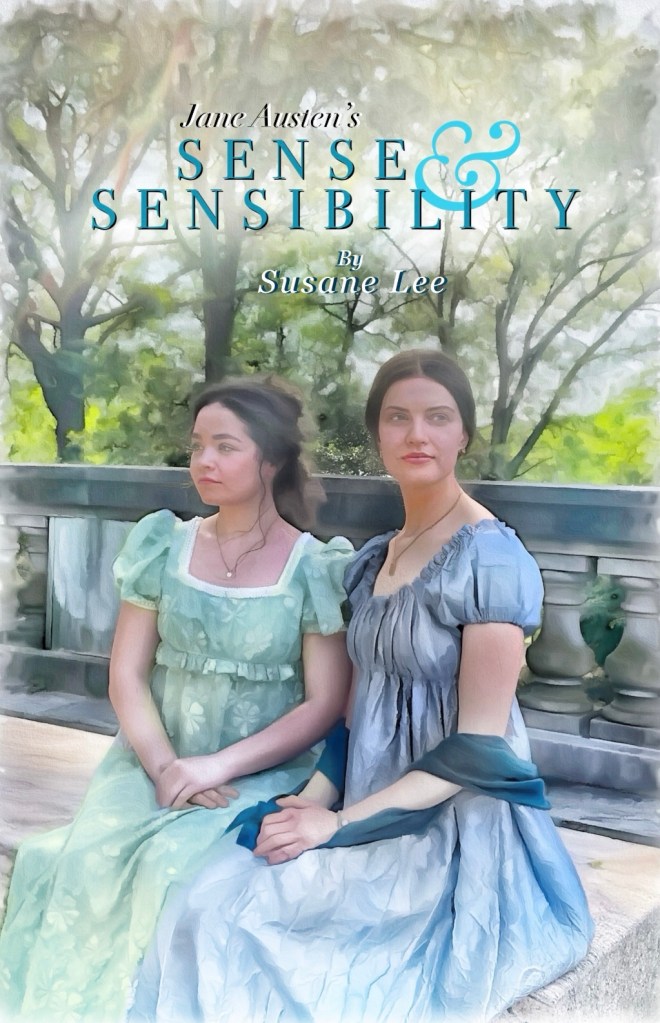
Hudson Classical Theater Company unlocks the vitality of Classical theater. It is our mission to delight our diverse audiences with intimate and accessible interpretations of classical literature.
In addition, our Education and Outreach Programs provide performances and theater training to audiences who don’t usually have access to theater, including the Incarcerated, Veterans, Seniors, and Community and Educational Centers.

Mary Elizabeth Micari launches Holistic Wellness Practice
After decades working in live theater—both backstage and as a performer in opera, jazz, and cabaret—Mary Elizabeth Micari is excited to announce the launch of her holistic wellness practice.
This new chapter blends her extensive experience in the performing arts with a deeply personal journey through health challenges. Mary has firsthand knowledge of the unique physical and emotional demands of the industry, and she’s ready to bring that understanding to her clients.
“My time in the theater, from working backstage to performing in operas and jazz clubs, taught me so much about dedication and the strong sense of community we all share,” says Micari. “My own struggles with inflammatory arthritis and other health issues showed me the incredible power of holistic healing. My goal is to create a supportive space for my fellow union members and anyone else who needs it, helping them find their own path to wellness.”
Mary’s practice will offer a range of services, all approached with the empathy and compassion she has cultivated through her life and career:
Acupuncture: (Starting in 2026) Mary is a New York State licensed acupuncturist, certified in facial acupuncture, a powerful tool for balance and relief.
Cosmetology: As a licensed cosmetologist, she brings a unique understanding of skincare and aesthetics to her holistic approach.
Herbalism: Mary will guide clients in creating personalized herbal remedies rooted in both Western and Chinese traditions.
Aromatherapy: Using the power of essential oils to promote relaxation and reduce stress.
Sound Healing: Facilitating deep states of peace with instruments like Tibetan and crystal singing bowls.
Reiki: A gentle healing technique to support the body’s natural processes.
Medical Astrology & Tarot: Offering intuitive and compassionate guidance for life’s challenges.
Mary has already applied her skills at places like Pacific College’s Acupuncture Clinic and the U.S. Department of Veterans Affairs. Her new practice is dedicated to empowering people on their journey toward optimal health, drawing on her multifaceted life experiences to provide heartfelt support.
Mary proudly supports her fellow union members from Actors’ Equity Association (AEA), SAG-AFTRA, AGMA, IATSE, and AFM, and welcomes everyone in the performing arts community.
To learn more or to schedule an appointment with Mary, please contact her at maryelizabethmicari@gmail.com or 646.338.9282.
INTERVIEWS WITH MARY CAN BE ARRANGED THROUGH INFO@JAYMICHAELSARTS.COM
 |
   |
| Mary Elizabeth Micari is a licensed acupuncturist, cosmetologist, and holistic healing practitioner. Her unique approach to wellness integrates ancient healing modalities with a deep personal understanding of the body’s capacity for healing, fostered by her own health journey. She is dedicated to empowering clients to achieve optimal health and inner peace.Decades of experience as a singer/actor and Broadway staff member offered her the opportunity to enchant audiences for opera, jazz/blues, and cabaret, and numerous Shakespearean roles. Her profound understanding of the voice and physical presence made the transition to health and wellness an easy one.Micari is also Artistic Director of Genesis Repertory, a non-profit arts & education organization. |


Jim Catapano asks “Wherefore Art Thou, Dromio?”
Michael Hagins Knocks It Out of the Park with an Early Farce from the Bard
Aptly named, The Comedy of Errors is a product of Shakespeare’s early period. Sharply plotted and wonderfully absurdist, it draws heavily on misunderstandings, wordplay, physical comedy, and puns. In other words, perfect for a revisit in 2025. Shakespearean Master Michael Hagins has brought the circa-1594 work roaring into the present with a series of summer outdoor performances produced by the Shakespeare Sports Theatre Company, including two at Central Park’s Summit Rock, a perfect venue if there ever was one for this type of production.
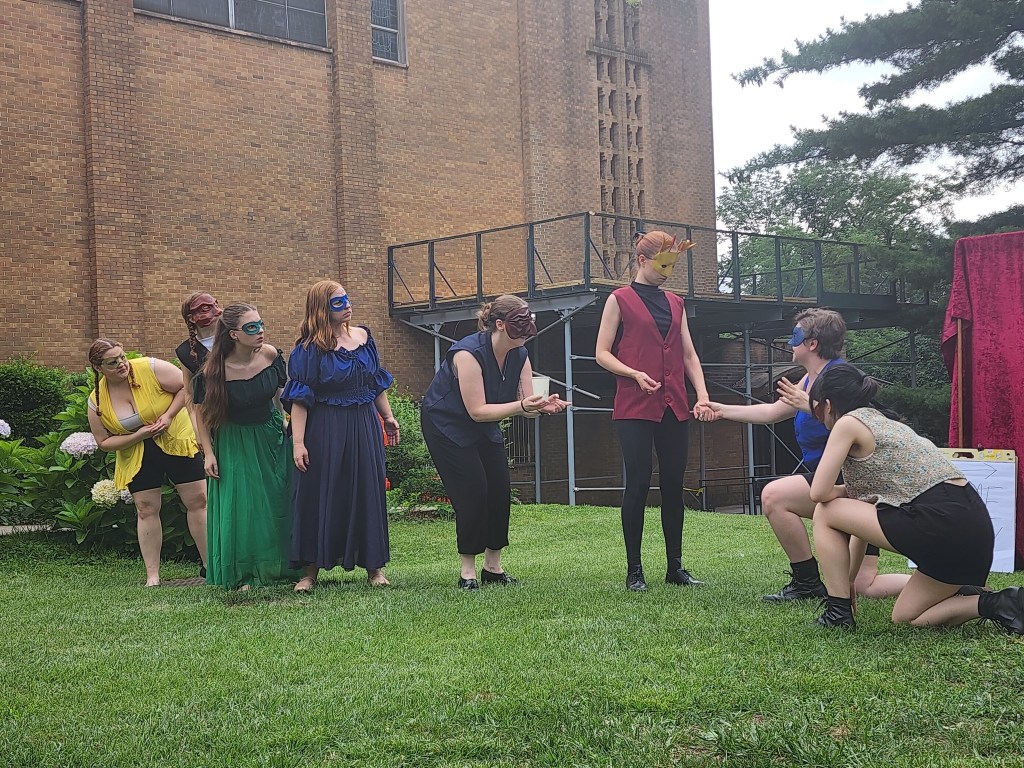
The Comedy of Errors takes place in Greece, and concerns not one, but two sets of twins who had been separated at birth. Antipholus of Syracuse (Vic Gitre) brings his servant Dromio of Syracuse (Emily Glaser) to Ephesus—unbeknownst to them, the city where their respective twin brothers, Antipholus of Ephesus (Charlie Keegan James) and his own servant Dromio of Ephesus (Jennifer Kim) reside. Thus begins a madcap, hilariously chaotic adventure of mistaken identity that is a delightful precursor to the tropes of hundreds of modern film and TV comedies. (The misunderstanding between a goldsmith and the wrong Antipholus, involving an impressive piece of bling, is a particular hilarious highlight.)
Director/choreographer Hagins brings his expert hand to an accomplished production, which incorporates the traditional half-masks of Renaissance Comedia—very handy (or face-y?) in depicting our two sets of befuddled twins. The staging is exceptional and the costumes elegant, and it is a treat to see the performers donning them in the charming park setting, giving a sense of true timelessness to the experience. Props are used to great comedic effect—from finger puppets, to a Sith lightsaber, to a giant swirly lollipop that doubles as a paddle when a certain character gets “out of line”. A red curtain held in place at appropriate junctures makes for some amusing entrances and exits. As evidenced at Summit Rock, the performers use the vast space wonderfully, making entrances from the surrounding trees; running, hopping, and skipping into the scene as they navigate the elevated grass, rocks, and steps. The ensemble possesses an astonishing physicality that is deftly choreographed and well-serves the tone of the play. It adds another level of free-spiritedness to the already deliciously zany piece, which eventually escalates to a hysterical climax that finally features both Antipholuses and Dromios with all the other (comically confused) characters. It makes for an incredibly enjoyable afternoon of classic theatre, beautifully realized by a great director and his expert team. It’s a text that the entire company clearly adores, and that joy is palpably felt by the audience. The Comedy of Errors is an entertaining and enjoyable tale told in an economical 80 minutes, and another positive triumph for Hagins and the Shakespeare Sports Theatre Company.
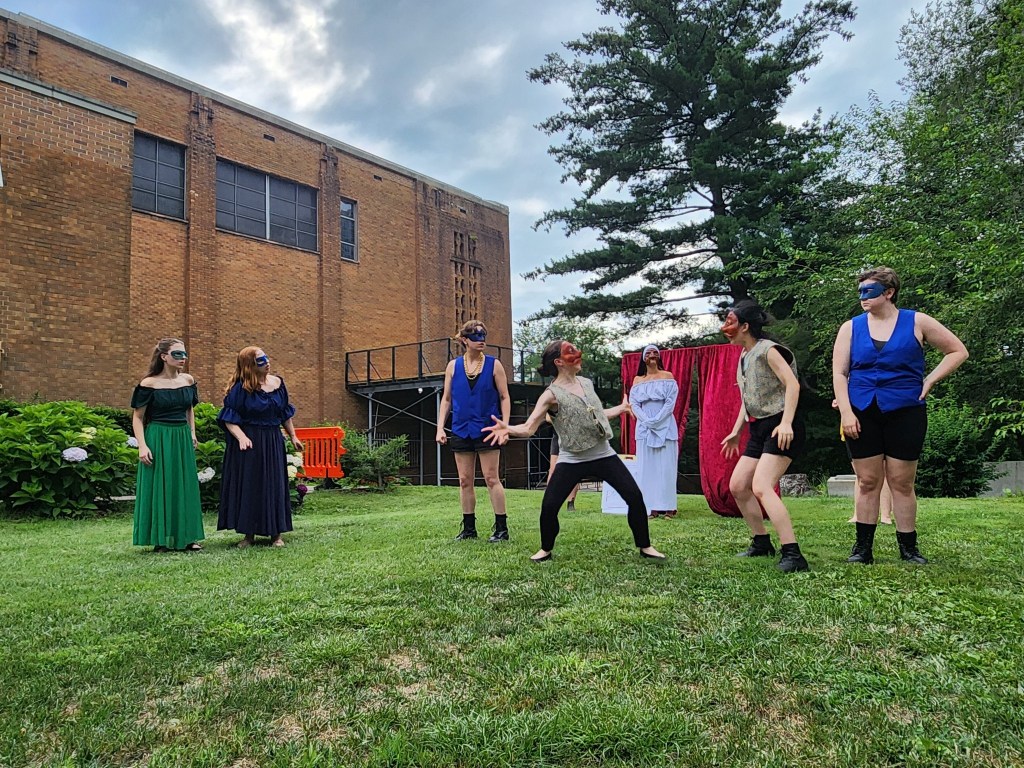
The Comedy of Errors is stage-managed by Adam Sherwin and also features Melissa Meli as Adriana, wife of the Ephesus Antipholus; Erica Gerold is Adriana’s sister Luciana; along with Katie Freimann (Angelo), Lila Ashley Meyers (2nd Merchant), Anna Behrmann (The Duke), Hayley Berketa (Aegeon), and Molly Feisher (Amelia/Dr. Pinch/1st merchant).

“The Interlude of Youth”: A 16th-Century Morality Play Resurrected by Dr. Jeff Dailey, Featuring David Ezell
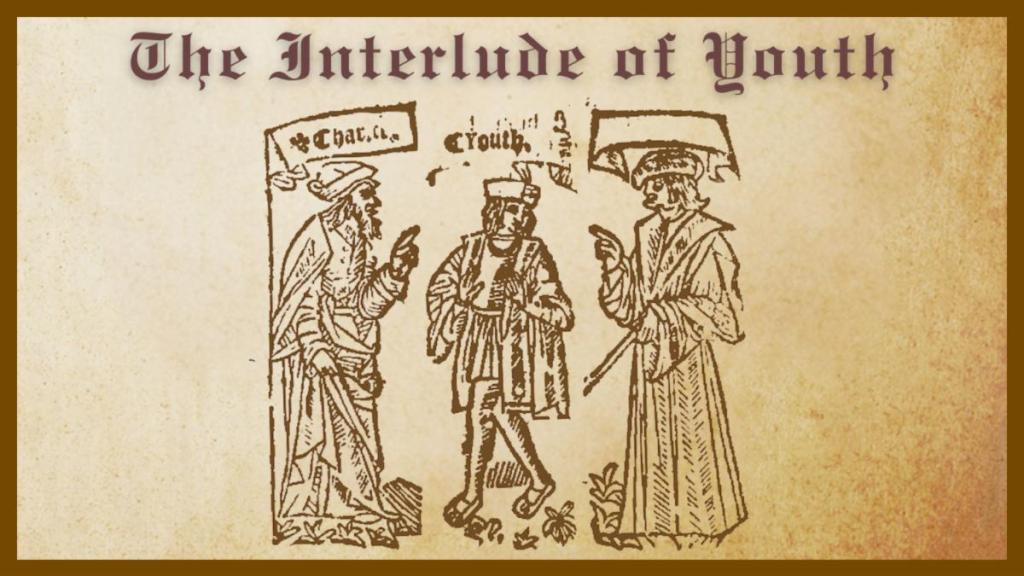
The American Theatre of Actors (ATA) is currently presenting a rare revival of “The Interlude of Youth,” a captivating morality play from the early 16th century, as part of its Classical Showcase. Directed and co-produced by Dr. Jeff S. Dailey, this production breathes new life into a forgotten piece of dramatic literature, offering audiences a blend of entertainment and timeless moral lessons. Actor David Ezell, a prominent figure in the New York theatre scene, takes on a significant role in this historical staging.
The Play: “The Interlude of Youth”
“The Interlude of Youth,” by an unknown playwright, is a verse-based morality play that charts the journey of a young man’s transformation from a “crude rogue” to a “serious member of society.” True to the morality play genre, its characters bear names such as Riot, Pride, and Lechery, embodying the vices and virtues that guide or corrupt the protagonist. Despite its antiquity, dating back to at least 1514, the play is renowned for its considerable comedic elements, making it one of the most entertaining surviving examples of its kind. The term “interlude” in the early modern period simply referred to a short play.
The play’s enduring message, encouraging viewers to abandon destructive behaviors like gambling, excessive drinking, promiscuity, and the pursuit of money, remains strikingly relevant in contemporary society.
Dr. Jeff S. Dailey: Bringing History to the Stage
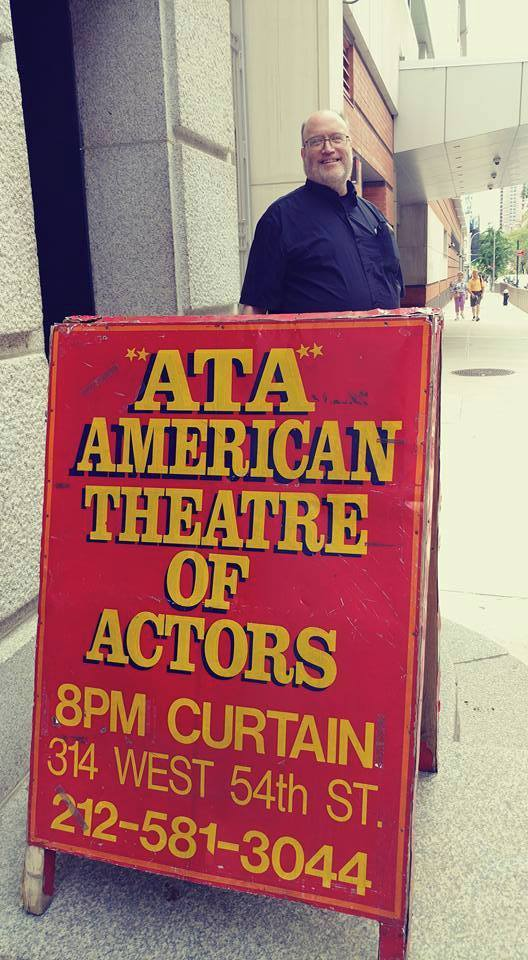
Dr. Jeff S. Dailey, with a PhD in theatre from New York University, has dedicated over 30 years to directing plays at the American Theatre of Actors. His extensive experience has allowed him to delve into and explore a wide range of dramatic works from the past.
Dr. Dailey emphasizes that while medieval theatre is often associated with religious themes, “The Interlude of Youth” stands out as a morality play that, though not overtly religious, aims to inspire a better lifestyle through engaging entertainment. He invites audiences to experience this historical work, which has been captivating people for over 500 years.
David Ezell: A Deep Connection to Classical Theatre
David Ezell, a writer and actor based in Midtown East, brings a profound personal and academic connection to his role in “The Interlude of Youth.” Holding a graduate degree in European history, Ezell was already familiar with the play before auditioning. His English heritage and intensive study of Shakespearean performance at institutions like Soho Shakespeare and the Royal Academy of Dramatic Art further deepen his appreciation for classical works.
Ezell describes his surprise and excitement upon seeing the audition notice for “The Initiation of Youth” (an alternative title), having just completed a run of “Little Women.” He notes that scholars widely believe Shakespeare himself was influenced by this play as a teenager, and to Ezell’s knowledge, “The Interlude of Youth” had never been staged in New York, though it continues to be performed in England. This unique opportunity thrilled him, offering the chance to perform in a foundational work of English theatre.

Ezell’s primary goal for the audience is to help them “get past the language” – true Middle English – and discover the abundant humor within the work. He continuously uncovers new layers of comedy in the text, which are not immediately apparent. Participating in this production has significantly boosted Ezell’s confidence in performing classical theatre, as over 98% of his prior acting experience was in modern works. He credits Dr. Dailey’s “very patient instruction” for this growth.
The American Theatre of Actors: A Home for Developing Talent
Founded in 1976 by James Jennings, who serves as its President and Artistic Director, the American Theatre of Actors (ATA) is a vital repertory theatre company. Comprising 50 actors, 15 playwrights, and 8 directors, ATA’s core mission is to foster the development of new talent in playwriting, directing, and acting, providing a nurturing, creative environment free from the pressures of commercial theatre.
ATA is known for presenting plays that tackle contemporary social and ethical issues. Over its history, the theatre has premiered more than 1000 new works and has hosted over 11,000 actors, including many who went on to achieve significant fame, such as Dennis Quaid, Bruce Willis, Danny Aiello, Dan Lauria, Chazz Palminteri, Kevin O’Connor, William Fichtner, Edie Falco, and Kathryn Hahn.
Upcoming Performances and Future Endeavors
“The Interlude of Youth” is running at The American Theatre of Actors complex, located at 314 W 54th St, New York City, from August 6 to August 17.
Beyond “The Interlude of Youth,” David Ezell plans to continue honing his classical acting skills. He has an upcoming reading for a piece connected to another part of his cultural heritage – Agatha Christie – and hopes to be involved in several upcoming Shakespearean productions, including at least two stagings of “Hamlet.” Ezell is also the co-owner of Camelback Films, whose first film, “Occam’s Beard,” is set to premiere in September, and their second project, “Paper Moon Rise,” is scheduled to begin production in Kansas in approximately two months. Camelback Films has also entered several major competitions, adding to Ezell’s exciting opportunities.
Broadway Icon, LEN CARIOU to star in New York Premiere of RICHARD VETERE’s riveting new drama, ZAGŁADA
Broadway Icon, LEN CARIOUto star in New York Premiere of RICHARD VETERE’s riveting new drama, ZAGŁADA. Production directed by MAJA WAMPUSZYC
October 16 — November 2 The AMERICAN THEATRE OF ACTORS 314 W. 54th Street. New York City Contact info@jaymichaelsarts.com for further info
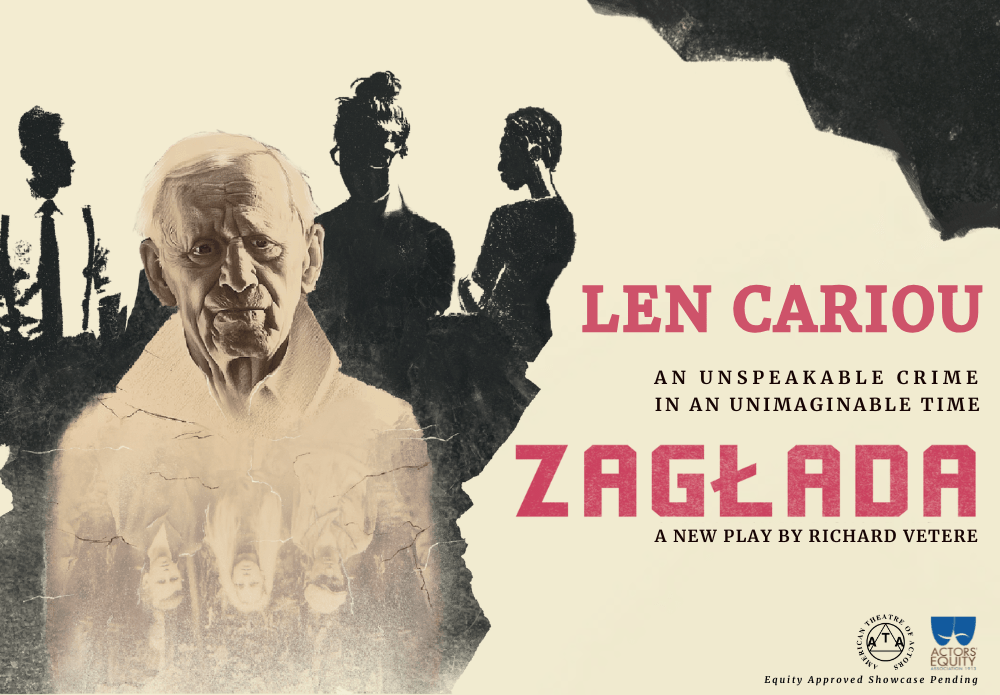
ZAGŁADA is a Polish word meaning annihilation used within Poland to refer to the HOLOCAUST, particularly in the context of the systematic, state-sponsored genocide of six million European Jews by the Nazi German regime and its allies and collaborators.
Journalist Danielle Hooper goes to interview 90-year-old Jerzy Kozlowski, in a quiet residential neighborhood in Queens for her book on World War II; he fires a gun at her, prompting his arrest. This gets the attention of Homeland Security Agent, Sonia Sokolow and NYPD Intelligence Bureau Officer, Frank Napoli.
Apparently, not only did Kozlowski lie on his immigration application when entering the United States after World War II; but he is suspected of collaborating with the Nazis at BUCHENWALD CONCENTRATION CAMP where he himself was a prisoner.
Agent Sokolow has 48 hours to prove Kozlowski’s collaboration so she can charge and extradite him to a country willing to try him for International War Crimes.
Sokolow must not only win the race against time but confront her own personal history through the mirror of Napoli’s mission to hunt down radical Islamic terrorists and White supremacists and Hooper’s righteous defense of the truth. What is a human being capable of doing to protect themselves and the ones they love and will justice prevail?
The play ZAGŁADA is inspired by history. All characters are fictional.
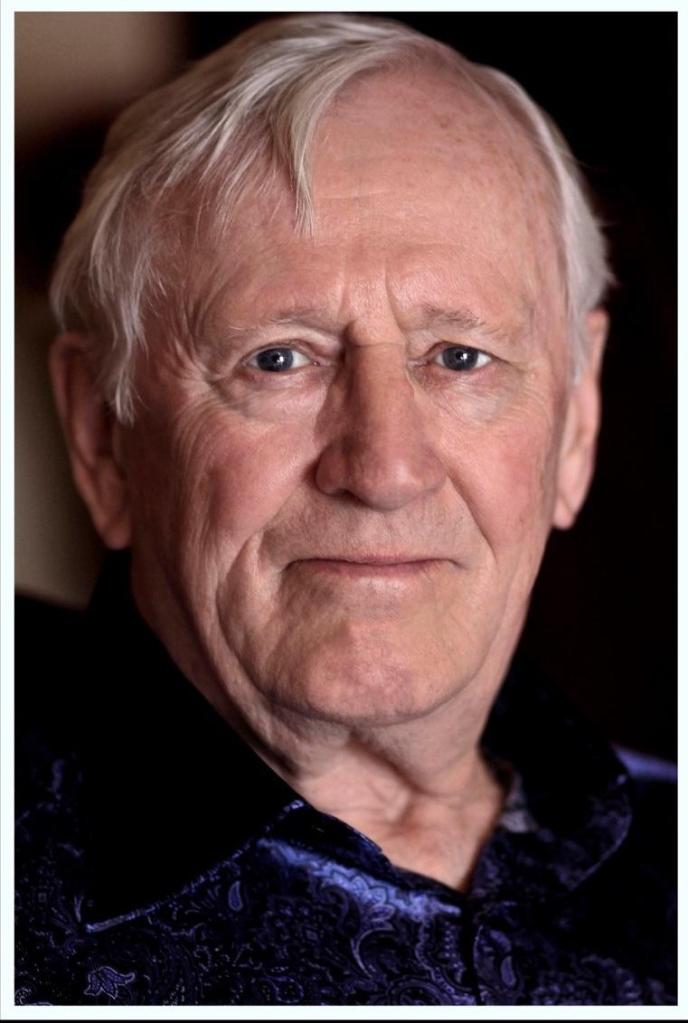
LEN CARIOU gained prominence for his Tony Award-winning title role in the original cast of Sweeney Todd: The Demon Barber of Fleet Street (1979). Prior to that, he earned nominations for Applause (1970) and A Little Night Music (1973). Cariou has had supporting roles in films such as The Four Seasons (1981), Thirteen Days (2000), About Schmidt (2002), Flags of Our Fathers (2006), Prisoners (2013), and Spotlight (2015). On television, Len was nominated for an Emmy for Into The Storm (2009) and is known for recurring roles in the shows Murder, She Wrote (1985–1992), Brotherhood (2005-2006), and Damages (2010) and his starring role in Blue Bloods (2010–2024).
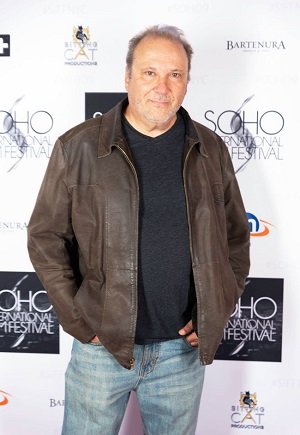
RICHARD VETERE, a Lifetime and Current Member of the Writers Guild of America East since 2012. His prolific career allowed him the opportunity to work with Oscar, Emmy, Tony, Grammy and Golden Globe award winners and nominees like Francis Ford Coppola, Walter Matthau, Carol Brunett, Robert Forester, Phil Ramone, Agnieszka Holland, Ed Harris, Elisabeth Shue, Armin Mueller-Stahl, Danny Aiello, Len Cariou and Jason Alexander. Recently, his stage play, Black & White City Blues, had an extended run and recieved rave reviews some critics calling his play a “masterpiece” at the Amrican Theatre of Actors. His screenplay, Caravaggio won the Golden Palm Award for Best Screenplay at the Beverly Hills International Film Festival 2021. His adaptation of his own stage play The Marriage Fool is now streaming on Amazon starring Walter Matthau, Carol Burnett and John Stamos. Mr. Vetere co-wrote the screenplay adaptation of his own novel The Third Miracle which premiered at the Toronto Film Festival in 1999, produced by Francis Ford Coppola, directed by Agneiszka Holland and starring Ed Harris and Anne Heche. It is considered by critics to be one of the best movies about faith ever filmed.Mr. Vetere’s first feature film Vigilante is an original screenplay, starring Robert Forester and Fred Williamson. Vigilante, released in 1983, became a blockbuster movie overnight making it the 20th highest grossing picture in 1983 and was just now re-released in Blu-Ray. It was named “a cult classic” by critic David Denby in the New York Times and one of the “best indies of the 1980s” by BAM. Over the years Mr. Vetere has written screenplays and adaptations for Paramount, Warner Bros, New Line, Zoetrope and CBS. As a member of the PD Workshop Unit at the Actors Studio he has developed several plays including ZagŁada
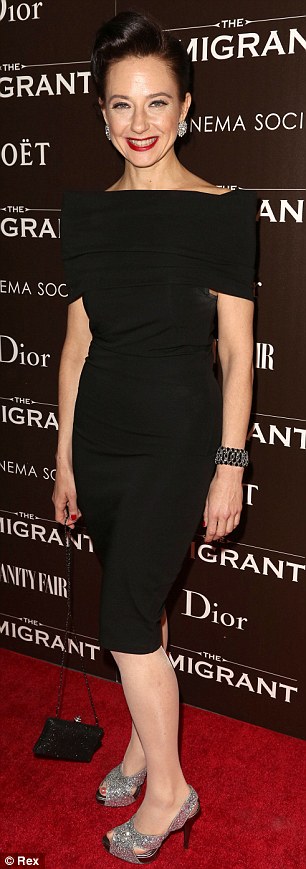
MAJA WAMPUSZYC has worked with Tony & Oscar Award winners. Film & TV credits include: The Immigrant (Cannes & NY Film Festival); Mona Lisa Smile; Going Shopping; The Knick; Madam Secretary; Search Party; and Law & Order: SVU. Broadway: Irena’s Vow. Off-Broadway, NYC, & regional credits include: Irena’s Vow; Lady Macbeth & Her Lover; House of Connelly; Foggy Bottom; An Oak Tree (Obie Award Winning Production); The Pearl Theatre; Precious Stones, and pool (no water) at The Barrow Street Theater. March 2020: Anna Akhmatova in Night Shadows Or: One Hundred Million Voices Shouting at Irondale. In 2021: Wampuszyc played the title role in Clytemnestra in Hades; and most recently played Ayn Rand in The Disciple for Thirdwing, LTD. PDW member of the Actors Studio, she has collaborated with Vetere as a director on developing six new plays; and with Lanie Robertson on his new play, a reimagining of the early years of Marie Curie, Unknown Objects of Desire. Member of The Actors Gym. Maja is Represented by Bret Adams, LTD.
The American Theatre of Actors, founded in 1976 by James Jennings, continues its mission of spotlighting socially and historically resonant works. The company has produced over 1,000 original plays and has been a creative home to actors such as Dennis Quaid, Edie Falco, and Chazz Palminteri.

Guest Writer, Manda Slew, discusses Miller’s A View From the Bridge at Modern Classics Theatre
Content Note:
While A View from the Bridge is a period piece set in 1950s Brooklyn, it explores themes that may be difficult for some viewers. The production includes depictions of immigration raids, which despite their historical contextcmay evoke distressing parallels to modern-day ICE activity. Additionally, the story involves emotionally charged dynamics of incest-adjacent longing, sexual jealousy, and homophobia, particularly directed toward one of the immigrant characters. These elements are central to the dramatic tension and are portrayed with seriousness and emotional weight. Audience members sensitive to these topics are encouraged to approach the production with awareness.
A View from the Bridge
Presented by Modern Classic Theatre
Walking into the BACCA Arts Center in Lindenhurst for A View from the Bridge by Arthur Miller, directed by Emily Vaeth, was quite a treat. The team transformed the venue into a black-box-style theater, seating roughly 50 patrons depending on the arrangement, and the intimacy of the space was used to full advantage.
Before a single line of dialogue was spoken, the world was already pulsing with life. In the center, Beatrice (Camille Arnon) moved about the apartment, humming along to Perry Como’s Chi-Baba, Chi-Baba while prepping dinner. Catherine (Jules Donahue) bounced between reading, dancing, sipping, and sighing bored, bright, and bursting with that specific teenage ache. Beyond the apartment walls, the community stirred: Louis and Mike (Kevin Russo and Thaddeus C. Plezia) made their rounds like neighborhood fixtures; Mrs. Lipari (Natalia Cotto) dominated the public phone with everyday urgency; and the silent shadow of the immigration officer (Alex Rich) drifted in and out, a subtle yet constant reminder of looming consequence.
This immersive pre-show tableau was a brilliant directorial move. In such a close space, it pulled the audience inward slowly and organically. You weren’t just watching a play you were already inside a Brooklyn neighborhood, witnessing the rhythms of daily life before the conflict ever cracked through.
Big praise is due to set designer Ian Freed for the thoughtful, minimal design. The perimeter of the playing space, with its suggestive dockside textures and city street grit, subtly framed the action. Streetlights glowed just enough to evoke Red Hook’s moody hush. One particularly smart touch was the elevation used to frame Alfieri’s (Derek McLaughlin) office a raised area that gave the narrator a quiet vantage point from which to observe and reflect. It gave his role both physical and emotional distance, reinforcing the sense that this was a memory being retold, a tragedy already written in the bones of the set.
More well-deserved praise for the lighting and sound design by Dan Caney. The pre-show playlist Peggy Lee, Perry Como, Sarah Vaughan rooted the show in time and place before a single line of Miller’s text was spoken. The use of “practical” streetlamps, apartment lights, Alfieri’s office lamp was especially effective in establishing tone and texture. That said, during scenes staged on the far leg of the thrust (where one row of the audience was seated), lighting occasionally failed to fully illuminate the actors during key monologues. While these moments didn’t erase the emotional clarity of the scenes, they were noticeable. Still, given the challenges of lighting such an intimate, three-sided space, Caney’s work achieved a rare balance: immersive mood and respectful shadow that allowed the audience to observe, not intrude.
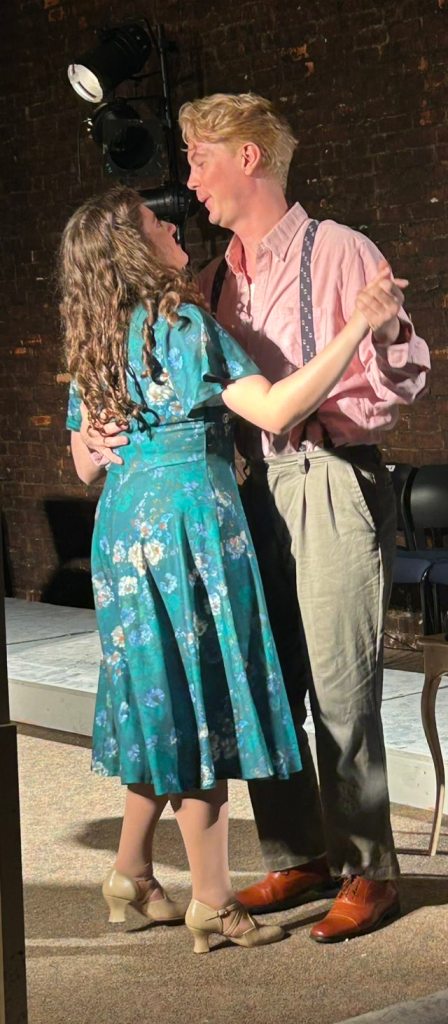
A special shout-out is due to the ensemble the so-called “smaller” roles that were anything but. Mr. and Mrs. Lipari (Leo Pompeo and Natalia Cotto), Mike and Louis (Thaddeus C. Plezia and Kevin Russo), and the Immigration Officers (Plezia and Alex Rich, pulling double duty) each brought thoughtful, grounded performances to the stage. Nothing felt phoned in or filler. Mike and Louis’ roughhousing camaraderie added humor and heart, while Mrs. Lipari’s no-nonsense phone habits brought real texture to the neighborhood. And Mr. Lipari? With his bloodstained apron and commanding stillness, Leo Pompeo exuded strength a figure you didn’t want to cross. Every glance, every shrug, every entrance had intention. This was an ensemble that knew how to build a world.
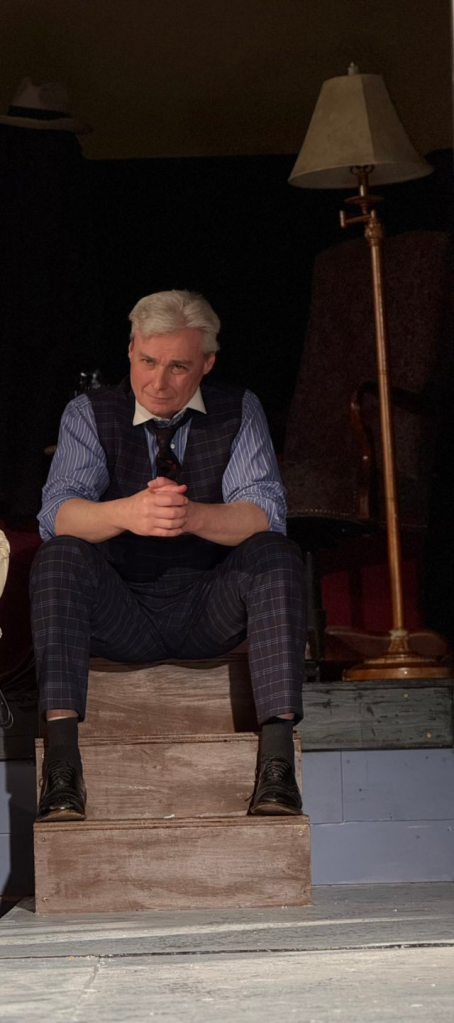
Derek McLaughlin’s Alfieri the narrator, conscience, and weary moral anchor was another standout. He brought a quiet, almost grandfatherly presence to the role, the kind of man who’s seen too much but still hopes for better. His lines were delivered with calm clarity and deep empathy, grounding the narrative in reflection and grief. Though a lawyer by trade, McLaughlin’s Alfieri radiated heart. You never doubted he wanted to do right by everyone involved, even as the story slipped through his fingers like sand.
Tim Smith as Eddie Carbone delivered a powerhouse performance. At first, he was the everyman: likable, steady, the guy who’d give you the shirt off his back. But as the undercurrent of possessiveness and jealousy surged, Smith didn’t miss a beat. His descent into emotional torment was layered and fully believable. One minute, you felt for him this man losing the only world he’s known. The next, you recoiled as the truth of his desires surfaced. He made Eddie both monster and man, and it was riveting.
Camille Arnone’s Beatrice was a masterclass in restraint and heartbreak. With every glance and carefully timed outburst, she built a woman trying to hold her world together while watching it slip away. Her keeping her jealousy of Catherine from boiling over was never cartoonish; it was human. She gave Beatrice dignity, fire, and unbearable sorrow all at once. You just want to hug her.
Jules Donahue’s Catherine was precise and technically strong never a line dropped, never a mark missed. Her portrayal leaned slightly more self-aware than one might expect for such a sheltered character, which occasionally made her feel more rehearsed than raw. Still, she captured Catherine’s central confusion especially in scenes with Eddie beautifully. You saw the girl trying to define love, identity, and independence in a world that hadn’t given her a language for any of it.
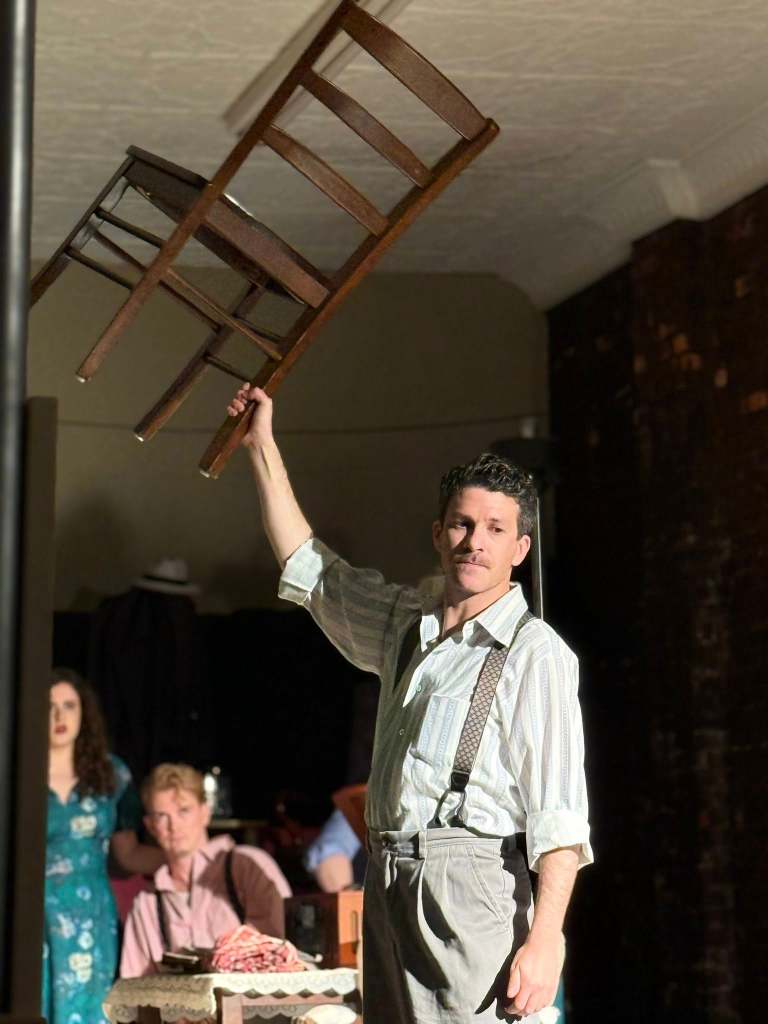
Andrew Accardi’s Marco brought big brother gravity in a small frame. With solemnity, strength, and just the right amount of quiet threat, he made it clear this man had crossed oceans for his children and would not be disrespected. The iconic chair-lift moment landed like thunder. Accardi’s Marco was no con artist, no passive guest. He was a protector. A man of few words but boundless integrity.
And then John McGowan. Rodolpho.
If there was a show-stealer, it was him. McGowan’s boyish charm was undeniable. He made it crystal clear why Catherine might fall for this wide-eyed Italian dreamer. He was goofy and elegant, sweet and proud. And when the accusations came, when his future was questioned, McGowan showed us the urgency and reason for the dream. This was a man who wanted to become something not just escape something. Even after the show, the audience was buzzing. Rodolpho was unforgettable, and McGowan lit up the stage with every step.
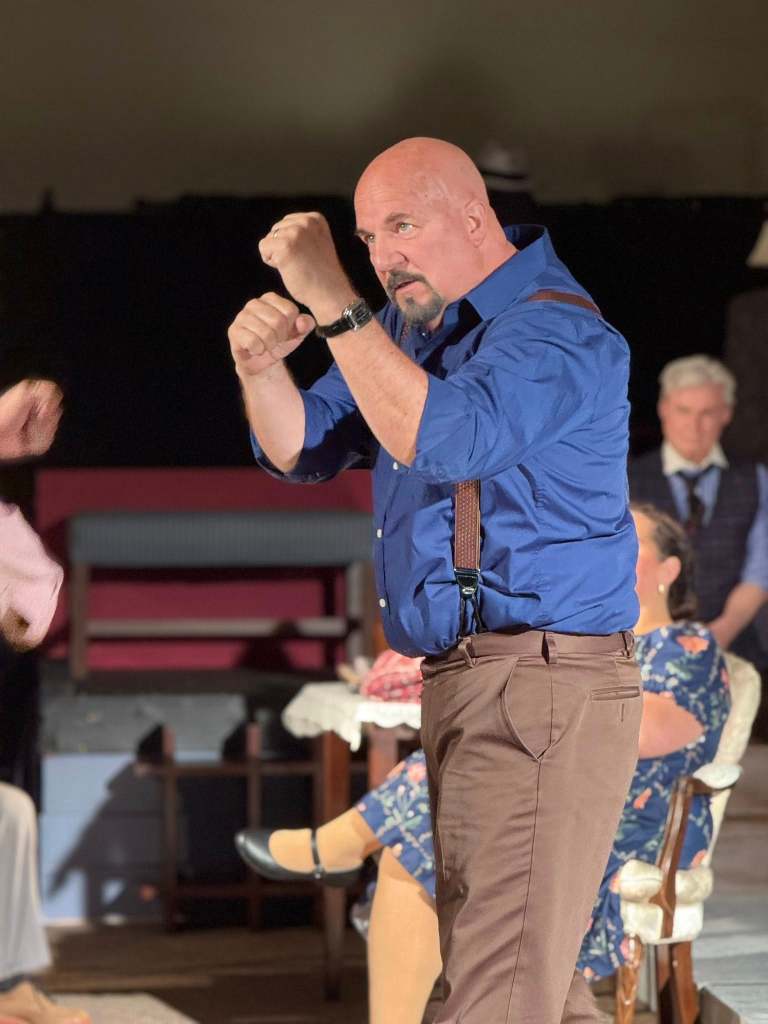
If there was one element that didn’t fully land, it was the larger fight choreography. While the boxing scene between Eddie and Rodolpho was sharp and brilliantly executed tense, clean, and full of subtext the ensemble fight sequences near the end felt a bit chaotic. With action happening so close to the audience on all sides, clarity was occasionally lost. That said, it never dulled the emotional impact of the story, nor the performances within it.
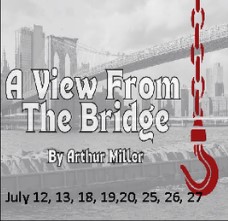
In all, A View from the Bridge was a stunning piece of theater. Intimate, emotionally charged, and brimming with heart. The performances were grounded. The design was intentional. The direction was brave. If you have the chance to catch it, do. The show runs one more weekend: Friday, Saturday, and Sunday at the BACCA Arts Center in Lindenhurst.
Support local theater. Let it break your heart and feel things.

Jim Catapano at a Compelling Double-Header: Takes on Corrupt Authority and Injustice
Laurie Rae Waugh Directs ¡Poof! and Love’s a Thin Diet at the ATA

In a time when their voices are desperately needed, two brave writers have come together in one production to battle misogyny, capitalism, corporate greed, abuse of power, and social injustice. Amy Losi presents Love’s a Thin Diet, and Sarah Vindigni provides ¡Poof!, both shepherded masterfully by director Laurie Rae Waugh.
The plays are very different in approach and subject matter, but share an underlying theme of toppling toxic power figures; the abused and betrayed rise up to defeat the abusers. In Love’s a Thin Diet, the setting is a university, where tenured professor of literature Oliver Randall (Alan Hasnas) is meeting with student Catharine (Joelle Raske) to discuss class-related matters—or so it would seem. After Oliver brings out white wine and a gift for Catharine, she recognizes that his intentions are not honorable and goes to leave, but not before Oliver forces a kiss. It is a disturbing scene well played by the actors, and the discomfort of watching it is magnified by one’s awareness of its prevalence in a patriarchal society rife with predators, abhorrently abusing their authority. (And Losi’s play does indeed stem from a personal experience.)
Comeuppance is served in the form of Aphra Behn (Amanda Cannon), Oliver’s former student—and former wife. Aphra was seduced and manipulated by the much older Oliver, who also betrayed her professionally by stealing her work and publishing it under his own name. In a tense scene realized stunningly by Hasnas and Cannon, Aphra confronts Oliver in her apartment, dismissing his laughable defense that everything that he had done to her was in the name of love and support. With help from a surprise guest, Aphra turns the tables on Oliver, culminating in a “punch the air” moment where his university boss Helen (played by playwright Losi) traps him by using his own playbook. Love’s a Thin Diet is a brief but satisfying piece, realized by an excellent cast bringing three-dimensionality to their characters in just 30 minutes, and providing a delicious denouement.
In ¡Poof! we are introduced to Todd Mandesfield (Ken Coughlin), CEO of Metro Energy, who is giving directions to his employee Amby Hughes (Ronan Kelly), who is seated at a laptop where he can control the entire power grid of New York City. The duo is suddenly ambushed by Lexie McCord (Sonia Halle) and Joey Bryan (William Allen), union activists who threaten to have the grid shut down unless Metro Energy gives in to their demands—chiefly, a 32-hour work week with no decrease in pay. But these are no ordinary activists; the scenario is plunged into the realm of the paranormal, as Joey uses his mental powers to paralyze Mandesfield. Allen is fantastic at creating an otherworldly air for Joey, as he manipulates Mandesfield physically by just moving his hands, almost like an orchestra conductor. But Mandesfield can still speak, and speak he does, championing the cause of capitalism. But Lexie and Joey have a counterargument for every point, calling on historical events over the last few centuries to prove that the way of the oligarch leads to doom for all, and how much better the world would be if we treated each other like human beings and gave everyone a fair share (a particularly powerful statement in 2025). The actors are collectively astonishing in their command of what is very difficult material, balancing verbose history lessons while never letting the tension of the present moment abate.
Lexie keeps asking Joey to “check-in”, i.e. find out through his psychic powers how the union fight is going, and he amusingly and cleverly receives the answers in code in the form of famous song lyrics by the likes of the Beatles, the Eagles, and Billy Joel.
Through it all Amby is an impartial observer, taking in the point/counterpoint until he chooses a side and is convinced to shut down the grid. (We actually see the boroughs go dark one by one on Amby’s monitor screen, and the effect is unsettling yet thrilling.)
Like the heroes of Love’s a Thin Diet before them, it is a triumph for the oppressed over the wealthy and powerful that one can only dream might play out in real life. Vindigni’s writing is unique, playful, and thought-provoking, and the history lessons demonstrating the power of the people are woven expertly into the narrative.
Ultimately, ¡Poof! and Love’s a Thin Diet are a powerful double feature that makes a pivotal statement regarding where we are today in society in terms of profound global injustice, and what we could aspire to be if the oppressed (AKA the 99 percent) can come together.
¡Poof! and Love’s a Thin Diet appear together at the Beckmann Theatre at the American Theatre of Actors through July 20, 2025.

Playwright J. Bernard Taylor & Jay Michaels take JOHN STILLWAGGON as TENNESSEE WILLIAMS to LONDON
Wednesday, August 20 @ 7:00 pm at Old Diorama Arts Centre, Regents Place 201 Drummond Street, London NW1 3FE UK
Saturday, August 23 @ 7:00 pm at The Audition House, 129A Whitfield Street, London W1T 5EQ UK
TENNESSEE WILLIAMS: Portrait of a Gay Icon
Tennessee Williams: Portrait of a Gay Icon is a one man play about the playwright Tennessee Williams.
After a sold-out run at the historic American Theatre of Actors in New York, this one-man exploration of the private life of one of the 20th century’s greatest authors travels to London for a limited run.
The play will be part of the Camden Fringe
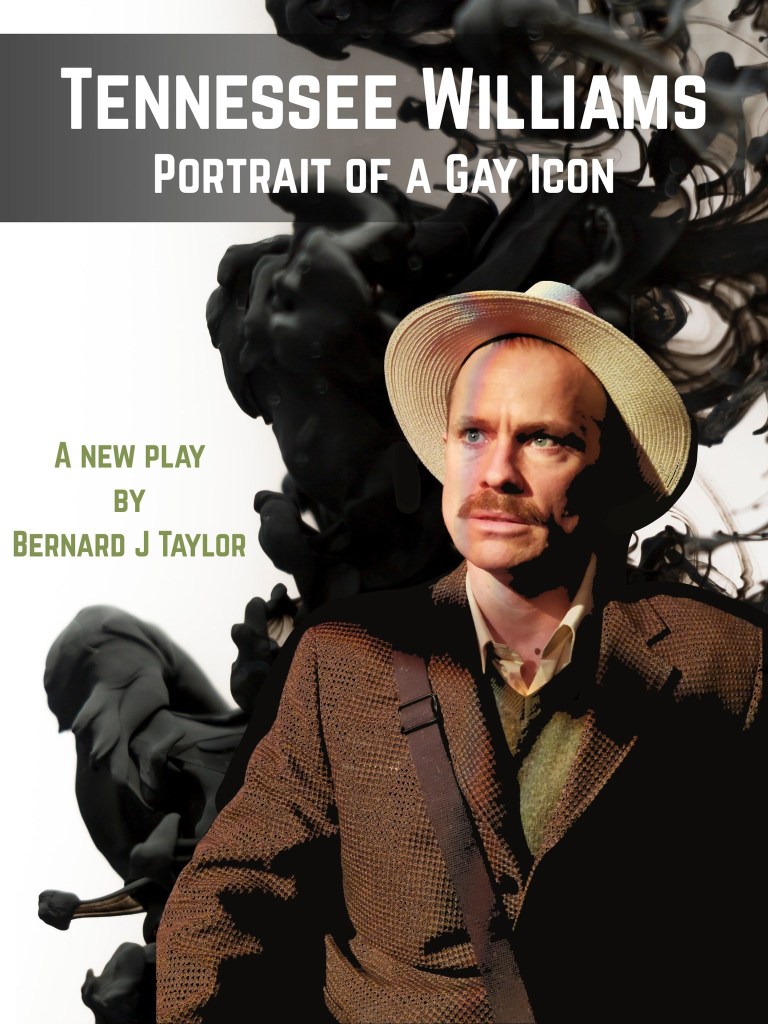
PLOT: Williams is chatting with “old friends” in his home and becomes increasingly inebriated during the course of the visit. The author launches into myriad diatribes about life, love — or the lack and abuse of it, his viciously cruel father, his sister — who received the brunt of that cruelty, and his work in the theatre — or more likely — his work with actors. The play had a wildly successful try-out in San Antonio, TX; a sold-out run Off-Broadway (NYC) and now, arrives here in London with John Stillwaggon returning to the role of Tennessee Williams.
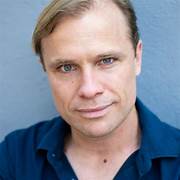
John Stillwaggon has been a member of the professional theatrical community for more than a dozen years. His credits include Off & Off-Off-Broadway theater as well as national tours with the Magik Theater. In 2011, ReviewFix named him “one of the top 10 off-off B’way professionals in New York City.” Stillwaggon’s acumen runs the gamut from classical (the titular role in Shakepspare’s Hamlet and Mercutio in Romeo & Juliet) to new works like Christina Hemphill’s A Symphony for Portland (off-B’way premiere).
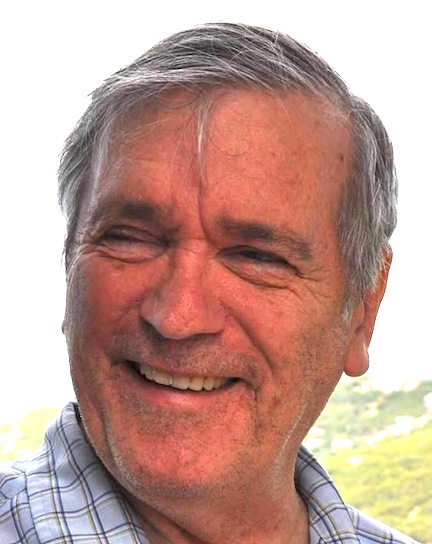
Playwright Bernard J. Taylor has had more than 100 worldwide productions of his shows – musicals and non-musical plays – in more than a dozen countries. His early works were chronicled in the Encyclopedia of Film and Stage Music. In 2013, he was made an Honorary Fellow by the Victoria College of Music and Drama for “services to music and the performing arts.” Recent years have been the most prolific creative period he has known. Six productions of his stage works in San Antonio won eleven awards at the 2015, 2016 and 2017 ATAC awards (San Antonio’s version of New York’s Tony Awards).

Award-winning director, Angie Kristic, founder and Artistic Director of The KBO Theatre Company has been invited back to The Camden Fringe Festival in London, England to present three new plays, “Tennessee Williams: Portrait of A Gay Icon”, “Music Between Us” and “The Dealers ” (playwright). She serves as co-producer of Tennessee Williams and producer of the latter two under her theatre company, directing as well, featuring John Stillwaggon in all three and Will Barton (West End’s “The Last Temptation of Boris Johnson). All will be presented inNYC prior to the London run as staged readings on Aug 24th at the new theatre, Arches Lane, in Battersea.
Jay Michaels is a prominent figure in the theater as a producer and promotional executive, known for his extensive work with independent artists and productions. Jay Michaels Global Communications (JMGC), is a boutique firm dedicated to creating visibility for independent theater, film, music, and literature. JMGC — through a diverse internal multi-media platform, can supply coverage to artists and their productions while growing its external network of promotional sites and groups. JMGC has clients on and off-Broadway, in film and television, across the country and around the world. Jay Michaels worked on the production teams for Broadway shows; served as a national tour manager for major productions such as Cats and Les Misérables; and as associate producer and on-air commentator for stage and screen on Spectrum Cable’s “Hi Drama” and ACW-TV’s “JayWatch.”

CHAZZ PALMINTERI will appear Saturday, August 2 ONLY for a talkback after the performance of LIGHTHOUSE REPERTORY THEATRE’s production of A BRONX TALE, the musical
CHAZZ PALMINTERI will appear Saturday, August 2 ONLY for a talkback after the performance of LIGHTHOUSE REPERTORY THEATRE’s production of A BRONX TALE, the musical running Friday, August 1 thru Sunday, August 10 AT The Bellmore Showplace, 222 Pettit Ave.Bellmore, NY TICKETS
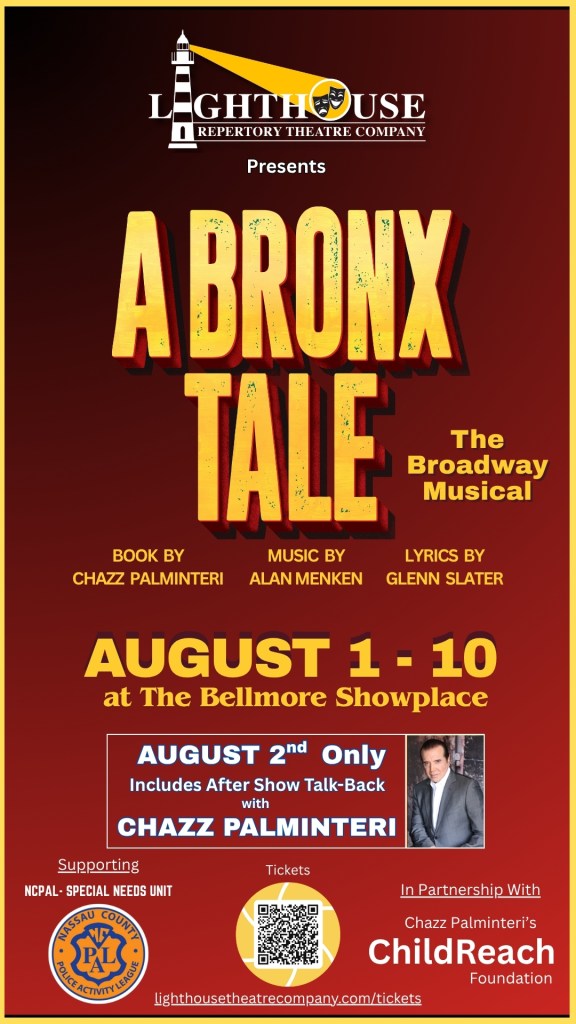
Based on the critically acclaimed play that inspired the now classic film, this streetwise musical will take you to the stoops of the Bronx in the 1960s—where a young man is caught between the father he loves and the mob boss he’d love to be. Book by Academy Award nominee, Chazz Palminteri, music by Oscar, Grammy, and Tony Award winner Alan Menken, and lyrics by Grammy Award winner and Oscar and Tony Award nominee Glenn Slater, A Bronx Tale is a story about respect, loyalty, love, and above all else… family.
AUGUST 2nd ONLY – your ticket includes an after-show talk back with CHAZZ PALMINTERI.
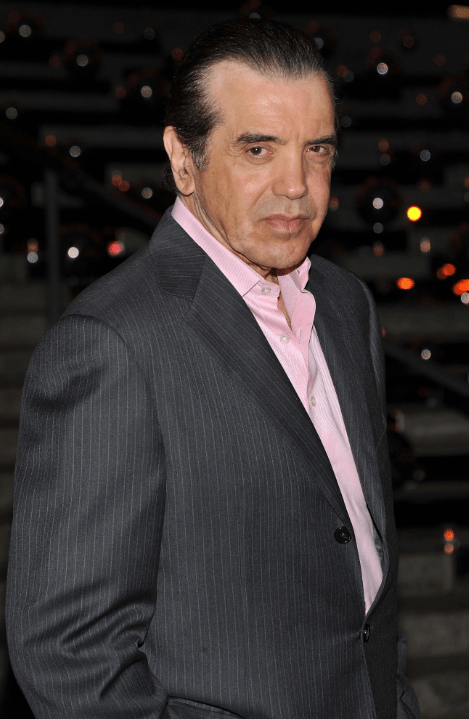
Bronx-born and raised Chazz Palminteri was a natural choice to continue the Italianate tradition set forth in the 1970s by such icons as director Martin Scorsese and actors Robert De Niro, Al Pacino, John Cazale and Joe Pesci.In 1988 he wrote for himself a play entitled “A Bronx Tale,” a powerful one-man stage commentary in which he depicted his bruising childhood in great detail, which included witnessing gangland slayings. Palminteri brought each and every character to life (18 in all) in this autobiographical piece — his friends, enemies, even his own family. He showcased for years in both Los Angeles and New York, finally sparking the interest of his film idol, Robert De Niro. DeNiro, wanting to direct for the first time, saw the potential of this project and brought both it and the actor/writer to the screen. Palminteri played one of the flashier roles, Sonny, a gangster, in the movie version. An unknown film commodity at the time, Chazz had stubbornly refused to sell his stage property (the offers went into the seven figures) unless he was part of the package as both actor and screenwriter. DeNiro, who became his mentor, backed him up all the way, and the rest is history. A Bronx Tale (1993), which featured his actress/producer/wife Gianna Palminteri, earned strong reviews.
He received a well-deserved Oscar nomination the following year for his portrayal of a Runyonesque hit man in Woody Allen‘s hilarious jazz-era comedy Bullets Over Broadway (1994). He was on the right side of the law in both The Perez Family (1995), his first romantic lead, and then the classic crimer The Usual Suspects (1995). He played the ill-fated brute in Diabolique (1996) and wrote a second screenplay, Faithful (1996), in which he again plays a hit man, terrorizing both Cher and Ryan O’Neal.
Parental Advisory: Contains adult language and mild violence.
Latest Posts
-

Jim Catapano reviews Anne L. Thompson-Scretching’s Home Is Sweet Sorrow: “A Masterful Conclusion to a Momentous Family Saga”
The War That Never Ends Home Is Sweet Sorrow is a must-see and a devastatingly powerful third chapter in the Blood trilogy, which also includes…
-

THE BARD TAKES BROADWAY: SIXTH ANNUAL NEW YORK SHAKESPEARE AWARDS CELEBRATES RECORD-BREAKING 2025 SEASON
THE BARD TAKES BROADWAY: SIXTH ANNUAL NEW YORK SHAKESPEARE AWARDS CELEBRATES RECORD-BREAKING 2025 SEASON The New York Shakespeare Awards has officially unveiled its list of…
-

American Theatre of Actors Announces 50th Anniversary Gala; Playwright LYLE KESSLER and TONY-winning actor, LEN CARIOU to Receive Lifetime Achievement Honors.
NEW YORK, NY — The American Theatre of Actors (ATA), a cornerstone of the New York theatrical landscape since 1976, is proud to announce ATA 50, a…
-

Music Among the Tumbleweeds: Jim Catapano reviews James Jennings’ New Dancing in the Meadow.
James Jennings’ New Dancing in the Meadow Brings Feel Good Vibes to the ATA James Jennings, legendary Founder of the American Theatre of Actors, brings…
 Arts Independent