
Home » Posts tagged 'art'
Tag Archives: art

Music Among the Tumbleweeds: Jim Catapano reviews James Jennings’ New Dancing in the Meadow.
James Jennings’ New Dancing in the Meadow Brings Feel Good Vibes to the ATA
James Jennings, legendary Founder of the American Theatre of Actors, brings another rich character study to the Beckmann Theatre, along with “a little night music”. The setting of Dancing in the Meadow, his latest production, is the home of songwriter Hank Anderson (Rick Jordan) and his wife June (Ginger Kipps), during a New York snowstorm. Hank, now past retirement age but still wonderfully motivated to pursue his art, is working on new material. June, however, is not impressed with the snippets she hears Hank singing, and with his apparent inability to see any of his works in progress to completion.
“If I hear any more of that sh—t, I’m gonna get one of the kids over here to toss your a-ss out into the snowdrift,” snarks June. “Now just cut this crap.” (June’s language is delightfully colorful throughout the play.) Hank was once involved with the Whispering Tumbleweeds, a country band fronted by his old friend Marvin Swing (Ken Coughlin), and boasts of the song he got on their sixth album. But that was 40 years ago, and the two haven’t crossed paths since. June is troubled by what she sees as Hank’s delusions, and would rather he focus on shoveling the snow. But Hank feels sure that a reunion with Marvin is imminent.
“Hey, I got to get ready,” says Hank, “you never know when he might show up.”

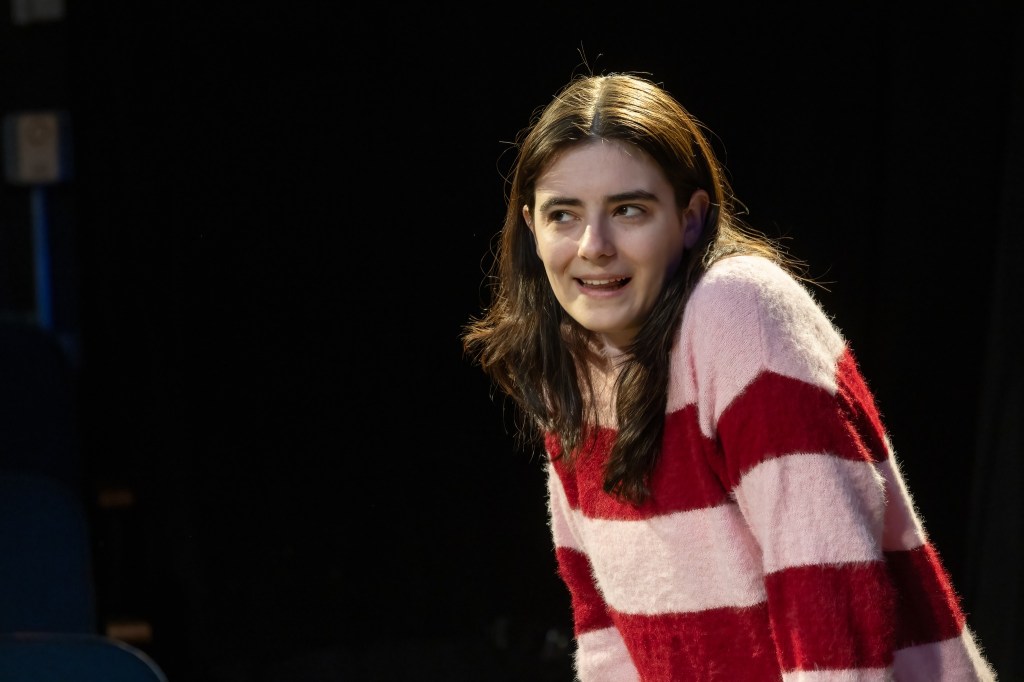
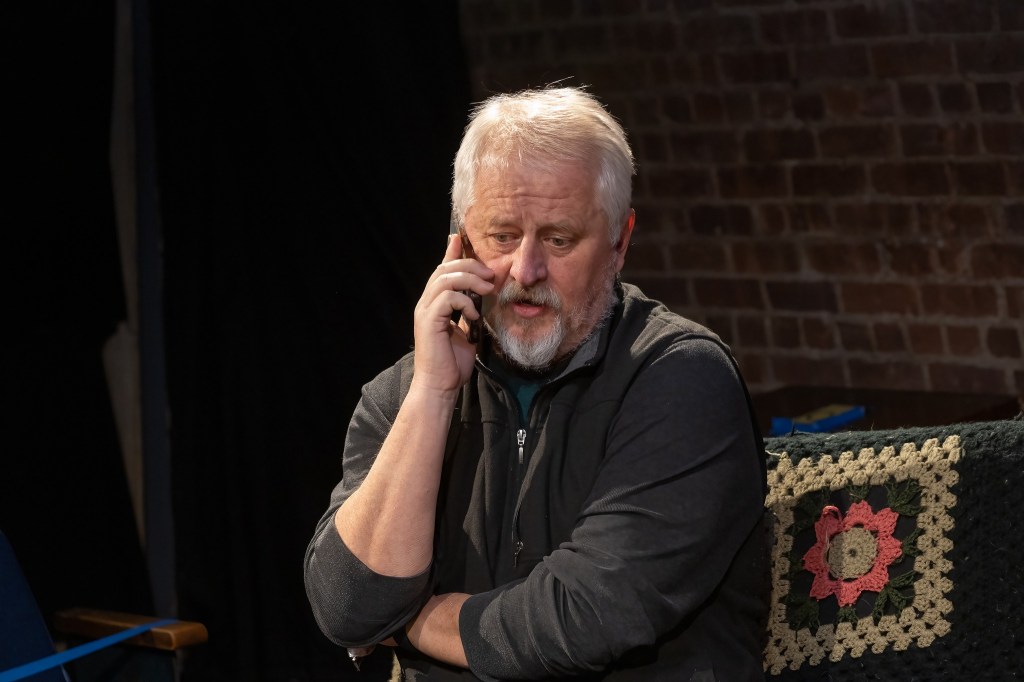
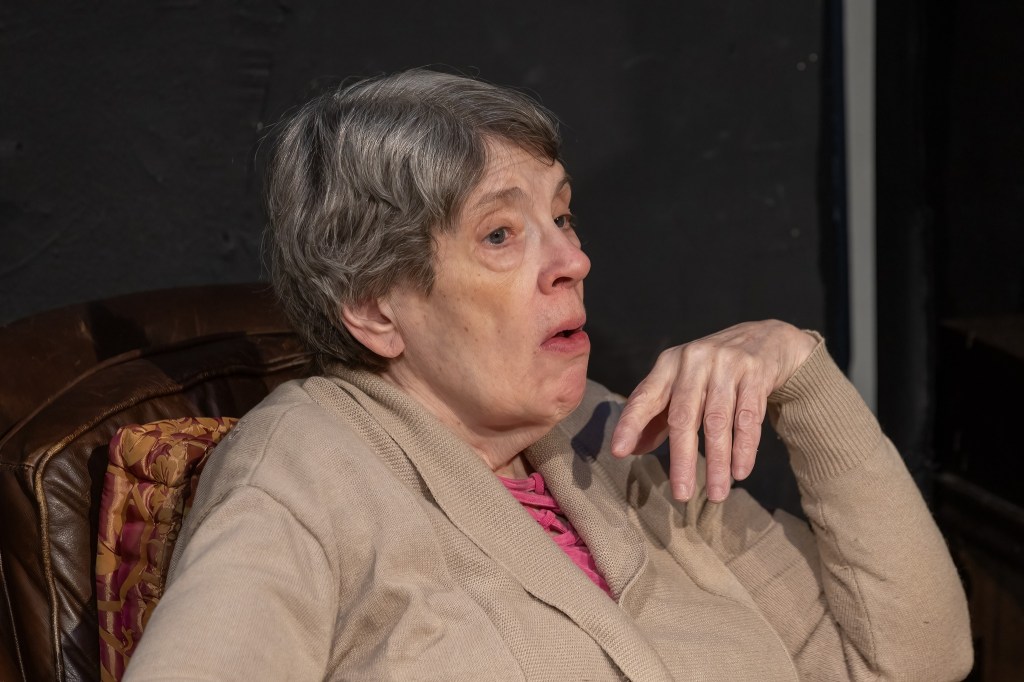
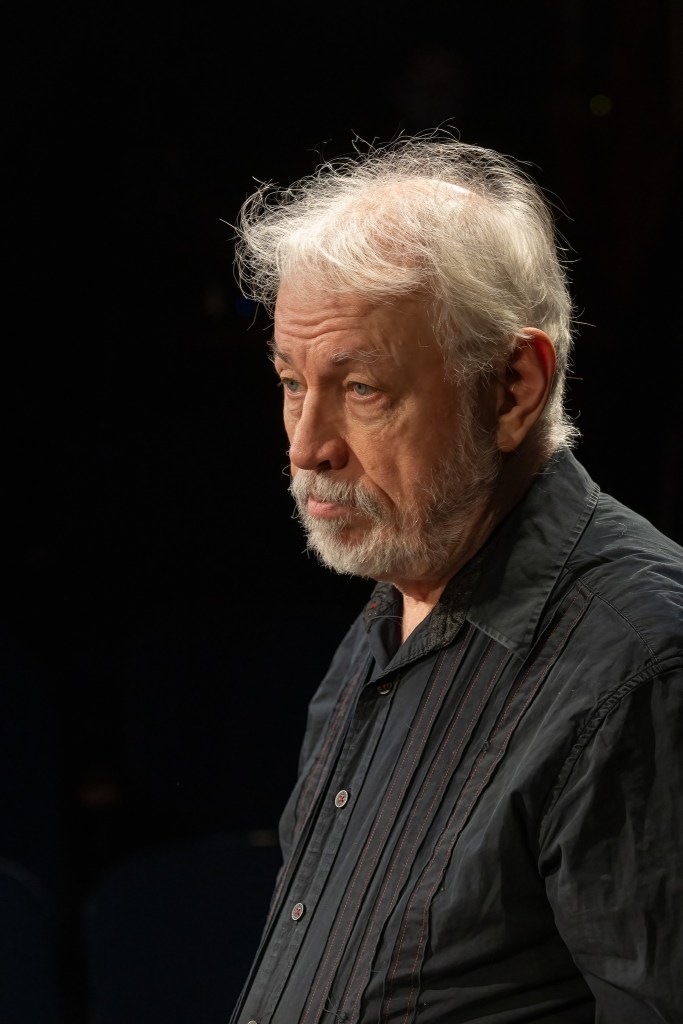
Their daughter Lucy (Chiara Aiello), an aspiring singer who just played The Bitter End, arrives to hear her dad’s old stories and her mom’s scoffing. But then, Marvin does indeed appear on their doorstep, resplendent in leather jacket and guitar-emblazoned scarf. He tunes Hank’s 12-string guitar and announces he is indeed here to make music, but wants it to involve more than one Anderson…
Dancing in the Meadow is a lovely piece that shows how the power of music can reunite old friends and connect generations. The interactions among the characters are genuine, moving, and fueled by Jennings’ trademark sparkling dialogue and wisdom about what makes people tick. The veteran cast sparkles in the first act of the production, and then return to the stage for a delightful surprise: Harmony in the Meadow, a concert with Aiello and Coughlin dueting as their characters. Coughlin’s excellent work on the 12-string and rich singing are accompanied by Aiello’s utterly gorgeous vocals, and we are treated to a set of some of the most beloved songs of the 1960s and beyond. Gems such as Joni Mitchell’s “Both Sides Now,” Simon and Garfunkel’s “The Boxer,” and the Righteous Brothers “You’ve Lost That Loving Feeling” are given marvelous readings by the duo, who I’d certainly love to see again in a concert setting. “Send in the Clowns” from the aforementioned A Little Night Music provides one of the most poignant moments, and “(I’ve Had) Time of My Life” from Dirty Dancing is the most uplifting. The half-play, half concert is one of the more joyous experiences you’ll have at the theatre this season, and another feather in the cap of James Jennings and the ATA.
Directed by James Jennings, Dancing in The Meadow runs at the American Theatre of Actors.

The Bard in the Boroughs: Rodney Hakim and the Digital Renaissance of “New York Shakespeare”

In a city where the theater is often synonymous with the bright lights of Broadway, Rodney Hakim is carving out a vital, digital niche for the classics. As the owner, writer, and host of New York Shakespeare, Hakim has transformed his lifelong expertise into a premier multimedia platform. Through his popular IGTV series and a sprawling social media presence, he has created a central nervous system for the Shakespearean community in the New York metro area and beyond.
A Renaissance Man for the Modern Era
Rodney Hakim is not just a commentator; he is a veteran of the very boards he discusses. His background is a tapestry of performance and production, spanning:
- Acting & Comedy: A freelance actor and stand-up comic, Hakim’s experience ranges from stage plays and musicals to independent films, voice-overs, and TV industrials.
- Directing & Producing: His creative vision has graced venues like the Queens Theater in the Park and various Off-Off-Broadway stages. Notably, he founded and directed a monthly Shakespeare reading group in partnership with Barnes & Noble, bringing the Bard to the public in accessible, communal spaces.
- Education & Writing: As an acting coach and freelance writer for theater review sites, Hakim bridges the gap between the “how-to” of performance and the critical analysis of the art form. He is currently developing new concepts for screenplays and books.
“New York Shakespeare” on IGTV: The Digital Front Row
At the heart of Hakim’s work is the New York Shakespeare brand. Designed to be a “central resource for all things Shakespeare in New York,” the program serves as a bridge between the stage and the audience, documenting current productions and providing deep-dive intellectual access.
Upcoming Special Event: “Speak the Speech” Winners
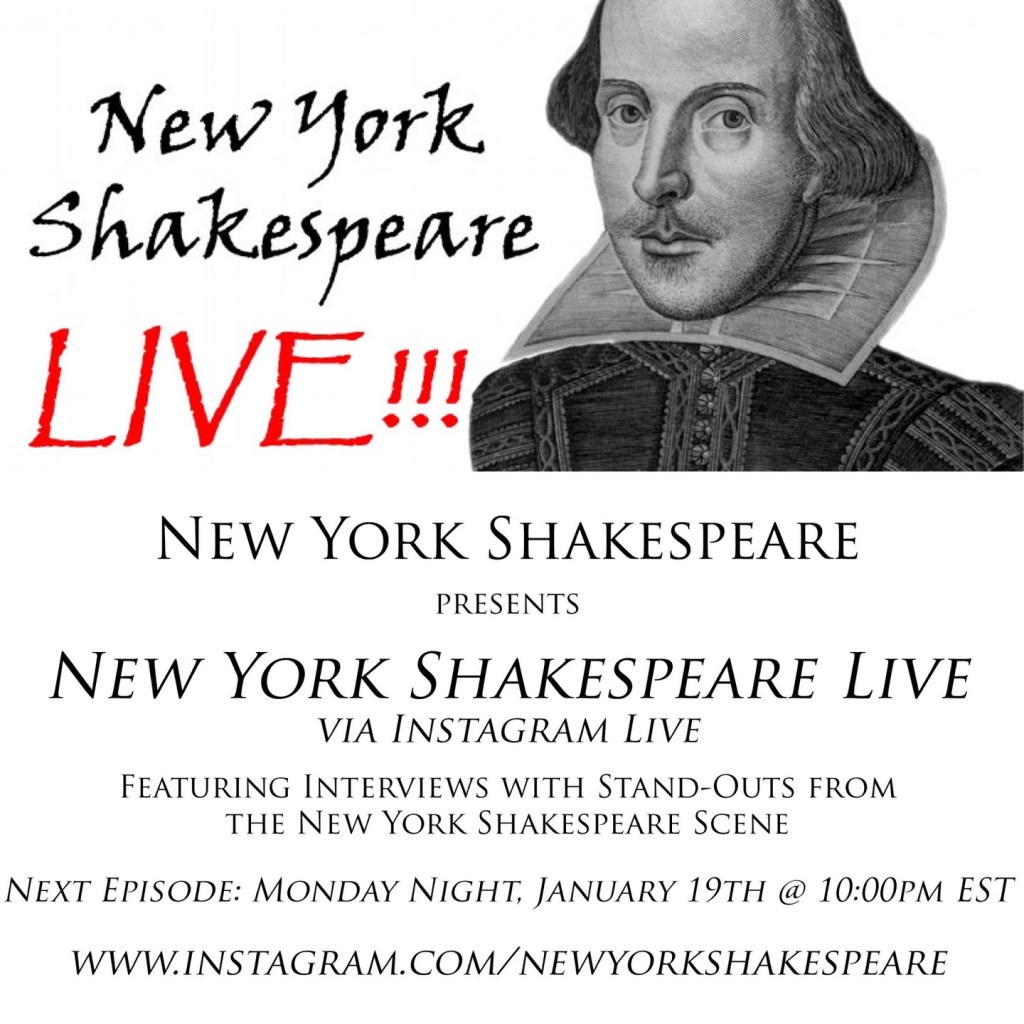
Highlighting the program’s commitment to excellence in classical performance, Hakim’s next episode features a powerhouse lineup. The broadcast will showcase the winning Shakespeareans of Channel Indie’s inaugural “SPEAK THE SPEECH” competition.
This exclusive session brings together a unique blend of rising stars and established masters, including:
- Joe Staton
- Sean Gregory Tansey
- Sam Hardy
- Michael Hagins (Classical theater luminary)
This episode promises an insightful look into the mechanics of Shakespearean delivery and the future of classical performance in the digital age.
A Global Community with Local Roots
While the focus is firmly on the “happenings taking place in and around New York City,” the reach of New York Shakespeare is global. By leveraging Instagram, Facebook, YouTube, LinkedIn, and WordPress, Hakim has built a digital archive of the city’s classical heartbeat.
Perhaps most impressively, these resources—including live interviews and online discussion groups—are offered free of charge. This mission of accessibility ensures that “supporting your local Shakespeare” is an invitation open to everyone, regardless of their proximity to a physical theater.
Connect with New York Shakespeare
Whether you are a seasoned actor looking for coaching, a scholar seeking fresh discussion, or a fan wanting to know what’s playing in the park this weekend, Rodney Hakim’s platform is the definitive guide.
- Website: www.nyshakespeare.com
- Email: info@nyshakespeare.com
- Watch: Follow @NewYorkShakespeare on Instagram to catch the latest IGTV broadcasts and live interviews.
Stage Whisper Celebrates Five Years as LeadingIndependent Arts Podcast
Stage Whisper, the celebrated podcast dedicated to independent artists of stage and screen, is proudly marking its fifth anniversary. What began as a “little show that could” has now firmly established itself as the #1 podcast in its category, achieving significant milestones and laying the groundwork for exciting future growth.
Over the past five years, Stage Whisper has become an essential platform for the independent arts community. The podcast has produced more than 1,300 interviews and episodes, with over 600 of those released in 2025 alone. Its commitment to showcasing diverse talent has resulted in over 100,000 content downloads and featured over 100 different festivals.
Reflecting its dedication to the local theatre scene, Stage Whisper staff attended over 1,000 productions in the New York City Area.
The podcast’s influence extends across digital platforms, having recently surpassed 10,000 followers across all social media platforms, generating more than 200,000 monthly interactions.
Stage Whisper is distinguished by its core mission to remain an unbiased and independent voice, open to all shows and stories without reliance on corporate sponsors, reviews, or social media trends. This commitment to artistic freedom has earned high praise from the industry’s top professionals:
- Award-winning playwright Marlin Thomas called his interview “a great experience.”
- Author and artist Betti Franceschi exclaimed, “I LOVED our talk!”
- Broadway performer Laura Shoop (Flying Over Sunset, She Loves Me) even dubbed the show “the NPR of Theatre Podcasts.”
Looking Ahead: 2026 and Beyond
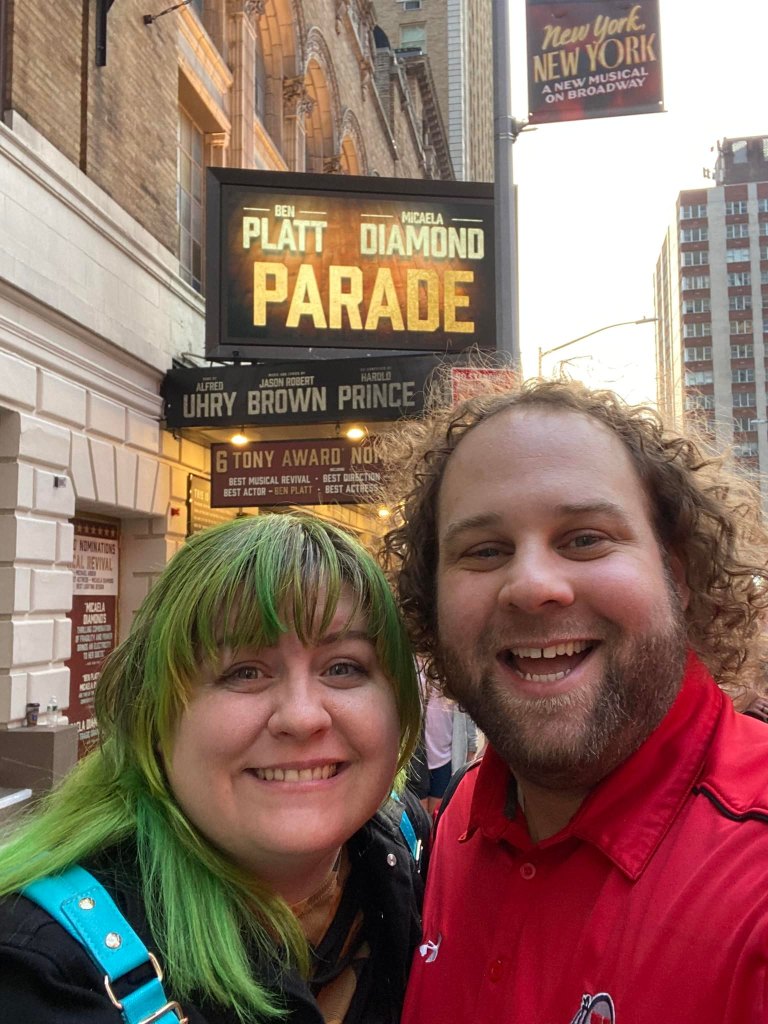
Co-hosts Andrew Cortes and Hope Bird have announced ambitious plans for 2026 and beyond, designed to further increase visibility for independent artists:
- Video Interviews launching via Channel Indie (ACW-TV).
- Special Panels and Discussions.
- Enhanced marketing efforts for increased visibility for guests.
- Exclusive Live Events.
A Call to the Community: Listener-Sustained Fundraising Drive
In the spirit of being a listener-sustained program, and recognizing the precarious financial nature of the arts, Stage Whisper is launching a critical holiday fundraising campaign. The goal is to raise $5,000 before the end of 2025 to ensure the podcast can continue its mission without compromising its independent ethos.
“We are reaching out to all of our listeners, guests, and collaborators,” the co-hosts stated. “We understand that money and art are precarious, but we are asking anyone who values our work to make a $5 donation in honor of our fifth year. Your support, at any level, is crucial to keeping Stage Whisper free for both artists and audiences globally.”
Stage Whisper aims to not only help the independent arts community survive difficult times but to foster its growth and help it thrive in 2026, which they anticipate will be an exciting year for the arts.
Donations can be made through the following platforms:
- Patreon: patreon.com/stagewhisperpod
- Venmo: @stagewhisperpod
- PayPal: https://www.paypal.com/ncp/payment/YVX5DQSAJWZXS
Stage Whisper extends its warmest wishes for a Happy Thanksgiving, Happy Holidays, and a Happy, Healthy, and Prosperous New Year to its entire community.
Media Contact: Jay Michaels / info@jaymichaelsarts.com / 646-338-5472

A Delightful Double Feature at the Delightful American Theatre of Actors, reviewed by the Delightful Jim Catapano
A Delightful Double Feature at the American Theatre of Actors
Tango in the Rockies and The Rubber Band Company Bow at the Beckmann
The 50th year of the American Theatre of Actors continues to go from strength to strength, as evidenced by the coupling of two compelling new works to kick off November. Tango in The Rockies is written and directed by ATA Artistic Director James Jennings, while The Rubber Band Company is written and directed by Meny Beriro.
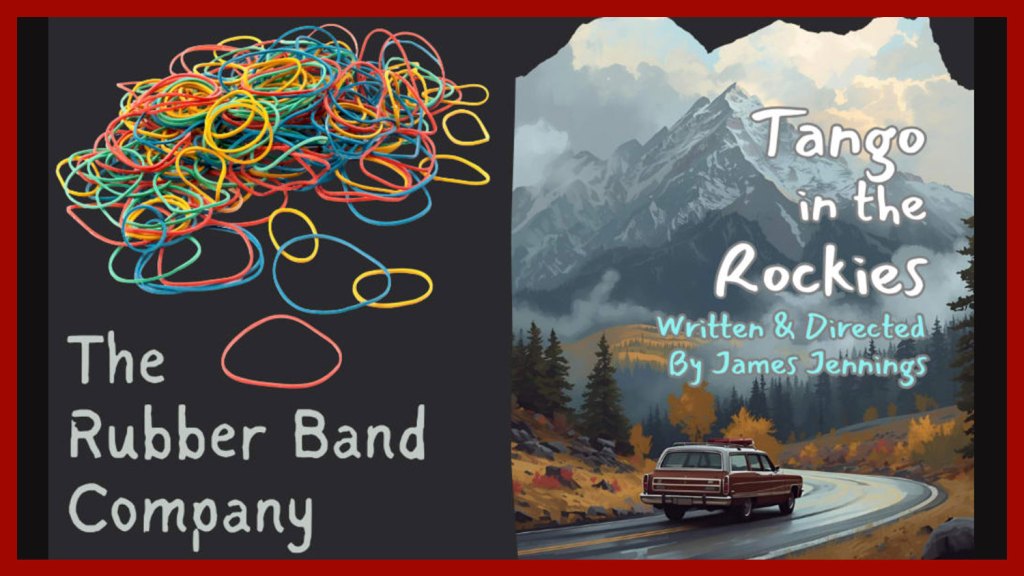
Following the strains of Marty Robbins’ classic ballad “El Paso,” Tango begins as a two-hander, as mature couple Albert (Tom Crouch) and Millie (Ginger Kipps) seek refuge in a cabin from an as-yet unseen adversary that has been following them in a car after Albert’s initial evasion of them. “They want us to sign some papers,” is all Albert knows, revealing that they had come to the house and “tried to force me to do it there”. Millie’s imagination regarding their identity runs from bill collectors, to CIA, and even ICE “They’re certainly trying to get something from us,” says Albert, “and I don’t know what the hell that can be.” When Millie realizes that the cabin is the one they used for a family trip years ago, some emotional memories come to the surface—skiing with the kids, cooking them eggs, and Albert’s time as a baseball player.
“Time slipped by so fast,” she says sadly, noting that their time with family is now near non-existent.
“And now here we are, trapped in a cabin,” Albert sighs. “Victims of the current times.”
“Victims of our age,” Millie adds.
“Maybe victims of some AI program that we’ve had nothing to do with,” Albert speculates ominously, grounding their dilemma in the here and now.
Crouch and Kipps display fantastic chemistry as they go from reminiscing wistfully to raging against the forces outside their makeshift sanctuary. Their depiction of a decades-long relationship facing perhaps its greatest crisis is stunningly genuine. The sound design is well utilized to create the sense of impending doom, until Millie bravely goes outside and returns with Charles (Josh Bartosch), an amiable real estate agent who reveals what he needs from the couple. The denouement of the tense situation is well played and functions as a deep exhale followed by a laugh of relief. The three actors deftly deliver Jenning’s witty dialogue, and it’s all held together by his expert direction.
The Rubber Band Company is heralded by the sound of the Spinners’ hit “The Rubberband Man”, setting a very different mood in a very different setting, but continuing the darkly humorous vibe. It’s the office of the company revealed in the title, and it opens on veteran rubber band salesman Bill (Ken Coughlin) shooting samples of their product across the room. He’s having no luck getting them in the cup he hs placed to catch them, which he dismisses as “too small.” He later decides to blame the rubber bands instead: “They don’t stretch like they used to.”
The losing streak is interrupted by Ann (Stephanie Andujar), a young go-getter who is trying to make her way up the ladder and feels she has the perfect idea to propel her.
“I knew when I walked in here that rubber bands was the reason God put me on this earth,” Ann announces with a very amusing earnestness.
The uneasiness of the reluctant colleagues makes for some very funny dialogue; equally humorous is the varied types of rubber bands the company boasts about. There are the 540s, that are supposed to glow in the dark (but don’t, according to a customer Bill speaks to on the phone). “They just ruined some family’s whole camping trip,” Bill tells Ann, explaining that he sent them a free box of the renowned “1280s” as an apology.
“That was a bit extravagant on your part!” says Ann.
She suggests that Bill pick up the dozens of rubber bands on the floor as their boss Connors (Derek Donnellan) is coming to give an important presentation on a “whole new concept” that she expects will be a game-changer. The agitated (and apparently unwell) Bill dismisses the notion: “He wouldn’t know a 1280 from a 1690! The only knew concept he’s going to introduce to this company—is Chapter 11.”
The tension is further escalated when Tom Luke DiCostanzo arrives as Gary, the slimy lead salesman trying to get his Westchester territory back from Ann (despite having famously remarked “f—ck Westchester” in a previous rant). His kid has asked for free rubber bands for his whole class, but to Gary’s sadness a “new policy change” makes this impossible.
The slick and money-minded Connors finally arrives to give his presentation. After announcing the new line of “industrial-strength super-sized outdoor rubber band—the 2559,” he adds that he wants to give the brand an identity by selling rubber bands in only one color—but it’s not the one that Ann envisioned, to her hilarious chagrin.
The situation escalates to a series of fight sequences, initially comedic and of course involving some of the company’s famed product. These are fantastically executed by the cast under the excellent direction of Fight Director Juan Carlo Castillo. Then it takes an unexpected very dark turn that will you leave you gasping, and yet is the perfect ending to the piece and a strong indictment of power-grabbing and greed. You’ll neber look at a rubber band the same way again.
It all makes for enjoyable evening (or afternoon) of theatre and is another triumph for the ATA in its golden anniversary year.
Tango in the Rockies and The Rubber Band Company run together at the American Theatre of Actors through Nov 16, 2025.

Absurdity, Activism, and the Authentic Self: Julie Lorson’s Vision for Five Lesbians Eating Quiche
The Modern Classics Theatre Company of Long Island (MCT), the 501(c)(3) non-profit organization in residence at the BACCA Arts Center, is distinguished by its commitment to staging challenging, innovative, and socially relevant theatre.1 With a core mission to produce works “seldom seen on Long Island” and championing non-traditional casting, MCT ensures its repertoire actively engages with contemporary issues.2 Leading this effort is Director Julie Lorson, whose selection and staging of the comedy Five Lesbians Eating Quiche exemplifies the company’s purposeful artistry.
Article by guest writer, Anya Kai
The Production: Five Lesbians Eating Quiche (November 2025)

The production, running from November 8 to November 23, 2025, is a staging of the 2012 New York International Fringe Festival Winner, written by Evan Linder & Andrew Hobgood.3 Set in 1956, the play centers on the Susan B. Anthony Society for the Sisters of Gertrude Stein, whose annual quiche breakfast is interrupted by the chilling reality of nuclear war.4
The Dual Message
Director Julie Lorson’s insightful Director’s Note reveals the play’s depth, moving beyond mere farce:
“Beneath the laughter lies a powerful story about five women who long for freedom in a world that tells them who they should be… In this play, our war widows gather to celebrate community, sisterhood, and courage.”
Lorson observes a troubling resonance with the present: “It is disheartening to see echoes of that same repression returning under the current administration. Rights once fought for are being questioned again.” She frames the production as an act of resistance, calling on the audience to “laugh loudly. Cheer boldly. And as you do, remember the bravery of those who came before us.”
Spotlight on the Director: Julie Lorson 🌟
Julie Lorson is a true “jack of all trades” in the Long Island theatre community. Beyond her directorial role, she is a producer, stage manager, and actor, and serves on the board of directors for both Modern Classics Theatre and Bellport Playcrafters.5
The Selection Process: Serendipity and Social Relevance
Lorson’s initial interest in the play was rooted in the need for a production that fit MCT’s criteria (5+ cast, one setting) and her personal inclination toward comedy. The choice of Five Lesbians Eating Quiche was serendipitous:
“I went on Concord Theatricals, put in the criteria and because it’s sorted by alphabetical order 5 Lesbians came up first. Obviously, intrigued by the title, I found the PDF of the script online and I FELL IN LOVE!“
This initial spark of intrigue quickly evolved into a realization of the play’s profound thematic fit within MCT’s mission.
The Obstacle: An Innovative Casting Challenge
A significant directorial choice that shaped this production was Lorson’s solution to working with a large ensemble while preserving the core dynamic of the five main characters:
- Non-Traditional Casting: Rather than a simple ‘A’ vs. ‘B’ cast structure, Lorson intentionally created “8 different casts” by mixing the performers.
- The Goal: This innovative approach was designed to make “each show… a unique experience and give the actors a challenge,” while also preventing competition and forcing the entire company to “work together to create a great show which feels in the spirit of the show.”
This intricate scheduling and creative mixing demonstrate Lorson’s commitment to prioritizing the actors’ collaborative development and the unique immediacy of live performance.
MCT’s Mandate: Theatre That Matters
Lorson is proud to align this production with MCT’s history of impactful storytelling, citing recent works that tackle pressing social topics:
| Theatrical Production | Social Theme Explored |
| POTUS | Political and gender dynamics |
| A View From The Bridge | Immigration and moral dilemmas |
| The Laramie Project | LGBTQ+ rights and hate crime |
| The Shadow Box, Curious Incident, Of Mice & Men | Powerful human, mental health, and social struggle stories |
MCT’s continued dedication to “diversity, equity, and inclusion” under Lorson’s influence cements its position as a vital, purposeful theatre company on Long Island.
What’s Next
Following the closing of Five Lesbians Eating Quiche, Julie Lorson will immediately dive into her own annual tradition:
- Acting Festival: She will be performing in the MCT’s annual one minute play festival, appearing in 13 out of the 46 plays submitted this year, showcasing her versatile talent across many short-form pieces.

Marlin Thomas’s REPARATIONS Set for Limited New York Run After International Win
Acclaimed Playwright Confronts the “Impossible Moral Debt” of American History at Teatro LATEA
Anya Kai, reporting
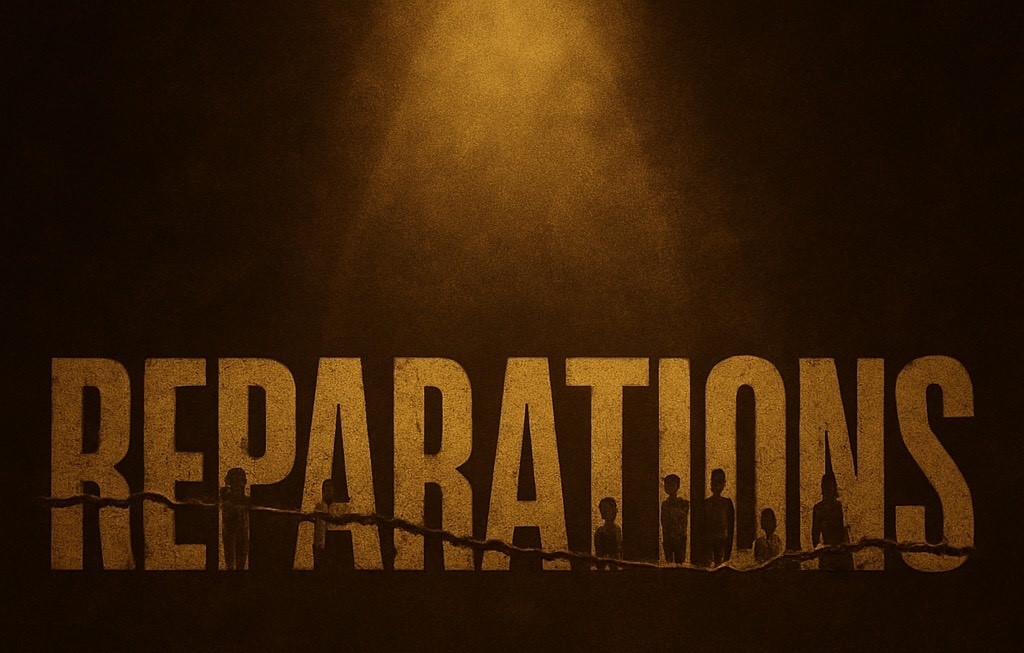
New York native and celebrated playwright Marlin Thomas is set to present a limited run of his latest, award-winning work, REPARATIONS, at Teatro LATEA (107 Suffolk St., New York, NY 10002). The production, which recently earned the top honor at the International Theater Script Competition 2024, promises an unflinching and sophisticated exploration of the debt owed for American chattel slavery and its lingering consequences.
A Confrontation at the Door
REPARATIONS centers on William McCrory, a wealthy white man whose comfortable life is shattered by an unexpected visitor—a Black man who shares both his name and his birthday. This mysterious stranger arrives carrying documents that connect the two men through a painful history rooted in slavery.
As the stranger’s intentions unfold, the play dramatically excavates painful histories, both public and private. It forces the protagonist—and the audience—to grapple with an impossible moral debt. The work has been lauded by the competition jury for its commitment to thoughtful discourse on a polarizing subject, balancing challenging political ideas with compelling, character-driven drama.
The production asks, but deliberately leaves unanswered, a host of urgent and contentious questions that resonate deeply in contemporary society, including:
- What does the present owe the past?
- Can historical injuries ever truly be repaired?
- What individual responsibility exists for distant sins?
- Should individuals be held accountable for the actions of their social and racial group?
Playwright’s Journey: From Skepticism to Drama
Marlin Thomas, an academic and writer whose background spans the humanities and the sciences (including literature, philosophy, and computer science), wrote REPARATIONS to satisfy his own curiosity about the issue.
“I was viscerally opposed to reparations,” Thomas explains, “so I was curious to find out how someone could be in favor of them.”
His research led him to gradually shift his perspective, realizing that the arguments presented on both sides of the issue had “as many flaws as merits.” Thomas sought to dramatize this intellectual and emotional movement, expressing his belief that “reasonable people can disagree about an issue as emotional and personal as that of reparations.”
When asked about his message, Thomas states, “History is on nobody’s side. No argument stands without engaging with its counter argument.” The timing of the play’s production, he notes, is not a direct response to current government action, but rather a function of his “slow writing pace and the length of time it took to gain recognition.”
The most significant obstacle in producing the show, according to Thomas, was finding a director who could “acknowledge the complexity of the characters” and approach the script with an open mind. He found this collaborator in DeMone Seraphin, who “broadly appreciates the humanity reflected in the characters.”
The Man Behind the Play
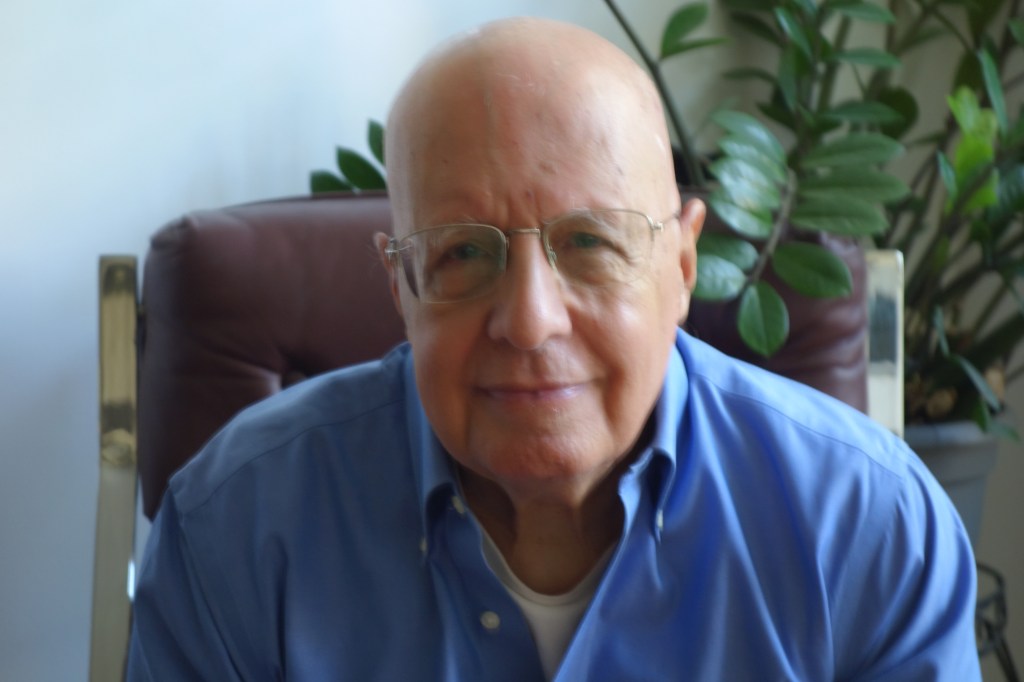
Born in the Bronx and raised in the Queensbridge Houses, Thomas was educated at Queens College (CUNY), Johns Hopkins University, and New York University. His academic work is extensive, with his piece on Alan Turing: The Enigma being named Computing Reviews’ best review of 2015.
As a creative writer, Thomas is also known for his full-length play FreudMahler (published in English and Italian) and The Middleman, a finalist for Best Play in the 2020 New York Theater Festival.
Regarding his unique perspective, Thomas introduces himself as: “An academic who has taught in departments of English and computer science. A writer who is political but non-partisan. An atheist trying to have enough faith to become an agnostic.”
Looking Ahead: The Humanity of Queensbridge
Following the run of REPARATIONS, Thomas will turn his focus to a deeply personal project: a new full-length play titled “Queensbridge.”
Queensbridge Houses, the country’s largest public-housing project, is often celebrated as the birthplace of rap but is also long associated with poverty and violence. Thomas intends to give the community a nuanced treatment, one that recognizes the “humanity and quiet heroism” of its residents. The play will dramatize the experiences of a decades-long resident who recounts his life, detailing the trauma endured by those he lived with, his own complicity in it, and his path toward partial redemption.
Performance Schedule
REPARATIONS will have a limited run at Teatro LATEA on the following dates:
- Thursday, November 20 at 9:00 PM
- Saturday, November 22 at 12:00 PM
- Sunday, November 23 at 8:30 PM
TICKETS for the limited engagement are available now.

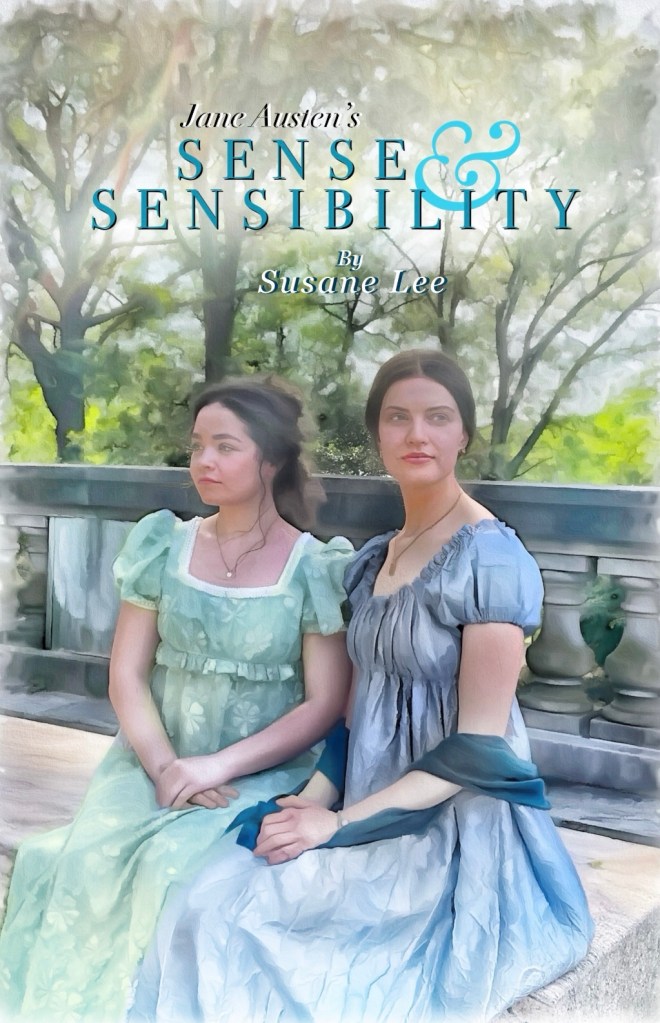
BRAVO to Parmeet Singh in Sense & Sensibility

Parmeet Singh delivers a charismatic and nuanced performance as John Willoughby in Hudson Classical Theatre Company’s adaptation of “Sense and Sensibility.” Singh’s portrayal stands out for its depth and complexity, successfully transforming the widely known villain of Jane Austen’s novel into a “grey antihero.” His performance is described as charismatic, intelligent, and electric, capturing the audience’s attention from his “bombastic and robust” entrance.
A Masterclass in Character Transformation
What distinguishes Singh’s performance is his ability to create a fully realized human being, rather than a one-dimensional character. He moves beyond the archetype of a villain, crafting a version of Willoughby that we initially want to love but ultimately end up despising, though not without a hint of pity. This depth is a testament to his artistry and his philosophy of acting, where he aims to have “abundant discoveries with limitless exploration and complete surrender.”
Versatility and Craft
Singh’s talent is further highlighted by his impeccable command of received pronunciation (a British accent), which adds authenticity to his classical performance. The provided text also emphasizes his versatility, noting his seamless transitions between vastly different roles. His recent work includes playing Romeo in “Romeo and Juliet” and Lysander in “A Midsummer Night’s Dream” with The Shakespeare Theatre of New Jersey, as well as a lead role in the premier of “Haunt Me” and an indie film. His diverse background, which includes training at both The American Musical and Dramatic Academy and the National School of Drama, India, and work in both classical Western and contemporary Indian productions, underscores his commitment to nurturing his artistry as a whole.
___________________________________________________________________________
Hudson Classical Theater Company unlocks the vitality of Classical theater. It is our mission to delight our diverse audiences with intimate and accessible interpretations of classical literature.
In addition, our Education and Outreach Programs provide performances and theater training to audiences who don’t usually have access to theater, including the Incarcerated, Veterans, Seniors, and Community and Educational Centers.

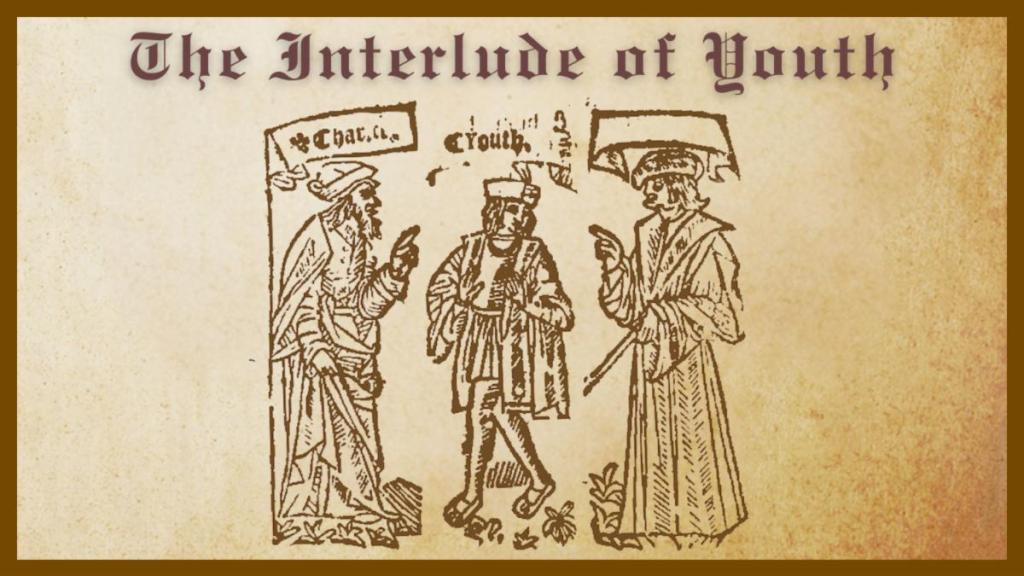
“The Interlude of Youth”: A 16th-Century Morality Play Resurrected by Dr. Jeff Dailey, Featuring David Ezell
The American Theatre of Actors (ATA) is currently presenting a rare revival of “The Interlude of Youth,” a captivating morality play from the early 16th century, as part of its Classical Showcase. Directed and co-produced by Dr. Jeff S. Dailey, this production breathes new life into a forgotten piece of dramatic literature, offering audiences a blend of entertainment and timeless moral lessons. Actor David Ezell, a prominent figure in the New York theatre scene, takes on a significant role in this historical staging.
The Play: “The Interlude of Youth”
“The Interlude of Youth,” by an unknown playwright, is a verse-based morality play that charts the journey of a young man’s transformation from a “crude rogue” to a “serious member of society.” True to the morality play genre, its characters bear names such as Riot, Pride, and Lechery, embodying the vices and virtues that guide or corrupt the protagonist. Despite its antiquity, dating back to at least 1514, the play is renowned for its considerable comedic elements, making it one of the most entertaining surviving examples of its kind. The term “interlude” in the early modern period simply referred to a short play.
The play’s enduring message, encouraging viewers to abandon destructive behaviors like gambling, excessive drinking, promiscuity, and the pursuit of money, remains strikingly relevant in contemporary society.
Dr. Jeff S. Dailey: Bringing History to the Stage
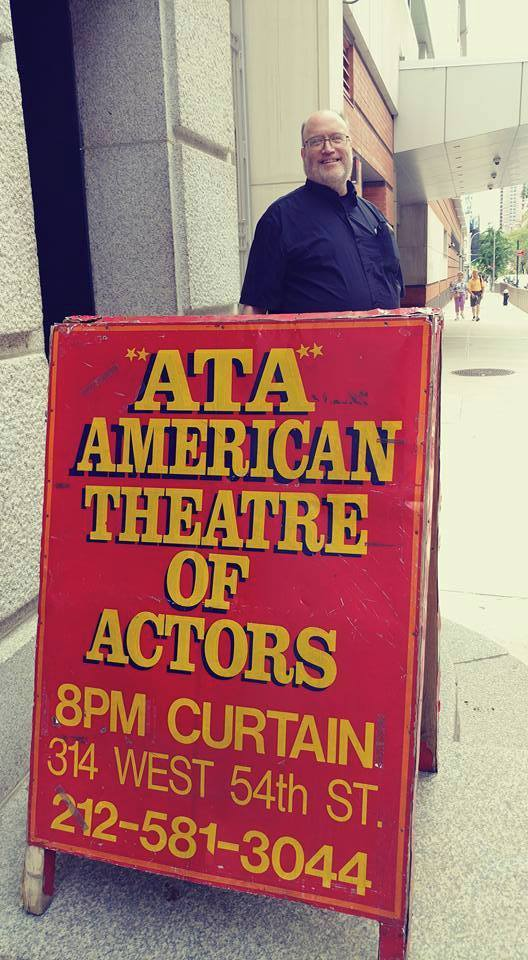
Dr. Jeff S. Dailey, with a PhD in theatre from New York University, has dedicated over 30 years to directing plays at the American Theatre of Actors. His extensive experience has allowed him to delve into and explore a wide range of dramatic works from the past.
Dr. Dailey emphasizes that while medieval theatre is often associated with religious themes, “The Interlude of Youth” stands out as a morality play that, though not overtly religious, aims to inspire a better lifestyle through engaging entertainment. He invites audiences to experience this historical work, which has been captivating people for over 500 years.
David Ezell: A Deep Connection to Classical Theatre
David Ezell, a writer and actor based in Midtown East, brings a profound personal and academic connection to his role in “The Interlude of Youth.” Holding a graduate degree in European history, Ezell was already familiar with the play before auditioning. His English heritage and intensive study of Shakespearean performance at institutions like Soho Shakespeare and the Royal Academy of Dramatic Art further deepen his appreciation for classical works.
Ezell describes his surprise and excitement upon seeing the audition notice for “The Initiation of Youth” (an alternative title), having just completed a run of “Little Women.” He notes that scholars widely believe Shakespeare himself was influenced by this play as a teenager, and to Ezell’s knowledge, “The Interlude of Youth” had never been staged in New York, though it continues to be performed in England. This unique opportunity thrilled him, offering the chance to perform in a foundational work of English theatre.

Ezell’s primary goal for the audience is to help them “get past the language” – true Middle English – and discover the abundant humor within the work. He continuously uncovers new layers of comedy in the text, which are not immediately apparent. Participating in this production has significantly boosted Ezell’s confidence in performing classical theatre, as over 98% of his prior acting experience was in modern works. He credits Dr. Dailey’s “very patient instruction” for this growth.
The American Theatre of Actors: A Home for Developing Talent
Founded in 1976 by James Jennings, who serves as its President and Artistic Director, the American Theatre of Actors (ATA) is a vital repertory theatre company. Comprising 50 actors, 15 playwrights, and 8 directors, ATA’s core mission is to foster the development of new talent in playwriting, directing, and acting, providing a nurturing, creative environment free from the pressures of commercial theatre.
ATA is known for presenting plays that tackle contemporary social and ethical issues. Over its history, the theatre has premiered more than 1000 new works and has hosted over 11,000 actors, including many who went on to achieve significant fame, such as Dennis Quaid, Bruce Willis, Danny Aiello, Dan Lauria, Chazz Palminteri, Kevin O’Connor, William Fichtner, Edie Falco, and Kathryn Hahn.
Upcoming Performances and Future Endeavors
“The Interlude of Youth” is running at The American Theatre of Actors complex, located at 314 W 54th St, New York City, from August 6 to August 17.
Beyond “The Interlude of Youth,” David Ezell plans to continue honing his classical acting skills. He has an upcoming reading for a piece connected to another part of his cultural heritage – Agatha Christie – and hopes to be involved in several upcoming Shakespearean productions, including at least two stagings of “Hamlet.” Ezell is also the co-owner of Camelback Films, whose first film, “Occam’s Beard,” is set to premiere in September, and their second project, “Paper Moon Rise,” is scheduled to begin production in Kansas in approximately two months. Camelback Films has also entered several major competitions, adding to Ezell’s exciting opportunities.

The Swan Inside Every Little Duck or “Take A Quack At It, Timothy L. Michuda’s Rocking Revelation for All Ages — an international review
The review is translated from a piece written by Yin‑Fang Chang, a respected Taiwanese conductor and arts educator. She’s the Resident Conductor of the National Symphony Orchestra (formerly its Assistant Conductor, 2006–2015) and a lecturer at Taipei National University of the Arts and National Taiwan Normal University. Chang has led acclaimed performances, including stepping in for conductor Gennady Rozhdestvensky at the 2012 Kaohsiung Spring Arts Festival, and has received nominations for the Taishin Arts Award in performing arts. The piece was originally published on Talks by the Taishin Bank Foundation for Art & Culture, the official site associated with theTaishin Arts Award—one of Taiwan’s top recognitions in contemporary visual and performing arts. This platform features expert commentary by nominated observers like Chang, making it a credible and reputable source for art and performance discourse.
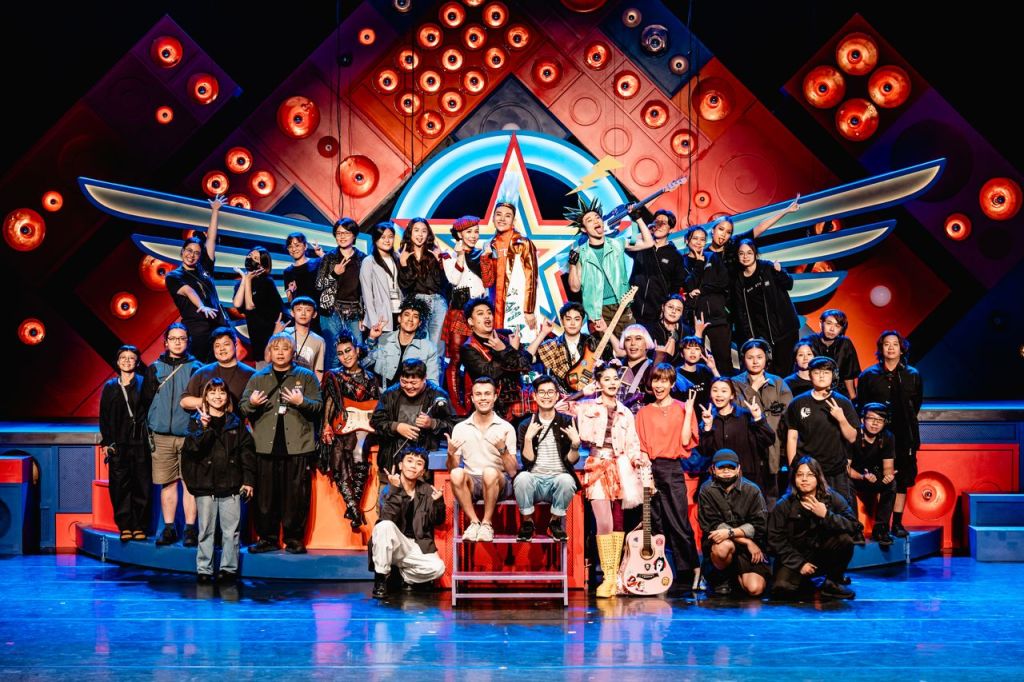
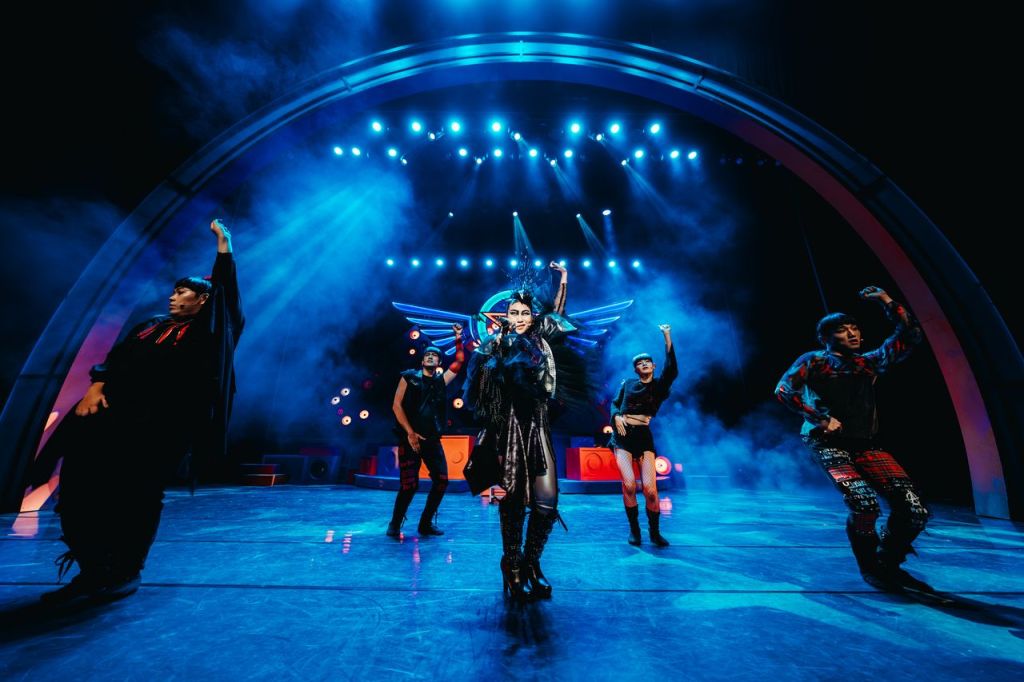
Total Musical Theatre’s “That Thing About the Ugly Duckling Becoming a Rock Star” (also known as “Take A Quack At It!”) delivers a truly astonishing family musical that transcends the usual boundaries of children’s theater. As reviewed by the esteemed Taiwanese conductor and arts educator Yin-Fang Chang (張尹芳) on the credible platform Talks by the Taishin Bank Foundation for Art & Culture, this co-developed Taiwan-U.S. production offers not only entertainment for children but also profound healing for adults.
A Cleverly Crafted Narrative with Depth
Drawing inspiration from Hans Christian Andersen’s timeless tale, the musical sets its story in a “rock music summer camp” for little ducklings. This inherently charming and “endearingly goofy” premise cleverly leverages the contrast between ducks and rock music to explore weighty themes like self-identity, bullying, the formation of musicians, and even “the false appearances of the workplace.” Chang praises the production for its ability to tackle these “problems rooted in human nature” with a “gentle force,” avoiding both “overly sentimental manipulation and divisive criticism.” The narrative respects the audience’s intelligence, unfolding rapidly from the protagonist’s entry into the camp with “every plot point connect[ing] tightly, without any dragging.” The reviewer highlights the show’s “clever hints and surprising twists,” such as the reveal of an eagle disguised as a duck, and the “scandal after the ugly duckling becomes a swan celebrity,” ensuring “there is never a dull moment.”
Stellar Performances and Musical Prowess
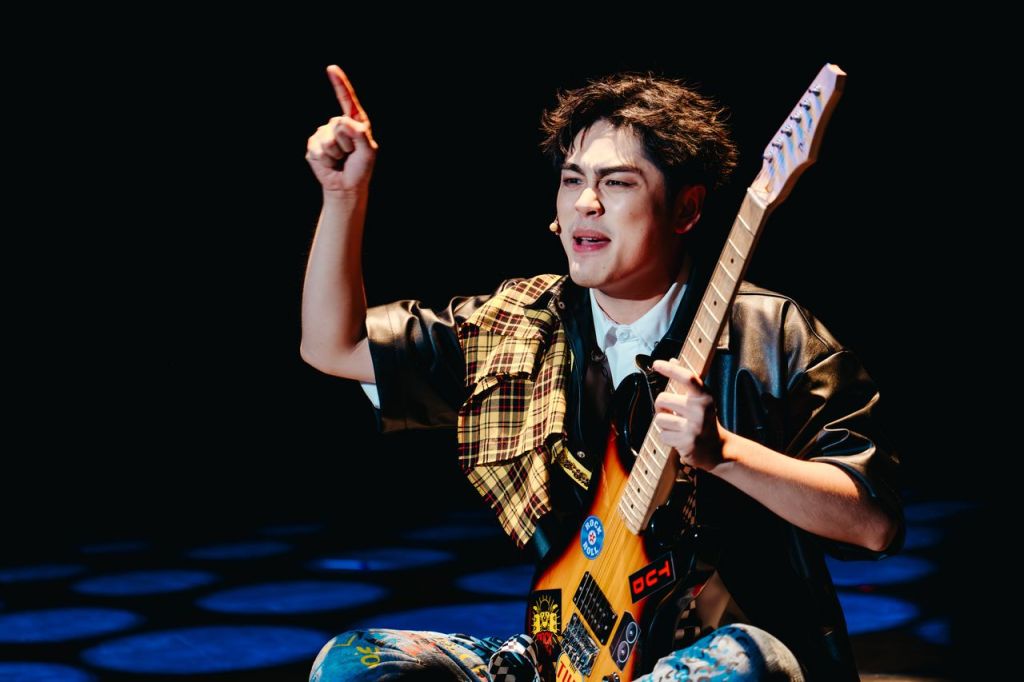
The cast of nine actors skillfully manages over twenty roles, showcasing exceptional stage management and orchestration. Their “impressive stamina” is matched by their rich and nuanced ability to switch between characters’ psychological states, making each portrayal feel natural and unforced. Despite the complete absence of subtitles, “about 95% of the lyrics were still understandable” thanks to the actors’ “clear diction and skill in both singing and speaking.” While there was a minor issue with the male lead Xiao-Fei’s pitch on the day, and some sound blending during reprises due to venue equipment, these minor points did not detract from the overall success driven by the actors’ “outstanding performance in singing, acting, and dancing.”
The music, the very “soul of a musical,” is attributed to composer Chang Ching-Yen, who brings a fresh perspective despite his extensive experience. He masterfully employs “different styles of jazz to match each character’s traits and the direction of the plot.” From the protagonist’s evolution from a “not-so-rock folk ballad style” to a powerful “stronger rock sound,” to the vintage gothic rock for the disguised eagle and jazz for the Japanese-inspired Shan-Dao Sparrow, the music “integrates perfectly with the storyline, vividly coloring each segment.” Chang notes that the audience’s ability to understand the lyrics without subtitles is a testament to the “collaboration between melody, word choice, and phonetic rhythm,” and the composer’s skill in creating “emotionally resonant melodies.”
Impeccable Direction and Production Value
Director Kao Tian-Heng’s work is lauded for its “natural and delicate” approach to character shaping, pacing, and dramatic tension, avoiding the common pitfalls of “stylized or stereotypical character portrayals” often found in children’s theater. The production creates a powerful atmosphere, drawing the audience into an empathetic connection with the characters and their emotional journey. Even with a “relatively simple set design,” the use of “lighting zones and curtain transitions” effectively creates multiple settings, from a “creepy forest” to a “rock concert stage,” demonstrating an “impressively high-value design” that feels anything but makeshift.
A Testament to Quality Children’s Theater
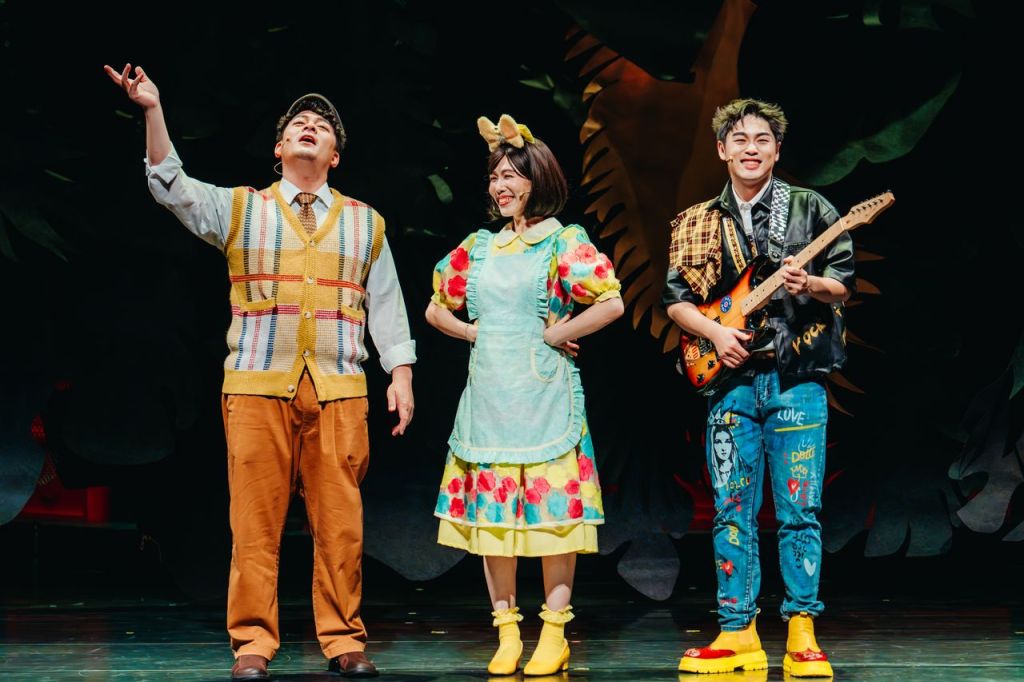
Ultimately, Chang Yin-Fang highly commends “That Thing About the Ugly Duckling Becoming a Rock Star” for its depth and high quality. It stands out as a parent-child production that “doesn’t preach, doesn’t rely on stereotypes, doesn’t pander to the audience,” yet still offers substantial artistic value. It proves that “children’s aesthetic development truly does require strong production values to support it.” More uniquely, it succeeds in “awakening a sense of childlike wonder in adults — offering healing, while clearly distinguishing between attention-grabbing gimmicks and artistry with real substance.” This production not only provided a platform for “talented rising stars of the stage” but also solidified Total Musical Theatre’s capability in handling medium-to-large scale productions.
Double the Drama, Double the Daring: Sarah Vindigni and Amy Losi Unveil Thought-Provoking Plays at ATA
Written by Zara Solange
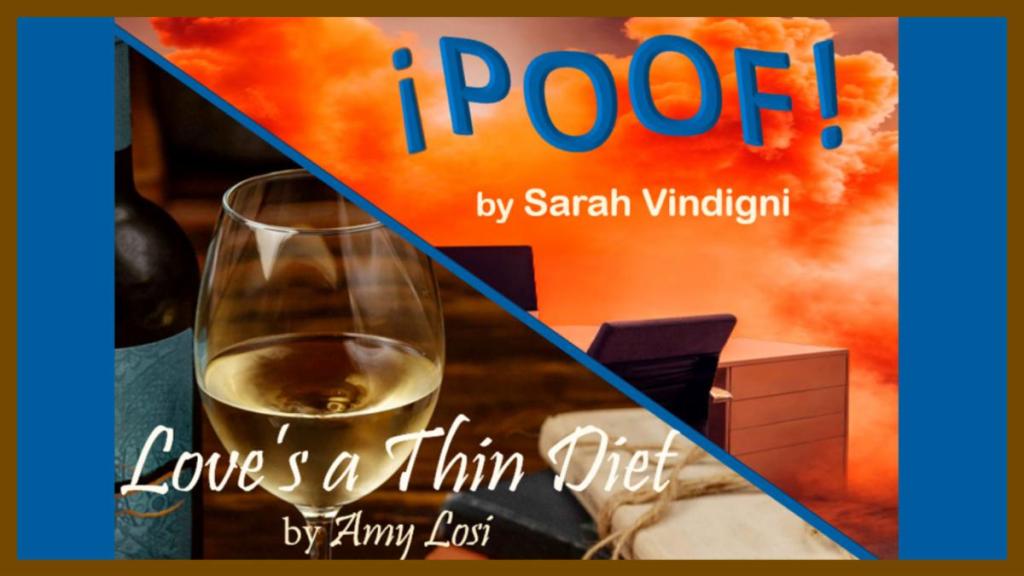
New York City’s American Theatre of Actors (ATA) is set to host a compelling “Laurie Rae Waugh Double Feature” this July, presenting two distinct yet equally impactful new plays: Sarah Vindigni’s “¡Poof!” and Amy Losi’s “Love’s a Thin Diet.” Both productions, guided by the experienced hand of director Laurie Rae Waugh, promise to ignite conversations and challenge perceptions on the Beckmann Stage from July 9th to 20th.
The ATA, a venerable institution founded in 1976 by James Jennings, has long been a nurturing ground for emerging playwrights, directors, and actors, fostering a creative environment free from commercial pressures. Its mission to explore “the social and ethical problems of contemporary society” resonates deeply with the themes tackled in this double bill.
“¡Poof!”: A Shocking Scenario and a Call for Connection
Sarah Vindigni, the playwright behind “¡Poof!”, introduces herself as a purveyor of the thought-provoking. Her inspiration for this audacious work? None other than the king of comedic absurdity, Mel Brooks. “Mel Brooks inspired me to think outside the box and that nothing is too ridiculous,” Vindigni shares, a sentiment that clearly permeates the premise of her play.
“¡Poof!” plunges audiences into a chillingly plausible scenario: Union Activists taking over Metro Energy in NYC, threatening to shut down the grid unless their demands are met. The play raises a vital question: “Will they succeed and could this happen globally?” Vindigni’s creative process, she states simply, involves “taking lots of notes,” suggesting a careful observation of societal anxieties and a dedication to crafting a narrative that resonates.
Beyond the dramatic tension, “¡Poof!” carries a profound message. When asked about the “scary thoughts” her play provokes and its real-world potential, Vindigni offers a hopeful vision: “I think the world can learn to share resources so that no one is in need, and everyone can live like a human being.” This suggests that beneath the thrilling premise lies a call for greater equity and human connection. As for what’s next for this insightful playwright, she reveals a shift towards “A romantic comedy,” a delightful contrast to the high-stakes world of “¡Poof!”.
“Love’s a Thin Diet”: Navigating the Murky Waters of Power and Consent
Amy Losi, a prolific actor, director, and playwright with ninety plays under her belt as an actor and nineteen festival acceptances for her own works, brings “Love’s a Thin Diet” to the stage. This play delves into the deeply sensitive and timely issue of power dynamics in relationships, particularly when a professor exerts influence over a student, even if that student is their ex-husband. The central question: “What is the line between seduction and consent…?”
Losi’s inspiration for this poignant play stems from a personal experience. “A college professor invited me to his private office. Like the women in the play, he offered me wine and asked personal questions. He asked me to return but I never did,” she recounts. This play, she emphasizes, is a powerful statement “for all the women who did return, and more importantly, for those who are about to.”
Losi’s creative process is driven by a desire to explore the female experience, focusing on “women at various stages of their lives and center around overcoming the past or pursuing their dreams.” She also notes her interest in showcasing “older people connecting or falling in love,” and drawing from “aspects of my own life.”
The play bravely tackles the complex interplay between seduction and consent. Losi’s stance is unwavering: “It is never permissible to control or take advantage of others — and in particular, for a professor or male in a position of dominance to seduce or harass women. Seduction is not equivalent with consent.” This clear articulation underscores the play’s vital contribution to ongoing conversations about ethical boundaries and individual autonomy.
A Shared Vision Under Laurie Rae Waugh’s Direction
Despite their distinct subject matters, both “¡Poof!” and “Love’s a Thin Diet” are intrinsically linked by the vision of their director, Laurie Rae Waugh. As Sarah Vindigni rightly points out, “The Director, Laurie Rae Waugh,” is the unifying force. Amy Losi further elaborates on this connection, stating that “The characters in both plays want to reverse injustice and are committed to achieving that.”
Laurie Rae Waugh, a seasoned theatre artist in New York since 1980, has garnered numerous accolades for her directorial work, including the Jean Dalrymple Award for Best Dramatic Director for various productions. Known for her “realistic and unapologetic takes on family and relationship dramas,” Waugh’s directorial style often involves giving actors the “freedom to explore their characters as we break down the script,” allowing for truth and vulnerability to emerge. Her ability to navigate diverse narratives and draw out powerful performances makes her an ideal choice to helm this thought-provoking double feature.
What’s Next for These Dynamic Playwrights
The future is bright for both Sarah Vindigni and Amy Losi. Vindigni looks forward to crafting a romantic comedy. Meanwhile, Amy Losi’s plate is overflowing with exciting projects: “Love’s a Thin Diet” is set for publication in October by Next Stage Press. In August, her newest play, a comedy about four older women, will be featured in the Gene Frankel Theatre Play Festival. September brings her full-length play, “To Feed the Roses,” to the Dream Up Festival at Theatre for the New City. And to cap off the year, a comedy by Losi will be part of the NY Theater Winterfest in December. Remarkably, Losi will also be acting in all these plays, all of which are being directed by Laurie Rae Waugh, showcasing a truly prolific and collaborative artistic partnership.
The “Laurie Rae Waugh Double Feature” promises an evening of compelling theatre, inviting audiences to confront timely social issues, ponder challenging ethical dilemmas, and perhaps even imagine a world where resources are shared and injustice is overcome. It’s a testament to the enduring power of new plays and the vibrant creative spirit fostered by institutions like the American Theatre of Actors.
 Arts Independent