
Home » Posts tagged 'books'
Tag Archives: books

“Are We Friends, and Were We Ever?” asks Jim Catapano at YEARS TO DATE’s New York Premiere
Allen Barton’s Masterpiece Years to the Day Takes a Hard Look at Modern Relationships
“How the hell do you live your life unless you know who you are?”
Jeff (Jeff LeBeau) and Dan (Peter Zizzo) met each other and their later partners at the very beginning of college and have been “best friends” ever since…and yet they haven’t seen each other in person in six years. They finally meet over coffee, and it’s the precise anniversary of their last get-together in the flesh. They are in their mid-fifties, a time when a certain “rigidity” can set in for a person in terms of habits and point of view, accompanied by a “this is who I am, deal with it” attitude.
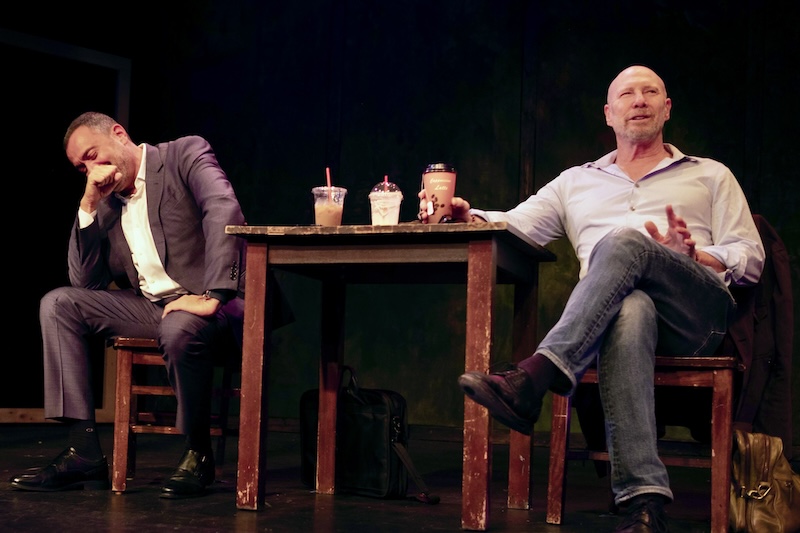
“You are the king of rudeness,” snarks Jeff as they settle in.
“You are the king of puerile, nanny-state intervention!” Dan claps back, but this “old buddy banter” is foreshadowing of the severe disconnection that is soon revealed. They discuss the “latest movie,” which Dan despises but Jeff saw twice; they debate about whether they’re middle-aged or old, and if “50 is the new 40” and how does that effect who they date.
But there’s a discomfort ever-present as the two try to slip into their old roles. The fiery Dan and the comparatively reserved Jeff come across like strangers that just happen to have known some of the same people and shared some experiences. We start to wonder immediately how these two came to be close, as their opposing energies and outlooks are brought to the table. Stunning revelations about each other’s lives come pouring out—important, life-changing, traumatic events that any close friend should have already known about. It’s clear that the notion of them having a deep connection is nonsense; their “friendship” is just a habit, and not one that they’ve cultivated in a healthy way. Jeff and Dan are on opposite sides of the political fence, but it’s never been a problem because Jeff used to downplay his beliefs; his refusal to take up the placating Avatar of old leads to a verbal explosion that nearly drives him out of the get-together. (The political climate is smartly kept vague and thus evergreen; we learn of an unnamed president that has somehow managed a third term, to Jeff’s delight and Dan’s horror.) Now that neither Jeff or Dan are “playing characters”, they find that the “actors” who brought them to life have little basis for a relationship. And yet somehow, their shared history and a genuine caring despite of all the differences just might be strong enough to lower the temperature and leave open the possibility of another meeting in the near future…maybe.
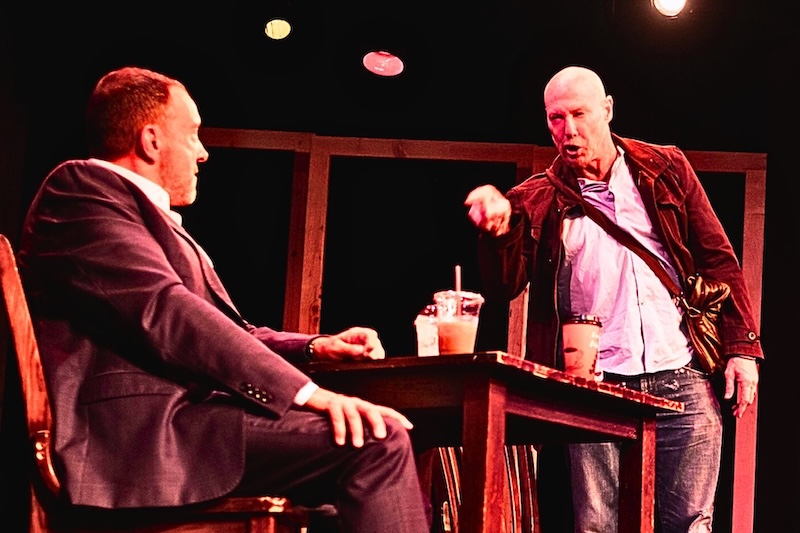
Written and directed by Barton and produced by Mia Christou, Years to The Day first premiered in 2013 to great acclaim and now makes its New York debut in a time when its themes are ever more relevant. Emmy winners LeBeau and Zizzo disappear deftly into their characters, delivering Barton’s musical, witty, rapid-fire dialogue with tremendous skill yet always appearing spontaneous in their interaction. Their body language, tense and awkward, is like another character in the play; seeing these two “buddies” barely look at each other for most of the meeting is chilling. Their unconvincing promise to “call Brenda” after a sad event for the unseen character stuns the audience; we all have a Brenda in our lives we’ve neglected. Seeing Jeff and Dan’s supposed closeness exposed as simply the product of having been in the same place at the same time is devastating as it certainly reflects reality for many in the modern world. In a time of social media false personas, fishing for “likes,” and a phone addiction that allows us to retreat at the first sign of boredom or discomfort, it becomes too easy to not even bother to cultivate a deep connection.
Hilarious, heartbreaking, and thought-provoking, Years to the Day is a must-see and a triumph for Barton, LeBeau, Zizzo and Christou.
“One thing exists at a time,” observes Dan throughout the play; it’s a simple yet astonishing declaration that will stay with you once you realize what it truly means, and the ark of Years to the Day reveals it powerfully.
Years to The Day is performed at the American Theatre of Actors through February 28, 2026.

It’s Mean to Be the King: Jim Catapano at RICHARD III (Atlas Shakespeare)
The Atlas Shakespeare Company Presents a Triumphant Retelling of Richard III
Following acclaimed productions of Henry VI Parts 1 and 2 and Henry VI Part III, the Atlas Shakespeare Company now completes the Bard’s first tetralogy with a riveting Richard III.
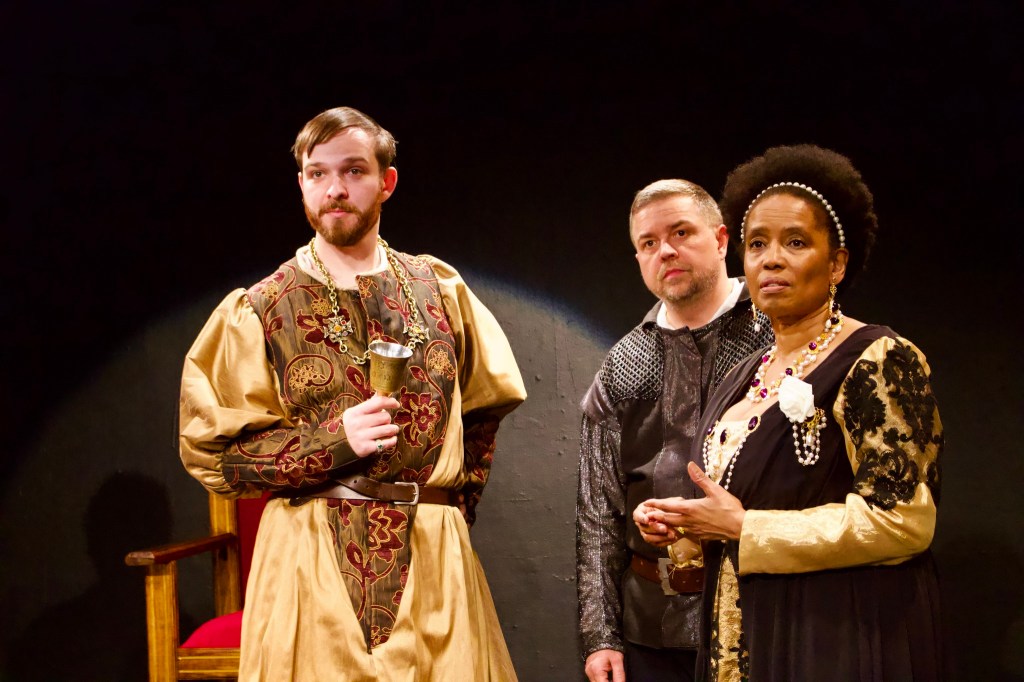
Following the long civil conflict in which the Yorks defeated the Lancasters, King Edward IV (Ethan Baker) sits atop the throne, depressed and ailing. His power-hungry brother Richard (Zachary C. Clark), the Duke of Gloucester, sees (and eventually seizes) an opportunity. Thus, he begins to systematically eliminate everyone who stands in his way, while wooing the widowed Lady Anne (Christa Souza) to his side. He imprisons his elder brother George (Yeshua Ellis), Duke of Clarence, in the infamous Tower, where he later also famously banishes his young nephews, Richard the Duke of York (also Souza) and Prince Edward (Charlotte Blacklock), to prevent any competition to the throne. The less-than-legitimate new King Richard’s reign of terror is finally threatened by Henry Tudor (Bradley Viktor), Earl of Richmond, who raises an army against the Machiavellian murderer.
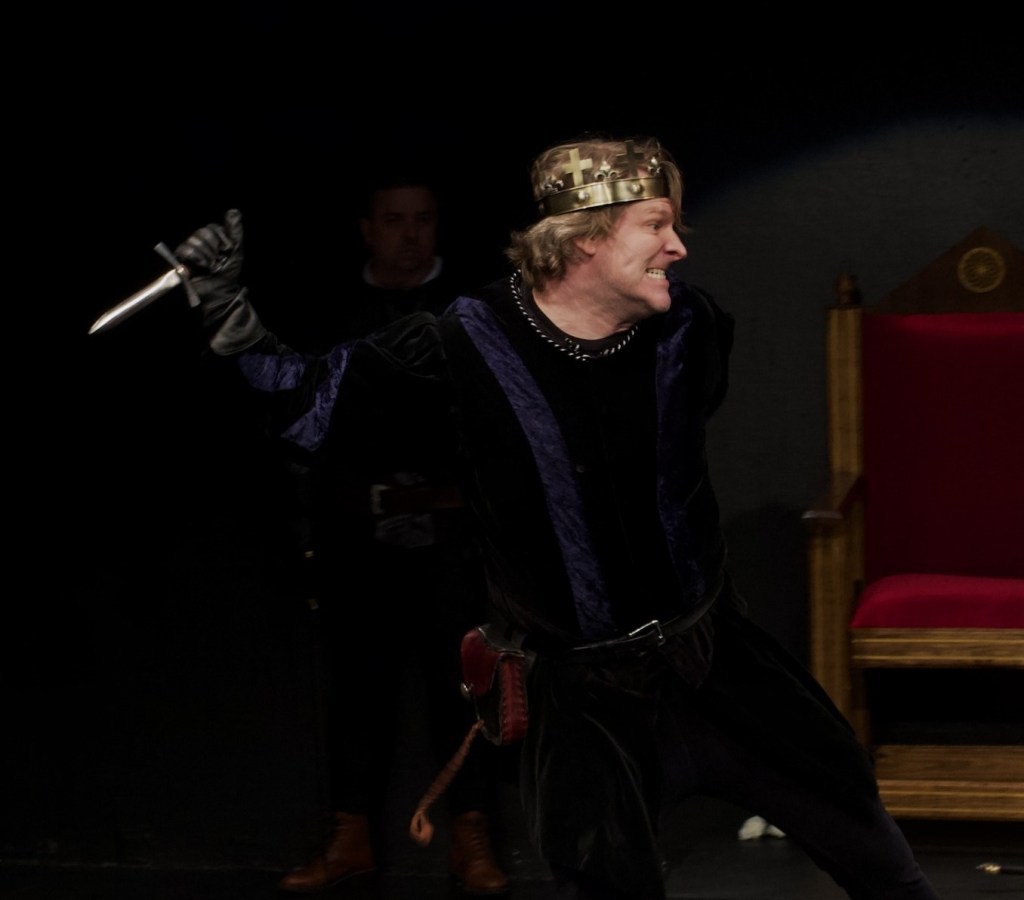
The play completes the War of the Roses saga with a compelling story of betrayal and sociopathic serial killing that ends in a bloodbath. Along the way we watch the titular character go from scheming to murder to full-on madness, with lots of backstabbing along the way, most of it literal. We learn that a cask of wine is a great place for a murder victim. And what show would be complete without a game of “catch the severed head”?
As the conniving cad of the title, Clark delivers a tour-de-force performance: charming, devious, funny and sly. He skillfully uses the audience as his “co-conspirators”, delivering asides and glances that make us feel part of the story.
“(Richard III) is very insecure in a lot of ways,” said director Adriana Alter in a talkback following a recent performance. “And very motivated by the need for external validation which he’s trying to get from the audience. We essentially become his imaginary friends. He’s trying to impress with how clever he is.” Clark is excellent at portraying Richard’s rollercoaster ride from the heights of power to the depths of slipping sanity. “He’s going to have to come face to face with the fact that he hates himself,” said Alter. “His coping mechanisms for keeping up, that pretense starts to melt away.”
Clark is joined by a sterling cast including Tonia E. Anderson as Cecily the Dutchess of York; Joscelyne Wilmouth as Queen Elizabeth; Nick Stevens as her brother Anthony (Lord Rivers); Matthew Tiemstra as Henry, the Duke of Buckingham; Quinlan Welch as Thomas Grey; Nicholas Grevera as William (Baron Hastings); Timm Coleman as Thomas Stanley; Chris Clark as Sir Richard Ratcliffe; and Gabe Girson as lawyer Sir William Catesby. (Baker, Blacklock, Sousa, Ellis, Viktor, and Welch each play two roles to round out the kingdom.)
The costumes—designed by Madeline Rostmeyer and coordinated by Nancy Nichols—are glorious in their elegance, and the sterling cast delivers Shakespeare’s iconic dialogue with a delighting deftness that captivates with every turn of phrase. Atlas’ mission statement is to present Shakespeare’s work as it was intended, and they do so here with a production that is true to the text and to the era it was initially performed, but still completely accessible to a 21st Century theatregoer.

Director Alter has presented a fantastic edition of the oft-performed classic, neatly trimmed and dynamically realized with all story beats intact. It is immensely engaging—from Richard’s first sinister speech, to the appearance of the ghosts of all his victims, to the incendiary final battle. That last sequence is astonishing, an edge-in-your-seat experience delivered with dance-like precision by the cast under the expert guidance of fight choreographer Leighton Schlanger.
This explosive conclusion to the saga is a positive triumph for Alter and Producer and Founder Alexander Nero. It’s a must-see for this “Winter of Discontent” or for any season.
Trade your kingdom for a horse and go see Richard III at the Wild Project through March 1, 2026. Learn more at atlasshakespearecompany.com/.


Jim Catapano examines A Legend Restored with the ATA production of Kenthedo Robinson‘s The Lewis & Clark Expedition: The Story of York
Kenthedo Robinson‘s The Lewis & Clark Expedition: The Story of York Returns a Hero to His Rightful Place in American History
“If a man can become a slave, a slave can become a man.”
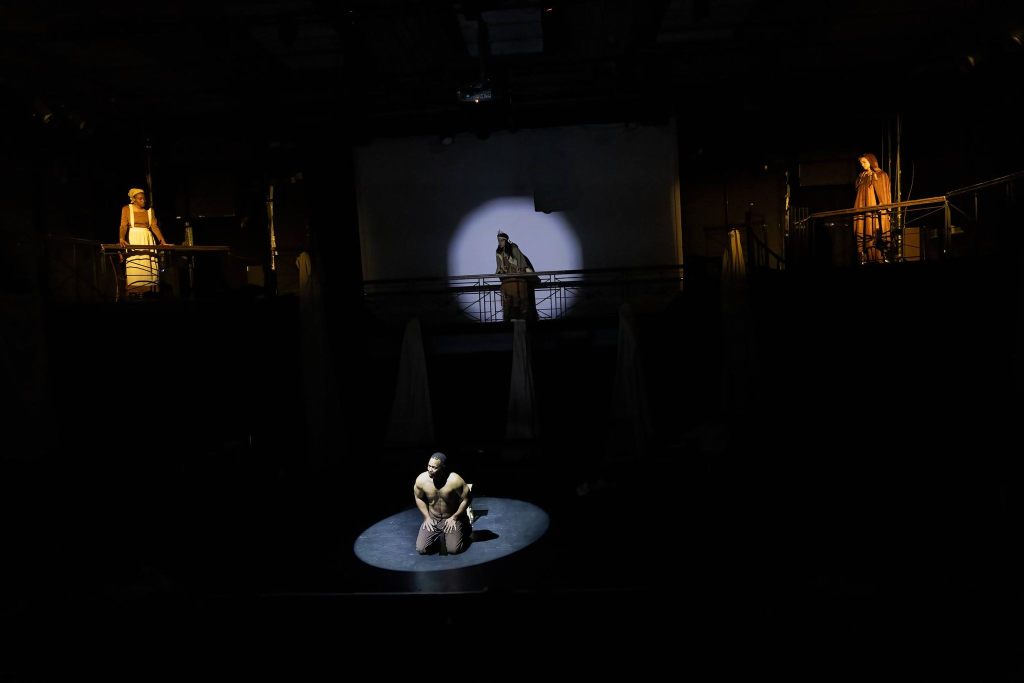
In 1804, a country in its infancy was determined to explore the uncharted land that would soon be part of its territory. The treacherous and dangerous journey was famously undertaken by Meriwether Lewis and William Clark, but few know of the man who accompanied them and was utterly essential to the success of the quest: York, an African-American enslaved by Clark.
York is portrayed with astonishing power and authenticity by Rommell Sermons, who we see discussing his being chosen for the expedition with his wife Reeva (Marsha St. Julien; portrayed later in the run by Zsay Moore). Reeva is deeply unhappy with the idea of York going into certain danger with his white oppressors. Though York is loyal to Clark (Nicholas Dodge) because “Clark is loyal to him”, Reeva is much more skeptical about the nature of the relationship, a foreshadowing that will lead to a devastating revelation at the end of the play. Indeed, Clark seems somewhat benevolent, especially in contrast to Lewis (Travis Bergmann). Lewis here is seen to be a raging bigot, seething with contempt for York and threatening him with the whip at every opportunity (despite not having the “authority” to do so), something his “master” Clark has never done. Lewis is out for fortune and glory while Clark purports to be more nobly motivated by the chance to grow and unite the young country.
“I hate you because you exist!” screams Lewis at York, forever paranoid that the slaves and the indigenous people they are about to displace will rise up against their oppressors. Though Clark appears to respect and even care for York, he still refers to him as property and refuses to agree to give him his freedom, only mumbling that he will “revisit” the notion upon their return. It becomes clear that Clark is only good to York because he needs him.

And York is indeed crucial to the treacherous journey, his intelligence, skills and strength proving indispensable. The indigenous tribes encountered are fascinated by York, having never seen a person of African descent before, astonished that his dark “paint” doesn’t wipe off. After a tense face-off with Chief Cameawaite (Kevin Leonard), it is shown that his very presence provides essential assistance to the expedition in their dealings with the Native Americans they encounter. The indigenous peoples are portrayed by a talented cast including Sebastian Arteta (Chief Anapae), James Oliver (Chief Tall Crow), LeeSandra Moore (Sonomo/Stage Manager) and Ms. D (Highshee/Assistant Stage Manager). As the journey continues, events are cleverly linked by Clark’s correspondence with his back-home brother John (Alex Silverman).
York saves the day at every turn, becoming an icon to the native tribes but taken for granted by his own team, who still see him as property. He cares for a very ill Clark; he looks after Sacagawea (Natasha Sahs), an indigenous teenager who assists the expedition and travels with them all the way to the Pacific Ocean; and even saves his nemesis Lewis from a bear attack, in a sequence that is fantastically realized through excellent choreography and sound design (Lighting/Sound Liam Riordan).
Lewis’ utter lack of gratitude and his doubling down on his profound hatred is a chilling reminder of the depths of white supremacy that are still in evidence over 200 years later.
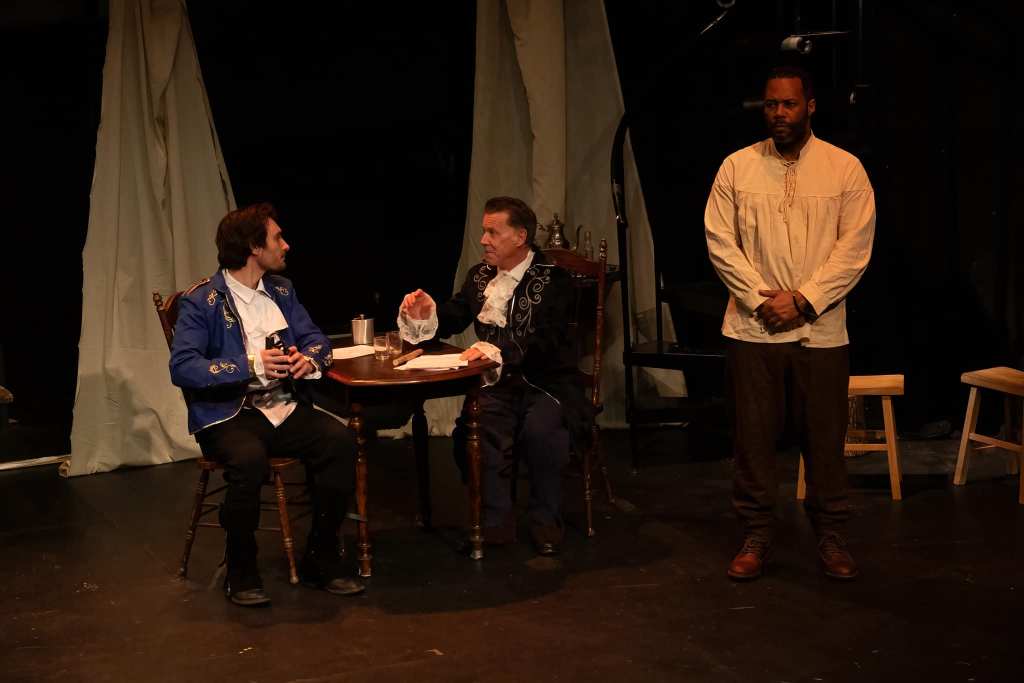
York’s spiritual encounter with the One From The Mountain Top (Jimena Rosas) gives him agency, self-worth, and a sense of purpose that will prove crucial upon his return from the journey, as the play concludes in a sequence of horrifying but powerfully depicted events that reveal the fates of Lewis and Reeva, and destroy any notion of Clark being a good man—sometimes evil and bigotry is more subtle than that displayed by the raging Lewis (a fact that those watching in 2026 need to stay aware of). This is where the production is at its most moving, as York refuses to be dominated and oppressed any longer; his self-actualization as he rises from the horror around him creates a triumphant resolution.
Written and directed by Kenthedo Robinson (with assistant direction by Andre Minkins), The Lewis & Clark Expedition: The Story of York sets history right, putting the man who was known as “The Bear God” back into the narrative, pulled from the obscurity where the history books had unfairly but predictably relegated him. The three leads, and the always exceptional Leonard and Sahs, are a wonder to watch, abetted deftly by a supporting cast that gels beautifully and is clearly moved by the important story they’re here to tell.
“It is better to walk into freedom.”
The Lewis & Clark Expedition: The Story of York runs at the John Collum Theatre at the American Theatre of Actors through February 22. It is presented as part of the African American Playwrights Initiative at the ATA.
PHOTOS BY DAN LANE WILLIAMS

The Winter of Discontent Finds Its Heat: Zachary C. Clark Takes the Throne in Atlas Shakespeare’s Richard III
NEW YORK CITY — The sun of York is setting, and in its place, a shadow looms over the Wild Project. Following their sweeping success with the Henry VI trilogy, Atlas Shakespeare Company is concluding the Wars of the Roses with a visceral, blood-soaked production of Richard III.
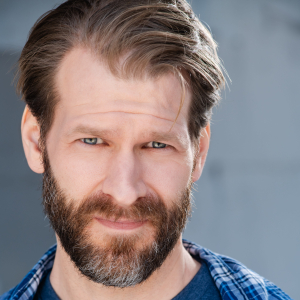
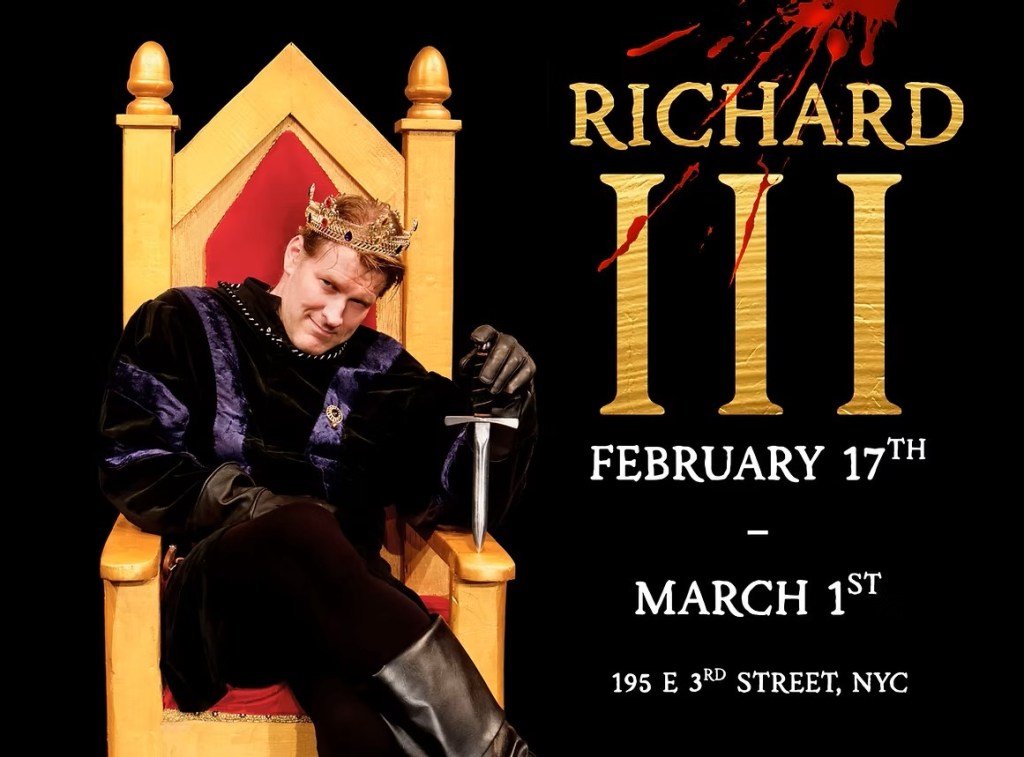
Running from February 17 to March 1, this limited Off-Off-Broadway engagement promises a return to classical roots, complete with period-accurate dress and live sword-fighting. But at the center of this political storm is a performance that has been a year in the making: Zachary C. Clark as the titular villain.
A Villain Formed in the Shadows
For Clark, the role of Richard is more than just a performance; it is a culmination. Having played Richard in the company’s previous Henry VI productions, Clark has had the rare opportunity to live in the character’s skin long before he ever reached for the crown.
“It’s fun to have the full story,” Clark notes. “So much of Richard’s backstory isn’t really explored in many productions because Henry VI is rarely performed.”
This continuity allows for a Richard that is far more than a caricature of evil. Clark approaches the role—the second-largest in the Shakespearean canon after Hamlet—with an eye for the “vulnerability despite how horrible he is.” It is a psychological tightrope walk between a “self-congratulatorily sociopathic” mastermind and a man unraveling under the weight of his own ambition.
The Descent into Madness
While the first half of the play showcases a charismatic strategist outmaneuvering his “dangerously suggestible” brother, King Edward, the latter half explores a much darker territory. Clark identifies the “descent to the point of near madness” as his greatest challenge.
Key Themes Explored in This Production:
- Political Melodrama: The shifting allegiances and the desperation to retain power.
- The Weight of Curses: A world where the supernatural is as real as the steel of a blade.
- The Human Cost: A portrait of how a quest for the crown costs a man his family and, ultimately, his sanity.
Classical Craft for a Modern Audience
Founders Adriana Alter and Alexander Nero have built Atlas Shakespeare Company on the principle that the Bard’s work should be vivid, relatable, and profoundly human. By utilizing full classical dress and high-stakes choreography, the company aims to strip away the “dusty and stale” reputation Shakespeare sometimes carries.
Clark echoes this mission, stating that the primary goal is clear storytelling. “I think as long as we tell the story in a way the audience will understand, we’ve won. To keep an audience engaged and following the plot is the most important goal.”
Whether it’s the chilling delivery of Clark’s favorite line—“So wise so young, they say, do never live long”—or the sparks flying during the live combat, this production is designed to be a “cautionary tale about being careful what you wish for.”
Performance Details
- Dates: February 17 – March 1
- Venue: Wild Project, 195 East 3rd Street, NYC
- Tickets: Available at atlasshakespearecompany.com/tickets
Don’t miss the “bloodsoaked finale” of a saga that has captivated New York theatergoers for the past year. Come witness the rise—and the inevitable, crashing fall—of Shakespeare’s first great villain.


When the Truth Is Found To (Possibly) Be Lies: Jim Catapano attends David Gutierrez’ RETRACTION
David Guiterrez’ Masterful RETRACTION Looks at Real Life Events that Nearly Damaged a Movement for Change
“If your mother tells you she loves you… check it out,” is the first statement we hear from journalist Wendy Denison (Renata Friedman), ambitious reporter for the popular magazine Heart Rhythm. This stunning declaration immediately sets the tone of uncertainty and discomfort that shadows RETRACTION, a compelling and timely work by David Gutierrez.
The title refers to what Rolling Stone actually found itself having to print in the aftermath of an article they published in November 2014. The piece, “A Rape on Campus,” claimed that a woman had been attacked by several fraternity members as part of an initiation ritual. Discrepancies in the account of that evening led to doubt and finally discredit, leading to lawsuits, and ultimately threatening the very cause the magazine was attempting to champion.
RETRACTION goes backwards and forwards in time to tell a fictionalized version of this event—at the center of which is Lacey (Rachel Resheff), a college student at Carolina Atlantic University. Lacey’s revelations regarding her attack at the Frat House draw the attention of Wendy, who wishes to bring awareness to the epidemic of sexual assault against women, and is supported in this endeavor by her editor Zack (Nathaniel Stampley). Wendy also speaks to Gillian (Bella Serrano), a fellow student and assault survivor, who is a steady presence during the rollercoaster of events that follow. Wendy publishes Lacey’s story in Heart Rhythm, and the article is scathing in its condemnation of the failure of University authorities to address the issue. It’s enough to create widespread outrage and make a Pariah of Carolina Atlantic’s Dean Gasso (Shannon Dorsey), who begins getting death threats for her perceived failure to protect her student.
But it is soon learned that the usually thorough Wendy was blinded by her passion for the cause, and made fundamental mistakes in her reporting. The recollections of the friends that Lacey had run to on the night of the alleged attack do not align with the events as portrayed in the piece. Chief among these is Travis (Charlie Webb), who had failed to reciprocate Lacey’s feelings right before she went on the date with the junior that ended in the attack she describes; along with Chris (Carson McCalley) and Melissa (Eliana Rowe), Wendy had failed to fact check with him or get any information from or regarding the alleged perpetrators. Lacey claims abandonment by all her friends, accusing them of words and actions that they later vehemently deny Add to that a competing reporter Victor (also McCalley) who suspects that things are not what they seem, plus Lacey’s subsequent admission that she felt her story “was true at the time,” and the situation implodes to the point where the movement to identify and stop rampant sexual abuse is in itself in danger.

The cast are collectively compelling in these difficult roles, with Friedman and Resheff anchoring with intensity and a command of their difficult roles. All the others deftly play dual parts…a podcaster, reporters, and lawyers who are all woven into the storyline. The stark set design by Julian van Haubrich complements the production well, with its white office tables, towering street lights and rolling chairs that at one powerful moment are rolled across the stage by the actors under the harsh, interrogation room -like lighting (by Adrien Yuen).
Under the expert guidance of director Caroline Fairweather and with the skillful writing by Guiterrez, RETRACTION handles an extremely delicate issue with sensitivity and without condemnation. It is never implicitly stated that Lacey is lying; it’s made clear in the narrative that PTSD could be affecting her memory of what was a very real assault. Were there 6 guys or 4? Was it dark or could she see them? Was the blood on her dress not there at all, or just too subtle for her friends to notice? Though the real truth (or at least the truth within Wendy and Lacey’s fictional story) is never arrived at in RETRACTION, what we know to be at fault here is the careless reporting that was certainly in evidence in the real life situation, which impacted many lives and ended up putting the safety of women on campus and beyond at further risk. It is a powerful and necessary reminder that these issues must be handled carefully and delicately, both in art and in life. RETRACTION doesn’t provide easy answers, but it will leave one determined to ask the right questions.
RETRACTION runs at the The Shiner Theatre at The Sheen Center for Thought and Culture through January 31, 2026.

“YEARS TO THE DAY” Makes Highly Anticipated New York Debut at American Theatre of Actors: Emmy Award Winners, Jeff LeBeau and Peter Zizzo, Star in Allen Barton’s Searing “Shaw for the 21st Century”
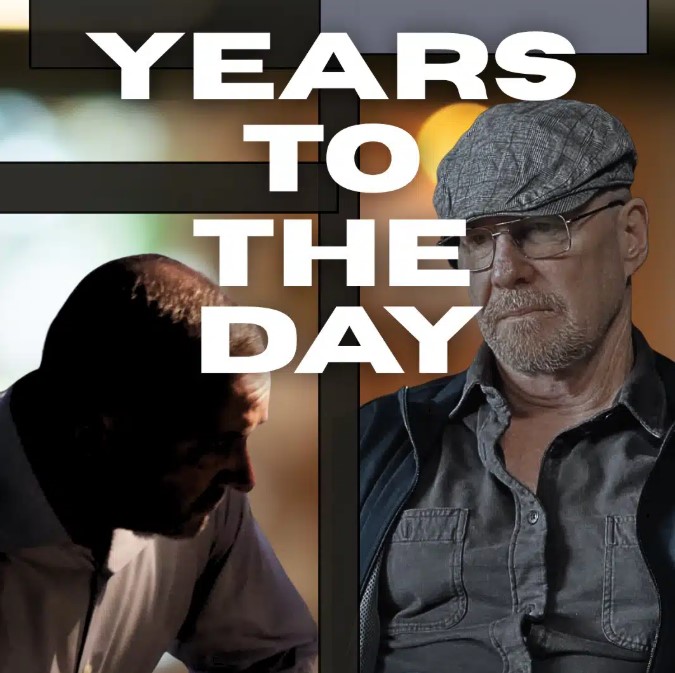
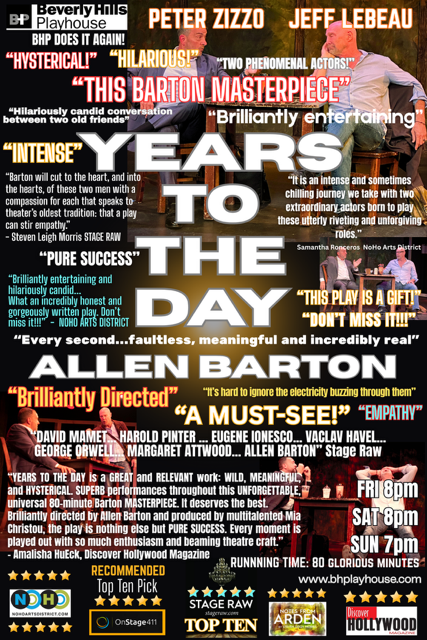
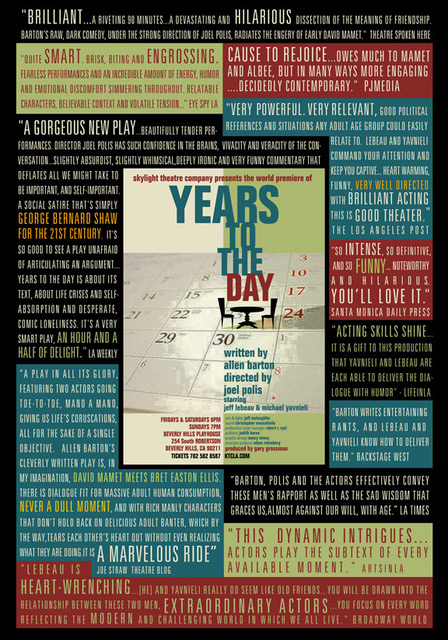
Renaissance man Allen Barton brings his critically acclaimed play, YEARS TO THE DAY, to the landmark American Theatre of Actors (314 W. 54th St.) for its New York City premiere. Opening February 25, the production stars Emmy Award winners Jeff LeBeau and Peter Zizzo in a play named one of the “10 Best New Plays” by LA Weekly.
First premiering in 2013, YEARS TO THE DAY has become a global phenomenon, performed in a dozen cities across three continents. The play utilizes the spare construct of a single conversation between two old friends to dissect marriage, social media, the delicate relationship between parents and children, politics, and gay rights. It is a raw, timely exploration of whether friendship can survive the calcification of middle age.
“After meeting an old friend, four years to the day from our last get-together, it struck me that though we knew what phones and computers we were using, we had no clue about each other’s lives,” says playwright Allen Barton. “The script was written to be ‘evergreen’—a timeless treatise on how friendship survives a world that changes more quickly every year.”
The Powerhouse Trio
The production features a unique collaboration of top-tier talent:
Allen Barton (Playwright): A Los Angeles-based “Renaissance man,” Barton is a playwright, director, Steinway Artist classical pianist, and owner of the renowned Beverly Hills Playhouse. His previous works include Circling, Disconnection, and Engagement.
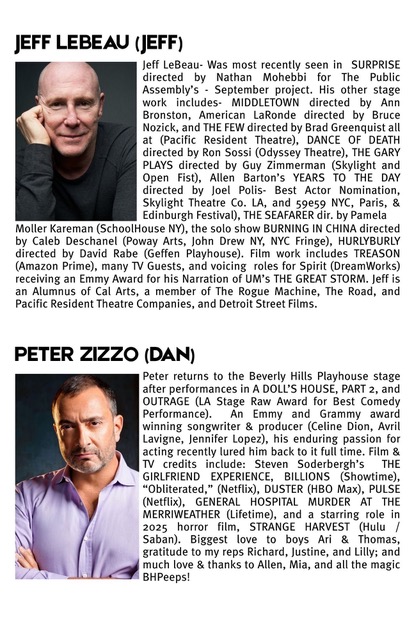
Jeff LeBeau (Jeff): An Emmy Award winner with extensive credits including the Geffen Playhouse (Hurlyburly), Circle Rep, and film/TV roles in The Practice and Life as a House.
Peter Zizzo (Dan): An Emmy and Grammy Award-winning songwriter and producer who has sold over 100 million records with artists like Celine Dion, Jennifer Lopez, and Avril Lavigne.
Critical Acclaim
- “A social satire that’s simply George Bernard Shaw for the 21st century… an hour and a half of delight.” — LA Weekly
- “David Mamet meets Bret Easton Ellis… dialogue fit for massive adult human consumption.” — Joe Straw Theatre Blog
- “Insightful dissection of some big ideas about life and how to live it.” — The Public Reviews, Edinburgh
- What: YEARS TO THE DAY by Allen Barton
- When: Opening February 25. (Full schedule to be announced).
- Where: American Theatre of Actors, 314 W. 54th St., New York City.
- Tickets: To be announced shortly.

About ALLEN BARTON (Writer/Director) is a Los Angeles-based playwright/author, director, teacher and classical pianist. As Playwright: OUTRAGE (2023), CIRCLING (2020), DISCONNECTION (2015), YEARS TO THE DAY (2013), and ENGAGEMENT (2010). YEARS TO THE DAY was named one of Los Angeles’ 10 Best New Plays by LA Weekly, and has since been performed in ten cities across three continents. As Supervising Director for Beverly Hills Playhouse: SEX WITH STRANGERS, THE PURPLE LOUNGE, LOST LAKE, BELLEVILLE, AN INFINITE ACHE, A DOLL’S HOUSE. Allen earned many years’ worth of L.A. stage, television and film credits as an actor, and he is also active as a classical pianist – he was a prizewinner in the 2002 Los Angeles Liszt Society Competition, has recorded five compact discs, and performs solo recitals on both coasts. In 2010 he was made a Steinway Artist. A native of the Boston area, a graduate of Harvard University and longtime student of the late Milton Katselas, Allen is currently owner and principal teacher at the renowned Beverly Hills Playhouse acting school. A compilation of his work as a playwright, ALLEN BARTON: FIVE PLAYS, has just been released and is available at Amazon.

The King of Villains in the Concrete Jungle: Adriana Alter and Atlas Shakespeare Company Take on Richard III
In the bustling landscape of New York theater, where experimental “black box” concepts and modern deconstructions often dominate the stage, Adriana Alter is championing a different kind of revolution: the return to tradition.

As the co-founder and artistic director of Atlas Shakespeare Company, Alter is currently preparing for an ambitious, extended run of Richard III. For Alter, Shakespeare isn’t just a literary obligation; it’s a lifelong obsession that she believes holds the key to modern empathy.
A Director’s Secret Weapon
While many directors approach the Bard with a sense of intimidation, Alter finds a unique freedom in the 400-year-old texts. “I’ve found that Shakespeare is by far the easiest thing to direct!” she admits.
Her reasoning is rooted in the practical history of the theater. Because Shakespeare was an actor writing for a fast-paced repertory system with minimal rehearsal time, he “baked” the direction into the language itself. While modern plays often require a director to build character depth from scratch, Alter notes that Shakespeare has already done the heavy lifting. “Right off the page, these are three-dimensional, engaging characters, with believable relationships and satisfying narrative arcs.”
The “Likable” Monster
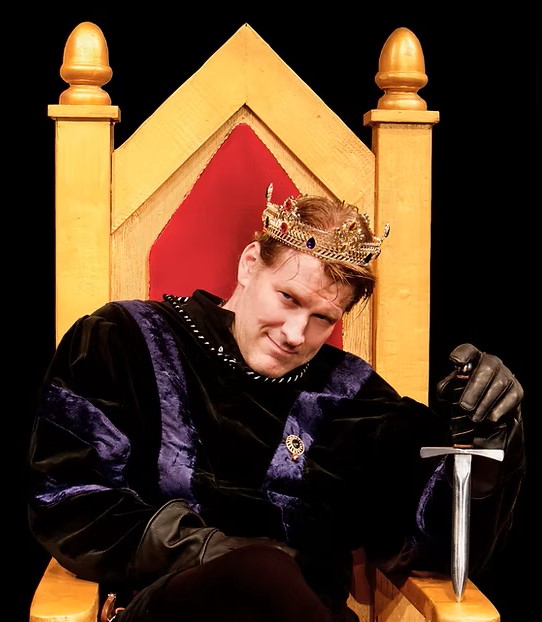
At the heart of their current production is perhaps theater’s most famous “unapologetically terrible person.” Alter describes Richard III not as a somber tragedy, but as a “wild ride” through unhinged political schemes.
“Richard is one of the earliest examples of a trope that continues to be popular in modern media: a charismatic, manipulative, unsettlingly likable villain whom the audience can’t help but root for.”
What sets this production apart is the actor bringing that charisma to life. Zachary C. Clark, who previously played Richard in Atlas’s production of Henry VI, Part III, returns to the role. According to Alter, the audience’s existing relationship with Clark’s portrayal adds a layer of complicity—we have watched this character grow from a soldier into a king, and now we must watch him descend into madness.
Finishing the Epic
This production serves as a grand finale for the company. Having just completed the Henry VI trilogy, Richard III is the natural conclusion to the “Wars of the Roses” cycle. It also marks a milestone for actress Charlotte Blacklock, who has portrayed Queen Margaret across all four plays.
“Now that she’s done such a truly extraordinary job of portraying each distinct stage of Margaret’s journey, we certainly couldn’t leave that story unfinished,” Alter explains.
Period Costumes and Steel Blades
Atlas Shakespeare Company is leaning into the very things that some might fear: the full script, period-accurate costumes, and live sword fights. To Alter, these aren’t “stodgy” choices—they are tools for escapism.
By working with fight choreographer Leighton Schlanger, the company has crafted an “epic battle sequence” designed to thrill. “Period costumes go a long way towards creating that world,” Alter says. “We’re offering audiences an opportunity to take a break from their daily lives and explore a whole different world.”
The Marvel Connection
When asked why so many elite actors from the Marvel Cinematic Universe or horror genres start in Shakespeare, Alter points to the “larger-than-life” demands of the text.
“Shakespeare teaches actors how to engage with unfamiliar worlds and how to embody larger-than-life characters without sacrificing psychological authenticity,” she says. “That’s a valuable foundation for anyone who wants to transition into genres where you have to persuade the audience to suspend disbelief.”
Looking Ahead
The goal for Atlas is nothing less than the full Shakespearean canon. By extending the run of Richard III, they hope to reach local schools and businesses, proving that these plays aren’t just for academics—they are for everyone who loves a good story.
https://www.atlasshakespearecompany.com/tickets

Jim Catapano attends A Powerful Double Bill for Dark Times
AnomalousCo’s Stiffler and Bounds Resonate at the ATA
In December of its 50th year, The American Theatre of Actors was host to two astonishing one-act plays that take on the oppression and abandonment of women and the plight of migrants—two of the most important issues facing the world as it sees out 2025.
Stiffler is the work of award-winning Kosovan playwright Doruntina Basha. It is not an easy watch in any way, but as a study of systemic oppression, violence against women, and femicide, a completely crucial, unmissable one. Though some laughter emanated from the audience during moments of dark humor, the world of Stiffler is bleak and brutal; the stark set and harsh lighting complement the hopelessness of the situation and the cruelty of most of its characters. Diana Zhdanova gives an astonishing, heartbreaking performance as the mortally wounded Hava, desperate for help but finding only callousness and contempt, ridicule and revulsion. Stumbling into the ER after feeling a sharp pain and getting knocked out at a motel, Hava gets little compassion from the nurse on duty (Ylfa Edelstein); when Hava begs for water the nurse points to the sign above her station prohibiting it from being dispensed to patients; and later when she gets sick at the desk from the pain, the nurse makes her clean up the vomit herself, tut-tutting that she didn’t try to do it farther away.
“I’m sorry for the state you’re in,” sighs the nurse before noting in the same breath, “there’s some (vomit) left in the corner.”
When the nurse sees the huge knife sticking out of Hava’s back she’s more interested than concerned, and concedes to let Hava see a doctor…after she’s signed the necessary forms. This lack of empathy for human life—particularly that of a woman, coupled with the callous dedication to procedure, places Stiffler squarely in our own reality. The contempt for Hava among the people she encounters in her most desperate hour grows as it is revealed she is a sex worker, and those in authority deduce that she “must have done something to provoke” her client into attacking her.
“You and your kind paint a bad picture of us,” seethes the nurse.
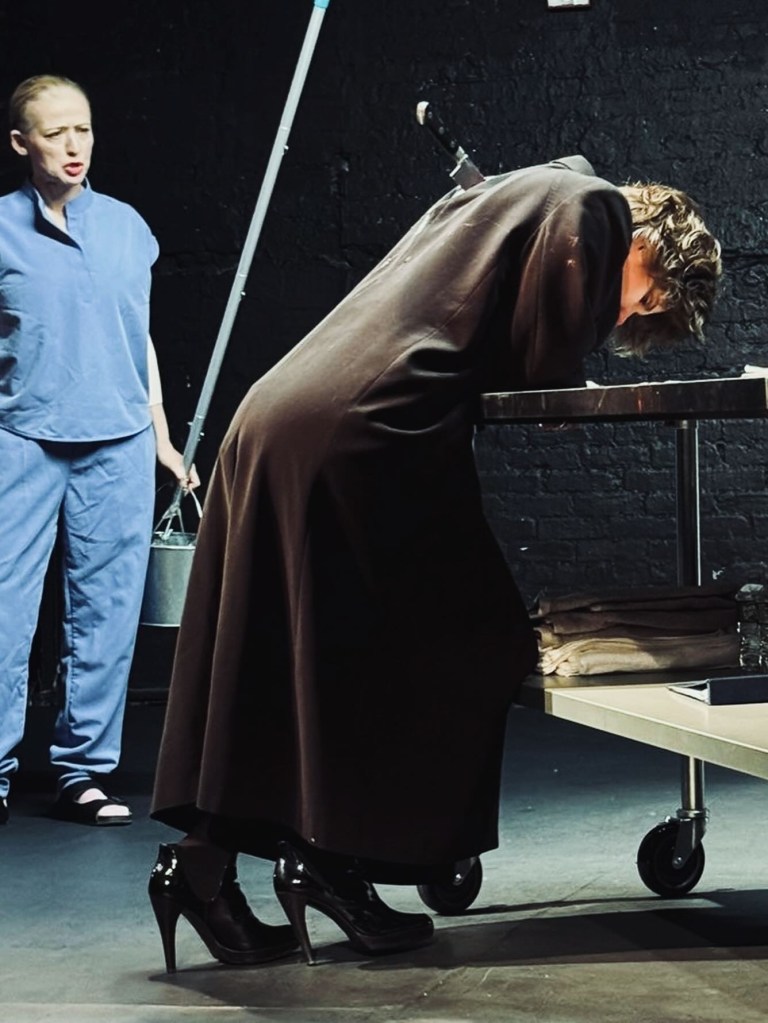
Thus Hava is now treated as the criminal rather than the victim, and she is subjected to verbal abuse, and psychological and physical torture by the vicious investigating police (Jeremy Goren and Giovanni Sandoval) that are purported to be helping her. When she has trouble breathing, the men say she can have the window opened—but she has to do it herself. During this latest ordeal the knife stays firmly in her back, a symbol of what the world at large has done to women. Zhdanova is incredible as a woman crying out to be seen as she fights physical and psychological agony, completely alone.
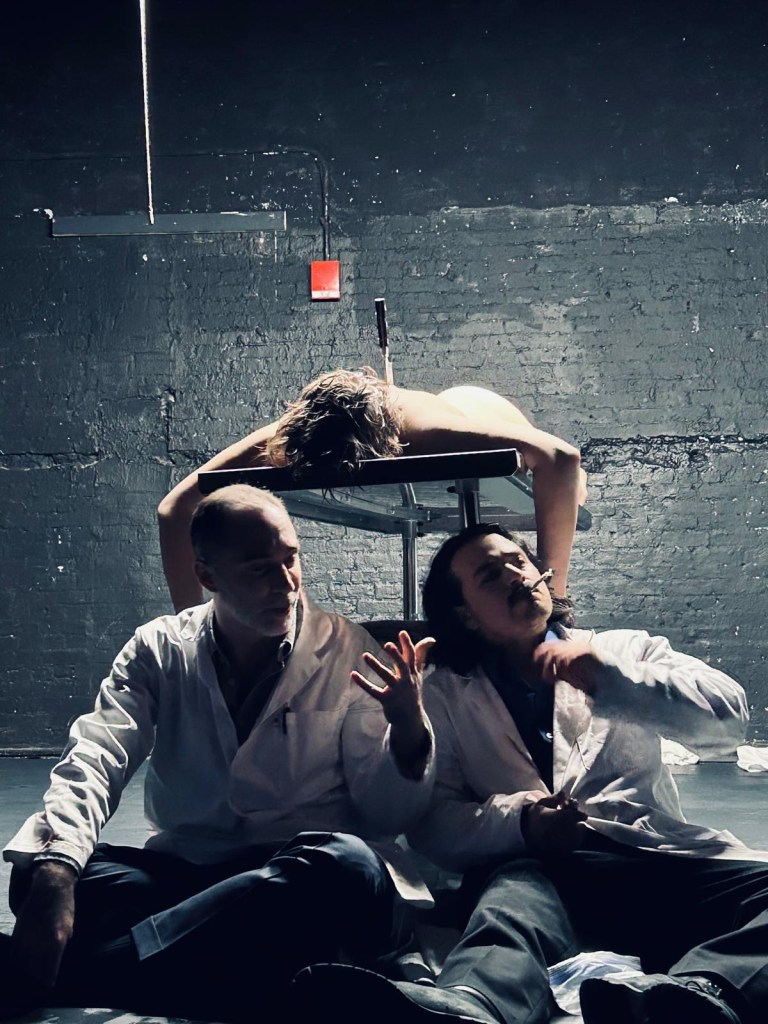
Hava’s story ends in a morgue, where even after death she is humiliated and treated as less-than-nothing; the attendants (Goren and Sandoval) roll her lifeless body around, and prop their clipboards and dictionary on top of her as if she were a table, as they consult the latter to come up with an appropriate but condemnatory name for her profession. And all the while, the knife remains. The only faint trace of compassion comes from Sandoval’s character, who literally takes a walk in Hava’s discarded shoes as he openly hopes someone will come to claim the body.
The scenes each end with a musical performance, powerfully punctuating what we’ve witnessed. Zhdanova joins Edelstein and Rina Brown in the fierce “Dead Men Don’t Rape” by Dellah Bon, and “I Love You Like an Alcoholic” by the Taxpayers. Edelstein also performs a chilling monologue as “Eyeless/Mindless Girl,” narrating her own story of being condemned and humiliated at the gynecologist. She describes herself as a “child of the roadside motel/gynecological clinic…all grown up with her very own souvenir” (now 8 weeks after conception), and muses that daughters who do bad things make their mothers sick.
“Boys can be lost in the dark, nothing happens to them,” she observes. “Girls can’t be lost in the dark because they’ll give their mothers cancer.”
Brown later narrates a first-person tale as the “Girl of the Two Hundred-Year-Old Cobblestone,” another woman brutalized and left for dead—abandoned like an empty bottle, broken on the cold streets.
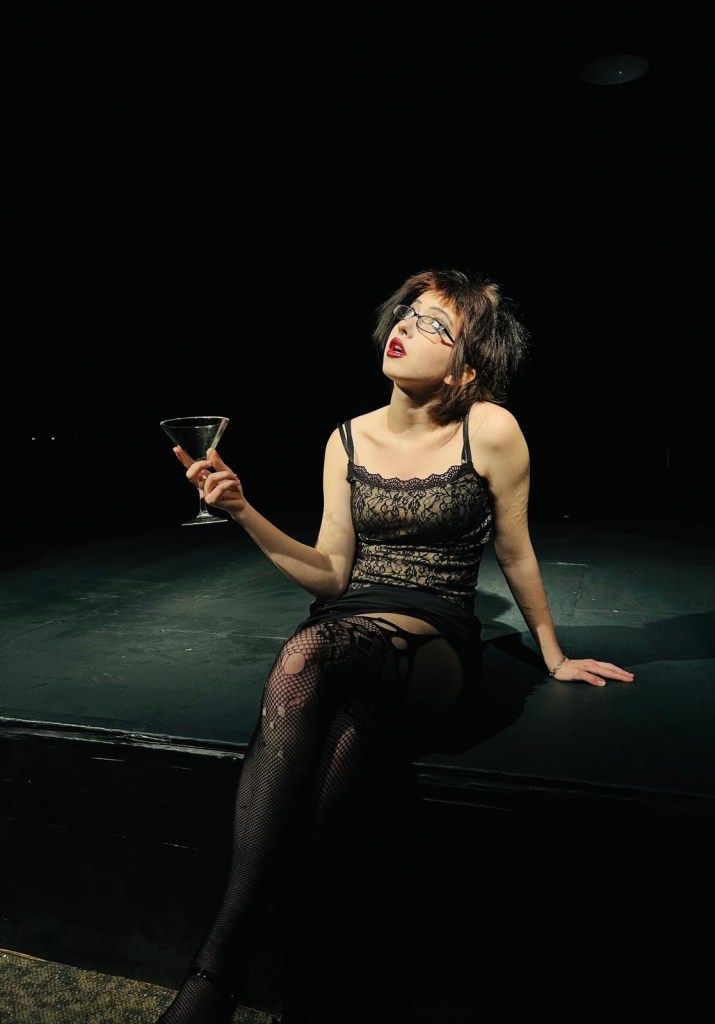
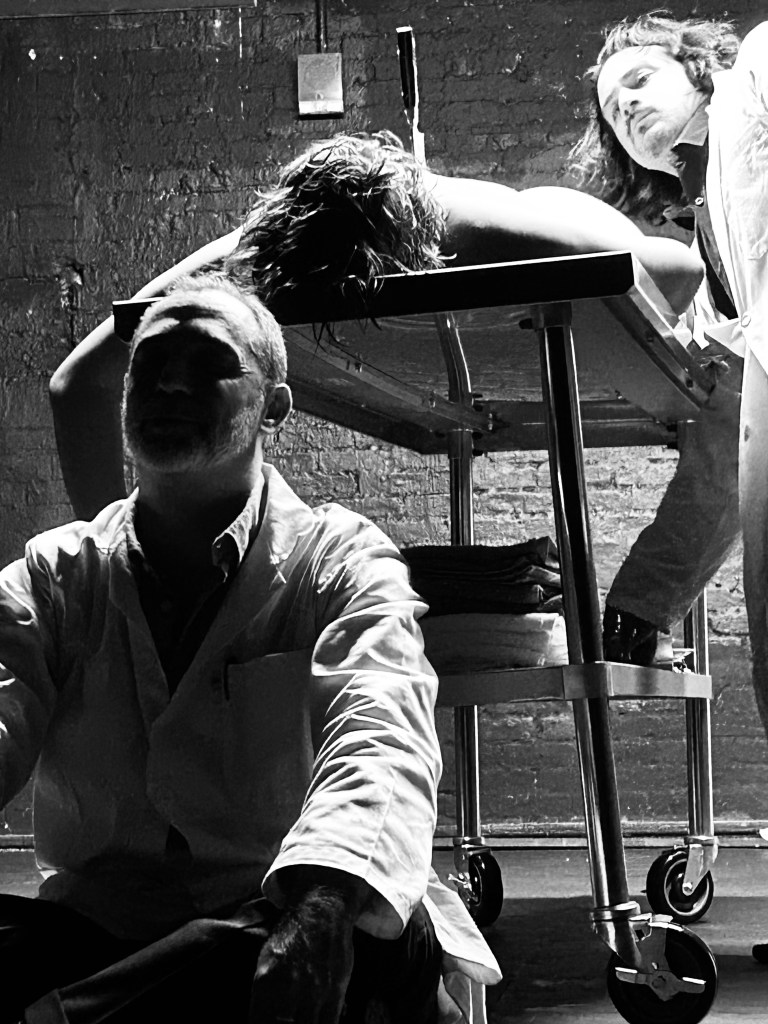
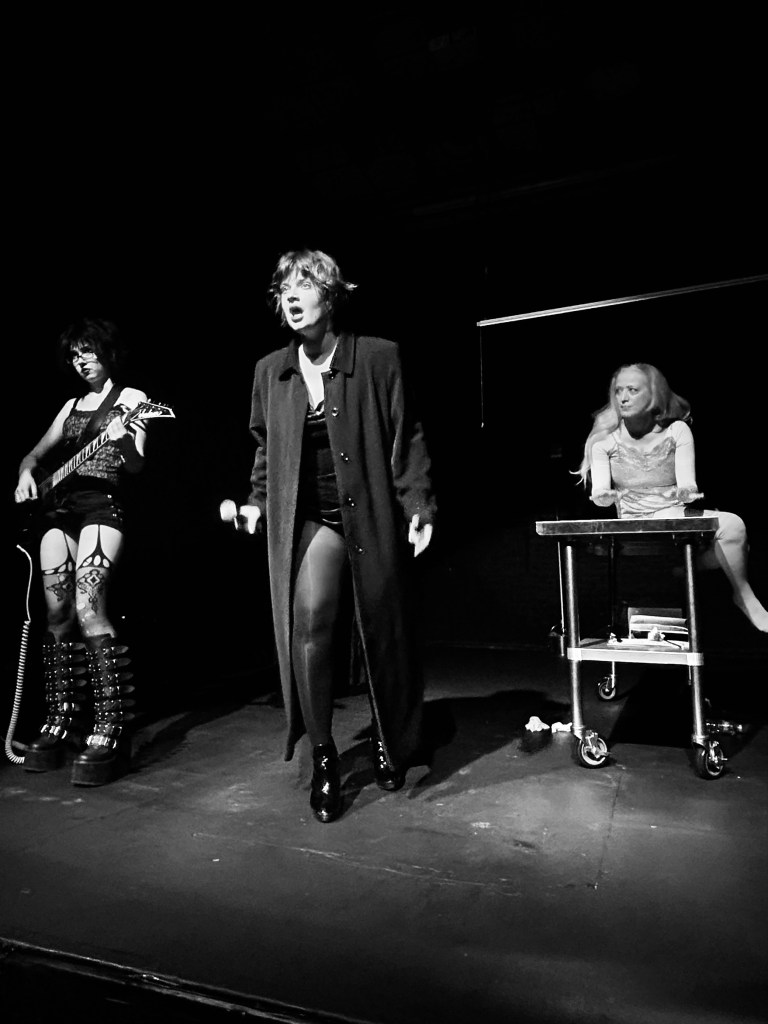
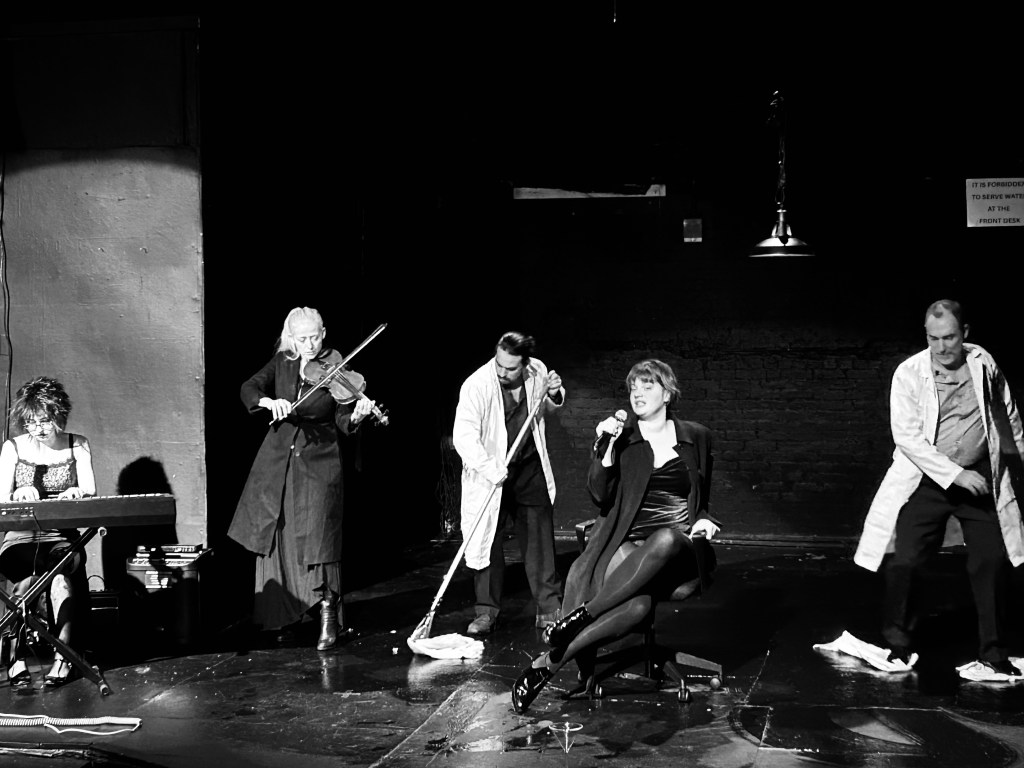
Diana Zhdanova
Stiffler is a stunning work that drives home the barely concealed contempt that our patriarchal society has for women, and devastatingly reminds us that its tragic, operatic story is not in any way removed from our current reality.
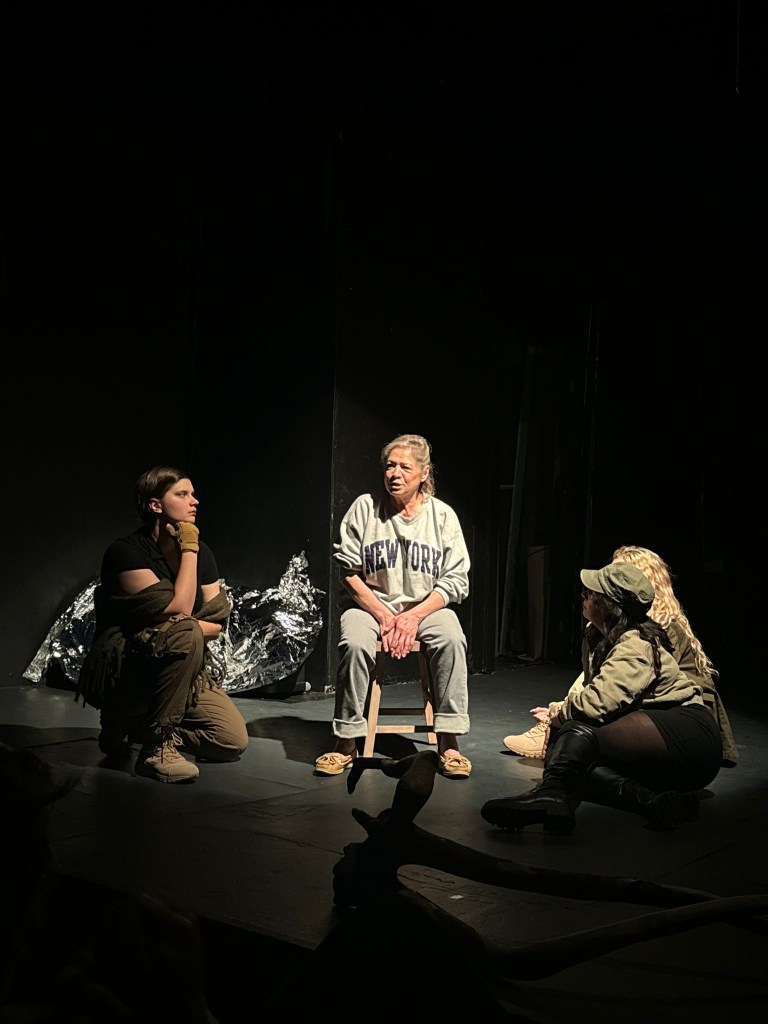
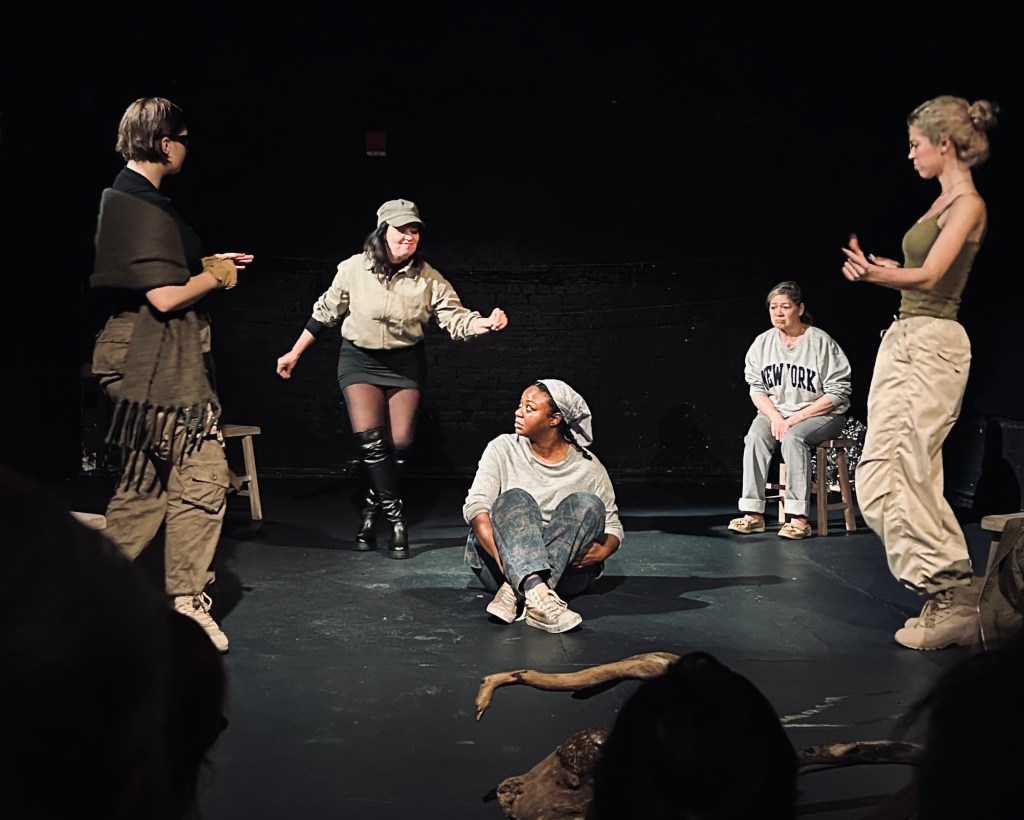
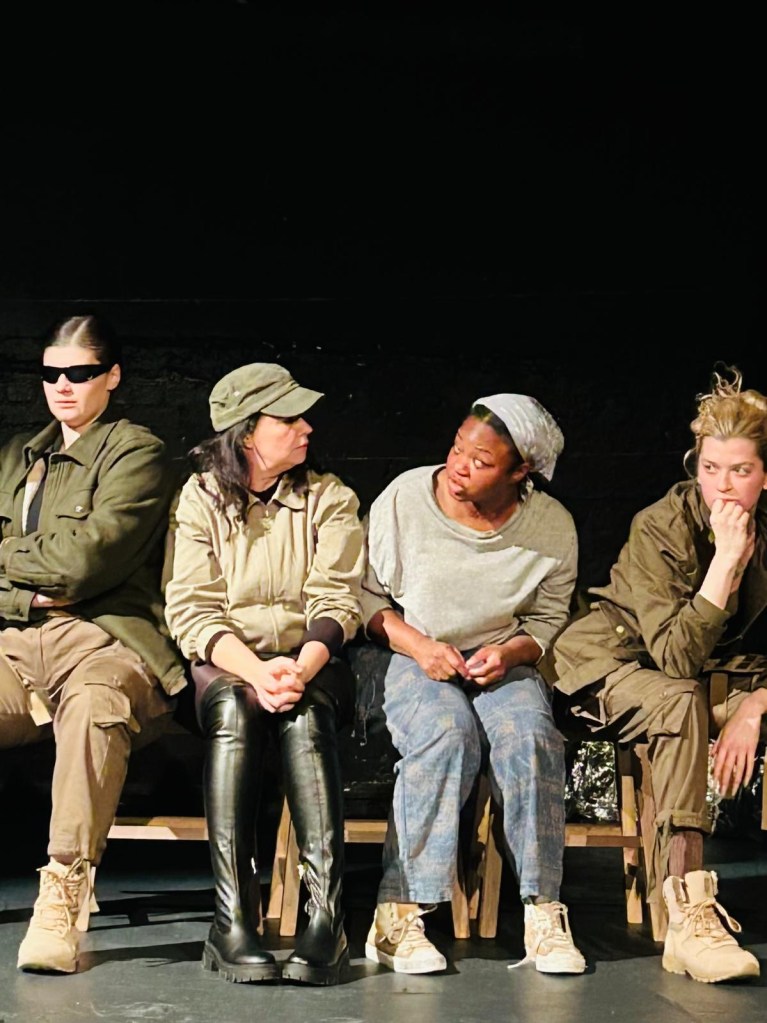
Bounds, by award-winning Italian playwright Tino Caspanello, was written in 2012 in a response to the recent migrant crisis in Europe. It was a time when thousands perished; others made it to freedom only to be rejected; and some were trapped in camps where they remain to this day. The playdepicts five women brought together in this frightening predicament, adrift on an unnamed shore. Two are military guards, two are migrants; the fifth woman is both.
One woman (Tia Cassmira) poignantly and powerfully sings of her desire and intention to simply have her own chair: “to sit on, to rest on, to dream on, for traveling, for laughing…a chair to sing my song on, for looking at the stars, for taking the air, for collecting rain…a chair to hide from death.” But the one actual chair among the women, symbolically, has to be “won.”
The group try to occupy themselves but grow restless. “There must be something else we could be doing,” sighs one woman.
“Like what?” says another. “We talked, we ate, we kept quiet, we slept and then we slept again, and now we’re playing. What more can we do?”
“What if we dance?”
Thus begins a brief moment of pure joy, where the women come together as one in transcendent movement, but also are likely imagining themselves as individuals on the road to freedom. But in the end, they know only one of them can ultimately be “chosen,” with the imagery of the childhood game “Musical Chairs” again illustrating the brutal point that most of them won’t make it.
Zhdanova, Cassmira, Simona DeFeo, Wilemina Olivia-Garcia, and Greta Rustani are the women; the actors hail from diverse backgrounds and experiences, and seeing them passionately joining together to tell the story of migrants, and to champion not only their rights but the rights of women everywhere, is intensely moving and inspiring.
These two crucial works are directed with compassion and extraordinary skill by Kathryn Mederos-Syssoyeva.
“There are a couple of really key issues which ground AnomalousCo theatre company,” noted Mederos-Syssoyeva while introducing the plays. “One is elevating, foregrounding, giving space to the perspectives of women…in some cases the writers themselves are women; in other cases it means that the plays are female-centric; and the second equally important thing is foregrounding the voices of immigrants, migrants, and also very broadly, voices from abroad interesting in bringing to New York a very strongly global, international, multicultural perspective through the work that we do. I don’t think we’re alone in thinking this increasingly urgent with every passing hour, if not every passing minute.”
Learn more about the Company’s work at Anomalousco.com/.

A Delightful Double Feature at the Delightful American Theatre of Actors, reviewed by the Delightful Jim Catapano
A Delightful Double Feature at the American Theatre of Actors
Tango in the Rockies and The Rubber Band Company Bow at the Beckmann
The 50th year of the American Theatre of Actors continues to go from strength to strength, as evidenced by the coupling of two compelling new works to kick off November. Tango in The Rockies is written and directed by ATA Artistic Director James Jennings, while The Rubber Band Company is written and directed by Meny Beriro.

Following the strains of Marty Robbins’ classic ballad “El Paso,” Tango begins as a two-hander, as mature couple Albert (Tom Crouch) and Millie (Ginger Kipps) seek refuge in a cabin from an as-yet unseen adversary that has been following them in a car after Albert’s initial evasion of them. “They want us to sign some papers,” is all Albert knows, revealing that they had come to the house and “tried to force me to do it there”. Millie’s imagination regarding their identity runs from bill collectors, to CIA, and even ICE “They’re certainly trying to get something from us,” says Albert, “and I don’t know what the hell that can be.” When Millie realizes that the cabin is the one they used for a family trip years ago, some emotional memories come to the surface—skiing with the kids, cooking them eggs, and Albert’s time as a baseball player.
“Time slipped by so fast,” she says sadly, noting that their time with family is now near non-existent.
“And now here we are, trapped in a cabin,” Albert sighs. “Victims of the current times.”
“Victims of our age,” Millie adds.
“Maybe victims of some AI program that we’ve had nothing to do with,” Albert speculates ominously, grounding their dilemma in the here and now.
Crouch and Kipps display fantastic chemistry as they go from reminiscing wistfully to raging against the forces outside their makeshift sanctuary. Their depiction of a decades-long relationship facing perhaps its greatest crisis is stunningly genuine. The sound design is well utilized to create the sense of impending doom, until Millie bravely goes outside and returns with Charles (Josh Bartosch), an amiable real estate agent who reveals what he needs from the couple. The denouement of the tense situation is well played and functions as a deep exhale followed by a laugh of relief. The three actors deftly deliver Jenning’s witty dialogue, and it’s all held together by his expert direction.
The Rubber Band Company is heralded by the sound of the Spinners’ hit “The Rubberband Man”, setting a very different mood in a very different setting, but continuing the darkly humorous vibe. It’s the office of the company revealed in the title, and it opens on veteran rubber band salesman Bill (Ken Coughlin) shooting samples of their product across the room. He’s having no luck getting them in the cup he hs placed to catch them, which he dismisses as “too small.” He later decides to blame the rubber bands instead: “They don’t stretch like they used to.”
The losing streak is interrupted by Ann (Stephanie Andujar), a young go-getter who is trying to make her way up the ladder and feels she has the perfect idea to propel her.
“I knew when I walked in here that rubber bands was the reason God put me on this earth,” Ann announces with a very amusing earnestness.
The uneasiness of the reluctant colleagues makes for some very funny dialogue; equally humorous is the varied types of rubber bands the company boasts about. There are the 540s, that are supposed to glow in the dark (but don’t, according to a customer Bill speaks to on the phone). “They just ruined some family’s whole camping trip,” Bill tells Ann, explaining that he sent them a free box of the renowned “1280s” as an apology.
“That was a bit extravagant on your part!” says Ann.
She suggests that Bill pick up the dozens of rubber bands on the floor as their boss Connors (Derek Donnellan) is coming to give an important presentation on a “whole new concept” that she expects will be a game-changer. The agitated (and apparently unwell) Bill dismisses the notion: “He wouldn’t know a 1280 from a 1690! The only knew concept he’s going to introduce to this company—is Chapter 11.”
The tension is further escalated when Tom Luke DiCostanzo arrives as Gary, the slimy lead salesman trying to get his Westchester territory back from Ann (despite having famously remarked “f—ck Westchester” in a previous rant). His kid has asked for free rubber bands for his whole class, but to Gary’s sadness a “new policy change” makes this impossible.
The slick and money-minded Connors finally arrives to give his presentation. After announcing the new line of “industrial-strength super-sized outdoor rubber band—the 2559,” he adds that he wants to give the brand an identity by selling rubber bands in only one color—but it’s not the one that Ann envisioned, to her hilarious chagrin.
The situation escalates to a series of fight sequences, initially comedic and of course involving some of the company’s famed product. These are fantastically executed by the cast under the excellent direction of Fight Director Juan Carlo Castillo. Then it takes an unexpected very dark turn that will you leave you gasping, and yet is the perfect ending to the piece and a strong indictment of power-grabbing and greed. You’ll neber look at a rubber band the same way again.
It all makes for enjoyable evening (or afternoon) of theatre and is another triumph for the ATA in its golden anniversary year.
Tango in the Rockies and The Rubber Band Company run together at the American Theatre of Actors through Nov 16, 2025.
A Jim Catapano Review: Don Nigro’s In the Wilderness of Demons Blends Ukranian Legend with Life’s Great Questions
Myth and Reality Meet in the Darkness
On a very dark and very stormy night, a folklore enthusiast (Tatyana Kot) appears at the Ukrainian cottage of a mysterious woman (Iryna Malygina). The isolated home deep in the woods is shared only by faceless dolls, represented by 4 dancers who lurk silently, witnesses to the unfolding events. Thus begins a journey In the Wilderness of Demons, a compelling tale by the acclaimed Don Nigro—one steeped in Ukrainian legend, mixed with dark wit, suspense, a touch of horror, and a deep dive into the existential.
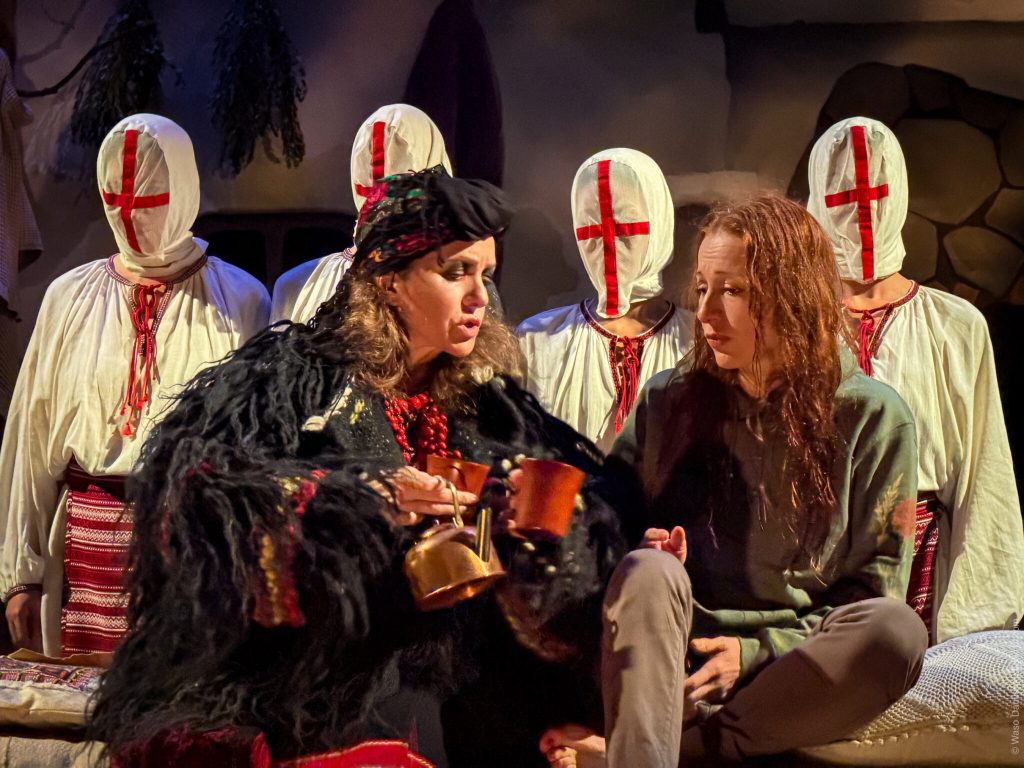
“What a night to be creeping around out there,” the woman scolds. “It’s pouring down ice cubes…there is a raven frozen to the pump!” (An image that immediately sets the tone.)
When the folklorist explains she got lost in the woods, the woman turns philosophical. “Getting lost on the way is all part of God’s plan,” she responds. “He wants us to get lost, to sell us outdated roadmaps and compasses that don’t work.” She admits that she thought the folklorist might have been one of the dead, “who come out of their graves this time of year…they try to get back in their houses.”
The eccentric, assertive cottage dweller pivots between doting on the soaked and shivering folklorist and appearing to intentionally frighten and unsettle her. She dries her feet, gives her slippers owned by her late grandmother, serves her tea, and makes up a bed for her—only to turn around and tease her by suggesting she’ll be sharing it with a dead rat.
“I’m joking,” she says. “He’s probably just sleeping—or pretending to sleep.”
Malygina (who also produced) is outstanding at bringing the witch-like character to life, creating a mystery and unease that is palpably felt by the audience. She is also intensely philosophical and astute, as when the folklorist mentions her realization that “all men are a—holes.”
“Men think we’re vampires,” notes Malygina’s character. “The thing they want most is to drive a stake into us…but it’s the men who prey upon us. I had my fourth husband buried face down to make sure he didn’t come back after he died.”
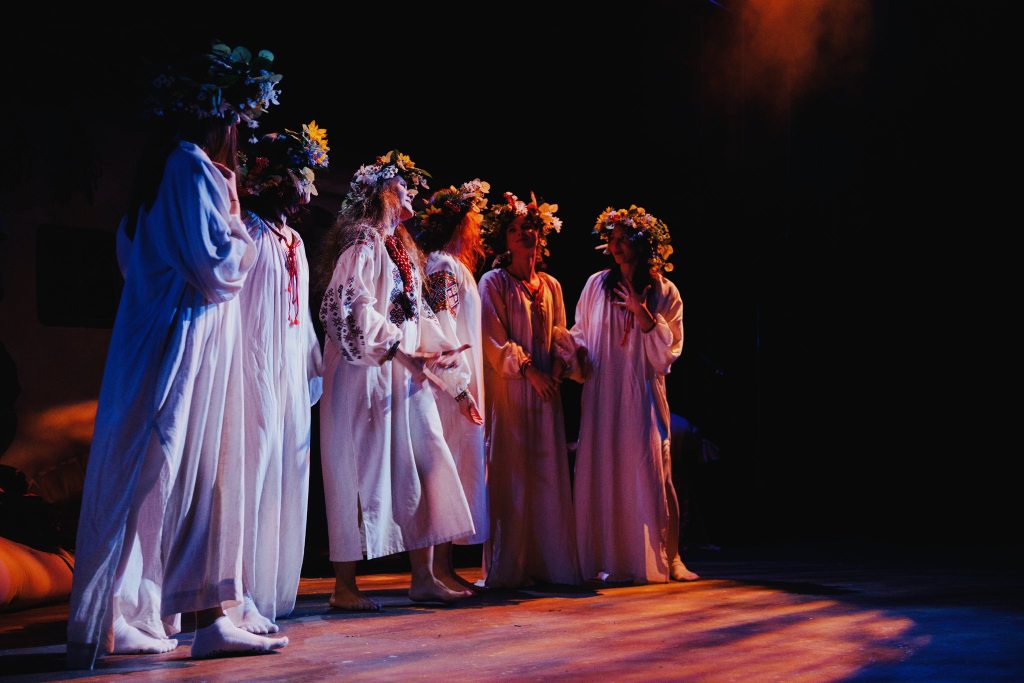
Along the way we get an education in the Ukranian folklore our protagonist is so intrigued by, as we learn of the Rusalka, the legendary water nymphs who would lure men to their deaths under the sea, and the demonic Chorts.
“Do you really think that they exist?” asks the folklorist.
“Define exist,” says the woman. “Does a dream exist? It always seems real when it’s happening in your head…but then you wake up…or, you wake up into another dream.”
The set design by Lesya Verba is a perfect complement to the unfolding thriller, allowing the faceless dolls to wander about menacingly, always watching (and judging? As the woman suspects). “It’s their job to make guests feel uncomfortable so they leave.”
As the audience identification character, Kot is fantastic, imbuing the wary folklorist with an intense existential dread, as she begins to suspect that she has been in this strange place before.
The soundscape adds further atmosphere with thunder, whistling winds, and ticking old-fashioned clocks. The woman explains that her father liked to collect broken clocks—in her opinion, as a way to control time.
The disturbing atmosphere is pierced mid-play by an exhilarating dance sequence, where our protagonists join the no-longer faceless dolls, all transformed into Rusalka-like spirits. Following this cathartic interlude (which makes the folklorist wonder what’s in the tea), the story ends (or begins?) with a shocking revelation—and an invitation…
In the Wilderness of Demons is a magical, frightening, funny, and exhilarating experience that celebrates both Ukrainian culture and legend, and women’s empowerment.
The production is expertly shepherded by director Eduard Tolokonnikov, with expert choreography by Kot. The doll dancers are Shoko Tamai, Marija Obradovic, Evelina Pristovsek and Iren Kamyshev.
In the Wilderness of Demons is a production by MOVA Theater Company. It runs at The John Cullum Theatre at the American Theater of Actors through 11/02/25. Learn more at movatheater.com/.
 Arts Independent