
Home » Posts tagged 'fiction'
Tag Archives: fiction

Jim Catapano reviews Anne L. Thompson-Scretching’s Home Is Sweet Sorrow: “A Masterful Conclusion to a Momentous Family Saga”
The War That Never Ends
Home Is Sweet Sorrow is a must-see and a devastatingly powerful third chapter in the Blood trilogy, which also includes the highly regarded A Lesson in Blood and A Long Way From Home. Anne L. Thompson-Scretching’s prolific pen and deft direction again triumph in a depiction of an American family wounded by war and the trials of the mid-20th Century.
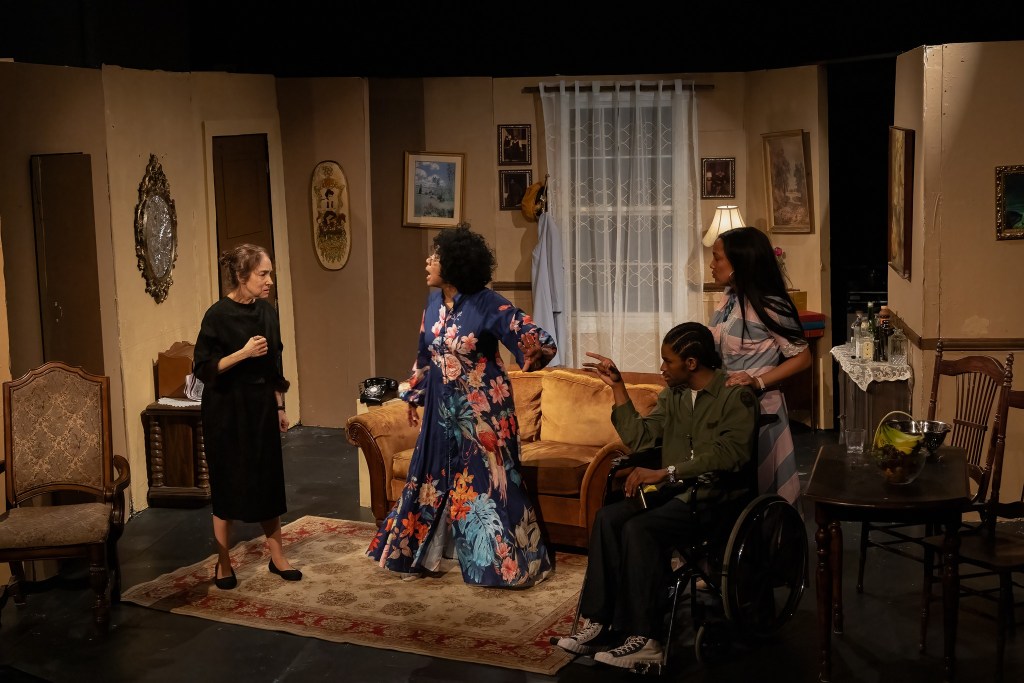
It is 1971, and PFC Willie Taylor (Laquan Hailey, reprising his role from A Long Way From Home) has come home from Vietnam. He is in a wheelchair, but his prognosis to walk again is good. Though he may soon regain his mobility, the damage to his mind is far less likely to ever be healed. He is a stranger to himself and to his family: mother Shanna (Gina McKinney), father Jacob (Kevin Leonard), and sister Luella (Joy Foster). Non-blood cousin Ceola Red Feather (Carrie Johnson) is the daughter of Oceola (the lead character of A Lesson in Blood); she has gone to school and now has medical training that she can help Willie with, and the two eventually begin the romantic relationship they were destined for. Rommell Sermons (Chester in A Long Way From Home) appears as Thomas Avery, a sergeant who visits to try to get Willie help for his PTSD.
That PTSD has shattered Willie’s personality and threatens his very sanity. After he arrives home (significantly not wearing his uniform), the mother he had missed so very much tries to help him navigate a tight hallway in his chair, and he snaps instantly and violently. He has developed a drinking problem—reaching for the bottle when the nightmares come (and they do, every time he closes his eyes), when the cars backfire like rifle shots, and when the flashbacks in his head threaten to consume him.
“I don’t know who I am or what I’ve done,” Willie despairs. “Them doctors, they only patched up the hole inside me and sent me on my merry way…sometimes when I wake up, I still feel like I’m dead. I can’t be the same person I was before I left here.”
Adding to his own trauma is that his friend and fellow PFC Jamie Lofton perished under suspicious circumstances in Vietnam. Jamie’s devastated mother Abigail (Elly-Anne Ehrman), aware of the secret that was her son’s burden, has come looking for answers from Willie, and a painful revelation adds even more horror to the already devastating effects of a war that no one wanted.
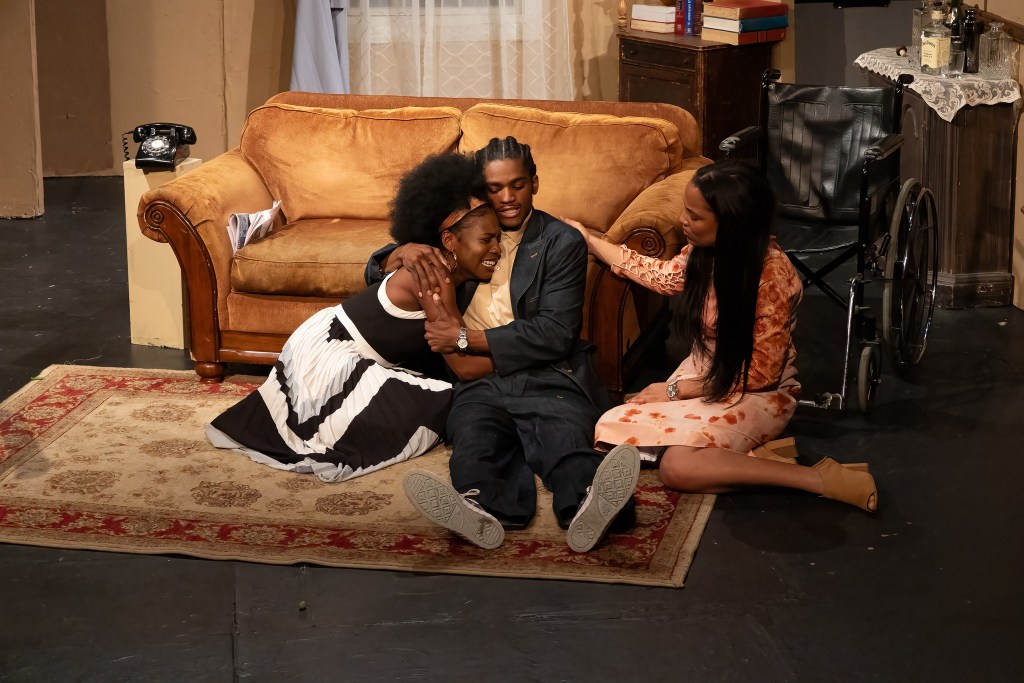
The relationships among the characters are so well-realized and so well-acted, anyone watching Home is Sweet Sorrow could almost feel like they truly are in the home of the Taylors in 1971. They share many a meal and many a drink, namecheck All in The Family and Ed Sullivan, and truly give the sense of having been through a great deal together. Each and every one of them feels like a real living and loving human being, and so their happiness and pain are felt viscerally. We find joy in their warmth and connection, thus making the moments when that connection is severed all the more painful to witness. Willie’s devotion to his Shanna is damaged by what he sees as her inability to grasp what he’s been through, and she is left terrified, forced to walk on eggshells in fear of the traumatized shell that her son has become. Shaina and Abigail, ostensibly friends, clash over their grief and their individual need to honor their sons, one who is gone physically and one emotionally. Jacob plays peacemaker and is anguished that any returns to normality are short-lived. Anne L. Thompson-Scretching’s powerful dialogue and skillful world-building are astonishing, as is her bravery in reminding us that resolutions and closure are not to be found in the brutal reality that Home Is Sweet Sorrow so poignantly depicts.
Layton Lamell, Patricia Fields and Sania Hyatt are Swings for Willie, Shanna, and Luella respectively.
Presented as part of the African American Playwrights Initiative, Home Is Sweet Sorrow is performed at the Sargent Theatre at The American Theatre of Actors through March 29, 2026.
Jim Catapano examines A Legend Restored with the ATA production of Kenthedo Robinson‘s The Lewis & Clark Expedition: The Story of York
Kenthedo Robinson‘s The Lewis & Clark Expedition: The Story of York Returns a Hero to His Rightful Place in American History
“If a man can become a slave, a slave can become a man.”
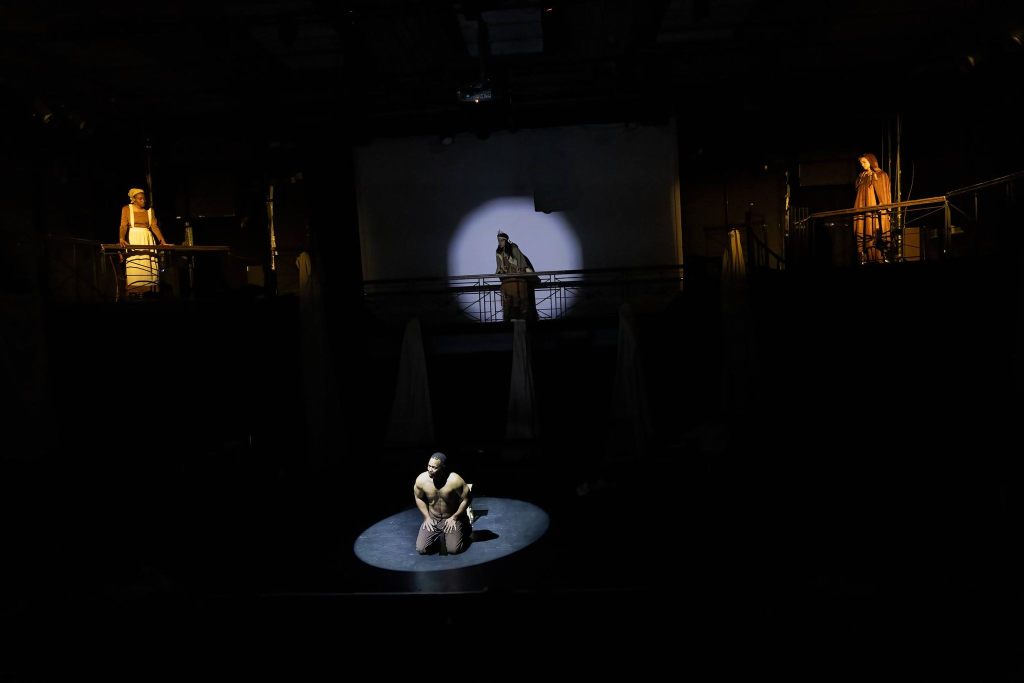
In 1804, a country in its infancy was determined to explore the uncharted land that would soon be part of its territory. The treacherous and dangerous journey was famously undertaken by Meriwether Lewis and William Clark, but few know of the man who accompanied them and was utterly essential to the success of the quest: York, an African-American enslaved by Clark.
York is portrayed with astonishing power and authenticity by Rommell Sermons, who we see discussing his being chosen for the expedition with his wife Reeva (Marsha St. Julien; portrayed later in the run by Zsay Moore). Reeva is deeply unhappy with the idea of York going into certain danger with his white oppressors. Though York is loyal to Clark (Nicholas Dodge) because “Clark is loyal to him”, Reeva is much more skeptical about the nature of the relationship, a foreshadowing that will lead to a devastating revelation at the end of the play. Indeed, Clark seems somewhat benevolent, especially in contrast to Lewis (Travis Bergmann). Lewis here is seen to be a raging bigot, seething with contempt for York and threatening him with the whip at every opportunity (despite not having the “authority” to do so), something his “master” Clark has never done. Lewis is out for fortune and glory while Clark purports to be more nobly motivated by the chance to grow and unite the young country.
“I hate you because you exist!” screams Lewis at York, forever paranoid that the slaves and the indigenous people they are about to displace will rise up against their oppressors. Though Clark appears to respect and even care for York, he still refers to him as property and refuses to agree to give him his freedom, only mumbling that he will “revisit” the notion upon their return. It becomes clear that Clark is only good to York because he needs him.

And York is indeed crucial to the treacherous journey, his intelligence, skills and strength proving indispensable. The indigenous tribes encountered are fascinated by York, having never seen a person of African descent before, astonished that his dark “paint” doesn’t wipe off. After a tense face-off with Chief Cameawaite (Kevin Leonard), it is shown that his very presence provides essential assistance to the expedition in their dealings with the Native Americans they encounter. The indigenous peoples are portrayed by a talented cast including Sebastian Arteta (Chief Anapae), James Oliver (Chief Tall Crow), LeeSandra Moore (Sonomo/Stage Manager) and Ms. D (Highshee/Assistant Stage Manager). As the journey continues, events are cleverly linked by Clark’s correspondence with his back-home brother John (Alex Silverman).
York saves the day at every turn, becoming an icon to the native tribes but taken for granted by his own team, who still see him as property. He cares for a very ill Clark; he looks after Sacagawea (Natasha Sahs), an indigenous teenager who assists the expedition and travels with them all the way to the Pacific Ocean; and even saves his nemesis Lewis from a bear attack, in a sequence that is fantastically realized through excellent choreography and sound design (Lighting/Sound Liam Riordan).
Lewis’ utter lack of gratitude and his doubling down on his profound hatred is a chilling reminder of the depths of white supremacy that are still in evidence over 200 years later.
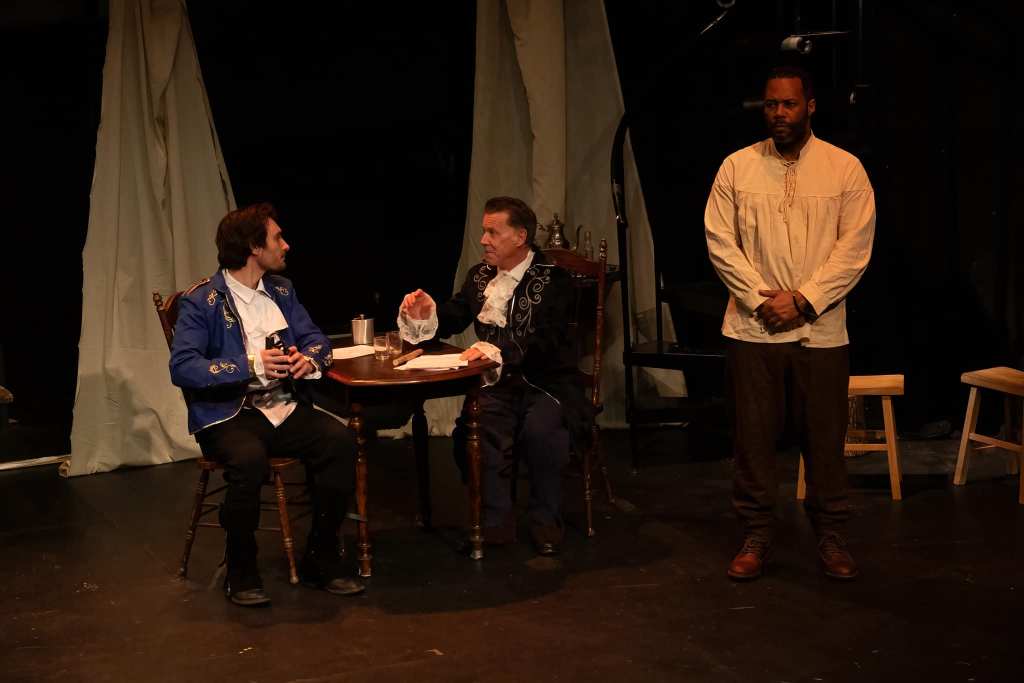
York’s spiritual encounter with the One From The Mountain Top (Jimena Rosas) gives him agency, self-worth, and a sense of purpose that will prove crucial upon his return from the journey, as the play concludes in a sequence of horrifying but powerfully depicted events that reveal the fates of Lewis and Reeva, and destroy any notion of Clark being a good man—sometimes evil and bigotry is more subtle than that displayed by the raging Lewis (a fact that those watching in 2026 need to stay aware of). This is where the production is at its most moving, as York refuses to be dominated and oppressed any longer; his self-actualization as he rises from the horror around him creates a triumphant resolution.
Written and directed by Kenthedo Robinson (with assistant direction by Andre Minkins), The Lewis & Clark Expedition: The Story of York sets history right, putting the man who was known as “The Bear God” back into the narrative, pulled from the obscurity where the history books had unfairly but predictably relegated him. The three leads, and the always exceptional Leonard and Sahs, are a wonder to watch, abetted deftly by a supporting cast that gels beautifully and is clearly moved by the important story they’re here to tell.
“It is better to walk into freedom.”
The Lewis & Clark Expedition: The Story of York runs at the John Collum Theatre at the American Theatre of Actors through February 22. It is presented as part of the African American Playwrights Initiative at the ATA.
PHOTOS BY DAN LANE WILLIAMS

When the Truth Is Found To (Possibly) Be Lies: Jim Catapano attends David Gutierrez’ RETRACTION
David Guiterrez’ Masterful RETRACTION Looks at Real Life Events that Nearly Damaged a Movement for Change
“If your mother tells you she loves you… check it out,” is the first statement we hear from journalist Wendy Denison (Renata Friedman), ambitious reporter for the popular magazine Heart Rhythm. This stunning declaration immediately sets the tone of uncertainty and discomfort that shadows RETRACTION, a compelling and timely work by David Gutierrez.
The title refers to what Rolling Stone actually found itself having to print in the aftermath of an article they published in November 2014. The piece, “A Rape on Campus,” claimed that a woman had been attacked by several fraternity members as part of an initiation ritual. Discrepancies in the account of that evening led to doubt and finally discredit, leading to lawsuits, and ultimately threatening the very cause the magazine was attempting to champion.
RETRACTION goes backwards and forwards in time to tell a fictionalized version of this event—at the center of which is Lacey (Rachel Resheff), a college student at Carolina Atlantic University. Lacey’s revelations regarding her attack at the Frat House draw the attention of Wendy, who wishes to bring awareness to the epidemic of sexual assault against women, and is supported in this endeavor by her editor Zack (Nathaniel Stampley). Wendy also speaks to Gillian (Bella Serrano), a fellow student and assault survivor, who is a steady presence during the rollercoaster of events that follow. Wendy publishes Lacey’s story in Heart Rhythm, and the article is scathing in its condemnation of the failure of University authorities to address the issue. It’s enough to create widespread outrage and make a Pariah of Carolina Atlantic’s Dean Gasso (Shannon Dorsey), who begins getting death threats for her perceived failure to protect her student.
But it is soon learned that the usually thorough Wendy was blinded by her passion for the cause, and made fundamental mistakes in her reporting. The recollections of the friends that Lacey had run to on the night of the alleged attack do not align with the events as portrayed in the piece. Chief among these is Travis (Charlie Webb), who had failed to reciprocate Lacey’s feelings right before she went on the date with the junior that ended in the attack she describes; along with Chris (Carson McCalley) and Melissa (Eliana Rowe), Wendy had failed to fact check with him or get any information from or regarding the alleged perpetrators. Lacey claims abandonment by all her friends, accusing them of words and actions that they later vehemently deny Add to that a competing reporter Victor (also McCalley) who suspects that things are not what they seem, plus Lacey’s subsequent admission that she felt her story “was true at the time,” and the situation implodes to the point where the movement to identify and stop rampant sexual abuse is in itself in danger.

The cast are collectively compelling in these difficult roles, with Friedman and Resheff anchoring with intensity and a command of their difficult roles. All the others deftly play dual parts…a podcaster, reporters, and lawyers who are all woven into the storyline. The stark set design by Julian van Haubrich complements the production well, with its white office tables, towering street lights and rolling chairs that at one powerful moment are rolled across the stage by the actors under the harsh, interrogation room -like lighting (by Adrien Yuen).
Under the expert guidance of director Caroline Fairweather and with the skillful writing by Guiterrez, RETRACTION handles an extremely delicate issue with sensitivity and without condemnation. It is never implicitly stated that Lacey is lying; it’s made clear in the narrative that PTSD could be affecting her memory of what was a very real assault. Were there 6 guys or 4? Was it dark or could she see them? Was the blood on her dress not there at all, or just too subtle for her friends to notice? Though the real truth (or at least the truth within Wendy and Lacey’s fictional story) is never arrived at in RETRACTION, what we know to be at fault here is the careless reporting that was certainly in evidence in the real life situation, which impacted many lives and ended up putting the safety of women on campus and beyond at further risk. It is a powerful and necessary reminder that these issues must be handled carefully and delicately, both in art and in life. RETRACTION doesn’t provide easy answers, but it will leave one determined to ask the right questions.
RETRACTION runs at the The Shiner Theatre at The Sheen Center for Thought and Culture through January 31, 2026.

Jim Catapano attends A Powerful Double Bill for Dark Times
AnomalousCo’s Stiffler and Bounds Resonate at the ATA
In December of its 50th year, The American Theatre of Actors was host to two astonishing one-act plays that take on the oppression and abandonment of women and the plight of migrants—two of the most important issues facing the world as it sees out 2025.
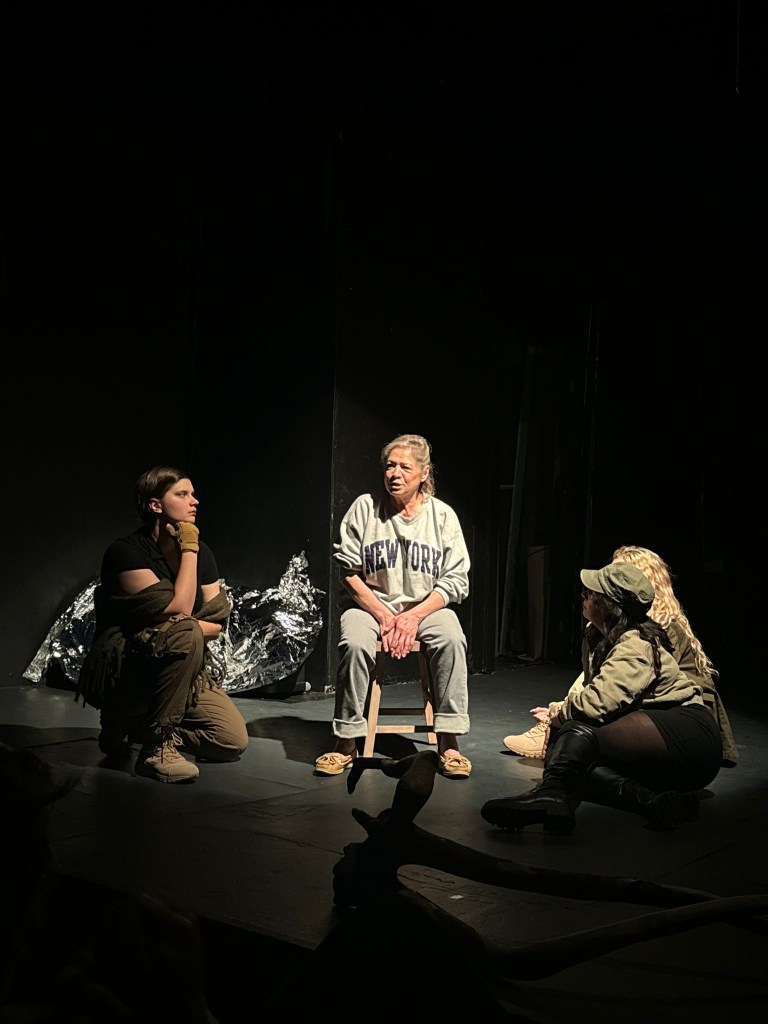
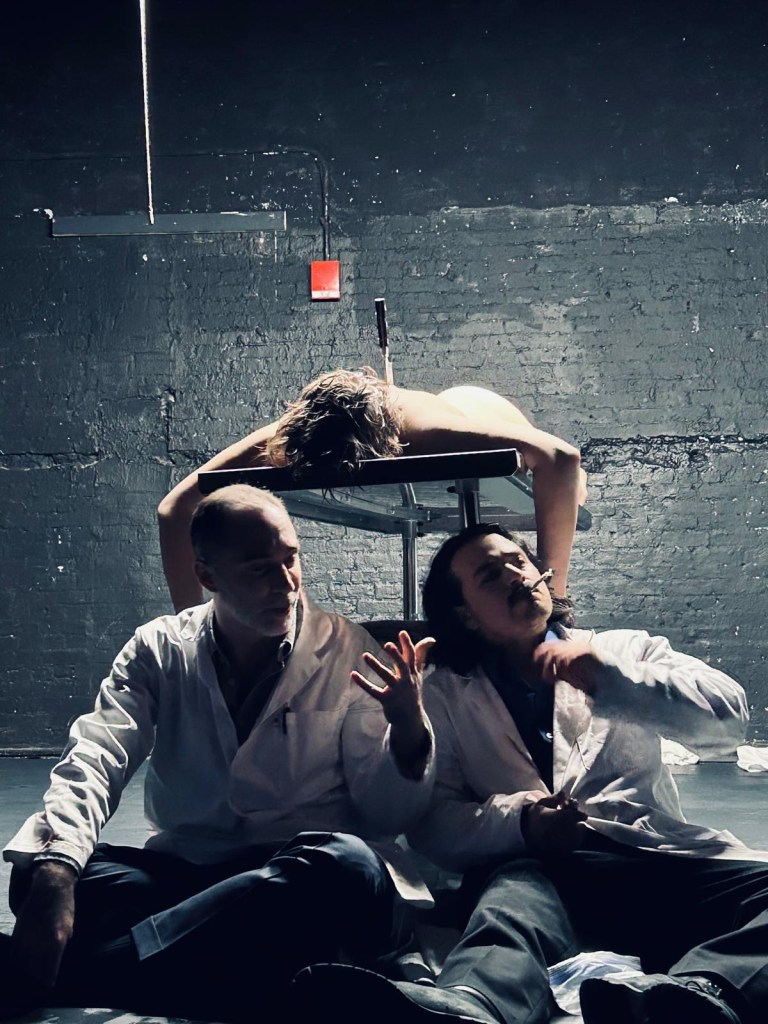
Stiffler is the work of award-winning Kosovan playwright Doruntina Basha. It is not an easy watch in any way, but as a study of systemic oppression, violence against women, and femicide, a completely crucial, unmissable one. Though some laughter emanated from the audience during moments of dark humor, the world of Stiffler is bleak and brutal; the stark set and harsh lighting complement the hopelessness of the situation and the cruelty of most of its characters. Diana Zhdanova gives an astonishing, heartbreaking performance as the mortally wounded Hava, desperate for help but finding only callousness and contempt, ridicule and revulsion. Stumbling into the ER after feeling a sharp pain and getting knocked out at a motel, Hava gets little compassion from the nurse on duty (Ylfa Edelstein); when Hava begs for water the nurse points to the sign above her station prohibiting it from being dispensed to patients; and later when she gets sick at the desk from the pain, the nurse makes her clean up the vomit herself, tut-tutting that she didn’t try to do it farther away.
“I’m sorry for the state you’re in,” sighs the nurse before noting in the same breath, “there’s some (vomit) left in the corner.”
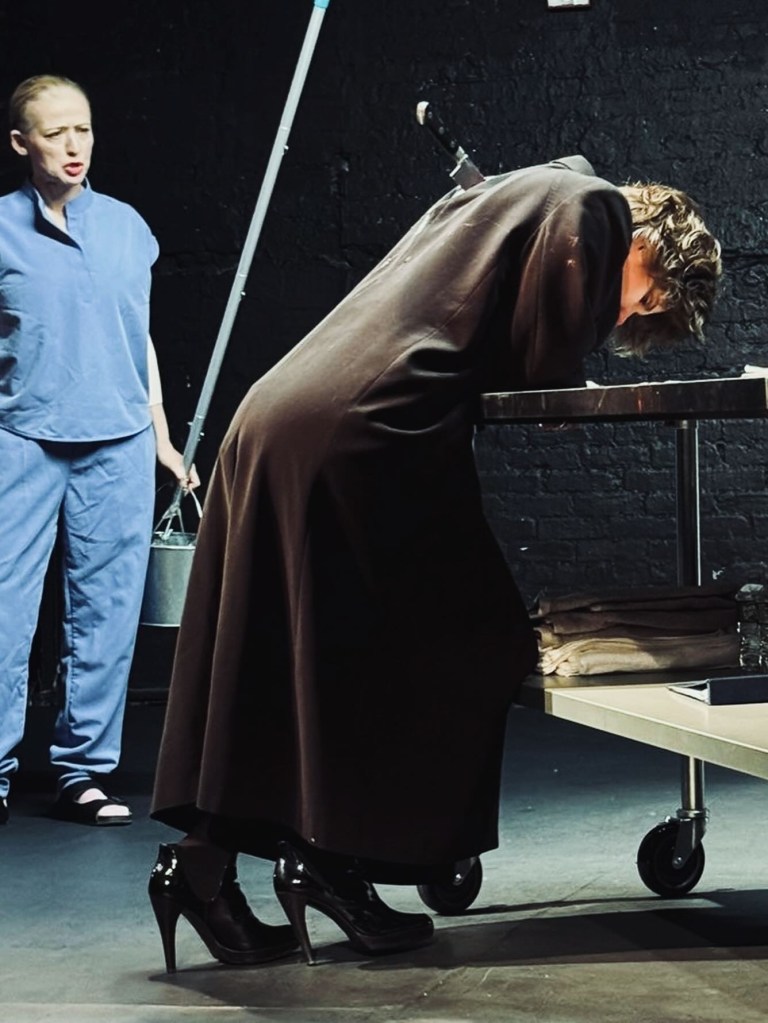
When the nurse sees the huge knife sticking out of Hava’s back she’s more interested than concerned, and concedes to let Hava see a doctor…after she’s signed the necessary forms. This lack of empathy for human life—particularly that of a woman, coupled with the callous dedication to procedure, places Stiffler squarely in our own reality. The contempt for Hava among the people she encounters in her most desperate hour grows as it is revealed she is a sex worker, and those in authority deduce that she “must have done something to provoke” her client into attacking her.
“You and your kind paint a bad picture of us,” seethes the nurse.
Thus Hava is now treated as the criminal rather than the victim, and she is subjected to verbal abuse, and psychological and physical torture by the vicious investigating police (Jeremy Goren and Giovanni Sandoval) that are purported to be helping her. When she has trouble breathing, the men say she can have the window opened—but she has to do it herself. During this latest ordeal the knife stays firmly in her back, a symbol of what the world at large has done to women. Zhdanova is incredible as a woman crying out to be seen as she fights physical and psychological agony, completely alone.
Hava’s story ends in a morgue, where even after death she is humiliated and treated as less-than-nothing; the attendants (Goren and Sandoval) roll her lifeless body around, and prop their clipboards and dictionary on top of her as if she were a table, as they consult the latter to come up with an appropriate but condemnatory name for her profession. And all the while, the knife remains. The only faint trace of compassion comes from Sandoval’s character, who literally takes a walk in Hava’s discarded shoes as he openly hopes someone will come to claim the body.
The scenes each end with a musical performance, powerfully punctuating what we’ve witnessed. Zhdanova joins Edelstein and Rina Brown in the fierce “Dead Men Don’t Rape” by Dellah Bon, and “I Love You Like an Alcoholic” by the Taxpayers. Edelstein also performs a chilling monologue as “Eyeless/Mindless Girl,” narrating her own story of being condemned and humiliated at the gynecologist. She describes herself as a “child of the roadside motel/gynecological clinic…all grown up with her very own souvenir” (now 8 weeks after conception), and muses that daughters who do bad things make their mothers sick.
“Boys can be lost in the dark, nothing happens to them,” she observes. “Girls can’t be lost in the dark because they’ll give their mothers cancer.”
Brown later narrates a first-person tale as the “Girl of the Two Hundred-Year-Old Cobblestone,” another woman brutalized and left for dead—abandoned like an empty bottle, broken on the cold streets.
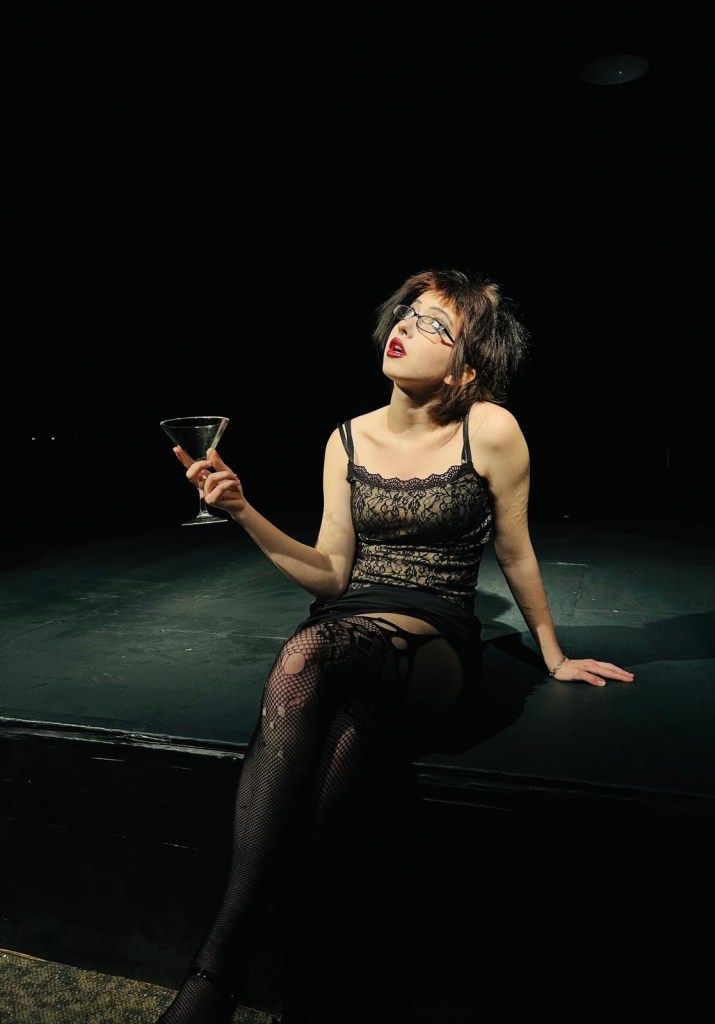
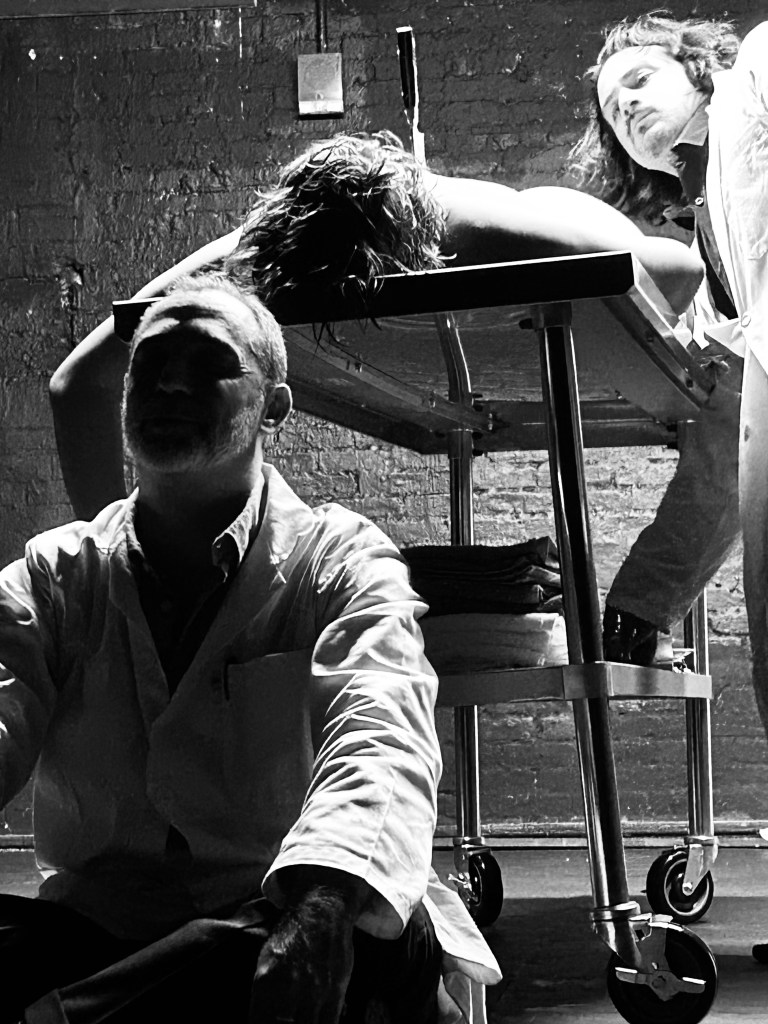
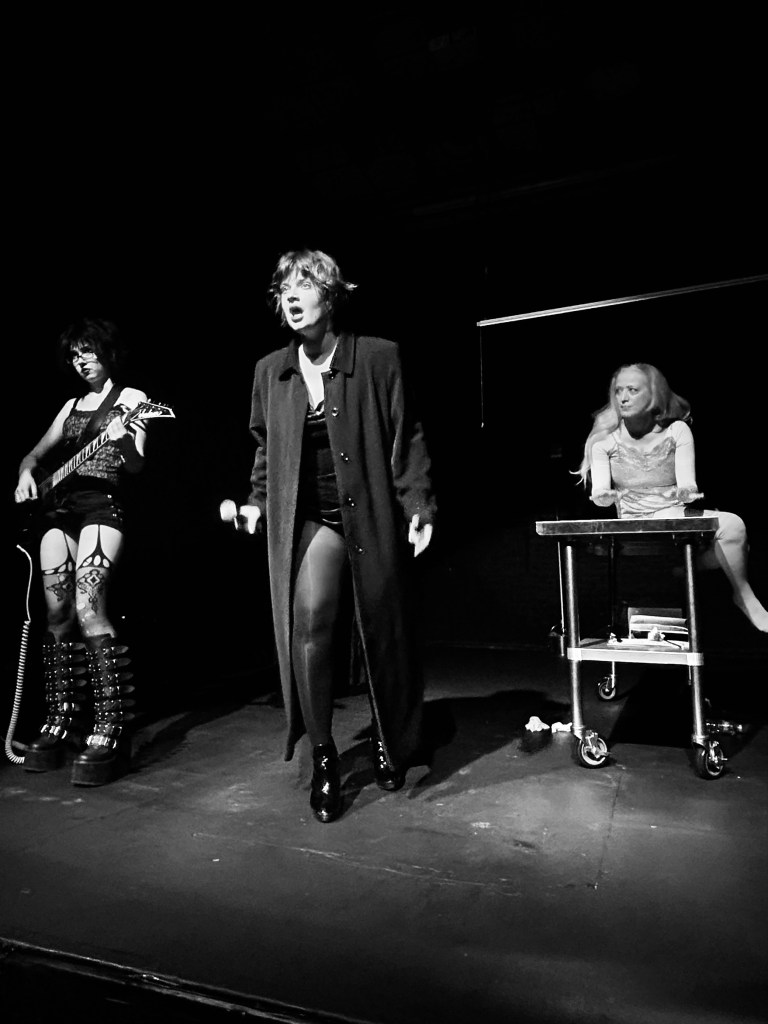
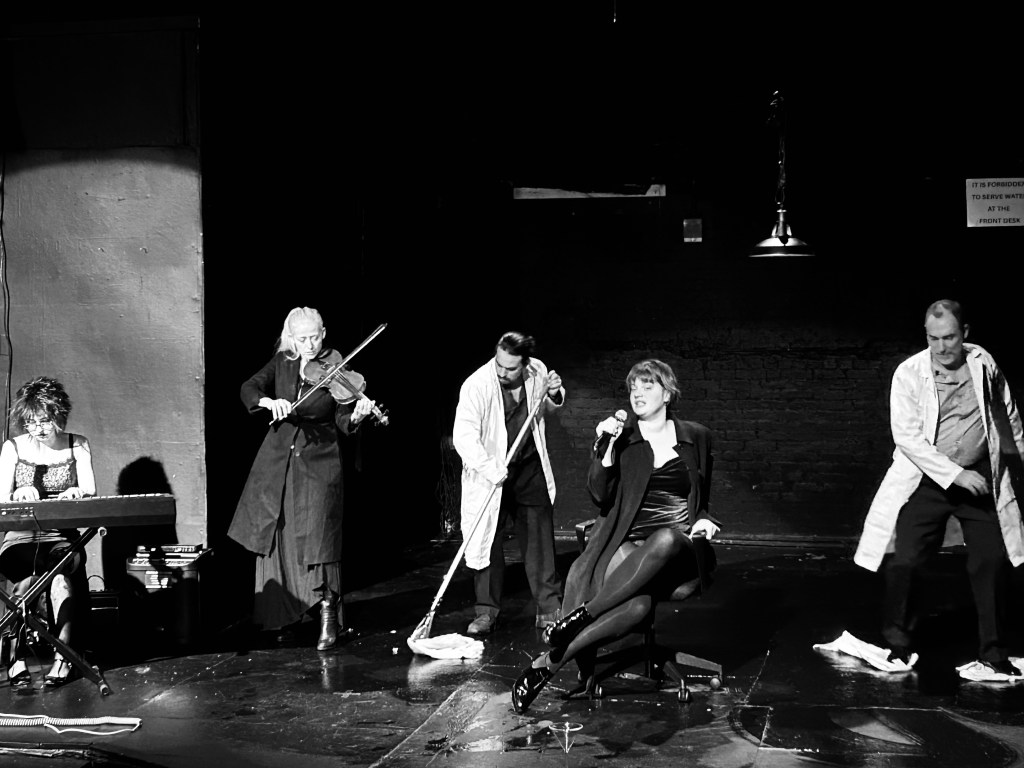
Diana Zhdanova
Stiffler is a stunning work that drives home the barely concealed contempt that our patriarchal society has for women, and devastatingly reminds us that its tragic, operatic story is not in any way removed from our current reality.
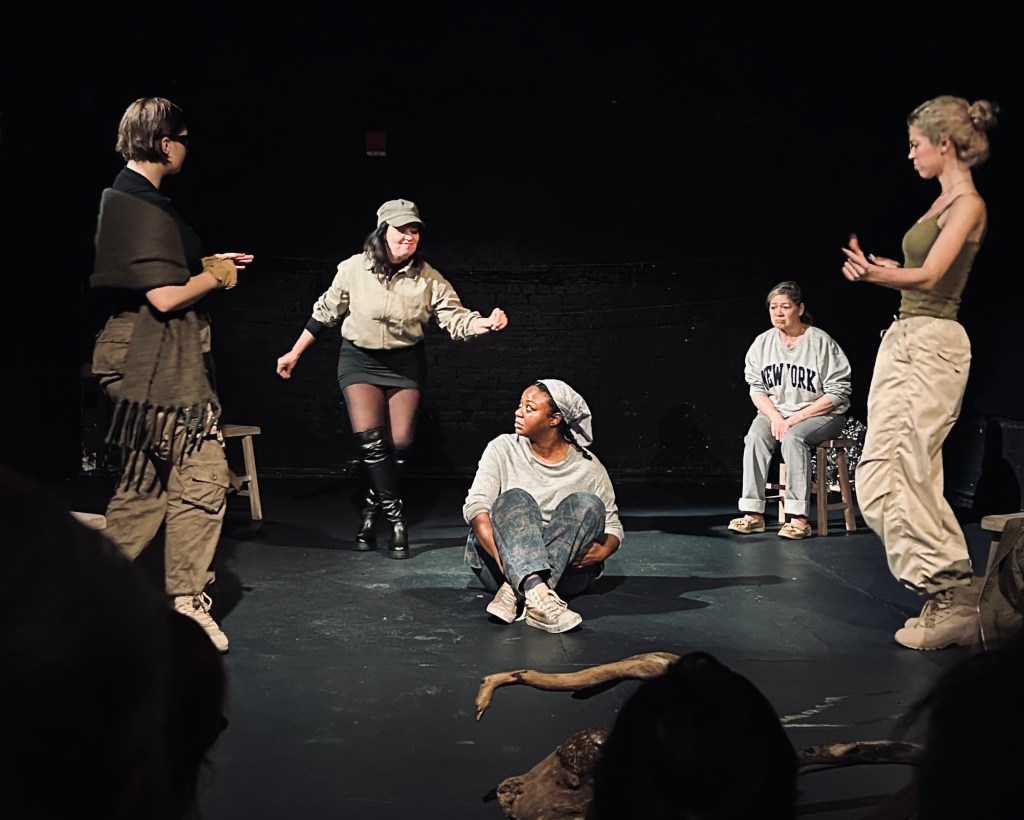
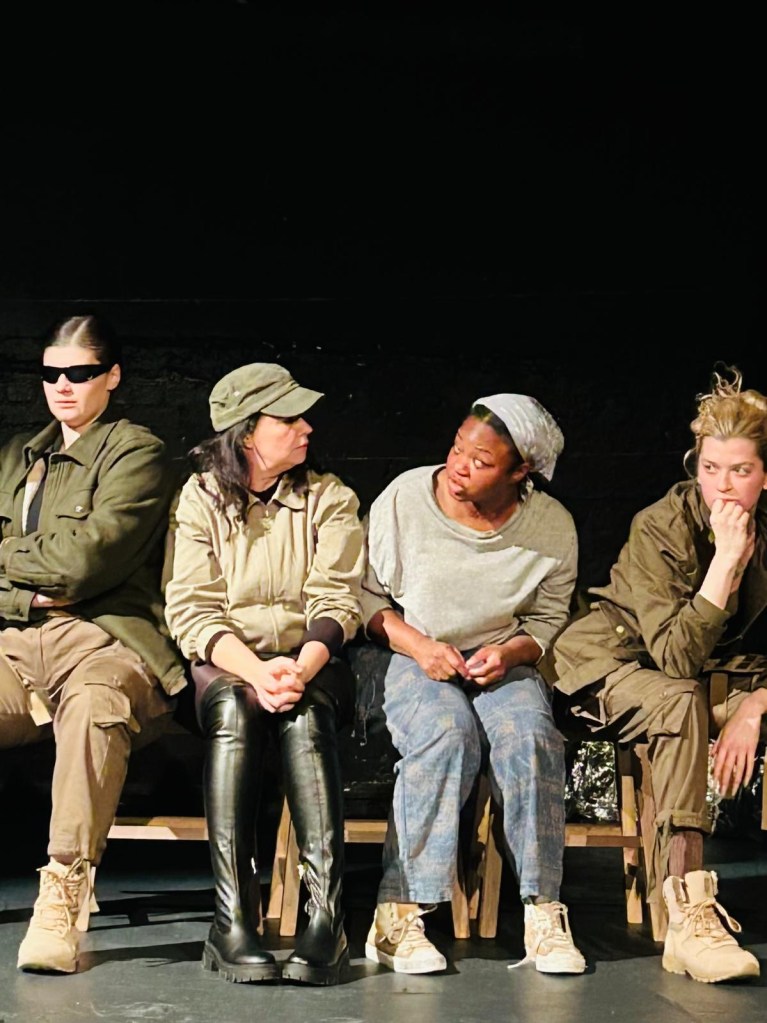
Bounds, by award-winning Italian playwright Tino Caspanello, was written in 2012 in a response to the recent migrant crisis in Europe. It was a time when thousands perished; others made it to freedom only to be rejected; and some were trapped in camps where they remain to this day. The playdepicts five women brought together in this frightening predicament, adrift on an unnamed shore. Two are military guards, two are migrants; the fifth woman is both.
One woman (Tia Cassmira) poignantly and powerfully sings of her desire and intention to simply have her own chair: “to sit on, to rest on, to dream on, for traveling, for laughing…a chair to sing my song on, for looking at the stars, for taking the air, for collecting rain…a chair to hide from death.” But the one actual chair among the women, symbolically, has to be “won.”
The group try to occupy themselves but grow restless. “There must be something else we could be doing,” sighs one woman.
“Like what?” says another. “We talked, we ate, we kept quiet, we slept and then we slept again, and now we’re playing. What more can we do?”
“What if we dance?”
Thus begins a brief moment of pure joy, where the women come together as one in transcendent movement, but also are likely imagining themselves as individuals on the road to freedom. But in the end, they know only one of them can ultimately be “chosen,” with the imagery of the childhood game “Musical Chairs” again illustrating the brutal point that most of them won’t make it.
Zhdanova, Cassmira, Simona DeFeo, Wilemina Olivia-Garcia, and Greta Rustani are the women; the actors hail from diverse backgrounds and experiences, and seeing them passionately joining together to tell the story of migrants, and to champion not only their rights but the rights of women everywhere, is intensely moving and inspiring.
These two crucial works are directed with compassion and extraordinary skill by Kathryn Mederos-Syssoyeva.
“There are a couple of really key issues which ground AnomalousCo theatre company,” noted Mederos-Syssoyeva while introducing the plays. “One is elevating, foregrounding, giving space to the perspectives of women…in some cases the writers themselves are women; in other cases it means that the plays are female-centric; and the second equally important thing is foregrounding the voices of immigrants, migrants, and also very broadly, voices from abroad interesting in bringing to New York a very strongly global, international, multicultural perspective through the work that we do. I don’t think we’re alone in thinking this increasingly urgent with every passing hour, if not every passing minute.”
Learn more about the Company’s work at Anomalousco.com/.

Jim Catapano, Danny, and Roberta, take a Plunge into the Deep End
John Patrick Shanley’s Stunning Two-Hander is Revived at the ATA
The renowned one-act playDanny and the Deep Blue Sea, which originallypremiered off-Broadway in 1983, is given a magnificent retelling at the American Theatre of Actors in its 50th season. Penned by prolific playwright and Oscar winner John Patrick Shanley (Moonstruck), it is an intense and compelling study of loneliness and human frailty, and the desperate desire to be seen and understood, forgiven and loved.
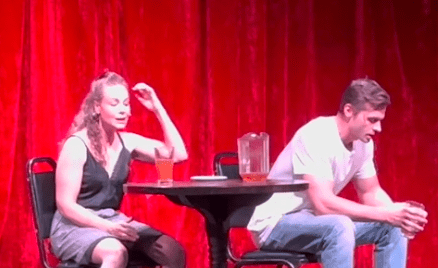
As observed in a holiday season where the “meet-cute” scenario is one of its hallmarks (pun intended), Danny stands out as a “meet-ugly”, and feels all the more real as a result.
Tashia Gates (producer) is Roberta, a divorced mom who encounters Danny (James Liddell) in a dilapidated, empty Bronx dive bar. Danny’s black eye and bruised hands indicate a recent altercation, creating an unsettling mood from the outset and the implication that he might erupt at any moment. He asks for one of Roberta’s pretzels and wants to leave it at that, but Roberta decides that she needs company and goes to sit with him, prompting Danny to act like a bear who’s been poked with a stick. Danny is bad news and makes no attempt to hide that, but Roberta is a woman in pain, trapped in her own life but yearning for some kind of human connection and normality that will release her from reality, at least for a handful of heartbeats.
“I can’t stay like I am,” she says to the only person she’s ever found who just might listen. “I can’t stay in this effing head anymore, I’ll go crazy.”
Danny is in a prison of his own. Feral and fearful and unable to connect to anyone except with his fists, he is in danger of losing his blue-collar job where his coworkers have labeled him “the beast.”
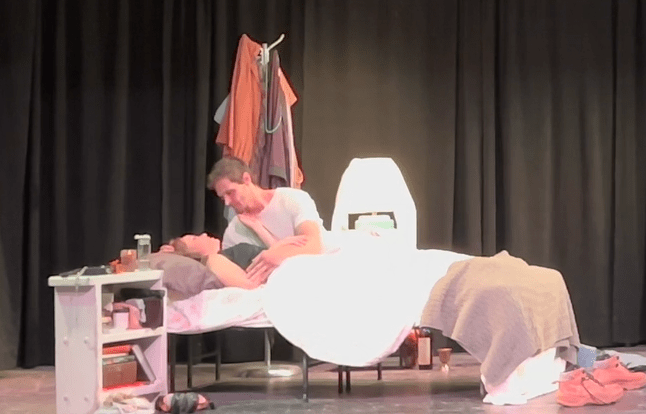
Undeterred, Roberta goes all in and tells this stranger of a dark, horrifying secret from her past, making Danny the only person who knows it and forcing a bond between them. Danny also suspects that his most recent actions may have led to tragedy, and the two debate the severity of their crimes and the depth of their pain until things get edge-of-your-seat frightening. As Danny grows more violent Roberta grows more defiant, winning the psychological and physical battle and convincing Danny to come home with her. She wants to play at “domestic bliss”, if only for one night; she even coaches her new partner in the art of being nice. But when Danny decides he wants the dream to become reality, they awake to a new nightmare that now imprisons them both.
Gates is astonishing as the broken Roberta, so trapped in her own mind that she wonders if prison would be a nice change of pace. She is looking for punishment, and then maybe forgiveness, though she suspects the latter impossible. Liddell is at turns terrifying and heartbreaking, a ticking time bomb who solves every issue with fighting, but crumples into a scared child as his unanticipated new lover takes him on a rollercoaster of emotions. These two damaged souls coming together in mutual desperation is portrayed compassionately and genuinely; and though most of us haven’t had Danny and Roberta’s experiences, Gates and Liddell make them relatable and even lovable.
Presented on a sparse stage and clocking in at a tight 80 minutes, this new incarnation of Danny and the Deep Blue Sea is a remarkable piece of work and a triumph for producer Gates and Liddell, who beautifully portray their characters in three dimensions. It is directed impeccably by Tessa Welsch, who makes brilliant use of the sparse surroundings to portray the dark, empty lives of the protagonists. And serving as executive producer along with Nick Milodragovich, this is Dr. Cynthia Hsiung’s first foray into theater, adding to an accomplished career in Film and TV. This iteration of Danny is a jewel in the crown for all involved.
Danny and the Deep Blue Sea is performed at the Sargent Theater at the American Theatre of Actors through December 7. It is dedicated to the memory of Maxine R. Gibbs.

Review by Jim Catapano: Tom Nemec’s A Cat in a Box Is a Moving Journey from Trauma to Healing
From The Storm to The Breeze
Comedian and actor Tom Nemec has a story to tell. It’s a deeply personal one, but judging by the response at The Tank theatre as he told it in his one-person show, one that resonates far and wide.
One of the first things Nemec does upon taking the stage is to invoke his childhood self, calling for his mom. “This is the way I entered my childhood home my entire life,” he explains. “Screaming ‘Mom!’ often before I even got through the front door.” He shows a picture of the home, in Lyndhurst New Jersey (“Gateway to the Meadowlands,” he quips before adding, “I hated that house.”)
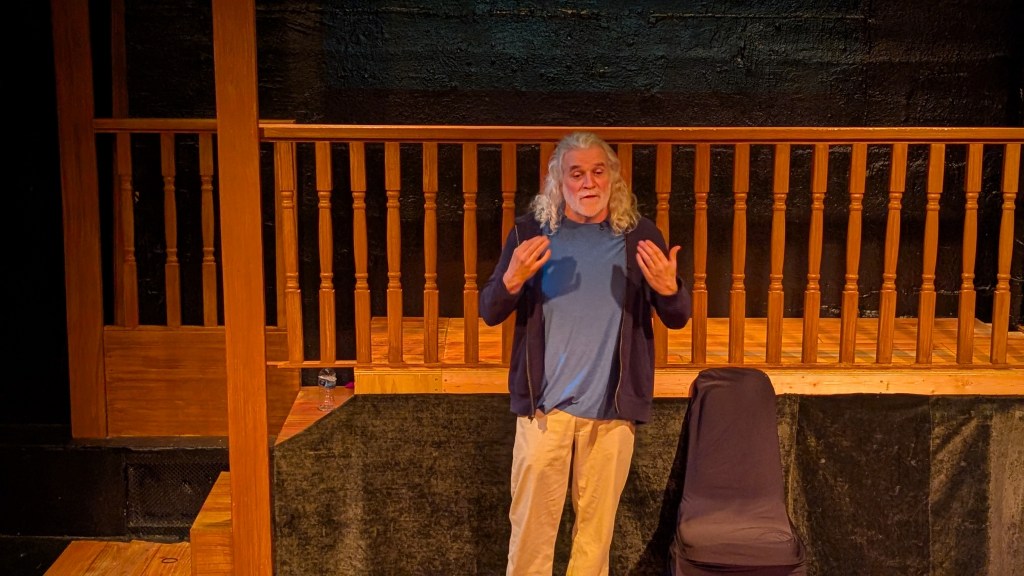
Over the course of an hour, A Cat in a Box reveals what happened in that house as Nemec and his three siblings grew up in the 1970s; and as these events unfold to us, Nemec bares his soul and shares his life. It was a childhood of dysfunction and isolation, of alcoholism and emotional and physical abuse.
Nemec warns early on not to expect any funny or sentimental anecdotes. “When most people hear the word ‘family’ they think love, stability, support,” he notes. “But that’s not the definition. That’s an ideal…My family was just a group living together as a unit.”
He hated the family photo that hung on the wall as much as the building that housed it, as it was a lie. “That was not us,” he observes. “But I continued to pretend it was for a long time.”
Nemec’s recollections are raw, and no punches are pulled. He speaks of nights that would end with Nemec’s severely inebriated father banging on the door, demanding to get in. “I’d just wish he’d wander off to someone else’s house and never bother us again,” Nemec admits. He is nostalgic for the Christmas holidays because “no matter how bad things were at home, everyone was in a slightly better mood (and besides I kind of believed in Santa Claus”). Though he concedes that any gifts were “more like an obligation wrapped in a bow.” He reveals sadly that his father’s addiction overshadowed his mother’s behavior, which was often accompanied by violence.
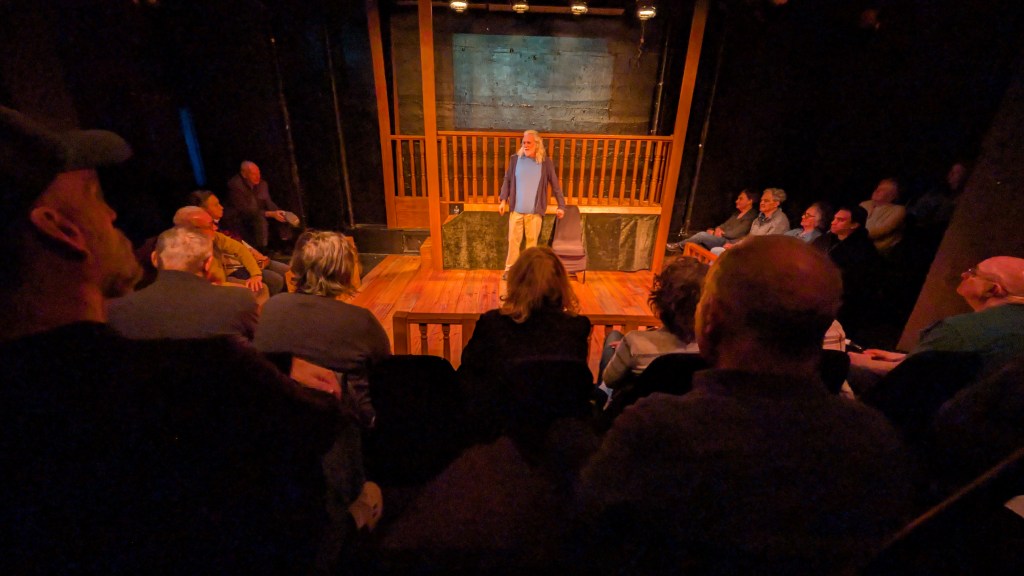
The audience was captivated by Nemec’s every word. One could almost picture themselves in that Lyndhurst home, so vivid is Nemec’s recollection and expert storytelling. The most moving part of his tale is his journey to adulthood and his path to reconciling with the past and conquering his own demons. He last entered that house in the year 2000, and is now not only an accomplished actor and comedian, but a teacher, helping young children make their first steps into life in a healthy, nurturing environment.
A brief Q&A after the performance revealed that many in attendance saw a lot of their own childhood in Nemec’s. For a moment, we were united in our collective experience, and in our resolve to heal; and to paraphrase Nemec’s powerful closing statement, “to see the breeze as our friend.”
A Cat in a Box is directed by Jim Mendrinos is performed at The Tank through November 8, 2025. For more information, visit https://thetanknyc.org/calendar-1/a-cat-in-a-box

Jim Catapano Wishes for Many Beautiful Hours at “Birthday Candles”
Noah Haidle’s Moving Masterpiece Birthday Candles is Beautifully Realized by the Lighthouse Repertory Theatre Company

Ernestine Ashworth celebrates her 17th birthday with her mom Alice (Alissa Wexler) as per family tradition—a homemade birthday cake. In between anxiously wondering about her place in the universe, she excitedly recruits Alice in helping her rehearse for her school’s production of “Queen” Lear, and then takes an annual turn at the height chart next to the front door of their Grand Rapids, Michigan home. That height chart will be filled with names we’ll get to know over the next century, and we’ll spend pivotal moments of those years with Ernestine and family, but always accompanied by the unseen but always felt antagonist of Birthday Candles: Time.
The idea for Birthday Candles came to Noah Haidle after his friend’s eight-year-old daughter asked her mom if she thought she had wasted her life. That question is also Ernestine’s first line, directed at herself, and thus a profound question from a child led to a profound play.
We get to spend Ernestine’s birthday with her over the course of 90 years; every year she bakes that same cake, and is accompanied by a version of her goldfish Atman (Sanskrit for “essence,”) always sitting in a bowl on the kitchen table. It is noted that goldfish only have 3 seconds of memory before they “start over”, and the other characters wonder if Atman is better off that way, as the years and the memories wear them down.
Kami Crary gives a magnificent performance as Ernestine Ashworth, whose life spans “one hundred years and ninety minutes concurrently.” With no makeup and only very slight costume changes, Crary embodies Ernestine at 17 and 107 and everything in between so convincingly it’s astonishing. Her castmates complement her wonderfully, going on their own life journeys filled with both sadness and joy, sometimes in the same scene.
The 17-year-old Ernestine is aggressively but charmingly courted by Kenneth (usually played by Kevin Russo, but in this performance played by producer Tony Chiofalo, in a stellar “one-night-only” turn). However, she instead marries Matt (Rian Romeo), and they have many happy years together until tragedy leads to a devastating betrayal. But, it also means that Kenneth may have a chance with Ernestine after all, if he waits long enough…
An ominous tickling clock accompanies blackouts that depict time moving forward. Sometimes the scene is brief and humorous (like when Ernestine’s daughter goes from College Senior to College Graduate to Unpaid Intern in a matter of real-life seconds, or when Matt is seen to give Ernestine the same gift three birthdays in a row). But sometimes the circumstances are heartwrenching (one short scene is just of the characters sobbing). Most scenes are longer, depicting poignant life-changing turning points. The fact that Ernestine lives for over a century means that tremendous sadness and loss are inevitable, and this casts a backwards shadow over the events of her life, even the happier ones. Ernestine is determined to keep her loved ones alive through her rituals, even if it means breaking into the house that she no longer lives in to bake that cake one more time, a full century after the tradition began—much to the chagrin of new owner Beth (Julie Lorson) and to the amusement of Beth’s domestic partner John (played by Chiofalo). “Ernestine: Age Eternity,” she introduces herself with pride.
Shea James plays Ernestine and Matt’s daughter Madeline (Maddy), who later wishes to be called Athena, and finally “Anonymous.” She is a troubled soul who is existentially perceptive, lending a perspective that complements the transitory nature of life that the play so keenly demonstrates. Stephen Anastasia is Billy, who rebelliously criticizes his parents for settling and selling out, only to have the same charges leveled at him by his own daughter Alex (Stephanie Curley) decades later. Billy is a musician who is heard practicing the Beatles’ “Let It Be” (a fitting song for this play), and his rendition gets better and better over the years. Liz Spencer is hilarious as Billie’s girlfriend (and later wife) Joan, an anxious person who berates herself in the third person after every faux pas. Amanda Luong and Glenn McKay are Ernestine’s grandchildren Ernie and William, seen rehearsing “Queen” Lear decades after their grandma’s initial triumph.
Birthday Candles is a heartbreaker for the ages, but also incredibly funny; and it is a stunning celebration of all that matters, and a reminder that a life well lived and full of love is worth the tears. To paraphrase Ernestine, let’s all make a wish for “so many beautiful hours.”
Birthday Candles is directed with finesse and poignancy by Kate Russo. It is performed at the Merrick Theatre and Center for the Arts through June 29, 2025. The production benefits Birthday Wishes of Long Island, whose mission is to improve and empower the lives of homeless children and their families. To learn more, visit birthdaywishes.org.

The Case of AI vs. Humanity Shall Now Be Heard by Judge Jim Catapano
One of the Greatest Dilemmas of Our Times Is Explored in Immersive Dance

Mrs. Zero (Monica Blaze Leavitt) and Mr. Zero (Johnny Blaze Leavitt) are from the 20s, but not the ones we’re experiencing now. They hail from the “roaring” 20s of 100 years ago, and are now marveling at the technological advances made in between. Well, Mrs. Zero is marveling…her husband is recoiling in horror.
The duo are hosts to AI vs. Humanity: The Experience at the Paradise Factory Theatre, presented by Ripple Effect Artists, and it’s an exquisite—and important—illustration of this very moment in time, when humanity itself is at a crossroads.
Mrs. Zero, dressed in bright red with a delightful accent recalling Audrey of Little Shop of Horrors fame, spent time with the audience before the show, asking each one of us our names and what we did; it was a fun icebreaker that would enhance and inform the experience of the performance to come. Women in white dresses followed, handing each of us a flower, which I playfully tucked behind my ear (something robots rarely do, by the way). We soon learned that the women — Emily Hart Herbert, Franca Rosenblatt, Francesca Savone, and Skye Todaro—were dancers who represented humanity. Their counterparts were the “robots”—Andrew Fitzpatrick, Eric Jaison, Trinity Smith, and Fiona Tsang. These were dressed in dark shirts and pants, with dark face masks under blank staring eyes, hiding any notion of human expression. The robots were “dancers” as well, and they were impeccably choreographed as they went about their function, in this case stacking pieces of sound-proofing foam, to the fitting sounds of Daft Punk. Mrs. Zero was enthused by the robot performance, as her initial thoughts suggested she would be, while her partner was so disturbed he continuously brought the automaton dances to a halt, protesting what he perceived as a palpable threat to humanity itself.
The “humans”, in contrast, performed with full emotion and exquisite grace, their eyes and smiles conveying the joy of movement, and of creativity. In the most powerful moment, two of the dancers made eye contact from across the floor, their smiles widening with elation as they connected on a deeper level. The other two human dancers followed suit, pairing ecstatically, and demonstrating the love and aliveness that their efficient but emotionless robot counterparts could never feel.
In between the dance performances we were treated to videos that helped support the case for the defense of humanity. These included a speech on the nature of love by the legendary Alan Watts; and a moving time-lapse by Ryan Anthony Fernandez, depicting moments of connection and compassion. Author Amie McNee was shown in an excerpt from her Ted Talk, “The Case for Making Art When the World Is on Fire.” She explained in her presentation that she had heard from so many artists who felt guilty focusing on creation when there was so much pain in the world.
“What I need all of us to realize today is that we need to be ‘at the piano’ making our art more than ever as we navigate these incredibly difficult things.”
The Leavitts provided deft comedic improv between the presentations, while making profound points in the case of humanity vs. technology. Mrs. Zero argued that tech was making life so much easier for the hard-working among us (microwaved food being exhibit A). Mr. Zero, in contrast, frowned with disgust at the rise of soulless technology. He noted that the word “robot” originates from the Czech word “robota”, meaning “forced labor” or “drudgery”. Humorously condemning the advent of “Chat Gibetah”, he warned of a future where Artificial Intelligence was no longer a tool for humans, but a replacement for them. (And that future is now—AI is already erasing jobs and creating mass layoffs by the millions). To their credit the Leavitt’s debate never became too heavy-handed; it was delivered with lightness and humor, while still driving the pros and cons home.
In the finale, the humans and robots united in dance, with one side abandoning their former essence to join the other. Without spoiling which, let’s see if reality follows suit.
AI vs. Humanity: The Experience is directed by Ripple Effects founder Jessie Fahay, with assistant direction from Emily Araújo and Olivia Armon; choreography is by Fahay, Rebecca Frazier and Kristen Mangione.

The Bees Still Can’t Help Themselves! says Jim Catapano
Douglas Carter Beane’s 90s Classic As Bees In Honey Drown Gets a Masterful Revival
“Once, I saw a bee drown in honey, and I understood,” is a famous quote attributed to the 20th Century Greek writer Nikos Kazantzakis. He recognized the danger of wanting too much, the trap that is set for us by our own unquenchable desires. Douglas Carter Beane took this fact of life and fashioned As Bees In Honey Drown, an astute and incredibly witty play that takes a brutal look at the fame game and how seduction can lead us down a dark path, and eventually destroy us. The Modern Classics Theatre Company has brought this masterwork roaring into the (new) 20s with panache and a sterling cast.
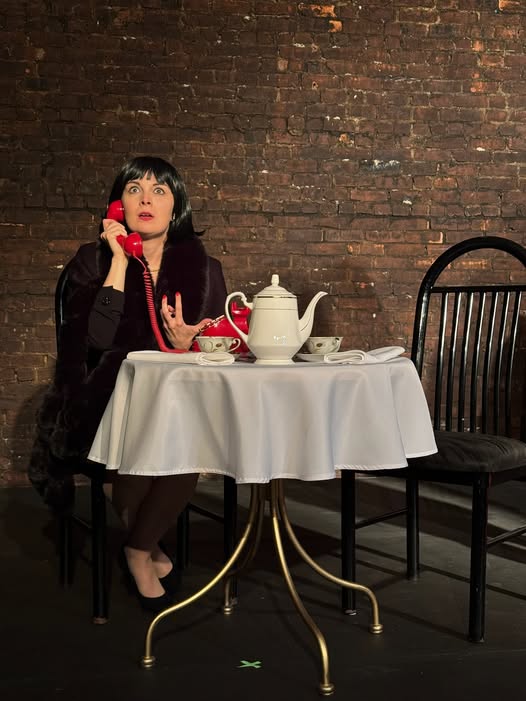
New York City con artist Alexa Vere de Vere (Christina O’ Shea), the villain of As Bees in Honey Drown, recognizes the power of the “honey” that is fame and fortune, and makes a living out of exploiting those who hunger for it. Alexa is a force of nature, a narcissistic socialite in designer dresses who sports an Uma Thurman Pulp Fiction-style black bob and an air of being the most important person at the party. She claims a thousand connections and drops a name at every opportunity, in an exotic, unplaceable accent rivaling that of Kathleen Turner (as she freely points out). As her story unfolds we learn that she is both Frankenstein, and the monster. The latest bee in her honey pot, Evan Wyler (Peter Konsevich), is a writer on the cusp of fame. At a magazine photoshoot for his upcoming book he is convinced by the photographer to pose without a shirt, and this gets Alexa’s attention, outing him as a person desperate for success. She seduces her prey with promises of fortune and glory—convincing him that she is the one who can take him to the top. They dine, they banter, they party, and he foots the bills. She even gets the openly gay Evan to fall for her: Just when it seems like Alexa’s pretentious phoniness is getting too obvious, she “humanizes” herself with a tragic backstory that’s really too “bad” to be true, but reels Evan in anyway. “I love you,” he proclaims at her weepy suggestion that she is unlovable. Before long he is down thousands of dollars, alone, still not famous, and desperate to get revenge—or so he says. Does he hate Alexa, or is he still infatuated?
O’Shea gives a powerhouse performance as the conniving Alexa. She is at turns over-the-top, hilarious, irresistible, and even at times almost sympathetic, and it all comes together brilliantly. When Evan finds artist Mike (Kevin Russo), Alexa’s overall-clad ex-partner and the focus of her tallest tale, we see in a flashback that he was the first victim of her crime spree. (She even chillingly calls him “lamb” before their falling out, just as she would later dub Evan.) As with Anakin Skywalker/Darth Vader, this compelling prequel shows us how the “Alexa” persona came to be, down to the accent and the bizarre surname, and O’Shea is remarkable portraying the ordinary girl behind the curtain who slowly morphs into the supervillain.
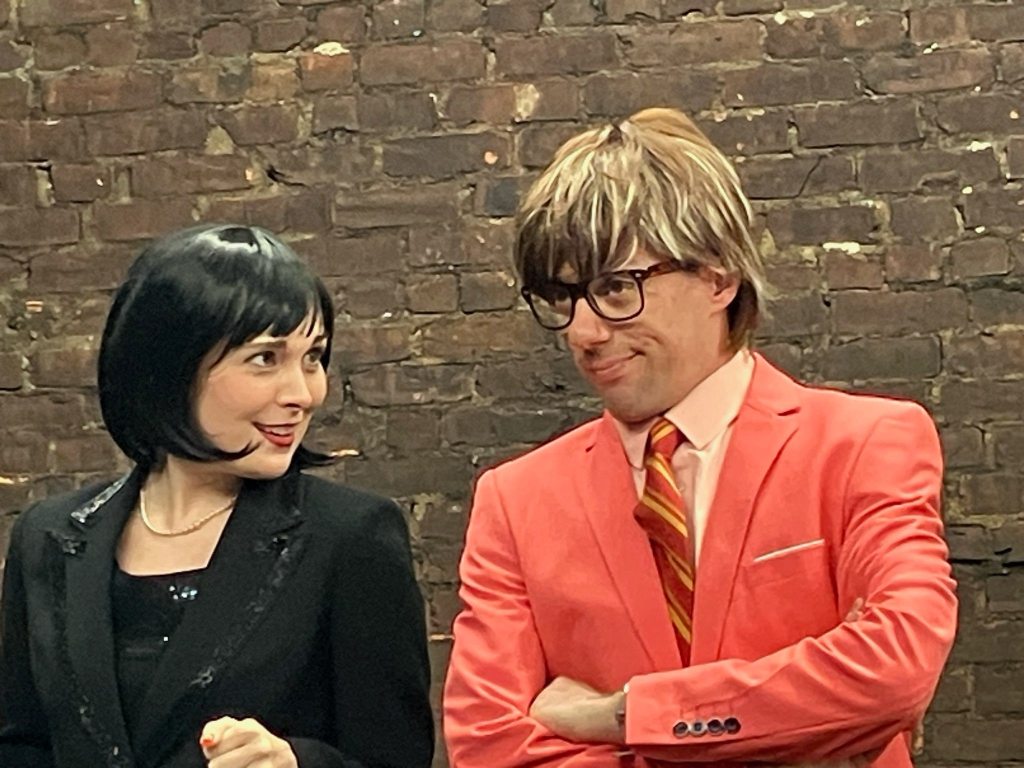
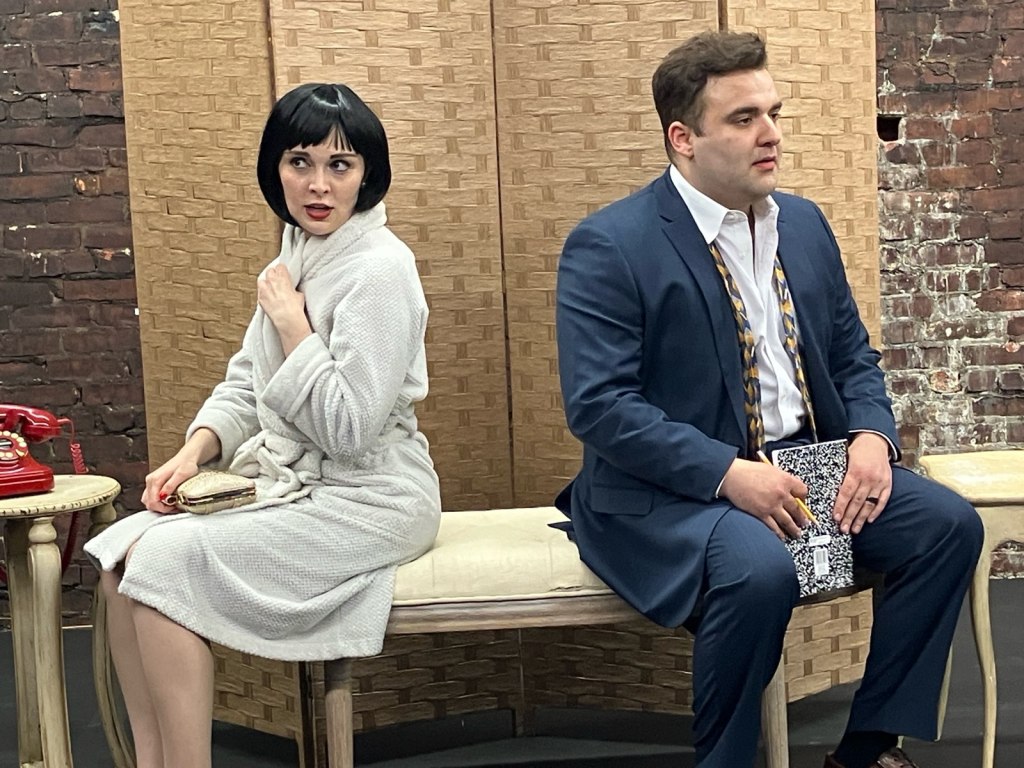
Konsevich is sympathetic and very funny as the befuddled, relatable Evan. Brian DiRaimondo, Julie Lorson, and Ronni Schweitzer round out the cast wonderfully in multiple roles, including several of the other bees caught in Alexa’s honey whom Evan calls on in his plan to get even. It all makes for an entertaining and faithful rendering of Keane’s clever classic, a cautionary tale that is all the more relevant in this modern age of Social Media, Influencers, and the “almost famous” who will do anything to get to the top of the search engine.
As Bees in Honey Drown is deftly directed by Tarmo Kirsimäe. It runs through June 1 at the Bacca Arts Center in Lindenhurst, Long Island. For more information, go to https://modernclassicsli.booktix.com/dept/main/e/Bees

Is That in the Script? asks Jim Catapano regarding Joseph P. Krawczyk’s Living the Play
Joseph P. Krawczyk’s Living the Play: A Dangerous Time for Women Is Timely, Clever, and Compelling
It is November 5, 2024. Crystal (Chelsea Clark), a New York Theatre actor, and her partner Jeremy (Nathan Cusson), a psychotherapist, are coming back to their apartment after voting for Kamala Harris on Election Day. Crystal awaits the outcome with tremendous trepidation while Jeremy just “que-sera-seras” and suggests they hope for the best. Crystal is also gearing up for her lead role in a make-or-break Off-Broadway production, a two-hander about a woman whose pregnancy and subsequent difficulties in getting proper reproductive care lead to tragedy. Jeremy’s apparent nonchalance (masking an anxious personality, as we soon learn) exasperates the passionate Crystal. She implores her reluctant partner to run lines with her. Jeremy, whose own acting career was brief and long ago, reads the lines initially in a disinterested monotone. But he has a didactic memory, and begins to get very familiar with a show that he’s not even in. The rehearsal of the tense dialogue between the couple in the play begins to mix with Crystal and Jeremy’s actual discourse and their real-life relationship difficulties, leading to the ominous mantra, “is that in the script?” (or, are we really saying these things to each other?). Soon neither they—or us—is certain where Crystal and Jeremy end and their characters begin.

The play-within-a-play technique, set against the backdrop of the real-life circumstances its audience finds itself in the United States of 2025, makes Living the Play a unique and powerful experience. We who are observing the couple know how the election of 2024 is going to end; how it’s going to affect Crystal; and how it threatens her rights as a woman. A revelation drives home that her character’s plight in the play could well be a foreshadowing of her own future, and Jeremy—whose “life is not at risk,” as she reminds him—seems incapable of the support and understanding she needs from a partner. Crystal had turned off the news for the remainder of November 5 after casting her vote, and it’s left to Jeremy to inform her of the outcome. She grabs a pillow and screams into it, and It’s a sad and chilling moment of recognition for those of us who wanted things to go another way. Jeremy continues to play the “it won’t be that bad” tune, ignorant of the fact that he is dismissing Crystal’s fear, and the clear and present danger that every woman is now in.
With this dark cloud over the future and their relationship, Crystal carries on with the play with Jeremy’s grudging assistance, the dialogue continuing to blur with their reality. When she brings out the real loaded gun she owns, mistaking it for the prop gun from the play, it drives home how close they are to living out the tragic circumstances of the show she’s so absorbed in.
The outcome of the election has consequences for the production itself too, as the understudy for Crystal’s scene partner, a transgender person, leaves for Canada. Jeremy is now the understudy for a role he doesn’t want, just one more defection away from being the lead. He desperately tries to get out of it and yet begins to paradoxically get more involved, his photographic memory causing an unexpected engagement with the material. He even questions the playwright’s choices, which draws further ire from his partner. We can feel the walls closing in as not only is Crystal’s career and relationship in danger, but so is her very future as a woman in America, as her rights to bodily autonomy and reproductive care begin to slip away, and the one person she wants to depend on can only shrug helplessly.
Clark and Cusson are astonishing in their roles—believable, relatable, and skillful in their juggling of their own characters’ voices with those of the characters of the play they are rehearsing. By showing how the suppression of rights impacts one person whom we’ve grown to care about, Krawczyk has driven the urgency of the situation home. His words are expertly brought to life by Clark and Cusson, under the deft guidance of Director Eddie Lew and Assistant Director Carrie Stribling. Just as Crystal is taking on injustice and fighting for her future through creativity, so is the team behind Living the Play showing us how art is one of our greatest weapons to wield against the tyranny of the times.
Living the Play: A Dangerous Time for Women is dedicated to Amber Thurman, Taysha Sobieski, Josseli Barnica, and Candi Miller, who lost their lives due to the denial of timely reproductive care.
The play runs at the American Theatre of Actors through May 18, 2025.
 Arts Independent