
Home » Posts tagged 'film'
Tag Archives: film
“Are We Friends, and Were We Ever?” asks Jim Catapano at YEARS TO DATE’s New York Premiere
Allen Barton’s Masterpiece Years to the Day Takes a Hard Look at Modern Relationships
“How the hell do you live your life unless you know who you are?”
Jeff (Jeff LeBeau) and Dan (Peter Zizzo) met each other and their later partners at the very beginning of college and have been “best friends” ever since…and yet they haven’t seen each other in person in six years. They finally meet over coffee, and it’s the precise anniversary of their last get-together in the flesh. They are in their mid-fifties, a time when a certain “rigidity” can set in for a person in terms of habits and point of view, accompanied by a “this is who I am, deal with it” attitude.
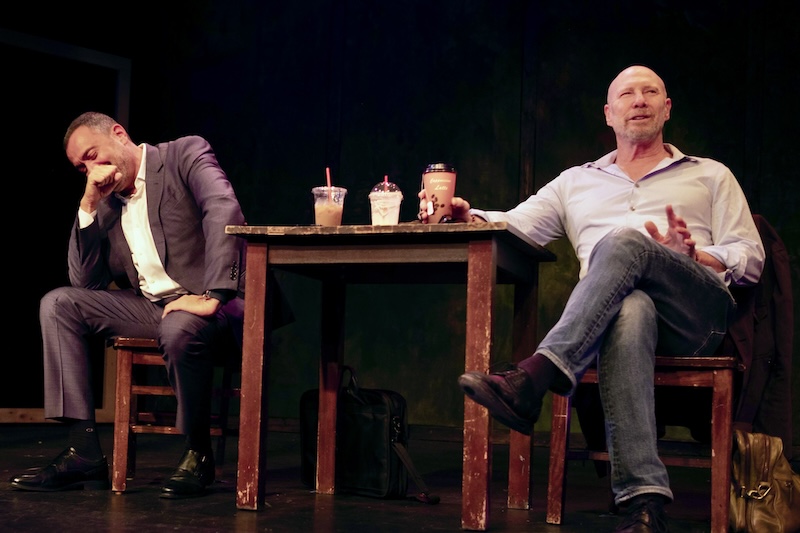
“You are the king of rudeness,” snarks Jeff as they settle in.
“You are the king of puerile, nanny-state intervention!” Dan claps back, but this “old buddy banter” is foreshadowing of the severe disconnection that is soon revealed. They discuss the “latest movie,” which Dan despises but Jeff saw twice; they debate about whether they’re middle-aged or old, and if “50 is the new 40” and how does that effect who they date.
But there’s a discomfort ever-present as the two try to slip into their old roles. The fiery Dan and the comparatively reserved Jeff come across like strangers that just happen to have known some of the same people and shared some experiences. We start to wonder immediately how these two came to be close, as their opposing energies and outlooks are brought to the table. Stunning revelations about each other’s lives come pouring out—important, life-changing, traumatic events that any close friend should have already known about. It’s clear that the notion of them having a deep connection is nonsense; their “friendship” is just a habit, and not one that they’ve cultivated in a healthy way. Jeff and Dan are on opposite sides of the political fence, but it’s never been a problem because Jeff used to downplay his beliefs; his refusal to take up the placating Avatar of old leads to a verbal explosion that nearly drives him out of the get-together. (The political climate is smartly kept vague and thus evergreen; we learn of an unnamed president that has somehow managed a third term, to Jeff’s delight and Dan’s horror.) Now that neither Jeff or Dan are “playing characters”, they find that the “actors” who brought them to life have little basis for a relationship. And yet somehow, their shared history and a genuine caring despite of all the differences just might be strong enough to lower the temperature and leave open the possibility of another meeting in the near future…maybe.
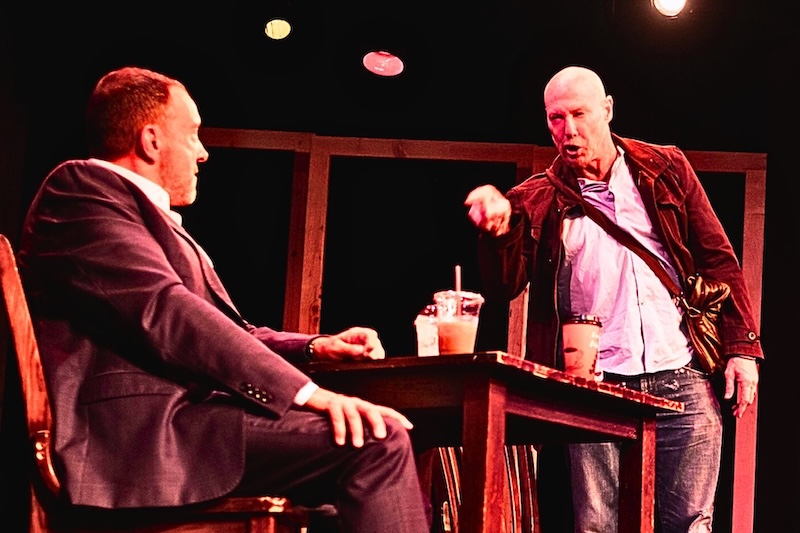
Written and directed by Barton and produced by Mia Christou, Years to The Day first premiered in 2013 to great acclaim and now makes its New York debut in a time when its themes are ever more relevant. Emmy winners LeBeau and Zizzo disappear deftly into their characters, delivering Barton’s musical, witty, rapid-fire dialogue with tremendous skill yet always appearing spontaneous in their interaction. Their body language, tense and awkward, is like another character in the play; seeing these two “buddies” barely look at each other for most of the meeting is chilling. Their unconvincing promise to “call Brenda” after a sad event for the unseen character stuns the audience; we all have a Brenda in our lives we’ve neglected. Seeing Jeff and Dan’s supposed closeness exposed as simply the product of having been in the same place at the same time is devastating as it certainly reflects reality for many in the modern world. In a time of social media false personas, fishing for “likes,” and a phone addiction that allows us to retreat at the first sign of boredom or discomfort, it becomes too easy to not even bother to cultivate a deep connection.
Hilarious, heartbreaking, and thought-provoking, Years to the Day is a must-see and a triumph for Barton, LeBeau, Zizzo and Christou.
“One thing exists at a time,” observes Dan throughout the play; it’s a simple yet astonishing declaration that will stay with you once you realize what it truly means, and the ark of Years to the Day reveals it powerfully.
Years to The Day is performed at the American Theatre of Actors through February 28, 2026.

The MITF is back and ATA has got them!
The Midtown International Theatre Festival Returns to New York After Decade-Long Hiatus and the Landmark American Theatre of Actors will host the event.
AN HISTORIC EVENT AT AN HISTORIC LOCATION

The Midtown International Theatre Festival (MITF), a respected and influential platform for independent theatre, is set to make its triumphant return to New York City after an absence of nearly a decade. Founder and Executive Producer John Chatterton, a pivotal figure in the Off-Off-Broadway movement, is partnering with Jay Michaels, one of indie theatre’s most visible personalities, to bring the groundbreaking theatrical event back in June/July of 2026.
The new festival will encompass the entire ATA complex of three theatres starting June 15 through July 26, 2026
MITF is accepting applications for productions to be included in the festival until December 31, 2025. Please contact Jay Michaels at info@jaymichaelsarts.com for further details and an application form.
An Ambitious Return at a Historic Venue
The revived festival will be hosted by the prestigious American Theatre of Actors (ATA), marking an auspicious collaboration as the ATA celebrates its 50th anniversary.
“We’re thrilled this event could happen at our theatre—and especially during our 50th anniversary,” says Jessica Jennings, Executive Director of the American Theatre of Actors. The ATA was founded in 1976 by her father, James Jennings, who remains its President and Artistic Director.
The new incarnation of the MITF is planned to be the largest independent theatre festival in history. Already, more than two dozen projects and events have signed on, with plans underway to expand offerings to include:
- A dedicated Cabaret Section.
- A comprehensive One-Act Series.
- A full-fledged Film Festival.
A Legacy of Innovation
Founded in 2000 by John Chatterton, the original MITF was established following the suggestion for a “Midtown Fringe” to complement the downtown scene. It ran for 18 successful seasons before its hiatus in 2018.
The festival quickly became a highly visible and respected launchpad for independent theatre artists. Notably, the MITF pioneered a festival model of theater rental and shared box office revenue that continues to influence theatre festivals worldwide today.
About the American Theatre of Actors (ATA)
The American Theatre of Actors, founded in 1976, is a vibrant repertory theatre company dedicated to fostering new talent. It consists of 50 actors, 15 playwrights, and 8 directors, providing a creative atmosphere for artists to develop their work without the pressures of commercial theatre.
ATA focuses on presenting new dramas and comedies dealing with the social and ethical problems of contemporary society. Over its history, ATA has:
- Presented over 1,000 new works.
- Employed over 11,000 actors, including notable alumni such as Dennis Quaid, Bruce Willis, Danny Aiello, Dan Lauria, Chazz Palminteri, Kevin O’Connor, William Fichtner, Edie Falco, and Kathryn Hahn.
The return of the MITF, in partnership with the ATA, promises to inject a significant burst of energy and opportunity into the New York independent theatre landscape.
Contact: Jay Michaels Global Communications 646-338-5472 // info@jaymichaelsarts.com
A Jim Catapano Review: Don Nigro’s In the Wilderness of Demons Blends Ukranian Legend with Life’s Great Questions
Myth and Reality Meet in the Darkness
On a very dark and very stormy night, a folklore enthusiast (Tatyana Kot) appears at the Ukrainian cottage of a mysterious woman (Iryna Malygina). The isolated home deep in the woods is shared only by faceless dolls, represented by 4 dancers who lurk silently, witnesses to the unfolding events. Thus begins a journey In the Wilderness of Demons, a compelling tale by the acclaimed Don Nigro—one steeped in Ukrainian legend, mixed with dark wit, suspense, a touch of horror, and a deep dive into the existential.
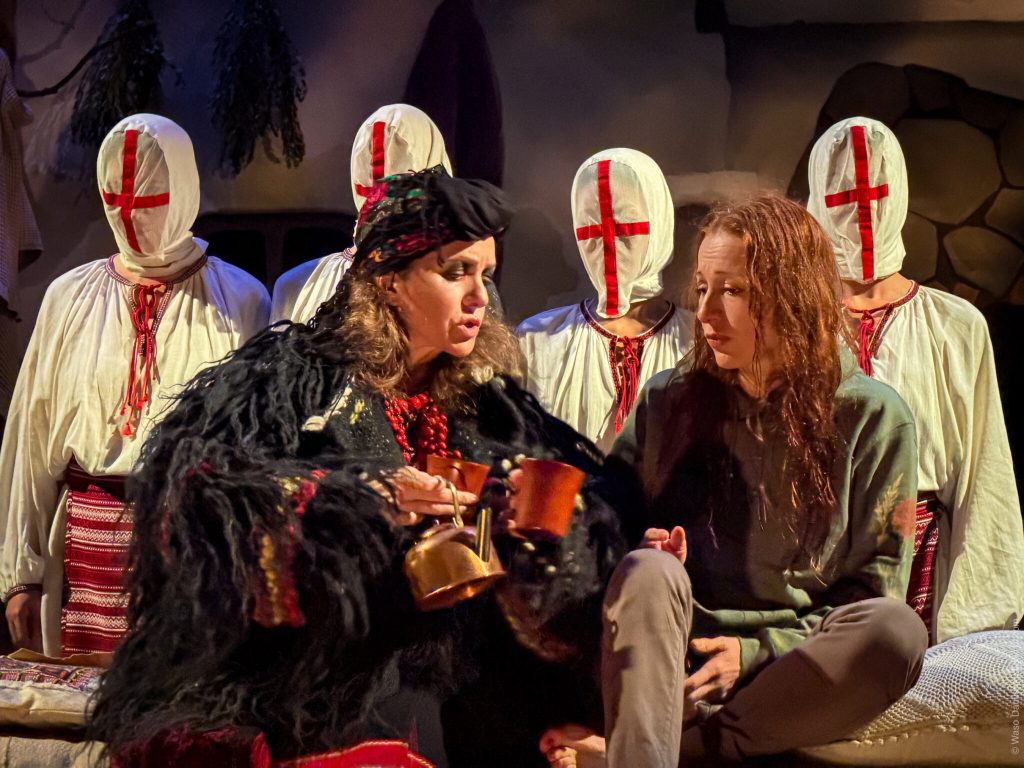
“What a night to be creeping around out there,” the woman scolds. “It’s pouring down ice cubes…there is a raven frozen to the pump!” (An image that immediately sets the tone.)
When the folklorist explains she got lost in the woods, the woman turns philosophical. “Getting lost on the way is all part of God’s plan,” she responds. “He wants us to get lost, to sell us outdated roadmaps and compasses that don’t work.” She admits that she thought the folklorist might have been one of the dead, “who come out of their graves this time of year…they try to get back in their houses.”
The eccentric, assertive cottage dweller pivots between doting on the soaked and shivering folklorist and appearing to intentionally frighten and unsettle her. She dries her feet, gives her slippers owned by her late grandmother, serves her tea, and makes up a bed for her—only to turn around and tease her by suggesting she’ll be sharing it with a dead rat.
“I’m joking,” she says. “He’s probably just sleeping—or pretending to sleep.”
Malygina (who also produced) is outstanding at bringing the witch-like character to life, creating a mystery and unease that is palpably felt by the audience. She is also intensely philosophical and astute, as when the folklorist mentions her realization that “all men are a—holes.”
“Men think we’re vampires,” notes Malygina’s character. “The thing they want most is to drive a stake into us…but it’s the men who prey upon us. I had my fourth husband buried face down to make sure he didn’t come back after he died.”
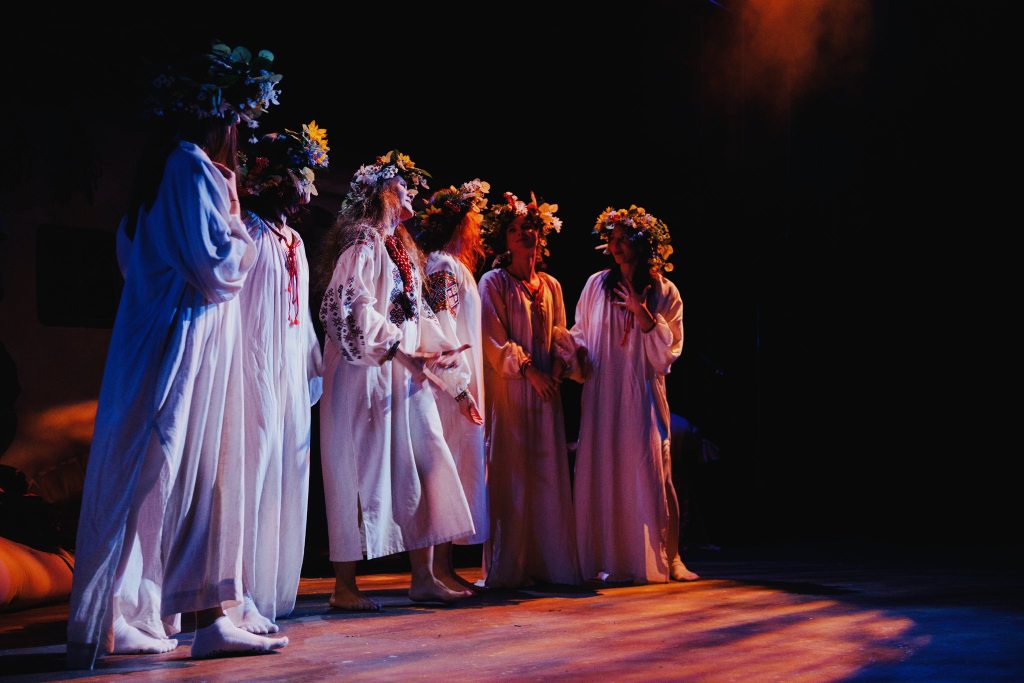
Along the way we get an education in the Ukranian folklore our protagonist is so intrigued by, as we learn of the Rusalka, the legendary water nymphs who would lure men to their deaths under the sea, and the demonic Chorts.
“Do you really think that they exist?” asks the folklorist.
“Define exist,” says the woman. “Does a dream exist? It always seems real when it’s happening in your head…but then you wake up…or, you wake up into another dream.”
The set design by Lesya Verba is a perfect complement to the unfolding thriller, allowing the faceless dolls to wander about menacingly, always watching (and judging? As the woman suspects). “It’s their job to make guests feel uncomfortable so they leave.”
As the audience identification character, Kot is fantastic, imbuing the wary folklorist with an intense existential dread, as she begins to suspect that she has been in this strange place before.
The soundscape adds further atmosphere with thunder, whistling winds, and ticking old-fashioned clocks. The woman explains that her father liked to collect broken clocks—in her opinion, as a way to control time.
The disturbing atmosphere is pierced mid-play by an exhilarating dance sequence, where our protagonists join the no-longer faceless dolls, all transformed into Rusalka-like spirits. Following this cathartic interlude (which makes the folklorist wonder what’s in the tea), the story ends (or begins?) with a shocking revelation—and an invitation…
In the Wilderness of Demons is a magical, frightening, funny, and exhilarating experience that celebrates both Ukrainian culture and legend, and women’s empowerment.
The production is expertly shepherded by director Eduard Tolokonnikov, with expert choreography by Kot. The doll dancers are Shoko Tamai, Marija Obradovic, Evelina Pristovsek and Iren Kamyshev.
In the Wilderness of Demons is a production by MOVA Theater Company. It runs at The John Cullum Theatre at the American Theater of Actors through 11/02/25. Learn more at movatheater.com/.

Broadway Icon, LEN CARIOU to star in New York Premiere of RICHARD VETERE’s riveting new drama, ZAGŁADA
Broadway Icon, LEN CARIOUto star in New York Premiere of RICHARD VETERE’s riveting new drama, ZAGŁADA. Production directed by MAJA WAMPUSZYC
October 16 — November 2 The AMERICAN THEATRE OF ACTORS 314 W. 54th Street. New York City Contact info@jaymichaelsarts.com for further info
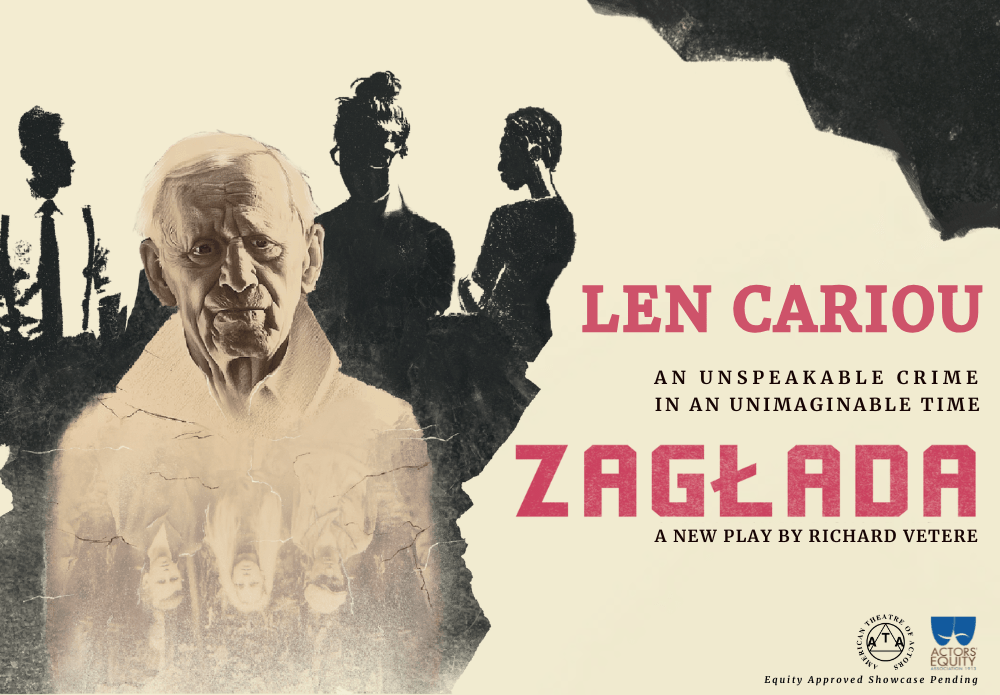
ZAGŁADA is a Polish word meaning annihilation used within Poland to refer to the HOLOCAUST, particularly in the context of the systematic, state-sponsored genocide of six million European Jews by the Nazi German regime and its allies and collaborators.
Journalist Danielle Hooper goes to interview 90-year-old Jerzy Kozlowski, in a quiet residential neighborhood in Queens for her book on World War II; he fires a gun at her, prompting his arrest. This gets the attention of Homeland Security Agent, Sonia Sokolow and NYPD Intelligence Bureau Officer, Frank Napoli.
Apparently, not only did Kozlowski lie on his immigration application when entering the United States after World War II; but he is suspected of collaborating with the Nazis at BUCHENWALD CONCENTRATION CAMP where he himself was a prisoner.
Agent Sokolow has 48 hours to prove Kozlowski’s collaboration so she can charge and extradite him to a country willing to try him for International War Crimes.
Sokolow must not only win the race against time but confront her own personal history through the mirror of Napoli’s mission to hunt down radical Islamic terrorists and White supremacists and Hooper’s righteous defense of the truth. What is a human being capable of doing to protect themselves and the ones they love and will justice prevail?
The play ZAGŁADA is inspired by history. All characters are fictional.
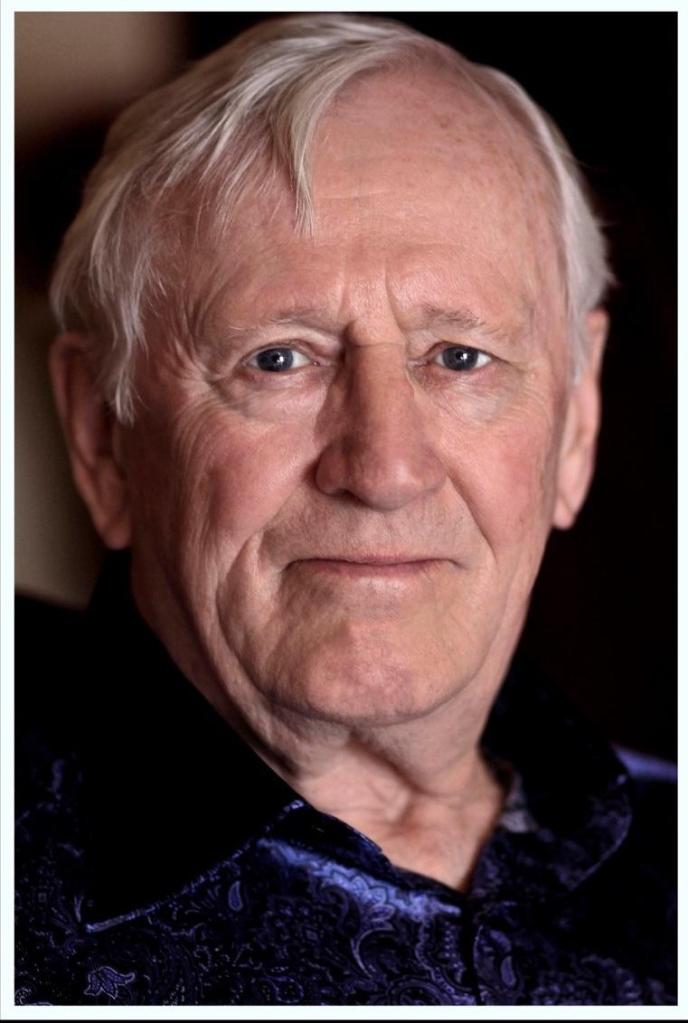
LEN CARIOU gained prominence for his Tony Award-winning title role in the original cast of Sweeney Todd: The Demon Barber of Fleet Street (1979). Prior to that, he earned nominations for Applause (1970) and A Little Night Music (1973). Cariou has had supporting roles in films such as The Four Seasons (1981), Thirteen Days (2000), About Schmidt (2002), Flags of Our Fathers (2006), Prisoners (2013), and Spotlight (2015). On television, Len was nominated for an Emmy for Into The Storm (2009) and is known for recurring roles in the shows Murder, She Wrote (1985–1992), Brotherhood (2005-2006), and Damages (2010) and his starring role in Blue Bloods (2010–2024).
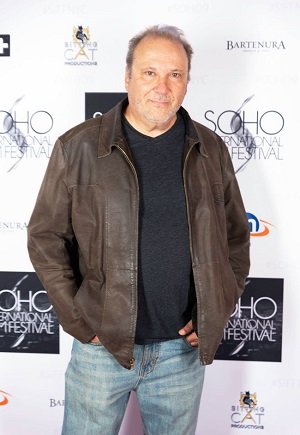
RICHARD VETERE, a Lifetime and Current Member of the Writers Guild of America East since 2012. His prolific career allowed him the opportunity to work with Oscar, Emmy, Tony, Grammy and Golden Globe award winners and nominees like Francis Ford Coppola, Walter Matthau, Carol Brunett, Robert Forester, Phil Ramone, Agnieszka Holland, Ed Harris, Elisabeth Shue, Armin Mueller-Stahl, Danny Aiello, Len Cariou and Jason Alexander. Recently, his stage play, Black & White City Blues, had an extended run and recieved rave reviews some critics calling his play a “masterpiece” at the Amrican Theatre of Actors. His screenplay, Caravaggio won the Golden Palm Award for Best Screenplay at the Beverly Hills International Film Festival 2021. His adaptation of his own stage play The Marriage Fool is now streaming on Amazon starring Walter Matthau, Carol Burnett and John Stamos. Mr. Vetere co-wrote the screenplay adaptation of his own novel The Third Miracle which premiered at the Toronto Film Festival in 1999, produced by Francis Ford Coppola, directed by Agneiszka Holland and starring Ed Harris and Anne Heche. It is considered by critics to be one of the best movies about faith ever filmed.Mr. Vetere’s first feature film Vigilante is an original screenplay, starring Robert Forester and Fred Williamson. Vigilante, released in 1983, became a blockbuster movie overnight making it the 20th highest grossing picture in 1983 and was just now re-released in Blu-Ray. It was named “a cult classic” by critic David Denby in the New York Times and one of the “best indies of the 1980s” by BAM. Over the years Mr. Vetere has written screenplays and adaptations for Paramount, Warner Bros, New Line, Zoetrope and CBS. As a member of the PD Workshop Unit at the Actors Studio he has developed several plays including ZagŁada
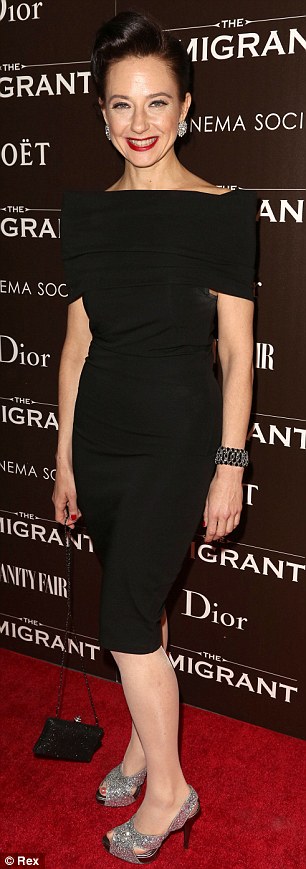
MAJA WAMPUSZYC has worked with Tony & Oscar Award winners. Film & TV credits include: The Immigrant (Cannes & NY Film Festival); Mona Lisa Smile; Going Shopping; The Knick; Madam Secretary; Search Party; and Law & Order: SVU. Broadway: Irena’s Vow. Off-Broadway, NYC, & regional credits include: Irena’s Vow; Lady Macbeth & Her Lover; House of Connelly; Foggy Bottom; An Oak Tree (Obie Award Winning Production); The Pearl Theatre; Precious Stones, and pool (no water) at The Barrow Street Theater. March 2020: Anna Akhmatova in Night Shadows Or: One Hundred Million Voices Shouting at Irondale. In 2021: Wampuszyc played the title role in Clytemnestra in Hades; and most recently played Ayn Rand in The Disciple for Thirdwing, LTD. PDW member of the Actors Studio, she has collaborated with Vetere as a director on developing six new plays; and with Lanie Robertson on his new play, a reimagining of the early years of Marie Curie, Unknown Objects of Desire. Member of The Actors Gym. Maja is Represented by Bret Adams, LTD.
The American Theatre of Actors, founded in 1976 by James Jennings, continues its mission of spotlighting socially and historically resonant works. The company has produced over 1,000 original plays and has been a creative home to actors such as Dennis Quaid, Edie Falco, and Chazz Palminteri.

CHAZZ PALMINTERI will appear Saturday, August 2 ONLY for a talkback after the performance of LIGHTHOUSE REPERTORY THEATRE’s production of A BRONX TALE, the musical
CHAZZ PALMINTERI will appear Saturday, August 2 ONLY for a talkback after the performance of LIGHTHOUSE REPERTORY THEATRE’s production of A BRONX TALE, the musical running Friday, August 1 thru Sunday, August 10 AT The Bellmore Showplace, 222 Pettit Ave.Bellmore, NY TICKETS
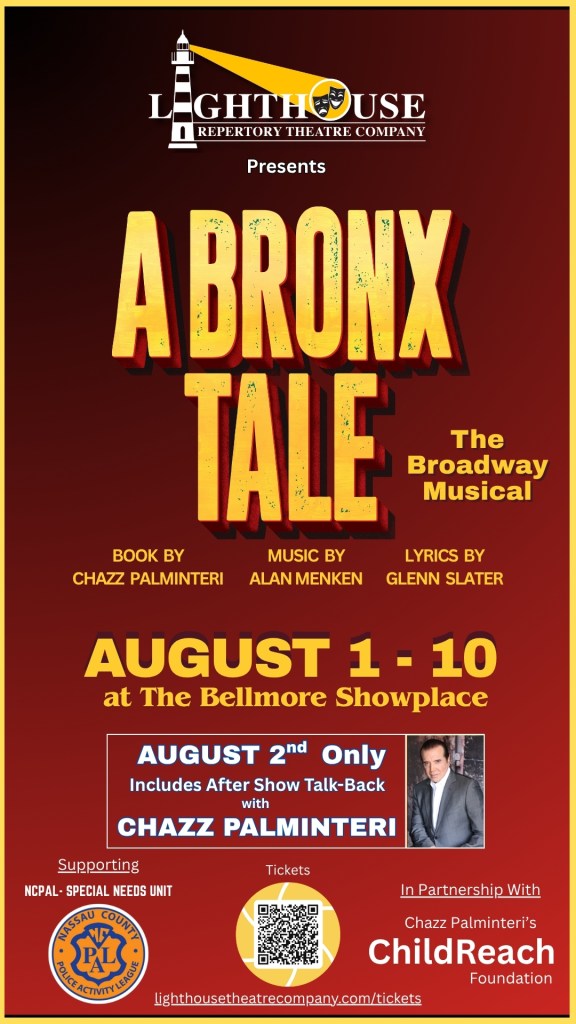
Based on the critically acclaimed play that inspired the now classic film, this streetwise musical will take you to the stoops of the Bronx in the 1960s—where a young man is caught between the father he loves and the mob boss he’d love to be. Book by Academy Award nominee, Chazz Palminteri, music by Oscar, Grammy, and Tony Award winner Alan Menken, and lyrics by Grammy Award winner and Oscar and Tony Award nominee Glenn Slater, A Bronx Tale is a story about respect, loyalty, love, and above all else… family.
AUGUST 2nd ONLY – your ticket includes an after-show talk back with CHAZZ PALMINTERI.
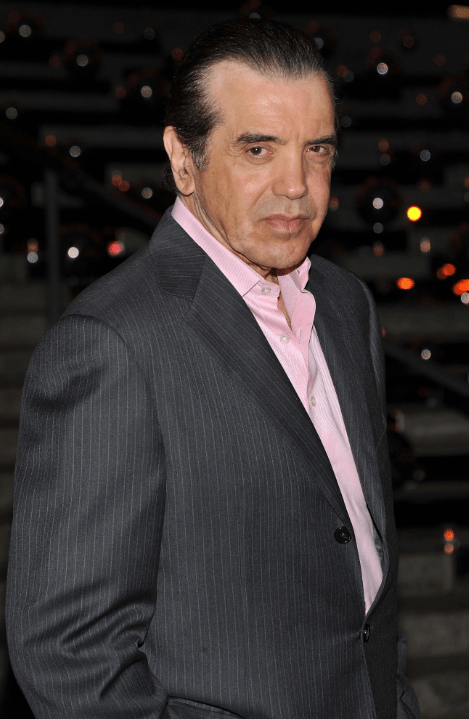
Bronx-born and raised Chazz Palminteri was a natural choice to continue the Italianate tradition set forth in the 1970s by such icons as director Martin Scorsese and actors Robert De Niro, Al Pacino, John Cazale and Joe Pesci.In 1988 he wrote for himself a play entitled “A Bronx Tale,” a powerful one-man stage commentary in which he depicted his bruising childhood in great detail, which included witnessing gangland slayings. Palminteri brought each and every character to life (18 in all) in this autobiographical piece — his friends, enemies, even his own family. He showcased for years in both Los Angeles and New York, finally sparking the interest of his film idol, Robert De Niro. DeNiro, wanting to direct for the first time, saw the potential of this project and brought both it and the actor/writer to the screen. Palminteri played one of the flashier roles, Sonny, a gangster, in the movie version. An unknown film commodity at the time, Chazz had stubbornly refused to sell his stage property (the offers went into the seven figures) unless he was part of the package as both actor and screenwriter. DeNiro, who became his mentor, backed him up all the way, and the rest is history. A Bronx Tale (1993), which featured his actress/producer/wife Gianna Palminteri, earned strong reviews.
He received a well-deserved Oscar nomination the following year for his portrayal of a Runyonesque hit man in Woody Allen‘s hilarious jazz-era comedy Bullets Over Broadway (1994). He was on the right side of the law in both The Perez Family (1995), his first romantic lead, and then the classic crimer The Usual Suspects (1995). He played the ill-fated brute in Diabolique (1996) and wrote a second screenplay, Faithful (1996), in which he again plays a hit man, terrorizing both Cher and Ryan O’Neal.
Parental Advisory: Contains adult language and mild violence.

The Swan Inside Every Little Duck or “Take A Quack At It, Timothy L. Michuda’s Rocking Revelation for All Ages — an international review
The review is translated from a piece written by Yin‑Fang Chang, a respected Taiwanese conductor and arts educator. She’s the Resident Conductor of the National Symphony Orchestra (formerly its Assistant Conductor, 2006–2015) and a lecturer at Taipei National University of the Arts and National Taiwan Normal University. Chang has led acclaimed performances, including stepping in for conductor Gennady Rozhdestvensky at the 2012 Kaohsiung Spring Arts Festival, and has received nominations for the Taishin Arts Award in performing arts. The piece was originally published on Talks by the Taishin Bank Foundation for Art & Culture, the official site associated with theTaishin Arts Award—one of Taiwan’s top recognitions in contemporary visual and performing arts. This platform features expert commentary by nominated observers like Chang, making it a credible and reputable source for art and performance discourse.
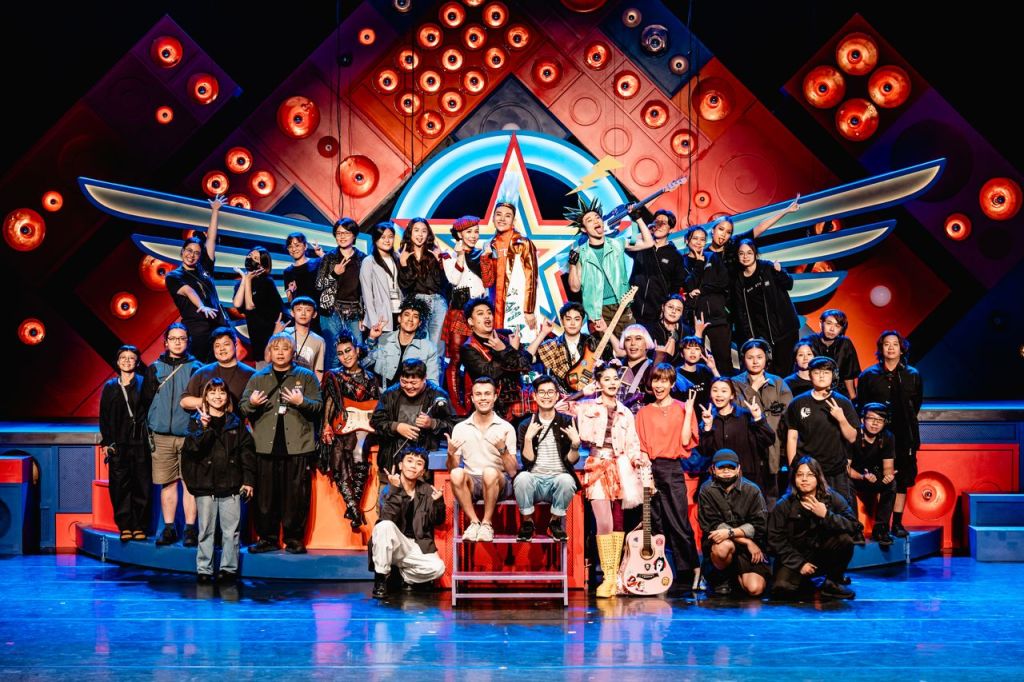
Total Musical Theatre’s “That Thing About the Ugly Duckling Becoming a Rock Star” (also known as “Take A Quack At It!”) delivers a truly astonishing family musical that transcends the usual boundaries of children’s theater. As reviewed by the esteemed Taiwanese conductor and arts educator Yin-Fang Chang (張尹芳) on the credible platform Talks by the Taishin Bank Foundation for Art & Culture, this co-developed Taiwan-U.S. production offers not only entertainment for children but also profound healing for adults.
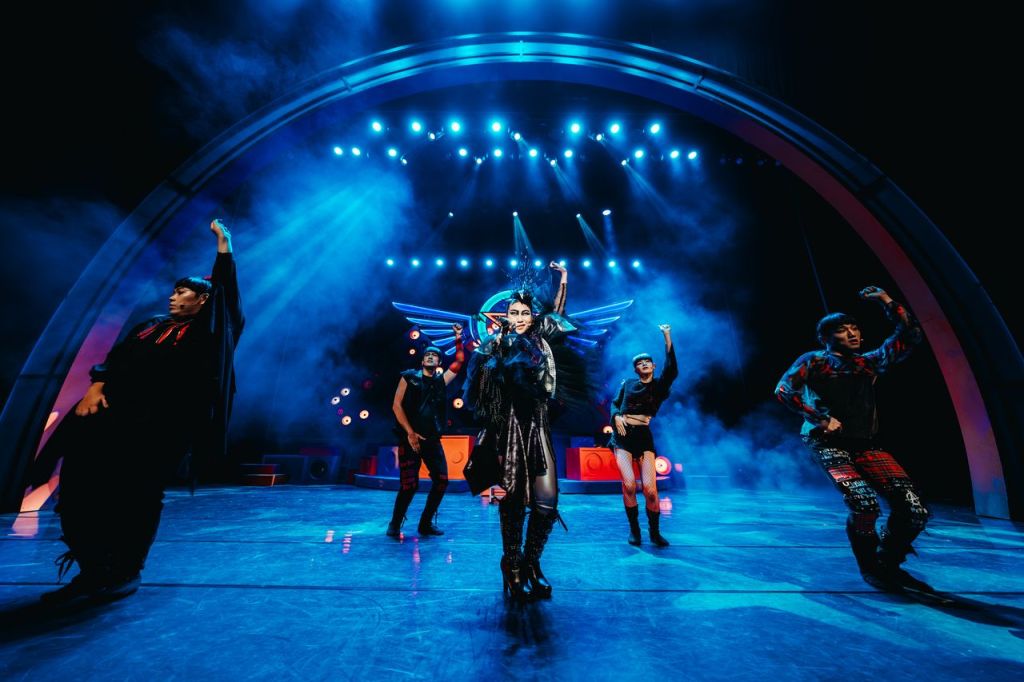
A Cleverly Crafted Narrative with Depth
Drawing inspiration from Hans Christian Andersen’s timeless tale, the musical sets its story in a “rock music summer camp” for little ducklings. This inherently charming and “endearingly goofy” premise cleverly leverages the contrast between ducks and rock music to explore weighty themes like self-identity, bullying, the formation of musicians, and even “the false appearances of the workplace.” Chang praises the production for its ability to tackle these “problems rooted in human nature” with a “gentle force,” avoiding both “overly sentimental manipulation and divisive criticism.” The narrative respects the audience’s intelligence, unfolding rapidly from the protagonist’s entry into the camp with “every plot point connect[ing] tightly, without any dragging.” The reviewer highlights the show’s “clever hints and surprising twists,” such as the reveal of an eagle disguised as a duck, and the “scandal after the ugly duckling becomes a swan celebrity,” ensuring “there is never a dull moment.”
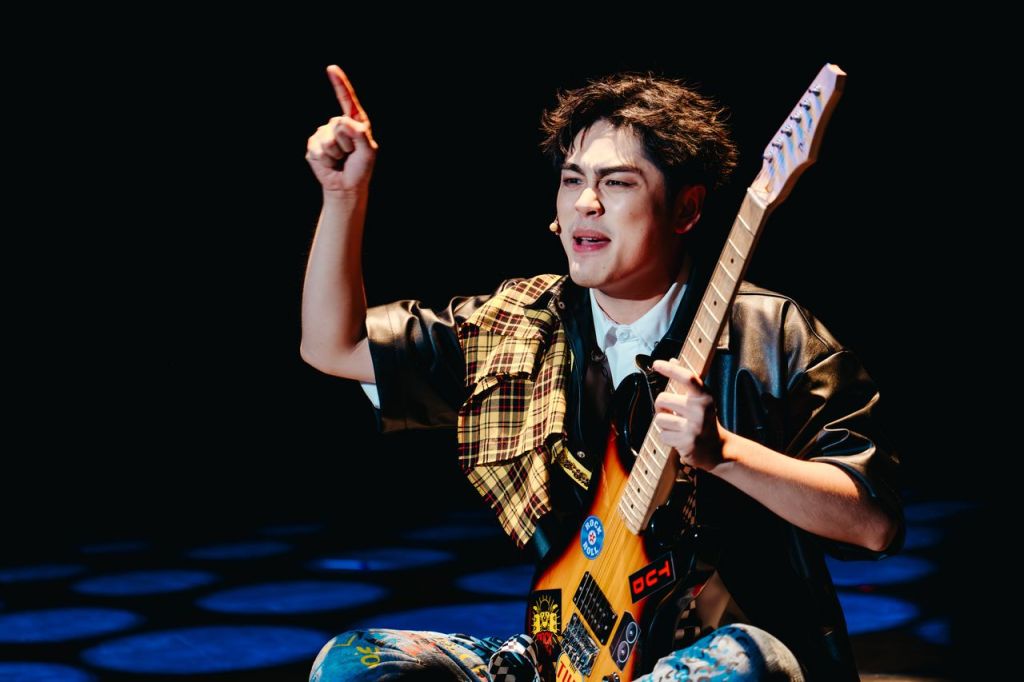
Stellar Performances and Musical Prowess
The cast of nine actors skillfully manages over twenty roles, showcasing exceptional stage management and orchestration. Their “impressive stamina” is matched by their rich and nuanced ability to switch between characters’ psychological states, making each portrayal feel natural and unforced. Despite the complete absence of subtitles, “about 95% of the lyrics were still understandable” thanks to the actors’ “clear diction and skill in both singing and speaking.” While there was a minor issue with the male lead Xiao-Fei’s pitch on the day, and some sound blending during reprises due to venue equipment, these minor points did not detract from the overall success driven by the actors’ “outstanding performance in singing, acting, and dancing.”
The music, the very “soul of a musical,” is attributed to composer Chang Ching-Yen, who brings a fresh perspective despite his extensive experience. He masterfully employs “different styles of jazz to match each character’s traits and the direction of the plot.” From the protagonist’s evolution from a “not-so-rock folk ballad style” to a powerful “stronger rock sound,” to the vintage gothic rock for the disguised eagle and jazz for the Japanese-inspired Shan-Dao Sparrow, the music “integrates perfectly with the storyline, vividly coloring each segment.” Chang notes that the audience’s ability to understand the lyrics without subtitles is a testament to the “collaboration between melody, word choice, and phonetic rhythm,” and the composer’s skill in creating “emotionally resonant melodies.”
Impeccable Direction and Production Value
Director Kao Tian-Heng’s work is lauded for its “natural and delicate” approach to character shaping, pacing, and dramatic tension, avoiding the common pitfalls of “stylized or stereotypical character portrayals” often found in children’s theater. The production creates a powerful atmosphere, drawing the audience into an empathetic connection with the characters and their emotional journey. Even with a “relatively simple set design,” the use of “lighting zones and curtain transitions” effectively creates multiple settings, from a “creepy forest” to a “rock concert stage,” demonstrating an “impressively high-value design” that feels anything but makeshift.
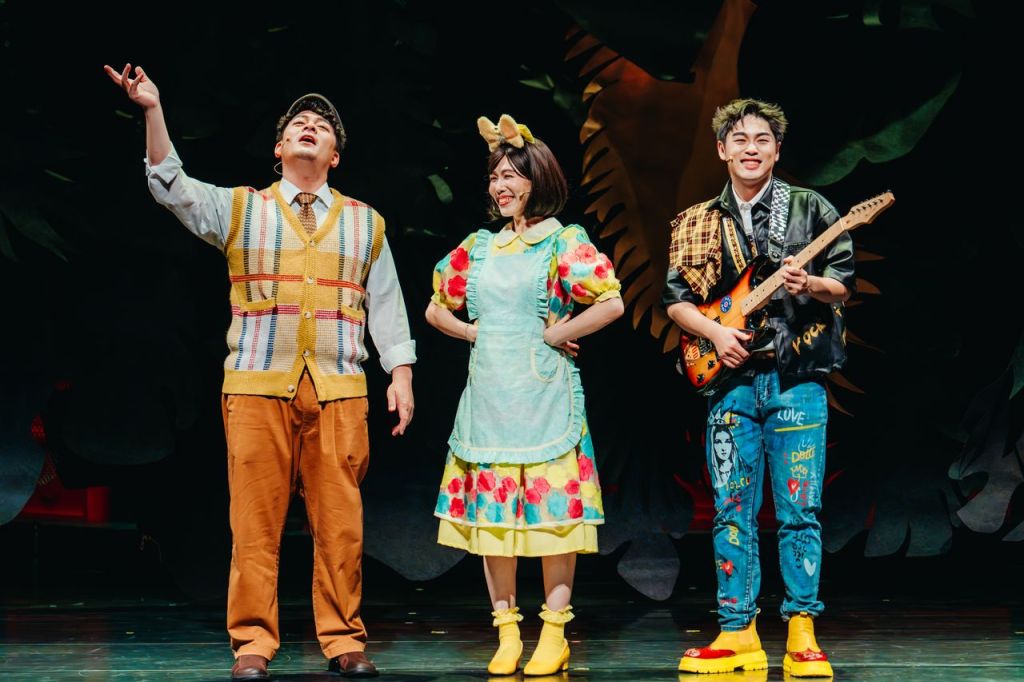
A Testament to Quality Children’s Theater
Ultimately, Chang Yin-Fang highly commends “That Thing About the Ugly Duckling Becoming a Rock Star” for its depth and high quality. It stands out as a parent-child production that “doesn’t preach, doesn’t rely on stereotypes, doesn’t pander to the audience,” yet still offers substantial artistic value. It proves that “children’s aesthetic development truly does require strong production values to support it.” More uniquely, it succeeds in “awakening a sense of childlike wonder in adults — offering healing, while clearly distinguishing between attention-grabbing gimmicks and artistry with real substance.” This production not only provided a platform for “talented rising stars of the stage” but also solidified Total Musical Theatre’s capability in handling medium-to-large scale productions.

The Aftermath of Murder: Jim Catapano reviews John Galsworthy’s “The First and The Last” at the ATA
John Galsworthy’s Compelling The First and The Last is Brought into the 21st Century at the ATA
Cleaning up after a killing is never going to be an easy task (unless you’re Harvey Keitel’s character in Pulp Fiction). Such is the dilemma of Keith (Clay von Carlowitz), a young, successful, and ambitious lawyer with a wayward younger brother, Larry (Jonathan Beebe). Larry is madly in love with Wanda (Natasha Sahs), with a fervor that leads to tragedy. A distraught Larry visits Keith with the news that he has killed Wanda’s estranged ex after an altercation, and the couple had casually dumped the body under an archway. The murder is now all over the media, and Keith’s dilemma is how to make this “problem” disappear for his brother while protecting his own reputation. Keith’s investigation has him conclude that nothing directly implicates Larry, and the news of a vagrant discovering the body makes for a convenient distortion of the truth…
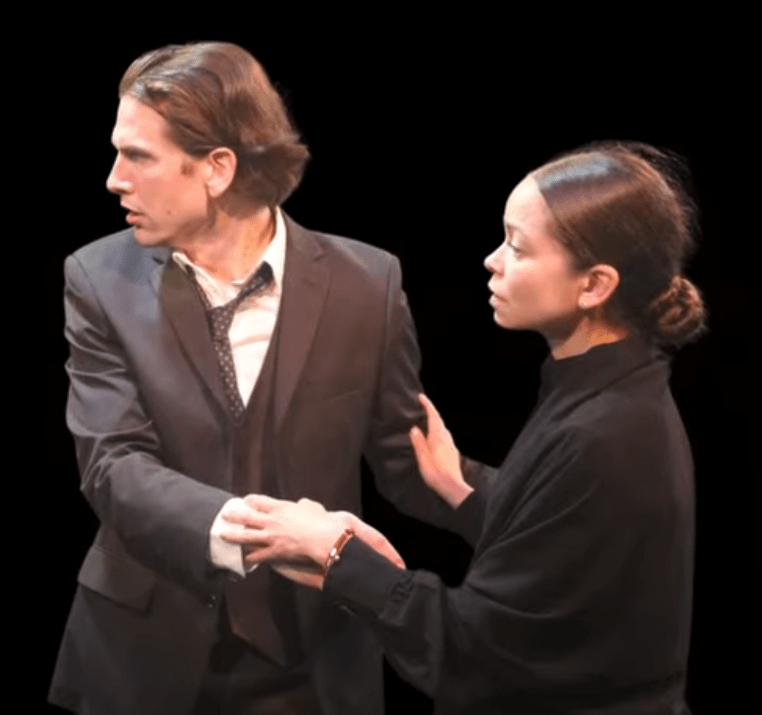
The provocative circumstances ensure that The First and The Last goes to 100 mph and stays there throughout its brief running time. Galsworthy’s play of over 100 years ago, itself based on a 1917 short story, is brought hurtling into 2025 by the actors, whose collective intensity is palpable. Amidst the powerful dialogue, the desperation of the situation is conveyed in their eyes, the glances between each other, the body language conveying human beings watching their very existences unravel. Beebe’s Larry is a deer in the headlights, his every expression and movement illustrating a man horrified by the dark corner of reality he has found himself in. Carlowitz’ dapper Keith is the picture of a man at a crossroads, trying to protect family while making sure his professional life is not tarnished, and grappling over which of those is most important to him. Sahs’ imbues Wanda with an astonishing potency that depicts a woman consumed by passion; Wanda starts in a black dress of mourning and traditions to a white wedding gown, hopelessly attempting to suggest an innocence that is no longer there. Ovid Radbauer provides a sinister, foreboding presence in the roles of a policeman and a paper seller, two people whose professions symbolize the very forces that could doom the brothers and Wanda.
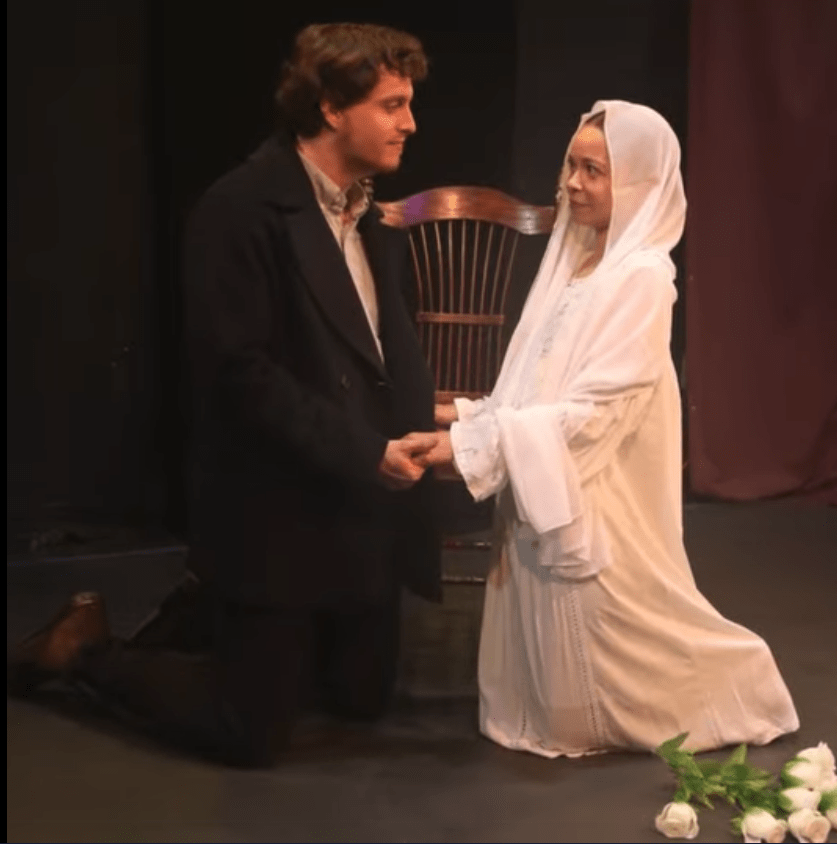
Directed with a flourish by John DeBenedetto, The First and The Last is like a runaway train heading towards a brick wall of an ending that is shocking and yet somehow inevitable, and makes for a gripping hour of theatre. It runs at the Beckmann Theatre at the American Theatre of Actors through June 15, 2025.
Nothing Left but the Kindness of Strangers: A Jim Catapano Review
Bernard J. Taylor’s Tennessee Williams: Portrait of a Gay Icon Brings a Legend to Life at the ATA
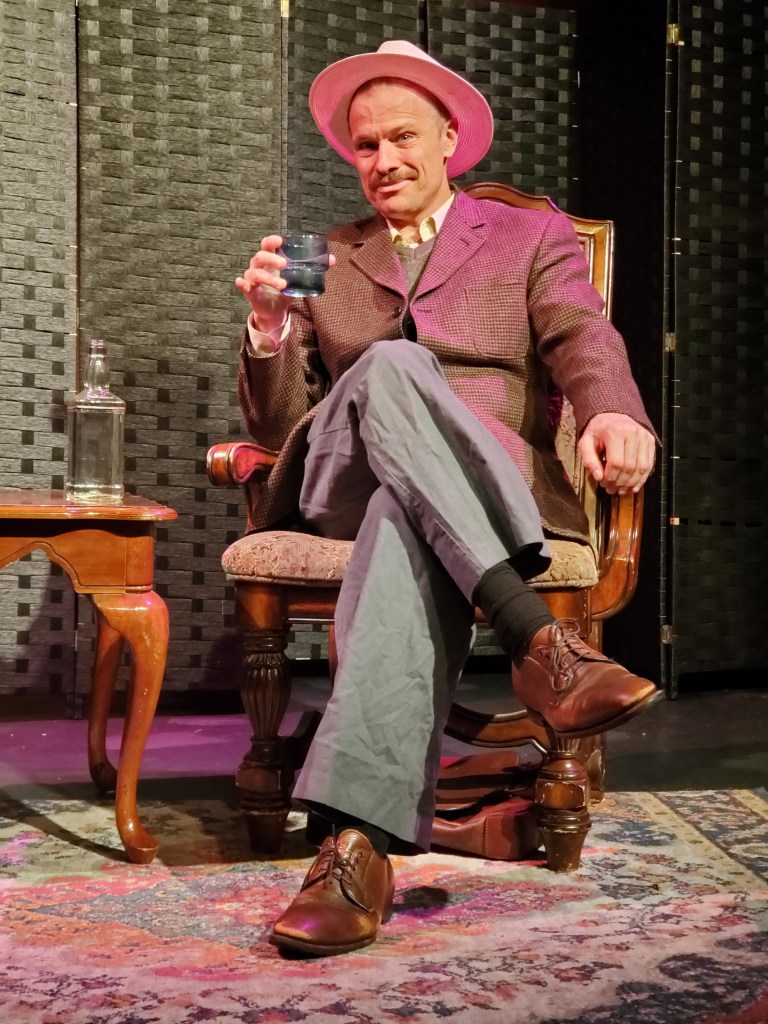
Tennessee Williams is alone on stage, and at this point, apparently alone in life. Seen on a lecture tour, he is surrounded by posters of his most famous works: A Streetcar Named Desire, The Glass Menagerie, Cat on a Hot Tin Roof; the face of his muse, Anna Magnani, stares out at us from a poster of The Rose Tattoo. Another wall is plastered with manuscript pages, relics of an era when creativity flowed. Pictures of his beloved sister Rose, his parents (one loving and one abusive), and his life partner Frank Merlo are on the table next to the chair from which he tells his story. They are all ghosts now—the only companion he has with him is a bottle of Vodka. He reminds himself to take “small sips”, but as his trauma comes to the surface these become heavy gulps. His laughter gives way to gasps of despair; he hugs the chair and sobs, imagining it to be Frank in his late partner’s last moments. He screams out Anna’s name in utter desperation for a companion for comforting and understanding than a liquor bottle.
John Stillwaggon as Williams is astonishing; one feels they are genuinely spending an evening with the legendary writer. Williams bares his soul, exorcises his demons and welcomes them back in again, and we feel we are witness to something extraordinary, as turns triumphant and tragic. The south of the mid-20th century comes to life in his words, and his disdain for the dreaded city of St. Louis is a hilarious running theme amidst the sadness.
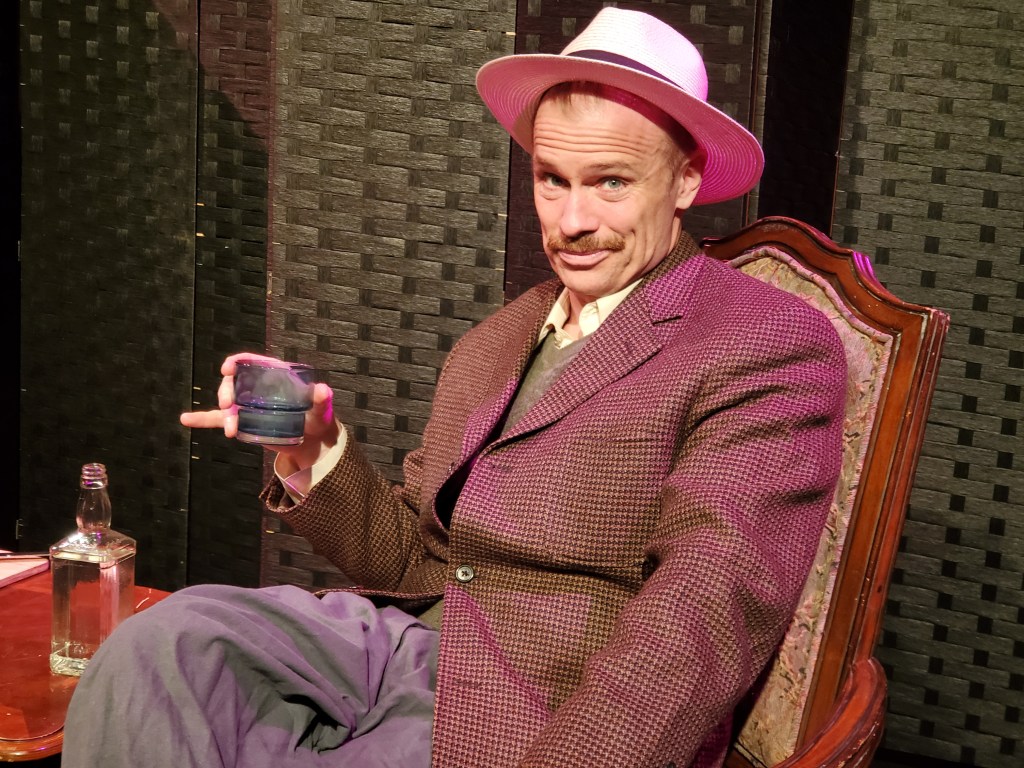
A gay man in a time and place where that was not treated kindly, Williams is portrayed by Stillwaggon as defiant, boisterous and charismatic, while simultaneously tragic and heartbreaking. He laments the fate of his beloved Rose, inspiration for Laura in The Glass Menagerie, and the victim of a lobotomy in a time when mental health was even more misunderstood than it is today. He mourns his beloved Frank and curses his vile father, who he says he only got along with “after he died.”
He gushes at the magnificence of the young Brando and rages against the critics—and at “the dying of the light,” noting that he’s once again “graverobbing” from other artists. “They say Dylan Thomas went to the White Horse Tavern…drank 18 shots of whiskey and dropped dead,” he remembers, glancing at the Vodka bottle and musing that he’s likely halfway there himself. It’s funny until you realize he likely wants to complete the journey.
The production is a must-see for the masterful performance of Stillwaggon, who recreates the swagger, wit, charm and pathos of Williams perfectly. It is directed deftly by Carolyn Dellinger, with a brisk pacing that complements Stillwaggon’s performance and Taylor’s writing expertly. It provides great insight into not only the story of one legendary artist, but the very notion of the highs and lows of fame, and the “having and losing” nature of life itself.
Tennessee Williams: Portrait of a Gay Icon, as part of the Icons Festival, runs at the American Theatre of Actors through June 15, 2025.
 Arts Independent