
Home » Posts tagged 'review'
Tag Archives: review

American Theatre of Actors Announces 50th Anniversary Gala; Playwright LYLE KESSLER and TONY-winning actor, LEN CARIOU to Receive Lifetime Achievement Honors.
NEW YORK, NY — The American Theatre of Actors (ATA), a cornerstone of the New York theatrical landscape since 1976, is proud to announce ATA 50, a golden anniversary celebration and awards ceremony. The black-tie evening will honor five decades of artistic excellence and community impact, headlined by the presentation of the Lifetime Achievement Award to legendary playwright and director Lyle Kessler and TONY-winning actor, Len Cariou..

The gala will take place at the lavish Penn Club at 30 West 44th Street in New York City, beginning with a VIP Admission at 6:30 PM, followed by a formal dinner and the awards presentation at 7:30 PM.
The ceremony will also feature the Hell’s Kitchen Awards, acknowledging the gritty, vibrant excellence of the local artistic community that has called the ATA home for fifty years.
DETAILS:
Event Date: Tuesday April 7th
Tix levels: ($35 OFF through MARCH 15)
6:30pm VIP $325 ~ includes photoshoot and open bar hour + Dinner & Award
7:30pm General $290 ~ Dinner & Awards, only.
Address:
The Penn Club
30 W. 44th St.
Honoring Legends:
Lyle Kessler
Recognized for his monumental contributions to American letters and stage, Mr. Kessler is best known for his masterwork Orphans—which received two Tony nominations for its Broadway revival and has starred luminaries such as Al Pacino, Alec Baldwin, and Jesse Eisenberg—Kessler’s career spans the Actors Studio, the Sundance Screenwriter’s Lab, and prestigious foundations like Rockefeller and NYSCA.Kessler other works include The Watering Place (premiered on Broadway and starred Shirley Knight and William Devane); Perp, premiering at The Barrow Group in March 2019, directed by Lee Brock; House on Fire (2018) which premiered at Palm Beach Dramaworks, directed by Bill Hayes; and Robbers (1987) which has been performed at the Long Wharf Theatre in New Haven, Connecticut starring Judd Hirsch. Kessler’s play Orphans has been made into a film of the same name. Directed by Alan J. Pakula, the film version of Orphans starred Matthew Modine and Albert Finney. Beyond his creative output, the award celebrates his humanitarian work with The Imagination Workshop, the world’s longest-running arts and mental health program serving veterans with PTSD.
Len Cariou
Len is an internationally recognized, Tony Award-winning, Emmy-nominated actor whose career spans sixty-five years on regional stages, Broadway, off-Broadway, film and television. A member of the Theatre Hall of Fame, he is known best for his legendary performance as the title character in Sweeney Todd: The Demon Barber of Fleet Street. In 2024 he was honored with the John Willis Award for Lifetime Achievement in the Theatre by the Theatre World Awards. Cariou remains highly regarded for his extensive classical repertoire, including King Lear which he assayed twice. His one-man show Broadway and the Bard re-visited some of the best dramatic and musical elements of his robust career. Len became a beloved figure as Reagan over 14 seasons on CBS Blue Bloods. Last year, he distinguished himself once again off-Broadway in the role of Morrie Shwartz in the award-winning Seadog Theatre production of Tuesdays With Morrie, and in the role of Kozlowski in ATA’s acclaimed production of Zagłada. Look for him in the new year on MGM+ as Linus Bean in the new series American Classic, in which he co-stars with Kevin Kline, Jon Tenney and Laura Linney. Len is a Mets fan, an inveterate gin rummy player, and loves the game of golf. He is an adored and adoring father, husband and grandfather, a member of the Order of Manitoba, and an Officer of the Order of Canada.
The Jean Dalrymple Award — In a tradition established in 1985, Founder and Artistic Director James Jennings, alongside Vice President Jane Culley and Executive Director Jessica Jennings, will present the Jean Dalrymple Awards. Named for the “First Lady of City Center” and a founding member of the American Theatre Wing, the Dalrymple Awards honor exceptional talent at the Off-Off and Off-Broadway levels. Jean Dalrymple, who mentored James Jennings for over a decade, was a visionary producer who worked with icons ranging from Cary Grant (whom she famously discovered) to Orson Welles and Uta Hagen. Previous recipients of this flagship honor include Ginger Rogers, Patricia Neal, and Danny Aiello.
The ceremony inaugurates the Hell’s Kitchen Awards, acknowledging the gritty, vibrant excellence of the local artistic community that has called the ATA home for fifty years.
The American Theatre of Actors was founded in 1976 by James Jennings, who continues as its President and Artistic Director. It is a repertory theatre company whose purpose is to promote the development of new playwrights, directors, and actors and provide them a creative atmosphere in which to work without the pressures of commercial theatre.
Over 2000 new works have been presented and more than 12,000 actors have worked at A.T.A., including Dennis Quaid, Bruce Willis, Danny Aiello, Dan Lauria, Chazz Palminteri, Kevin O’Connor, William Fichtner, Edie Falco and Kathryn Hahn.
President: James Jennings
Vice President: Jane Culley
Exec Director: Jessica Jennings
Secretary: Joseph Krawczyk Treasurer: Jacqueline Pace
Board of Directors: Gil Ancowitz, Ted Baehr, Courtney Everette, Joseph Krawczyk, Suzanne McGrath, Terrence Fergus, McMillan Johnson
Honorary Board: Robert De Niro, Barbara Bel Geddes, James McManus, Peter Masterson, Vincent Sardi, Paul Sorvino, Joseph Stein, Madeline Thornton Sherwood, Andrew Stein


The American Theatre of Actors invites you to join us for A REPERTORY OF TWO PLAYS from ground-breaking playwright, Anne L. Thompson-Scretching
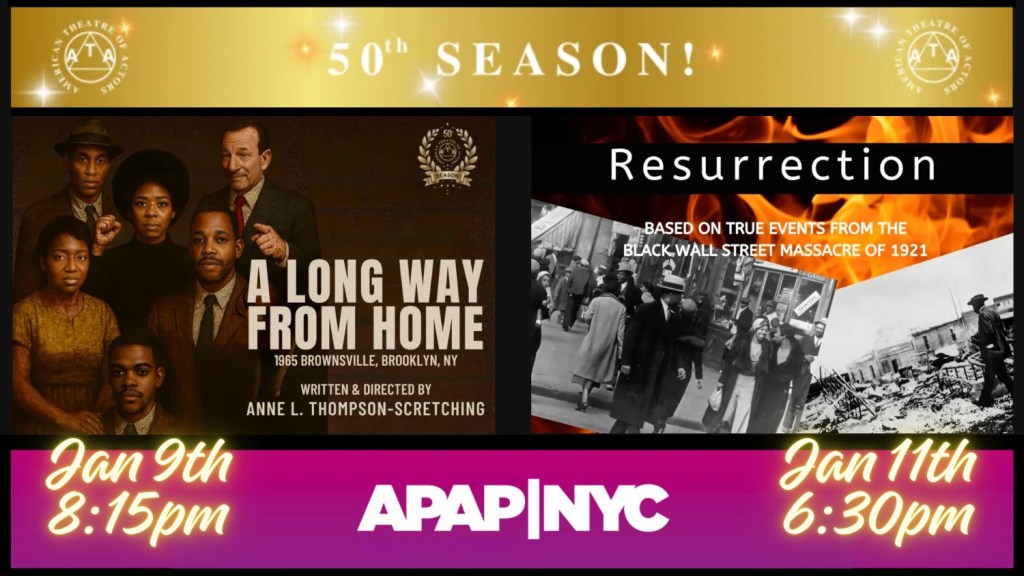
The American Theatre of Actors invites you to join us for A REPERTORY OF TWO PLAYS from ground-breaking playwright, Anne L. Thompson-Scretching: A LONG WAY FROM HOME & RESURRECTION (American Theatre of Actors, 314 W. 54th Street, New York City)
A LONG WAY FROM HOME featuring Ms. D, Gina McKinney, Rommell Sermons, Joy Foster, Kevin Leonard, Laquan Hailey, and Phil Oetiker, A Long Way From Home is the second play in Ms. Thompson-Scretching’s “Blood Trilogy.”

Set in the 1960’s, and follows Shanna Taylor’s family, who has migrated from Macon, Georgia to Brooklyn, New York. They rent an old walk-up in an area called Brownsville.
Escaping from Jim Crow and the Klan in the south, the family realizes segregation and civil unrest is in the North too.
Luella, the daughter, is so disenchanted, she gets involved with the “Black Power Movement.” Jacob, her husband, is away from home carousing for women in the streets. His son, Willie, is duty bound to follow in his father’s footsteps.
Shanna is focused on keeping the family together while saving for her dream home and maintaining her Southern values. Jacob’s older brother, Chester, is a New York big shot. He’s employed as a broker at Falco & Son, who shows Shanna a worthless house that’s been redlined by the bank. Chester steals her money and blames it on her husband. Joe Falco is Chester’s boss, who has him blockbusting the neighborhood.
APAP Members, use code ‘APAP’ for a free seat. Use link or Book in APP under “PHYSICAL THEATRE” Contacts: Jessica Jennings at Conference: 917-773-2933 or Jay Michaels at 646-338-5472 / info@jaymichaelsarts.com
RESURRECTION Featuring Ms. D, Gina McKinney, Rommell Sermons, Joy Foster, Kevin Leonard, Laquan Hailey, and Phil Oetiker, A Long Way From Home is the second play in Ms. Thompson-Scretching’s “Blood Trilogy.” Set in the 1960’s, and follows Shanna Taylor’s family, who has migrated from Macon, Georgia to Brooklyn, New York. They rent an old walk-up in an area called Brownsville.

Escaping from Jim Crow and the Klan in the south, the family realizes segregation and civil unrest is in the North too.
Luella, the daughter, is so disenchanted, she gets involved with the “Black Power Movement.” Jacob, her husband, is away from home carousing for women in the streets. His son, Willie, is duty bound to follow in his father’s footsteps.
Shanna is focused on keeping the family together while saving for her dream home and maintaining her Southern values. Jacob’s older brother, Chester, is a New York big shot. He’s employed as a broker at Falco & Son, who shows Shanna a worthless house that’s been redlined by the bank. Chester steals her money and blames it on her husband. Joe Falco is Chester’s boss, who has him blockbusting the neighborhood.
APAP Members, use code ‘APAP’ for a free seat. Use link or Book in APP under “PHYSICAL THEATRE” Contacts: Jessica Jennings at Conference: 917-773-2933 or Jay Michaels at 646-338-5472 / info@jaymichaelsarts.com
American Theatre of Actors, Inc.
American Theatre of Actors, Inc. (ATA) was founded in 1976 by James Jennings to promote the development of new playwrights, directors and actors, and to provide them a creative atmosphere in which to work. The plays are dramas, comedies, and hybrids, dealing with the social and ethical problems of contemporary society.
12,000 actors have worked at ATA including Dennis Quaid, Bruce Willis, Dan Lauria, Chazz Palminteri, Danny Aielo, David Morse, Edie Falco and Kathryn Hahn. Our productions are sometimes grouped as ‘festivals,’ such as a Playwrights Festival or a Directors Festival. In 2016 we began an initiative to feature women in theatre as directors and playwrights, today this is our WIT! (Women in Theatre) program.
Star Power and Seasoned Talent: The Cast Bringing Richard Vetere’s “ZAGŁADA” to the ATA Stage
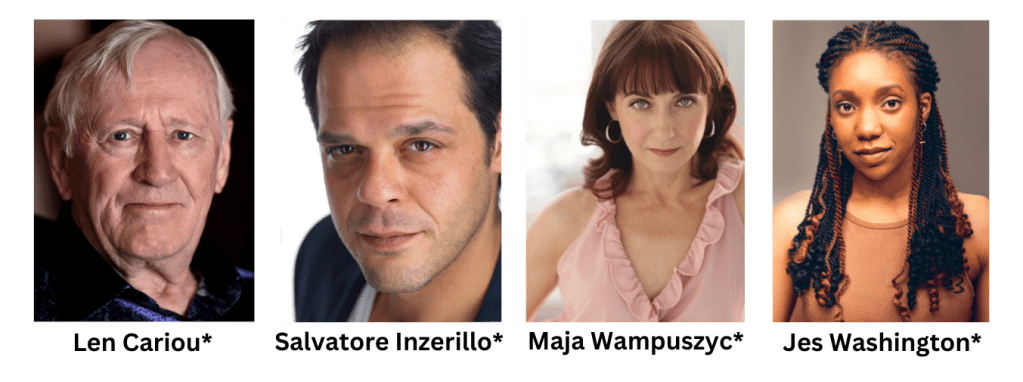
Richard Vetere’s new psychological crime thriller, ZAGŁADA, is set for its New York City premiere at the American Theatre of Actors (ATA), supported by a powerhouse team of Broadway veterans, acclaimed character actors, and an experienced director. The production, running from October 16 to November 2, features the formidable talent of Tony Award winner Len Cariou, leading an electrifying cast to confront a chilling piece of history.
The play, which centers on the arrest of an elderly Maspeth resident—a former kapo in a Nazi concentration camp—demands a cast with the gravitas and skill to navigate the story’s dense layers of historical trauma, moral ambiguity, and high-stakes confrontation.
The Headliner: Len Cariou as Jerzy Kozlowski
Leading the cast is the internationally recognized, Tony Award-winning, and Emmy-nominated Broadway icon, Len Cariou.
Cariou is perhaps best known for his legendary, Tony-winning performance as the title character in Stephen Sondheim’s Sweeney Todd: The Demon Barber of Fleet Street. His extensive, 65-year career spans regional stages, Broadway, off-Broadway, film, and television, earning him membership in the Theatre Hall of Fame. A master of the classical repertoire, he has twice assayed the title role in King Lear.
While his stage career is monumental—recently honored with the 2024 John Willis Award for Lifetime Achievement in the Theatre—Cariou is also a beloved figure on television. For 14 seasons, he played the patriarch ‘Pop’ Reagan on CBS’s hit show Blue Bloods. His recent work includes the award-winning off-Broadway role of Morrie Shwartz in Tuesdays With Morrie.
In ZAGŁADA, Cariou takes on the central and challenging role of Jerzy Kozlowski, the 90-year-old former kapo arrested for shooting a journalist. His casting ensures the character, though morally dark, will be portrayed with a depth and humanity that forces the audience to grapple with the play’s central questions of justice and self-preservation.
The Electrifying Supporting Cast
The veteran performers joining Cariou are charged with portraying the three New Yorkers who must confront Kozlowski and his past: Danielle Hooper (the journalist), NYPD Officer Frank Napoli, and Homeland Security Officer Sonia Sokolow.
Jes Washington
A New York actress, writer, and singer, Jes Washington brings a compelling resume of stage and screen work. A Lifetime Member of the Actors Studio, her dedication to in-depth character work is clear. Her stage credits include off-Broadway productions such as Coping Mechanism and White Woman, Black Boy, and her acclaimed international one-woman show Who Will Sing for Lena. Washington is also known for her television appearances on HBO’s The Gilded Age and CBS’s The Equalizer. Her involvement in workshops directed by figures like Estelle Parsons and Steve Broadnax III further speaks to her commitment to developing challenging new work.
Salvatore Inzerillo
Salvatore Inzerillo is a respected New York-based actor, director, and artistic director, with deep roots in the city’s theatre scene. A member of both LAByrinth Theater Company and The Actors Studio, Inzerillo has worked extensively at The Public Theater and developed over a hundred new plays with leading American playwrights. His stage credits include originating roles in early works by Stephen Adly Guirgis, all directed by Philip Seymour Hoffman, such as In Arabia We’d All Be Kings and Jesus Hopped the ‘A’ Train. He also appeared in The Iceman Cometh with Nathan Lane and Brian Dennehy at BAM. On screen, he is recognizable from roles in Boardwalk Empire, The Deuce, and various Law & Order franchises. Inzerillo’s history with gritty, character-driven material makes him an ideal fit for this psychological thriller.
The Creative Vision: Director Maja Wampuszyc
Guiding the production is director Maja Wampuszyc, who has a close working relationship with playwright Richard Vetere, having directed the development process of ZAGŁADA at the PDW at The Actors Studio.
Wampuszyc is an accomplished actress herself, known for her appearances on Broadway in Irena’s Vow, as well as off-Broadway and regional productions. Her film and TV credits include The Immigrant (with Marion Cotillard), Mona Lisa Smile, The Knick, and Madam Secretary. As a director, her work is recognized for its bold approach, having previously helmed productions in Krakow, Poland, and throughout the U.S. Her deep familiarity with the script and Vetere’s writing ensures an interpretation that is both true to the playwright’s intent and dramatically compelling.
The Creative Home: The American Theatre of Actors (ATA)
The production is staged at the American Theatre of Actors, a venue founded in 1976 by James Jennings. The ATA continues its mission of spotlighting socially and historically resonant works, having produced over 1,000 original plays and served as an artistic home for figures like Dennis Quaid, Edie Falco, and Chazz Palminteri early in their careers. The ATA’s legacy provides the perfect institutional support for a drama that grapples with weighty historical and moral questions.

John Stillwaggon & Carolyn Dellinger celebrate the works of BERNARD J. TAYLOR with a special private showing of TENNESSEE WILLIAMS: PORTRAIT OF A GAY ICON
John Stillwaggon & Carolyn Dellinger celebrate the works of BERNARD J. TAYLOR with a special private showing of TENNESSEE WILLIAMS: PORTRAIT OF A GAY ICON plus other presentations. This event is dedicated to the EMERGENCY FUND OF SAVE THE CHILDREN (All donations go to Save the Children) and the 50th anniversary of the AMERICAN THEATRE OF ACTORS, the host venue of the original New York production. Doors open at Noon; Program begins at 12:30 p.m. on Monday, November 3, 2025 at the Jerry Orbach Theatre, 210 West 50th Street on Broadway, New York City.
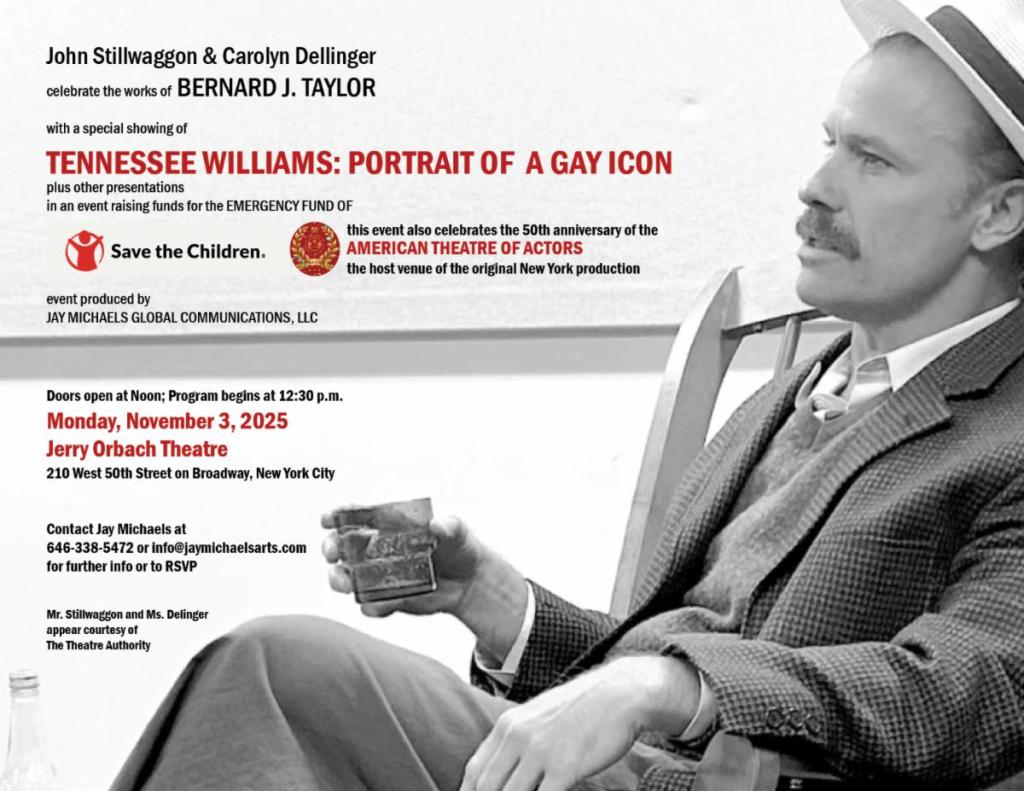
This event is produced by JAY MICHAELS GLOBAL COMMUNICATIONS, LLC (Contact Jay Michaels at info@jaymichaelsarts.com for further info or to RSVP)
Tennessee Williams: Portrait of a Gay Icon an exploration of playwright Tennessee Williams’ “private” life.
After acclaimed national performances, Bernard J. Taylor’s play made its NYC debut to sold-out showings at the historic American Theatre of Actors before garnering the same kudos in the United Kingdom.
Join us for one last showing tributing playwright Taylor and raising funds for the Emergency Fund of the
Save the Children Foundation.
PLOT: Williams is chatting with “old friends” in his home and becomes increasingly inebriated during the course of the visit. The author launches into myriad diatribes about life, love — or the lack and abuse of it, his viciously cruel father, his sister — who received the brunt of that cruelty, and his work in the theatre — or more likely — his work with actors.
Mr. Stillwaggon and Ms. Delinger appear courtesy of The Theatre Authority
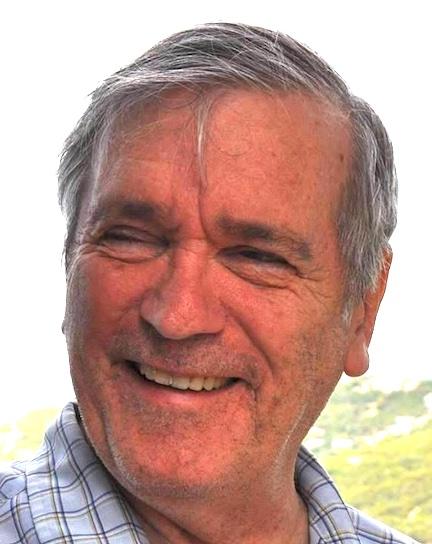
Playwright Bernard J. Taylor had more than 100 worldwide productions of his plays and musicals in more than a dozen countries. His early works were chronicled in the Encyclopedia of Film and Stage Music. In 2013, he was made an Honorary Fellow by the Victoria College of Music and Drama for “services to music and the performing arts.” Recent years have been the most prolific. Six productions of his stage works in San Antonio won eleven awards at the 2015, 2016 and 2017 ATAC awards (San Antonio’s version of New York’s Tony Awards).

Jim Catapano asks “Wherefore Art Thou, Dromio?”
Michael Hagins Knocks It Out of the Park with an Early Farce from the Bard
Aptly named, The Comedy of Errors is a product of Shakespeare’s early period. Sharply plotted and wonderfully absurdist, it draws heavily on misunderstandings, wordplay, physical comedy, and puns. In other words, perfect for a revisit in 2025. Shakespearean Master Michael Hagins has brought the circa-1594 work roaring into the present with a series of summer outdoor performances produced by the Shakespeare Sports Theatre Company, including two at Central Park’s Summit Rock, a perfect venue if there ever was one for this type of production.
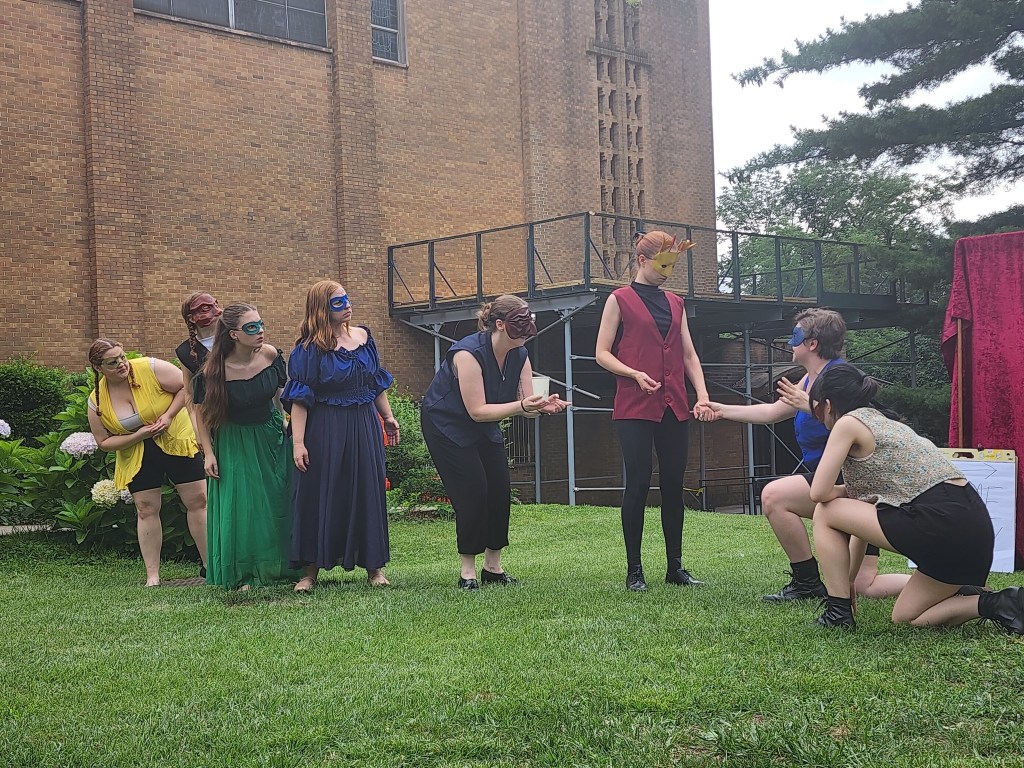
The Comedy of Errors takes place in Greece, and concerns not one, but two sets of twins who had been separated at birth. Antipholus of Syracuse (Vic Gitre) brings his servant Dromio of Syracuse (Emily Glaser) to Ephesus—unbeknownst to them, the city where their respective twin brothers, Antipholus of Ephesus (Charlie Keegan James) and his own servant Dromio of Ephesus (Jennifer Kim) reside. Thus begins a madcap, hilariously chaotic adventure of mistaken identity that is a delightful precursor to the tropes of hundreds of modern film and TV comedies. (The misunderstanding between a goldsmith and the wrong Antipholus, involving an impressive piece of bling, is a particular hilarious highlight.)
Director/choreographer Hagins brings his expert hand to an accomplished production, which incorporates the traditional half-masks of Renaissance Comedia—very handy (or face-y?) in depicting our two sets of befuddled twins. The staging is exceptional and the costumes elegant, and it is a treat to see the performers donning them in the charming park setting, giving a sense of true timelessness to the experience. Props are used to great comedic effect—from finger puppets, to a Sith lightsaber, to a giant swirly lollipop that doubles as a paddle when a certain character gets “out of line”. A red curtain held in place at appropriate junctures makes for some amusing entrances and exits. As evidenced at Summit Rock, the performers use the vast space wonderfully, making entrances from the surrounding trees; running, hopping, and skipping into the scene as they navigate the elevated grass, rocks, and steps. The ensemble possesses an astonishing physicality that is deftly choreographed and well-serves the tone of the play. It adds another level of free-spiritedness to the already deliciously zany piece, which eventually escalates to a hysterical climax that finally features both Antipholuses and Dromios with all the other (comically confused) characters. It makes for an incredibly enjoyable afternoon of classic theatre, beautifully realized by a great director and his expert team. It’s a text that the entire company clearly adores, and that joy is palpably felt by the audience. The Comedy of Errors is an entertaining and enjoyable tale told in an economical 80 minutes, and another positive triumph for Hagins and the Shakespeare Sports Theatre Company.
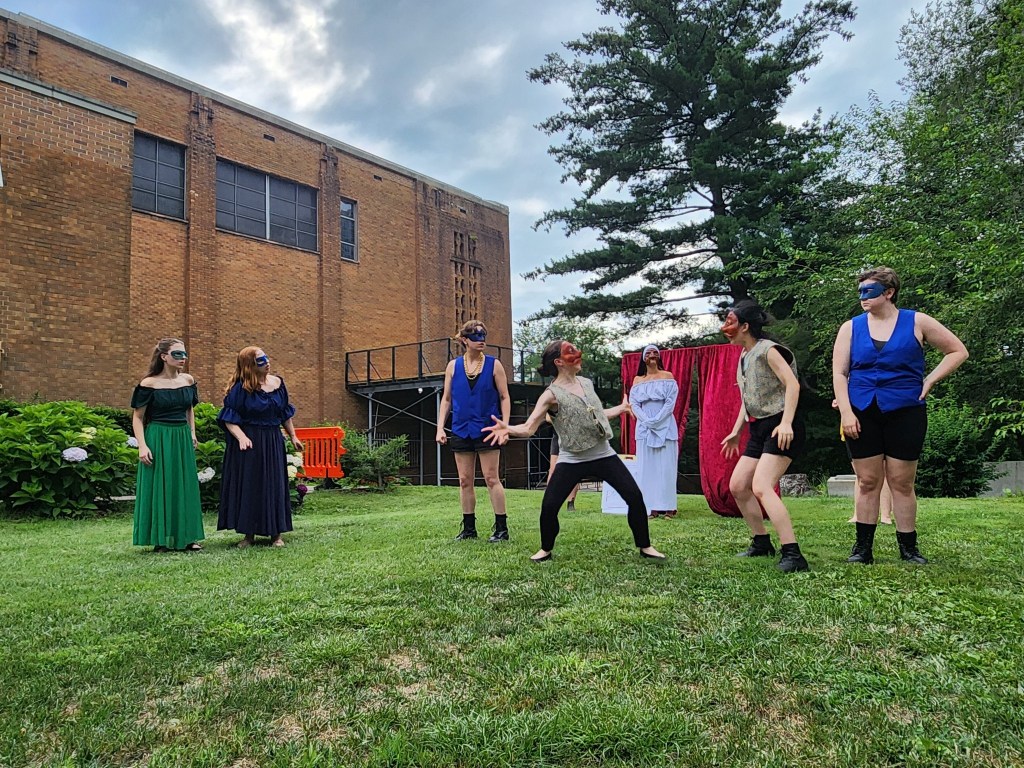
The Comedy of Errors is stage-managed by Adam Sherwin and also features Melissa Meli as Adriana, wife of the Ephesus Antipholus; Erica Gerold is Adriana’s sister Luciana; along with Katie Freimann (Angelo), Lila Ashley Meyers (2nd Merchant), Anna Behrmann (The Duke), Hayley Berketa (Aegeon), and Molly Feisher (Amelia/Dr. Pinch/1st merchant).
“The Interlude of Youth”: A 16th-Century Morality Play Resurrected by Dr. Jeff Dailey, Featuring David Ezell
The American Theatre of Actors (ATA) is currently presenting a rare revival of “The Interlude of Youth,” a captivating morality play from the early 16th century, as part of its Classical Showcase. Directed and co-produced by Dr. Jeff S. Dailey, this production breathes new life into a forgotten piece of dramatic literature, offering audiences a blend of entertainment and timeless moral lessons. Actor David Ezell, a prominent figure in the New York theatre scene, takes on a significant role in this historical staging.

The Play: “The Interlude of Youth”
“The Interlude of Youth,” by an unknown playwright, is a verse-based morality play that charts the journey of a young man’s transformation from a “crude rogue” to a “serious member of society.” True to the morality play genre, its characters bear names such as Riot, Pride, and Lechery, embodying the vices and virtues that guide or corrupt the protagonist. Despite its antiquity, dating back to at least 1514, the play is renowned for its considerable comedic elements, making it one of the most entertaining surviving examples of its kind. The term “interlude” in the early modern period simply referred to a short play.
The play’s enduring message, encouraging viewers to abandon destructive behaviors like gambling, excessive drinking, promiscuity, and the pursuit of money, remains strikingly relevant in contemporary society.
Dr. Jeff S. Dailey: Bringing History to the Stage
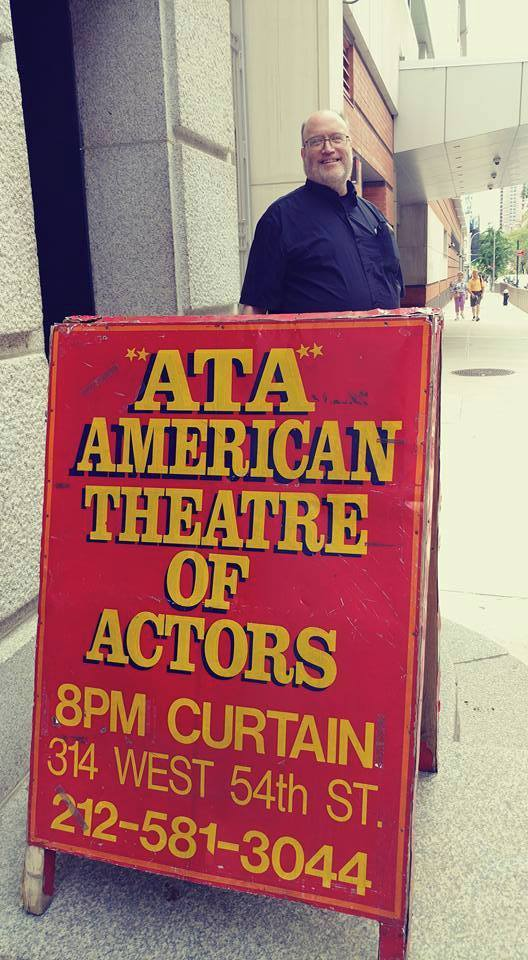
Dr. Jeff S. Dailey, with a PhD in theatre from New York University, has dedicated over 30 years to directing plays at the American Theatre of Actors. His extensive experience has allowed him to delve into and explore a wide range of dramatic works from the past.
Dr. Dailey emphasizes that while medieval theatre is often associated with religious themes, “The Interlude of Youth” stands out as a morality play that, though not overtly religious, aims to inspire a better lifestyle through engaging entertainment. He invites audiences to experience this historical work, which has been captivating people for over 500 years.
David Ezell: A Deep Connection to Classical Theatre
David Ezell, a writer and actor based in Midtown East, brings a profound personal and academic connection to his role in “The Interlude of Youth.” Holding a graduate degree in European history, Ezell was already familiar with the play before auditioning. His English heritage and intensive study of Shakespearean performance at institutions like Soho Shakespeare and the Royal Academy of Dramatic Art further deepen his appreciation for classical works.
Ezell describes his surprise and excitement upon seeing the audition notice for “The Initiation of Youth” (an alternative title), having just completed a run of “Little Women.” He notes that scholars widely believe Shakespeare himself was influenced by this play as a teenager, and to Ezell’s knowledge, “The Interlude of Youth” had never been staged in New York, though it continues to be performed in England. This unique opportunity thrilled him, offering the chance to perform in a foundational work of English theatre.

Ezell’s primary goal for the audience is to help them “get past the language” – true Middle English – and discover the abundant humor within the work. He continuously uncovers new layers of comedy in the text, which are not immediately apparent. Participating in this production has significantly boosted Ezell’s confidence in performing classical theatre, as over 98% of his prior acting experience was in modern works. He credits Dr. Dailey’s “very patient instruction” for this growth.
The American Theatre of Actors: A Home for Developing Talent
Founded in 1976 by James Jennings, who serves as its President and Artistic Director, the American Theatre of Actors (ATA) is a vital repertory theatre company. Comprising 50 actors, 15 playwrights, and 8 directors, ATA’s core mission is to foster the development of new talent in playwriting, directing, and acting, providing a nurturing, creative environment free from the pressures of commercial theatre.
ATA is known for presenting plays that tackle contemporary social and ethical issues. Over its history, the theatre has premiered more than 1000 new works and has hosted over 11,000 actors, including many who went on to achieve significant fame, such as Dennis Quaid, Bruce Willis, Danny Aiello, Dan Lauria, Chazz Palminteri, Kevin O’Connor, William Fichtner, Edie Falco, and Kathryn Hahn.
Upcoming Performances and Future Endeavors
“The Interlude of Youth” is running at The American Theatre of Actors complex, located at 314 W 54th St, New York City, from August 6 to August 17.
Beyond “The Interlude of Youth,” David Ezell plans to continue honing his classical acting skills. He has an upcoming reading for a piece connected to another part of his cultural heritage – Agatha Christie – and hopes to be involved in several upcoming Shakespearean productions, including at least two stagings of “Hamlet.” Ezell is also the co-owner of Camelback Films, whose first film, “Occam’s Beard,” is set to premiere in September, and their second project, “Paper Moon Rise,” is scheduled to begin production in Kansas in approximately two months. Camelback Films has also entered several major competitions, adding to Ezell’s exciting opportunities.
Guest Writer, Manda Slew, discusses Miller’s A View From the Bridge at Modern Classics Theatre
Content Note:
While A View from the Bridge is a period piece set in 1950s Brooklyn, it explores themes that may be difficult for some viewers. The production includes depictions of immigration raids, which despite their historical contextcmay evoke distressing parallels to modern-day ICE activity. Additionally, the story involves emotionally charged dynamics of incest-adjacent longing, sexual jealousy, and homophobia, particularly directed toward one of the immigrant characters. These elements are central to the dramatic tension and are portrayed with seriousness and emotional weight. Audience members sensitive to these topics are encouraged to approach the production with awareness.
A View from the Bridge
Presented by Modern Classic Theatre
Walking into the BACCA Arts Center in Lindenhurst for A View from the Bridge by Arthur Miller, directed by Emily Vaeth, was quite a treat. The team transformed the venue into a black-box-style theater, seating roughly 50 patrons depending on the arrangement, and the intimacy of the space was used to full advantage.
Before a single line of dialogue was spoken, the world was already pulsing with life. In the center, Beatrice (Camille Arnon) moved about the apartment, humming along to Perry Como’s Chi-Baba, Chi-Baba while prepping dinner. Catherine (Jules Donahue) bounced between reading, dancing, sipping, and sighing bored, bright, and bursting with that specific teenage ache. Beyond the apartment walls, the community stirred: Louis and Mike (Kevin Russo and Thaddeus C. Plezia) made their rounds like neighborhood fixtures; Mrs. Lipari (Natalia Cotto) dominated the public phone with everyday urgency; and the silent shadow of the immigration officer (Alex Rich) drifted in and out, a subtle yet constant reminder of looming consequence.
This immersive pre-show tableau was a brilliant directorial move. In such a close space, it pulled the audience inward slowly and organically. You weren’t just watching a play you were already inside a Brooklyn neighborhood, witnessing the rhythms of daily life before the conflict ever cracked through.
Big praise is due to set designer Ian Freed for the thoughtful, minimal design. The perimeter of the playing space, with its suggestive dockside textures and city street grit, subtly framed the action. Streetlights glowed just enough to evoke Red Hook’s moody hush. One particularly smart touch was the elevation used to frame Alfieri’s (Derek McLaughlin) office a raised area that gave the narrator a quiet vantage point from which to observe and reflect. It gave his role both physical and emotional distance, reinforcing the sense that this was a memory being retold, a tragedy already written in the bones of the set.
More well-deserved praise for the lighting and sound design by Dan Caney. The pre-show playlist Peggy Lee, Perry Como, Sarah Vaughan rooted the show in time and place before a single line of Miller’s text was spoken. The use of “practical” streetlamps, apartment lights, Alfieri’s office lamp was especially effective in establishing tone and texture. That said, during scenes staged on the far leg of the thrust (where one row of the audience was seated), lighting occasionally failed to fully illuminate the actors during key monologues. While these moments didn’t erase the emotional clarity of the scenes, they were noticeable. Still, given the challenges of lighting such an intimate, three-sided space, Caney’s work achieved a rare balance: immersive mood and respectful shadow that allowed the audience to observe, not intrude.
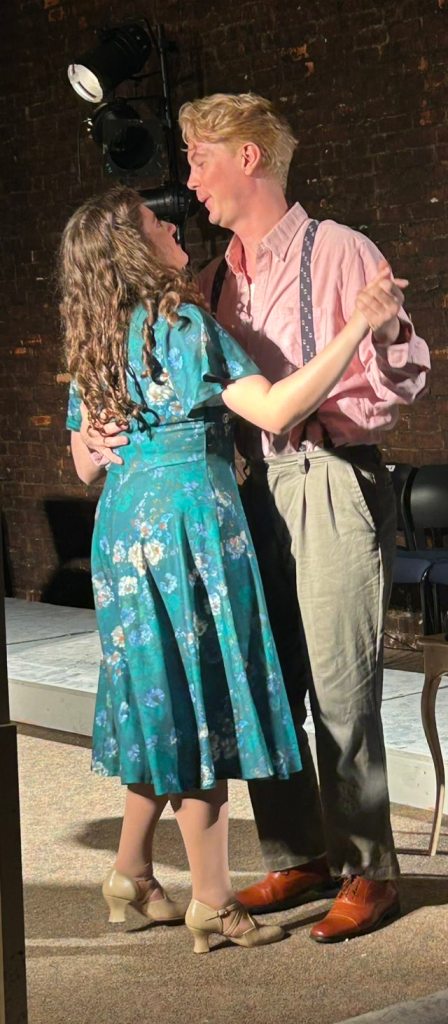
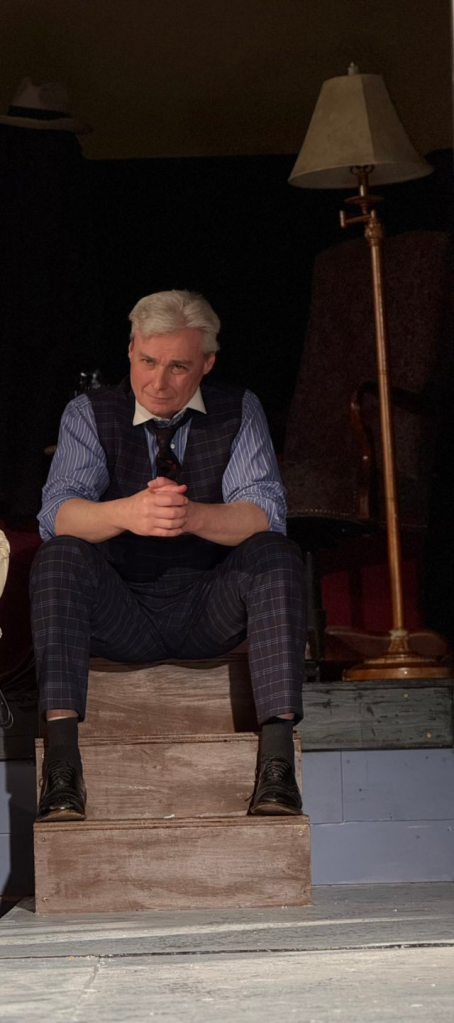
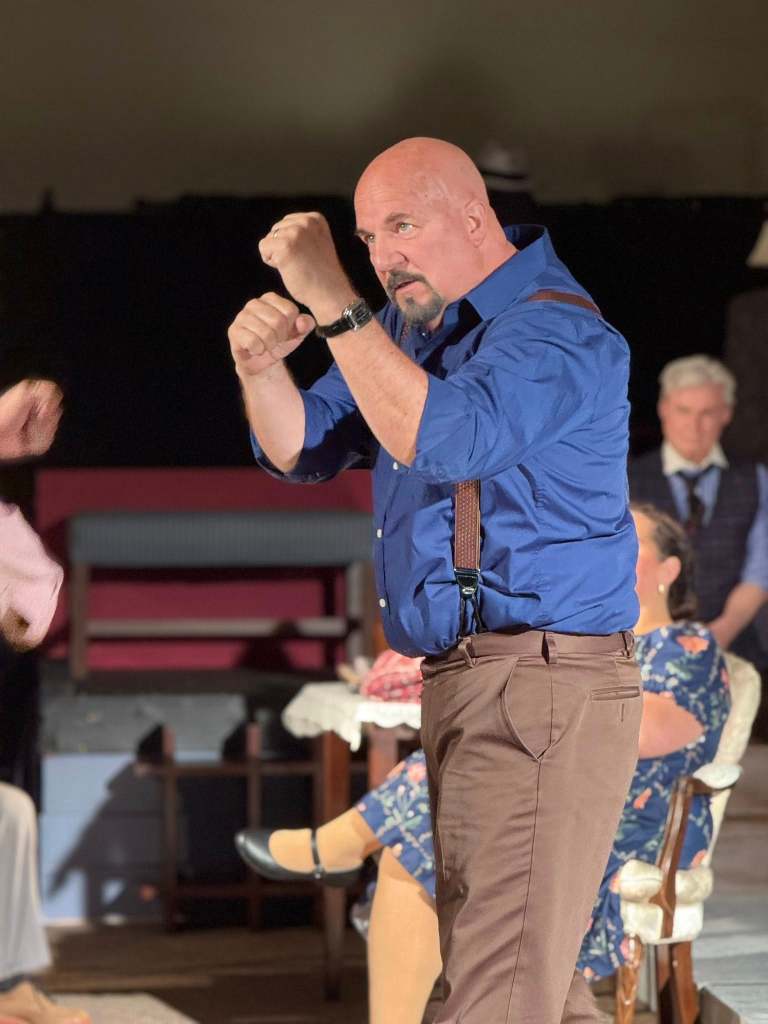
A special shout-out is due to the ensemble the so-called “smaller” roles that were anything but. Mr. and Mrs. Lipari (Leo Pompeo and Natalia Cotto), Mike and Louis (Thaddeus C. Plezia and Kevin Russo), and the Immigration Officers (Plezia and Alex Rich, pulling double duty) each brought thoughtful, grounded performances to the stage. Nothing felt phoned in or filler. Mike and Louis’ roughhousing camaraderie added humor and heart, while Mrs. Lipari’s no-nonsense phone habits brought real texture to the neighborhood. And Mr. Lipari? With his bloodstained apron and commanding stillness, Leo Pompeo exuded strength a figure you didn’t want to cross. Every glance, every shrug, every entrance had intention. This was an ensemble that knew how to build a world.
Derek McLaughlin’s Alfieri the narrator, conscience, and weary moral anchor was another standout. He brought a quiet, almost grandfatherly presence to the role, the kind of man who’s seen too much but still hopes for better. His lines were delivered with calm clarity and deep empathy, grounding the narrative in reflection and grief. Though a lawyer by trade, McLaughlin’s Alfieri radiated heart. You never doubted he wanted to do right by everyone involved, even as the story slipped through his fingers like sand.
Tim Smith as Eddie Carbone delivered a powerhouse performance. At first, he was the everyman: likable, steady, the guy who’d give you the shirt off his back. But as the undercurrent of possessiveness and jealousy surged, Smith didn’t miss a beat. His descent into emotional torment was layered and fully believable. One minute, you felt for him this man losing the only world he’s known. The next, you recoiled as the truth of his desires surfaced. He made Eddie both monster and man, and it was riveting.
Camille Arnone’s Beatrice was a masterclass in restraint and heartbreak. With every glance and carefully timed outburst, she built a woman trying to hold her world together while watching it slip away. Her keeping her jealousy of Catherine from boiling over was never cartoonish; it was human. She gave Beatrice dignity, fire, and unbearable sorrow all at once. You just want to hug her.
Jules Donahue’s Catherine was precise and technically strong never a line dropped, never a mark missed. Her portrayal leaned slightly more self-aware than one might expect for such a sheltered character, which occasionally made her feel more rehearsed than raw. Still, she captured Catherine’s central confusion especially in scenes with Eddie beautifully. You saw the girl trying to define love, identity, and independence in a world that hadn’t given her a language for any of it.
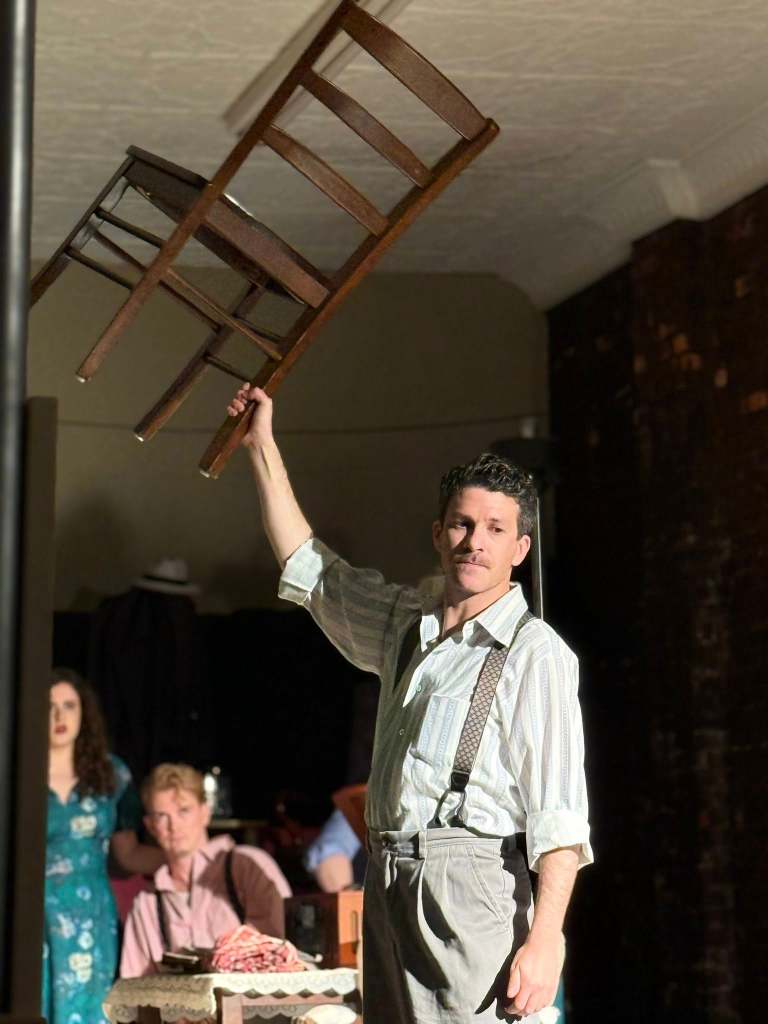
Andrew Accardi’s Marco brought big brother gravity in a small frame. With solemnity, strength, and just the right amount of quiet threat, he made it clear this man had crossed oceans for his children and would not be disrespected. The iconic chair-lift moment landed like thunder. Accardi’s Marco was no con artist, no passive guest. He was a protector. A man of few words but boundless integrity.
And then John McGowan. Rodolpho.
If there was a show-stealer, it was him. McGowan’s boyish charm was undeniable. He made it crystal clear why Catherine might fall for this wide-eyed Italian dreamer. He was goofy and elegant, sweet and proud. And when the accusations came, when his future was questioned, McGowan showed us the urgency and reason for the dream. This was a man who wanted to become something not just escape something. Even after the show, the audience was buzzing. Rodolpho was unforgettable, and McGowan lit up the stage with every step.
If there was one element that didn’t fully land, it was the larger fight choreography. While the boxing scene between Eddie and Rodolpho was sharp and brilliantly executed tense, clean, and full of subtext the ensemble fight sequences near the end felt a bit chaotic. With action happening so close to the audience on all sides, clarity was occasionally lost. That said, it never dulled the emotional impact of the story, nor the performances within it.
In all, A View from the Bridge was a stunning piece of theater. Intimate, emotionally charged, and brimming with heart. The performances were grounded. The design was intentional. The direction was brave. If you have the chance to catch it, do. The show runs one more weekend: Friday, Saturday, and Sunday at the BACCA Arts Center in Lindenhurst.
Support local theater. Let it break your heart and feel things.
Nothing Left but the Kindness of Strangers: A Jim Catapano Review
Bernard J. Taylor’s Tennessee Williams: Portrait of a Gay Icon Brings a Legend to Life at the ATA
Tennessee Williams is alone on stage, and at this point, apparently alone in life. Seen on a lecture tour, he is surrounded by posters of his most famous works: A Streetcar Named Desire, The Glass Menagerie, Cat on a Hot Tin Roof; the face of his muse, Anna Magnani, stares out at us from a poster of The Rose Tattoo. Another wall is plastered with manuscript pages, relics of an era when creativity flowed. Pictures of his beloved sister Rose, his parents (one loving and one abusive), and his life partner Frank Merlo are on the table next to the chair from which he tells his story. They are all ghosts now—the only companion he has with him is a bottle of Vodka. He reminds himself to take “small sips”, but as his trauma comes to the surface these become heavy gulps. His laughter gives way to gasps of despair; he hugs the chair and sobs, imagining it to be Frank in his late partner’s last moments. He screams out Anna’s name in utter desperation for a companion for comforting and understanding than a liquor bottle.
John Stillwaggon as Williams is astonishing; one feels they are genuinely spending an evening with the legendary writer. Williams bares his soul, exorcises his demons and welcomes them back in again, and we feel we are witness to something extraordinary, as turns triumphant and tragic. The south of the mid-20th century comes to life in his words, and his disdain for the dreaded city of St. Louis is a hilarious running theme amidst the sadness.
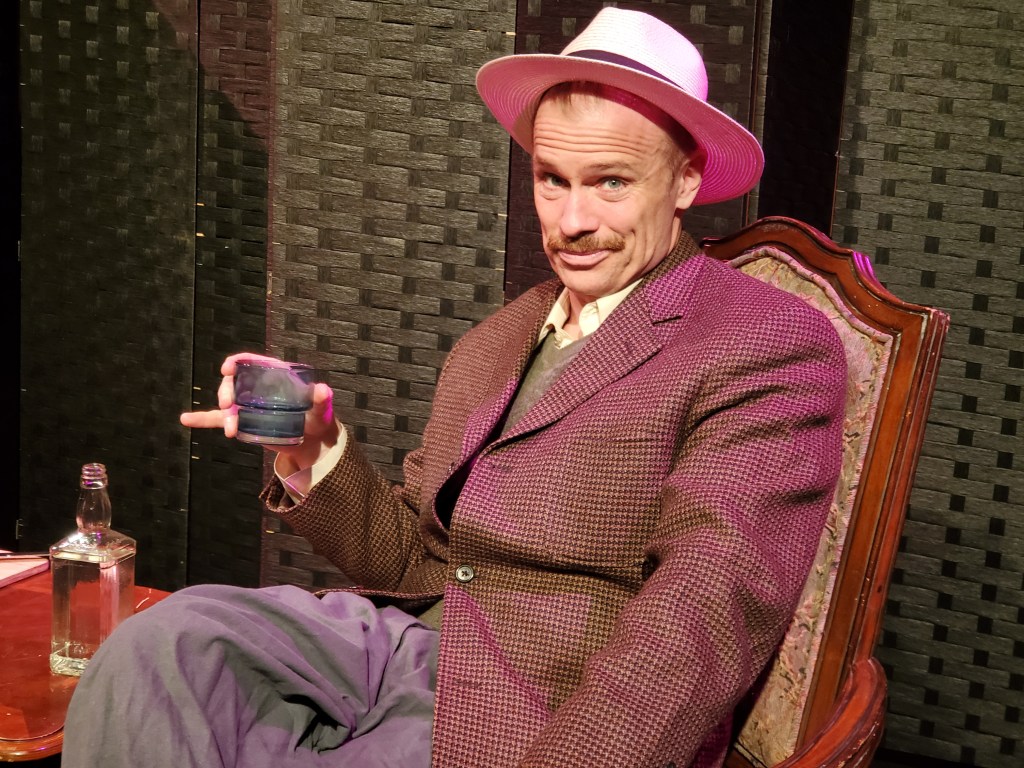
A gay man in a time and place where that was not treated kindly, Williams is portrayed by Stillwaggon as defiant, boisterous and charismatic, while simultaneously tragic and heartbreaking. He laments the fate of his beloved Rose, inspiration for Laura in The Glass Menagerie, and the victim of a lobotomy in a time when mental health was even more misunderstood than it is today. He mourns his beloved Frank and curses his vile father, who he says he only got along with “after he died.”
He gushes at the magnificence of the young Brando and rages against the critics—and at “the dying of the light,” noting that he’s once again “graverobbing” from other artists. “They say Dylan Thomas went to the White Horse Tavern…drank 18 shots of whiskey and dropped dead,” he remembers, glancing at the Vodka bottle and musing that he’s likely halfway there himself. It’s funny until you realize he likely wants to complete the journey.
The production is a must-see for the masterful performance of Stillwaggon, who recreates the swagger, wit, charm and pathos of Williams perfectly. It is directed deftly by Carolyn Dellinger, with a brisk pacing that complements Stillwaggon’s performance and Taylor’s writing expertly. It provides great insight into not only the story of one legendary artist, but the very notion of the highs and lows of fame, and the “having and losing” nature of life itself.
Tennessee Williams: Portrait of a Gay Icon, as part of the Icons Festival, runs at the American Theatre of Actors through June 15, 2025.
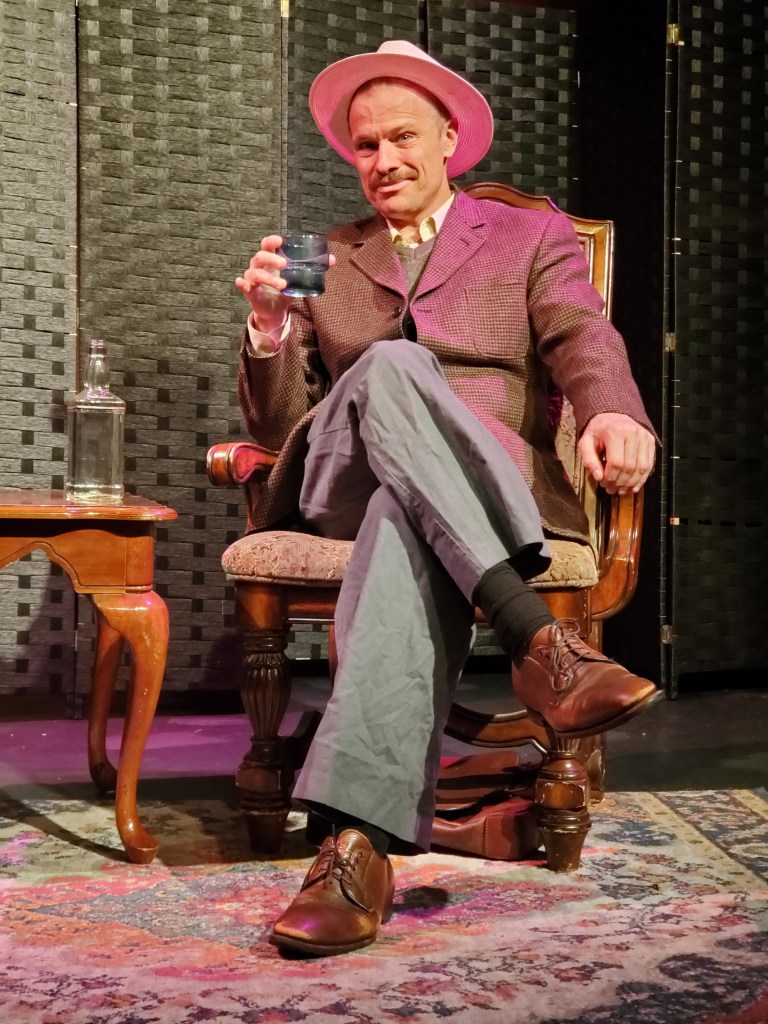

American Theatre of Actors announces Jessica Jennings as New Executive Director on Eve of 50th Anniversary
The American Theatre of Actors (ATA), a cornerstone of New York City’s off-off Broadway scene, today announced the appointment of Jessica Jennings as its new Executive Director. This announcement comes as the venerable institution approaches its 50th anniversary in 2026. James Jennings, the theatre’s esteemed founder, will continue in his role as Artistic Director.
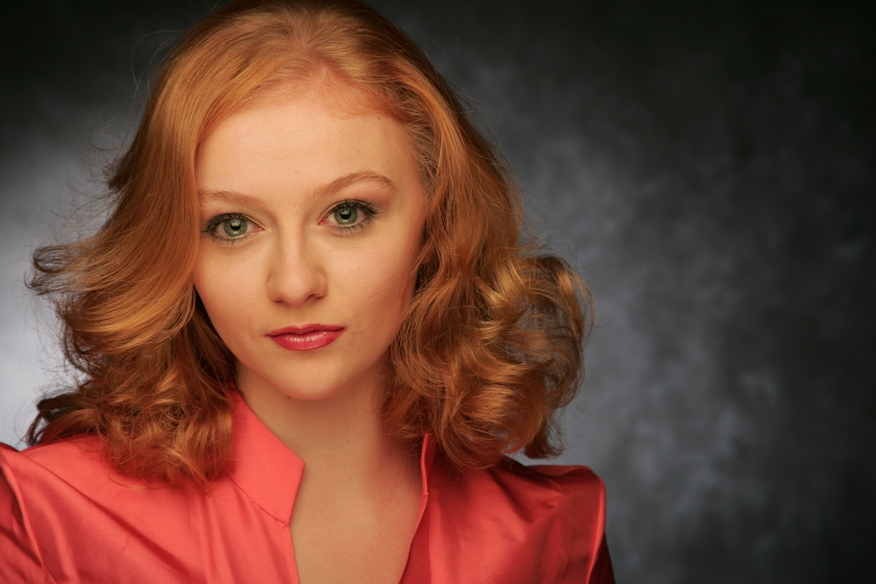
“I’m thrilled to continue the tradition started by my father in 1976 and now to bring the theatre forward into the next generation of the 21st century,” said Jessica Jennings, a multifaceted theatre artist with a distinguished career as a director, actor, dancer, and producer.
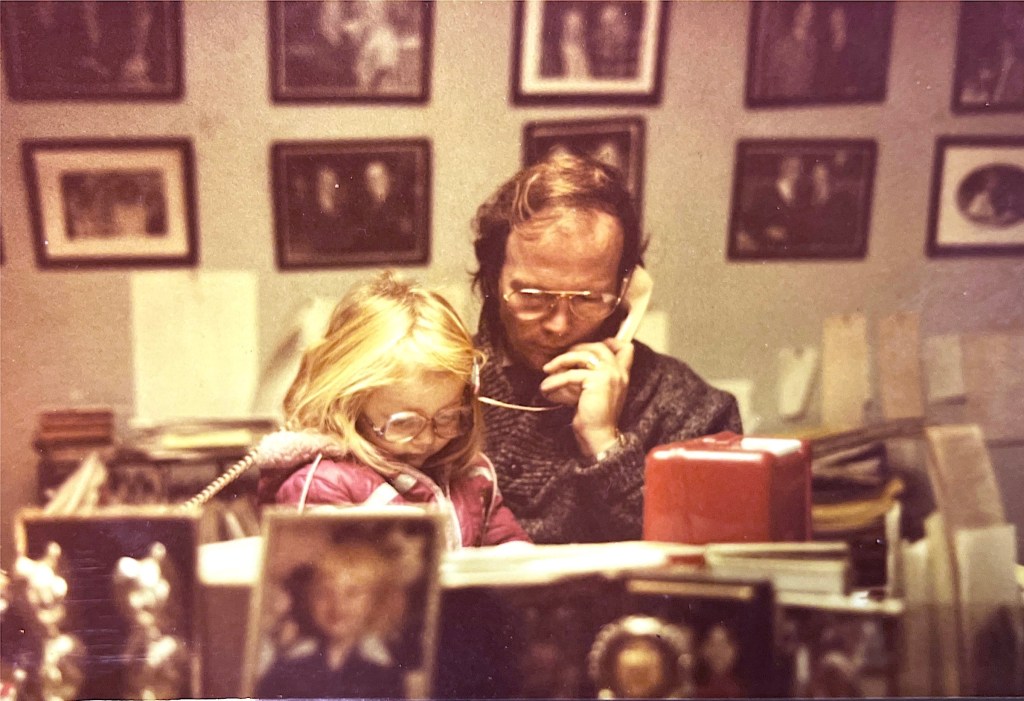
James Jennings, a celebrated figure in independent theatre renowned for directing the complete Shakespearean canon and his work with legends like Elia Kazan, Lee Strasberg, and Harold Clurman, expressed his pride: “I’ve watched Jessica go from that little girl looking over my shoulder to a celebrated director/actor/dancer and producer. Her plans and ideas are already bringing a new dimension to all three theatres in the ATA complex.”
Jay Michaels, ATA’s longtime press representative, echoed this sentiment, stating, “The Jennings family has truly placed itself as a prominent arts family in the indie arts scene of New York! Jessica’s vision is a dynamic force for the ATA’s future.”
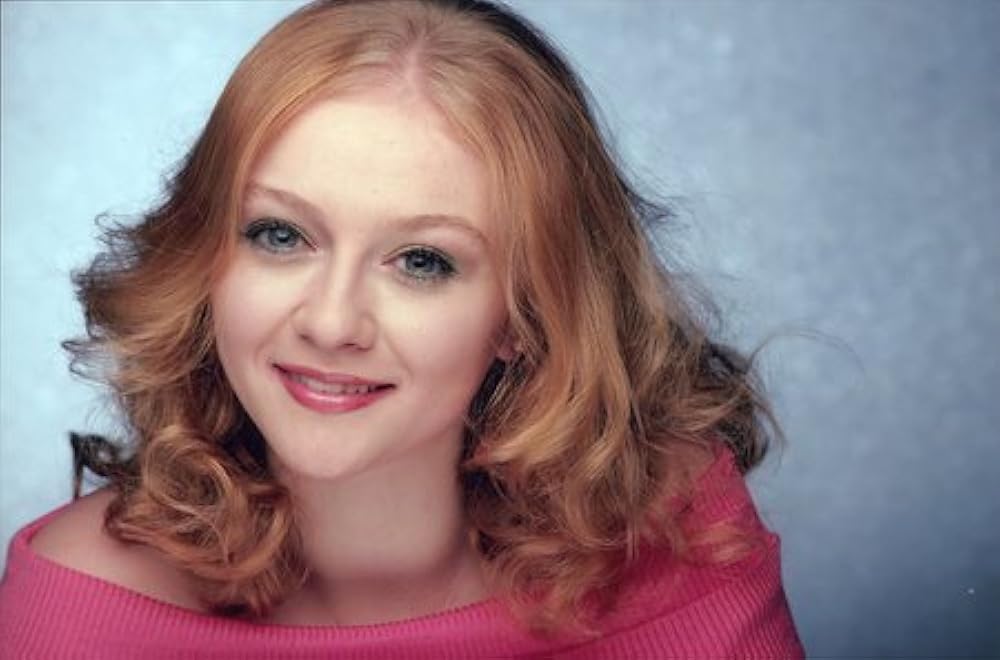
Jessica Jennings brings a wealth of experience to her new role. She holds a BFA in Dance from the University of the Arts and a certificate from the Martha Graham School of Dance, where she was a Van Lier Scholarship recipient. Her dance career includes performances at the Philadelphia Fringe, Edinburgh Fringe, and the Etruscan Riviera Festival, as well as collaborations with renowned choreographers and companies. Notably, she danced in Cinderella with the Fort Worth Ballet at City Center and served as a dancer and dance stand-in for Bryce Dallas Howard in M. Night Shyamalan’s film, The Village, where she also assisted in teaching period dances to the cast.
As a director, Ms. Jennings has garnered accolades, including audience-vote awards for her productions at the John Chatterton Festival and Testo-Genius, the Jean Dalrymple Award for A Midsummer Night’s Dream at ATA, and a Princess Grace Award nomination for Romeo & Juliet.
Her acting credits are equally impressive, ranging from childhood appearances in commercials to lauded performances on the ATA stage, including Ophelia in Hamlet, Katherine in Taming of the Shrew, and Lady Macbeth. She has also performed in numerous Shakespearean productions and Off-Broadway shows.
Beyond her artistic achievements, Ms. Jennings possesses significant business acumen gained from managing multi-million-dollar retail locations and her experience in development at the Spanish Repertory Theatre (Repertorio Español). As the founding Board President of Ripple Effect Artists, a social-justice theatre, she honed her skills in theatre management and development, co-producing Off-Broadway shows and SAG short films. In 2021, she established Alchemy Theatrical Consulting, assisting indie theatre clients with various aspects of production and management. She has since returned to the American Theatre of Actors, contributing to rebranding, archiving, marketing, and business development.
American Theatre of Actors
Founded in 1976, the American Theatre of Actors is a vital repertory theatre company dedicated to fostering new talent in playwriting, directing, and acting. Over its history, ATA has presented over 1000 new works and provided a platform for more than 11,000 actors, including notable names such as Dennis Quaid, Bruce Willis, and Edie Falco.As the American Theatre of Actors looks towards its next 50 years, the appointment of Jessica Jennings as Executive Director signals a dynamic new chapter for this influential institution.
Contact info@jaymichaelsarts.com for further info

Julie Lorson: A Theatrical Force Multiplied in MCTLI’s “As Bees in Honey Drown”
Anya Kai, reporting
For Julie Lorson, a dedicated board member of Modern Classics Theatre of Long Island, theatre isn’t just a hobby – it’s a way of life. Her involvement spans far beyond the stage, encompassing producing, stage managing, technical operations, publicity, and even prop and costume sourcing. This deep commitment makes her inclusion in the cast of “As Bees in Honey Drown” at the BACCA Arts Center a particularly significant contribution, showcasing her multifaceted talent.

While deeply involved behind the scenes, “As Bees in Honey Drown” marks only Lorson’s third main stage performance with MCTLI, following her roles in “The Curious Savage” (alongside fellow cast member Christina O’Shea) in 2022 and “The Curious Incident of the Dog in the Nighttime” in 2023. She has also been a consistent participant in their annual One Minute Play Festival, demonstrating her consistent engagement with the company.
Lorson’s connection to “As Bees in Honey Drown” began during the play selection process for the season. Among thirty scripts, Beane’s work stood out for its “brilliantly written and incredibly witty” dialogue. She was particularly drawn to the central character of Alexa Vere de Vere, whom she describes as the aspiration of every actress, a compelling “anti-hero” who is both captivating and detestable. Lorson also appreciates the rarity of a show driven by a strong female lead, making this production particularly appealing to her.
Despite the play being set in the late 1980s and early 1990s, Lorson finds its themes strikingly contemporary. She draws a parallel to the recent news surrounding Anna Sorokin, whose real-life deceptions bear a remarkable resemblance to Alexa’s schemes, even playfully suggesting Sorokin might have drawn inspiration from the play. This relevance underscores the enduring nature of the play’s exploration of ambition and artifice.
In “As Bees in Honey Drown,” Lorson takes on the ambitious task of portraying six distinct characters, each demanding unique costuming, accents, wigs, and shoes. This demanding feat has led to a significant personal realization. “I play six different characters, with 6 different costumes, 6 different accents, with 5 different wigs, 4 pairs of shoes and it’s a lot. But I learned that I can handle more than I thought,” she reflects. This challenge has proven both demanding and deeply rewarding, showcasing her versatility as a performer.
Lorson finds inspiration in the transformative power of wigs, particularly referencing a Tracy Ullman stand-up skit where wigs embody distinct personalities. This concept serves as a key influence for her multiple roles in the play. Beyond this specific inspiration, she admires the powerful presence of Broadway divas like Ethel Merman, Patti LuPone, and Audra McDonald, as well as the sharp wit of female comedians such as Judy Gold, Lisa Lampanelli, Amy Schumer, and Sarah Silverman.
As a self-described “comedic actress,” Lorson’s primary mission is to evoke laughter from the audience. “I feed off of laughter,” she admits, highlighting the symbiotic relationship between performer and viewer. She also emphasizes her responsiveness to the audience’s reactions, adjusting her performance to their preferences.
Interestingly, despite holding a degree in film theory, Lorson has no aspirations for a career in film acting. The prospect of multiple takes for a single scene holds little appeal for this “one and done type of girl,” further solidifying her passion for the immediate and dynamic nature of live theatre.
Lorson humorously describes her weekend role as a birthday party clown, where she enjoys the enthusiastic reception from her young audience. However, her true appreciation lies with performing for “theatre people” who understand the dedication required to mount a successful production. While her family offers their support, she notes that only her theatre-involved father truly grasps the intricacies of the process.
When considering who “needs” to see “As Bees in Honey Drown,” Lorson highlights its dual nature as a mystery, following Evan’s unraveling of Alexa’s identity, and a character study in multiple personalities. This makes it particularly appealing to mystery enthusiasts and fellow actors seeking to observe the complexities of portraying diverse roles.
The intricacies of managing numerous wigs have become a running joke within the production. “We joke that the show isn’t actually about Alexa and Evan but about the 13 wigs we use throughout the piece,” Lorson quips. A specific challenge lies in differentiating between her various British accents, ensuring her “proper British accent doesn’t sound too much like my Cockney British accent.”
Looking ahead, Lorson is eagerly anticipating her role as Beth in “Birthday Candles” at Lighthouse Repertory Theatre. This production marks her fourth consecutive show since early May, leaving her with a packed schedule until her brief “break” around July 4th, which will be followed by a cabaret performance.
Julie Lorson’s deep-seated love for theatre, her willingness to tackle multifaceted roles, and her dedication to engaging the audience make her a vital part of Modern Classics Theatre of Long Island’s production of “As Bees in Honey Drown.” Her ability to seamlessly transition between six distinct characters promises a dynamic and entertaining experience for all who attend.

 Arts Independent