
Creativity and Connection, Challenged in a Changing World
Richard Vetere’s Compelling Poet on a String Draws Eerie Parallels between 1939 and Today
As the 1930s faded and the reality of another World War loomed, the artists of the time were facing their own crossroads. Film was becoming the dominating medium, and the culture-changing era of Television was fast approaching. The poet Delmore Schwartz (Sam Cruz), only 26 but already studiously examining his “past”, rages against the new paradigm, mocking the very notion of a “screenwriter” as a meaningful pursuit.
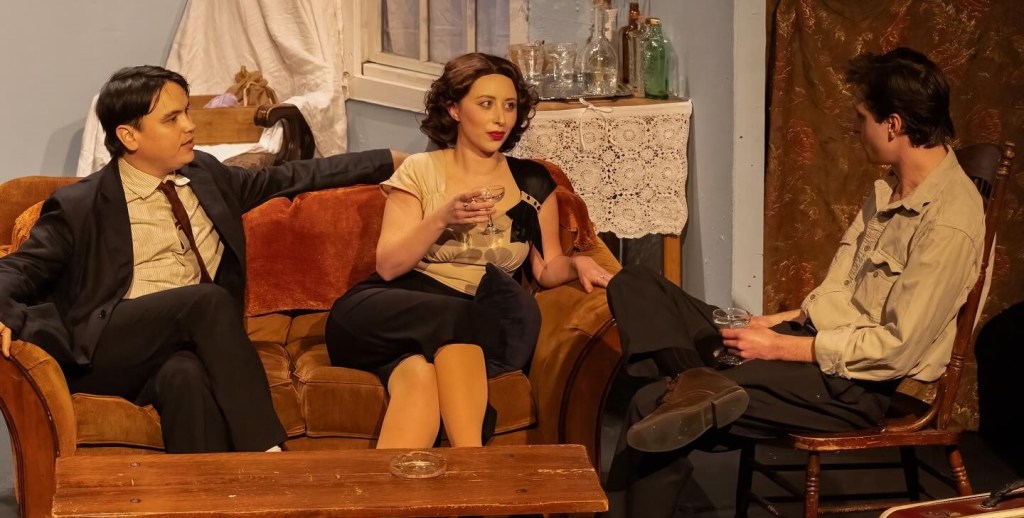
Delmore’s wife of two years, Getrude Buckman (director Amber Brookes), is also a writer, but this means little to the narcissistic, dismissive Delmore. “I don’t think she has talent, but I love her just the same,” he confesses directly to the audience at play’s opening. But the “love” part is seriously in doubt as well, as it becomes evident that Delmore sees Getrude solely as the muse to fuel his own brilliance.
“I have a big ego because I’m a genius!” he bellows.
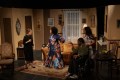
In the midst of the couple’s play-acting at a healthy partnership, they arrive at the home of friend and fellow writer James Agee (Joseph Monseur) to spend the summer weekend boozing and philosophizing. James is primarily a journalist and commentator who is doing a piece for Life magazine on Delmore. But in stark contrast to his friend and interview subject, James is planning to jump headfirst into the modern way of storytelling, aspiring to be one of the Hollywood screenwriters that Delmore scoffs at. In between drinking and flirting with Gertie, James likes to wander off and seek out the ghost of his father, who died very young, and according to James appears nightly on the grounds to have a chat.
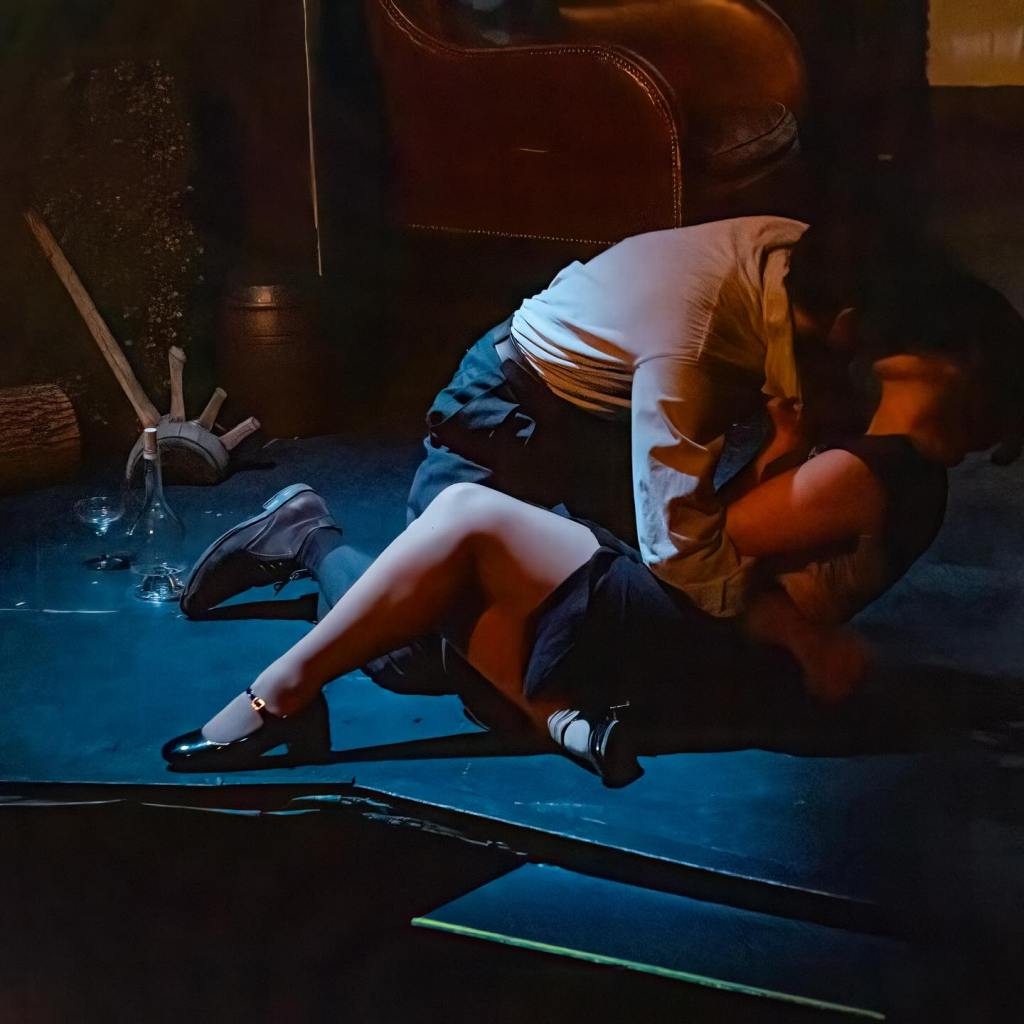
Thus begins an intense 48 hours that examine the fragility of relationships as the tidal wave of global change on many fronts threatens to consume them. James is self-destructive, Delmore is paranoid and rigid; Getrude struggles to be seen as an individual with a creative voice that deserves to be heard.
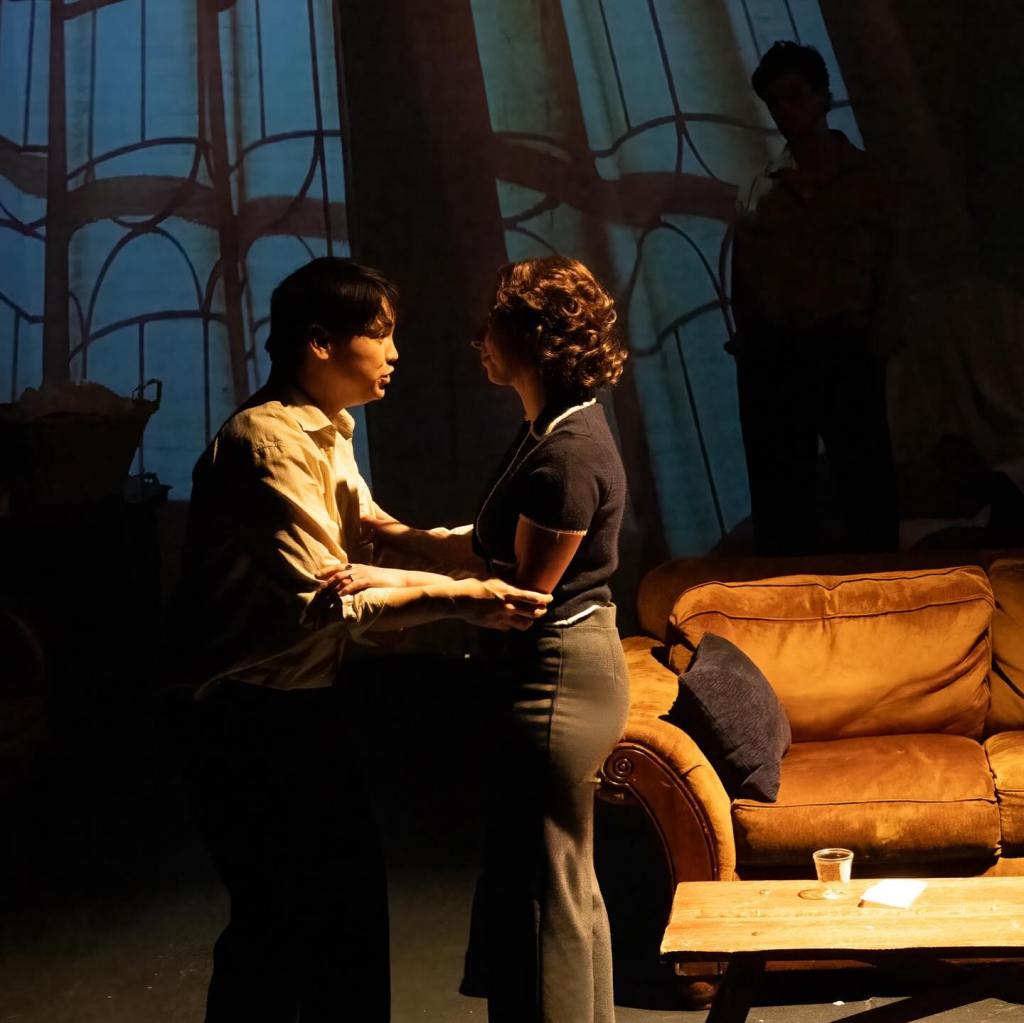
“I don’t want to be his muse!” a defiant Gertrude proclaims to James. “I’m searching for my own.”
A passionate debate between Delmore and James illustrates the crux of the conflict. “When poets destroy other poets, they are falling into the hands of the Philistines,” seethes Delmore. “The people must read poetry, they must shun the movies, they must be allowed to learn and question life—not deny pain and suffering. Movies perpetuate fantasy: We are a culture of denial.”
“Let’s join the culture of denial!” responds James, urging Delmore to join him on the “dark side” by coming with him to Paramount to write movies together.
Vetere and Brookes have come together to create a production that not only gives a tantalizing fly-on-the wall-look at three real-life artists in the pivotal year of 1939, but also holds tremendous relevance up to those of us navigating the treacherous waters of 2026. The dawn of the Golden Age of Hollywood mirrors the rise of AI. When Delmore condemns film as an affront to genuine artistry and a catalyst in the diluting of audience intelligence, we can’t help but shudder at where we are now, as the even greater danger of Artificial Intelligence threatens to utterly destroy the human component so crucial to creativity. That said, Agee’s point of view must also be considered; if the creative world is changing and nothing can stop it, the only options are to ride or die. This conundrum, along with the tension among the characters, is presented with astonishingly strong dialogue, deft direction and terrific work by the cast. Many of the things the characters say are based on extensive research, with Vetere’s artistic flourish painting a realistic picture of what may have happened that fateful weekend. There are many witty, laugh-out loud moments to complement the dramatic intensity and powerful performances, making Poet on a String a modern classic and a must-see.
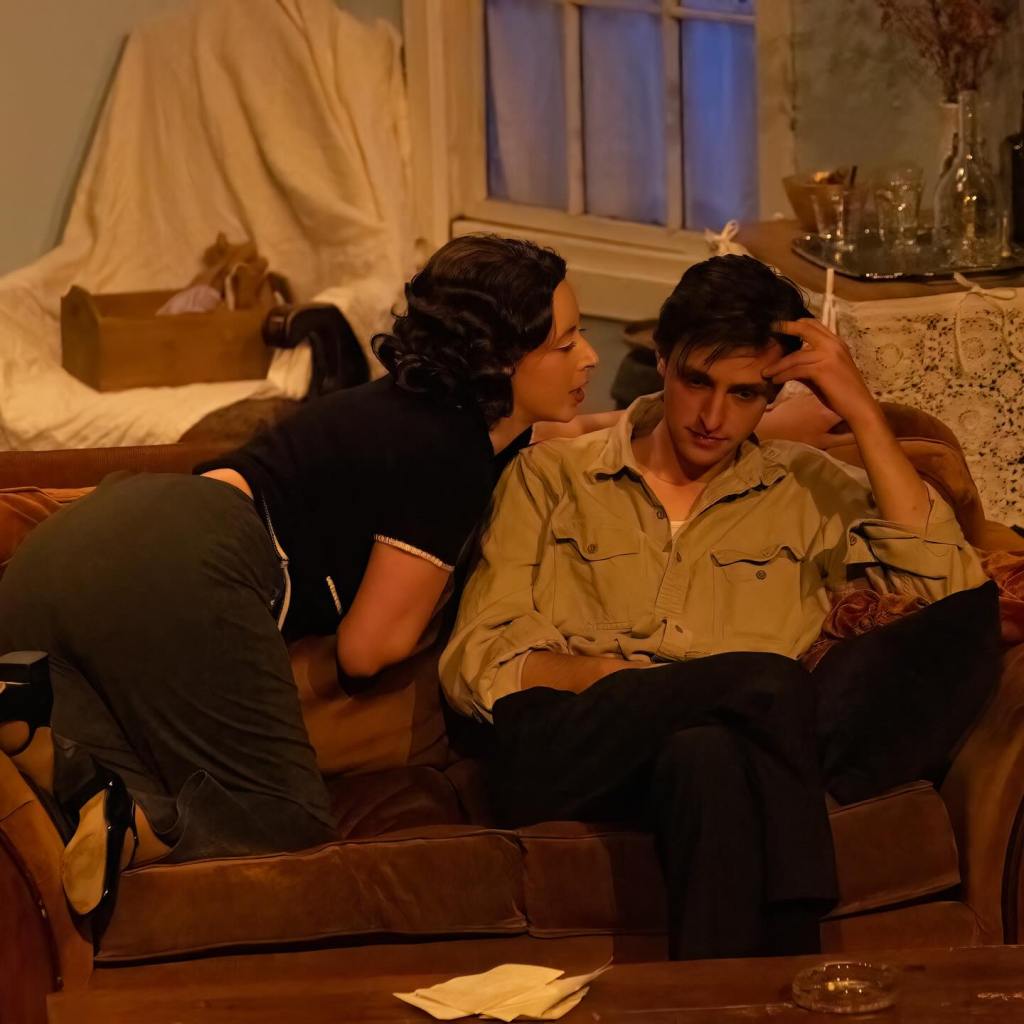
Note that the production features two rotating casts, allowing for audiences to enjoy different interpretations of these literary icons and this very relevant artistic dilemma: The second cast features Dustin Pazar as James, Elizah Hill as Gertrude, and Jake Minter as Delmore.
Poet on a String runs at The Sargent Theatre at The American Theatre of Actors through April 12, 2026.


 Arts Independent