
Home » Posts tagged 'writing'
Tag Archives: writing

A Star Who Burned Brief and Bright: Jim reviews the life of Raúl Juliá
Robert Liebowitz Celebrates the Great Raúl Juliá in the Old Skool Playwrights’ Festival
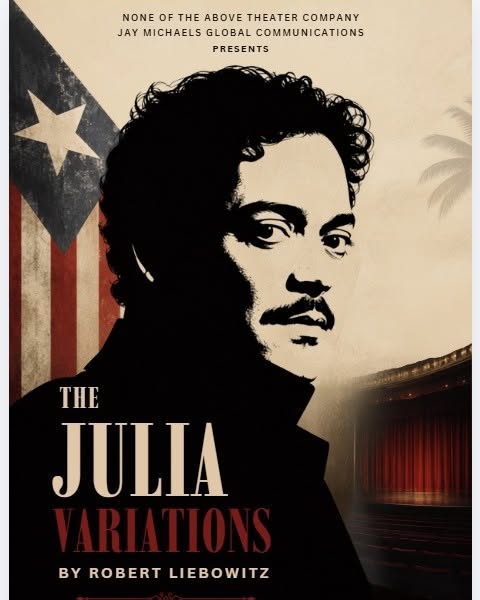
The Julia Variations is a long-overdue celebration of an iconic actor who left us far too soon. Through eight vignettes tracing key moments in Raúl Juliá’s life, playwright Robert Liebowitz presents a journey that is at once triumphant and bittersweet. Even those familiar with Juliá’s story will find the final Variation deeply moving.
Narrator Patrice Battey introduces each chapter of Juliá’s life. The first takes us to Puerto Rico in 1948, where a young Raúl (Giuan Warren) and his friend Pedro (Frank Petrovich) watch The Adventures of Robin Hood on the big screen. The spirit of Errol Flynn (Benjamin Hard) appears before the boy, inspiring the remarkable career to come. Yet Flynn’s own untimely death also serves as an early foreshadowing of Juliá’s tragically brief life.
As the adult Juliá, Pedro Dinavez delivers a dignified and deeply poignant performance that anchors the production. He brings elegance and vulnerability to the role, while sharing excellent chemistry with the many notable figures who cross Juliá’s path.
Tauqeer Paul is Orson Bean, whose encouragement helps set Juliá on the path to New York, while Alan Hasnas portrays Joseph Papp, the legendary producer who discovers the young actor on the city’s theatre scene.
One of the production’s most affecting sequences recreates Juliá’s 1978 performance opposite Meryl Streep (Rachel Marcus) in The Taming of the Shrew at the Delacorte Theatre. Still grieving the loss of her partner John Cazale, Streep tearfully confides, “I begged him to stop smoking!” as Juliá comforts her. Cazale’s premature death becomes another poignant echo of Juliá’s own fate, making it all the more heartbreaking when, only a few Variations later, we find the ailing actor quietly drowning his sorrows from a flask.
The play also captures Juliá’s resilience. After enduring dismissive reviews early in his career, he ultimately triumphs with successes such as Nine in 1982. A scene in which Juliá and his fellow performers furiously read the scathing reviews of John Simon and other critics is one of the evening’s funniest moments. Leia Martin, Brenna Peerbolt, and Bianca Torrente provide excellent support throughout in multiple ensemble roles. Torrente is especially affecting as Ana, the first person to whom Raúl entrusts the devastating news of his terminal illness.
Dinavez is at his finest during the closing Variations, portraying a man whose emotional anguish threatens to overwhelm him even as he remains utterly devoted to his craft.
The final Variation is, unsurprisingly, a tearjerker. A gravely ill Juliá hails a taxi and strikes up a conversation with a driver (Martin) who recognizes him. Presented as one of the last people to see him alive, she unknowingly bears witness to the final moments of an extraordinary life.
Though The Julia Variations offers only a brief glimpse into pivotal moments of Raúl Juliá’s career, it leaves audiences wanting to revisit his remarkable body of work—and to learn even more about the generous, gifted man behind it. More than a tribute to one legendary performer, Liebowitz’s play is a heartfelt celebration of the transformative power of acting itself. By the final curtain, it feels as though Juliá has returned to take one last, well-deserved bow.
The Julia Variations is performed at the American Theatre of Actors through October 18, 2026, as part of the Old Skool Playwrights’ Festival presented by None of the Above Theatre Company.

Jim Catapano learns “Don’t Die with Your Music Inside You” from The Laros Theatre Company’s My Ghosts
The Laros Theatre Company’s My Ghosts Provides a Fine Haunt at The Manifestival

It’s not easy to create when your inner critics are Christopher (Kit) Marlowe, Jack Wilson, and William Shakespeare. Such is the fate of Cab Curio (Dave Laros), a sequin-jacketed scribe living in his family’s clocktower, and sabotaged by a case of operatic anxiety. His other ever-looming enemy is time itself, a character that is unseen but casts a shadow over us all, and is felt most intensely by the artists who are desperately trying to get their creations seen and appreciated before the curtain falls. And for Curio, we soon learn the urgency is particularly great.

The arrogant Shakespeare (Mundo Ballejos) is fittingly the leader of the tormentors, leading Curio to wonder why he should bother when he could never compete with the output of this particular voice in his head. The bard’s infamous rival Marlowe (Jessie Grimaldo) sports an eyepatch and a tongue of acid. Jack Wilson (Justin Anthony) is a manifestation of the musical component of Curio’s artistry; as Curio is torn between completing his book and pursuing his musical passions (another relatable conundrum for the typical suffering artist).
Another ghost, Lenore (Jillian Soares) also has a strong presence in his psyche, as she is apparently Curio’s mother; she advises him while literally peering from a portrait frame. Sean Andrews expertly accompanies the cast as musical director.
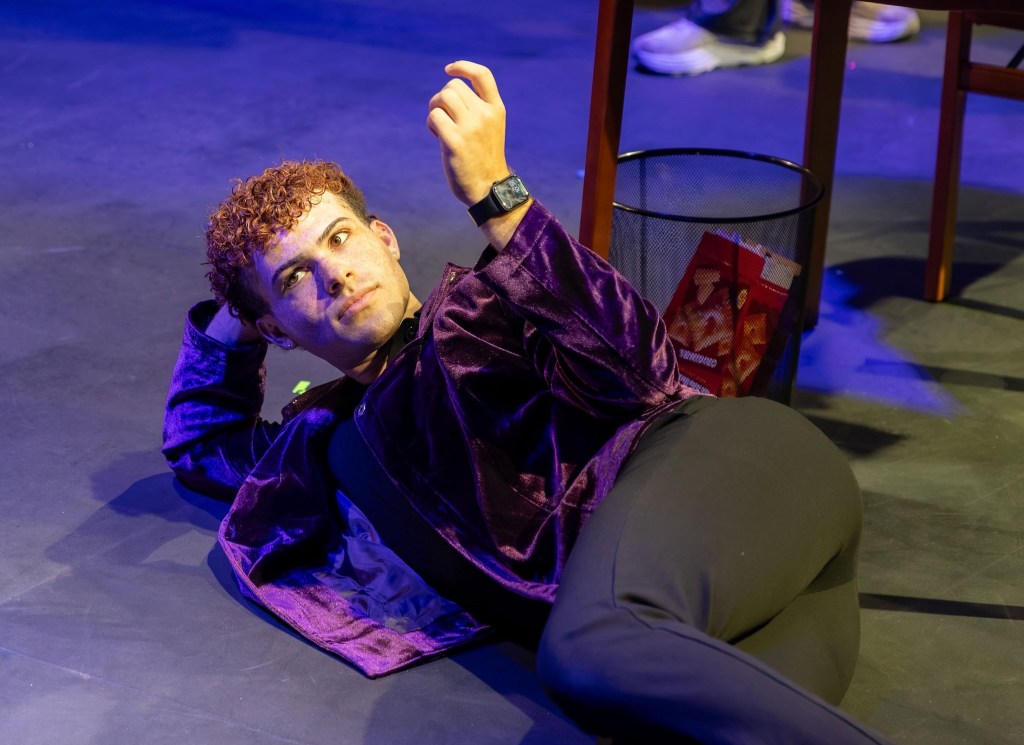
My Ghosts is quite surreal and comedic in all the right places, but also incredibly relatable for any (or maybe every) artist tormented by Imposter Syndrome. The layout of the Paradise Factory theatre allowed one to keenly observe the reactions of the audience to what was happening on stage, and it was clear in their eyes how much they both related to Cab’s dilemma and enjoyed the whimsical way it was dealt with.
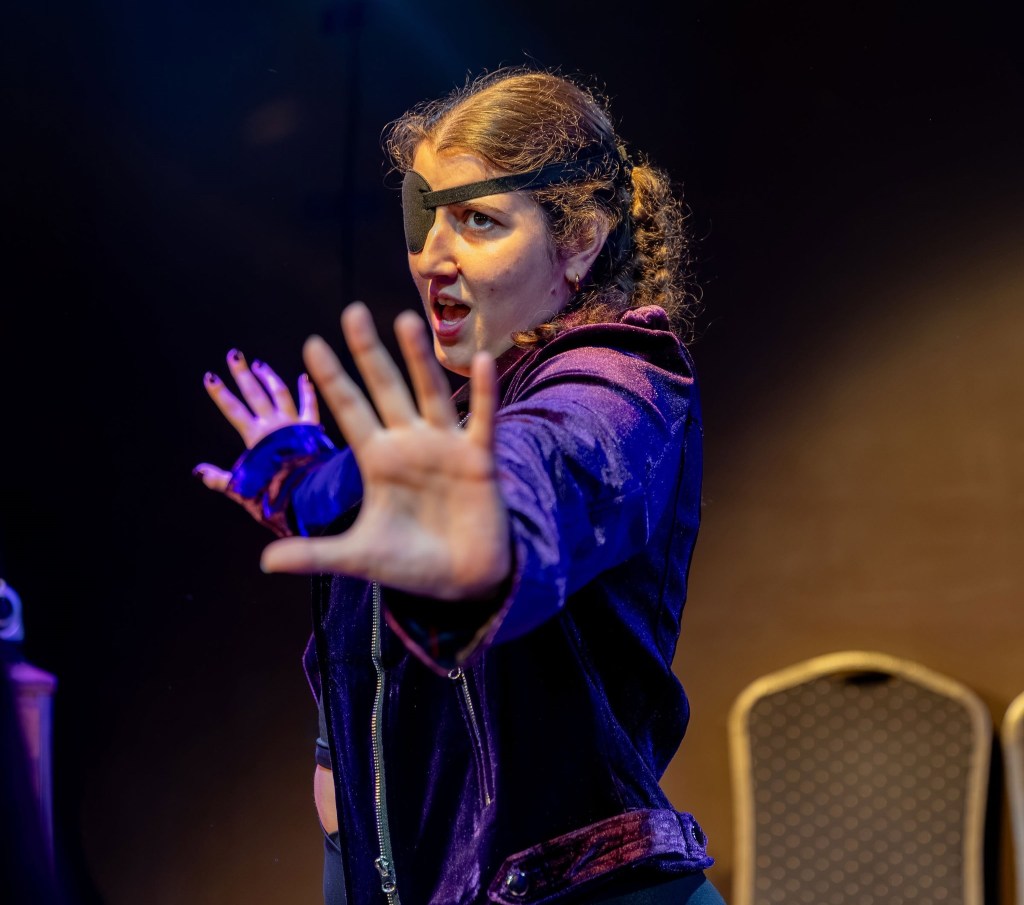
In addition to the universal themes, My Ghosts is notable for its tremendous musical performances. Soares is particularly astonishing, hitting high notes that would break the glass of the frame her character constantly holds. The entire cast performs with a precision and passion that beautifully exemplifies the mantra of the opening song, “Don’t die with your music inside you.”
Dave Laros (music and lyrics), Erica Elsa Laros (Book Writer, Producer, and Costumes) and Rebecca Frazier (Director, Choreographer, Costumes, Lighting) are a team to watch, and those of us with lots of music to share are grateful for the shoutout.
Learn more at https://www.myghostsareinme.com.

Jim attends Sad Stories of the Death of Kings: Richard II kicks off the Classical Initiative at the ATA
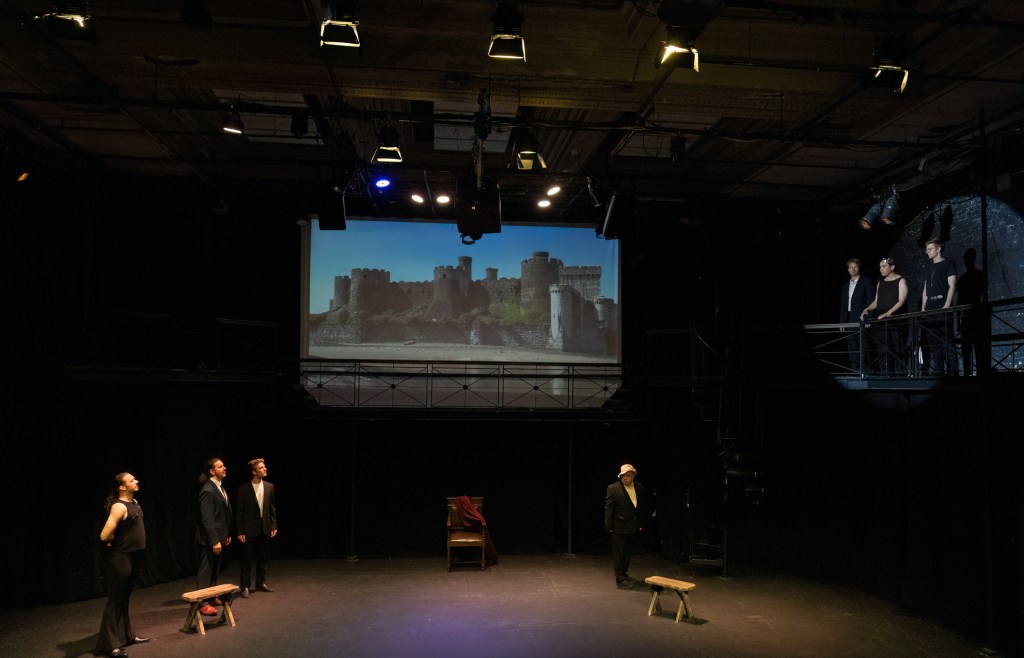
Director James Jennings has gifted American Theatre of Actors aficionados with another successful Shakespeare production at the John Cullum Theatre with this season’s Richard II. The text is word-for-word intact and as the Bard intended, and the play is cast with familiar faces from previous forays into his work, who have the passion and experience to deliver it well.
This production is a Tale of Two Sams: Sam Cruz is perfectly cast as the titular king, and co-producer Sam Hardy is commanding as ever as Bolingbroke, as he fights to seize the crown and become Henry IV. Cruz brings an energy and lightness to the king that is crucial to the portrayal and to the narrative, and makes his downfall all the more tragic. His Richard is arguably the most likable character, so his abdication, imprisonment, and final fate are genuinely heartbreaking; even his successor is saddened—or claims to be. Hardy plays Bolingbroke with a noble elegance tinged with a hint of menace and a layer of steel, perfectly contrasting Cruz’s almost benign Richard. Annie Unger is excellent as the queen, creating a powerful moral presence as she tries to be a beacon in the ever-growing darkness until it can no longer be contained. Her gorgeous gown changes symbolically from white to dark in between acts. (And speaking of costuming, Bolingbroke’s outfit after he takes the crown is suitably fabulous). Shakespearean stalwarts Jane Culley and Emery Lawrence shine in the pivotal roles of the Dutchess of York and John of Gaunt.
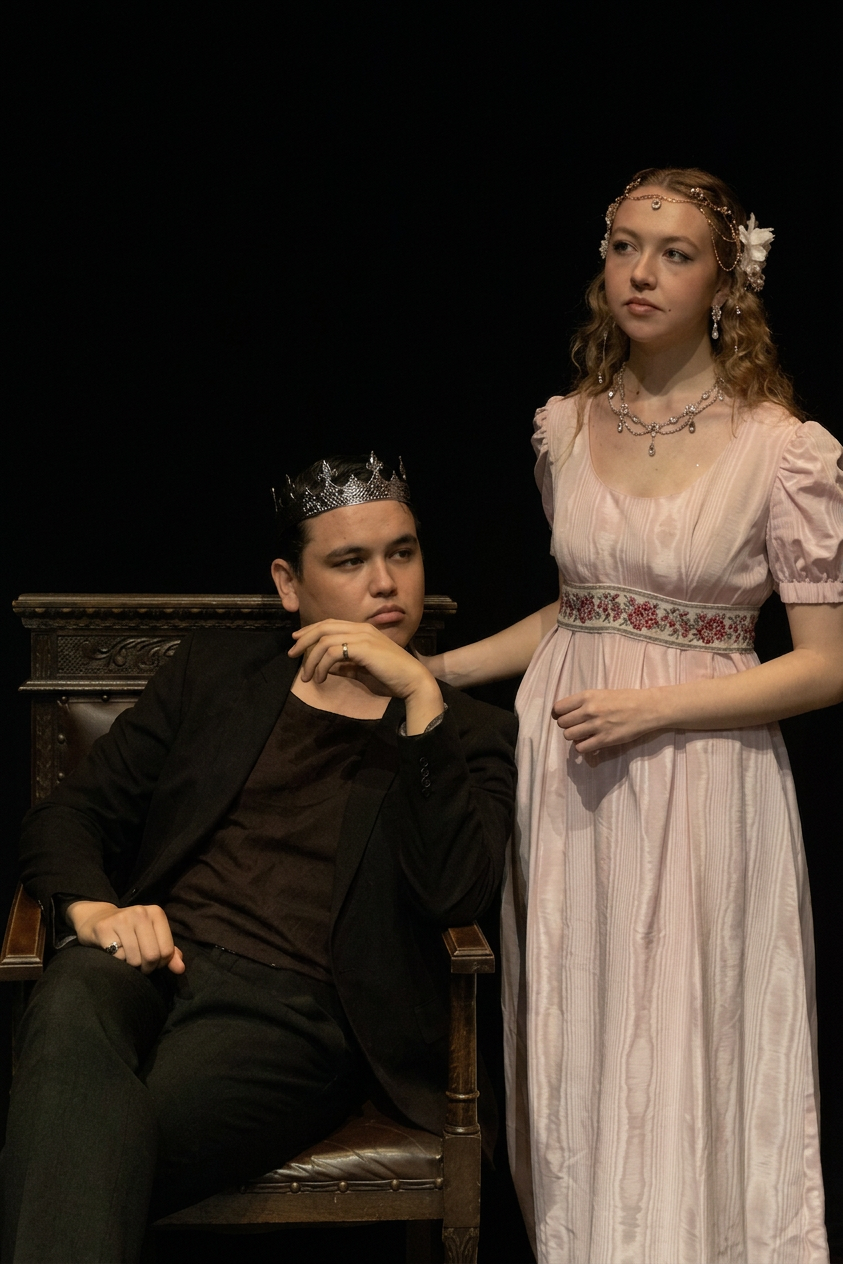
Richard II—a rarely performed part of the canon— is a story of political intrigue, so the physical action is minimal; but when it does occur, it’s impeccably choreographed and well served by the dramatic buildup. At 3 hours it requires patience and concentration from the audience, but the Return on Investment is undeniable. Kudos to producers Hardy and Jennings and the cast and crew for delving into the Shakespeare catalog and bringing us a terrific deep cut.
Richard II is performed at the American Theatre of Actors through August 16, 2026.

Jim Catapano at the Movies with “BLACK BOX”
Joshua Crone’s Compelling Black Box Takes a Compassionate Look at Hurting and Healing After 9/11
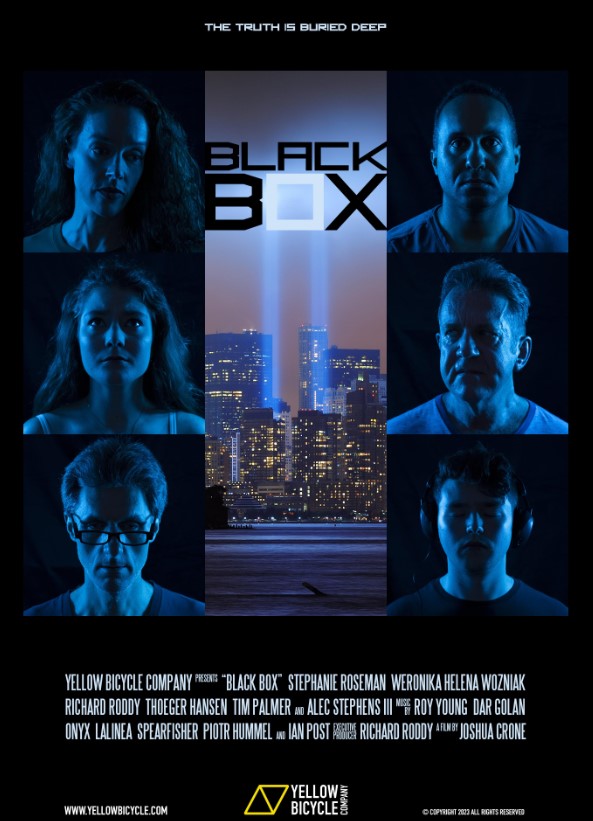
“It’s not the kind of black box that tells you what happened before a crash,” Dante (Alec Stephens III) notes to us, directly. “I want to know what happened after. Who died? Who remarried? Who took pills or went to war? What about that?”
It’s September 2002, and forgetting is not an option. Dante is a fireman who lost his life at the Towers, but nevertheless is here to tell the story of the ones left behind. “Funny where a name can take you,” Dante says, noting the bitter irony of what he is called. “I don’t remember much, just running up the stairs,” he says. “It’s always like that…except this time the stairs ran out.”
He introduces us to his widow Mary (Weronika Helena Wozniak), who pole dances at a New Jersey club called (again ironically) The Fire Station; her stage persona is Magda, created with a blond wig and a Polish accent. Army man Sgt. Dooley, back from Afghanistan, is one of her biggest fans, and Dante announces to us that he will play the “character” of Drew “so he can be close to Mary.”
Mary visits the fire house where he once worked, where his chronically coughing, survivor-guilt ridden boss Frank (Richard Roddy) is beginning his shift. Frank finds her dancing around the firepole, recognizes her, and their roles in Dante’s life do not stop them from connecting in the Biblical sense. Shift to Frank’s confused, often-stoned 18-year-old son Drew (Tim Palmer) spending time with his 9/11 conspiracy theory-obsessed Uncle Nate (Thoeger Hanson), and then cut to Frank’s wife Sarah (Stephanie Roseman), whose instincts tell her Frank is not being faithful, and we get a clear picture of where many people were on that somber anniversary. These are human beings who are all suffering in their own way, and searching for connection and understanding from others who are themselves too traumatized to give it.
The characters continue to intersect, as Drew comes to the recruiting office and meets Dooley, who encourages him to enlist, much to the horror of Sarah who now feels in danger of losing both her husband and son. Mary and Sarah become friends as well (and Nate humorously keeps appearing in unexpected places, first as a café waiter and then a bouncer at the Fire Station). Sarah and Dooley bond as well, over mutual concern for Drew but each of course wanting a different path for him.
Black Box is a moving, gripping and relatable story of people in pain, confused and looking to make connection in any way they can. Some isolate; some make bad choices; some look for answers in the fantastical; some choose to go numb. The film is also beautifully shot, with some scenes looking like a stage play (and fittingly in the “black box” of many theatres), and others taking place in the streets of NYC—then a city still healing. One pivotal scene takes place with the lights of the 9/11 memorial shining in the background, and the effect is stunning; as the 25th anniversary of that tragedy looms, Black Box succeeds in taking us right back there in a way that is painful but necessary. Writer/Director Crone shows an incredible understanding of the human condition following a traumatic event that is brought to life deftly by the talented cast. The narrative threads and the characters come together at the end in a very natural and satisfying way that leaves us with a feeling of hope and an understanding that people just need to be seen and heard, and supported by each other, especially after tragedy—even if getting there is extremely hard to navigate.
Black Box is a production of Yellow Bicycle Theater. To learn more, visit https://yellowbicycle.com/

Jim at “Club 27” — One More Rider on the Storm
Club 27: A One Woman Confessional Cabaret Triumphs at the Inaugural Manifestival
A figure is slumped over a chair, apparently dozing. The room is filled with dazzling clothes, shoes, and accessories around a chessboard carpet; there is a stack of record albums, one from Amy Winehouse at the top.

Amy was 27. Kurt was 27. Janis was 27. Jimi was 27…
The woman (Faith Pasch) snaps awake at the sound of a ringing telephone, and her Pianist (Alex Parrish) asks, “Are you going to get that?”. The woman herself is, we will learn, a 27-year-old singer, and the significance of that hangs over her like a piano dangling from a high window on a flimsy string. She later muses she has about six months to decide if she’s going to join the club.
“Do I have to?” The Singer asks, re: getting the phone, which they cannot even locate. “Can we make it stop?”
“Why stop it when we can drown it out?” says The Pianist. “Don’t you want to drown?”
“You know I do.”
To the strains of “Paint it Black”, Club 27: A One Woman Confessional Cabaret begins, and it is nothing short of a modern masterwork from author Maeve Z. O’Connor, coupled with a tour de force from Faith Pasch.
Pasch proceeds to give an electrifying performance as she summons the ghosts of rock stars past, and her character wrestles with her own demons as they threaten to pull her into the same abyss. She captivates the audience throughout in a way that both echoes and honors the icons she invokes.
“Audiences like to see their blues singers miserable,” her unnamed character observes. “They like their blues singers to die.”
In addition to his excellent work at the keyboard, Alex Parrish is a compelling second, often contrarian voice, as he admonishes The Singer to set aside her philosophizing and her anecdotes about Janis and Amy.
“Do you hear yourself right now?” he scolds. “…All that waxing poetic, it’s going to catch up to you. You don’t have infinite time—you have here and now. And you’d better do something with it.”
And does she ever—Pasch puts on a tremendous show indeed, her powerhouse vocals perfect for the songs given to us by those much-loved icons. Her earth-rattling renditions of Joplin’s “Move Over” and “Piece of My Heart”, and Winehouse’s “You Know I’m No Good” are spine-tingling and celebratory, as if to balance out—or perhaps add an exclamation point to—the chaos and darkness at the heart of the proceedings. The already haunting “Riders on the Storm” has never felt more ominous than it did on this anonymous rock singer’s clothing-strewn stage.
“It won’t stop unless you stop it,” says The Pianist. “Sing, or tell them another story. Famous…or dead?” The description of Amy Winehouse’s last days that follows this is heartbreaking; and the observation about the possibly inseparable nature of artistry and addiction, chilling.
“You’re going to end up in a ditch,” says The Pianist.
“Doesn’t matter,” says The Singer, as long as you enjoy the ride there.” But as the phone keeps ringing, the singer wonders if there is another option.
Pasch and Parrish aren’t doing a jukebox musical here—they give every bit of themselves to the music, performing it with a passion and a purpose while honoring the ones who first brought these songs to the public conscience. There’s a desperation underneath the pounding of the keyboard and the banging of the tambourine and the searing vocals—a rage against the candle that burns extra bright and extra brief by the artist’s own design.
The unnamed singer chain smokes, chugs from a Jameson bottle, dances wildly and strikes classic rock star poses in an almost ritualistic, deliberate playing out of the rock and roll story that seemingly has only one resolution. Pasch fearlessly commands the stage and inhabits the character fully; and O’Connor makes sure that the very real people who inspired Club 27 are honored and remembered as human beings who lived, loved, and created, rather than just cautionary tales of the ever-more distant past. It is a remarkable tribute to these artists, an insightful look at the price of fame, and an outstanding piece of live theatre that is not to be missed.
Club 27: A One Woman Confessional Cabaret is presented as part of Diamond Mesh Inc.’s Manifestival. It is performed at the Paradise Factory Theatre through August 9, 2026.
Learn more about the Manifestival at diamondmeshinc.com.

Jim Catapano witnesses a Dream of An America for All of Us, Set to Jubilant Music by Kevin Davis
Kevin Davis’ One in a Million Cabaret Electrifies at the MITF

The Sargent Theatre at the American Theatre of Actors was the latest home of the cabaret consisting of highlights of Kevin “KD” Davis’ powerhouse Broadway World-nominated Musical, which has delighted audiences throughout NYC.
“You’re not going to get the beginning, middle or the end,” noted Davis of the Cabaret version. “But what you are going to get are the themes that run throughout the musical.”
And those themes were driven home by the key scenes performed and by the dynamic score, assisted by the fantastic JazzCatz band and a lineup of magnetic singers and dancers giving life to the characters, telling a tale of greed vs giving, and evil vs good. The gist of the story is as relevant as ever, as we see a group of church friends win a shared lottery of $999 million, and quickly learn that happiness is not the result. Their struggles and conflicts are set against the backdrop of life in 2020s America, where the message of Matthew 25:40 appears to have been forgotten: “Whatever you did for one of the least of these brothers and sisters of mine, you did for me.”
Raquel Sciacca is an exuberant Little Red (Red for short), who urges us not to misconstrue her nickname. “No, not that kind of red. I’m so liberal the trees hug me”.
She acts as an observer and commentator for the proceedings, part Jiminy Cricket and part Ghost of Christmas, as she laments the collapse of the protagonists into selfishness and the cruelty of today’s USA.
Valerie Chamberlain reprises her lead role as Wanda, and Jillian Marzziotti dazzles in her spotlight dance sequence as Moriah (“because every show needs a bad girl.”) Karen Vigo, Rayvon Johnson, and J. Singh round out the cast, all tremendous vocalists who give their all to the emotional songs, and depth and humor to their parts.
The narrative yearns for an America that can return to true Christian values through a progressive perspective. It’s a reaction to a conservative movement that has coopted and corrupted the teachings of Jesus for years, literally doing the opposite—not feeding the hungry, not caring for the sick, hating the neighbor and rejecting the immigrant. A screen shows videos of recent incidents of extreme brutality committed in the United States by law enforcement, followed by clips from the film Judgment at Nuremberg, to drive home how far we haven’t come as a society. A disillusioned Red reveals that she is a DACA Dreamer whose parents have been banished from the country and are now missing.
But the sadness gives way to hope, which can be found in the lyrics of the songs and the glorious musicianship of the JazzCatz (Davis on sax and percussion, Hector Rodriguez Jr. on keyboards, Daniel Best on bass and Sound Designer Christopher Velazquez on percussion). It’s a terrific sampler that makes one eager to see the full production of One in a Million, and a great example of how music and theatre—and creation itself—can inspire, teach, and unify.
Directed by Davis, this run of One in a Million was presented as part of the Midtown International Theatre Festival in July 2026.

RAIN PRYOR’S ‘PASS THE MATZO’EYEING FALL 2026/SPRING 2027 OFF-BROADWAY RUN: Producers Pryor, Eisenberg, & Michaels gathering team & funding.
NEW YORK, NY — Fresh off a highly successful, critically buzzing industry presentation at New York’s Open Jar Studios, the powerhouse producing trio of Rain Pryor, Joel Eisenberg, and Jay Michaels has officially announced that Pryor’s explosive, culturally vital new play, PASS THE MATZO, is marching toward its Off-Broadway premiere as early as Autumn 2026.
In tandem with securing a premier New York venue and finalizing cast attachments, the producers are formally opening exclusive investment tiers and Associate Producer opportunities for theatrical investors looking to back a highly lucrative, lean commercial property.

Set against the backdrop of a family Passover Seder, Pass the Matzo brings together two fiercely distinct families—the Jewish Bergers and the Black American Johnsons. Together, they are forced to navigate decades of unspoken history, racial tensions, systemic realities, and a sudden, life-altering medical revelation. The play features an exceptionally balanced, diverse six-character ensemble that directly expands traditional box office demographics, appealing simultaneously to loyal, established theatergoers and younger, cross-cultural audiences.
The Play Renaissance: A Massive Market Advantage
“Pass the Matzo hits the market at a time when straight plays are experiencing a commercial resurgence on Broadway and Off-Broadway. As upfront capitalization costs for musicals skyrocket to between $15 million and $25 million, smart capital is moving toward intimate, text-driven, emotionally resonant stories,” says producer/promtional executive, Jay Michaels.
Because Pass the Matzo utilizes a single interior location and a tight six-actor cast, it features an incredibly low weekly operating overhead. This built-in fiscal discipline allows the show to hit its box office “break-even” point at modest capacity, paving a rapid path to profitability through its primary run, national/international tours, and massive global secondary licensing potential.
“We are also heavily in discussion to turn this into an independent film,” says producer/screenwriter, Joel Eisenberg
The Rain Pryor Legacy & Pedigree
Playwright Rain Pryor brings a powerful artistic pedigree and built-in brand recognition to the project. As the daughter of the legendary comedy icon Richard Pryor, Rain grew up at the exact intersection of Black and Jewish cultures. Her unique upbringing infuses Pass the Matzo with unmistakable authenticity, using sharp, uncompromising humor to dismantle complex social issues like race, identity, and generational trauma. Her name gives the production an immediate media hook, creating built-in audience curiosity and press coverage.
HONEYVIC PRODUCTIONS PRESENTS ‘ACTS OF BREAKING SILENCE’ A POWERFUL NEW YORK CITY THEATRE FESTIVAL CONFRONTING SYSTEMIC TRUTHS AND CULTURAL SECRETS
Running July 15–19, 2026, at The American Theatre of Actors, the annual Playwrighting for Social Change Festival tackles reparations, mental health, and the heavy toll of staying quiet.
NEW YORK, NY — HoneyVic Productions today announced the official lineup for its annual Acts of Breaking Silence Playwriting for Social Change Festival. Returning to New York City this July, the powerful theatrical event features a curated collection of original short plays designed to explore the profound courage required to confront hidden truths and the devastating, heavy toll of remaining quiet in the face of injustice.

“We believe every community deserves a stage,” says creative director and co-founder, Juanda Hall. “We treat the rehearsal room as a practice space—a place where individuals and communities can engage with complex social issues, strengthen communication, and experiment with new ways of responding before moments become high-stakes. Rehearsal is not preparation for life. Rehearsal is life—practiced with intention, honesty, and community.”
The 2026 festival features four unique, hard-hitting works that push back against systemic silence:
- The Reckoning: A poignant exploration of reparations, brought to life through the vital, urgent voices of enslaved ancestors and a survivor of the Tulsa Race Massacre.
- Homeless Not Hopeless: A tender, humor-laced portrait of two unhoused friends on a park bench, revealing the dignity, resilience, and humanity too often rendered invisible.
- The Basement: A raw, deeply moving examination of mental health, depression, and the unique, silent burdens Black men are societal pressured to carry.
- Silent Farm: A vivid, sharp allegory that questions systemic confinement, asking whether the animals in a barn ever truly chose their cage.
Through these original productions, HoneyVic Productions continues its mission to use theatre and rehearsal-based education to ignite social change, amplify underrepresented voices, and transform urgent cultural dialogue into meaningful civic action.
EVENT DETAILS & TICKETING
- WHAT: Acts of Breaking Silence: Playwriting for Social Change Festival
- WHEN: Previews begin July 15, 2026. Official performances run July 16 through July 19, 2026.
- WHERE: American Theatre of Actors, 314 W 54th St, New York City
- TICKETS: General Admission is $30. Tickets can be purchased directly here through HoneyVic Productions
About HoneyVic Productions
HoneyVic Productions uses theatre, performance, and rehearsal-based education to ignite social change. The organization develops accessible, community-centered programs that amplify underrepresented voices, build inclusive creative processes, and transform dialogue into meaningful civic and organizational action. Through original productions, education programs, faith-based partnerships, and performance-based training, HoneyVic Productions turns cultural participation into a pathway for empowerment, reflection, and measurable impact.

Jim Catapano asks “How’s Annie and The American Dream?” at Kate Gill’s AMERICARING at the MITF
Kate Gill’s Heartfelt and Socially Sharp Americaring Depicts a Family Failed by the System

Annie (Quinn Davis) is a high schooler who has much more to deal with than homework. Her father Mac (Kevin Patrick Dowling) turned to alcohol after Annie’s mother passed after a long (and very expensive) illness, and now only comes home from the bar to borrow drinking money. Her brother Mickey (Carlos Fruzzetti) has become a drug dealer because it’s the only way to bring in decent money. Annie’s pre-teen brother Jimmy (Teagan Guertin) is depressed and cynical, preferring to spend their time with the family’s violent orange cat Buzz, “the terror of the South End” as Mickey puts it. And Annie is working to exhaustion as a diner waitress while trying to keep her family from imploding further. As the story unfolds, we learn that the struggling family is one of many who have become victims of a capitalist society and a healthcare system that has robbed them of their mother, damaged their relationships, and shattered their hopes for the future. The American Dream they were promised has become a waking nightmare.
When Annie meets Kyle (Preston Ottaviano) as a charity event, the two bond over the mutual loss of their mothers. The connection leads to romance and a glimmer of happiness for Annie. But when she meets Kyle’s father Frank (Mark Gilchrist) and his new wife Marilyn (Fredda Takacs), the shocking truth about the wealthy Frank’s hand in her family’s fate threatens to destroy it all.
Skillfully steered by director Frank Licato, Americaring is a realistic depiction of an American family in tatters, drowning in its own dysfunction and reeling from the actions of a system that has turned its back on them. To its credit, it stays grounded and real, never descending into melodramatic pathos, and is sprinkled with humor along the way (much of it surrounding the unseen Buzz the cat), giving it a true-to-life feel. It ends with a spark of hope thanks to the resilient Annie, as she recovers from her obstacles and refuses to give up on the chance at a better life for her and her family. The characters feel real and evoke genuine sympathy, with tremendous work in particular by the sibling actors, who are heartbreakingly numb and world-weary at such a tragically young age. The family are the heart of the story, but given equal weight is the utter failure of the American healthcare system to put people over profit, and Gill pulls no punches in depicting the human cost of the injustice that pervades modern society. Americaring is one to catch and one to think about.
Americaring was presented at the American Theatre of Actors in June as a featured selection of The Midtown International Theatre Festival.

Jim Catapano reviews A Moving Musical About Identity Lost and Found
Richard Uhrlaub’s For the Record(s) Tells a Very Personal Story in Song
It’s the mid-90s, and Joshua Greenman (Gabe DeRose) is on an emotional journey. His adoptive parents Eliana (Taylor Simon) and Fred (Josh Ilan) have given him a good life and a loving home. But they didn’t tell him he was adopted until he was 11 years old, and then only because Joshie (as his mom calls him) was getting teased at sleepaway camp as the rumor leaked out. This triggers an identity crisis and sends him on a mission to find out who he is and who gave him away, and why. But answers are hard to come by in a complicated world, as Joshua learns all too quickly.

For the Record(s) is a deeply resonant musical about a sensitive subject from someone who understands. An adoptee himself, Richard Uhrlaub, MEd (book, music and lyrics) is a renowned adoptee advocate, speaker, and legislative advocate; he is also a contributing author and collaborator for Finding Our Place: 100 Memorable Adoptees, Fostered Persons and Orphanage Alumni.
“I try not to think about her,” Joshua initially says regarding his adoptive mother. “She didn’t want me anyway, so what’s the point?”
But in a devastating flashback to 1967, we learn that this wasn’t true. The play is constructed in a way that allows the audience to find out the full truth before Joshua does, which creates tremendous dramatic tension and great sympathy for the confused young man and the characters that inhabit the story. His teenage birth mom Blanca Gonzales (Lauren Cristina Updyke) wants to keep the baby but is pressured not to by the authority figures around her. To add to the heartbreak, the father, Joey (Michael Norman) is being sent to Vietnam, and has no legal right to the baby as the couple are unwed.
And Joshua’s suggestion that he doesn’t think of his birth mom proves untrue as well:
“What does she look like, is she OK?” he sings. “Would she remember me if we met today?”
Joshua has joined a support group where he bonds with Link (Christopher Cheng), an adoptee of Korean descent who is in danger of being deported to a country he’s never set foot in. The dynamic Riki Stevens in Germaine, who counsels and helps Joshua and the adoptees as what she calls a “Search Angel.” Sabrina Acosta is Consuela, the grandmother Joshua never knew he had, who welcomes him home in a tear-jerking scene. Paul Fraccalvieri, also an adoptee, plays Father Kilpatrick, and Heidi-Liz Johnson is Sister Magdalene; Maija Johnson and Daniel Calderon round out the exceptional cast.
The relationship dynamics and emotions surrounding this delicate situation are handled with sensitivity, and the complexity of the circumstances and the people facing them are realistic, clearly the work of someone who’s lived through them. Joshua and both his sets of parents are all confused and devastated by events, and all are portrayed with sympathy. The problems of navigating the adoption system and the rulings of the United States courts are also a powerful part of the narrative. Thus, For the Record(s) is not only a riveting theatre experience, but an education on what real-life adoptees and all involved on a familial and legal level genuinely go through.
The 18 songs accompanying the story add to the emotional weight, and are beautifully rendered by the leads and ensemble. They are also tremendously catchy; highlights are the opening soul number “Baby Fever” and the gospel rouser “Testify.” The drama is peppered with humor and warmth as well, giving the characters a three-dimensionality that adds depth to the already emotional story.
The musical arrangements are by Dan Sander-Wells, who performed keyboards at the reading, accompanied by Will Shishmanian (guitar), Ryan Blivohde (drums) and Keaton Viavattine (bass and orchestration).
The play was given a staged reading (directed by Abigail Rebekah) at The Producers Club in spring 2026 in cooperation with the New Step Theatre Festival. It provided a terrific preview of what will no doubt be a memorable theatrical experience once fully realized, and a deeply moving experience for anyone who has searched for a sense of both self and genuine connection.
To learn more about For the Record(s), visit https://www.ftrmusical.com.

