
Powerful Piccione Play
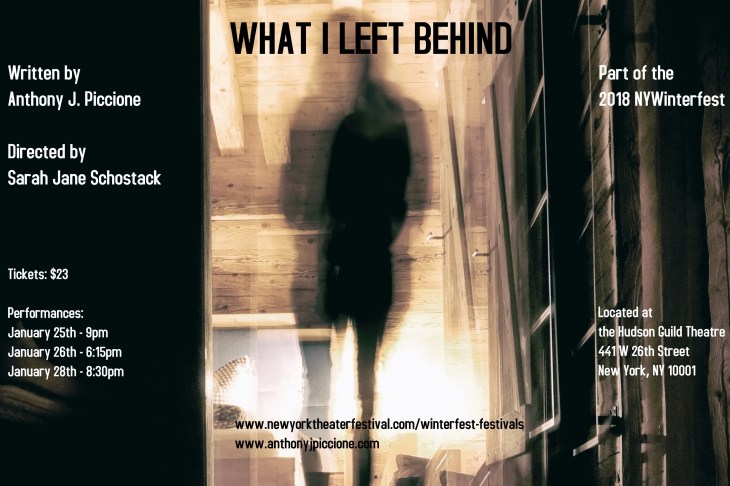
We spoke with Anthony J. Piccione about his latest work, WHAT I LEFT BEHIND.
 The prolific playwright adds another thought-provoking drama to his eclectic canon of works. WHAT I LEFT BEHIND explores teen suicide, its impact, and repercussions it has on those left behind.
THE PLOT: The play focuses on a young high school student, in severe depression brought on by bullying at the hands of classmates, who shocks everyone by taking his own life. In a unique retelling of the events leading up to the decision, we see what – and who – brought him to make this life-ending move … and how they are forced to deal with it.
SEE IT: January 25th @ 9:00 pm; January 26th @ 6:15 pm; January 28th @ 8:30 pm.
Hudson Guild Theatre, 441 West 26th Street, New York City
Tickets cost $23 and can be purchased up to one month prior to opening night by visiting www.newyorktheaterfestival.com/winterfest-festivals.
Click HERE to go to the Direct ticket Link
Tell us about this latest work?
What I Left Behind is a short drama about a young teenager who has committed suicide, and is now forced to exist in a fictional afterlife and reflect on her decision, and the impact it has had on others who she left in her wake. I wrote it with the purpose of starting a conversation about bullying and youth suicide, and also the role that we can play in doing a better job at helping others who are dealing with mental health issues. It’s my 2nd play that I’ve put up at the NYWinterfest, and my 5th overall production in New York, and it’s quite different from most of the other one-acts I’ve put up so far. I’m working on it with a wonderful director, Sarah Jane Schostack, and a relatively large cast – compared to some of my past productions, anyway – of talented actors. I’m intrigued to see what people think of it, and I hope it proves to be a very thought-provoking experience for the Winterfest audience.
Your plays pack powerful messages. Do you feel compelled to write on such topics?
I think it just comes naturally, for me. Early on, when I start work on a play, if it’s dealing with a specific issue or debate topic, then of course, I’m writing about it because it’s something that I feel very strongly about. That said, I will say that I don’t necessarily see it as my role, as a playwright, to lecture or preach. Rather, it’s to start conversations and possibly provide different perspectives about an issue – whether it’s mental health or the environment or media consumption or even the existence of God – that deserves more attention than it may be getting from politicians, pop culture, or the broader society. Many people will have their own strong views on certain subjects, and I don’t pretend that my plays will always be able to get every single person to agree with my own personal views. But if I can get just a small handful of those theatergoers to start thinking seriously about something that they weren’t thinking about before, or maybe even to at least consider a viewpoint other than their own, then I’ll have considered my work a success.
Give us your thoughts on the importance of Indie Theatre and Film?
For starters, it feels like there’s a certain level of creative and artistic freedom that flourishes in independent theatre and film. Unfortunately, that isn’t always available for artists who may be working with a big Broadway producer or a big Hollywood studio. Especially in the case of theatre, the indie scene is where some of the most original and thought-provoking writing is thriving, and I’m not just saying that because I myself am a playwright working in independent theatre. If you look at most commercial art today, either in theatre or film, there’s some good work being put out there, sure. But there’s also a lot of shows and films that are completely unoriginal, and are often made for the purpose of making profits over great storytelling. Furthermore, when there is commercial art that turns out to be great, it’s often when there is a certain level of creative freedom that is granted to the artists. With commercial film, one example I like to use is with the Batman movies, where studio interference on the part of Warner Bros. was a big part of what led to the monstrosity that is Batman and Robin, but after that, they pretty much let Christopher Nolan do whatever he wanted with the franchise, and we got the masterpiece that is The Dark Knight Trilogy. I could throw out other examples, too, but that’s one good example of how allowing artists to have creative freedom – which is far more common in independent art than with commercial art – can make a huge difference, and I think that’s just as true for theatre as it is for film. I hope maybe we’ll eventually get to a point where that’ll change, but for now, even if I am ever lucky enough to have a play produced on Broadway or adapted into a blockbuster movie, I’ll still be putting up new plays in venues and festivals like where my work is being produced today, for those exact reasons.
It Ain’t Just Pac-Man!
The Minds Behind the Games: Interviews With Cult and Classic Video Game Developers
 Patrick Hickey’s long-awaited and highly praised tome on the evolution and revolution of Games featuring interviews with the creators of 36 popular video games–including Deus Ex, Night Trap, Mortal Kombat, Wasteland and NBA Jam is now on pre-order. This definitive book on they that have helped form the industry that Gaming is today gives a behind-the-scenes look at the creation of some of the most influential and iconic (and sometimes forgotten) games of all time. Recounting endless hours of painstaking development, the challenges of working with mega publishers and the uncertainties of public reception, the interviewees reveal the creative processes that produced some of gaming’s classic titles.
While Mr. Hickey – or rather – Professor Hickey is an accomplished writer and editor, this is his maiden voyage as a book-writer. After a whirlwind tour that included the customary stops like book stores and radio programs and the more colorful stops like conventions and game stores, we wanted to ask Patrick one simple question… how’s it feel?
It’s a great feeling. I’ve been promoting this book just as long as I’ve been writing it and along the way, I’ve gotten so much support from the indie video game community and video game journalists. To be accepted into those fraternities has been huge for me as well and has opened up so many more opportunities. Away from the birth of my daughter and marriage to my wife, I’ve never been so excited for anything in my entire life. This book is without a doubt the most important thing I’ve ever written and something I feel the world needs more of. I hope this plays a part in people understanding just how unique and passionate video game developers and the industry is. It’s so much more than fun and games.
 Pre-Order:
Playwright Kate Gill to the “Rescue”
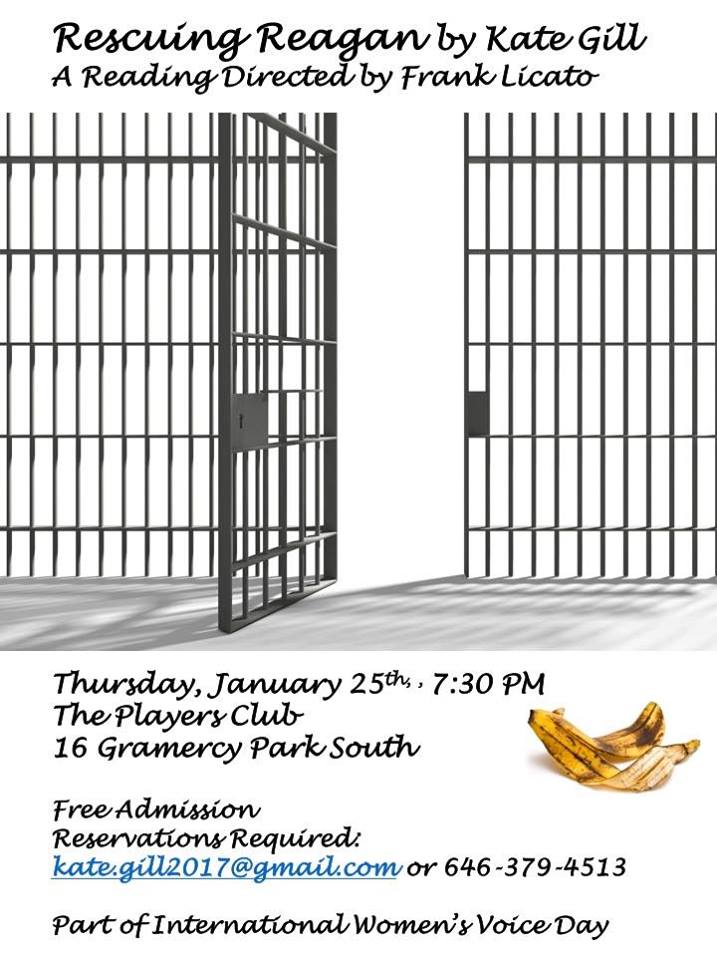 Coming off of a triumphant run at TheatreLab of her play, Soundview Summer, playwright Kate Gill goes from scaring us about the all-too-real threat of nuclear radiation to the near-distant future threat of lab life ala science fiction. This focused article writer shared a few comments about art and life and its intersection.
 Tell us about this latest work?
My play, “Rescuing Reagan”, is a comedy in which this government-funded, scientific experiment at a University lab has reached young adulthood – he’s Reagan, the hybrid ape/human aka “Project Gunga Din”. Although he lives in a cage and has never left the lab, he’s moody, difficult and focused mainly on food and sex (not unlike most of the University students.) Now the government wants to claim him for use in medical experiments. Can he be rescued from this fate? Can he find his way in the world? Can people embrace him as one of them.
Your plays pack powerful messages. Do you feel compelled to write on such topics?
The inspiration for this was a rumor years ago that people were seeing these giant chickens running loose in northern Connecticut. It might have very well have been the drugs these people were taking but it did get me thinking about what might be secretly going on in government-funded labs.
There was a so-so sci-fi movie a long time ago called Night Of The Lepus about giant rabbits and then there’s H.G. Wells’ Food of the Gods. Go-on…
It seems likely they have created hybrid humans. Which means we may need to deal with the moral and social issues these “experiments” create. Sometimes it’s easier to laugh about things that scare you so I guess that might be why “Reagan” became a comedy.
Of course these days you don’t need a lab to create an underclass that is not seen as fully human and given the rights and dignity they deserve – including food, house, education, work and freedom to decide how they will be governed and they will worship.
Give us your thoughts on the importance of Indie Theatre and Film.
Indie Theater and Film are on the cusp of being mainstream. If you look online you can see that the advances in technology (and the decrease in its cost) have made film production accessible to almost everyone. And technology is also transforming the theater experience in exciting and cost efficient ways – get a space and a couple of projectors and your play can be anywhere.

‘Tiz the season… but what about the rest of the year?
Article contributed by Jay Michaels
Edited by Natasha Dawsen
Performing Arts organizations, whether they are for- or non-profit, take this time of year to add a larger helping of philanthropy to celebrate its audience. Free performances, events for children, not to mention fundraising & benevolent opportunities for those to whom engaging in the performing arts is rare.
There are those that do this all year long.
 Planet Connections Theatre Festivity, for instance, has joined its productions within its festivals to more than 300 charities over the course of it’s just under 10 years. Founder Glory Kadigan has transformed the Theatre Festival concept into something educational and philanthropic. PCTF is New York’s premiere socially-conscious arts festival. It’s designed to invoke the power of art in motivating philanthropy, community outreach and social change. PCTF artists raise awareness for an organization/topic of their own selection and introduce audiences to these causes and charities. Planet Connections has more than 250 Full Theater Productions and nearly 100 Staged Readings. More than 300 charities have benefitted from Planet Connections Artists. Planet Connections also hosts Playwrights for a Cause connecting illustrious authors and much needed charities to audiences grateful for the entertainment … and enlightenment.
 Genesis Repertory, and its educational institution, the M Center, both run by artistic director Mary Elizabeth Micari has, since the start of the twenty-first century, created opportunities for individuals to learn and perform in professional atmospheres. Its student body are promising individuals who – for myriad reasons – never got the chance to engage in their dream of working in the arts. The M Center gives these students the training they need mixed with opportunities to be on a professional stage. Dreams have come true for Genesis/M Center students at numerous NYC theatres including the Producers Club, 440 Studios, and the 13th Street Playhouse. Frank Calo’s Spotlight-On even hosted a special night in which four one-acts were written, produced, directed, and featured more than 50 students from Kingsborough Community College.
Ms. Kadigan and Ms.Micari Are Not Alone. The New York Independence Theater Skyline glitters with those dedicated souls who use their art with heart.
 Step 1 Theatre Project. Recently, in response to the hurricane that hit Puerto Rico, Step 1 Theatre Project, and artistic directors Jazmyn Arroyo & Janelle Zapata, created Artists United for Puerto Rico, and produced a fundraiser for the people of the devastated island. In what seemed like an instant the two philanthropic artists gathered together the finest of their colleagues and presented a night of music, theatre, and art.
“Janelle and I knew we wanted to do something” said Ms Arroyo. “We started organizing the same day Maria hit Puerto Rico. We put out the call for performers, different art pieces, reached out to theaters for performance space, studios for rehearsal space, anything that would help create a platform. We did this before we knew what the event would be, before we had heard from our families on the island, before we really understood the magnitude of the situation. We felt a strong sense of urgency and needed to organize. We are so lucky to have encountered such amazing, talented, generous people to make this come to life. It started as a conversation between Janelle & I, and grew into a community effort and a movement that inspired audience and artists alike, myself included. I was moved and humbled by the love and talent that took place at Artists United for Puerto Rico and am so grateful to everyone who supported us. There is still much work to do, but we were more than happy to do our part” she concluded.
This event helped so many and changed the lives even of the artists:
 “Since this catastrophic event happened in the island where I was born – I had been doing what I can with the very limited resources that I have. I feel like [the event] gave me a chance to do much more then I could ever give to my little island by myself – this sense of community near and far cannot be erased by any administration or institution. Puerto Rico will always live on.” Maribel Martinez
A regular at FRIGID Fest, Step 1 will join with prolific playwright, Michael Hagins, for his play, The Vengeance Room. Hagins explored racial issues brilliantly with Michael Is Back earlier this year, in which the life of an African American was presented in a one-man show – played by a Caucasian actor. And where was it done … Planet Connections. Step 1 also has multiple initiatives to give back to the artistic community with their newest – Step It Up!, a workshop series, where they invite expert artists of different areas of independent theatre to host free panels and workshops for aspiring artists. Their most recent hit another hot-button topic: Creating Trans and Non-Binary Narratives, led by Trans Activist and Playwright Ashley Rogers.
Walking along Manhattan you need but look up to see other Independent Artists extending a hand in Friendship rescue and care. List of shows.
 Since 2011, Playhouse Creatures Theatre Company has been one of the most community-oriented theatre companies in NYC. Besides the main stage productions (here and in Boston- viewed by over 15,000 patrons), PCTC has created and maintained its LCAO (Little Creatures Act Out) youth theatre program; these FREE theatre camps have given access to over 500 at-risk youths. This program has provided access to a group that has traditionally been overlooked and forgotten.
 Then there’s Rising Sun Performance Company, an Award-Winning Ensemble Theatre Company committed to the principle of ensemble process and performance through the collaboration of a resident company of theatre artists, RSP’s mission is to advance the vitality and diversity of American theater. Child’s Play – dealing with childhood trauma – and Glory of Living – a powerful tome about spousal abuse – are recent entries in the canon of this company heading toward 20 years in NYC. Their [truly] fearless leader, Akia Squitieri, heads a team of vibrant young artists determined to shine a spotlight on daring issues.
 Founder Jessie Fahay’s Ripple Effect Artists is committed to working with productions and touring companies that promoted a sense of change through dialogue, REA conducts regular productions and educational workshops to colleges and universities across the country, featuring distinguished experts in fields of Psychology and Social-Reform. They offer as a contribution, Drama-Education Workshops both abroad in Lima, Peru and in New York City to those in need. Through this, they are committed to empowering students to explore self-expression and to make a difference in their own community. REA addresses injustice and causes social impact through art – primarily by producing masterful plays – presenting them along with talk-back discussions in partnership with educators and advocacy groups. These events cultivate empathy, shift audiences from APATHY to ACTION, and create a RIPPLE EFFECT in the larger community.
 Sometimes it takes just one artist. Doug Devita is rapidly becoming an indie theatre go-to playwright with a rapidly growing canon of works featuring the gay everyman. The Phillie Trilogy and The Fierce Urgency of Now have shown us life – from adolescence to employment – of the [gay] man in the street. Mr. Devita has been lucky enough to get Broadway personalities to tell his story over the years… with no end in sight.
 Anthony J. Piccione can’t decide which cause is most important to him so he writes about them all. He saved the planet with a play about being green in An Energy Tale and will present What I Left Behind, a tome about teen suicide opening this January. Another play, Ebol-a-Rama, looks – with biting satire – at this quite deadly issue. A recent reading, A Therapy Session with Myself tells the story of a young college student and aspiring writer dealing with severe social anxiety, depression and Asperger’s syndrome. This piece is looking for a home for a first production.
With these and countless other venues dedicated to opening our minds at every opening night, Mr. Piccione should have no problem finding a home.
For more information on these and other philanthropic arts organizations and individuals, please contact JMAE.events@gmail.com
This is for a more serious site about playwrights and productions called Arts Independent
1) What is your creative process?
It takes time for me to create something, whether it be original work or just the concept. I have to be properly motivated. I know so many great directors and writers who can just start and subscribe to the “just start writing and it’ll come.” Sadly I’ve never been able to do that. A lot of my ideas come when I see the actors do their thing.
2.) Does this play have any special – or personal – purpose for you? Example: are there elements that are autobiographical?
Two Gentlemen of Verona was the first play that I got to produce in the New York International Fringe Festival, and it’s always had a special place in my heart. It was the first time I really discovered my love of Shakespeare. It’s not autobiographical though cause I’m a little past the “young-men-finds-themselves” phase.
3) What’s the parable or universal message we will come away-with?
Along with even Shakespeare can mess up a play…that love and friendship still mean something. Valentine and Proteus both grow up in the show, and find themselves through a lot. And I’d like to think a few original ideas thrown in will give a little nod to feminism and LGBTQIA members.
4) How does it feel to be a part of something like this?
It’s always a wonderful experience to be a part of Shakespeare, and this show has been no different. It’s been an honor to have a fresh take with Ariel at the helm and a new cast to bring out some freshness.
5) When I say “being your own boss” what goes through your head immediately without thinking?
Success. Being able to call your own shots, pick your own projects. Control your own destiny. Things like that.
6) Final Thoughts?
Come see Two Gentlemen of Verona: A Swashbuckling Comedy! It’s safe for young audiences, and has a little something for everyone, from the novice who has never seen Shakespeare to the experienced scholar!
Songs and Poems
Rachel Rocano reviews “See You at the Funeral!” & “Village Orpheus” at the Fresh Fruit Festival
 “See You at the Funeral!” a musical comedy, about three women – Dina the charming gay compulsive liar; Medusa, the washed up Diva determined to make her comeback; and Gittel the Holocaust survivor and oldest living dominatrix. In the show Gittel takes the audience on an unforgettable ride of choosing to go upstairs or downstairs because you only die once.
All played by Tova Katz.
Amusing, hypnotic in an odd way, and engrossing, Katz, had an amazing voice and played three distinct characters. Every time Katz came out, there was a fully-formed (and different) person.
This enjoyable event is worth a second look, simply for Katz’ wonderful voice rolling all though the theater. One persons-shows can seem sparse but here, we met a chorus.
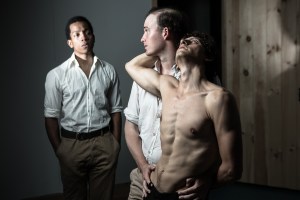 “Village Orpheus” was about sexual celebration in Greenwich Village. Frank O’Hara is the poet whose work lit up the neighborhood throughout the 50s and 60s. I really liked the poems and how all the characters talked in sync at some points. The actors were very entertaining and for every scene they choose a song that perfectly matched the it. The show was well organized and would recommend to those who enjoy poems.
Christmas with a Twist
=============================================================================
ROBERT LIEBOWITZ AND THE PARABLE OF THREE
AMY M. FRATEO, guest reviewer
Everybody’s a playwright. Every day there are new works appearing in festivals and black box theaters throughout New York – everything from 10-minute quickies to two hour tomes. That why it was gratifying to see a revival of some excellent works from the heyday of OOB.
This group of works was all written by Robert Liebowitz, a member of the off-off Broadway circuit for decades.
The series went backward like the Sondheim musical cult favorite, Merrily We Roll Along, kinda-sorta showing us who we are and why we are.
The first play, Seven Scenes of Grande Grande Blah Blah Blah, written just a few years ago, featured Kevin Hauver as a beaten-back administrator with nothing to look forward to except the mortality of a dear friend (maybe something more) and Molly Callahan as a snarky millennial with no patience for him. Mario Claudio brought up the rear as a coffee house server with miseries of his own. The meat of the matter was good, showing us a preamble of what the new world looks like to old people, with Callahan handing us the worst of the new generation and Hauver utilizing everything from brains to brawn to show her the error of her – and undoubtedly his – ways. The ironic use of seduction was obviously there to show societal ignorance as Callahan’s character announces early on that she is a lesbian. Joe Pitzvalty could have done more with staging especially the very funny and eloquent Claudio, whose character had the ability to move much more.
Bus Ride Home, a little longer and a little older (the 90s) gave us Cathy Noonan-Sturges and Ken Coughlin as a disenfranchised working class pair on their way from the ritual of going to Atlantic City. Pair and not couple as they are not married … to each other. The concept of an “affair of need,” common in many dramas these days (even British drama like Call the Midwife), is depicted with Coughlin quite engrossing as a civil servant in a life change. The surprise ending totally reversed the idea that Noonan-Sturges was the villain of the piece. Directed by Ioan Ardelian, the show maintained a dark slow pace that made really feel like we, too, were caught on this endless bus ride home.
Coulda Woulda Shoulda, obviously the main attraction was a powerful play about the people on the fringe and at OTB – a now extinct way of getting your gambling fix in NYC. The play – staged in noir no nonsense by Allan Smithee – gave us the last hours of the life of Allie Neiterman; played by TJ Jenkins, with engrossing desperation, as a once-high-roller, now nobody, who, with his slow-witted partner, Bobo, played with smile-inducing childlike detail by Ted Montuori, try for that last lucky win. The play, an obvious star vehicle for several character actors, played like a old-fashioned sermon on the mount with lines that run the gamut between smart cliché and deep parable.
The play, set in 1985, when connected to the others shows us the aging of the American dream and what it looks like today.
Tommy Sturges insinuated the concept of unwitting narrator well but the playwright should have altered the ethnicity of the role to fit Sturges own culture; not so with the flawlessly authentic Anthony J. Gallo, who moved, motioned, and mannered himself into a role that could have been written for him – down to the clever injection of Italian language toward the finale. The same can be said for the commanding Michael Ruocco, truly superb as the next level of degenerate gambler. He, too, gave us neighborhood guy in all its provincial detail. His inner world was all there in his eyes and was a strong juxtaposition to his goonish demeanor.
Serving as the big number was Jay Michaels as the monster-in-a-pinstripe suit, loan shark Barney Cutley. Michaels’ level of acting was truly powerhouse with a demonic first appearance that silenced the unwitting crowd – both on stage and in the audience – and then a tortured second appearance provoking the tragic finale where you saw a back-story in nothing more than his back. Michaels gave us a “Negan-esque” portrayal (see the Walking Dead to know what this means) with a sense of fulfillment at being the black-hat in this western.
Robert Liebowitz writes excellent dialogue and creates powerful and quite unique situations. Allan Smithee missed the mark by putting so much of the action in obstructed areas and let lots of sitting happen. Only Michaels seemed to utilize the well-planned set and stage.
Of the three parables this evening, Coulda Woulda Shoulda, stands as one for the ages. Something that should be seen more and more. Ironically, maybe the other two will also, when we become a period piece like the 80s is now. Regardless, the credible complement of character actors gave us a evening of real art and performance.
=======================================================================
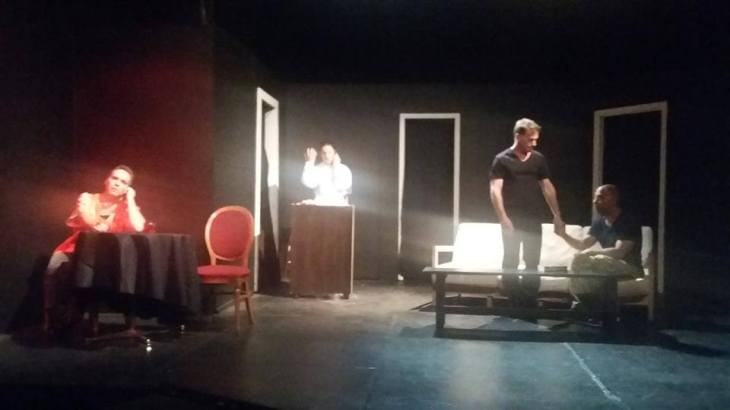
On Film: THE WATCHTOWER
Allan Johnston, Guest Reviewer
Crime and criminals on television and film are always attractive, daring, even sexy. In other words … fictionalized. However, auteur Steve Silver has given us a riveting, unapologetic tome about what it really means to be a criminal.
The Watchtower, a new feature film, written, directed, and starring Mr. Silver (from his original play), is not a vanity piece as one might imagine since much of the spotlight is focused his way.
What we have a fascinating character study lensed in an old-fashioned style giving us a harder look. A brilliant touch when one meets the denizens of Hell’s Kitchen, in the 80s.
The premise is familiar. We are there at the end of an era. We see Irish and Italian mobsters trying to hold onto a piece of territory the only way they know how, through the eyes of one of their own – who’s not so sure he wants to be there.
And that is the unique part.
This film explores those who were involved in “that thing” … and why. You leave the theatre with a new understanding of what people needed to do to survive then … and even now.
It’s not surprising the level of power Silver himself brought to the role as one feels a sense of autobiography coming off his tense portrayal of of an Irish hood grieving over the effect this life has had on his family. It’s refreshing to see an ensemble share this level of power. Notables include D.J.Sharp, absolutely spot-on as a Russian immigrant who comes to America to be a success … and as a loan shark … he is; Thomas J. Kane as the Irish mob leader – possessing all the needed grit but with excellent acting chops; Ken Coughlin as a Mafia Don who understands what it means to be a Roman Emperor; Caroline Smith, understated as Tommy’s long-suffering wife; and Laurie Rae Waugh, engrossing as Tommy’s sister-in-law by day and a cold-blooded assassin by night.
Watchtower initiates a program under Silver’s command dedicated to putting powerful off-off Broadway plays on film.
If they’re all as good as this one, then we may see history being made.
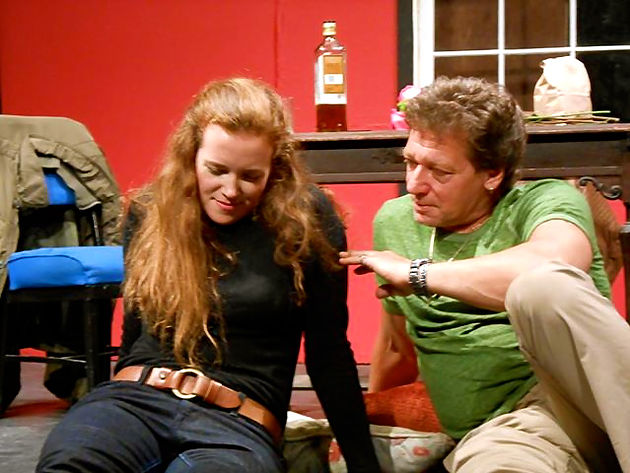
Ms. Smith and Mr. Silver in the original stage production of The Watchtower.
THE TEMPEST – PRESENTED BY IDENTITY THEATER
REVIEWED BY ROBERT LIEBOWITZ
 Once in a great while, an evening in the theater becomes more than going to see a play, and even more than a theatrical experience. It transcends any and all art, and makes a statement, directly, about life itself. The last such event was in 2006, when the Classical Theater of Harlem produced Waiting for Godot, but set in New Orleans during Hurricane Katrina. Rather than the two hobos passing their time near a tree, Vladimir and Estagon were seen clinging to life on a rooftop of a flooded home, as the infamous tree passed them by in the muddy Mississippi…and, as in the original story, no help was to be found. Godot was not coming. What an immensely creative interpretation, that was wholly relevant and heartbreaking.
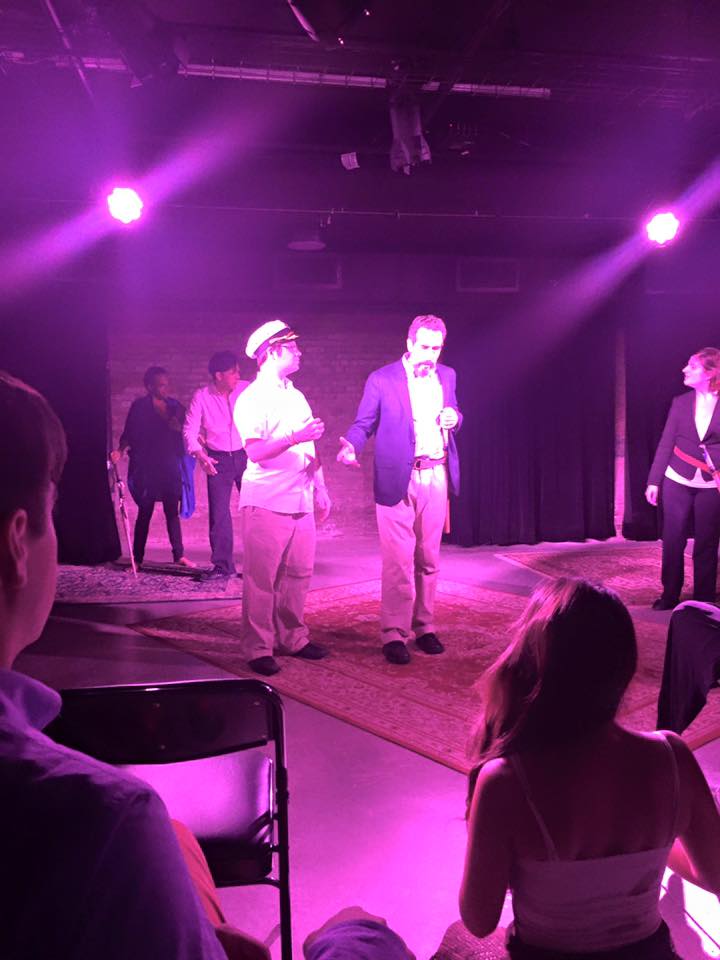 However, in this production, one must care. Several members of the cast have various and assorted disabilities, and the producers have masterfully woven them together seamlessly with other actors from the Shakespeare Forum; together they have provided this humble scribe with one of the most moving experiences in the theater, ever. It is must-see theater.
REMEMBRANCE DAY had all the ingredients to create a wonderful, tasty salad of theater.
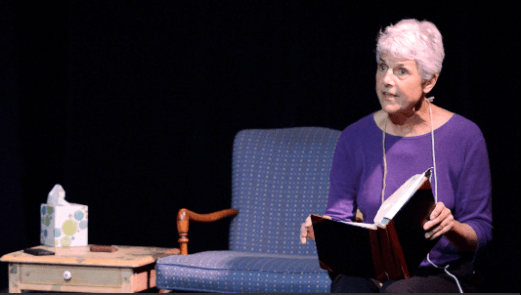
Remembrance Day, a one-woman show written and performed by June Ballinger at the 13th St. Repertory Theater. Had a versatile performer, a decent script, and a compelling unique story; a firsthand narrative about a woman who in the bowels of Great Britain secretly worked on Colossus, a gigantic computer whose sole mission was to break the Nazi code and save the world from speaking German during WW II.
Director Janice Goldberg, however used a risky stage device that doesn’t always work – Pantomime.
Every single reference in the text that could be accompanied by a physical invisible gesture WAS accompanied. The frequency of this technique wound up looking foolish more often than not. Truly a shame as the playwright/performer was superb and deserved so much more.
Ioan Ardelean serves as guest director for one of the productions in THREE BITES OF THE APPLE: A revival of Robert Liebowitz’ canon of works. “he’s fascinating” says Ken Coughlin, one of Ardelean’s actors. Fascinating is the right word. it will be interesting to see how his European sensibilities enhance Liebowitz’ hard-bitten NY prose.
WHY WATER FALLS Commercial CLICK HERE
[Excerpted from LEIGH CURRAN: AN OVERVIEW]
I’ve spent my life in the Arts and while I started out as an actress I soon added playwriting and later founded the The Virginia Avenue Project a non-profit using long term, one-on-one arts mentoring to give children growing up under difficult circumstances the skills to think creatively, critically and courageously about life goals and choices. Project kids join at age six and stay through high school working alongside caring, adult mentors throughout their growing years. The Project’s longtime community partner is the Santa Monica Police Activities League in Santa Monica, California. I was the Artistic Director from 1991-2013.
I’m also the author of three full length plays: The Lunch Girls (finalist for the Susan Smith Blackburn Award; world premiere at the Long Wharf Theatre, Arvin Brown, dir.; Off Broadway at the Grove Street Theatre , Stuart Ross, dir.); Alterations (Off Broadway at the WPA Theatre, Austin Pendleton, dir.; world premiere at the Whole Theatre Company, Olympia Dukakis, dir.) and Walking the Blonde (world premiere Off Broadway at Circle Rep, Paul Benedict, dir; and Off Broadway at La Mama, Leonard Foglia, dir.) The Lunch Girls and Alterations are published by Samuel French.
 My first novel, Going Nowhere Sideways, was published in 1999 by Fithian Press and was highly praised by Publishers Weekly, Spillway, and Inscriptions Magazines and is available on Amazon.com and other on-line bookstores. It is a coming of middle age story that traces one woman’s evolution from Woodstock in 1969 to the demolition of the Berlin Wall in 1989. My poetry has appeared in Slant: A Journal for Poetry, Onthebus, The Bark, Spillway, and Rattle Magazines as well as in the on-line e-zine, The Junkyard.
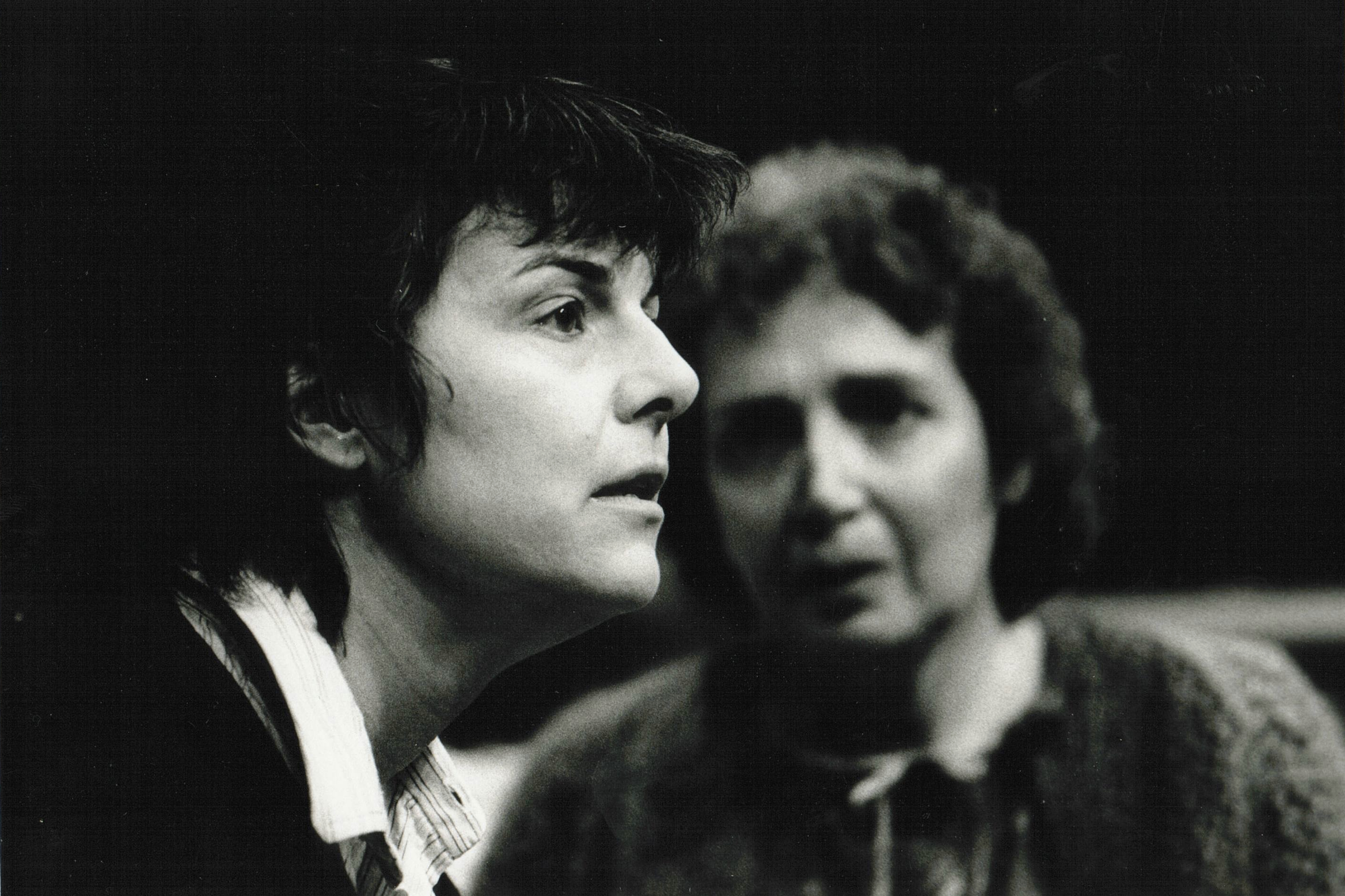
As an actress, I’ve performed on, off and way off Broadway working with the likes of Kathy Bates, Arthur Penn, Paul Benedict and George Abbott. In Los Angeles I appeared in my own play, Walking the Blonde and in the LA Women’s Shakespeare Company’s acclaimed productions of Romeo and Juliet, Othello and Measure for Measure. TV/Film credits include: West Wing, Judging Amy,Once and Again, LA Law and Reds.
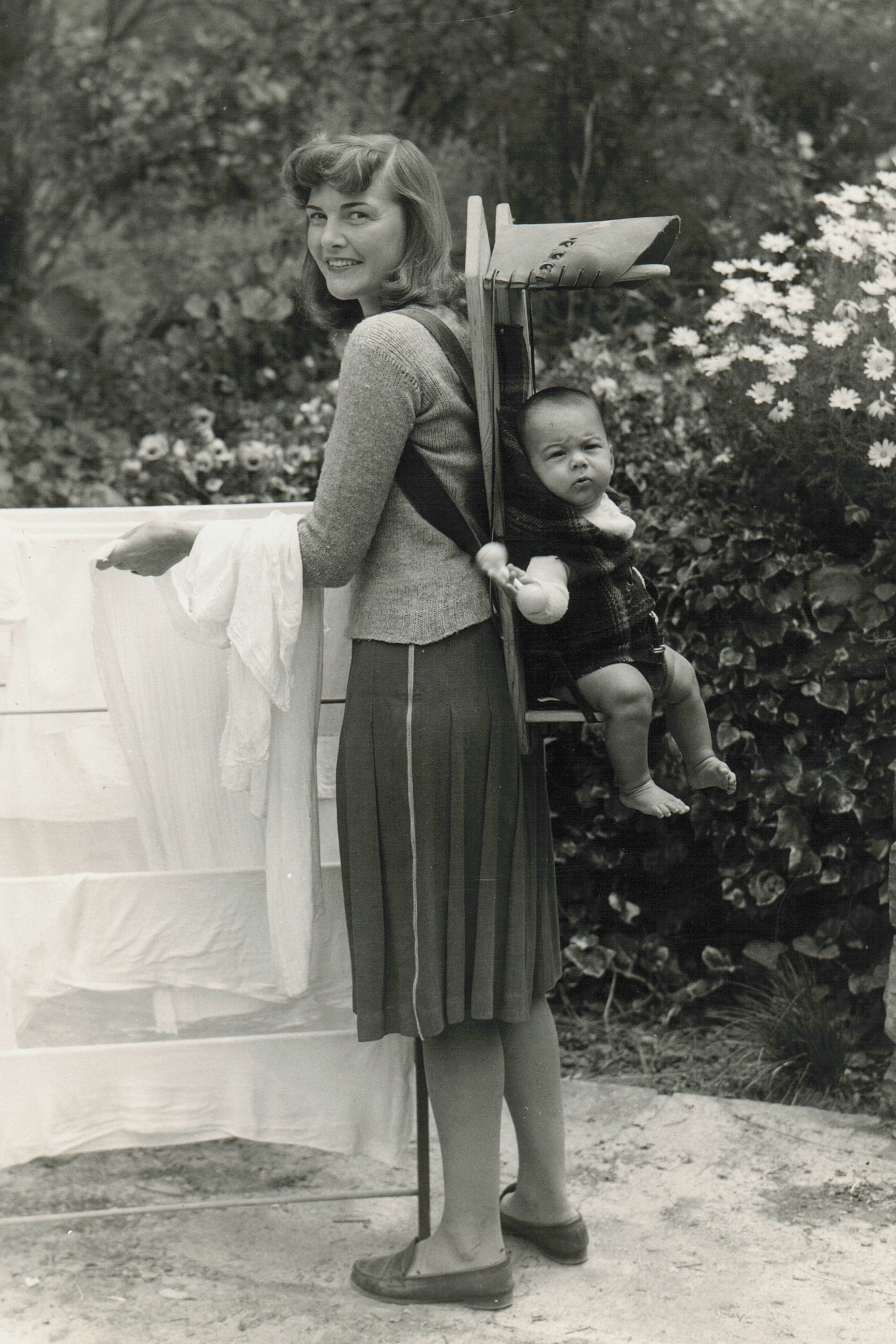 I was born in 1943 and grew up in California and Connecticut. My father taught at the Thacher School in Ojai, California where my mother, younger brother and I spent the school year but come summer my father would load up our DeSoto station wagon and we’d drive across the country to Salisbury, CT where my father had a summer cabin – kerosene lamps, outhouses, well water and all. During the school year, my father taught French, Latin, Spanish and motor mechanics at Thacher. My mother, an actress/singer, performed with the Chekov Players in Upper Ojai until my father died in 1954 – at which point, my mother took over my father’s classes until the school could find his replacement.
I graduated from Santa Catalina School in 1961 when I was 17 and in 2001 received the school’s Distinguished Alumna Award for my work with the Virginia Avenue Project. In 1962, after a year of working odd jobs in Ojai that included taking care of the studio of noted ceramist and friend, Beatrice Wood and teaching arts and crafts to first graders at my first alma mater, Monica Ros School – I headed for New York City to begin my career in theatre.
From 1962-64 I attended the American Musical and Dramatic Academy. I studied acting with Sanford Meisner, Bill Esper and Robert Modica; dance with Hanya Holm and music appreciation with Lehman Engel. After I graduated I studied acting privately with Ludwig Donath and later at HB Studios with Uta Hagen.
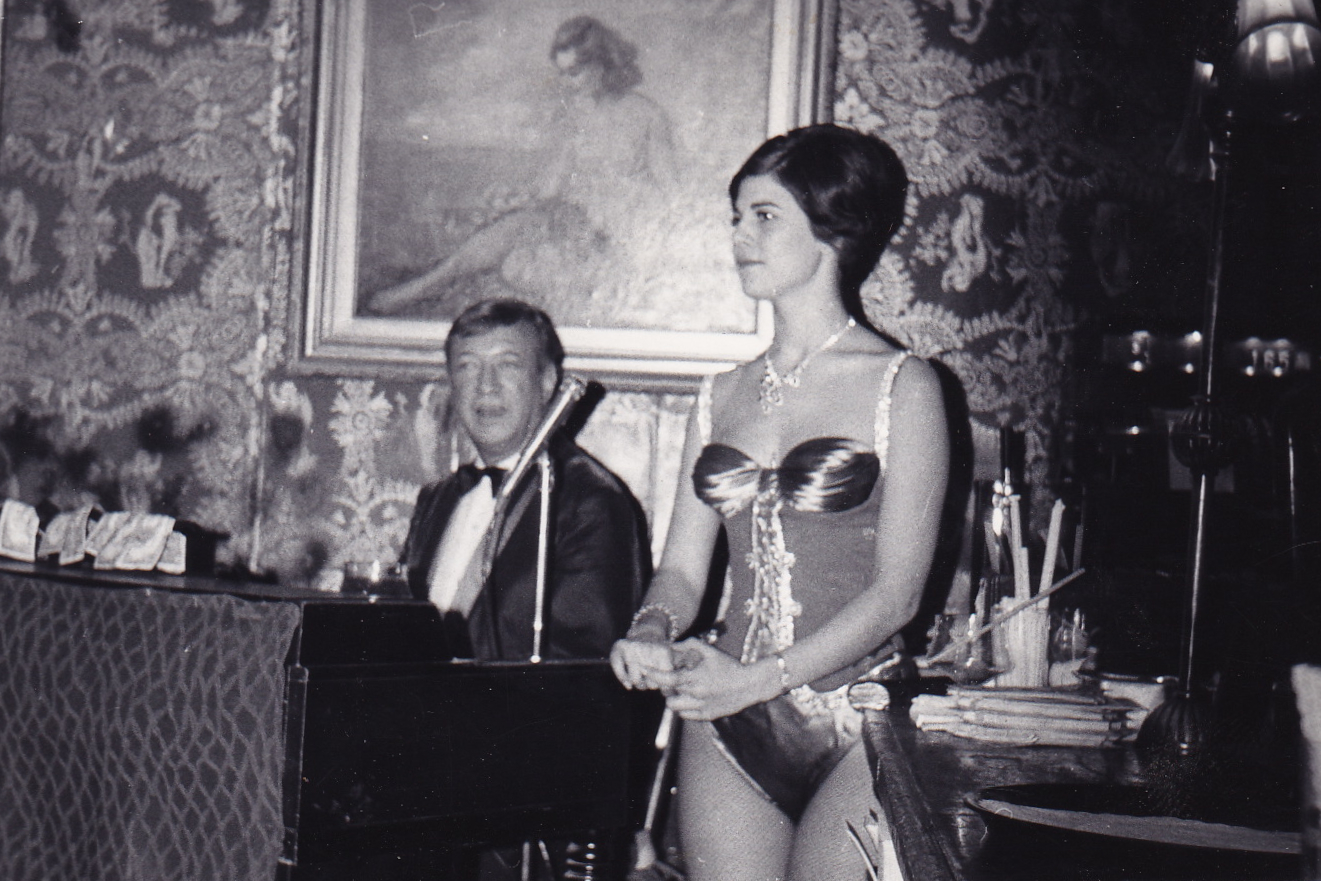
To support my theatre habit, I waited on tables predominantly at the Gaslight Club – a key club similar to the Bunny Club but with a gay-nineties feel. Because I was tall and strong I was relegated to working lunches and because the club was in a brownstone, all the lunch girls carried heavy trays up and down flights of stairs while trying to look sexy in fishnet hose, scant costumes and six-inch heels. Ten years later, this experience which always felt disconnected from my intended life would become the inspiration for my first play, The Lunch Girls.
I got my Equity Card in 1968 when I was hired to be in the chorus and understudy Brenda Vaccaro in the Broadway musical, How Now, Dow Jones. Shortly thereafter I began making TV commercials and by the mid 70s had become one of the top on-camera commercial artists. Making commercials made it possible for me to explore lesser paying jobs like playwriting, alternative theatre and life in general.
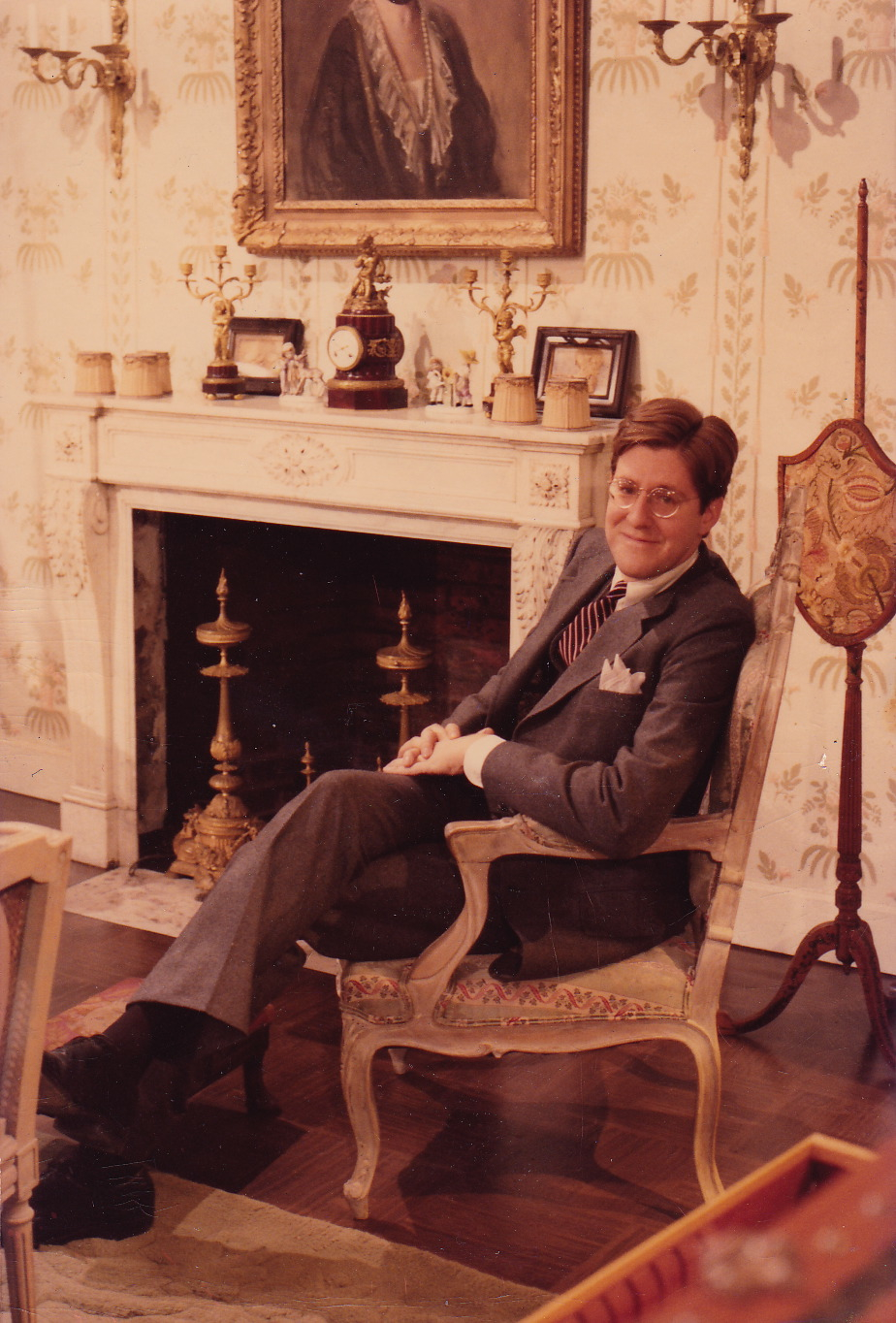 In 1974, I met actor, Edward Herrmann. Shortly after we moved in together, I took up playwriting. I’d had no formal training as a writer but I had a good ear for dialogue and understood dramatic tension. Basically, I asked myself all the questions I’d ask myself when creating a character as an actress – what do I want and why is it so important I get it now as opposed to later? And if the characters had opposing Wants – there was plenty of room for conflict. In time I began to realize my characters would lead me to the story rather than the other way around. This was the adventurous part of writing – I never quite knew how things were going to turn out and, therefore, neither did the audience. And, in addition to writing parts for women that were meaty and off-beat – I also discovered that with writing, unlike acting, you don’t have to wait to be hired to be creative.
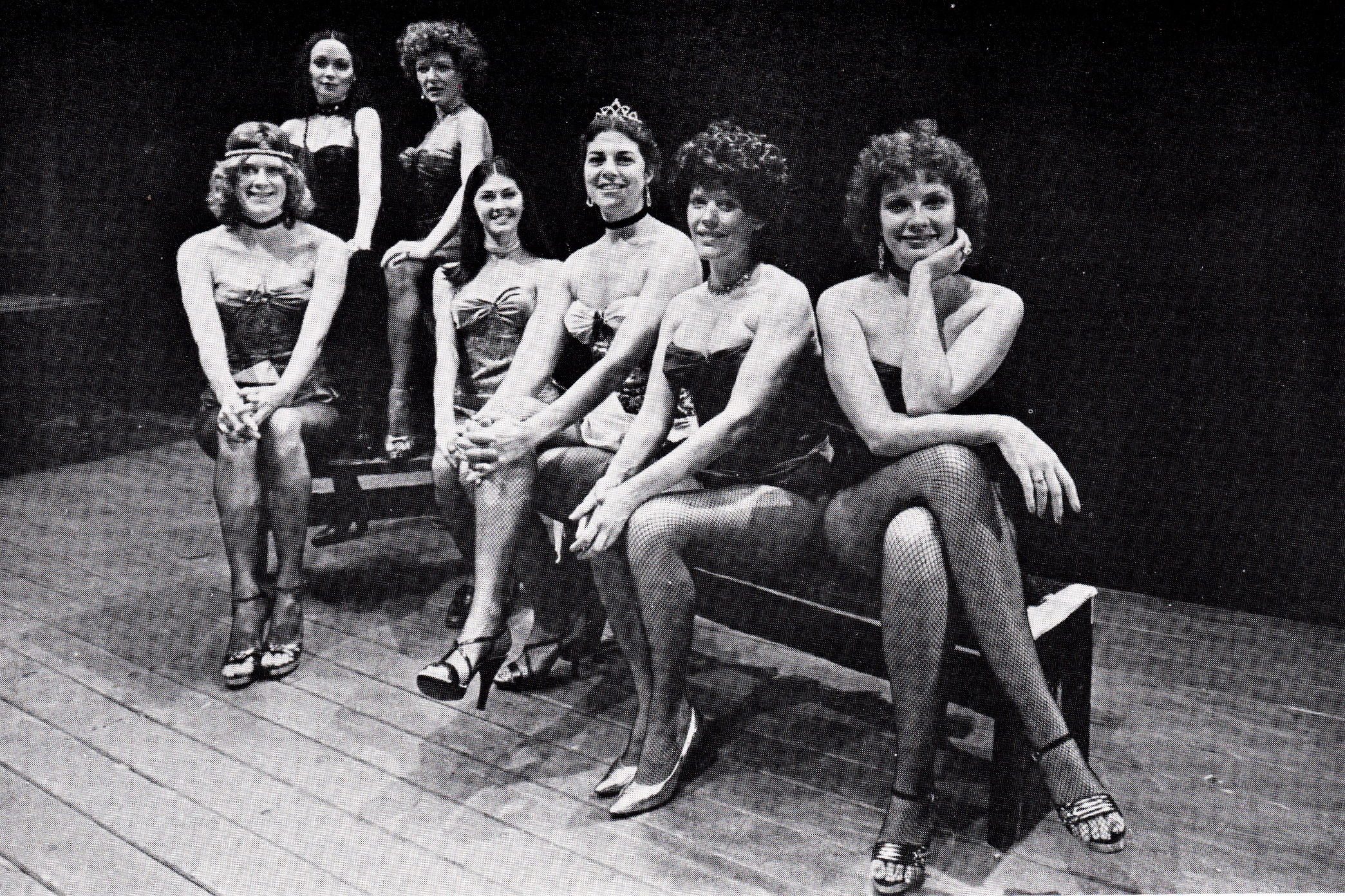 My first play, The Lunch Girls, was produced at the Long Wharf Theatre in 1979 under the direction of its Artistic Director, Arvin Brown. Throughout my playwriting career, I’ve been lucky to work with some wonderful directors in addition to Arvin – who taught me about play structure, timing, audience attention, etc. Some of my director/mentors are Austin Pendleton, Olympia Dukakis and the late Paul Benedict. Other influential mentors include playwright, Michael Weller; director, Dan Petrie and producer, Dorothea Petrie.
In 1978, Edward and I bought a house in Carmel, New York and were married in the fall of that year. In the country, I discovered my love for vegetable gardening and while that didn’t seem important at the time, it would become a major part of my life later on.
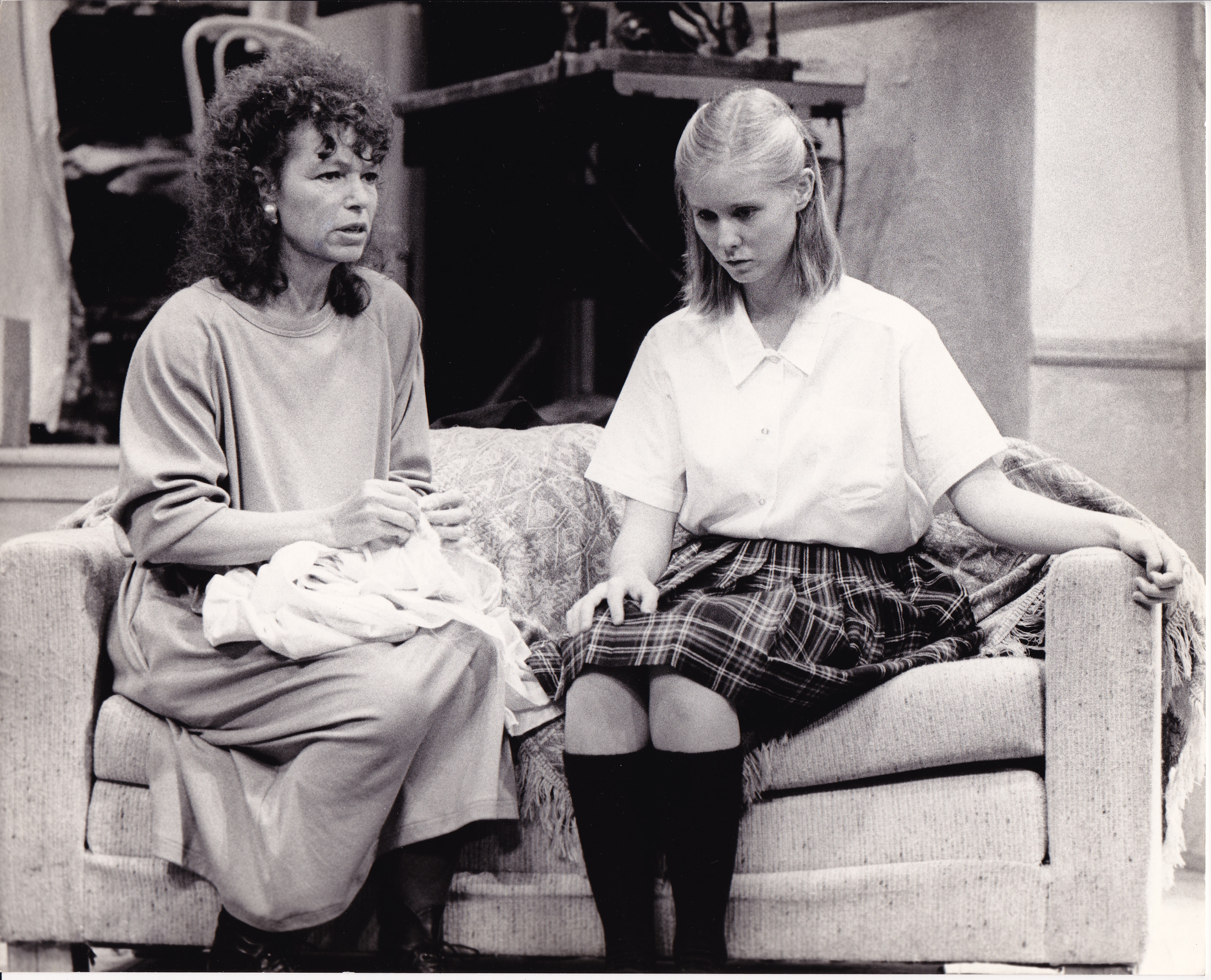
While Edward was enjoying considerable success in theatre, film and television, I wrote my second play, Alterations which was ultimately produced Off-Broadway at the WPA Theatre featuring Cynthia Nixon and Gretchen Cryer in the cast and Austin Pendleton as director.
Edward and I separated in 1986. I returned to New York City where I wrote and performed in my third play, Walking the Blonde. It had its world premiere at Circle Rep under the direction of Paul Benedict then The Barrow Group picked it up and produced it Off-Broadway at La Mama, directed by Leonard Foglia. During this period, I began exploring alternative theatre. I wrote and performed in my own pieces at PS122 and the Wow Cafe where I was fortunate to work with Lisa Kron and the Five Lesbian Brothers.
In 1988, I was invited to write a short play for the 52nd Street Project‘s One-on-One Program. In this program, a professional actor is teamed with a kid to perform in a short play written by a professional playwright. My actor was Paul McCrane and my kid was an eight-year-old boy from a neighborhood housing project. I was so taken with the experience I began volunteering for the Project as an actress, writer, collaborator, director, class mentor, stamp licker, whatever – because in my heart of hearts I sensed the 52nd Street Project was changing my life. The change became real when I was invited to learn how to teach kids to write plays. The process, called Playmaking, was created by Daniel Judah Sklar – it was creative, smart, loaded with integrity and as much fun for seasoned playwrights as it was for kids. At the end of the training, I knew I had to teach kids how to write plays and, for that matter, how to act in them and it was then I got the idea to replicate the 52nd Street Project in Los Angeles.
In 1991, newly divorced and feeling the wind at my back, I moved to Los Angeles to found the Virginia Avenue Project. At the time I knew nothing about non-profits and little more about kids. I was lucky to have the former Executive Director of the 52nd Street Project, Marsue Cumming, to guide me through the grant writing and set up process. Daniel Judah Sklar, my great mentor when it came to working with kids, flew to LA to get Playmaking and his advanced playwriting program for children, Replay, off the ground.
I started the Virginia Avenue Project in a leaky lean-to behind my house – a scrap of paper hanging over my desk with a phone number to call if I ever needed an Executive Director. When the Virginia Avenue Project’s first production, Strangers in Paradise, opened in April, 1992, I called the phone number and the fates brought me Kendis Heffley who became the Project’s Founding Executive Director. Kendis and I were opposite halves of a whole and great friends. We guided the Project through its first eight years adhering to the belief that who we were in the office would trickle down to our kids so if we wanted the Project to have legs we needed to practice what we preached.
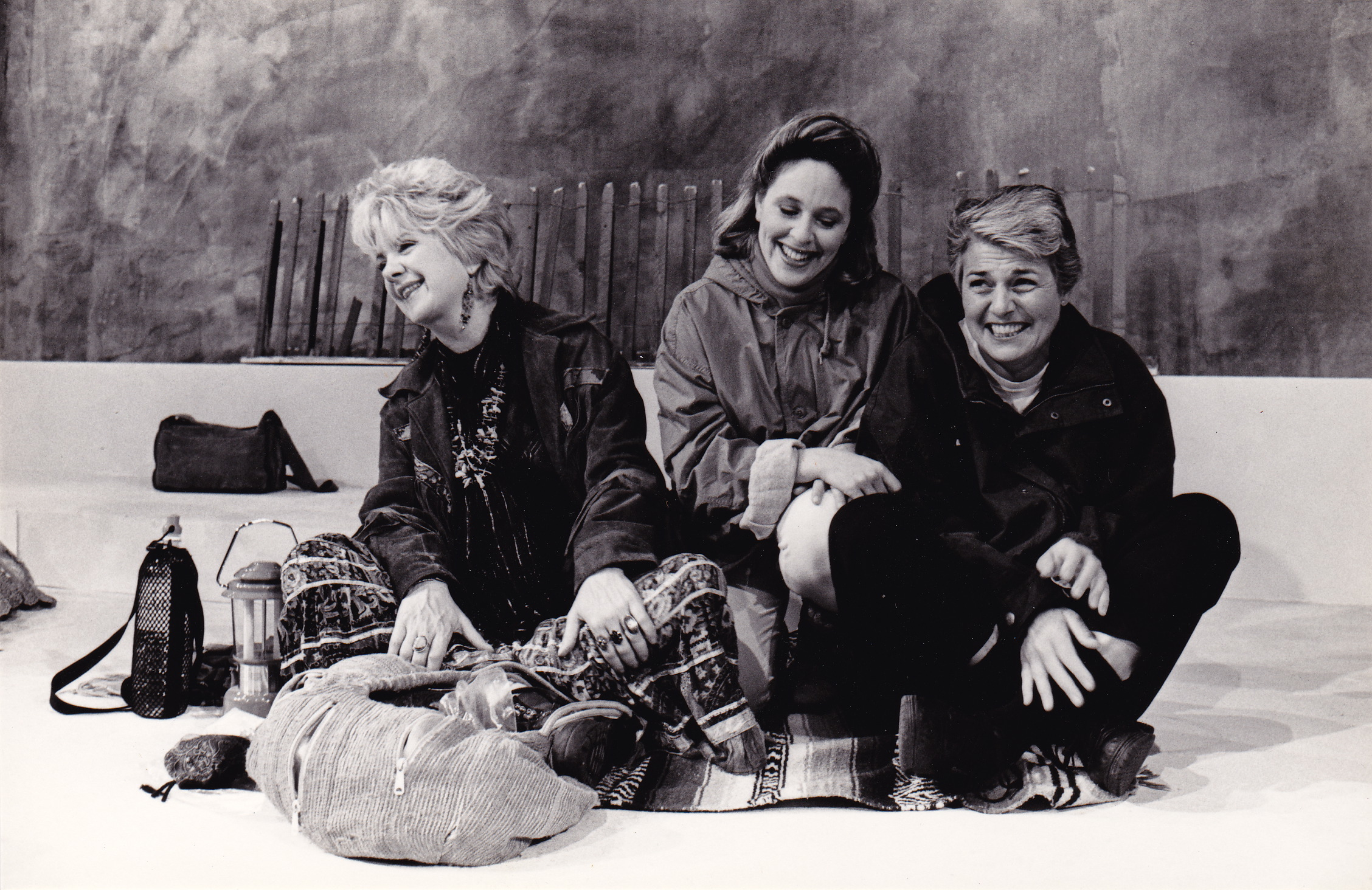 During that time, I also starred in a production of my play, Walking the Blonde at Theatre Geo in Los Angeles. My first novel, Going Nowhere Sideways, was published to enthusiastic reviews by Fithian Press. I began studying with Jack Grapes of the Poets and Writers Collective and writing and publishing poetry.
In 2000, Meryl Friedman became the second Executive Director of the Virginia Avenue Project guiding it through its adolescence for seven exciting, creative years. Meryl and I expanded the Project’s horizons by augmenting our Outreach Program and instituted new programming to challenge Project kids in ways that were relevant to the changing times. We also started the Project’s creative tutoring program, Smart Partners, designed to make learning fun again for Project kids who were struggling in school or kids who wanted to maintain strong grade point averages before applying for college.
At the end of 2013, I retired as Artistic Director of the Virginia Avenue Project and returned to my first love, writing and performing. I began reading personal essays around town and in June, 2015 my solo show, Why Water Falls, had its World Premiere Production at the Hollywood Fringe Festival. This was followed by a successful run Off-Off Broadway in the fall of 2015. Why Water Falls enjoyed a return engagement in Los Angeles at Highways Performance Space in April, 2016 and will be having its final performance at the United Solo Festival in New York City on September 30, 2016. Stay tuned!
Nine Theatricals at the 13th St Repertory Theater’s version of Shakespeare’s HAMLET opens with a new character: ‘The Teller’ (played by RJ Lamb), who serves as a sort of “Living, Breathing Cliff Notes Guy”. It is a convention invented by the Greeks, and, for this reviewer, a welcome addition to guide us through the incessant, beautiful-but-wholly-unnecessary poetry that mars all of Shakespeare’s’ works. However, if indeed ‘”…the play is the thing…”, then it is a dubious achievement to actually present a character that Mr. Shakespeare did not actually write (unless he did, in earlier quartos/folios). But we digress.
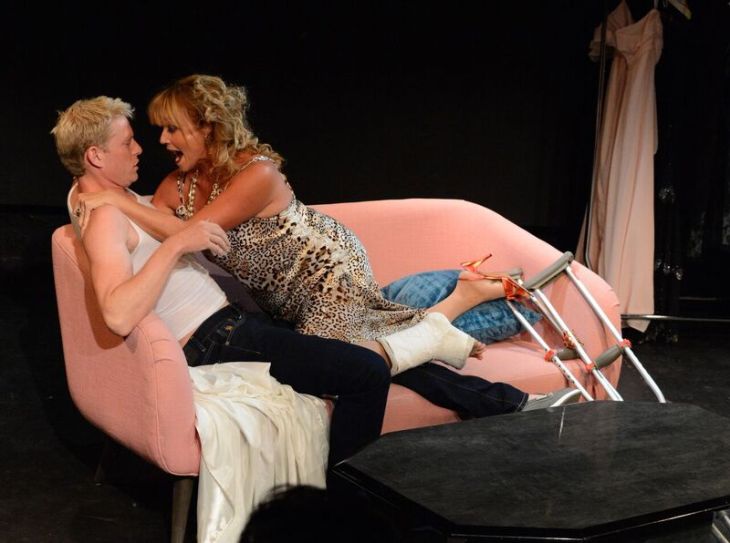 Tom Rowan is talented – that’s for sure. An excellent dialogue writer (Renee Bang Allen’s entrance line, “Who turned the sun up so high?” gives immediate insight into the title character, which she played quite well) but more focus was needed to the entire piece.
At first the drama concerns the foolishness of a convenience marriage; then becomes a mystery; then a tale about forbidden love; then a matter about a young man (played well by Andrew Gelles) coming out for the closet, and standing up to the callous, shallow, contemptible heterosexual world. He seems to be the hero as the other characters seem stereotypical.
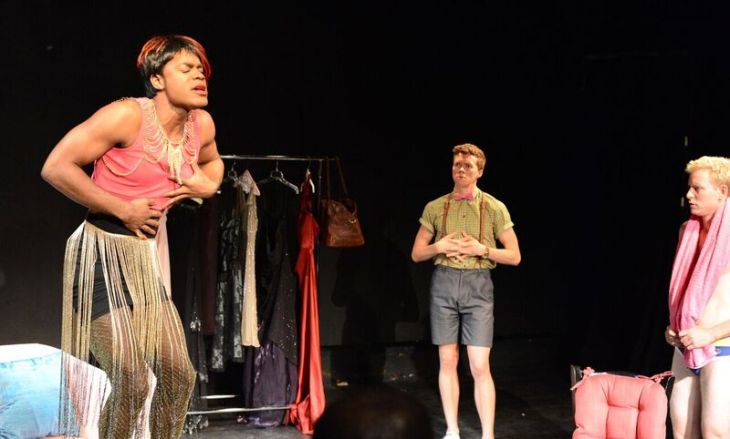
But make no mistake, Mr. Rowan has talent, which includes a good ear for dialogue, a well-structured play, and masterful exposition, but he should be mindful of those stereotypes. The women seem too bitchy and the men, too – well – too much like Donald Trump (A thumps up for the performance of Peter Reznikoff, playing the billionaire husband)
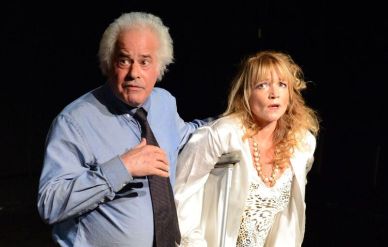
With some fine-tuning, Faye Drummond could really say something to its audience.
Photos by Jonathan M. Smith
Ernest Barzaga started a theatre company, rented a theatre, raised $25,000, and presented a seminal American classic in one of Indie Theater’s last bastions of cutting-edge theaters. And he hasn’t graduated college yet.
MILLER’S MASTERPIECE in NEW HANDS
‘Death of A Salesman’ by Arthur Miller is an unquestioned masterpiece of American Drama–it is, by far, Miller’s best play, and it belongs, with three others, on the Mount Rushmore of Great American Plays (the others being ‘Who’s Afraid of Virginia Woolf?’, ‘Long Days Journey…’ and the combination of ‘Glass Menagerie and ‘Streetcar’)
A thousand before Ernest Barzaga and his company have analyzed the play to death since its premiere in 1949; it remains a towering piece of art, for so many reasons, because of its never ending timeliness, but in a larger sense its devotion to its mission–which is, destroying the lies that people live. The play, at its essence, is a journey, to reveal the lies for what they are–lies and myth-making, nothing more–and discard them. If a definition of art is to remind people how to live their lives, then this is the poster boy for such a proclamation.
Miller also created one of the most memorable characters in all dramatic history–the aptly named Willie Loman, a salesman/husband/father/Chaser of the Fake and False American Dream who has suffered one too many lashes at the mast, and has consistently bet on the wrong horse.
In this production, at the John Cullum Theater, Ian Cooper tries to tackle the role and does it justice. Yes, he’s young – the entire cast is younger than any of the roles in the production. Clearly, with this role at such a young age, he has jumped into the deep, deep end of the pool. But Mr Cooper’s performance is boulder-solid. He is compelling to look at and listen to. He knows how to stand on a stage, and give space to his fellow thespians when necessary. He belongs on a stage, any stage, doing any play. To quote Miller himself–‘Attention must be paid.’ Mr Cooper has accomplished something fairly remarkable–he has, though no choice of his own (the play demands it), taken this gigantic, man-mountain of a play on his back, and has successfully, sometimes spectacularly, carried it across the finish line. This makes us forgive his inapprpriate hair style (one must wonder if he needs his hair long in life thus was reticent to cut it for such a short run).
After a rocky start and some volume issues, about the 15 minute mark, Mr. Cooper talks about the longing for his 1928 Chevy–and then it were over. Mr. Cooper had won over this humble scribe, from that very moment until the end of the play. Swimming against the current, against the dying of the light, Mr. Cooper forges on and on and on and on, and doesn’t stop, never stops. His almost insatiable desire to – what – succeed … sell stuff … teach his children about manhood before he croaks on the Interstate?–is fascinating and harrowing to watch, since we know from the outset that Mr, Loman is doomed in his quest. Why? He has a skewed vision of what constitutes manhood, and is listening to the one man–his brother (superbly played by Caycee Kolodney, who gives Mr. Cooper a real run for his money with his performance), a land baron of the 19th Century, of the Gilded Age almost, who has no problem robbing from everyone he encounters (‘You cannot deal fairly with strangers’, he proudly boasts), who will steer him down the wrong path.
Joining the triumvirate of superior performance was Anna Paone, playing the tortured, fierce, loyal, Linda Loman. From her opening moments, sleeping (again) by herself, to her final monologue at Willie’s graveside, Ms Paone demonstrated a world-weariness and an inner strength that was completely appropriate for the character and in line with what Mr. Miller wrote.
Gianni Damaia was masterful as Willie’s neighbor Charlie. Their scene alone–which both defines their relationship and also creates new question about it–was the high point of the play. The timing, the direction, the pace, the rhythm, the stakes involved, the passion–all first rate and compelling theater. It also raised a question which we don’t think had been explored before–did Charlie have a thing for Linda? Interesting insight.
The brothers were not quite as successful, but acquitted themselves as the play went on. David Levi as Happy has talent but was missing Happy’s shallow view of the world, and his need for shallow things–like chasing girls to the exclusion of everything else (wonderfully highlighted by the steak house scene in Act II).. His parents pay him little attention for a reason. There must be an understanding from the actor to the character, and give it basis. He, like Mr. Cooper, needed more period-perfect make-up and costuming.
Aaron Ogle as Biff gave a good, earnest performance. Mr. Ogle, like Mr. Cooper, affected a tone in their voices that had a Lower East Side flavor. Maybe this was meant to show age or time-period but wasn’t needed. Biff has a powerful journey – as a man doomed to the abyss because he learned his father was a lying hypocrite, a devastating discovery for any child. Authentic tone optional. .
Alexander Gheesling as Howard was well-cast, his time on stage is in a vital scene on which the play pivots, so he could have done even more in his moments. David Melgar as Bernard played both his scenes well, and the latter one, with an ailing Willie, was touching. Now, about that hair… (these aforementioned problems (hairstyles for most characters were incorrect for 1949; costuming was inconsistent) were fixable and a lesson learned for next time).
A tip of the hat to the director, Mr. Ernest Barzaga. At its essence, a director’s job is to address the individual art of the actor, and to bring the assorted arts of the other actors and designers together in a cohesive product – and in this task, Mr. Barzaga succeeded. Matters of pacing and staging will only grow stronger and stronger, that is obvious.
The best of success to a fledgling theater company…and maybe next time, into the ocean, where there is no bottom, and no limits. This group has proven, with little hesitation, which it can tackle anything the Theater Gods present before them.
=======================================================================
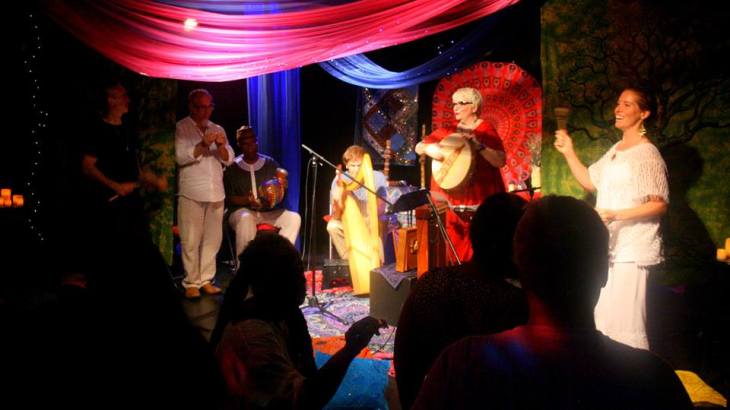
SUMMER SOUL SOUNDS
There are some lovely words in the English Language. ‘Sound Bath’ would be one.
When this dazzling combo made its entrance about 10 minutes into the Healing Session/Performance, butts shifted in chairs, and attention was paid.
Mary Elizabeth Micari hosted this innovative, unusual, well-meaning experiment–both a ‘session’ and a ‘performance’–and on the whole, despite a few trappings of the modern world sneaking in, was a successful endeavor.
This is an evening of healing, as advertised, by trained sound healers (a wholly legitimate science and art, with schools and degrees dedicated to its teachings), and the healing will take place by any means necessary. It is also a performance of sorts–after all, you’re here, and the healers are ‘up there’. Because of that fact, because the ‘stage’ was dressed so elegantly and appropriate for the tranquil evening planned, a certain level of performance is expected.
Once in awhile the lines became too blurred–sometimes a ‘session’, sometimes a ‘performance’, and sometimes, unfortunately, an infomercial. We are here for meditation, for inner peace through music, that should be the entire agenda.
 The evening started with a session by Daniel Lauter, a thoughtful, gentle soul who shared his talent in a caring, giving, touching way. One was free to join in, or not; the decision was entirely ours. His assorted collection of “singing” bowls was beautiful and elegant and lovely to listen to. He was a man of few words, and had nothing to offer except himself, his energy, and his art. Unfortunately, the next performer was not as gracious a host. After an amusing story as a 5-year-old learning the sax, Erik Lawrence regaled us with one tale after another of who he played with, and where. Even if this wasn’t his intention, it seemed as if he was attempting to find new clients in the audience.
 Fortunately, Act I was saved by George Brandon–a man filled with spirit and soul, and the possessor of a wonderfully sonorous voice, a voice so powerful we could listen to him recite the Yellow Pages without getting fidgety. A commanding presence on the stage, properly dressed for the occasion, you had no choice but to listen, and enter his world. His musical piece–in which all performers joined, including the hostess–was required listening. His mantra–“Don’t Waste Your Life” was short, sweet, and to the point. If only the rest of the world was listening, we’d all be better off.
Act II brought another infomercial. Malia Culp might be successful amongst those she knows well, but on a stage, performing for a group of strangers, she seemed pretentious. Her talents may or may not resonate with her clients, but it’s hard to believe spending half her evening sounding like a bumble bee would work. She acknowledged her ‘…beautiful Erik’ and then began her own commercial much like he did. Sadly, she, too, decided to talk of her talent was better than to show it making her contribution to the evening amount to nothing.
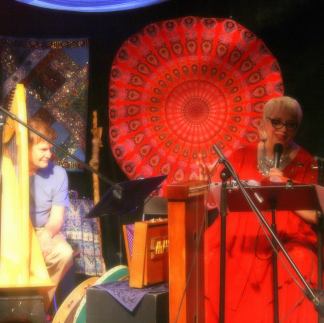 That left the ‘finale’ to Ms. Micari. She saved the day. There is a reason she hosted the event, and a reason she went last–she has the talent the others have, but also a personality that is second to none. She sang beautiful odes of healing brought down to her from her ancestors, and they did not disappoint–from the Gaelic Hills, to the lovely land of Calabria, her voice lifted the evening all by itself…then, it a fitting conclusion, led the audience members out of their seats and into the lobby of the theater, for a wholly satisfying conclusion.
As Hostess, Ms. Micari must be a little mindful of the ramblings of her company but otherwise, a splendid time was had by all, and a big fat tip-of-the-hat to her for organizing such an innovative evening of healing and performance.
=========================================================================
Latest Posts
-
Jim Catapano reviews Anne L. Thompson-Scretching’s Home Is Sweet Sorrow: “A Masterful Conclusion to a Momentous Family Saga”
The War That Never Ends Home Is Sweet Sorrow is a must-see and a devastatingly powerful third chapter in the Blood trilogy, which also includes…
-

THE BARD TAKES BROADWAY: SIXTH ANNUAL NEW YORK SHAKESPEARE AWARDS CELEBRATES RECORD-BREAKING 2025 SEASON
THE BARD TAKES BROADWAY: SIXTH ANNUAL NEW YORK SHAKESPEARE AWARDS CELEBRATES RECORD-BREAKING 2025 SEASON The New York Shakespeare Awards has officially unveiled its list of…
-

American Theatre of Actors Announces 50th Anniversary Gala; Playwright LYLE KESSLER and TONY-winning actor, LEN CARIOU to Receive Lifetime Achievement Honors.
NEW YORK, NY — The American Theatre of Actors (ATA), a cornerstone of the New York theatrical landscape since 1976, is proud to announce ATA 50, a…
-

Music Among the Tumbleweeds: Jim Catapano reviews James Jennings’ New Dancing in the Meadow.
James Jennings’ New Dancing in the Meadow Brings Feel Good Vibes to the ATA James Jennings, legendary Founder of the American Theatre of Actors, brings…
 Arts Independent