
AnomalousCo’s Stiffler and Bounds Resonate at the ATA
In December of its 50th year, The American Theatre of Actors was host to two astonishing one-act plays that take on the oppression and abandonment of women and the plight of migrants—two of the most important issues facing the world as it sees out 2025.
Stiffler is the work of award-winning Kosovan playwright Doruntina Basha. It is not an easy watch in any way, but as a study of systemic oppression, violence against women, and femicide, a completely crucial, unmissable one. Though some laughter emanated from the audience during moments of dark humor, the world of Stiffler is bleak and brutal; the stark set and harsh lighting complement the hopelessness of the situation and the cruelty of most of its characters. Diana Zhdanova gives an astonishing, heartbreaking performance as the mortally wounded Hava, desperate for help but finding only callousness and contempt, ridicule and revulsion. Stumbling into the ER after feeling a sharp pain and getting knocked out at a motel, Hava gets little compassion from the nurse on duty (Ylfa Edelstein); when Hava begs for water the nurse points to the sign above her station prohibiting it from being dispensed to patients; and later when she gets sick at the desk from the pain, the nurse makes her clean up the vomit herself, tut-tutting that she didn’t try to do it farther away.
“I’m sorry for the state you’re in,” sighs the nurse before noting in the same breath, “there’s some (vomit) left in the corner.”
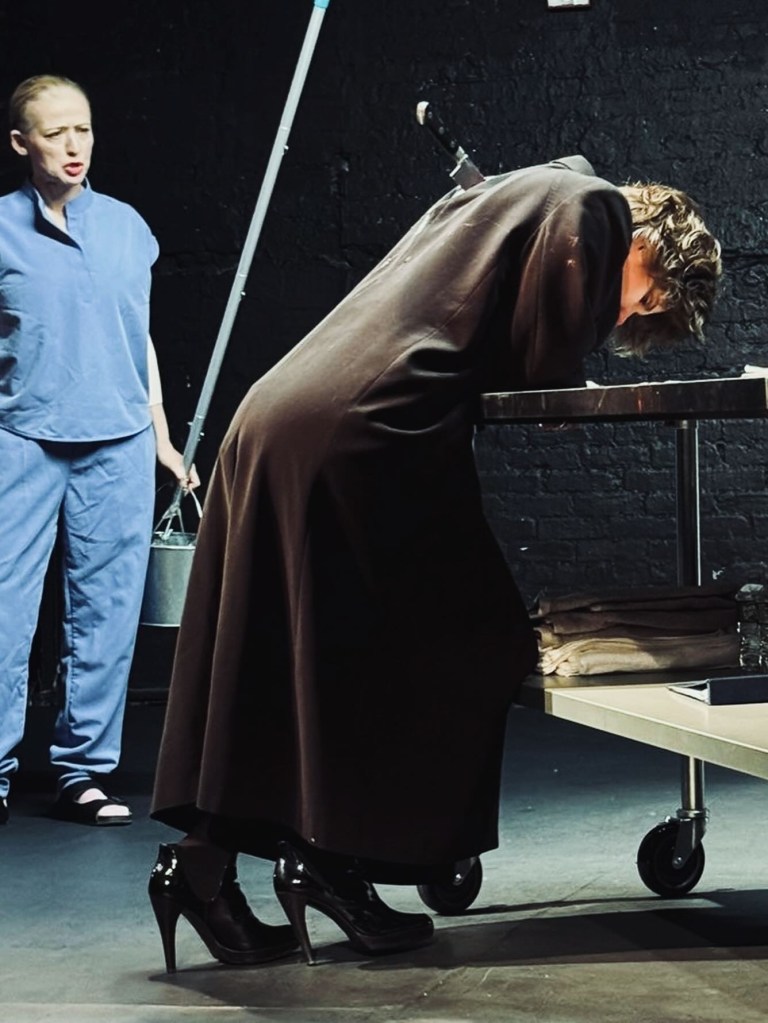
When the nurse sees the huge knife sticking out of Hava’s back she’s more interested than concerned, and concedes to let Hava see a doctor…after she’s signed the necessary forms. This lack of empathy for human life—particularly that of a woman, coupled with the callous dedication to procedure, places Stiffler squarely in our own reality. The contempt for Hava among the people she encounters in her most desperate hour grows as it is revealed she is a sex worker, and those in authority deduce that she “must have done something to provoke” her client into attacking her.
“You and your kind paint a bad picture of us,” seethes the nurse.
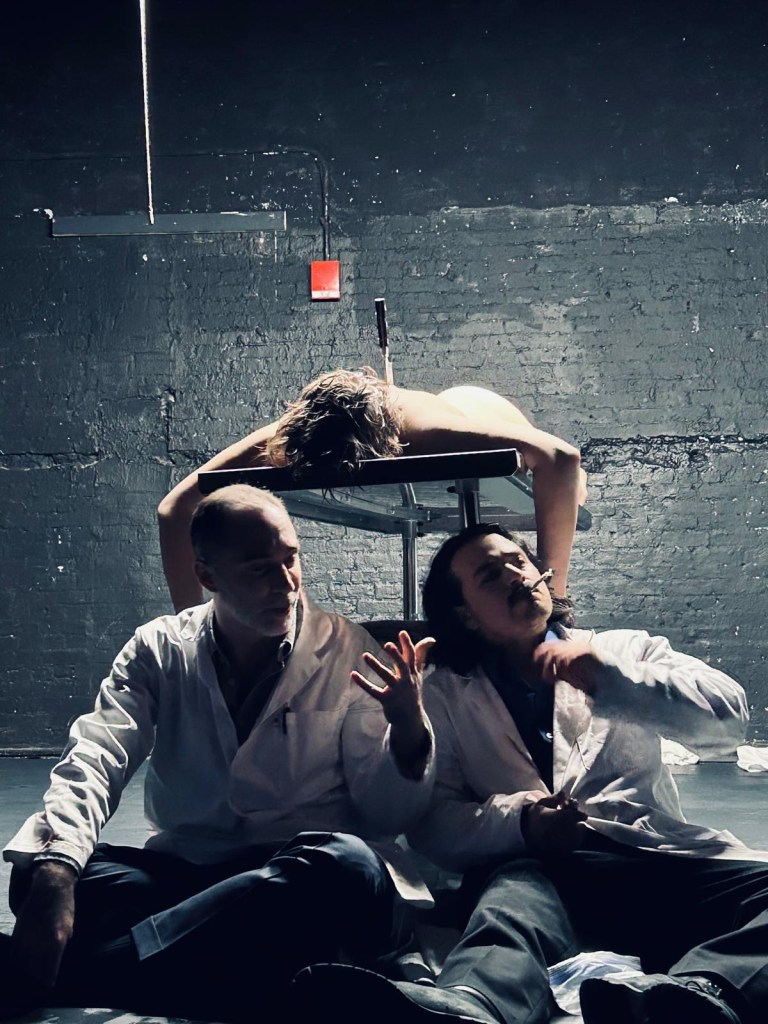
Thus Hava is now treated as the criminal rather than the victim, and she is subjected to verbal abuse, and psychological and physical torture by the vicious investigating police (Jeremy Goren and Giovanni Sandoval) that are purported to be helping her. When she has trouble breathing, the men say she can have the window opened—but she has to do it herself. During this latest ordeal the knife stays firmly in her back, a symbol of what the world at large has done to women. Zhdanova is incredible as a woman crying out to be seen as she fights physical and psychological agony, completely alone.
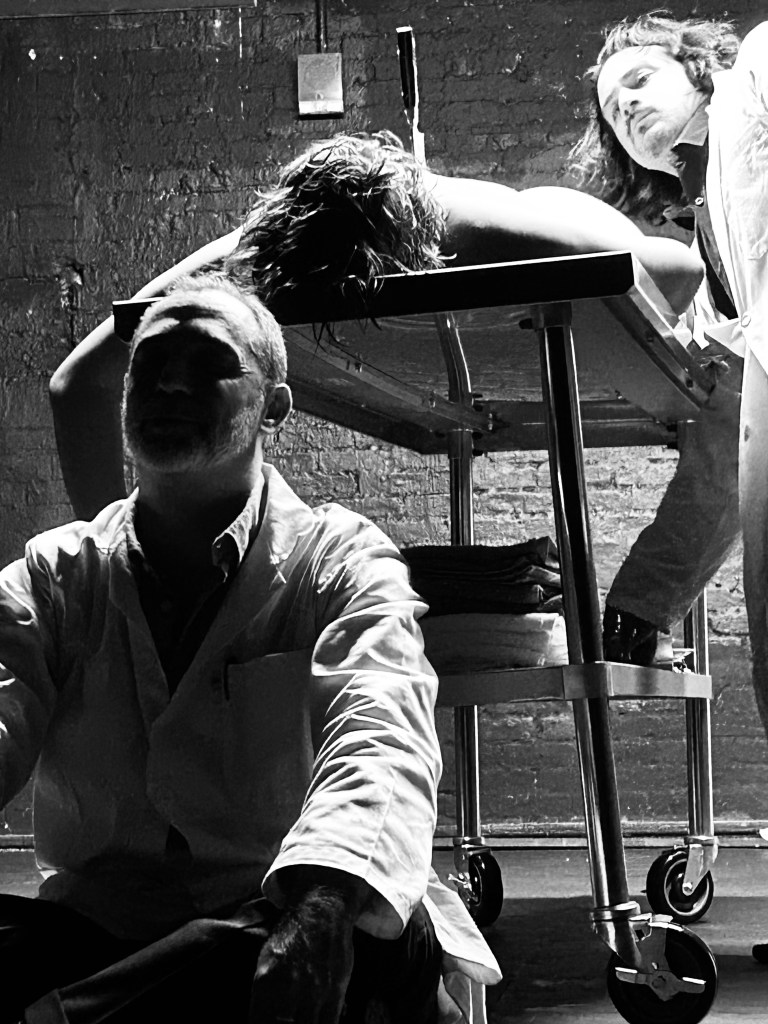
Hava’s story ends in a morgue, where even after death she is humiliated and treated as less-than-nothing; the attendants (Goren and Sandoval) roll her lifeless body around, and prop their clipboards and dictionary on top of her as if she were a table, as they consult the latter to come up with an appropriate but condemnatory name for her profession. And all the while, the knife remains. The only faint trace of compassion comes from Sandoval’s character, who literally takes a walk in Hava’s discarded shoes as he openly hopes someone will come to claim the body.
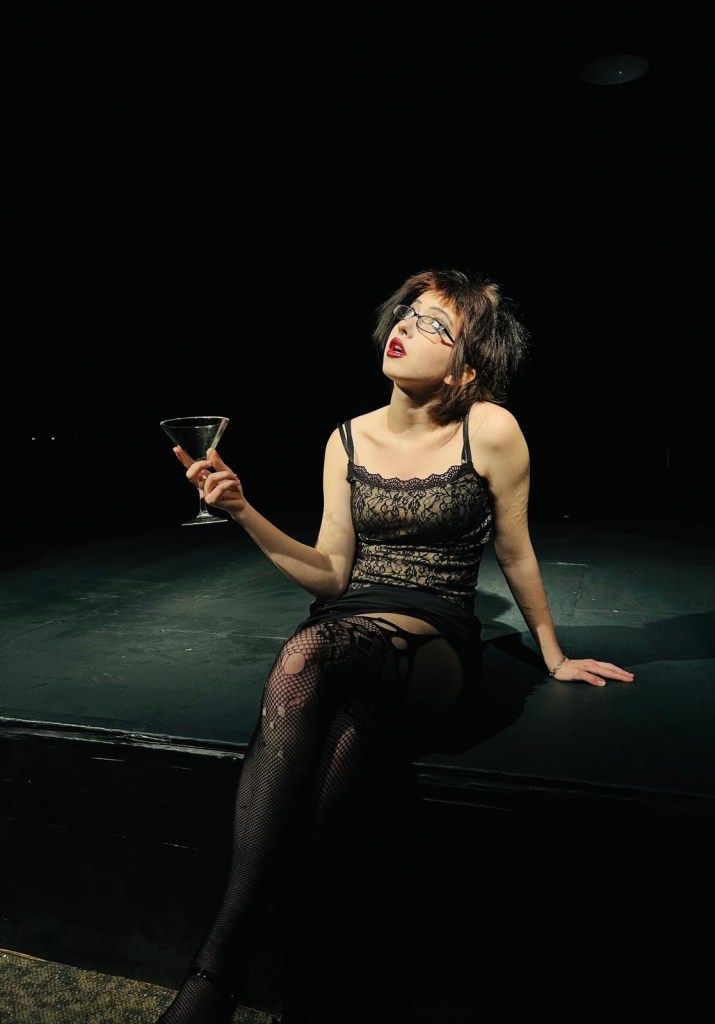
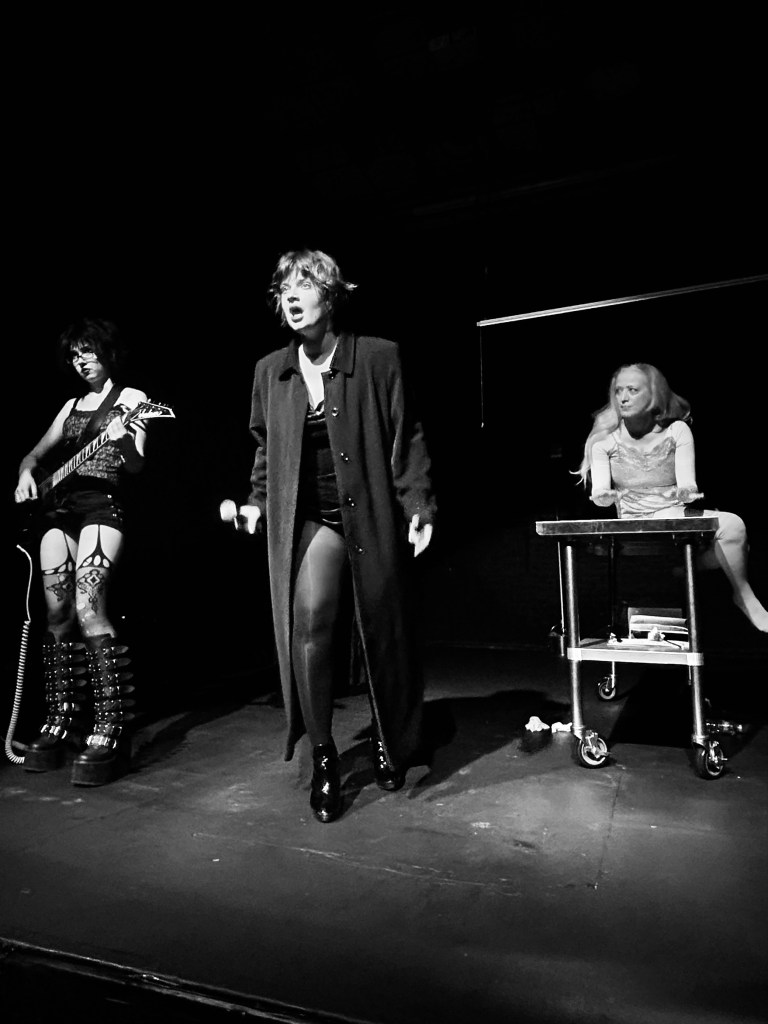
The scenes each end with a musical performance, powerfully punctuating what we’ve witnessed. Zhdanova joins Edelstein and Rina Brown in the fierce “Dead Men Don’t Rape” by Dellah Bon, and “I Love You Like an Alcoholic” by the Taxpayers. Edelstein also performs a chilling monologue as “Eyeless/Mindless Girl,” narrating her own story of being condemned and humiliated at the gynecologist. She describes herself as a “child of the roadside motel/gynecological clinic…all grown up with her very own souvenir” (now 8 weeks after conception), and muses that daughters who do bad things make their mothers sick.
“Boys can be lost in the dark, nothing happens to them,” she observes. “Girls can’t be lost in the dark because they’ll give their mothers cancer.”
Brown later narrates a first-person tale as the “Girl of the Two Hundred-Year-Old Cobblestone,” another woman brutalized and left for dead—abandoned like an empty bottle, broken on the cold streets.
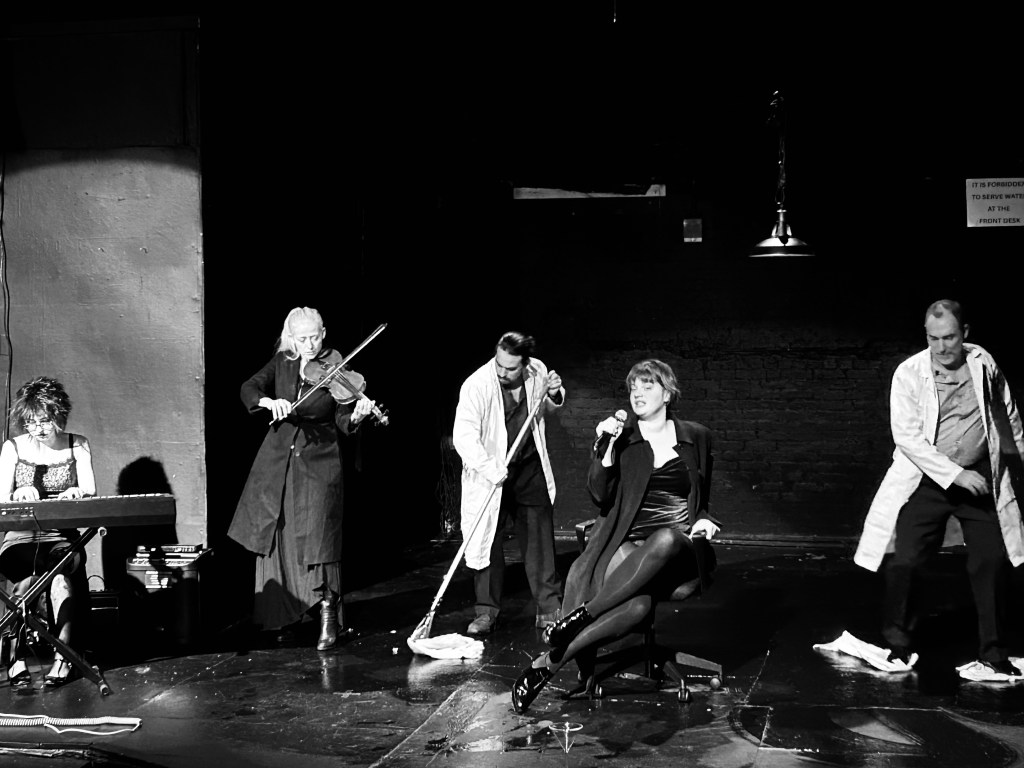
Diana Zhdanova
Stiffler is a stunning work that drives home the barely concealed contempt that our patriarchal society has for women, and devastatingly reminds us that its tragic, operatic story is not in any way removed from our current reality.
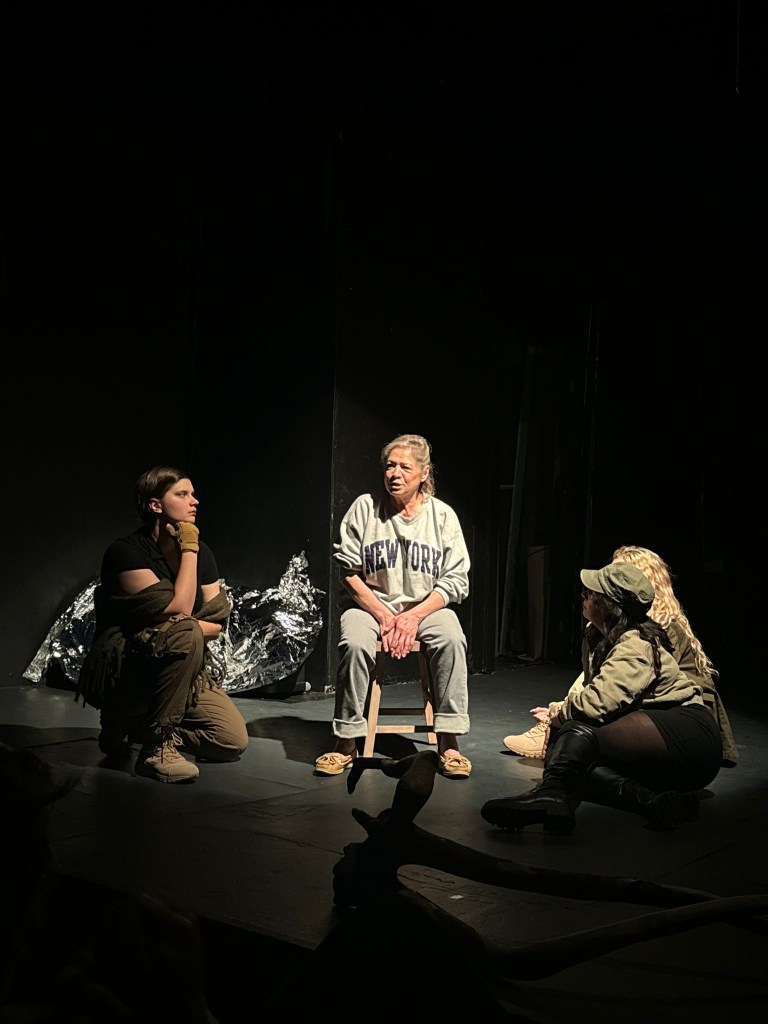
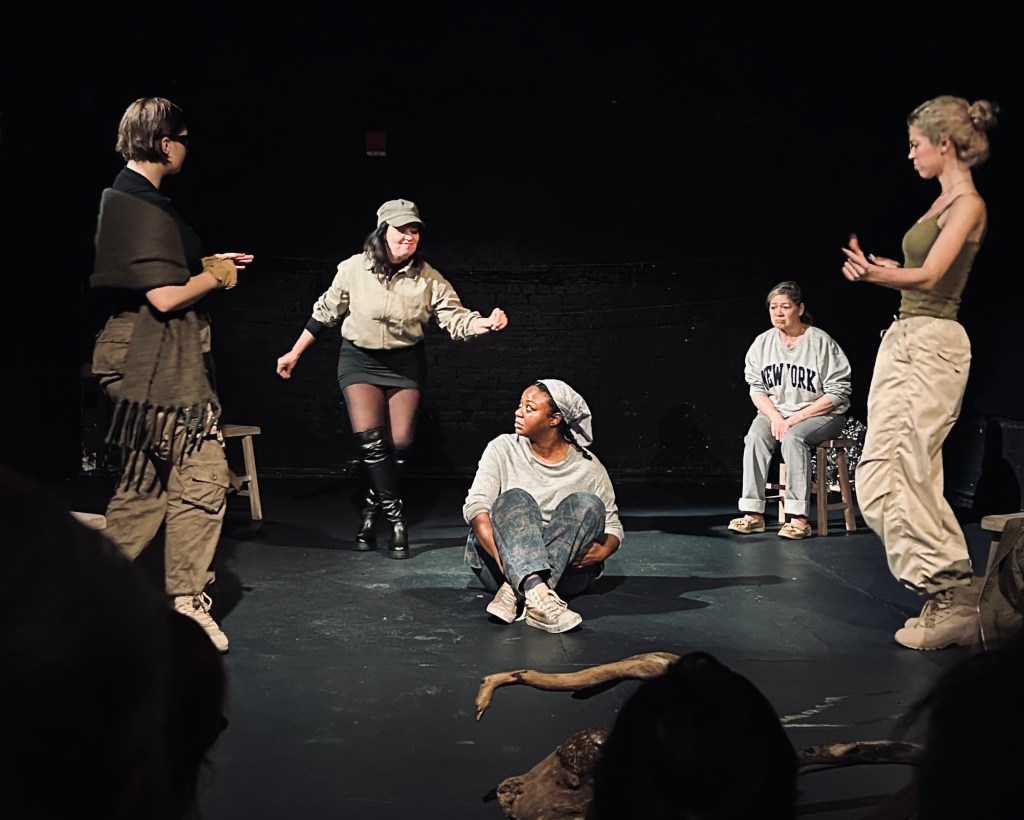
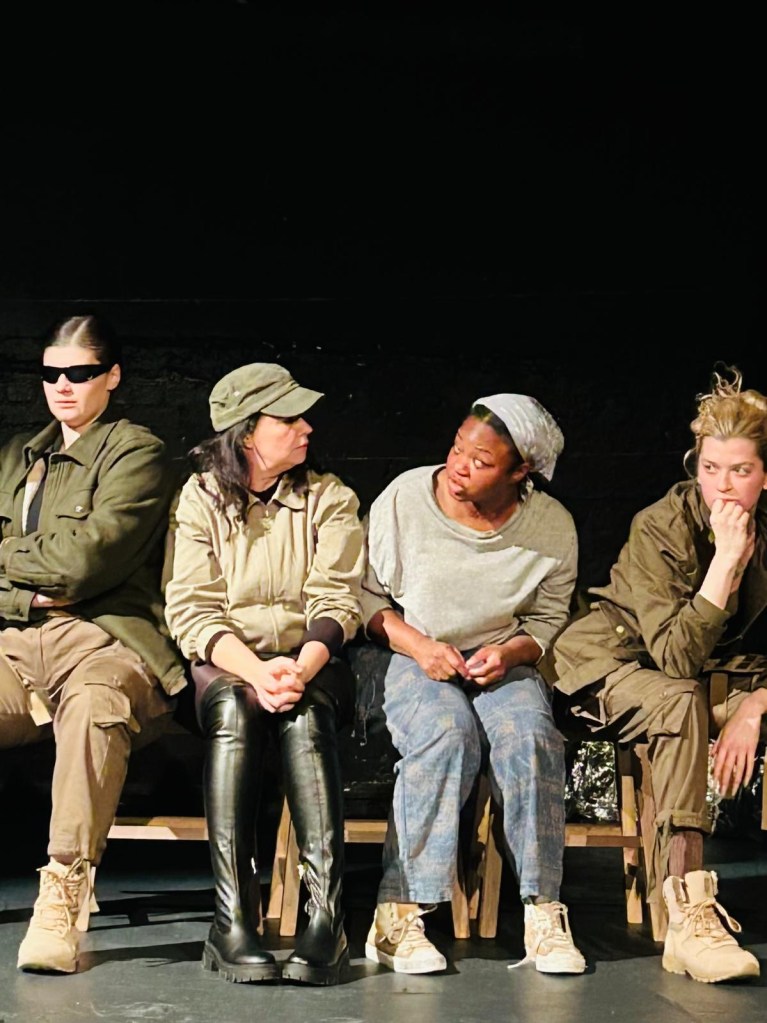
Bounds, by award-winning Italian playwright Tino Caspanello, was written in 2012 in a response to the recent migrant crisis in Europe. It was a time when thousands perished; others made it to freedom only to be rejected; and some were trapped in camps where they remain to this day. The playdepicts five women brought together in this frightening predicament, adrift on an unnamed shore. Two are military guards, two are migrants; the fifth woman is both.
One woman (Tia Cassmira) poignantly and powerfully sings of her desire and intention to simply have her own chair: “to sit on, to rest on, to dream on, for traveling, for laughing…a chair to sing my song on, for looking at the stars, for taking the air, for collecting rain…a chair to hide from death.” But the one actual chair among the women, symbolically, has to be “won.”
The group try to occupy themselves but grow restless. “There must be something else we could be doing,” sighs one woman.
“Like what?” says another. “We talked, we ate, we kept quiet, we slept and then we slept again, and now we’re playing. What more can we do?”
“What if we dance?”
Thus begins a brief moment of pure joy, where the women come together as one in transcendent movement, but also are likely imagining themselves as individuals on the road to freedom. But in the end, they know only one of them can ultimately be “chosen,” with the imagery of the childhood game “Musical Chairs” again illustrating the brutal point that most of them won’t make it.
Zhdanova, Cassmira, Simona DeFeo, Wilemina Olivia-Garcia, and Greta Rustani are the women; the actors hail from diverse backgrounds and experiences, and seeing them passionately joining together to tell the story of migrants, and to champion not only their rights but the rights of women everywhere, is intensely moving and inspiring.
These two crucial works are directed with compassion and extraordinary skill by Kathryn Mederos-Syssoyeva.
“There are a couple of really key issues which ground AnomalousCo theatre company,” noted Mederos-Syssoyeva while introducing the plays. “One is elevating, foregrounding, giving space to the perspectives of women…in some cases the writers themselves are women; in other cases it means that the plays are female-centric; and the second equally important thing is foregrounding the voices of immigrants, migrants, and also very broadly, voices from abroad interesting in bringing to New York a very strongly global, international, multicultural perspective through the work that we do. I don’t think we’re alone in thinking this increasingly urgent with every passing hour, if not every passing minute.”
Learn more about the Company’s work at Anomalousco.com/.



 Arts Independent