
Home » Posts tagged 'short-story'
Tag Archives: short-story

Jim Catapano at the Movies with “BLACK BOX”
Joshua Crone’s Compelling Black Box Takes a Compassionate Look at Hurting and Healing After 9/11
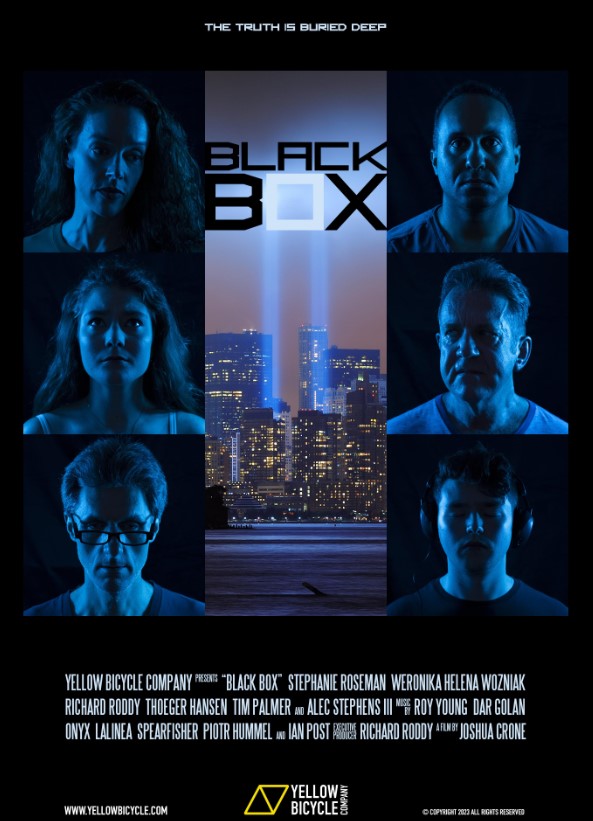
“It’s not the kind of black box that tells you what happened before a crash,” Dante (Alec Stephens III) notes to us, directly. “I want to know what happened after. Who died? Who remarried? Who took pills or went to war? What about that?”
It’s September 2002, and forgetting is not an option. Dante is a fireman who lost his life at the Towers, but nevertheless is here to tell the story of the ones left behind. “Funny where a name can take you,” Dante says, noting the bitter irony of what he is called. “I don’t remember much, just running up the stairs,” he says. “It’s always like that…except this time the stairs ran out.”
He introduces us to his widow Mary (Weronika Helena Wozniak), who pole dances at a New Jersey club called (again ironically) The Fire Station; her stage persona is Magda, created with a blond wig and a Polish accent. Army man Sgt. Dooley, back from Afghanistan, is one of her biggest fans, and Dante announces to us that he will play the “character” of Drew “so he can be close to Mary.”
Mary visits the fire house where he once worked, where his chronically coughing, survivor-guilt ridden boss Frank (Richard Roddy) is beginning his shift. Frank finds her dancing around the firepole, recognizes her, and their roles in Dante’s life do not stop them from connecting in the Biblical sense. Shift to Frank’s confused, often-stoned 18-year-old son Drew (Tim Palmer) spending time with his 9/11 conspiracy theory-obsessed Uncle Nate (Thoeger Hanson), and then cut to Frank’s wife Sarah (Stephanie Roseman), whose instincts tell her Frank is not being faithful, and we get a clear picture of where many people were on that somber anniversary. These are human beings who are all suffering in their own way, and searching for connection and understanding from others who are themselves too traumatized to give it.
The characters continue to intersect, as Drew comes to the recruiting office and meets Dooley, who encourages him to enlist, much to the horror of Sarah who now feels in danger of losing both her husband and son. Mary and Sarah become friends as well (and Nate humorously keeps appearing in unexpected places, first as a café waiter and then a bouncer at the Fire Station). Sarah and Dooley bond as well, over mutual concern for Drew but each of course wanting a different path for him.
Black Box is a moving, gripping and relatable story of people in pain, confused and looking to make connection in any way they can. Some isolate; some make bad choices; some look for answers in the fantastical; some choose to go numb. The film is also beautifully shot, with some scenes looking like a stage play (and fittingly in the “black box” of many theatres), and others taking place in the streets of NYC—then a city still healing. One pivotal scene takes place with the lights of the 9/11 memorial shining in the background, and the effect is stunning; as the 25th anniversary of that tragedy looms, Black Box succeeds in taking us right back there in a way that is painful but necessary. Writer/Director Crone shows an incredible understanding of the human condition following a traumatic event that is brought to life deftly by the talented cast. The narrative threads and the characters come together at the end in a very natural and satisfying way that leaves us with a feeling of hope and an understanding that people just need to be seen and heard, and supported by each other, especially after tragedy—even if getting there is extremely hard to navigate.
Black Box is a production of Yellow Bicycle Theater. To learn more, visit https://yellowbicycle.com/
Jim Catapano attends A Powerful Double Bill for Dark Times
AnomalousCo’s Stiffler and Bounds Resonate at the ATA
In December of its 50th year, The American Theatre of Actors was host to two astonishing one-act plays that take on the oppression and abandonment of women and the plight of migrants—two of the most important issues facing the world as it sees out 2025.
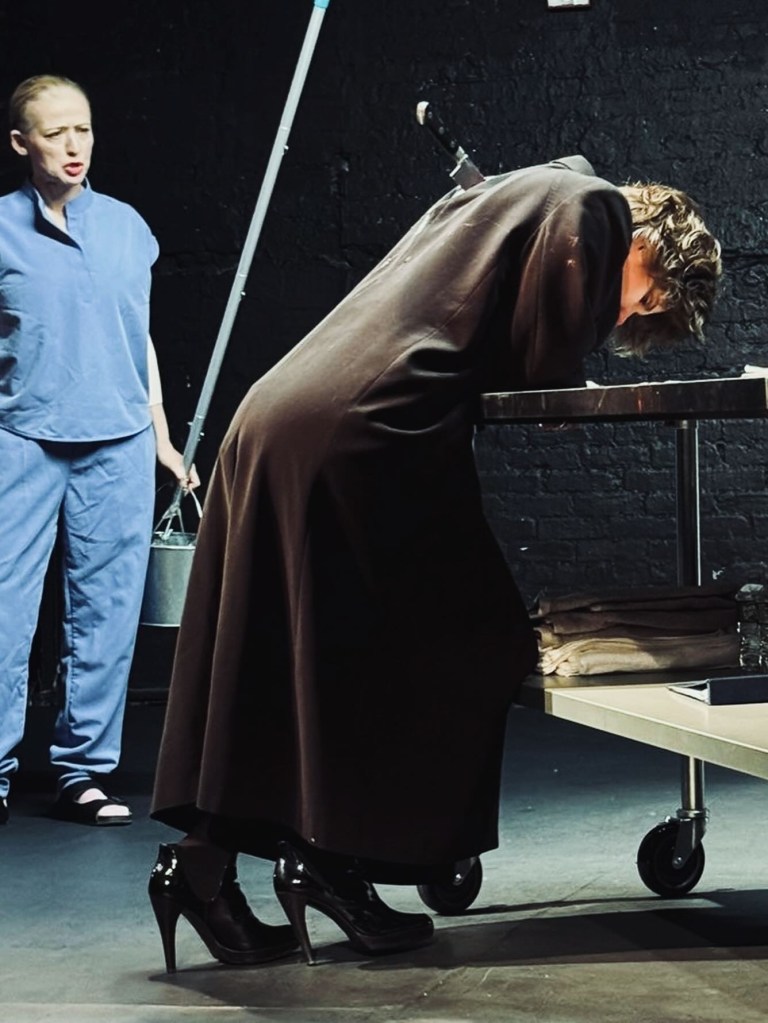
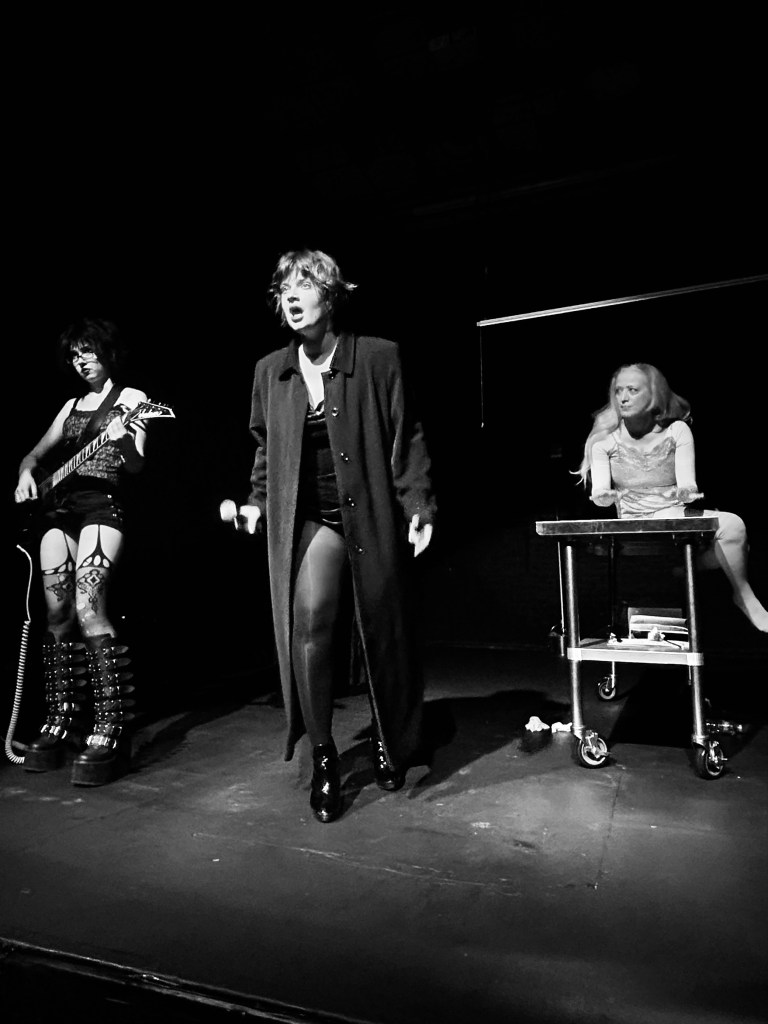
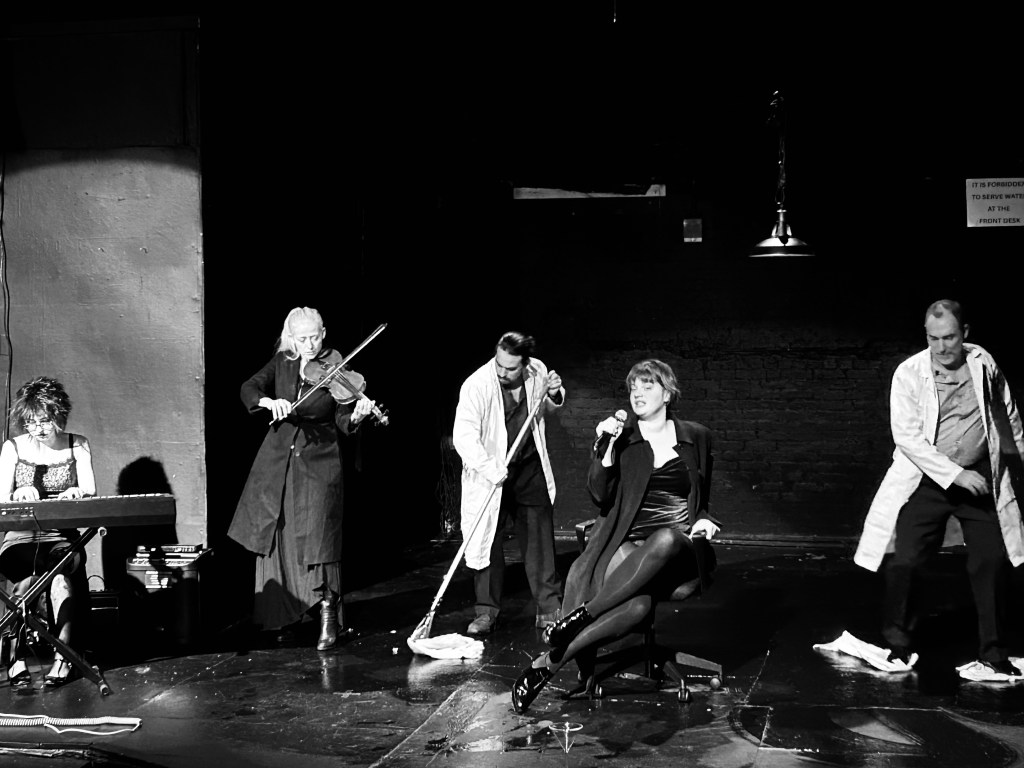
Stiffler is the work of award-winning Kosovan playwright Doruntina Basha. It is not an easy watch in any way, but as a study of systemic oppression, violence against women, and femicide, a completely crucial, unmissable one. Though some laughter emanated from the audience during moments of dark humor, the world of Stiffler is bleak and brutal; the stark set and harsh lighting complement the hopelessness of the situation and the cruelty of most of its characters. Diana Zhdanova gives an astonishing, heartbreaking performance as the mortally wounded Hava, desperate for help but finding only callousness and contempt, ridicule and revulsion. Stumbling into the ER after feeling a sharp pain and getting knocked out at a motel, Hava gets little compassion from the nurse on duty (Ylfa Edelstein); when Hava begs for water the nurse points to the sign above her station prohibiting it from being dispensed to patients; and later when she gets sick at the desk from the pain, the nurse makes her clean up the vomit herself, tut-tutting that she didn’t try to do it farther away.
“I’m sorry for the state you’re in,” sighs the nurse before noting in the same breath, “there’s some (vomit) left in the corner.”
When the nurse sees the huge knife sticking out of Hava’s back she’s more interested than concerned, and concedes to let Hava see a doctor…after she’s signed the necessary forms. This lack of empathy for human life—particularly that of a woman, coupled with the callous dedication to procedure, places Stiffler squarely in our own reality. The contempt for Hava among the people she encounters in her most desperate hour grows as it is revealed she is a sex worker, and those in authority deduce that she “must have done something to provoke” her client into attacking her.
“You and your kind paint a bad picture of us,” seethes the nurse.
Thus Hava is now treated as the criminal rather than the victim, and she is subjected to verbal abuse, and psychological and physical torture by the vicious investigating police (Jeremy Goren and Giovanni Sandoval) that are purported to be helping her. When she has trouble breathing, the men say she can have the window opened—but she has to do it herself. During this latest ordeal the knife stays firmly in her back, a symbol of what the world at large has done to women. Zhdanova is incredible as a woman crying out to be seen as she fights physical and psychological agony, completely alone.
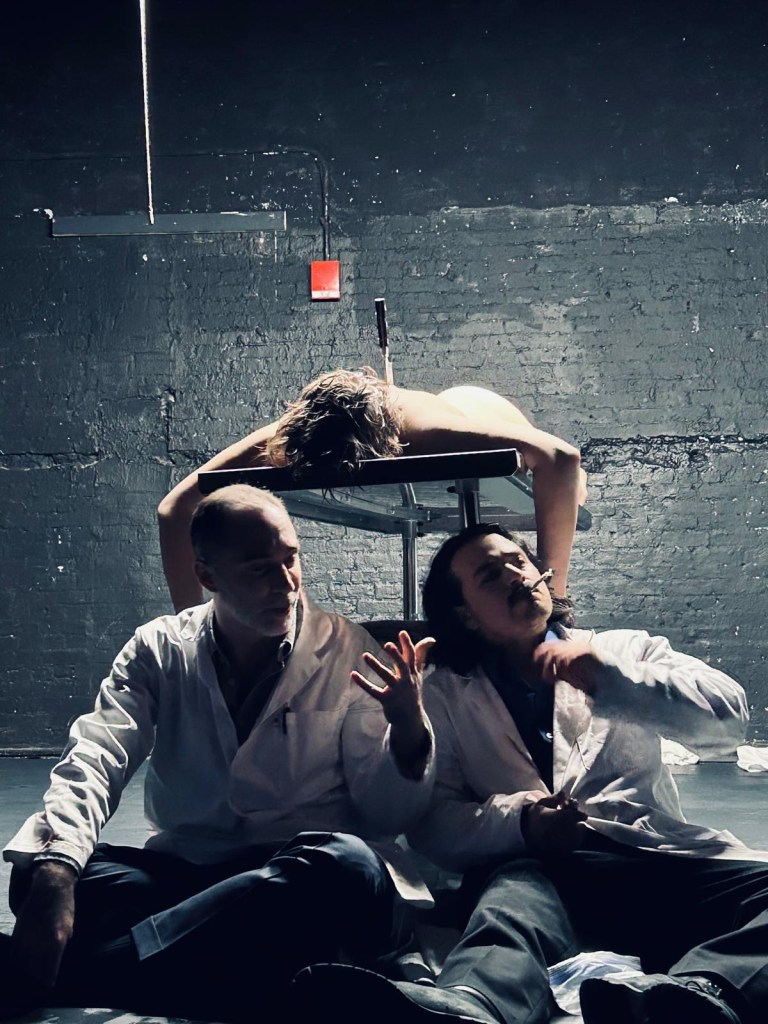
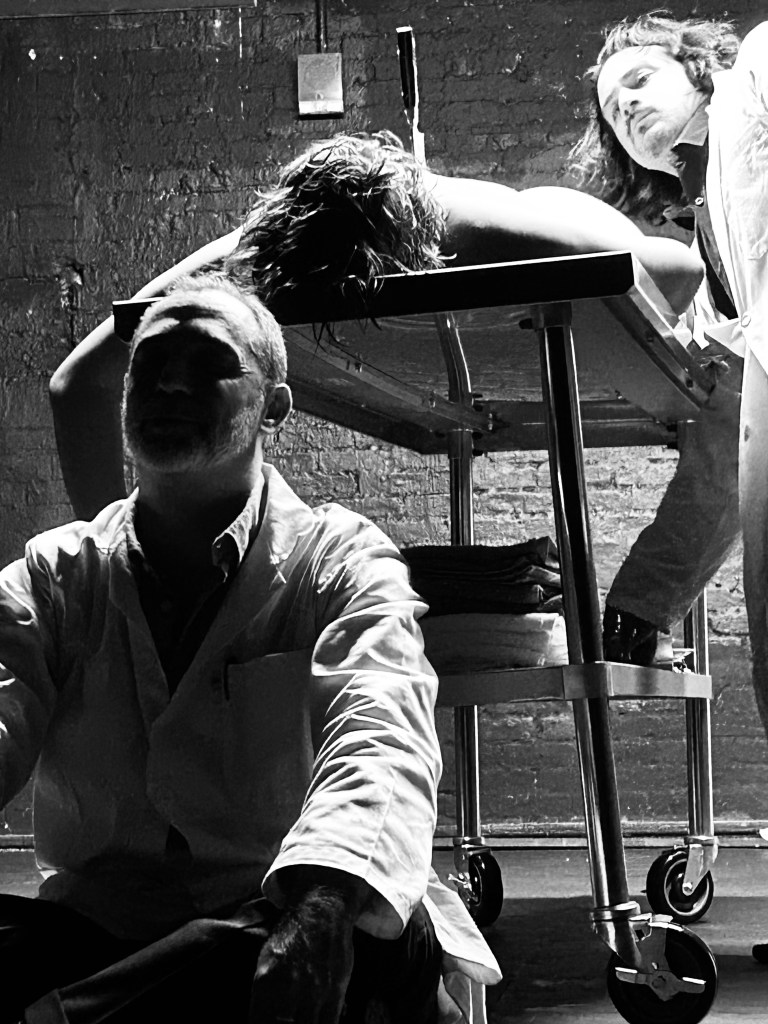
Hava’s story ends in a morgue, where even after death she is humiliated and treated as less-than-nothing; the attendants (Goren and Sandoval) roll her lifeless body around, and prop their clipboards and dictionary on top of her as if she were a table, as they consult the latter to come up with an appropriate but condemnatory name for her profession. And all the while, the knife remains. The only faint trace of compassion comes from Sandoval’s character, who literally takes a walk in Hava’s discarded shoes as he openly hopes someone will come to claim the body.
The scenes each end with a musical performance, powerfully punctuating what we’ve witnessed. Zhdanova joins Edelstein and Rina Brown in the fierce “Dead Men Don’t Rape” by Dellah Bon, and “I Love You Like an Alcoholic” by the Taxpayers. Edelstein also performs a chilling monologue as “Eyeless/Mindless Girl,” narrating her own story of being condemned and humiliated at the gynecologist. She describes herself as a “child of the roadside motel/gynecological clinic…all grown up with her very own souvenir” (now 8 weeks after conception), and muses that daughters who do bad things make their mothers sick.
“Boys can be lost in the dark, nothing happens to them,” she observes. “Girls can’t be lost in the dark because they’ll give their mothers cancer.”
Brown later narrates a first-person tale as the “Girl of the Two Hundred-Year-Old Cobblestone,” another woman brutalized and left for dead—abandoned like an empty bottle, broken on the cold streets.
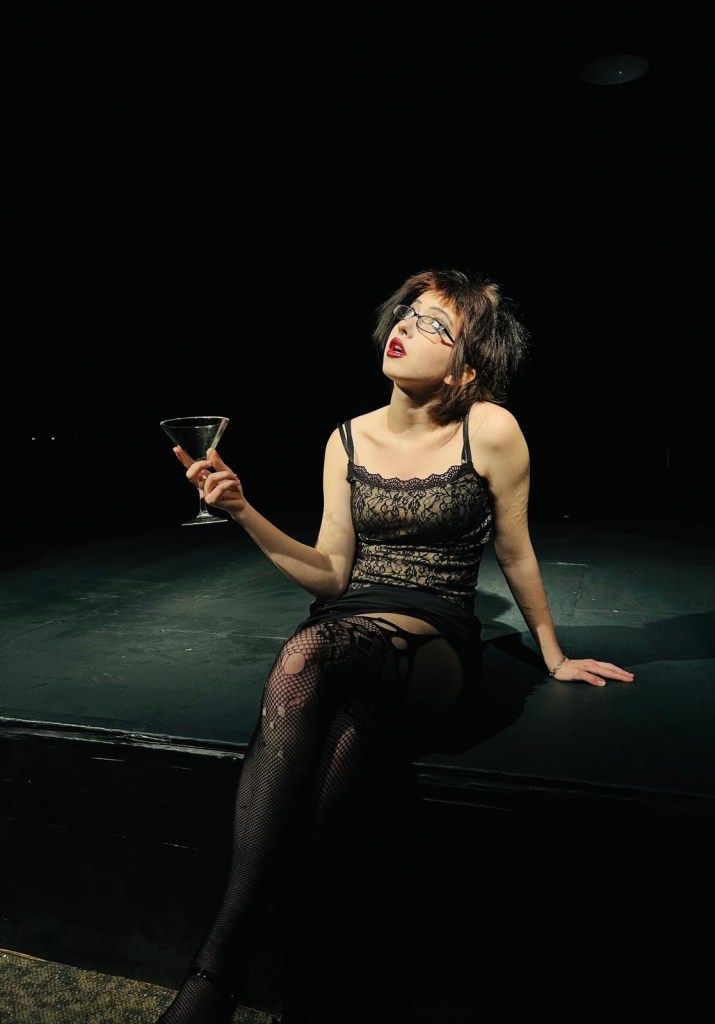
Diana Zhdanova
Stiffler is a stunning work that drives home the barely concealed contempt that our patriarchal society has for women, and devastatingly reminds us that its tragic, operatic story is not in any way removed from our current reality.
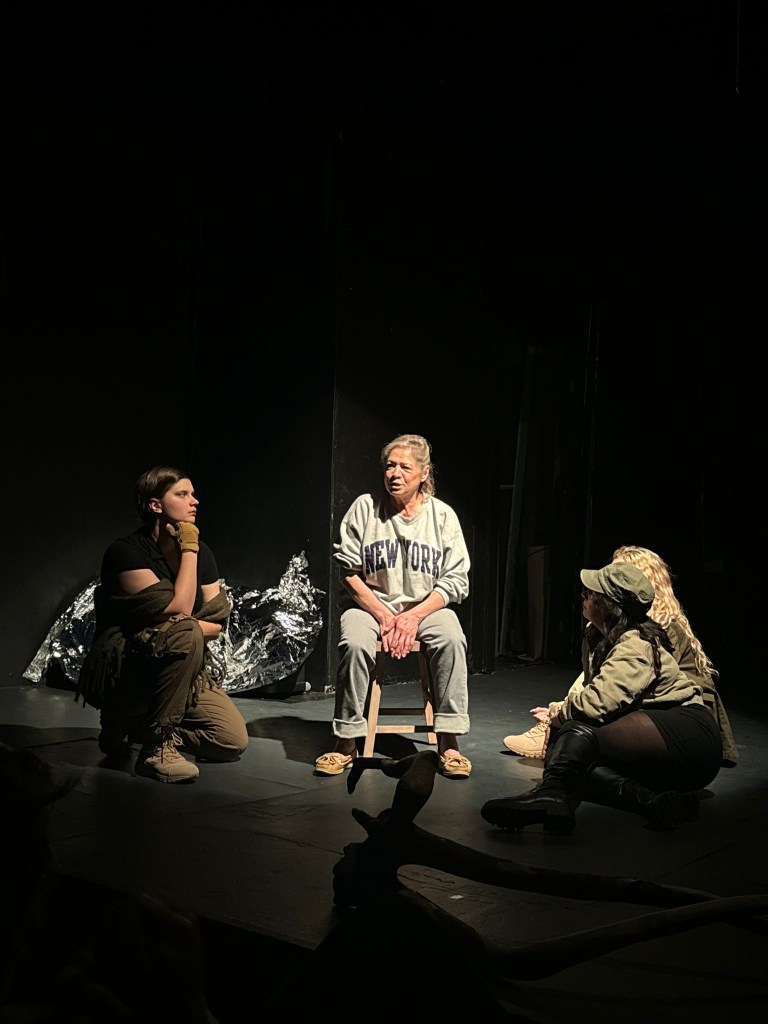
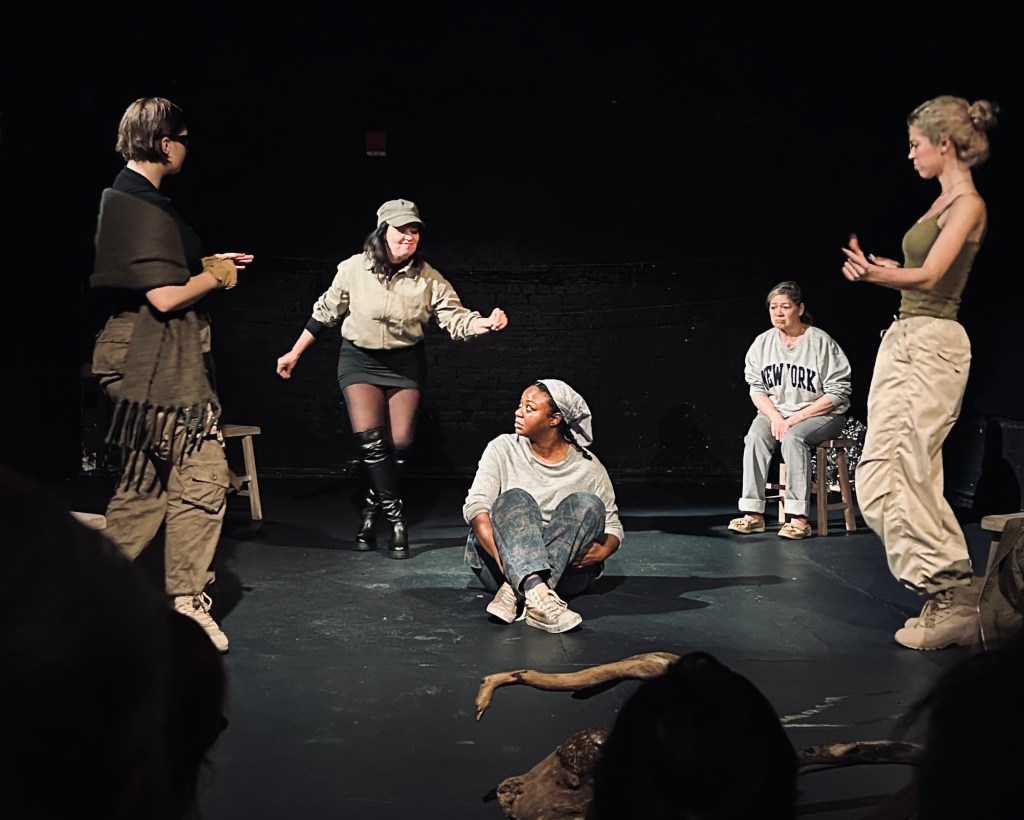
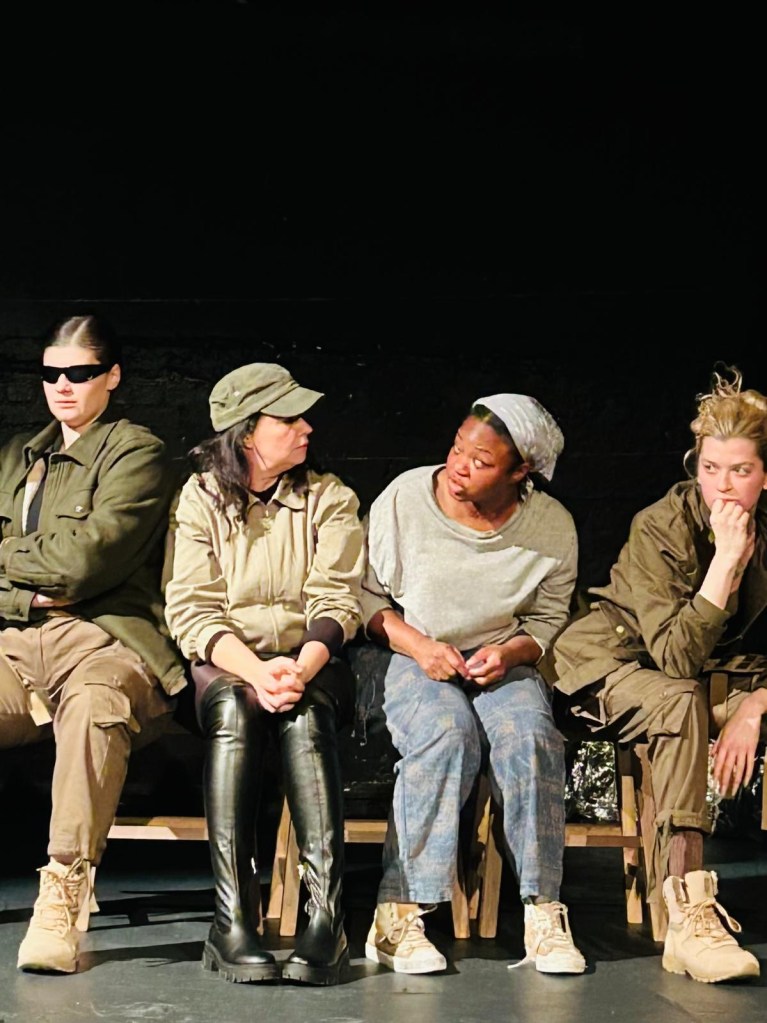
Bounds, by award-winning Italian playwright Tino Caspanello, was written in 2012 in a response to the recent migrant crisis in Europe. It was a time when thousands perished; others made it to freedom only to be rejected; and some were trapped in camps where they remain to this day. The playdepicts five women brought together in this frightening predicament, adrift on an unnamed shore. Two are military guards, two are migrants; the fifth woman is both.
One woman (Tia Cassmira) poignantly and powerfully sings of her desire and intention to simply have her own chair: “to sit on, to rest on, to dream on, for traveling, for laughing…a chair to sing my song on, for looking at the stars, for taking the air, for collecting rain…a chair to hide from death.” But the one actual chair among the women, symbolically, has to be “won.”
The group try to occupy themselves but grow restless. “There must be something else we could be doing,” sighs one woman.
“Like what?” says another. “We talked, we ate, we kept quiet, we slept and then we slept again, and now we’re playing. What more can we do?”
“What if we dance?”
Thus begins a brief moment of pure joy, where the women come together as one in transcendent movement, but also are likely imagining themselves as individuals on the road to freedom. But in the end, they know only one of them can ultimately be “chosen,” with the imagery of the childhood game “Musical Chairs” again illustrating the brutal point that most of them won’t make it.
Zhdanova, Cassmira, Simona DeFeo, Wilemina Olivia-Garcia, and Greta Rustani are the women; the actors hail from diverse backgrounds and experiences, and seeing them passionately joining together to tell the story of migrants, and to champion not only their rights but the rights of women everywhere, is intensely moving and inspiring.
These two crucial works are directed with compassion and extraordinary skill by Kathryn Mederos-Syssoyeva.
“There are a couple of really key issues which ground AnomalousCo theatre company,” noted Mederos-Syssoyeva while introducing the plays. “One is elevating, foregrounding, giving space to the perspectives of women…in some cases the writers themselves are women; in other cases it means that the plays are female-centric; and the second equally important thing is foregrounding the voices of immigrants, migrants, and also very broadly, voices from abroad interesting in bringing to New York a very strongly global, international, multicultural perspective through the work that we do. I don’t think we’re alone in thinking this increasingly urgent with every passing hour, if not every passing minute.”
Learn more about the Company’s work at Anomalousco.com/.

The Case of AI vs. Humanity Shall Now Be Heard by Judge Jim Catapano
One of the Greatest Dilemmas of Our Times Is Explored in Immersive Dance

Mrs. Zero (Monica Blaze Leavitt) and Mr. Zero (Johnny Blaze Leavitt) are from the 20s, but not the ones we’re experiencing now. They hail from the “roaring” 20s of 100 years ago, and are now marveling at the technological advances made in between. Well, Mrs. Zero is marveling…her husband is recoiling in horror.
The duo are hosts to AI vs. Humanity: The Experience at the Paradise Factory Theatre, presented by Ripple Effect Artists, and it’s an exquisite—and important—illustration of this very moment in time, when humanity itself is at a crossroads.
Mrs. Zero, dressed in bright red with a delightful accent recalling Audrey of Little Shop of Horrors fame, spent time with the audience before the show, asking each one of us our names and what we did; it was a fun icebreaker that would enhance and inform the experience of the performance to come. Women in white dresses followed, handing each of us a flower, which I playfully tucked behind my ear (something robots rarely do, by the way). We soon learned that the women — Emily Hart Herbert, Franca Rosenblatt, Francesca Savone, and Skye Todaro—were dancers who represented humanity. Their counterparts were the “robots”—Andrew Fitzpatrick, Eric Jaison, Trinity Smith, and Fiona Tsang. These were dressed in dark shirts and pants, with dark face masks under blank staring eyes, hiding any notion of human expression. The robots were “dancers” as well, and they were impeccably choreographed as they went about their function, in this case stacking pieces of sound-proofing foam, to the fitting sounds of Daft Punk. Mrs. Zero was enthused by the robot performance, as her initial thoughts suggested she would be, while her partner was so disturbed he continuously brought the automaton dances to a halt, protesting what he perceived as a palpable threat to humanity itself.
The “humans”, in contrast, performed with full emotion and exquisite grace, their eyes and smiles conveying the joy of movement, and of creativity. In the most powerful moment, two of the dancers made eye contact from across the floor, their smiles widening with elation as they connected on a deeper level. The other two human dancers followed suit, pairing ecstatically, and demonstrating the love and aliveness that their efficient but emotionless robot counterparts could never feel.
In between the dance performances we were treated to videos that helped support the case for the defense of humanity. These included a speech on the nature of love by the legendary Alan Watts; and a moving time-lapse by Ryan Anthony Fernandez, depicting moments of connection and compassion. Author Amie McNee was shown in an excerpt from her Ted Talk, “The Case for Making Art When the World Is on Fire.” She explained in her presentation that she had heard from so many artists who felt guilty focusing on creation when there was so much pain in the world.
“What I need all of us to realize today is that we need to be ‘at the piano’ making our art more than ever as we navigate these incredibly difficult things.”
The Leavitts provided deft comedic improv between the presentations, while making profound points in the case of humanity vs. technology. Mrs. Zero argued that tech was making life so much easier for the hard-working among us (microwaved food being exhibit A). Mr. Zero, in contrast, frowned with disgust at the rise of soulless technology. He noted that the word “robot” originates from the Czech word “robota”, meaning “forced labor” or “drudgery”. Humorously condemning the advent of “Chat Gibetah”, he warned of a future where Artificial Intelligence was no longer a tool for humans, but a replacement for them. (And that future is now—AI is already erasing jobs and creating mass layoffs by the millions). To their credit the Leavitt’s debate never became too heavy-handed; it was delivered with lightness and humor, while still driving the pros and cons home.
In the finale, the humans and robots united in dance, with one side abandoning their former essence to join the other. Without spoiling which, let’s see if reality follows suit.
AI vs. Humanity: The Experience is directed by Ripple Effects founder Jessie Fahay, with assistant direction from Emily Araújo and Olivia Armon; choreography is by Fahay, Rebecca Frazier and Kristen Mangione.

