
Home » Uncategorized (Page 43)
Category Archives: Uncategorized
Robert Viagas says “There’s Much Ado at the Delacorte”
Much Ado About Nothing
By William Shakespeare
Director Kenny Leon fills the Delacorte Theater in Central Park with energy and laughter in his new all-African-American production of Shakespeare’s romantic comedy, Much Ado About Nothing, set in the American South in 2020.

The first of two summer 2019 free Shakespeare in the park productions, Much Ado is the Bard’s story of several crisscrossed love stories that play themselves out at a country estate. Central to the plot is the relationship of Beatrice and Benedick, two sharp-tongued combatants who troll each other with witty insults, when it is clear to everyone around them that they are actually in love. Strategems to trick them into finally avowing their true hearts occupies much of the action of the play.
It’s not easy to steal a Shakespeare production, especially one likeMuch Adothat boasts a half dozen major characters, but The Color Purple Tony nominee and “Orange Is the New Black” TV star Danielle Brooks doesn’t just walk away with the production in the role of Beatrice, she struts away with it, like a princess showing off her crown. She delivers her sick burns with evil delight, making them sound like they’d been invented on the spot rather than 400 years ago. Grantham Coleman is an adorable Benedick, and does his best to keep up with Brooks.
They and the supporting cast deliver the Bard’s lines with wonderful clarity, wisdom and humor. High on the list are Chuck Cooper as Leonato, Billy Eugene Jones as Don Pedro, Tiffany Denise Hobbs as Ursula, and Lateefah Holder as the malaprop-plagued (and gender reversed) police chief Dogberry.
The gallivant across Tony Award-winner Beowulf Boritt’s elegant outdoor country manor set that only gets more beautiful at evening performances as the sun sinks and lights come on in the windows (courtesy of another Tony winner, Peter Kaczorowski).
The program states “Our modern-dress production in set in the near future, 2020, on the eve of the election, in the American South,” but there is no reference to that premise (except in some of the costuming) anywhere in the show, except for a prominent poster reading “Stacey Abrams 2020” (a reference to the Georgia House minority leader who lost a hard-fought race for governor of that state in 2018). Despite the sign, it’s all backstory that doesn’t change the play’s many references to princes, dukes and other European royalty/nobility. Oddly, given its prominence, poster is never alluded to in the show.
Nevertheless, given its high fun level, this production would make a great first Shakespeare for audiences who may never have tried one before.
Much Ado About Nothing is playing a limited run at the Delacorte Theater in Central Park. Admission is free.
נמרוד דנישמן שובר את הקירות ב׳בורדרס׳ (Nimrod Danishman breaks down walls in BORDERS)

Dirty Laundry Theatre opens its door with the inaugural showing of BORDERS premiering at the Hudson Guild Theatre and running June 25, 26, and 29. the play is written by international playwright Nimrod Danishman. Acclaimed actors Eli M Schoenfeld and Adrian Rifat, appear in this love story for the online age directed by Michael R. Piazza.
 “We start with Israel,” says Founding Artistic Director, Maera Daniel Hagage. “Airing Israel’s ‘dirty laundry’ allows us to create a mosaic based on the less familiar perspective of day-to-day Israeli life, allowing us to overcome cultural differences and prejudice. The Israeli stories, very much like “Borders”, are both personal and universal. We invite our audience to open their minds and hearts and experience a new narrative that might be, surprisingly, more familiar than they expect.”
Boaz and George meet on Grindr. They are attracted to one another instantly and want to meet in person, but something prevents them from doing so. One lives in Israel, the other- in Lebanon. Will history and its prejudices prevent this union?
Nimrod Danishman has crafted an intriguing and timely drama about love in the 21st century. Danishman shows us the two worlds in which we exist – fantasy and reality – each containing its own set of “borders” governing love and tolerance.
Israeli Playwright, Nimrod Danishman, discussed the play, the players and world affairs with us briefly.
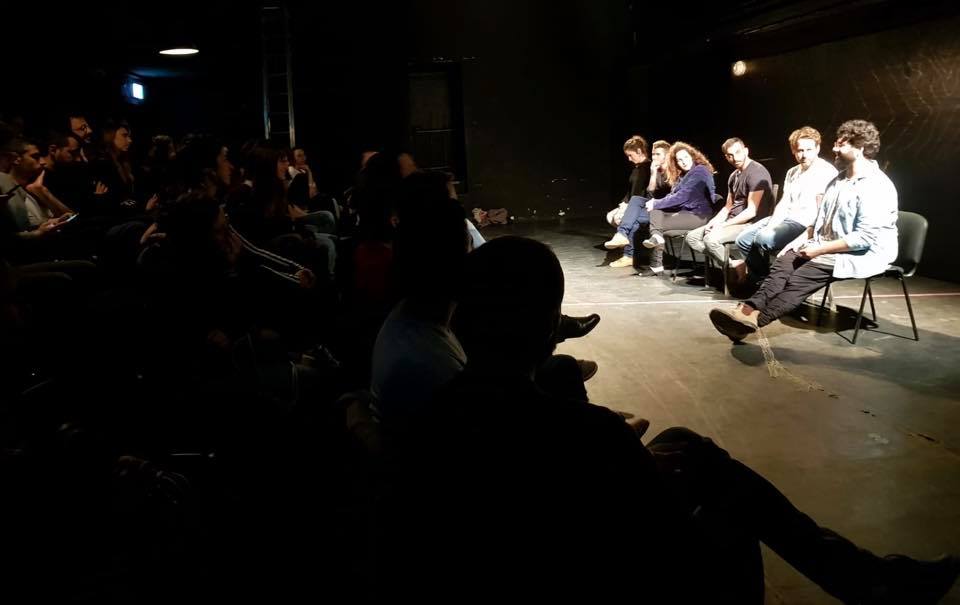
Tell us about yourself.
Shalom 🙂 My name is Nimrod Danishman, and I am a theater director, playwright and teacher from Tel Aviv, Israel. I grew up in a kibbutz in the north of the country, to a single mother who came from an ultra-Orthodox home.
“Borders” is my first play. Since then I have written 2 more plays and another 2 in the development process, and I notice that so far the characters in all my plays are characters from the LGBT community. I was not going to be a gay playwright, but I try to write about things I can understand and imagine myself, and because I’m gay, so are my characters.
Tell us about this play … where do you get your inspirations? Is it just from life or do you have a “plan?”
I wrote the first scene of (what then was called) “The Wall” following a conversation I had with a guy from Lebanon on Grindr. I visited a friend who lives on a kibbutz by the border with Lebanon, and because the app shows men who are close to you, suddenly the physical border was breached through the virtual space. The first scene in the play is very similar to the original conversation we had.
I returned to the same scene at the end of my studies at the School of Performing Arts without a final project. I wanted to direct a play by my favorite Israeli playwright, Hanoch Levin, dealing with refugees, but I couldn’t get the rights for the play. When I looked for another play, I remembered that scene and decided to develop it for the play. In the process I tried to explore the life of gay men in Lebanon – not very successfully. Suddenly it was very difficult to communicate with people from Lebanon. When they heard that I was an Israeli, the talks suddenly stopped. Some claimed it might harm them in Lebanon. Some did not give reason. I understood that, of course. In the reality I grew up in, the person on the other side of the fence was a monster. But it was also disappointing, I wrote a play about the ability of people to connect even if they are defined as “enemies,” but in reality it didn’t work.
Apart from that conversation with the guy from Lebanon, another inspiration for the play was a relationship with my partner. It was a long- distant relationship, since he is Italian from Rome and I am in Israel. Despite the distance, we were able to meet many times, nevertheless, most of this relationship took place in the written space of WhatsApp and Facebook Messenger. When I wrote the play, I understood that it makes sense to us, but apparently many relationships exist like this, even when the couple lives in the same house. We live in an age where most of our communication is paved and arranged in an endless dialogue. It’s as threatening as it’s amazingly shown in the Black Mirror series, but I chose to tell a different story about this written dialogue.
In terms of that, once the idea is there, how do you write … what’s the creative process?
So part of the answer is already in answer to the previous question. I can add that the process itself is light years away from the romantic image of the playwright writing into the night. To create a model of work rather than a hobby, I created a routine for writing. I read about writers and playwrights that I admire and discovered that they organize their day very well, so I imitated them: I woke up early in the morning, ate well, wrote, went out for an afternoon walk and then went back to writing until evening. I wrote a lot. I say in conversations after the show in Israel that the final play has almost 4000 words. The file in which I kept all the dialogues I chose to delete from the play has 25,000 words. I had the privilege of doing it because at the time, a play I was supposed to direct fell through. Nowadays I pray for such an opportunity, to allow myself to just sit and write.
Who do you feel is your “audience?”
I think the Y generation I’m part of is my first target audience. It’s true that this is a love story for two men, but I think my Y-generation friends will be able to see the story behind sexual orientation and geographical location. The story of the dating app, of a relationship in correspondence, of falling in love with a guy who is in a place I can not reach, and the only place we can meet at is online.
In a way that is perhaps not surprising, we see that many adults come to the show in Israel. I think there is such a great thirst for LGBT characters in the Israeli theatre that they are not the same ole’ type you see in musicals.
What’s next?
I’m very happy about the connection with the Dirty Laundry Theatre. They create a cultural bridge in the United States to the culture of a strong local community, and through it opens to a geographical area that attracts a lot of attention. I am very excited that they chose my play as the theatre’s first play, and I hope that this cooperation will produce new projects.
This year I wrote two other LGBT plays: the first about the relationship between a high school teacher and the student, the second about a group of Tel Aviv gays that goes from the bachelor stage full of parties and drugs to the stage of institutionalization and the desire for children. In Israel, we still gay marriage are still illegal, same as adoption. I felt that I had to make another voice in the community’s struggle.
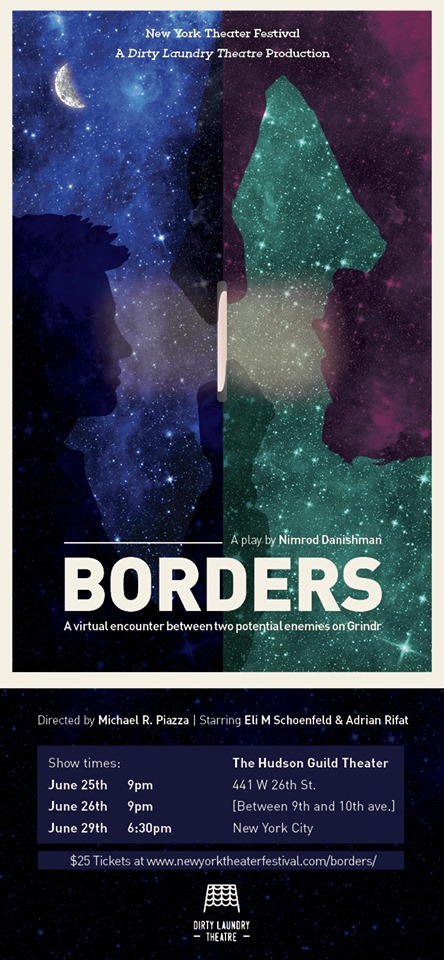
Tickets are $25 and available online at www.newyorktheaterfestival.com/borders/ or at the door. Performances take place at the Hudson Guild Theater, 441 W 26th St, NYC, between. 9th and 10th ave. Additional information can be found online at https://www.dirtylaundrytheatre.org/show/borders/”

Viagas Views pre-TONYs
ArtsIndependent goes to Broadway with Robert Viagas.
The sage of the stage shares his thoughts on four powerhouse musicals currently gracing the boards. As founding editor-in-chief of Playbill online for a quarter century,
Mr. Viagas knows a couple’a things about musical theatre.
Starting with the classics…
Oklahoma!
Music by Richard Rodgers, book and lyrics by Oscar Hammerstein II,
directed by Daniel Fish.
Among the saddest carnage created by developments in politics and news in the last few years is the damage done to America’s image in the world, and the self-image in our hearts. We were the clean, noble, honest, open-hearted people of the world—the “good guys.”
The outlook today is very different from the early months of World War II when American freedom shone like a beacon in the fascist darkness, the time when Oscar Hammerstein II and Richard Rodgers wrote the groundbreaking musical Oklahoma! as a celebration of all good things American.
In many ways, that vision been replaced with a national image of angry cowboys addicted to guns and bloodshed, of broken race relations, and of powerful people’s ability to press their thumbs on the scales of justice. The new Broadway revival of Oklahoma!has been reconceived by director Daniel Fish as a reflection of that new self-image. Not a word of the original Hammerstein book or lyrics has been changed (though a few added). The reinterpretation is all in the staging of the beloved cowboy musical. More accurately, he found the darkness that was already lurking in the corners of the story, just as it was already lurking in the nation in the 1940s.
As entertainment it is often startling; the familiar songs appear like old friends in sometimes alarming new costumes. As commentary the revival is as searing as the chili they cook on stage during Act I and dish up to the audience free at intermission. Not everyone will like it, but credit is due for boldness and imagination.
The story begins innocently enough, with and pretty farm girl named Laurie (Rebecca Naomi Jones) trying to decide who will take her to the town’s “box social”: the handsome cowboy Curly (Damon Daunno) or brooding farm hand Jud Fry (Patrick Vaill). But their rivalry darkens, and throws its shadow over the scene in which Curly tries to get Jud to kill himself to gain the sympathy of townsfolk who “treat him bad.” The scene is played almost entirely in literal pitch darkness.
The most sobering moment comes at the end, after poor Jud is really dead, shot by Curly for threatening Laurie on their wedding day. Their white formalwear spattered with Jud’s blood, the wedding party sings the grimmest version of the show’s bouncy title song you’re ever heard.
Daunno plays his own guitar and sweetly sings “Oh What a Beautiful Mornin’” and “Surrey With the Fringe on Top,” but his performance of Curly come off more like a kid wearing his dad’s cowboy boots. Jones is a tough tomboy of a Laurie, and Mary Testa is an authoritative Aunt Eller. But the breakout performance of this production is Ali Stroker as wheelchair using Ado Annie. Her lusty, country-flavored performance of “I Cain’t Say No” brings down the house.
Speaking of the house, the show has been staged at Broadway’s most unusual playhouse, the in-the-round Circle in the Square. Lara Jellinek’s set includes raw wood planking with a spare number of chairs and tables that are rearranged to as needed to suggest the various locations in the story. Orchestrator Daniel Kluger has reduced Robert Russell Bennet’s lush original full orchestra down to a seven-piece virtual jug band that ably reflects the new interpretation while still cherishing Rodgers’ musical genius.
Amid the darkness of this production, there is a ray of light. It should be noted by fans of musical theatre that we are living in a time when classics My Fair Lady; Kiss Me, Kate; and now Oklahoma! are all playing on Broadway simultaneously. Maybe there’s hope after all.
Oklahoma! is scheduled to run through January 19, 2020 at the Circle in the Square Theatre on Broadway.
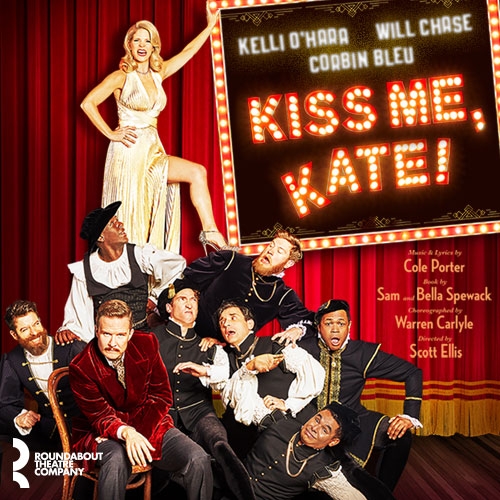
Kiss Me, Kate
Music and lyrics by Cole Porter, book by Bella and Sam Spewack
There are certain shows which, by virtue of the classic scores, funny librettos, or sheer dramatic brio ought to be kept in revival on Broadway all the time. Kiss Me, Kate would be high on that list if it weren’t for one problem: its sometimes musty attitude toward women, especially in the #MeToo era. The show is built around Shakespeare’s The Taming of the Shrew, and the original production ended with the leading lady singing “I Am Ashamed That Women Are So Simple,” based on the Bard’s original final speech. Is she being serious, sarcastic, or just telling her husband what he wants to hear?
Roundabout Theatre Company’s high-energy current revival, starring Kelli O’Hara and Will Chase, gets around the latter problem by editing Shakespeare slightly, changing the lyric to “I Am Ashamed That PEOPLE Are So Simple,” but the uncomfortable woman “taming” issues manage to peek through.
And that’s really saying something because director Scott Ellis has mounted an otherwise joyous production, crowded with fun—especially from the lithe members of the dancing chorus, as choreographed by Warren Carlyle. Among the high points are the virtuosic acrobatics of “Tom, Dick or Harry” as performed by Will Burton, Rick Faugno and the show’s limber co-star Corbin Bleu. Bleu later flips himself over and begin tapping upside down and an overhang.
O’Hara is extremely talented and deserving of the many lead roles she has gotten in recent years. That said, she seemed to lack the world-weariness the role longtime stage veteran and divorcee Lilli Vanessi requires. She and Chase sometimes seemed like kids play-acting in their parents’ clothes.
Still, it’s great to hear them, and the rest of the cast, once again singing Cole Porter standards like “So in Love,” “Wonderbar,” “Too Darn Hot,” and “Another Op’nin, Another Show” back where they belong, on Broadway.
Kiss Me, Kate is playing a limited run through June 30 at Studio 54.
Engaging in pop-culture…
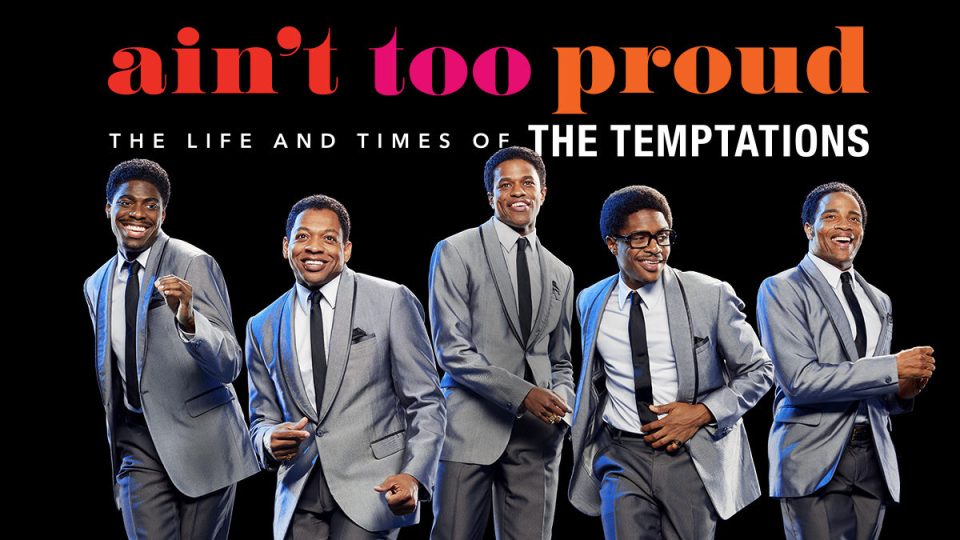
Ain’t Too Proud: The Life and Times of The Temptations
Book by Dominique Morisseau, based on “The Temptations” by Otis Williams. Music and lyrics by various composers.
We all connect certain songs with special events in our lives. Hearing the music can evoke a long-vanished person, place or activity. This phenomenon accounts for the popularity of so-called “jukebox musicals”—ones that celebrate the songbook of a particular performer, songwriter or group.
The backstage, onstage, and offstage story of the 1960s Motown superstars The Temptations is told in the latest jukebox biomusical Ain’t Too Proud, now on Broadway at the Imperial Theatre.
If you love the Temptations and have fond memories that spring to life when you hear their hits “My Girl,” “Papa Was a Rolling Stone,” “If You Don’t Know Me By Now,” “I’m Gonna Make You Love Me,” and more than two dozen other chart-climbers, you will also likely love this show.
Slickly and professionally done, with Sergio Trujillo’s loving recreations of the group’s signature choreography, plus lighting, costumes and even hair design that subtly guide the audience from the early 1960s through the mid 1970s.
Librettist Dominique Morisseau shows she learned the lessons of previous jukebox smashes like Jersey Boys and Beautiful: The Carole King Musical in showing the ups and downs of the artists while using their hit songs more or less like showtunes to comment on the action.
The story is narrated by Otis Williams (Derrick Baskin), who is credited as the group’s founder and captain as it navigates through the storms of politics, history, tangling with the juggernaut of Motown Records, boss Berry Gordy, and especially drug abuse among the group’s members. He is depicted as having personal failings: his marriage breaks up and he neglects his only son. The one constant is his single-minded devotion to The Temptations, which, by the way, he still leads in 2019 as it goes on touring forever with the latest lineup of singers.
The other characters tend to blur together, given little more than a verbal tic or a favorite piece of clothing to pass as character development.
It’s a fun, entertaining, skin-deep show, very much in the style of Jersey Boys, and depending on the same well of nostalgia and happy personal associations with the group’s catchy close-harmony tunes.
Ain’t Too Proud is playing an open-ended run at the Imperial Theatre on Broadway.
Hadestown
Music, lyrics and book by Anaïs Mitchell
When I first heard they were doing a musical based on the Orpheus legend, I was skeptical. But then I read it again and was reminded that Orpheus believes he can charm Hades, lord of the Underworld, because of the supernatural beauty of his voice. Now that’s a musical idea!
The classical Greek legend of the gods-touched musician Orpheus and his quest to retrieve his love Eurydice from the grip of Death itself is given fresh currency in the thrilling new Broadway musical Hadestown. Directed by Rachel Chavkin, the musical transforms one of Western Civilization’s oldest stories into one of its newest and freshest.
Set in an ancient Greece that looks and sounds like Depression-era New Orleans, Hadestown benefits from a Cajun-flavored score by rock singer and songwriter Anaïs Mitchell that is full of darkly brilliant music. In a bid for contemporary relevance, she has Hades sing a number called “Why We Build the Wall,” which includes the lyric, “Because we have and they have not!/Because they want what we have got!”
Not all the lyrics are that pointed. And way too many are just sloppily rhymed. In song after song we hear the likes of “rut” rhymed with “up,” “crave” with “days,” “down” with “ground”—and those examples were from just one number. It’s especially annoying in a show that is otherwise so good.
The show is anchored by performances from two cool, wicked old-timers: slick André De Shields as Hermes, who narrates and knowingly comments on the proceedings; and Broadway’s favorite villain, Patrick Page, deploying his foundation-shaking basso as Hades. Page once again plays nemesis to his Spider-Man co-star Reeve Carney as Orpheus. And if Carney’s voice doesn’t quite measure up to Page’s (ironically, in this story of a magical vocal cords), he lets his burning desire to reunite with his love Eurydice (Eva Noblezada, recently on Broadway in the title role of Miss Saigon) shine through the stygian darkness (lighting designed by Bradley King).
Among the younger cast members, the standout is Amber Grey as Hades’ slinky unstable wife, Persephone, who somehow loves her icy husband even though he forces her to spend half of each year in hell. She sees in Orpheus and Eurydice an echo of her own story, and, in the song “How Long?” she begs Hades to give Orpheus one chance. Hermes sings that even though we all know how the tragedy ends, we relive it again and again, hoping that one day it will turn out differently.
This one-of-a-kind show is new only to Broadway. It was developed in Vermont starting in 2006, earned a concept album that developed a cult following, and debuted in 2016 at Off-Broadway’s New York Theatre Workshopthat led to this production, which has some four dozen names above the title as producers. Though there are funny moments, Hadestown is clearly the serious entry in this season’s lineup of musical comedies. It’s a grown-up theatre piece that does the most of all the shows to open this season to advance the musical theatre form.
Hadestown is playing an open-ended run at the Walter Kerr Theatre Broadway.
And now, from screen to scene…
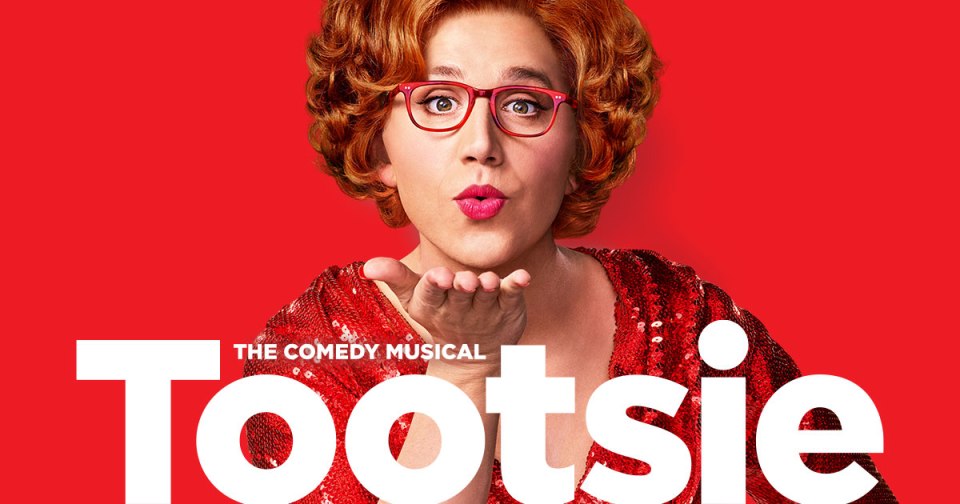
Tootsie
Music and lyrics by David Yazbek, book by Robert Horn,
based on the film by Don McGuire and Larry Gelbart
Several things set Tootsie apart from the recent spate of Broadway musicals based on popular Hollywood movies.
Most importantly, its creators understood that a stage musical is more than just a movie script with a bunch of songs jammed in willy-nilly. A musical tells a story that requires music and dance in order to live, populated with characters who burst with emotions that demand to be sung.
The 1982 film comedy starred Dustin Hoffman as Michael Dorsey, a male actor whose diva behavior has gotten him blacklisted by every director in town. To escape his poisoned reputation, he disguises himself as a woman, whom he names Dorothy Michaels. Not only is his drag act convincing to casting directors, but Michael finds that by playing a woman, his whole attitude begins to evolve and mature. He finds that he’s actually a better person as a woman than as a man. He also becomes the star of a hit soap opera. But how long can he keep the façade from falling?
To make that story musical, songwriter David Yazbek and librettist Robert Horn changed its whole show-biz milieu, with strong results. Instead of trying to get a job in a TV soap opera, Dorothy now wants to be the star of a Broadway musical. This gives them lots of room to fill the script with witty Broadway jokes and allows characters to more naturally break into song.
And instead of trying to find an actor who looks and sounds like Dustin Hoffman (who won an Oscar in the role), they went with the talented Santino Fontana, who played the prince in Rodgers + Hammerstein’s Cinderella, and played the singing love interest on the TV series Crazy Ex-Girlfriend. He’s brilliant in the role, and creates his own idea of what Dorothy looks and sounds like. His head voice, often a stumbling block for male drag performers, is lovely and convincingly feminine.
The authors also wisely took 21stcentury feminist objections head-on by writing the objections into the show, and making the issues of oppressive patriarchy and the celebration of female identity central to the story.
Yazbek’s score sounds nothing like his Tony-winning score to 2018’s The Band’s Visit, but often echoes his lesser-known 2010 musical adaptation of another film, Women on the Verge of a Nervous Breakdown. His showstoppingly zany patter number “What’s Gonna Happen” (a tour de force for Tony-nominated featured actress Sarah Stiles) is the sister of the Laura Benanti marathon “Model Behavior” in the earlier show. As leading lady Julie Nichols, Lilli Cooper is a little too supportive of Dorothy taking over the lead in her show, and allows herself to be elbowed out of the spotlight.
Master comedian Michael McGrath also has far too little to do as the on-again off-again agent Stan Fields, but he gets one great memorable moment, performing one of the longest and funniest slow-burns (from behind a close door yet) in recent stage history.
Side note: Tootsie seems to follow the same basic plot as another Broadway musical hit, Dear Evan Hansen: an outcast makes himself the center of attention by creating a false story about his life that delights everyone around him for a while, but eventually gets uncovered, with calamitous results. Why does this story hold such audience appeal?
Another side note: Thank you, Tootsie creators, for calling your show not Tootsie: The Musical or David Yazbek’s Tootsie, but simply and straightforwardly Tootsie.
Tootsie is playing an open-ended run at the Marquis Theatre on Broadway.
Alex sees Pod-Possibilities
Ps in a Pod, a new web series, created by and starring Alex Pires, and co-starring Stephanie Windland and executive produced by Richard Wingert starts on a blind date between Pete (Pires) and Polly (Windland) at a bar in Brooklyn. At first, they seem to be “two peas in a [neurotic] pod” but something is off. After a ton of awkward fumbling – including an uproarious attempt at sex – they simultaneously realize they are perfect as friends. As luck would have it, Polly is looking for a room and Pete needs a room-mate. A best friendship is born! “Pod follows how funny and real it is to have a close, platonic friendship between a man and a woman,” says executive producer, Richard Wingert.
“By eliminating the “Will they? Won’t they?” dynamic we make room for a ton of very funny and very touching situations that audiences have been deprived of in an episodic sitcom format,” creator and star, Alex Pires, exuberantly exclaimed; while co-star, Stephanie Windland chimed in with “The world is going through a paradigm shift in terms of the roles men and women play separately – this series shows how they come together under this new way of thinking,” she said regarding the evolving friendship the series depicts.
Pod follows the characters through semi-story lined episodes “a day in the life” style. We see them struggle – both comedic and realistic – with germaphobia, stereotypes, cultural-diversity, identity, romanticizing the past, relationships, depression and so much more.
We learn something new about the Ps – Pete & Polly – every episode. Things that we know or will learn about ourselves as well. It seems the stronger their friendship, the wilder things get. They just want to be happy and healthy but between self-sabotage and the universe who knows what will happen!
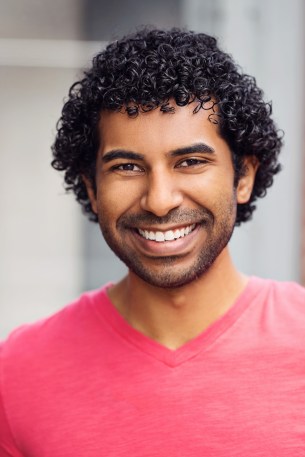 That tall, broad-grinned fellow in the picture is the creator and star, Alex Pires. Aside from being a really strong actor, he is an imaginative articulate man. Ai spoke with him briefly on career and Pods.
Tell us about yourself.
I’m an Actor first and foremost. I created this web series to work on something I was really excited about and to have complete creative freedom. Wearing all these hats is just a means to an end but it’s been a very enriching experience. I grew up in New Bedford Massachusetts. After a lot of soul searching and taking a 180 from the Physician Assistant career I was on, I decided to pursue acting professionally. I booked some cool jobs in the small Boston market, saved enough money to move and came to NYC in the summer of 2015. I’ve been lucky enough to work on some really interesting projects: Altered Hours, Texture and Filling In, all available on Amazon. I worked on an episode of Netflix’s The Punisher season 2. I also recently had a Capital One commercial air nationally. Now I’m deep in the making of Ps in a Pod.
What inspired you to create Ps in a POD?
I’ve been working on some version of this show for about three and a half years. In late 2015, I ran into a colleague I did a web series with back in New England and we decided to write a “Roommates Shenanigans” type sketch show. I didn’t have much writing experience but I had a lot of excitement and not much else going on so I decided to at least try. Within a month I wrote several “sketches” and received extremely positive feedback. Unfortunately the collaboration sort of faded with that colleague, as they tend to do, and not much happened with those scripts for a while. I burned through two more creative partners in 2016/2017 before landing on Stephanie Windland in 2018. Within that time the show began to really take form and I discovered an angle that I felt strongly about: what if the male and female leads of the show were just friends…? No “Will they? Won’t they?”, no easily explainable excuse like someone is gay or put in the friendzone. They both decided to be friends and they just really hit it off in that way. I’ve never seen that before and yet it’s such a real thing. I started thinking of all the comedic opportunities that would come from that dynamic and I began to get excited again. From there I started really thinking about the type of show I’d want to make and how I’d fit everything I had already written into this new concept. I decided I wanted to make a show that had a nice blend of comedy and drama. I wanted to pay homage to all the shows, movies and actors that inspire me. I wanted to make a show that celebrated women and minorities. A show that has a tangible message or lesson in every episode. I wrote what became the pilot with a wonderful Actor/Writer, Tory Flack. Then Stephanie agreed to co star and co produce the show. Those sketches I initially wrote became full episodes of the show. We deliberated on a title for a while and landed on “Ps in a Pod” because of the sort of play on the phrase. Our characters names are Pete and Polly so we thought it was cute. Stephanie and I just went on from there.
Share with us, your creative process. Collaboration, delegation, storyboards, brainstorming, moral/message, etc.
In terms of writing, I would write the first draft of the script after we landed on the idea of the episode. Once I felt I couldn’t do more with it on my own, I’d ask Stephanie for notes/feedback, I’d make adjustments as needed and we’d repeat that until they were “finished”. But we all know it’s never really finished. In terms of acting I feel very connected to the character because I created it from scratch. Pete is really just an extreme version of myself in a lot of ways. It’s my comedy though so I don’t really struggle with that aspect. I’m someone who always strives for excellence in my work which includes this. I’m trying to create the best quality web series I can with the resources I have. It’s also been great to assemble a team that’s so skilled and diverse. I let everyone do their jobs and we come together to make sure it all supports the vision of the show. I assume the way we’re doing it is very different from how it’s done on bigger sets but on ours most people are wearing multiple hats. We’re all doing what we can so that way when we see our name in the credits we can be proud.

Tell us about your vision for the future in terms of TV, sitcoms, programming, networks, etc.
I think the future is bright. I’m not sure what it looks like exactly but the streaming platforms seem to really appeal to people. I know it does for me. I think Ps in a Pod could definitely fit in on one of the major streaming platforms. That being said a lot of people watch cable/network TV so it comes down to what the best offer at the time is.
What’s next?
We have shot three out of our eight episode season. The first episode is already available on YouTube and Vimeo. A show is nothing without an audience so we’re trying to get as many people as possible to watch the pilot. They’ll obviously love it and become followers. Then after the rest of the season comes out and we’re the talk of the town the studios and production companies will be lining up to make this happen!….. best case scenario.


Hero’s Story … Told Heroically
REVIEW: The Buffalo Hero: The Wayne Miner Story
By L.A.Henderson
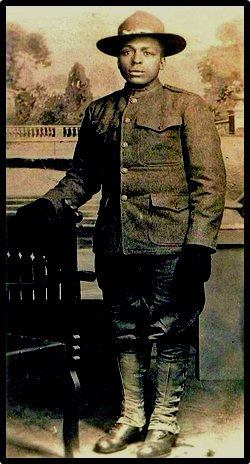
Another unknown thread in the rich tapestry of African-American contributions to US history is revealed in The Buffalo Hero: The Wayne Miner Story, about the last soldier killed during World War I. A member of the legendary “Buffalo Soldiers” regiment who won medals and were hailed as heroes despite sparse or inferior weapons and training, Miner died three hours before the signing of the Armistice on November 11, 1918 while bringing ammunition to the troops. Like many other Blacks, Miner suffered harsh treatment because of prejudice from without, while sometimes having to fight his fellow soldiers to survive, much less thrive, in a world that grudgingly tolerated and used them, but viewed them as inferior and expendable cannon fodder.
The play focuses on Miner (Darrell Wyatt), a proud third generation Buffalo Soldier and his troop mates Franklin B. Seymoure, an aspiring doctor (Bereket Mengistu) and the gentle yet determined Rafius Rucker (Shatique E. Brown). While all three are eager to prove themselves and serve their country, Seymoure’s hot temper often puts him in conflict with aspiring general Cpl. Kenneth Quincy Blu III (Timothy Patrick Walsh, appearing courtesy of Actor’s Equity Association), sometimes bringing harsh treatment down on his and the trio’s heads. Miner and fellow Buffalo Soldier and commanding officer Lt. Henry Nugent Ivan Clark (Mark J. Robinson) do their best to work together within the system to prepare the troops for battle, but face as many battles off the field as on, some of them between themselves, Seymoure and Ruckert. Miner finds guidance and strength in the teachings and words of his mother, Mama Miner (Ms. D), who appears to him in moments of crisis to remind him to hold on to his principles and the faith she instilled in him; easier at some times more than others, but helping Miner realize that sometimes his faith is the only thing he can depend on.
Wyatt portrays Miner with the quiet, solid dignity of a man focused on his goals who sees the big picture while navigating the roadblocks in his way, and who tries to lift others along with him as he climbs. Mengistu puts one in mind of Malcolm X, chafing under the stings of prejudice and ready to fight anyone for the basic dignities all men are entitled to regardless of colour. Brown is beautifully touching as Ruckert, a man who is willing to do his bit but not really suited for the grimness of war. Walsh pulls no punches in embodying the ugly realities of the prejudices of the era, his Southern accent hammering out the cruelties and indignities of Jim Crow with every syllable. Ms. D. gently glides into and out of the action to watch over and help her son, giving him her strength while reminding him of his own, with the steadiness only a mother of strong faith can have.
Playwright/Director Kenthedo Robinson researched the play for five years in the US and overseas, a commission from Joe Louis Mattox, former historian of Wayne Miner Post 149—the first Negro post of the American Legion—in Kansas City, Missouri, who wanted the story of Kansas City native Miner to be told for the Post’s 100th anniversary. Robinson gives us an emotional picture of the fierce battles in the barracks as well as in the field, and how they can pale in comparison with the emotional battles between us and sometimes within ourselves, and how “separate but equal” is always shown for the lie that it is.
Viagas and Vernovsky’s Carcass
Carcass By Eddie Vernovsky
Reviewed by Robert Viagas
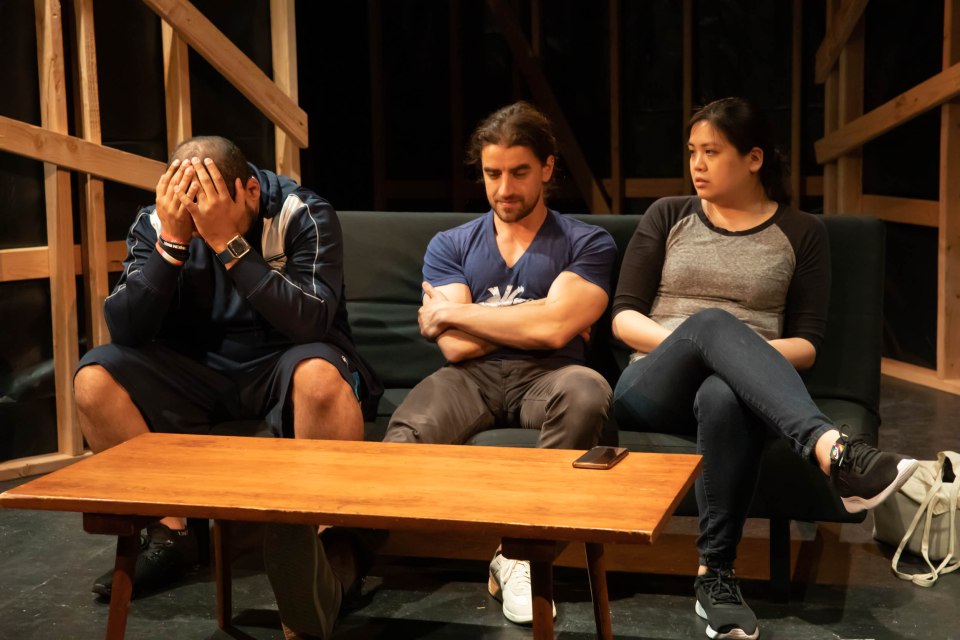
Eric stands to enjoy an easy life when he inherits his family’s house-building business, but there is an existential dread, a deep and terrible restless dissatisfaction that poisons all his plans and relationships in Eddie Vernovsky’s scalding drama, Carcass, currently having its world premiere under the auspices of the Off-Off-Broadway Wednesday Repertory Company (WedRepCo).
The play’s other four characters—Eddie’s girlfriend (Aleeza Lew), best buddy (Alan Cordoba-Diaz) , mother (Elaine Davis) and grandfather (Dan Lane Williams)—all suffer from similar angst. They are like a field of geysers, with a world of heavy hurt boiling in the depths of their Sam Shepard-like personas—every once in a while bursting forth with a fountain of epic snarling over trivia.
“What are you talking about?,” is the play’s mantra, a line hurled by one character after another groping for understanding while expressing their own dissatisfaction. The play never really attempts to answer that key question for any of the characters, but leaves the audience to work out the “quantum entanglement” of their relationships. Wondering why Eddie returns to the fold after a mysterious three-month absence, his mother explains, “We don’t have hope in this family.”
The brooding playwright Vernovsky plays Eddie himself, dragging on a bloody side of bison at one point in another inarticulate attempt to connect with his family. It gives the play its titular symbol.
Directed by Bruce Ornstein, Carcass is playing a limited run through May 19 at Shetler Studios 244 W 54 St. in Manhattan.

Robert Viagas on the “Floor”
The Floor Is Lava By Alex Riad
Reviewed by Robert Viagas
While the uptown theatres are catering to Millennials still obsessed with proms and high school bullies, LaMaMa ETC’s new drama The Floor Is Lava is examining the way Millennials now in their late 20s are coping with the challenges of early career success—and failure.

In the children’s game The Floor Is Lava, kids try to cross a room by walking on furniture and anything else that will keep them from physically coming into contact with the floor. No one has to teach kids games like that; each kid seems to invent the same rules by themselves. In Alex Riad’s play of the same title, four former high school buddies find their lives careening off in wildly different directions, which strains their friendship to the breaking point. Matt (John Gutierrez) works in a pizzeria and sells weed. Tom (Andrew Gobel) has become an internet billionaire by inventing a simple but wildly popular app. Kat (Kailah S. King), who helped Tom develop the app, now finds herself his employee, but not his partner. The most disappointed and bitter of all is the little group’s former leader, Sean (John Di Mino), who found his dream job as a marketer to be hollow, and got fired after having a breakdown in front of an important client.
They reunite together in the basement (a set full of witty details from designer Izzy Fields) of Tom’s Silicon Valley mansion at a party to celebrate the success of the app. Set in a world drenched in social media, the four consume vast amounts of alcohol in order to undergo some long-overdue face-to-face truth-telling. What results is an examination of disillusionment and the true meaning of success in a materialistic world—and one of the first true grown-up stage dramas for a generation that is already taking the wheel of our society.
Directed by Glory Kadigan, The Floor Is Lava is playing a limited run through May 19 in the Downstairs Theatre at LaMaMa Experimental Theatre Company, 66 East 4th Street in Manhattan.

Endorsing “Blood”
Inola McGuire and Lester Cook at Washed in the Blood, a play by Joshua Crone, at the Nubox Theatre, 754 9th Avenue, NYC.
INOLA McGUIRE:
The performances of Daniel Saulle, Alec Nevin and Joshua Crone were outstanding. The play transcended to the whole landscape of the realities of gun violence to the audience. The audio and the voice aspect of the drama surely gave an extra bonus to the message.
Pastor Jim’s character convinced the audience into thinking about the old-time religion of Sundays at a church somewhere around the world. However, the audience settled for the Bible belt in the United States of America in its mind’s eye.
This play, “Washed in the Blood” has a lot of potential, and it deserves to be seen by a wider audience in New York City and in other states within the United States of America.

LESTER COOK:
I saw Joshua Crone’s Washed in the Blood and enjoyed it immensely. The intense dialogue befitted material that was deep in scope. I was impressed with the exchange between one of the characters and St. Peter.
I enjoyed the realism supplied to this kind of conversation. I enjoyed that ultimately this young man was given a choice and he chose to go back. I wish some colleges could get hold of this intense play and perform it. The parables and the lessons this play provides should really be seen by the masses.
Pvt. Wayne Miner and Playwright Kenthedo Robinson
Playwright, Producer, Director, and Scholar, Kenthedo Robinson, brings to life another riveting work filled with history and inspiration: The Buffalo Hero of World War I: Based on a True Story.
Pvt. Wayne Miner, a “Buffalo Soldier,” valiantly volunteered to take artillery to the front-line during World War I even when fellow soldiers refused. Miner, a son of slaves, took the credo of the Buffalo Soldier to heart: “Deeds Not Words.” Ignoring his fears and looking death in the face, armed with the light of his mother’s spirit, Wayne Miner entered history at a time when he was not considered an equal.
Buffalo Soldiers originally were members of the 10th Cavalry Regiment of the United States Army, formed in 1866. This nickname was given to the Black Cavalry by Native American tribes who fought in the Indian Wars. The term eventually became synonymous with all the African-American regiments formed in 1866. Although several African American regiments were raised during the Civil War as part of the Union Army, the “Buffalo Soldiers” were established by Congress as the first peacetime all-black regiments in the regular U.S. Army.
Robinson, known for his spiritually-infused works, gathered a repertory of like-minded artsists including Chaelene Mulgrave, Darrell Wyatt, Shatique Brown, Ms. D., Timothy Walsh, Bereket Mengistu, Mark Robinson, Isaac Winston, Phillip Iweriebor, and brought them to one of the last theaters left in NYC that was an integral part of the original off-off Broadway movement – the American Theatre of Actors – to properly honor this fallen hero. The American Theatre of Actors, 314 W. 54th Street, NYC.
Buffalo Soldiers originally were members of the 10th Cavalry Regiment of the United States Army, formed in 1866. This nickname was given to the Black Cavalry by Native American tribes who fought in the Indian Wars. The term eventually became synonymous with all the African-American regiments formed in 1866. Although several African American regiments were raised during the Civil War as part of the Union Army, the “Buffalo Soldiers” were established by Congress as the first peacetime all-black regiments in the regular U.S. Army.
Robinson elaborated on his journey regarding the creation of this powerful piece:
Former Historian of Wayne Miner Post 149, Joe Louis Mattox, approached me to write a play about Wayne Miner, the last soldier to die in World War I and to produce it coinciding with the 100 Year Anniversary Celebration of the post, November 2019. After many intense collaborations with Mr. Mattox it was decided that the title of the play would be, The Buffalo Hero: The Wayne Miner Story. Being a native Kansas Citian, I began my research in The Heart of America. The journey of my research and working with Kansas Citian Historian, Joe Louis Mattox, Rev. Lindon and Sidney Malone has been illuminating. Researching countless articles and books in the K. C. Public Library Missouri Valley Room, The Southeast Library and The Black Archives of Kansas City was exhaustive but rewarding. Further research led me to The Schomburg Center for Social Research in Harlem, New York, The Grand Army Plaza Library and local New York libraries and have certainly been encouraging. Of course, countless research was also conducted on the internet. It also took me to the London War Museum and to the beautiful St. Mihel Memorial in France where Pvt. Wayne Miner and black soldiers of WWI have found their final resting place. I will never forget the enthusiasm on the coordinators face when we arrived at the St. Mihel Memorial site and I presented her with a Buffalo Soldier 92nd Division Patch and materials from The Wayne Minor Post and explained the celebration to be held in November 2019. In her enthusiasm, she shared that when local schools in France visit the site, she tells them of the bravery and courage of Pvt. Wayne Miner.
We then discussed Robinson himself:
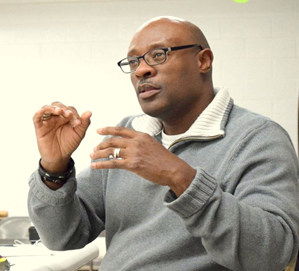
Kenthedo Robinson
Tell us about yourself as an artist and educator
There is nothing more rewarding than working with the youth who grow into adulthood and have taken their learning experiences and applied them in life. The theatre teaches great life and professional skills: Analyzing, Collaborating, Researching, Presenting, Planning, etc.
What drew you to this topic and to Wayne Miner?
Kansas City Historian and my mentor Joe Louis Mattox, once said, “You should write a play about Wayne Miner.” Because Wayne Miner had a housing project named after him in the Kansas City area, I quickly replied, “Oh, you want me to write a play about a housing project?” He immediately began to school me on who Wayne Miner was, much to my embarrassment. He went on, “Buffalo Soldier Wayne Miner was the last man to sacrifice his life for world democracy in World War I.” What that experience taught me is that housed behind many buildings we pass each day is a life that should go on living for those who don’t know and for those who have forgotten.
Is the ATA your go-to theater?
ATA is important to me because when I arrived in New York in 1980, it was Jim Jennings, the owner who produced my play, Nicky: The Unknown Man. It was about an aging Kansas City boxing trainer suffering from concussions from his boxing career as he struggled to keep his gym open for wayward youth.
You write with more than a hint of spirituality in your work. Explain.
So often we are so busy with life that we don’t stay in tune with that which gives us life, our spirit. So to strike the right balance, we need to make that connection to God. God is someone who’s often sitting on the sideline waiting for us to to let him into the game. If we’re honest, many things boil down to what’s wrong and what’s right and the spirit of God helps us see that. I’m reminded of my mother often saying, when something seemed confusing or going wrong, “When all the water’s boiled out of the pot, then you’ll see what you got.” She meant, you can spin your wheels until you can’t go anymore, then you’ll have to turn to the spirit inside to get you going again. Then you’ll have to put some more water (God) into the pot.
What’s next.
Oh, my God! What’s next. A whole lot. I have so many “great” ideas about what to write next. We’re coming up on the 250 year anniversary of the death of Crispus Attucks, that would make a great play. Ever heard of the Triple Nickles? They were the 555th Parachute Infantry Battalion from the 92nd Infantry (Buffalo) Division. That will make a great play. There’s also naval hero Robert Smalls, a slave, who was so daring against the Confederate Soldiers during the Civil War that President Lincoln recruited him to help enlist fellow African Americans into the Union Army. Not all of my interest is centered around the military. There’s also this idea I’ve had for years about writing a play I’ve titled, Ridacee in the City. The story of Orpheus and Euyridice set to jazz in the 1920’s with Charlie Parker as Orpheus. Maybe I should stop, because I could go on. It’s going to come to come to who grabs me by the collar first. I would bet, probably Crispus Attucks.
The Buffalo Hero opens Thursday, May 9 and running through May 19 (Thurs., May 9 & 16; Fri., May 10 & 17; all at 7:00 p.m.; Sat., May 11 & 18 at 2:00 & 7:00 p.m. and Sun., May 19 at 3:00 p.m.) with tickets available on Brownpapertickets.com. Admission is $25 ($20 Teacher/Student Discount Code: STBH; $20 Senior Citizens Discount Code: SCTBH; $20 Veterans Discount Code: VTBH; Special Mother’s Day Brunch Performance, Sunday, May 12: $40 includes brunch from 3:00 – 4:30 p.m. with the performance at 5:00 p.m.).
Contact cpactickets@gmail.com or Kenthedo@gmail.com or 917-523-2823 for further info.
Kadigan & King
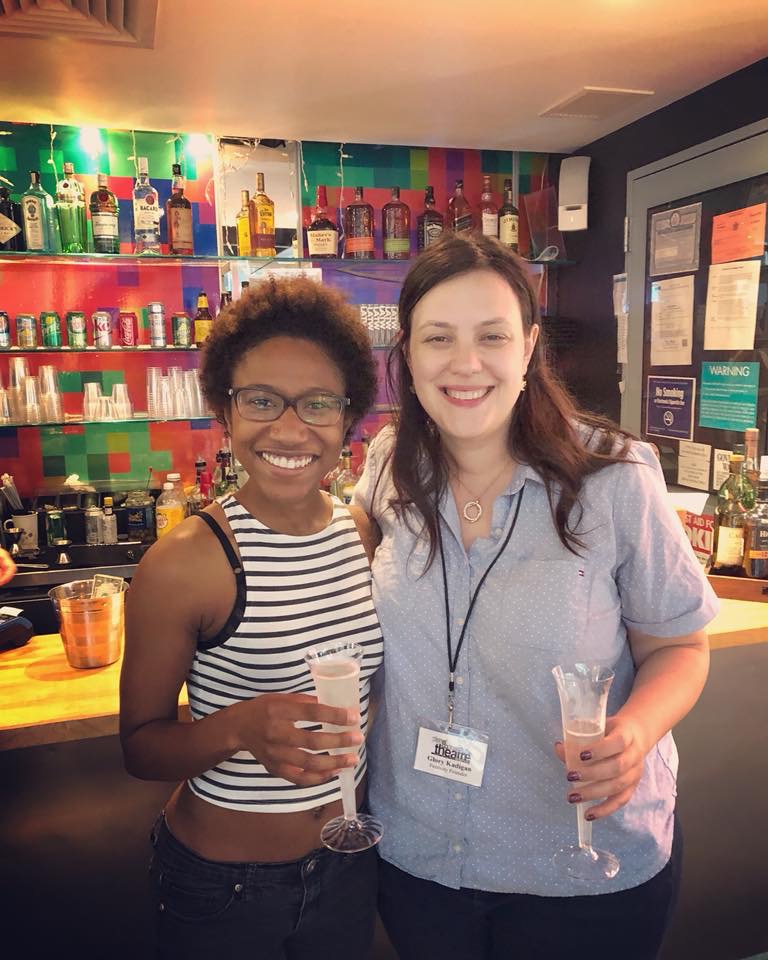
Glory Kadigan – a creative director in the indie arts community recently joined forces with a rising star – Kailah S. King.
Their first project, Vivian’s Music 1969, exploded at Edinburg Fringe before a resounding off-Broadway run last July, which became the springboard for a multi-state tour. Now the two have come together again at the “home” of another woman leader of the arts – Ellen Stewart’s legendary incubator for quality art from the soul – LaMaMa – for a full-scale run of a show that premiered as a workshop presented by the acclaimed Farm Theater Company at Kadigan’s own incubator of the arts – Planet Connections Theatre Festivity. The Floor Is Lava, one of the more visible works exploring the world of the Millennial, premieres in May.
The Floor is Lava, May 09 – May 19, 2019 – Downstairs | 66 East 4th Street
Thursday to Saturday at 8PM; Sunday at 5PM Tickets: Lamama.org
Written by Alex Riad and Directed by Glory Kadigan
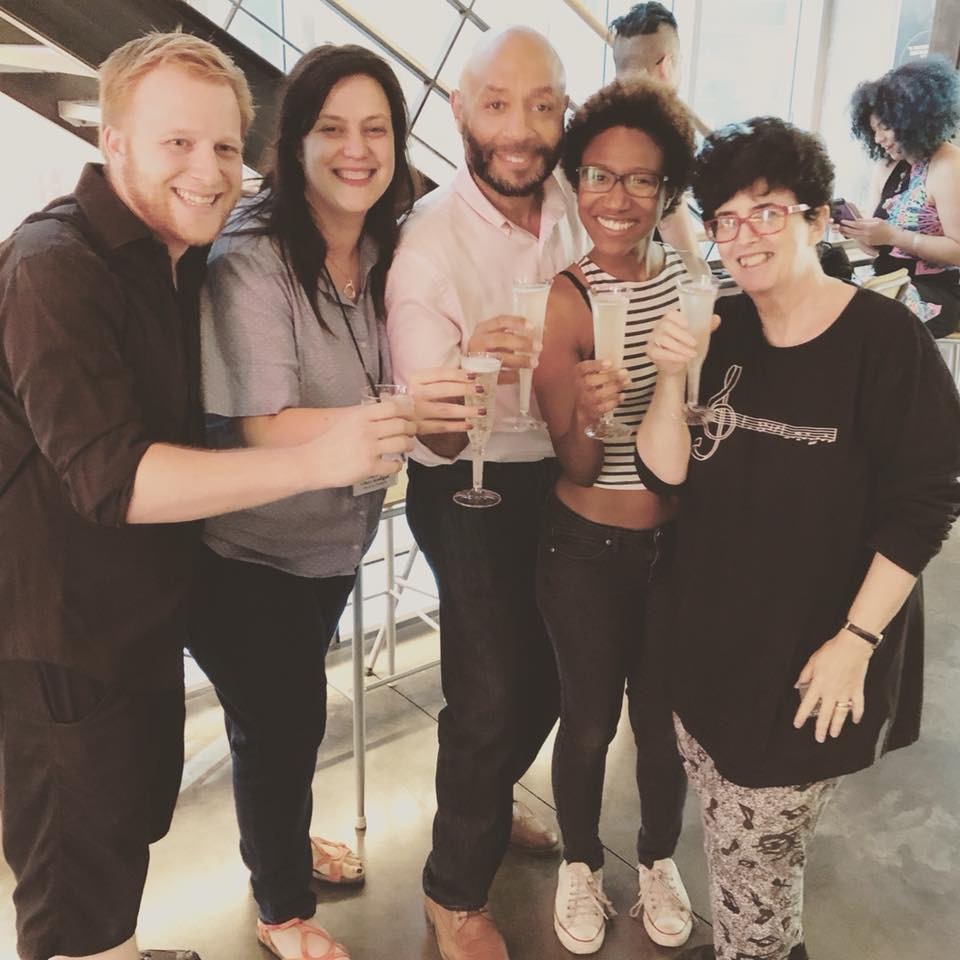
How did you two meet – and decide to collaborate?
Kailah: Glory and I were introduced to each other through playwright Monica Bauer in 2017 while working on a staged reading version of Vivian’s Music, 1969.
Glory: Yes we were introduced to each other through Monica Bauer the playwright of Vivian’s Music 1969. We were both asked to be involved in a reading of the play and about a year later, Monica contacted me to ask if I would direct a production of it that was going to Edinburgh Scotland.
Tell us about Vivian’s Music and its run?
Kailah: Vivian’s Music, 1969 is a fictional story based on a real-life event of Vivian Strong, a 14 year old black girl who was wrongfully shot and killed by a white police officer, which ignited the Omaha riots in 1969. A little less than a year later, Vivian’s made its way to The Edinburgh Festival Fringe in Scotland where it received 5-star reviews. Vivian’s Music was then extended from 55-min to 85-min and performed a 3-week at the Off-Broadway venue 59E59 Theaters. Since the new year, Vivians has toured to the East Hamptons and to Connecticut!
Glory: Yes, and now it’s going to run in DC and we might have another production of it in NYC next year.
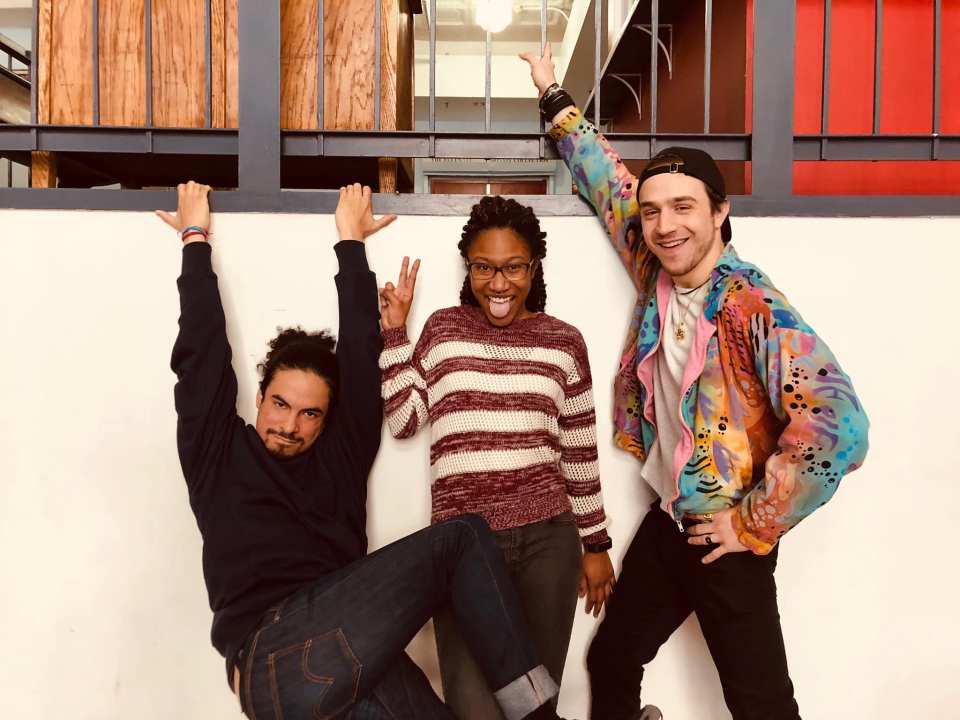
Did “Lava” naturally flow?
Kailah: I always have a great time working alongside Glory. We get along well and understand each other, so moving forward with her to the new production of The Floor is Lava felt very natural.
Glory: The Floor Is Lava had been presented as a workshop production at Planet Connections Festivity by The Farm Theater Company lead by a long time friend of mine Padraic Lillis. La Mama was interested in supporting writers in their twenties who were writing about issues that 20-somethings are challenged with today. So I created a short list of writers, which Alex’s name was on. I’ve been with La Mama for about five years and consider them to be one of the most outstanding communities you can be a part of in the theater world. Alex eventually met with Mia (Artistic Director of La Mama) and The Floor of Lava was offered a slot with me as director. Luckily Padraic gave us the green light. Alex (the playwright) and I then had several closed readings of the script and heard many great actors on roles. But I always knew in my heart that I wanted Kailah and that she would be brilliant. Our collaboration on Vivian’s Music 1969, meant that we had a shared mutual respect for each other and for each other’s process.
Two different plays, themes, schedules, and, I’m sure, many other things. How does that change the way you work together?
Kailah: Well, our rehearsal process is definitely very different. With Vivian’s, both my costar and I perform alternating monologues, so I had to rely a lot on storytelling, playing multiple characters, and since we were on a bare stage, it’s really the actors job to create this world in which the audience can see exactly where it is you want to take them. With Lava, I have scene partners I need to play off of and connect with, and a stage filled to the brim with scenery.
Glory: Well Vivian’s Music 1969, is a play about one of the worst race riots in United States history, sparked by the shooting of a 14 year old black girl by a white police officer. Floor Is Lava is partially about the unconscious bias in todays time, regarding race and gender. I knew from the beginning that these topics were part of what I was interested in exploring with my own interpretation of the play. So I intentionally sought a diverse cast of performers which has cracked open the plays accessibility. In terms of our collaboration, Kailah is someone who always wants to do the work. So am I. Having the trust in each other that we’re going to put in the time, and deliver, goes a long way. Also we both love Game of Thrones so….there’s that.
Do you foresee a grander scale to your working relationship (partnerships, writing, producing together, etc.)
Kailah: Although it isn’t something we’ve personally talked about I do foresee us working together of future projects. We get along great, and I’m constantly learning new things about Glory as a director and about myself as a performer.
Glory: We haven’t talked about that yet but anything is possible. In terms of process, there are adjustments made to different companies. La Mama gives us all room to “explore” and “experiment” with the rehearsal process. In commercial theater, you aren’t allowed to “explore”. You just have to do it the way that it’s always been done before. Both Kailah and I are flexible at adapting to a theater company, and delivering what commercial theater producers need. But, sometimes it’s just fun to be “experimenting” down at La Mama. So that’s what were doing with the process this time around.
Speaking philosophically and specifically, what makes a good team in the arts?
Kailah: What makes a good team in the arts is just always being ready to put in the work. Putting together a show of any size requires a lot of hard work, and when everyone is willing to make choices and be flexible to change, I think a lot of greatness can follow.
Glory: Trust. But also…being met by your collaborators in terms of work ethic and intelligence. The entire cast of Floor Is Lava are people who really want to be doing the work. It’s the first time in a long time that the entire cast “met” me on day one with ideas, thoughts, and creativity. I love going to rehearsal to see them because all four of them are great collaborators. They’re smart and talented but also flexible and easy to get along with. We’ve been having a great time collaborating.
OK, team… what’s next?
Kailah: Next up, I will be revisiting Vivian’s Music as we head down to Washington DC for a 16-show run this July!
Glory: We’re looking forward to Vivian’s Music 1969 running in Washington DC in July. Kailah and I will be going into rehearsals with Russell Jordan (another brilliant actor) at the end of June. I’m also working on two new Erik Ehn plays, one in June at the Sheen and another on Governors Island in early August with Rising Sun Theatre Company.