

Two Deep Cuts from a Legendary Playwright: Jim Catapano reviews Anton Chekhov
Two Deep Cuts from a Legendary Playwright
Chekhov’s Witty One-Act Character Studies Are Showcased at the ATA
The coupling of A Tragedian In Spite of Himself and The Anniversary is a delicious sampler of the work of the iconic Anton Chekhov, suited for both aficionados and newcomers. It’s another triumph for the American Theatre of Actors as it begins its 49th season.

A Tragedian… is a two-hander written in 1889, where “Chekhov’s Gun” gets an immediate namecheck. Ivan Ivanovitch Tolkachov (Devon Lawler) asks to borrow said revolver from his friend Alexey Alexeyevitch Murashkin (Harry Cooke). “If you don’t lend me a revolver than somebody else will!” he shouts. When Alexey admits he cannot detect what exactly is wrong with his friend’s life, Ivan proceeds to tell him…in incredible detail. Lawler is riveting as he delivers a long, frantic, impassioned monologue, raging against the perceived injustices of his existence. “Nobody has any sympathy for me, and everyone seems to think that all is as it should be!” he seethes—the final insult to him is his peers’ ignorance of his plight. It’s a complex stream-of-consciousness piece that Two Deep Cuts from a Legendary Playwright
Chekhov’s Witty One-Act Character Studies Are Showcased at the ATA
The coupling of A Tragedian In Spite of Himself and The Anniversary is a delicious sampler of the work of the iconic Anton Chekhov, suited for both aficionados and newcomers. It’s another triumph for the American Theatre of Actors as it begins its 49th season.
A Tragedian… is a two-hander written in 1889, where “Chekhov’s Gun” gets an immediate namecheck. Ivan Ivanovitch Tolkachov (Devon Lawler) asks to borrow said revolver from his friend Alexey Alexeyevitch Murashkin (Harry Cooke). “If you don’t lend me a revolver than somebody else will!” he shouts. When Alexey admits he cannot detect what exactly is wrong with his friend’s life, Ivan proceeds to tell him…in incredible detail. Lawler is riveting as he delivers a long, frantic, impassioned monologue, raging against the perceived injustices of his existence. “Nobody has any sympathy for me, and everyone seems to think that all is as it should be!” he seethes—the final insult to him is his peers’ ignorance of his plight. It’s a complex stream-of-consciousness piece that Lawler performs with astonishing energy and tremendous skill. (His “fed-up-ness” will have you nodding in solidarity.) Through it all Cooke’s Alexa listens with apparent sympathy, but then shockingly makes a request of Ivan that indicates he didn’t take in a word that his friend said, thus proving Ivan right. This sends the teetering Ivan over the edge, and chaos inevitably—and fittingly—reigns.
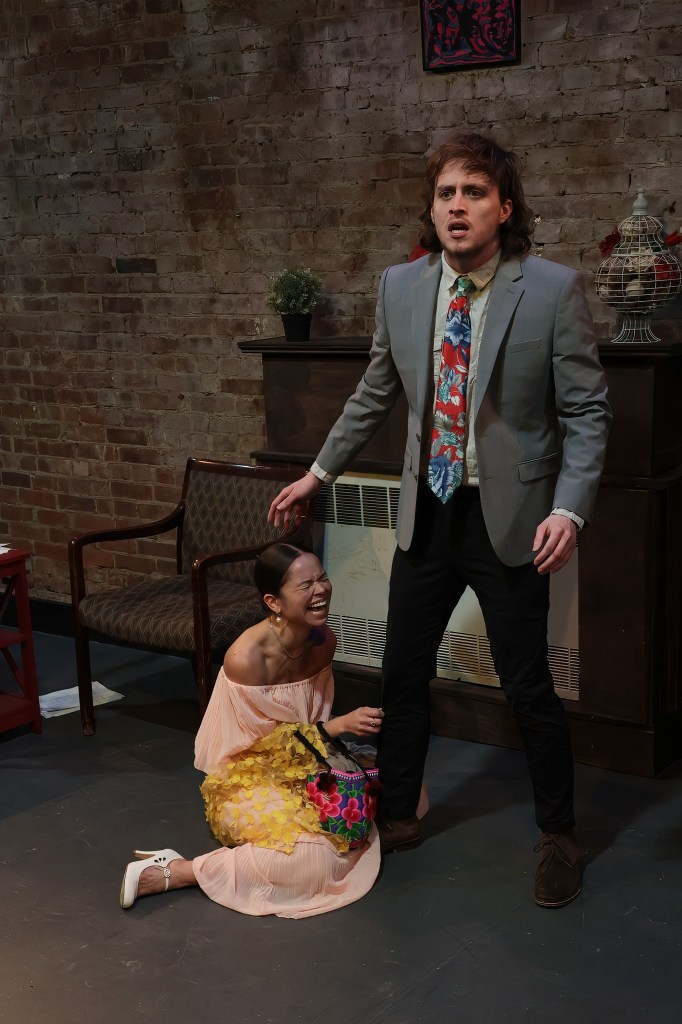
In The Anniversary, Anton takes on corporate life, and it’s striking to see how the piece—also from 1889—resonates in 2025. A farcical story set at a private bank, it concerns one Andrey Shipuchin (Jonathan Beebe), the company’s chairman, as he gathers his colleagues and shareholders to celebrate the institution’s 15th anniversary. Unfortunately for Shipuchin and all involved, events quickly go comedically south. Harry Cooke returns as the frustrated clerk Kusma, lamenting the chairman’s empty promises even as he prepares to craft his boss’ speech for the occasion. Natasha Sahs is hilarious as Andrey’s obnoxious wife Tatiana, who cannot stop talking about things that are not remotely relevant to anyone else. Kate Jergensen’s Natasha arrives to very humorously ruin the vibe even further, demanding that the bank pay her husband’s salary even though there’s no evidence that he ever worked there.
The actors collectively shine, providing a masterclass in realizing Chekhov’s classic and clever material, resulting in a can’t-miss dual production that demonstrates how words written long ago still resonate in the early 21st century.
A Tragedian In Spite of Himself and The Anniversary are directed by John DeBenedetto. They run at the American Theatre of Actors through February 2, 2025.

Holly Doubet: A Musical Legacy in the Making with a musical lineage that spans generations,
Holly Doubet is poised to make her mark on the Broadway stage with THIS IS NOT A DRILL.
A graduate of the Royal Academy of Music in London and a double major in classical piano and voice from a California university, HOLLY DOUBET boasts a diverse musical background. Her career has encompassed a wide range of experiences, from working as a studio singer and songwriter to leading her own band and serving as a backup singer in both Los Angeles and Las Vegas.

Doubet’s creative talents extend beyond performance. She served as the songwriter for the beloved children’s television show “Barney and Friends” in Dallas, contributing to its enduring popularity. Her songwriting prowess has also garnered recognition in the pop music world, with several of her songs achieving commercial success, including one that earned a CableAce Award nomination.
Drawing upon her rich musical heritage, Doubet has now turned her focus to musical theater. Her debut musical, “This is NOT A Drill,” a poignant and powerful work inspired by a true event, has captivated the attention of industry luminaries on both coasts.
In a significant milestone, “This is NOT A Drill” was unanimously selected to receive the prestigious Donald Fowler Theatre Arts Memorial Grant in May 2021. This esteemed recognition further solidifies Doubet’s position as a rising star in the musical theater world.
“This is NOT A Drill” — after its highly acclaimed premiere in Dallas in 2021, Doubet sets her sights on Broadway, she is currently in development for an industry reading in New York. Details to follow when solidified.

Searching for Hope in a State of Decay: Jim Catapano reviews Black & White City Blues
Richard Vetere’s Powerful Black & White City Blues Opens the American Theatre of Actors’ 49th Season

It begins with a tragedy and gets ever sadder from there. 32-Year-Old Little Guy (Joseph Monseur), his younger brother John John (Sam Cruz), and their friend Bobby (Jake Minter) are high on heroin and high on a rooftop, deliriously plotting a drug deal that they think we take them to even loftier places. But this euphoria is a smack-fueled illusion, and reality strikes abruptly and violently. Now Little Guy is without a sibling and consumed with a guilt that competes with his addiction to destroy him.
Black & White City Blues depicts the Williamsburg Brooklyn of 1971, where the streets are mean and bleak. Weary Detective Lucy Cortez (Anita Moreno) is suddenly working solo after her partner had decided he’d seen enough despair and retired to Florida. As she investigates what happened to John John, she is shadowed by Village Voice reporter Burke (Wasim Azeez), who sees a great story; Burke becomes so obsessed with making a name for himself through the tragic circumstances that he dooms himself to becoming just another part of them.

Little Guy longs for the existence that he saw depicted on TV in his childhood, where everyone was happy and any problems were solved in 30 minutes. “No one is lonely on TV,” is a mantra repeated through the play. This of course is a lie, as potent and damaging as the heroin he can’t kick. He alternates between trying to get clean (becoming one of the “straights”) and wondering if it might be better to succumb. The people he associates with are all living harrowing existences, while actively trying to make money off of them. Delilah (Amber Brookes, who also directs) is the addicted, broken prostitute haunted by memories of her toxic father; Bernice (Gary E. Vincent) is a barfly trying to find glimmers of joy and self-actualization amidst the dread. Piranha (Riyadh Rollins) is the most powerful and dangerous person in the neighborhood, a pimp and a drug dealer who the others try to stay on the good side of. Bobby and Delilah, in particular, are enablers on Little Guy’s road to destruction; he’s literally of more use to them as a junkie. But even as Little Guy searches for a way out, he continues to be literally haunted by John John, who even in death holds a devastating secret that just may lead to Little Guy’s breaking point.
As the only person actively trying to save Little Guy, Kevin Leonard is poignant as Mr. Wellman, a former addict now counseling him and helping him get clean. Wellman also has drug-related tragedy in his past, and like Little Guy, the guilt is always with him, affording no rest or peace.
We really get a sense of the world closing in on Little Guy and his doomed community, as any sign of hope is quickly cast aside by the false promise that heroin keeps dangling in front of them.
Though Little Guy is the focus, every character gets an aria, a moment in the spotlight to tell their story, and the cast collectively astonishes in bringing the heartbreaking tale to life. The actors give a brutally realistic depiction of addiction and withdrawal, while being utterly compelling and truly sympathetic to the very end.
The production is stylishly directed by Brookes and makes excellent use of the space to depict a city of ruins occupied by desperate people. (Of particular note is the clever use of a backlit door depicting the silhouettes of first sex, and then suicide.)

Brookes’ team includes Dustin Pazar as Assistant Director/Production Manager, and Jake Smith providing Lighting Design.
Black & White City Blues is an incredibly moving, impactful, and astute observation of the frailty of human existence that is not to be missed, and will stay with you long after the lights go out.
Note: This play portrays violence, scenes of intimacy, and drug use and paraphernalia.
Black & White City Blues runs at the American Theatre of Actors through January 19, 2025.

Brad Dickson’s LOVELY IDIOTS comes to NY
You’re invited to a funeral!
Playwright BRAD DICKSON in association with Jay Michaels Global Communications llc bring to New York an industry presentation of Dickson’s uproarious play.

A group of New York actors and producers gather for the funeral of a faded theatrical acting icon. Who ever knew that death could be so darn funny?
LOVELY IDIOTS will be presented Thursday, April 3 @ 2:00 and 6:00 p.m. at Open Jar Studios, 1601 Broadway, New York City. Contact 646-338-5472 or info@jaymichaelsarts.com for further details or to RSVP
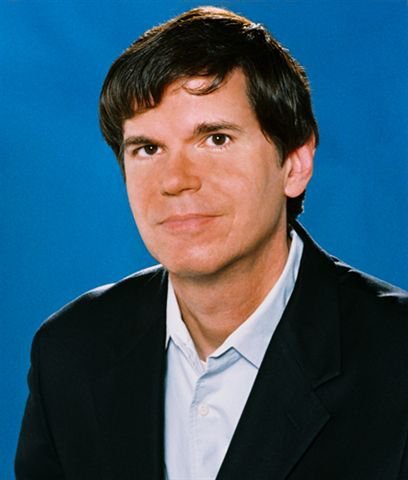
EMMY Award-winner, Brad Dickson is a former staff writer for The Tonight Show. He was a newspaper humor columnist back when newspapers were a thing. His essays have appeared in the Los Angeles Times, Los Angeles Times Magazine and America Magazine. He’s the co-author of two books that were published by Simon & Schuster. His plays have been produced at numerous theaters in New York City and throughout the rest of the country as well as in Canada.
Jim Catapano reviews a Letter-Perfect Power Play
Frank Cossa’s Witty Character Study Bows at the ATA
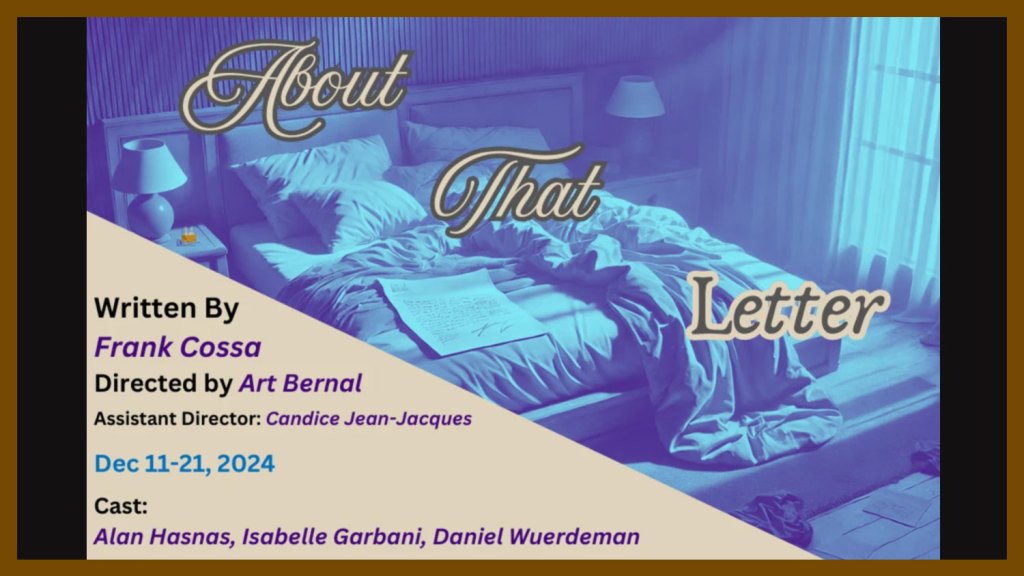
While sipping an adult beverage at a professional conference, Doctor Emma Vanderlyn (Isabelle Garbani) meets a charming man who she describes as “oddly cute, in a cutely odd kind of way.” However, to her horror the man turns out to be her arch-nemesis, tenured professor Pete Brasso (Alan Hasnas). Years earlier, Brasso had single-handedly brought to a near-halt the academic career of Emma’s husband, Josh Sperling (Dan Wuerdeman). Brasso had sent a letter to the editor of The Art Review, pointing out a serious factual error in Sperling’s article in the journal regarding the artist Whistler. This action led to Sperling’s credentials being questioned, culminating in the rejection of his own tenure. The incident, in her estimation, “ruined her life”— and she’s ready for revenge, but in a very unusual manner.
Thus begins About That Letter, a sharp and engaging one-act by Bronx-born Frank Cossa. To the sounds of the Pomp and Circumstance Graduation March, we flash back to Emma and Josh learning of Brasso’s letter; Josh is in despair—admitting Brasso is right, and correctly predicting the dire consequences of it. Emma seethes that the triumphant life path she had sought through her husband’s success is about to be denied her; she is almost Lady Macbeth-like in her rage. She scoffs at Josh’s suggestion that it will end up ok: “I don’t want OK, I want pretty damn good!”
Returning to the present, things have taken an unexpected turn—after copious drinks, Emma has “slept with the enemy.” Wearing the fluffy white robes of the hotel they are staying in, they bask in the afterglow the next morning, until Emma reveals her motives and gives us a clearer picture of the calculating, success-obsessed person underneath the professional charm and decorum.
“I wanted to know what it felt like to have sex with a man I detest,” she proclaims unapologetically. (There’s a slang term for that, but I won’t repeat it here.) Still reveling in the satisfaction of this, she gleefully assassinates his character, dismissing him as a poser and a hypocrite who rambles on meaninglessly (“A Rebel Without a Pause” is one of her more memorable dismissals). And circumstances only escalate from there…
The three actors bring Cossa’s compelling story beautifully to life, delivering his insightful and humorous observations with relish. It’s a terrific study of human interaction and dysfunction, and how the desperate desire to be somebody leads to some shocking life choices.
About That Letter is directed by Art Bernal with co-direction by Candice Jean-Jacques. It is presented at the Beckman Theatre at the American Theatre of Actors through December 21, 2024.
Jim Catapano dreams a little dream of three: Rich and Dale Baron’s Delightful Dream On, Baransky! Returns for an Encore

NYC millennial Jonathan Baransky (Archie Colville) is something of an accidental cad. He’s openly seeing Lyla (Julie Bausivoir); secretly seeing his best buddy Frank’s wife Suzie (Mecca Alexis); and considering getting back together with his ex-girlfriend Jennifer (Kaelin Phillips). The part of him that recognizes that this is extremely complicated (and wrong) is suffering anxiety, so he seeks therapy from the eccentric Doctor Samantha Smithson (Olivia Fairless). Forward, flirty, and dressed like she’s about to perform Burlesque, Smithson proposes an unconventional treatment, utilizing “Dreamacil, the Magic Pill,” in the opening song. The wonder drug will induce a dream-like state where Jonathan will confront his issues to the accompaniment of showtunes and with the help of the wacky people that live in his head.
Dream On, Baransky! is the name of the show and its rallying cry, and this tremendously entertaining production written by Rich Baron is in its third imagining. The music and lyrics that accompany Jonathan’s surreal journey are by Dale Baron, with contributions from Alex Baker and Dan DeVere.
Jonathan’s psychedelic mind journeys are populated by a fun cast of quirky and wonderfully costumed characters that form the “army” dedicated to helping him find his way. Justin Knapp is the trenchcoated Commander Ted; Bea Corkhill is the level-headed Irish girl Reagan O’ Reilly; Andraes Ktorides is the uncouth, leather-jacketed Kazz-Nova; Hera Güneş Barlowe is perky cheerleader Patsy Purity; Alisa Mironoff is the shimmering Darlene Winters; and Jadé Porciatti is Daniela Divine and a host of other quirky surprise personas. They are distinct archetypes that are fun, familiar, and memorable, all well-realized by the sterling cast. Under their watch the befuddled, stressed-out Jonathan navigates both reality and the dreamscape in an escalating adventure that is quite surreal, but also familiar to anyone who finds life and dating in the big city rather overwhelming.
James Ahn Brandfonbrener (Musical Director) provides exceptional keyboard accompaniment to the playful and memorable songs, all beautifully rendered by the cast. A standout is “I Met This Man,” which sees Lyla, Suzie, and Jennifer come together to lament their Baransky-shaped dilemma. The production is imaginatively staged with many amusing things happening, from Frank suddenly rising from his hiding spot on the balcony clad only in a towel, to Dr. Smithson whimsically riding her office swivel chair to center stage during scene transitions. It all makes for an incredibly entertaining and funny show that also has some insightful things to say about mental health and the anxiety epidemic, and how they affect modern relationships.
Dream On, Baransky! is stylishly directed by Luana Seu, with Assistant Director/Stage Manager Paul Grant. It is featured at the John Cullen Theatre at the American Theatre of Actors through December 22, 2024.

Moving Figures, Moving Hearts, … Jim Catapano was also moved
Two Shining Examples of Modern Dance from Alessandra Corona Performing Works
One of the bright lights of the New York City artistic scene in 2024 was showcased at the Theater at St. Jean on the Upper East Side in the Spring. Fervida and Status Quo join forces to depict where we are as people in a wounded, conflicted post-pandemic society, and use the ecstatic beauty of modern dance to express the emotions we often find so hard to convey through mere words.

In a turbulent time where we often struggle to find intimate connection, Fervida elegantly expresses this dilemma through movement. On a stark stage, performers clad in hues of black and gray reach for each other, forming a bond through movement, while others stand symbolically with their backs to the audience. Some of the music recalls “Nights in White Satin” by the Moody Blues, which is a fitting complement to the moody blue stage lighting. The music shifts to an elegiac Italian ballad as just two performers grace the stage, their bodies intertwining in a way that many people can sadly only dream of.

Status Quo interprets the necessity of evolution and adaptation in an ever-changing and challenging world. It begins to the howling sounds of nature, with a single performer on stage. They are joined by others, making full use of the space with fluid movements as intense wind instruments abound. The group of eight becomes just two; a third rejoins but dances alone as the other two pair bond. Finally, there is only one, moving in solitude as the music fades and is replaced by the resonant sound of trickling waters. A distant voice intones, “As we get bigger and bigger, the distance between ourselves and that other outside world becomes smaller and smaller, and this world that we are inside which seemed so huge in the beginning and so infinitely welcoming, has become very uncomfortable.” As she speaks, two dancers in flesh-colored attire move slowly as mournful piano music fades in, amidst a floor strewn with what appears to be fallen leaves. The others join them on stage, holding their hands in front of their eyes in a depiction of sadness as they try to shut out the ever-increasing harshness of the world. The entire ensemble re-emerges in flowing black skirts, symbolically accepting the changing nature of their environment, and deftly performing complex movements in unison as the soundtrack suggests a sense of peace and acceptance.
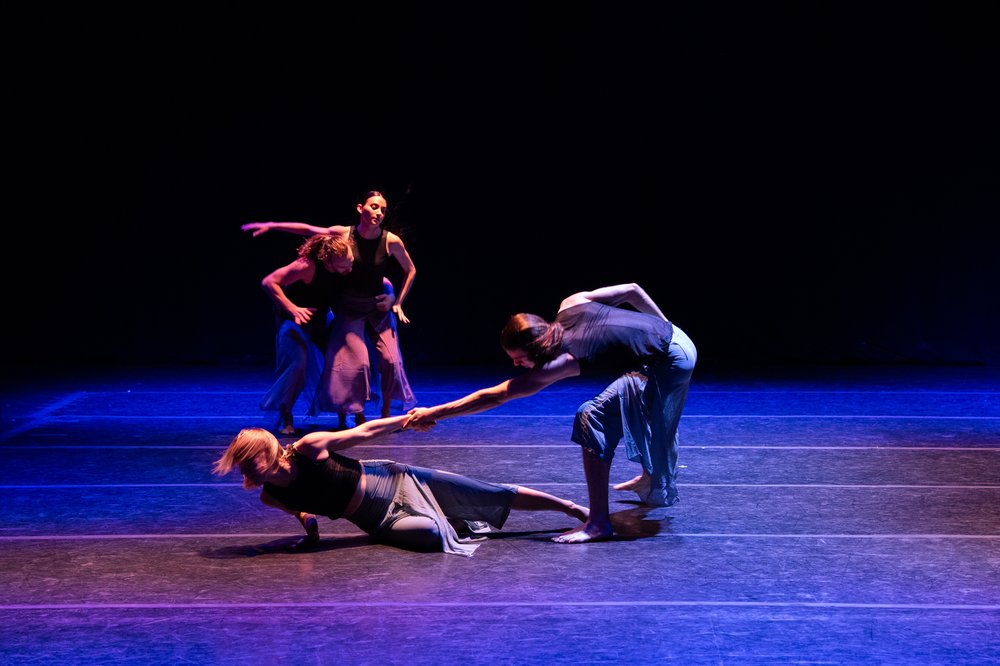
The coupling of these two pieces perfectly depicts the journey of the human spirit and the challenges people face from the world—and from each other—in an uncertain age, and both do so with a poignancy and beauty that makes the journey easier to bear.
The performers are Alessandra Corona, Maria Vittoria Villa, William Valles, Halle Augenstein, Lucia Flexer-Marshall, Nicolas Fiery, Juan Viveros, Madelyn Wansong, and
Madeline Burr. Fervida is choreographed by Alessandra Corona
in collaboration with the Company; Status Quo is choreographed by Simon Kuban. The music is by Jocelyn Pook, Max Richter, Ran Bagno, and Ólafur Arnalds. Original music by Thomas Lentakis, Olivia Sellerio, Franca Masu.

Charles Evered’s CLASS directed and starring Ben Atkinson with Eliza Banaszak comes to New York
GOTO GOTO Studio in association with Jay Michaels Global Communications llc bring to New York an industry presentation of the regional cast of Charles Evered’s CLASS directed and starring Ben Atkinson with Eliza Banaszak to Open Jar Studios, 1601 Broadway, New York City, on Wednesday, April 9 @ 1:30 and 5:00 p.m.

CLASS is in session: A mysterious young woman shows up in the studio of a prominent – yet jaded – acting teacher in NYC. Each armed with an agenda and an ego. What started as a battle of wills evolved into a unique and deeply moving relationship made up of love and respect. Surprise twists are presented with ingenious subtlety and razor sharp wit.
“Alluring … it is very clear that Mr Evered, a bi-coastal film director and playwright, knows a good deal about celebrity … Elliot is a fabulous character.” —The New York Times
“A lovely piece of theatre … a flawless experience that makes you realize just how much value theatre has in our lives … Evered’s CLASS truly is a class act … thoroughly absorbing entertainment.” —Broadway World
“Wonderful … Evered’s dialogue is sharp, witty, extremely funny and poignant … this is the show to see. Don’t miss it.” —LA Examiner
“Plenty of laughter and more. Expect to be surprised. Expect to be moved. What more can one ask for from an evening of theater?”—StagesceneLA.com
“Humorous and touching …” —OnStageLosAngeles.com
“A riveting emotional journey …” —EntertainmentToday.net
“Charles Evered has created a character in Elliot who I would eagerly follow through a 10 part series.” —NoHoArtsDistrict.com
“Masterful … superbly written.”—Tolucan Times
LEARN MORE HERE
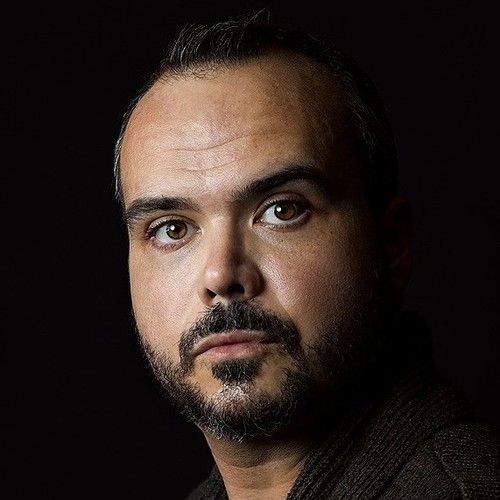
Ben Atkinson could not be prouder to bring Class to the city where the play is set, and to return to the role of Elliot. Ben has performed on both coasts, with credits including Diana of Dobson’s and As You Like It with the Antaeus Theatre Company; the world premieres of Resolving Hedda at The Victory Theatre Center and An Actor’s Carol (also by Class’s playwright, Charles Evered) at the Hi-Desert Playhouse; and also worked alongside Class co-star Eliza Banaszak in Love and Information at Live Arts in Charlottesville. He is the founder and director of the Queen Charlotte’s Villeins Shakespeare troupe in Charlottesville. Film credits include a number of short films and online series, as well as starring in the feature film, Ripple (2015) directed by Christian Everhard. When not on stage, Ben also produces video content for various platforms and organizations with his company GOTO GOTO Studio.

Eliza Banaszak is thrilled to revisit Class: A Play as Sarah. A student living in Charlottesville, Virginia, Eliza has appeared in numerous productions, including Ella in Rodgers and Hammerstein’s Cinderella with Four County Players, Baker’s Wife in Into The Woods with Live Arts Theater, and Mya in You Don’t Know Jackshit About the Mothman at Live Arts Theater. In addition to acting, Eliza has directed Godspell at Albemarle High School, and The Rocky Horror Show at Piedmont Virginia Community College. They are particularly passionate about yoga, improvisation, and disability advocacy. When not on stage, Eliza enjoys working as a Party Princess with Character Connections, a character entertainment company in their hometown.

Jim Catapano is seeing double: two shows at the ATA
The Oddest of Couples: Meny Beriri Brings Two Witty and Insightful Character Studies to the ATA
Opposites may attract, but they also repel pretty quickly too, as Meny Beriri observes in his two new one-act pieces, Smoking Kills and SKU. They complement each other perfectly as each is a look at two sets of people struggling to get on the same page. Each pairing features one cynic, and one hopeless romantic; one cautious, and the other free-spirited; one level-headed, and the other obsessive; one grounded in reality, and the other in Hallmark movie-land. Both plays take place in a post-pandemic world, which informs the approaches to life of all the characters—it’s basically “Let’s Form a Connection” vs. “Leave Me Be.”

SKU: “We’ll always have Paris Baguette!”
Alex (Gordon Rothman) and Melanie (Stacey Petricha) are fresh from their memorable date at the aforementioned bakery/café, and are now meeting at a restaurant to keep the fire burning over Indian food. Melanie is a retired nurse, and happy to be independent and free of responsibility. “We’re not heroes,” dismisses Melanie, who sees her nursing career as having been just a stressful gig. Alex, in contrast, is a high-school social studies teacher so in love with his job that he has convinced himself that every day is as meaningful as Dead Poets Society. He’s a passionate soul who fixates on something and won’t let it go; he’s an hour late to the second date, blaming it on his obsession over obtaining a certain stapler missing the SKU of the title. (It stands for “Stock Keeping Unit”, which stores use to identify products in their inventory.) He then goes on a tangent about Star Trek (The episode “The Doomsday Machine,” to be appropriately specific), and his quest to discover the identity of the actor who walked in front of Kirk in one pivotal scene. Melanie is life-loving as well, but in a fiercely independent way. She doesn’t see constant companionship as the key to happiness—to her, it’s by and large an obstacle.
“You still need other people,” argues Alex. “But you can’t depend on them for happiness!” Melanie fires back.
She stays polite, but her demeanor begins to indicate that the Paris Baguette encounter should maybe have been a one-and-done. Alex, however, has decided after one date and a half that Melanie is his soul mate.
“You think we share a soul?” she scoffs. “From what I remember, that’s not how reincarnation works!” But Alex is unrelenting—he announces he wants to travel the world with the sudden love of his life, and Melanie recoils in horror; to her, that basically echoes the title of the very first episode of Star Trek: “The Cage”.
While perfectly depicting the clashing of their characters, the actors have tremendous chemistry and make the script sing. Petricha and Rothman are supported by Samiha Ahmed, the waitress who has a god’s eye-view of the quickly crumbling romance. Though things go south fast for Alex and Melanie’s connection, they do so humorously, and the theme of incompatibility lands while never feeling tragic or even at all downbeat; Alex lands on his passionate feet, in a very funny resolution.
Smoking Kills opens to the sounds of the Odd Couple theme, lampshading the relationship between the youthful and exuberant Emily (Julianne Lorndale) and her roommate/landlord, the older, warier Jane (Leia Martin).
An Oklahoma transplant, Emily returns to their NYC apartment gushing over her date with “Harold”, who took her to the exotic Avenue D and then on a romantic trip on the Staten Island Ferry. Emily compares it to Casablanca, which she recently discovered. Jean smells cigarettes on Emily—the extremely potent Marlboro Reds, to be exact—and is disgusted. Emily admits she smoked one of Harold’s ciggies in the heat of the moment, and still has the pack. Jean is triggered due to the 6-pack a day habit she once had as a teen, and warns Emily of the evils of the addiction, and of a lot of other dangers in life that Emily seems blissfully unaware of—such as the antibiotic filled Jumbo Shrimp she consumed at dinner. Jean invokes the “my house, my rules” clause, escalating the confrontation between the two, and leading to an explosive, violent-but-comical climax. As with SKU, a potentially traumatic conclusion is handled humorously, and again with the perfect final moment. Martin and Lorndale realize this modern-day Felix and Oscar beautifully, playing off each other with deftness and expertly serving the witty material.
These two delightful one-acts are a testament to Beriri’s ability to take the sad reality of the failed connections that plague life in the post-pandemic 2020s, and imbue them with a compassionate touch and knowing sense of humor that is refreshing, and somehow even healing.
SKU is directed by Meny Beriro; Smoking Kills is directed by Ginger Kipps. They are featured together at the American Theatre of Actors through December 8, 2024.
“The Butterfly Soars” says Jim Catapano
Monarch: A Mexican-American Musical Makes a Poignant and Timely Entry Into Public Consciousness
The Monarch Butterfly is known for its autumnal instinctive migration between the Northern United States and Mexico, during which it travels thousands of miles. The butterfly is also the embodiment of change and transformation, and thus the perfect symbol for the journey of Luis, the hero of Monarch: A Mexican-American Musical.

The handyman is a “Luis of All Trades,” beloved by the community. But, he is also an undocumented immigrant, making him a target in turbulent times. Officer Castelo of ICE makes it his life’s obsession to pursue Luis, echoing the arc of the iconic Inspector Javert of Les Misérables. Luis is forced to seek sanctuary in a local church where he relates the story of his life. We are introduced to his daughter Ana (who sings “Dreamer”), who came to America as an infant and is now 20 when circumstances grow grim for the dreamer family; and his beloved wife Amanda, who passed before Luis had left Mexico but is still a powerful presence in his life. The titular Monarch (The Nagual, meaning Spirit or Shaman) is the narrator, relating the story of the butterfly’s journey while Luis’ story unfolds in song. “The Monarch, the most amazing creature, my darling,” he croons. “That’s what you are.”
In a time when the fate of the undocumented Dreamer is in considerable danger, Monarch reminds us that these are human beings who are only looking for a better life, as is the story of all who came to America since it was founded centuries ago; our ancestors were all once Luis.
As crafted by Alfonso Molina (music, lyrics and book) and Mayu Molina Lehmann (lyrics and book), the score runs the gamut of musical styles, from the Leonard Bernstein-recalling piano Overture to the operatic tones of the solo numbers, to the classic Broadway of the rousing ensemble pieces. The lyrics are direct and necessarily unsubtle in depicting the points-of-view of Luis’ hopeful family, as well as the “only following the law” Castelo. The production is a testament to the power of words and music to tell the story of the human experience, in a desperate time when we need creative activist voices more than ever.
Monarch boasts a cast of 13 and a total of 51 musical pieces over two acts, as presented at the Los Angeles Theatre Center in December 2023. An abridged reading was performed at Open Jar Studios in NYC in November 2024.
Latest Posts
-

THIS IS HOW WE RISE: Inside the Launch of TEDxAstorPlace at NYU Kimmel Center
On Friday, November 6, 2026, the historic crossroads of downtown Manhattan becomes the launchpad for a major new forum of ideas, civic momentum, and cultural…
-

Mic’d from the Heart: Jim at the Chain with Adam Bradley
Adam Bradley’s Emotional Is This Thing On? Lights up the Chain The Philadelphia Fringe Festival treated audiences to Adam Bradley’s dynamic, raw one-person show in…
-

“Is It Better to Rule in Hell?” Jim finds out at the ATA with Anne L. Thompson-Scretching’s “The Fall From Grace”
Anne L. Thompson-Scretching’s The Fall from Grace Explores Paradise—and Innocence—Lost “I am coming, mortal… enjoy this strange light that illuminates your world. It cannot protect…
-

The Rhythm of Survival: Andy Teirstein on Scoring BROKE and Honoring a Vanished New York
Before Hell’s Kitchen became synonymous with luxury high-rises, it housed St. Clare’s—a haven that was chronically underfunded, defiantly kindhearted, and open to anyone the rest…

