

Controversial New Play in Development
Acclaimed activist/artist CATHERINE GROPPER begins workshopping her next – and highly controversial – work. International playwright, documentary filmmaker, and fine artist, Catherine Gropper, had a chance meeting with an actual global government interpreter. What he divulged to her could have changed the course of history.
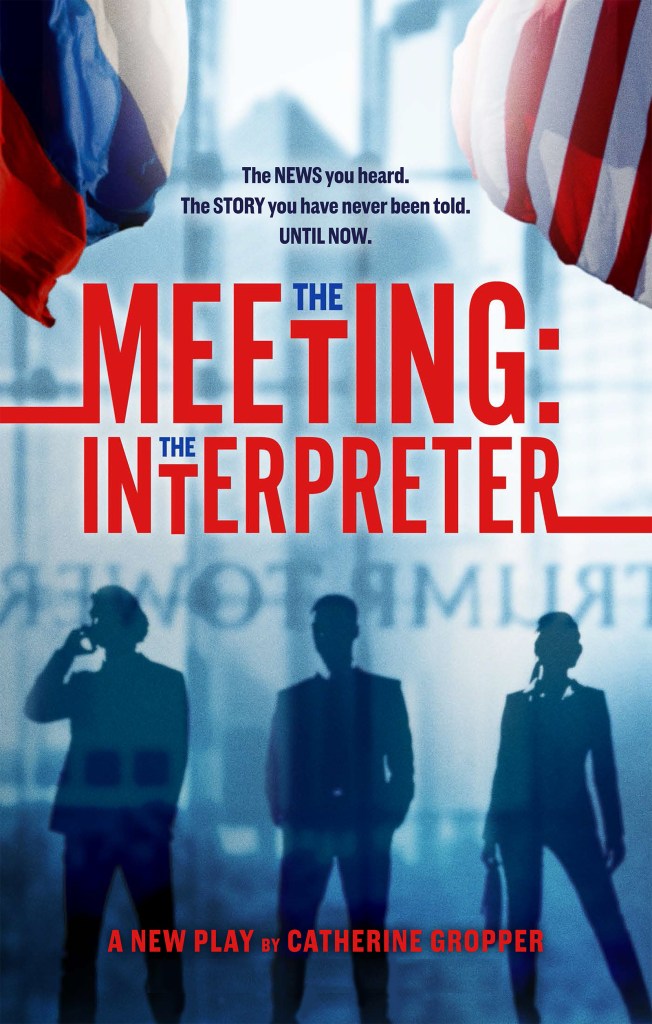
The Meeting: The Interpreter, a new play based on true accounts shared with her, is a political drama that cuts down to the bone of truth. It is the story of the infamous meeting in Trump Tower prior to the 2016 Election with – among others – Russian nationals, and Don, Jr., told by someone who was there.
“The play is currently in development for a run Off-Broadway,” says playwright Catherine Gropper; “we are currently negotiating with a prominent television personality to help us bring this necessary story to life before it’s too late,” Catherine Gropper added – possibly alluding to next year’s presidential election.
Cast and performance information on her new work will be announced shortly.
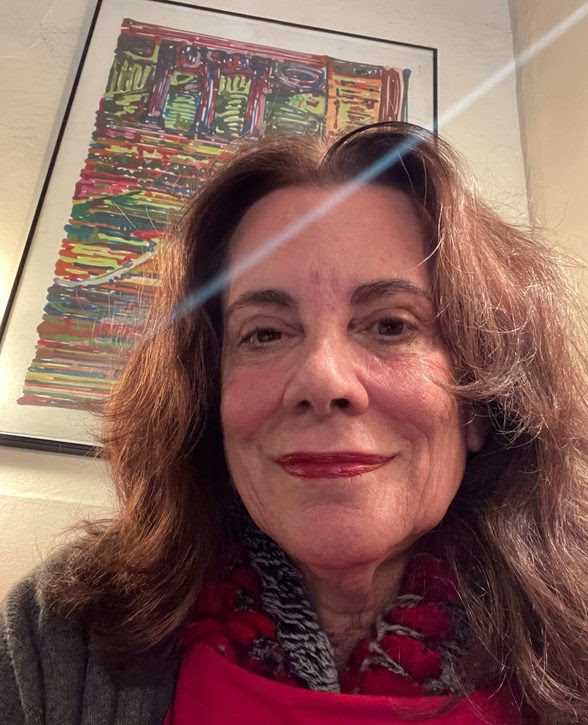
Catherine Gropper, acclaimed for her work as a painter, sculptor, and playwright, boasts accolades from Scotland’s national newspaper, the Scotsman (four-star review) and a rave from Anita Gates in the New York Times – both for her play, Embers; and great praise in DC Theatre Scene for her play, Miss Crandall’s Classes, which explored racism in the education system. Ms. Gropper is also the author of several short stories, a book of poetry, and is also working on a pair of comedies – both having a controversial bent. She is also an international award-winning filmmaker.
Resurrecting a Phenominal Play
Reflections by Robert Liebowitz
‘The world is a small place’, Steven Wright tells us,’but I wouldn’t want to paint it’.
Indeed. He is correct on both fronts.
In 2016–suddenly 7 years ago–I was being feted with a theater award for Excellence in Playwriting at a ceremony at Sardi’s, a famous restaurant known to all theater people. A nice theatrical memory, in a lifetime of theatrical memories.
Suddenly, this very tall person appeared on the horizon; at the end of the bar would be a more apt description. Blessed with a decent memory, I recognized him immediately. Of all the folks that have passed through the doors of my life–both theater people and regular ‘civilians’–Courtney has always been known to have the largest, illuminating-an-entire-room smile ever. Between that, and his frame at 6′ or more, there was no mistaking him. I hadn’t seen him since our college days in 1978, an astounding lapse of 38 years.
The theater world is a small world, and within minutes we were hugging and laughing and smiling, and doing all the things that two people do when reunited after a passing of some substantial time. Of course, in the theater, there is always this caveat–let me know when your next show is. Of course; you do the same. And so, it’s that carrot that carries us through our days.
No empty gesture here. He has since seen my work, and I have seen his. There we were, facing off on a college stage in the previous century, when we were still in our teens, and the world that awaited was ahead of us. Now, all these years later, we are again two peas in a pod, visiting each other in the lobby or backstage in a dressing room. So much had changed, and yet nothing had changed.
My dear friend and college classmate Courtney Everette is starring in a revival of ‘Resurrection’, a play about the 1921 Tulsa Massacre, at the American Theater of Actors…and it is Must-See-TV.
Ever since the George Floyd Execution–he didn’t die, he wasn’t murdered, he wasn’t even assassinated in anonymity, he was executed in the town square–there has been a profound shift in the Theater Landscape, and with good reason: Things Must Change. It is no coincidence that the two most fertile times for theatrical production in American History took place in the 1930s, and the 1960s–both decades filled with a real, justified anger and rage, and a fervent attempt for positive change in the immediate future.
There is no question that this rage spilled out into our theaters–or was it the other way around?–and made day-to-day living, in a general way, better for most people. The 1930s gave us The Group Theater, and Clifford Odets, and a host of A-List actors and actresses, plus the Omnipotent Presence of Orson Wells and the Mercury Theater. The 1960s gave us Ellen Stewart and La Mama, Sam Shepard, The Living Theater, and too many more theatricians to list here. Just now, in 2023, they are our grandparents, as we continue to exist in the stream that they created and nourished.
In the three subsequent years, there has been a ‘tsunami’ of stories that attempt to depict a truer, more complete picture of real American History, and how traditionally disenfranchised minorities fit into that narrative. This is proper. This is correct. This is just. If it means stepping on a few toes, then that is what it means. Finally–finally–these other voices will be given their chance to be heard.
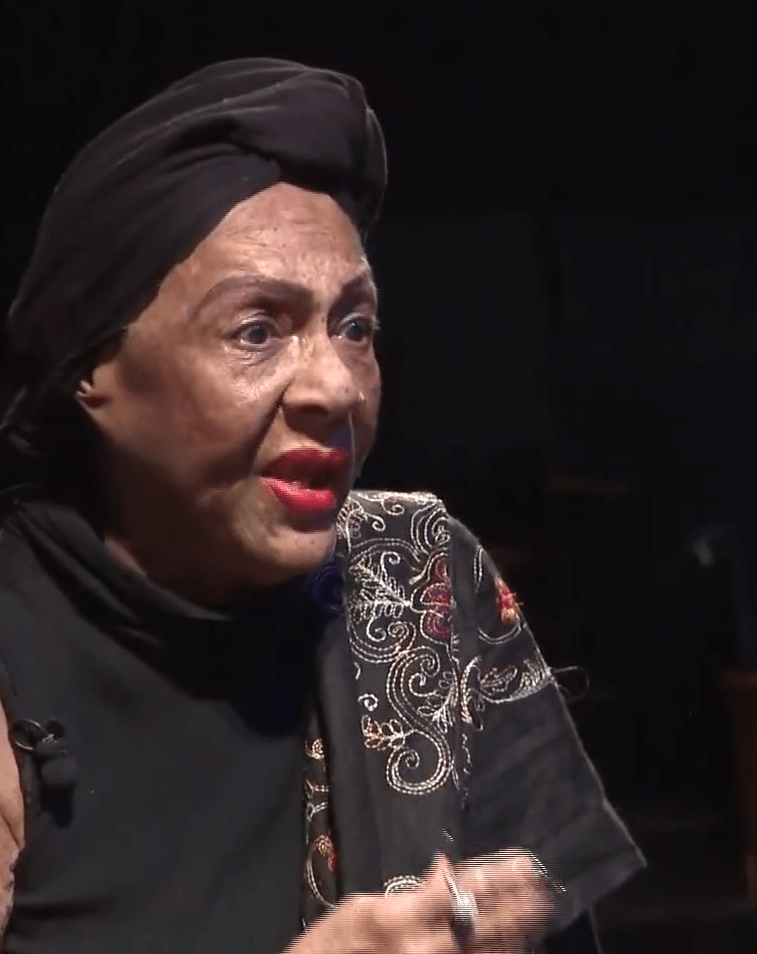
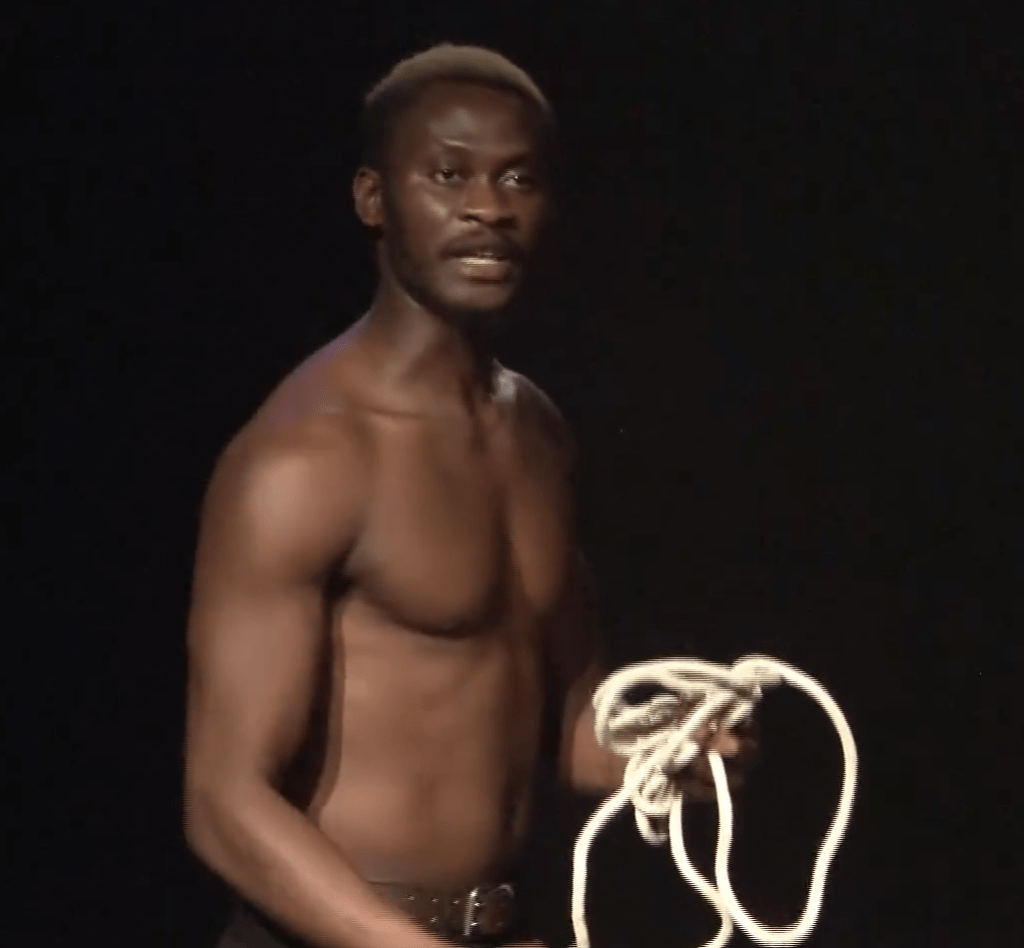


‘Resurrection’, by Ms. Anne L. Thompson–Scretching, is one such worthy venture. Too many times, modern, novice playwrights set out to tell a story about a particular element of Americana, through the prism of the African-American Community, or the LBGTQ+ Community, with mixed and often times unsuccessful results. Why? Because it is easy to confuse a play with a history lesson. History lessons are fun; knowledge– in a general way–is always a wonderful thing when imparted. But, a history lesson is not a play. The trick is to disguise the history lesson, while attempting to depict a play…a play, which has its own by-laws that governs it, impervious to other art forms.
‘Resurrection’ is a fantastic play, while being well acted and stylishly directed. You will learn much–as you would at any college lecture hall about any subject–but at play’s end you will feel that you went somewhere. That you’ve been somewhere. At the end of the day, that is the point of mounting a play in the first place.
Marcello at the Movies: PREET
Siddharth Sethi Weds Preet Kaur – Reviewed by Marcello Rollando
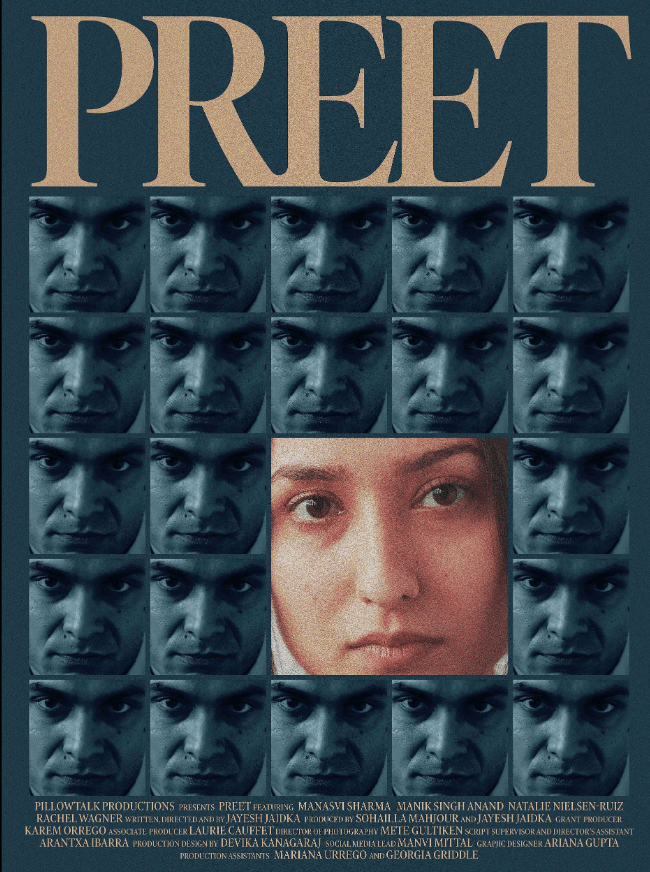
Freedom and Peace Come to Those Who Listen
In less than three minutes, this Pillow Talk Productions, Siddharth Sethi Weds Preet Kaur with subtitles even when speaking English, exposes revealing exposition with recent bride voiceover accompanied by silent mood transition close ups – and darkness immaculately skewed to keep us craving to see the light, of what’s lit, and why.
This is no American fast paced action flick with sex and gunplay guaranteed every third scene between car chases, murder, and mayhem – but it is wisely set in NYC where one can selectively admire Manhattan from across the East River in Brooklyn.
Yet clearly director Jayesh Jaidka and DP Mete Gaultiken keep us in the dark so we can, with our mind’s eye perhaps – see that something has been snuffed out by dehumanization twisting exhilaration into fragmentation.
Preet Kaur (Manasvi Sharma) is a bride from India now in New York seeking the friendship from perhaps her only friend now, Jugal (Manik Singh Anand), who can’t imagine Preet’s perception of Manhattan as a place of restorative peace.
The edit talent of director Jayesh Jaidka gracefully reminds us that film is at its best when, moving pictures – if only we listen with more than our ears.
After an opening tease of what’s not to come: airport visuals where people are but silhouettes, before we are completely immersed in the darkness that, which by its very nature, brightens the light we have in common with this earthbound pupa, – puncturing externals, without touch, for a way to finish life’s sentence:
Now I am…
JMGC and IFT Network form partnership.

It was only a matter of time. Jay Michaels Global Communication, a worldwide service creating visibility for all forms of independent artists has formed a partnership with IFT Network, Inc. an integrated community of programs and professionals whose purpose is the development, marketing, and distribution of independent film and the creation of opportunities for independent theater, and live events.

executive director. JMGC
Jay Michaels Communications and its media partners have been creating visibility for independent theater, film, music, and literature for more than two decades. Through a diverse internal multi-media platform and diverse group of media partners including Stage Whisper Podcast, ReviewFix.com, Music Makers New York., YouTube Channel I, Five Star Arts Journals, Next Stage Press, and now IFT Network, this communications organization is able to supply guaranteed coverage to hundreds of emerging artists and their productions while growing its external network of promotional sites and groups.
CEO, IFT Network
IFT Network offers powerful and unique services to its membership: The IFT Network Writing Room – a FREE, SAFE, virtual development space for writers to hear their scripts read; the IFT Network Agency – their marketing arm works to enhance the brand and image of independent filmmakers, theater producers, and their projects; and its flagship program: the IFT Network itself – Available now on the App and Play Stores, IFT Network streams dozens of Award Winning Independent Films, Theater & Musicals, Original Series & Shows, as well as live tapings of compelling theatrical projects.
Currently the new collaboration is in development to create a new paradigm for theatre and film festivals.
Jen Bush sheds light on Denise Flemming’s darkness.
Denise B. Flemming Interview
WINTERKILL is an engrossing one-woman mystery written and performed by Denise B. Flemming. It tells the tale of the dubious past of a successful professor.
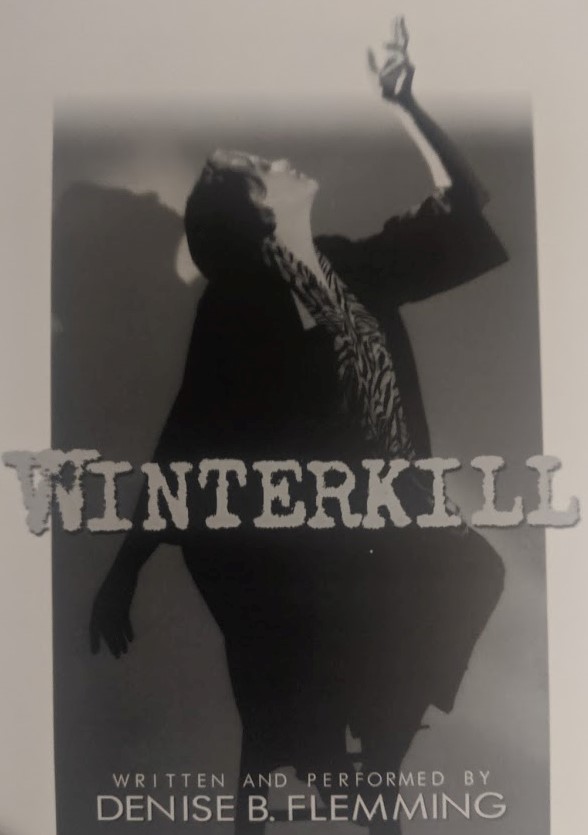
Denise B. Flemming is a Chicago native. She began her artistic career at Hull House Theater. After completing her B.A she attended the University of Iowa where she studied stage lighting. Her passion was play writing and acting but she wanted to be VERY aware of the technical aspects around her. After completing her studies, she attended the University of Southern California for an MFA in acting. She is a member of the League of Professional Theater of Women, N.A.C.A and P.O.W.E.R.
Every artist has a mission for their artistic endeavors. Ms. Flemming’s mission is reflective. “My mission as an artist is to reflect humanity. I am a mirror. I want to show you where we are, so that the audience can arrive at their own truth.”
It was Ms. Flemming’s interest in crime and criminal justice that sparked the writing of this play. “The inspiration of WINTERKILL came from my interest in the MANSON murders, The Belly of the Beast, and several newspaper articles.”
Ms. Flemming tackles difficult and uncomfortable topics in her writing. Addressing these issues through art can sometimes be thought provoking and can lead to enacting positive change. “I write about topics that BOTHER me. And my other scripts such as ECLIPSE is about discrimination and racism, and HEADLINE focuses on senior abuse and loneliness.”
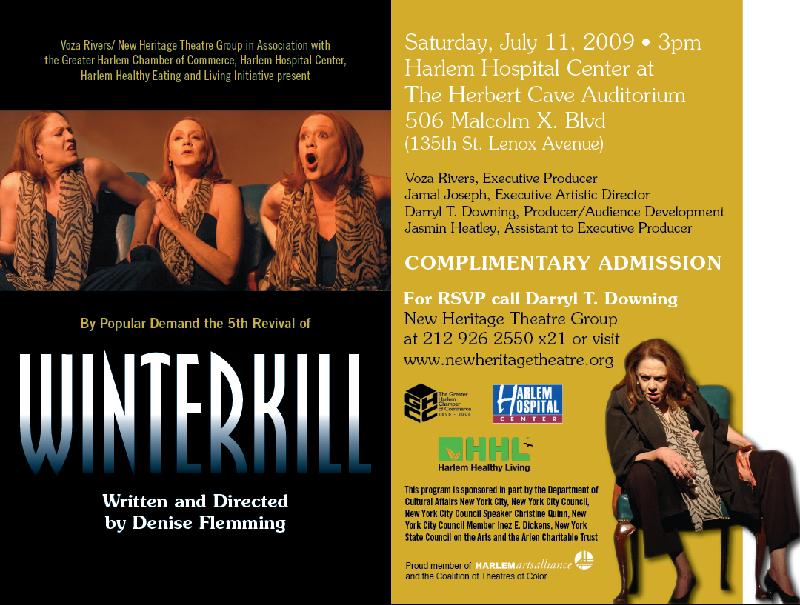
Ms. Flemming relates to and internalizes the characters that she creates. “I learn about myself by creating and writing my characters. I feel their pain, their addictions, how society views them. Also, I alone have to feed, protect and provide for myself as these characters.”
Ms. Flemming would like to raise awareness of the topic that is presented in WINTERKILL. “My hope for WINTERKILL is that audiences realize this topic remains in our newspapers, television and society. It cannot be overlooked or forgotten. It continues to happen. Therefore, it BOTHERS me. I must continuously remind/reflect this topic.”
Liann Herder and Twenty Minutes of Turning Points, courtesy of Anna Capunay
Anna Capunay’s Your Silent Face confronts generational tension, alcoholism, mental instability and queer expression, all in just 19 minutes. Aurelia, played by Greta Quispe, is struggling to support and protect her daughter Guada, played by Marie Capunay, whose nonbinary identity and queer relationships are confusing and distressing to her. Guada’s lesbian friend Piura, played by Yessenia Rivas, is staying with Guada in their home, which causes further tension that Aurelia copes with through drinking.
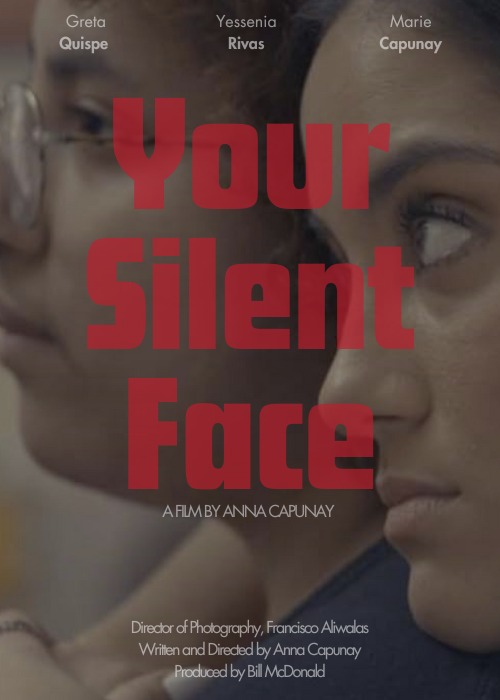
Your Silent Face doesn’t pull any punches. Aurelia is a mean drunk, name-calling and tossing out judgments against Piura and Guada’s “lifestyle” and choices. It’s revealed that the struggle for support and independence comes on the heels of a psychotic break for Guada, who was tackled by police in the family kitchen after their frightened mother called 911. The trust between the two after that moment seems irreparably broken. Aurelia is convinced that Guada will have another episode. She also seems terrified that Guada is now reliant on medication—pills she fears Guada won’t take.
Piura’s presence is an additional strain on the family—yet as a third party she offers Guada an intriguing perspective. She is able to handle Aurelia’s drunken cruelty with ease—she even encourages Guada to see the bright side—that their mother cares about them, even if Aurelia is unsure and still learning how to be supportive. In the end, Piura sneaks her friend out to a concert in Brooklyn, where the two Latines share a kiss in defiance of the heteronormative and cultural demands around them.
At its finest moments, Your Silent Face encourages family to have patience for each other in their darkest moments, particularly in the face of generational expectations. The film’s presentation of these huge arguments can be a bit clumsy—it glosses over Mom’s drinking problems and abusive language. But Rivas’s and Quispe’s performances in particular resonate despite occasionally clunky dialogue.
Yet the story of queerness surviving in hostile homes is deeply important and resonates with today’s reality. It encourages both children and parents to find love and understanding for each other, and reminds queer youth that they can still find, experience, and pursue joy while they and their families learn to understand their identities.
Liann Herder scratched the surface of One-in-a-Million
The One in a Million Documentary will certainly mean more to those lucky few who were able to see the musical during its limited run during fall 2022. But giving more people a chance to see the show is exactly what director and producer Kevin Davis is hoping to influence through his documentary by connecting his musical with potential investors.
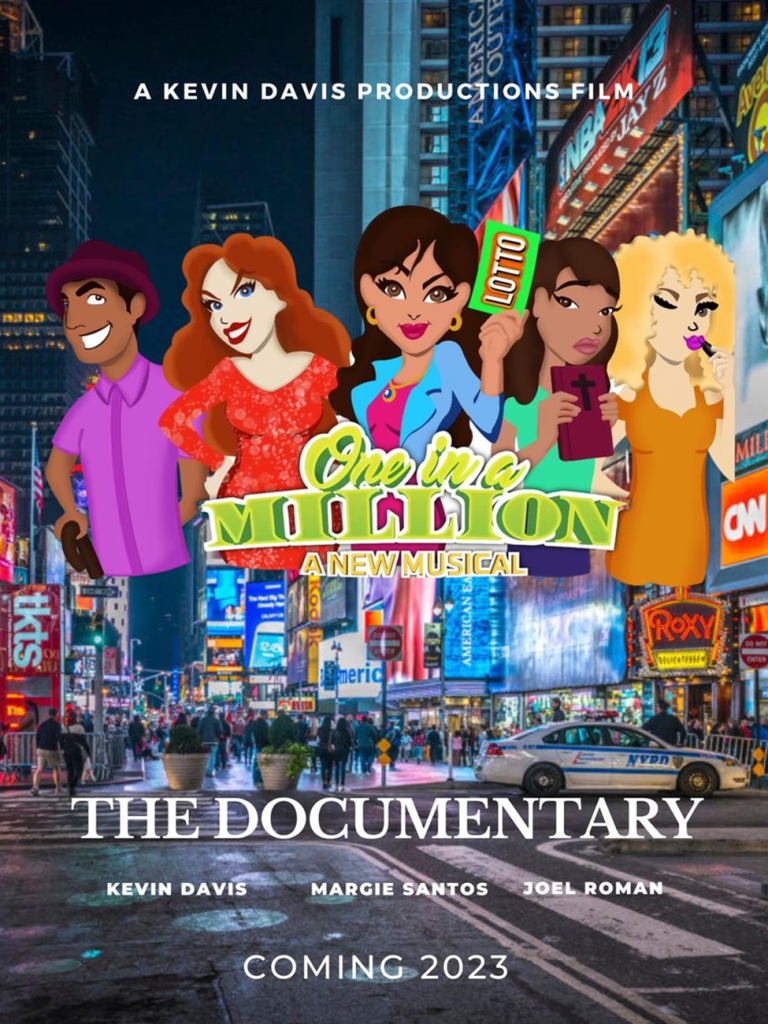
The sky is the limit for Davis and his team of co-producers, Joel “El Niño” Roman and Margie Santos. They explain through interviews their dream to take One in a Million to Broadway in an extended run, create a soundtrack and maybe even a TV series starring the characters created in the show.
Little teases of the musical are sprinkled throughout the documentary—photographs and a few clips, even the introduction to one of the audience’s favorite numbers, written by Davis. The story begins when a group of friends use all their money to buy lottery tickets—and then end up winning. The ensuing plot reveals how those winnings tear their friendship apart, but one stranger is able to show them how to live together in unity doing all things through Christ.
The fact that this show is evangelical in nature is something the producers hope will connect with future stakeholders. The play’s message, Davis says, is not just for Christians but for all viewers, to show how coming together despite and even because of differences is necessary for the betterment of the nation.
While non-Christian viewers of the show may be a little put off by these Christian ideals, the producers’ full-throated support of their greater vision takes this documentary beyond religion. While the film itself could perhaps be organized better—full discussion of what One in a Million is actually about does not happen until after the first 20 minutes—viewers will certainly be left wanting a chance to experience the Davis, Roman and Santos production, an opportunity this film hopes to help create.
Two Broadway Legends compare … BOOKS
Amanda Reckonwith: In Residential Care
Theatre Review of Broadway icon, David Sabella as Amanda Reckownwith by one of Broadway’s chiefest chroniclers, the great Robert Viagas
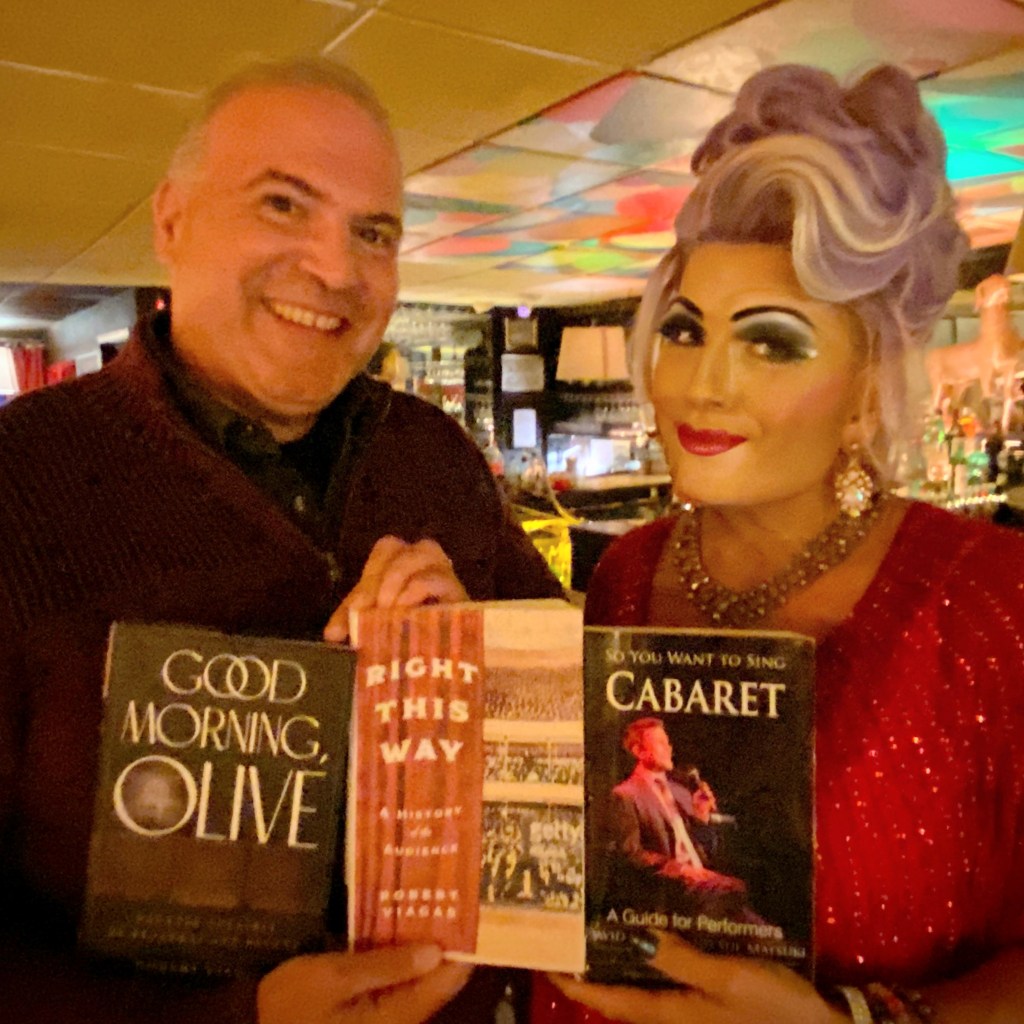
These two Great Bright Way alumni had a wonderful time at Amanda’s latest showing and took time to hold court in the restuarant sharing quotes from their books.
As the Wicked Witch of the West famously lamented, “What a world, what a world.”
We now have haters from Tennessee and other red states to thank for attempting to twist the naughty, witty, fun tradition of drag performance into what they perceive as a sinister political act. Indeed, a crime.
Luckily, New York once again can embrace well-named Amanda Reckonwith, back from a 25-year hiatus/rest cure, to sing us golden showtunes and opera, and to entertain us with wicked double-entendre patter during her monthly apparitions spéciales on the stage of Pangea nightclub in the West Village (and elsewhere), collectively titled In Residential Care.
Amanda Reckonwith is the alter-ego of Broadway actor David Sabella, who originated the role of sob-sister Mary Sunshine in the current epically long-running revival of Chicago.
Among the more delicious moments in the new show: A murderously funny “To Keep My Love Alive” by Rodgers and Hart. Singing both Maria and Anita’s parts in the duet “A Boy Like That/I Have a Love” from West Side Story. And a salute to gone-too-young chanteuse Nancy LaMott with “How Deep Is the Ocean.” Amanda also tipped her wig to one of the earliest and greatest of American female impersonators, Julian Eltinge, finding new life in the ballad “Those Come-Hither eyes,” custom written for Eltinge by Jerome Kern in 1914.
In between gulped martinis, Amanda makes fun of her age, which somehow has grown during her long sabbatical. Some of her jokes have mellowed with the years, like a lovingly refrigerated Dubonnet. Once classed as a Spinto Soprano, she now admits to being a “Spento” Soprano. “I found my top wasn’t what it used to be.” (Pause) “I’m sure you can all relate to that.”
But some of the gags are now almost old enough to vote, including one about Vice President Dick Cheney’s 2006 hunting accident. Time to vote that one out of office.
Given that this was Amanda’s Pride Month performance, a little more current political bite might have been expected. But that kind of confrontation is not Amanda’s style. Standing up proudly as a drag artist is commentary enough, reflected in her opening medley of “Born This Way” and “I Enjoy Being a Girl.”
Amanda Reckonwith: In Residential Care is written, directed and performed by Sabella and special guests, with musical direction by Mark Hartman.
All books by Robert Viagas and David Sabella can be found on Amazon.com
Theatre Artist, Anna Capunay, makes the jump to film with “Your Silent Face”
Writer/Director Anna Capunay makes the jump from theatre artist to film director with Your Silent Face, a deeply moving piece involving two Latines risking all to go on an “adventure,” as her cinematic director’s bow.
Your Silent Face premieres at the Festival of Cinema NYC in Forest Hills, Queens at the Regal UA Midway, 108-22 Queens Blvd, Queens, NY. The festival runs August 4 – 13. Visit https://www.festivalofcinemanyc.com/ for details.
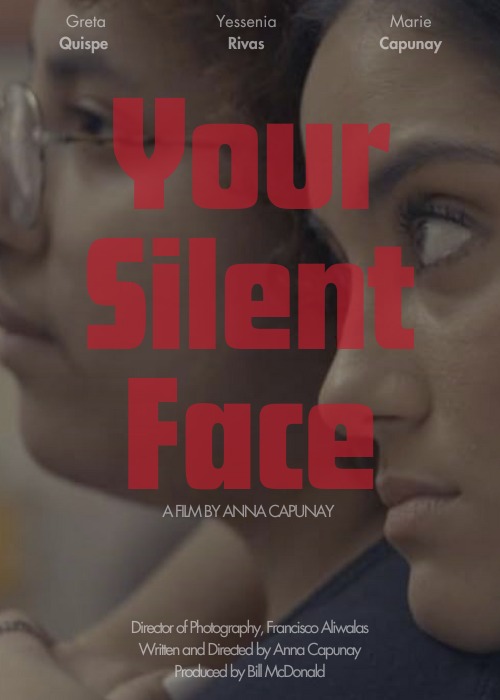
Secrets and stories unfold in this engrossing journey of two romantically-linked Latines who decide to risk all to see their favorite post-punk band, Bootblacks. The “risk all” part includes Guada, who is risking not only being grounded if caught but may find themself back at the psych ward if they don’t comply with their mother’s terms.
Anna is proud to include a Latine female-identified-led cast in this short film dealing with mental illness and LGBTQ themes.
Writer/Director Anna Capunay received a grant in 2021 from the Queens Council on the Arts to help fund this project. Greta Quispe and Yessenia Rivas had previously collaborated with Capunay in her play, La Gota Fria in 2017. That play was also awarded a grant from the Queens Council on the Arts and performed at the Thalia Spanish Theatre in Sunnyside, Queens. Yessenia Rivas can also be found Off-Broadway this August in Capunay’s play, Cowl Girl, at the famed Greenwich Village venue, The Players Theatre. Additionally, Marie Capunay – the filmmaker’s niece – is making her own film debut.
Wendy Stuart just met a girl named MARIA
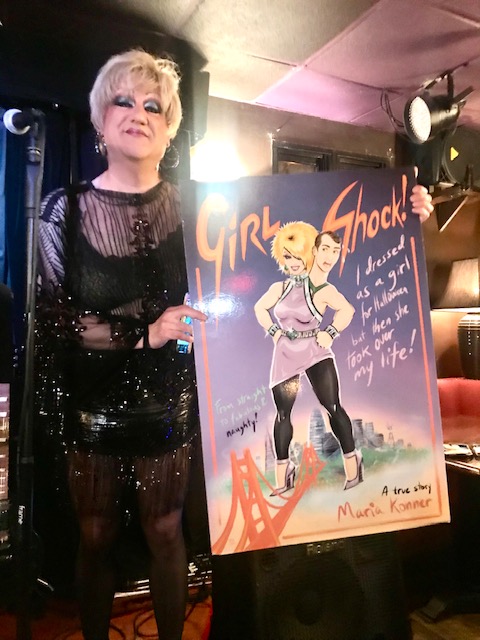
“Girl Shock:I Dressed As A Girl For Halloween And She Took Over My Life”
By the book of the same name, “Girl Shock” The Musical, debuted right before Pride, for two days to packed audiences at Pangea. The timing couldn’t have been better. Because you see this is Maria Konner’s story…a brilliant entertainer, composer, pianist, guitarist, singer, explosively passionate and raw, and yet somewhat shy, and now somewhere along on her transgender journey, with her male alter ego “Dude” brilliantly played by the mega talented Jackson Sturkey, who is the other creative collaborator on this show.



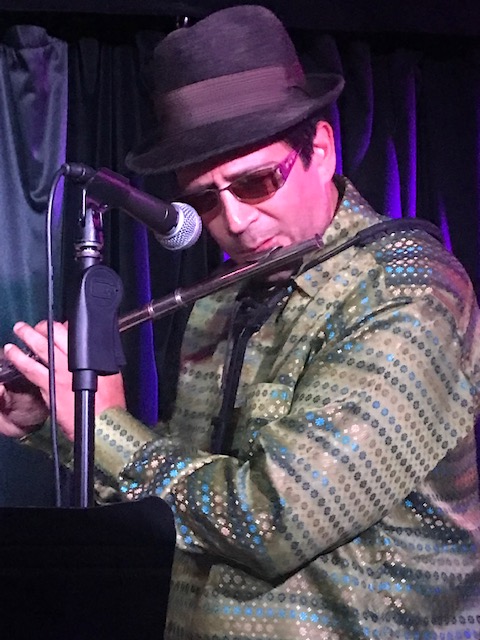

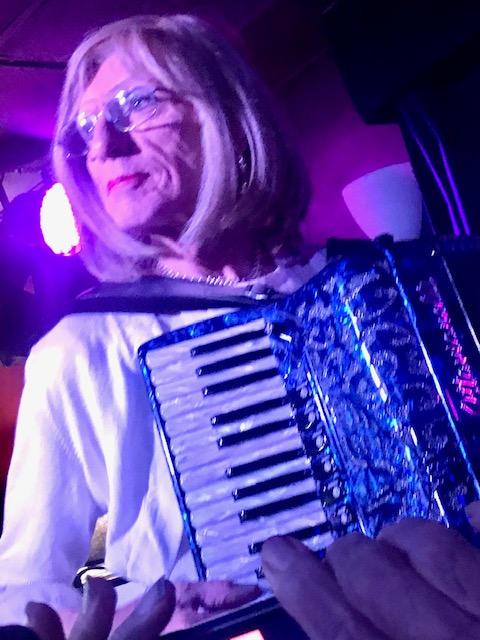
The musical, which is a work in progress is much like Maria. The complexity of the music she writes, along with lyrics by Jackson Sturkey, created a piece so layered in words, and melody, that it had me wishing for a sing a long sheet so I could read those words again when I got home and examine their meaning. Because you see, Maria takes us from her marriage, the annoyance, nag of a wife, symbolically represented by a muppet (controlled by the hilarious characterization created by actress Jessie Bangarang Atkinson) a marriage plagued with heteronormative expectations, and disgust at the monoculture virus that Maria was expected to live up to, and ultimately moving from a straight life in the suburbs all the way to San Francisco two blocks away from a Trans Bar (the Universe at play here) after leaving this suffocating marriage. And along the way Maria finds a cure for the monoculture virus:Kink….and so begins Maria’s quest for her own truth from the Orgy Dome at Burning Man where she was “outslutted” and the realization that “no man can change the world, what about a woman”. The discovery of the joy and power of being a girl. But what about that male alter ego “Dude” played by Jackson Sturkey, always there as a reminder of the guilt, of knowing who you once were, but no knowledge of what’s next, but a burning passion to find out! What will life be like when the outside matches the inside and will a boob job be the answer? And there’s the complexity again….
“Girl Shock” defines the personal journey of transition. Of the yin and the yang, of the whole choice or the parts of a choice. And which side in this gender contest will win or will aspects of who you once were exist with who you are now?
And the music! Shout outs here to Omar Kabir, on sax trumpet and flute, turning those instruments into an organic living backround to the stories that were shared on stage, along with Bernice Bellows on accordion, punctuating moments in the story, with Rachael Kaufman on piano while Maria played guitar.
Thank you Maria Konnor for your brilliance and honesty. Your show is a piece that clearly defines how personal a journey transitioning is. Through the music and musicians, the characters you developed and the actors who played them, your audience took that journey with you. And we can’t wait to see what happens next. All aboard….
Latest Posts
-

A Star Who Burned Brief and Bright: Jim reviews the life of Raúl Juliá
Robert Liebowitz Celebrates the Great Raúl Juliá in the Old Skool Playwrights’ Festival The Julia Variations is a long-overdue celebration of an iconic actor who…
-

THIS IS HOW WE RISE: Inside the Launch of TEDxAstorPlace at NYU Kimmel Center
On Friday, November 6, 2026, the historic crossroads of downtown Manhattan becomes the launchpad for a major new forum of ideas, civic momentum, and cultural…
-

Mic’d from the Heart: Jim at the Chain with Adam Bradley
Adam Bradley’s Emotional Is This Thing On? Lights up the Chain The Philadelphia Fringe Festival treated audiences to Adam Bradley’s dynamic, raw one-person show in…
-

“Is It Better to Rule in Hell?” Jim finds out at the ATA with Anne L. Thompson-Scretching’s “The Fall From Grace”
Anne L. Thompson-Scretching’s The Fall from Grace Explores Paradise—and Innocence—Lost “I am coming, mortal… enjoy this strange light that illuminates your world. It cannot protect…

