
“I Haunt You” is scary good! Emily Ulibarri interview Part II
The inspiration for I Haunt You came from multiple places. “I Haunt You was a long time coming kind of project. I was studying at Naropa University in Boulder, CO, and I saw a one-man show performed by one of my dance teachers. I was mesmerized. There was script and movement, props and strange set pieces, audience interaction, comedy, tears, big fucking life questions presented. He killed it. I drove home that night with a new goal – to produce a full-length stage show for just Raymond and I. We were typically producing shows with 20+ cast members at the time. This was a challenge I desperately wanted to take on. So I got a new notebook and wrote “Duet” on the cover. For about ten years, we would occasionally deep dive into concepts and daydream about the project. What is it? What could it be? But we’d always put it aside to focus on more immediate revenue generating projects.”
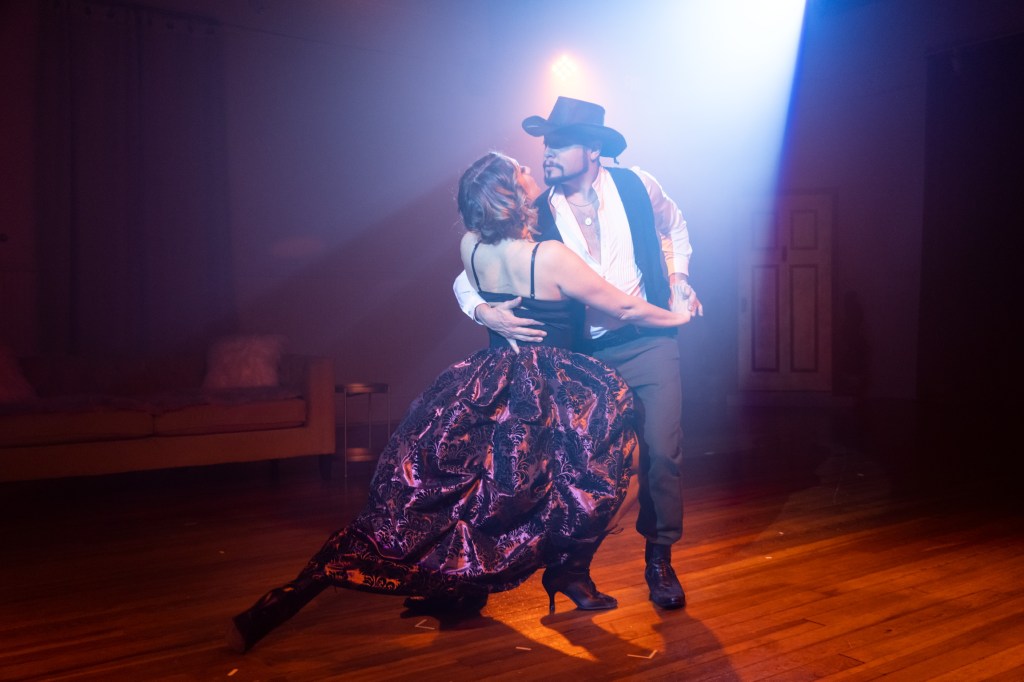
“Then I woke up one morning, kind of like you wake up from a nightmare, with a gasp. It was January of 2020, I was five months pregnant with my second child, and I bought airfare to New York that morning. Something told me, we have to go now. We were there for Valentine’s weekend; we had lessons with one of our Argentine Tango coaches, we took in fabulous off-Broadway shows (ones that had resonance with our creative style). We were examining: how does our work fit into this landscape? Is it good enough? We were getting inspired, and choosing which project to focus on next: Experience ANNA 3 – yes a third production in our own story world, or Duet, whatever that old thing was going to be. I felt in my heart that it was time to focus on us. It was time to elevate our work and give this project the time it deserved. I wrote the first scene of Duet (working title) from our Jersey City Airbnb while I laid in bed one morning. And that was that. Duet was later named I Haunt You, a play on the expression “I heart you,” and we finally knew what it was going to be. Then we returned home, and the world closed due to COVID. What a brilliant nudge from the universe to insist that we go to New York when we did. And to choose Duet. What the hell else could we have even worked on?!”
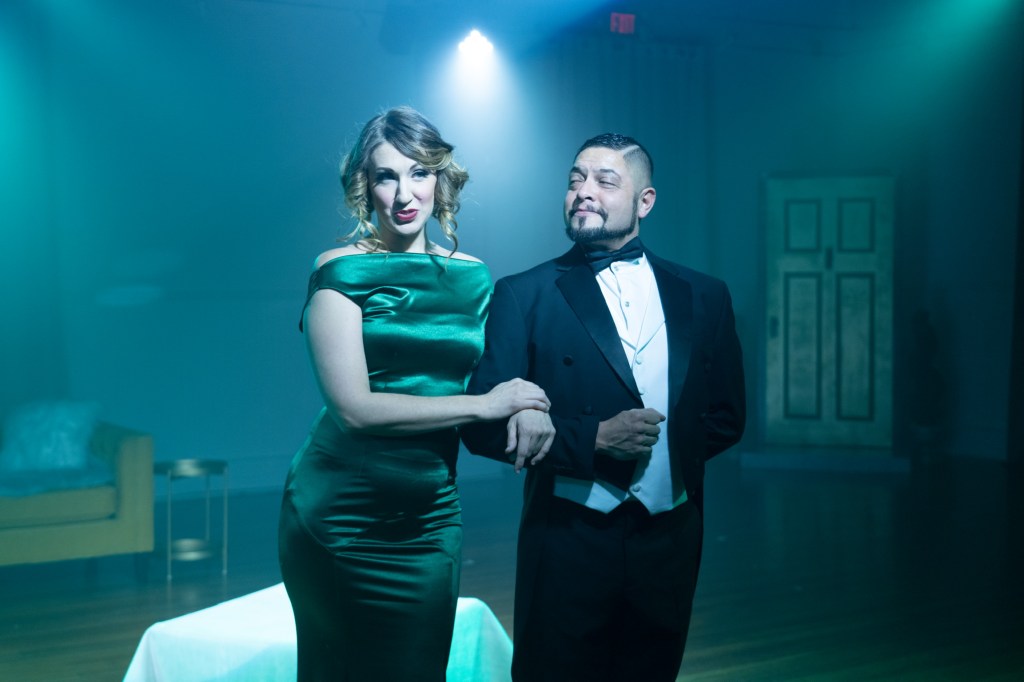
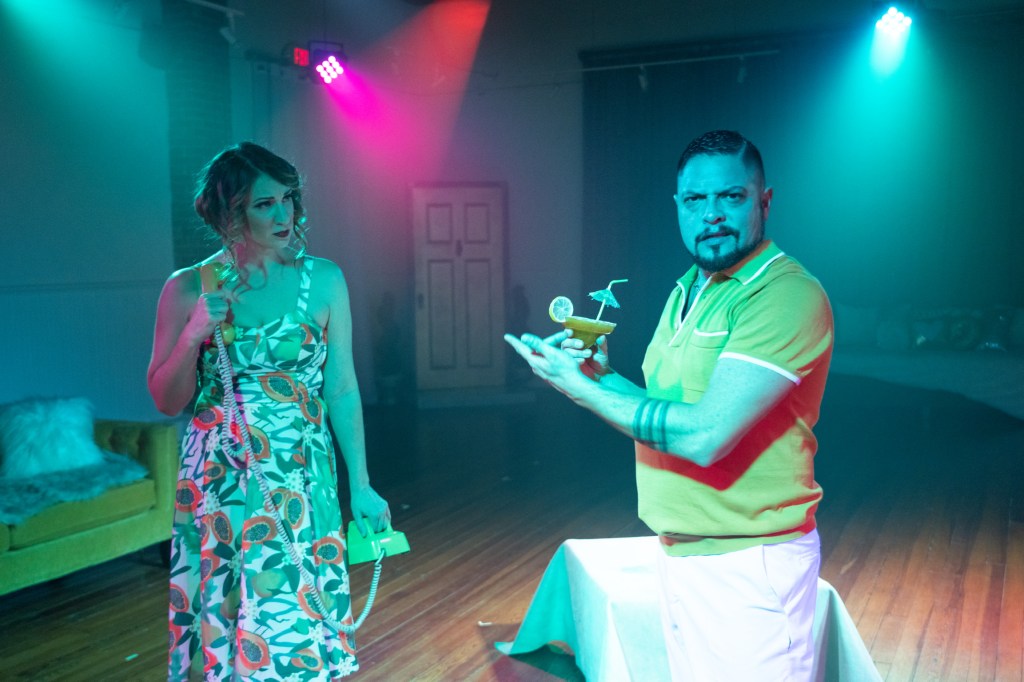
“We opened I Haunt You in the fall of 2021 in our ballroom in Eureka Springs, AR. We designed it to ‘travel-light’ with almost no set, only essential props, but a plethora of fabulous costumes! The creative choices we made to keep the show minimalist ended up working beautifully. It creates this unparalleled invitation for the audience to use their imaginations. It was a production risk, a different way of bringing a show to life. But it worked. Our audiences seriously resonated with it. And we’ve since produced another show in similar fashion, Silence in the Jungle – a show we wrote specifically to accommodate my third pregnancy! That show, also incredibly well received, I now perform with a fake belly. My heart would love to open I Haunt You at the McKittrick Hotel, where Raymond and I felt so inspired and connected back on that NY trip in 2020. It would be a poetic full circle experience for us as creators. Although we’re not opposed to other fabulous spaces.”
Considering that this couple connected through dance, dance is a very important element in their productions. They teach dance at Melonlight studios and on Zoom. They believe in the power of dance and feel confident that people who see their productions will connect with dancing in some way. “Raymond and I have this silly catch phrase that we’ve repeated thousands of times throughout our careers, it’s actually a line from one of our scripts, and it goes like this: “you don’t even have to like dancing, you’ll love it!” And it’s so true. A lot of people, if you ask them if they like dancing (even just to watch it) they’ll often give a very ho-hum answer. But if you look to your right and there’s no one dancing, and you look to your left and there’s someone dancing, I promise, you’re going to keep looking left. Even people who “don’t like dance” like to watch dancing. It’s human, it’s ancient, it’s ingrained in us by now.”

“I think our audiences receive our dancing so well because we use dance contextually. If there’s a dance number, it’s because it makes sense for our characters to be dancing right now. There’s always a love story; and if there’s a love story, then there’s a reason to dance. My husband and I have specialized in partnership dance styles for the last twenty years, so we have a bulky repertoire and a real life chemistry that is obvious on stage. We dance so close to our audience members that we can literally see the wave of emotion wash over them – whether it’s awe, desire, appreciation, or even feeling a little hot and bothered – the effect is palpable. It’s quality dancing, and often you don’t get that in a theatrical show, unless it’s a musical, which is a whole different animal!”
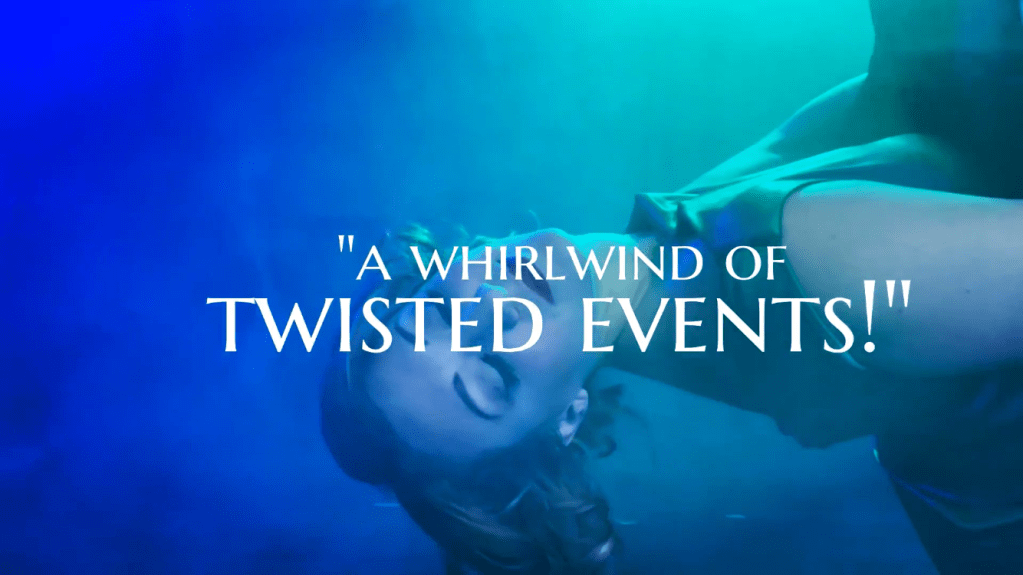
“The second way we position dance into our shows contextually, is through spooky sequences. We often tell ghost stories, and there’s a sort of creative freedom that exists when we’re in unknown realms – like sleep, supernatural occurrences, or other dimensions. None of us are sure what those spaces hold, so everything is fair game, and thus we lace dance and unique movement into those spaces to create a haunting effect.”
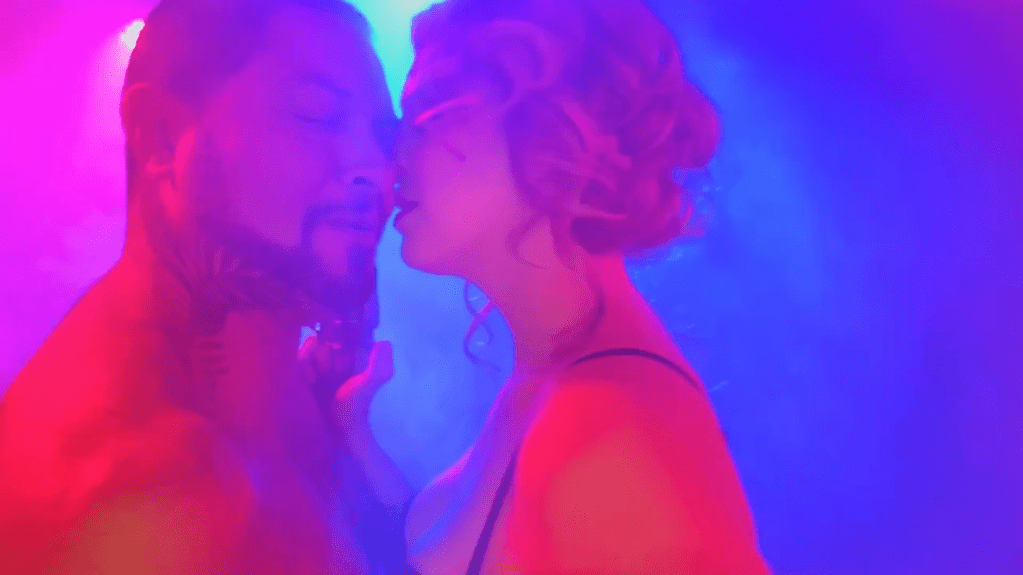
Obstacles certainly get in the way of artistic energy when trying to put together a production. Emily discusses some of these obstacles. “Kind of everything is an obstacle when you’re producing with a small team on your own budget (except for writing scripts, I could do that all day every day!) But we address what some would consider “limitations” by repositioning them as “creative challenges.”
“For instance, we created I Haunt You with virtually no set. We did this on purpose so that we would be able to take this show on the road without a bus. It would’ve been easy to say “how in the hell are we going to let the audience know where we are without all these set pieces?” But instead, this very logistical limitation led to a very creative and successful artistic approach, in which the audience is given soundscapes, costuming, familiar lighting, and skillful acting to “display” the location. What happened (which is what we were hoping for) is that our audiences’ imaginations would be effortlessly ignited, and thus, the world (set) they imagined was so much more grand than any set we could’ve ever delivered. Also that “set” became unique to each audience member. Our minds know how to do this, we do it everytime we read a book. Now we often get the review that our guests “loved the set!” I laugh everytime. I’m so proud of their imaginations (and our ability to ignite them!) “
“Creative endeavors can always be tackled (fun!), but I think the biggest challenge we face is our location. I just don’t think that there are enough people with a heart for theater coming through our sweet little town. It is a tourist town, but I’m sure you’re not surprised that Arkansas is not known for theater. The guests that find us are definitely the right ones, those who totally resonate with our work. I know there’s more out there. Let us find you dear audience members.”
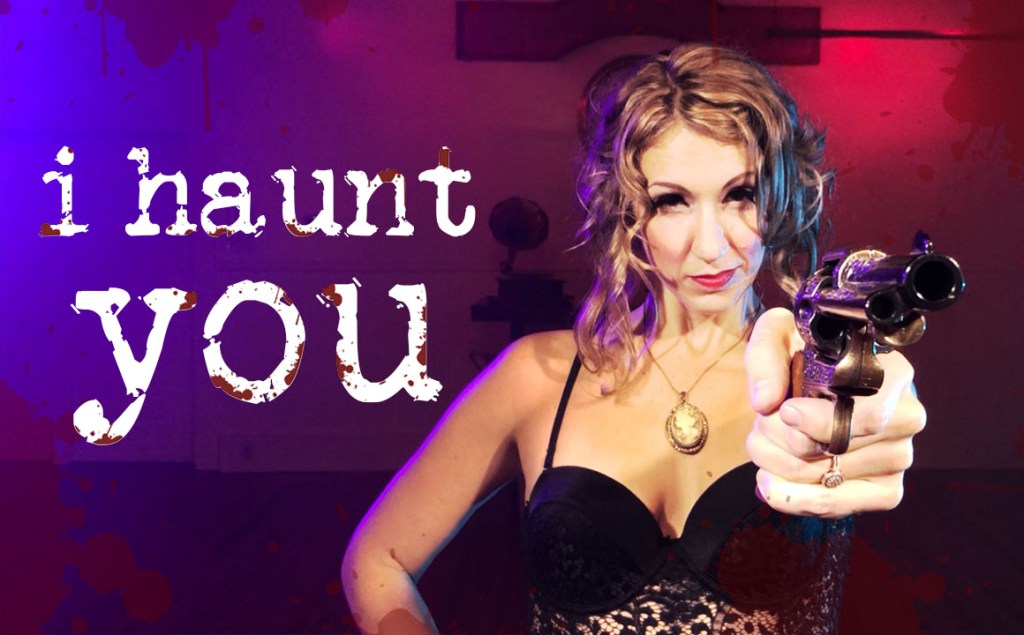
“So the next challenge becomes how to take this little show to some big places. We’ll have to bring our brigade along as well (i.e. our three little boys and at least one nanny – oh my!)”
Emily recognizes that gothic romance is an enduring popular genre. “Oh, I’ve asked myself this so many times, pondering why these are the stories I want to write. What is this dark nature within me? I’m not a particularly dark person, and like everyone, I don’t want to live out the tragedies that I write.”
“To me, gothic romance hones in on the two most universal base emotions – love and fear. And they’re not just the undertones of the story (as those emotions are present in every story), but they are the story. I believe those emotions are two sides of the same coin. When I feel how much I love my husband and my boys, I’m simultaneously filled with fear, the fear of somehow losing it all. And when I think about how much I miss my dad, I can’ help but ponder what exists in the next dimension. None of us get to escape these questions and emotions, and gothic romance shines a spotlight on them. So if you’re inclined to go deep into your emotions – into your desire for love, your greatest fears, your philosophical wonderings about the unknown – gothic romance invites you to do exactly that, and often in a very poetic and visceral way.”
“Also, “people love to be scared.” Walt Disney, the man who created the happiest place on earth said that, and of course he’s right. We love to touch fear, and it’s especially fun when we know we’re still safe.”
The goal is to bring I Haunt You to New York City where I’m sure it will be received well and have a successful run. “Well, New York is the intention. One of my yoga teachers always says “do the thing you need to do to do the thing you need to do.” It’s the stupidest and simultaneously most brilliant (and always relevant) advice I’ve ever received. So if you want to take your show to New York, then don’t go to Cincinnati (thanks Jay.) Really, we hope to bring I Haunt You to New York for a successful run. We daydream about what doors may open following that. I think that our show Silence in the Jungle would be beautifully received in the Big Apple as well. And then…”
The devil is in the details for Emily’s next production. “I can’t not write. So, I’m currently working on a new script. It’s not a ghost story (as my last four scripts have been) so this is fresh! But it is the devil’s story. Think less Exorcist and much more avant garde burlesque with a killer philosophical message about the devil that exists within each of us. It promises to be incredibly sexy and laugh out loud funny, but this time around, scary will just be a side note. Dance may find a slightly more prominent role in this production. I play my burlesque persona, Miss M who is a ridiculously eccentric matriarch of her own burlesque company. But everything goes haywire when “The Devil” (played by my husband) joins her cast. More to come!”
Kevin Davis IS One in a Million — Part I
Kevin Davis Interview by Jen Bush
Every day people pray to win the lottery. Coming this fall to New York City is One In A Million: A New Musical! Kevin Davis Productions presents a musical comedy about church goers who pool their money to try to win the Lotto jackpot.
BENEFIT AND DOCUMENTARY film about the making of this show premieres on June 23rd at
EL Barrio Arts Space, 215 E 99th St, New York City, on June 23rd at 7pm. SAVE THE DATE!
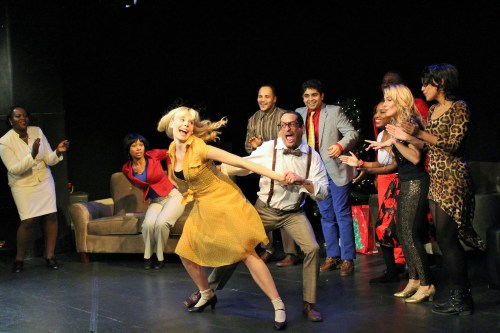
Sisters Wanda and Zuzy invite several members of their church to their annual Christmas party including Wanda’s nemesis Priscilla. Things get out of control and the group pin their hopes to a lottery ticket.
Kevin Davis, who wrote the book and the score was gracious enough to give us some time to discuss this musical and his craft.
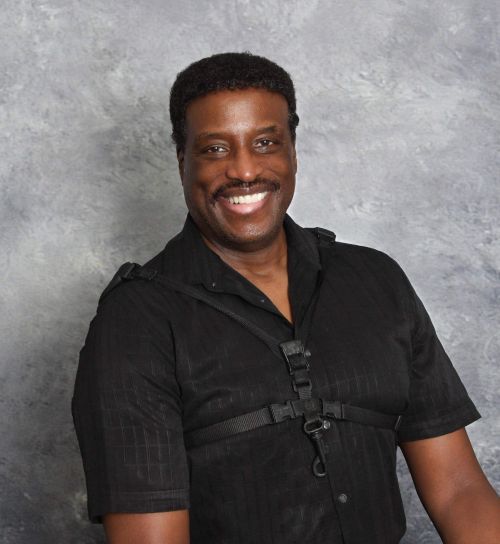
How do you get to Carnegie Hall? Be a gifted 13-year-old artist! Mr. Davis entered the arts as a teenager and never looked back. Since then, this multi-hyphenate talented individual is working his craft in some wonderful projects and on multiple continents. He is just as skilled on the business side as well as the entertainment side of the industry having had experience in the corporate world. That was excellent training for opening up his very own production company. Early showcases of One In A Million Musical have been well received. It doesn’t get much better than getting an endorsement from Ken Davenport.
“I am a musician, composer, playwright and director. I love creating stories that both entertain and encourage. My shows are truly diverse in character and content.”
“My artistic journey began at the age of 13, when I was chosen to participate in a theater arts program for gifted children at Carnegie Hall. In 2009, I formed Kevin Davis Productions, LLC in order to produce theater, films and TV shows that will inspire and impact the culture, as well as, illuminate the richness of those too often left behind.”
“My show, One In A Million Musical (OIAM), for which I wrote the book and music, was showcased November 2017 to acclaim from critics and theater patrons. I just completed another showcase run of OIAM in September of 2022 and was again lauded by patrons and the professional Broadway community. Two time Tony Award winner Ken Davenport said “It was a thrill to finally see his terrific show One In A Million Musical . Congrats to Kevin Davis and his entire company and crew.”
“Other recent projects include directing Dramatists Guild member Amy Drake’s Somewhere I Can Scream, and scoring the dance recital Polar Bear Fantasies that was staged at the Theater for The New City. I composed the score for Greyson Matters, a new musical that was scheduled to open in London at Andrew Lloyd Webber’s The Other Place Theatre in July of 2020. It was placed on hold due to the pandemic. Greyson Matters was Optioned to a Broadway and West End Producer, who produced Death Of A Salesman on Broadway. I also directed the streamed reading of Saints Under Glass: Mystic or Martyr for the League Of Professional Theatre Women.”
As former leader of the Brooklyn Tabernacle Choir horn section, Mr. Davis traveled the country sharing the joy of faith inspired music at many venues including Carnegie Hall. He currently leads the Jazz Catz, an ensemble that plays America’s classical music, Jazz, as well as, Gospel music. They have performed at many venues in and around NYC.
Part II in ArtsWRITES.com
Why Shakespeare Today: the actors from ATA’s Julius Caesar talk about the Bard’s importance in the 21st Century.
Shakespeare Actors Talk Shakespeare by Jen Bush
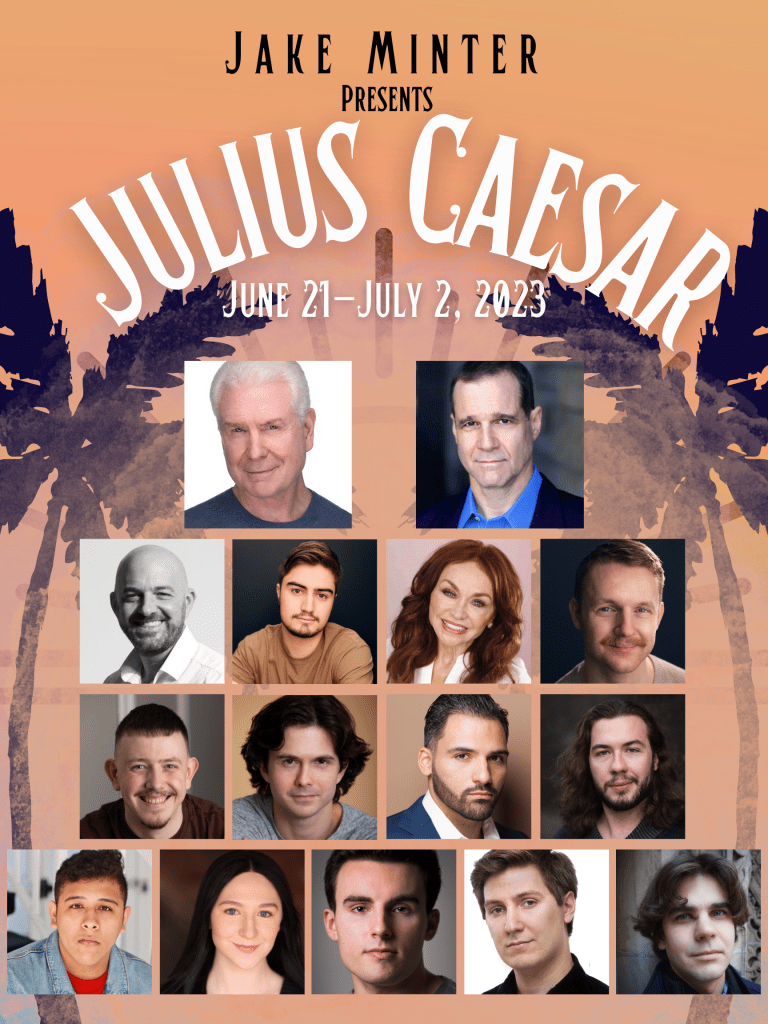
“Friends, Romans, countrymen, lend me your ears.” Jake Minter and The American Theatre of Actors present an uncut version of Shakespeare’s infamous Julius Caesar. This vision is set in the modern world with nods to Fascism and Communism overthrowing Democracy. Four talented members of the cast, Nicolas Capella, James C. Gavin, Sam Hardy and Jonathan Power gave us their insights on why Shakespeare is important in the 21st century.
James C. Gavin
Just about every working actor in New York City has secured at least one credit in the “Law and Order” franchise. After reading James C. Gavin’s bio, it begs the question, could he have a credit in that show? In the criminal justice system, James C. Gavin enjoyed a long career as a criminal investigator, prosecutor and trial lawyer. He taught English to Ugandan orphans, served as a pastoral care worker in Philadelphia and met his wife in jail. Serendipity brought him to acting and he is a graduate of New York’s William Esper Studio. Here is his take on why Shakespeare is important in the 21st century:
“Despite the many technological, scientific, and cultural advances made by mankind over the past 400 years, the basic human emotional drivers that impel each of us through life remain unaltered. Shakespeare’s eternal themes of love, hate, lust, hubris, ambition, greed, and envy continue to resonate with us all. Shakespeare holds up a mirror before us and tasks each of us to see ourselves as we really are: noble but deeply flawed beings, constantly buffeted by strong and often conflicting emotional winds. Shakespeare will remain important and relevant as long as humankind continues to exist.”
Sam Hardy
Sam Hardy’s entry into the arts was acting in school plays in Palmyra, PA. That led to him being active in community theatre at the Hershey Area Playhouse. His participation in oratorical competitions was definitely good training ground for his future as a connoisseur of Shakespeare.
While attending the University of Alabama where he received a B.A. in Theatre, the head of the undergraduate acting program, Professor Seth Panitch recognized that Sam had an aptitude for text analysis and emotional connection to heightened speech. After some tutoring in the Shakespearean arts, he was cast in his first ever Shakespeare role as Iago in Othello. He had the privilege of working with Michael Luwoye who was cast as Othello and who currently has numerous Broadway and television credits to his name.
Sam took the University of Alabama’s department of theatre and dance by storm appearing in numerous productions there. He hit The Bard hard garnering apprenticeships and internships at the Shakespeare Theatre of New Jersey and the Colorado Shakespeare Festival.
New York’s thriving artistic community called to Sam and after Colorado, he moved to Brooklyn to further pursue the arts. After a period of stagnation, Sam came upon an artistic haven known as the American Theatre of Actors. This landmark theatre has a stellar reputation for developing, supporting and promoting new artists and providing them with a creative atmosphere in which to grow and shine.
Sam is not all Shakespeare all the time. Two of his proudest professional credits are Carmen Ghia The ‘Pourducers’, an early production of the now wildly successful Drunk Musicals and Hades in Alcestis Ascending. “Written and directed by Seth Panitch, it was a bilingual production featuring American and Cuban actors, performed in New York and Havana thanks to a collaboration between the University of Alabama and the Cuban Ministry of Culture.”
When not on stage, Sam will provide you with service with a smile in the hospitality industry. His hobbies include Dungeons & Dragons, video gaming and exploring the incredible restaurants and bars that New York City has to offer. Here is what Shakespeare in the 21st century means to Sam:
“Shakespeare is important in this century, as in every century, because he reveals and ennobles the foundations of our shared human experience. Every emotion and scenario that can define a life can be found in Shakespeare’s text, turned into the most true and beautiful poetry there is. As long as humans can love, and fight, and grieve, and laugh, and die, we will have need of Shakespeare’s words.”
Jonathan Power
Jonathan Power will be playing the role of Octavius Caesar. His superpower is being a multi-hyphenate artist. Having grown up in a Christian homeschooled military family, his family supported his artistic endeavors. Every new military station that his family moved to provided an opportunity for Jonathan to cultivate his craft. The Virginia Children’s Chorus, California Ballet School and Arizona String Orchestra were just some of the places that facilitated Jonathan performing around the country before he even finished high school. After studying musical theatre at the University of the Arts in Philadelphia, Jonathan moved to New York City to pursue his dream to be on Broadway. Here is what he had to say about Shakespeare in the 21st Century:
“An elemental form of communication is what makes us human. In Shakespeare we put people on stage and talk in language that is hard to understand and ask the audience to come to us. It seems to go against the grain of our current entertainment industry which serves up explosions and 3D interface on a screen to capture the attention of the viewer. When Shakespeare was writing his work, he probably thought the same as our current industry and tried to capture the modern mind in his explosive and 3D skill as a poet and dramatist. I believe Shakespeare today works because it delights the 21st century mind into thinking that we are still the same humans. If you peer into any Shakespeare play you watch live on stage, you will find delight and raptures of joy not because you know all of the complexity of his literary ability but because Shakespeare serves us love and beauty through the simple truth of the human experience.”
Nicolás Capella
Characters: Marullus/Cicero/Ligarius/Artemidorus/Octavius Servant/Plebians/Lucilius.
The force is strong with this one! Twenty-two years ago, in a country far, far
away… Nicolás Capella was born and raised in Santiago, Chile. He spent most of his
childhood playing around with the force, spaceships, and lightsabers. He then switched
to sports and played competitive soccer and basketball. Although he grew up, he kept
his eyes on the stars and was going to dedicate his life to Astronomy. But his heart
decided to take a leap of faith and he joined The American Academy of Dramatic Arts
where he completed the two-year training and was invited back and joined The
Academy Company. Some of his credits include Dracula in Dracula, Nic Muscolino in
Napoli, Brooklyn, and Alexander Kalabushkin in Dying for it.
Nicolas has immense gratitude toward his teachers, Nurit Monacelli, Michael Toomey,
Janis Powell and Barbara Rubin. They all provided him with invaluable tools that informed how
he uses his craft today. In a short period of time, he did his due diligence to learn, absorb,
integrate information and blossom into a skilled artist. He followed his heart into the arts, but he
will always have stars in his eyes as he reaches for the sky. Here is what he had to say about
Shakespeare in the 21 st century:
“I think Shakespeare’s plays are written from a general perspective and that is
why you’ll never see a production of a play being the same as another production of the
same play. It’s general content, but it can be the most specific in terms of how the
ensemble works the piece. The verse is the language of the heart, which for me it
means that it touches a very visceral part of our body, and the words are a full
embodiment. In today’s world where a lot is on the TV and the emotions are shown in a
square of energy, I think Shakespeare shows us a full power of our energy and emotion
in our entire body and makes it captivating to watch.”
These four intelligent, enthusiastic and talented actors are just a few members of
the brilliant ensemble of Julius Caesar at the American Theatre of Actors. These
interesting gentlemen who hail from diverse backgrounds have joined forces for the
common passion and pursuit of putting art out into this world. Hopefully hearing their
words has whet your appetite to see some good old Shakespeare. You’ll not only be
entertained but you’ll be supporting a landmark institution that has been supporting and
uplifting artists for decades.
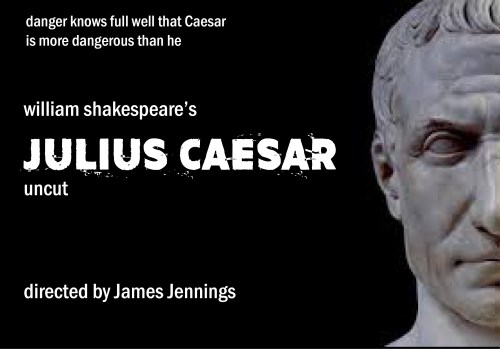
Jake Minter and American Theatre of Actors bring an uncut version of Shakespeare’s JULIUS CAESAR. This version is set in the modern world with nods to Fascism and Communism overthrowing Democracy.
Starring: James C. Gavin (June 21-25) and Alan Hasnas (June 28-July 2)
June 21- July 2 only!
‘EarlyBird’ Tickets Here. = $17 + fees. Expires June 7th @ 1AM.
‘HailCaesar’ Tix Here. = $22 + fees. Expires June 14th @ 1AM.
General Tickets Here. = $27 + fees.
($30 Cash at at the Door)
Moretti is a knock-out!
BOBCAT MORETTI – Review by Marcello Rollando
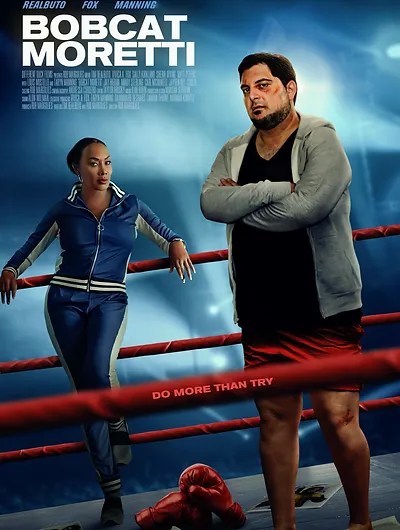
I’ve only loved three films about boxing: Sly as Rocky, Russell Crowe’s Cinderella Man and the one so good, I never want to see again: Million Dollar Baby. And now, for my money, BOBCAT MORETTI directed and produced by Rob Margolies is entering that ring where the big boys and girls of boxing films – “settle their problems,” as no-nonsense “Jo” (played brilliantly by Vivica A. Fox with knock out tough love tells Bobby just before he’s caught cold by her drubbing him with the title role: BOBCAT MORETTI (amazingly internalized by actor Tim Realbuto – as we witness his transition, without special effects, from Big Bobby to BOBCAT.
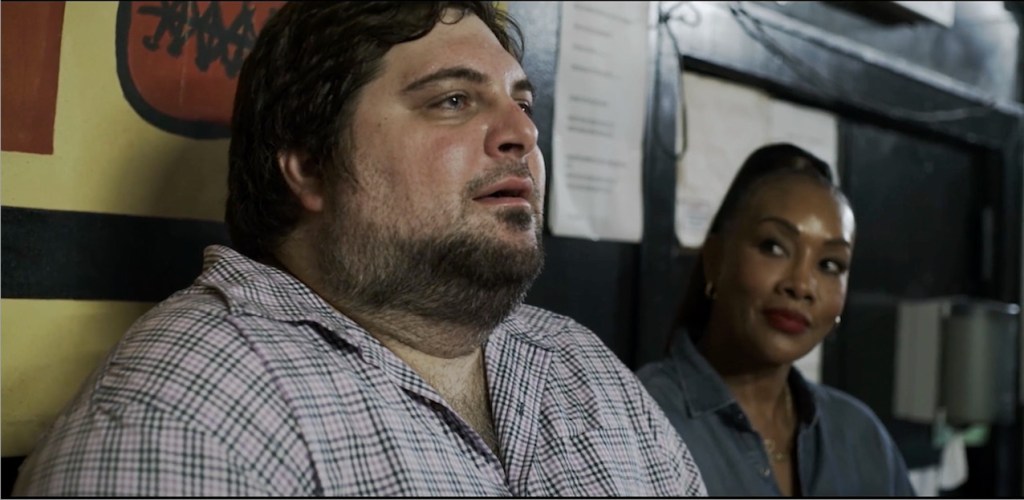
Both Sally Kirkland (Helene Moretti) and Mindy Sterling (Jean) embody remarkable and noteworthy characters deserving to be remembered on and offscreen.
BOBCAT MORETTI co-written by director Rob Margolies and Rob Margolies, is a sucker punch riddle, wrapped in a gut-wrenching mystery, inside the enigma of lost love, fringe families, and the blood, sweat and tears of forever friendships.
BOBCAT MORETTI is about the invisible people we walk past every day without notice, but if noticed: only with temporary unwanted pity, demeaning, there but for the grace of whatever we believe saves us from becoming them.
BOBCAT MORETTI isn’t about crime on the streets but surviving crimes of the heart. It’s not about what we think we know, but discovering our reflection in every life struggling for a comeback from unresolved dramas.
BOBCAT MORETTI is the reality check following the KO!
Hail! Caesar
 |
| Producer Jake Minter teams with one of New York’s last original off-off Broadway theatre organizations, the American Theatre of Actors to bring one of Shakespeare’s politically charged and all-too-timely plays back to live theatre in a rarely seen uncut version. JULIUS CAESARJune 21 – July 2American Theatre of Actors 314 West 54th St, New York City Reminiscent of Orson Welles’ version of the 1930s, this modernized in timeframe version offers up a devastating hypothesis of how Fascism and Communism can overthrow Democracy. Shakespeare’s masterpiece about conspiracy, government overthrow, corruption, and greed, begs the ironic question being asked today in political arenas – which side is the right side? Production directed by the founder and artistic director of the American Theatre of Actors, James Jennings with James C. Gavin as Caesar (June 21-28) with Alan Hasnas assuming the role after that. The ensemble cast includes David Allard, Nicolás Capella, Curtis Cunningham, Samuel B. Dolman, Billy Gillen, Leonardo Gómez, Sam Hardy, Meeno Morales, Sophie Morrison, Connor O’Shea, Dustin Pazar, and Jonathan Gregory Power — and featuring Jane Culley.* (Ms.Culley appears courtesy of Actors Equity Association) Tickets: https://www.eventbrite.com/e/julius-caesar-tickets-640241147507 $17(plus fees) use “EarlyBird” discount code online (offer ends June13)$22 (plusfees) use “HailCaesar” discount code online (offer runs June 14-20) $27 (plus fees) use “Et tu Brute” discount code online (General Admission) $30 at the door – CASH only |
 |
| HEALTH& SAFETY at the ATA: ADA Access: please call 24 hours in advance if a wheelchair ramp is required to get over the 3 steps at the front of our facility: 212-581-3044. Masks in the theatre are optional until further notice. If you are feeling unwell or experiencing symptoms of COVID-19, have been exposed to anyone within 14 days of your visit, or have been instructed to self-isolate, we ask that you stay home and contact the ticket site (or producer of the show) to discuss a ticket refund or exchange. Ticket purchasers are responsible for informing and providing this information if they are providing the ticket for a guest. Anyone that does not abide by our protocols may be denied entry to our facility. We recognize that public health guidelines may change and therefore our policies are also subject to change without notice. If you test COVID positive within a week of being in our facility, you may have exposed others. Please call us as a tracing contact: 212-581-3044. |
All is Swell with Lauryn Withnell by Jen Bush
Meet Lauryn Withnell! Most toddlers start singing “Old Mcdonald” or “Mary had a Little Lamb”. Lauryn went straight to Phantom of the Opera. Born into a family of performing artists, she was destined to be on the stage. At the age of seven, Lauryn joined her family to form the vocal quartet, The Withnells. Things were right on track for this talented family when they were chosen to perform as artist on board across Canada on Via Rail for Canada’s 150th birthday celebration.
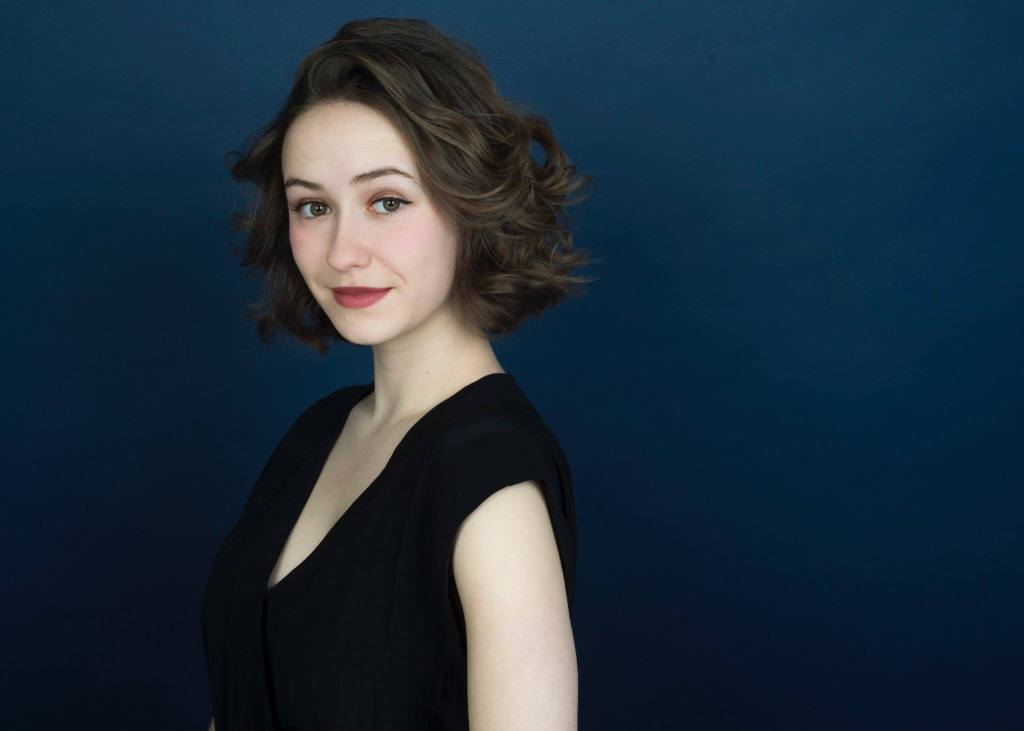
Lauryn went on to study at the esteemed performing arts high school in Canada, the Etobicoke School of the Arts. There was no role of fairy number three for this performing powerhouse. She was one singular
sensation when she was given the leading role of Cassie from A Chorus Line. The earth moved under her feet when she played Carole King in Beautiful. She graduated with awards and a scholarship.
The Boston Conservatory at Berklee welcomed Lauryn with open arms into their prestigious musical theatre program. That led to roles in Cabaret and Pippin as well as dancing for Justin Timberlake and Tony nominee Constantine Maroulis. Five agencies recognized her brilliance and made her offers.
Lauryn has played many juicy and substantial roles in her young career. She shares some musical theatre and performance memories with us.
Under the direction of a former Disney World Snow White, Fantasy Fables in Toronto, whose clients include Make A Wish and the Justin Bieber family. She engaged young and old with hour-long performances as Disney princesses Elsa, Belle and Ariel.
Director Rachel Bertone hired Lauryn for the role of Graziella in West Side Story based on the strength of her singing, dancing, partnering and stage presence. “This speaks to the top tier of training and talent that Boston Conservatory produces. Our production of West Side Story received 8 Broadway World Regional Award nominations including Best Musical.”
When Lauryn was nine years old, she had the good fortune of being chosen to work with Tim Minchin, the Tony Award winning writer and composer of Matilda the Musical. She got to revisit Matilda years later as an understudy for numerous parts, young and old, male and female. She was up for the challenge with years of skill and experience under her belt. “This requires the highest level of a triple threat—our nickname in the show was “wonderstudy”! With sometimes only two hours’ notice, I performed the show as a big kid and both male and female competition dancer, doing lifts and partnering.”
Fosse is to dance what Sondheim is to singing. They are as complex as it gets. For multiple roles in Pippin, Lauryn had to be fluent in Fosse. “Having studied Fosse and performed Fosse choreography in Cabaret was an asset, as well as my vocal harmonizing adaptability.”
Lauryn said come to the cabaret when she was cast as Rosie in Cabaret at the Boston Conservatory. “This show was directed and choreographed by renowned award-winning choreographer and Academy Awards director Otis Sallid. Having worked with Broadway and Hollywood royalty (Aretha Franklin, Prince,
Stevie Wonder, Queen Latifah, Faith Hill, Debbi Allen), he expected us to be quick studies who were willing to push the envelope with our colourful, charismatic characters and marionette-like choreography. He is a brilliant choreographer and visionary director, always seeking a new way of bringing a thought-provoking, authentic performance. ”
What Lauryn did for love was take the role of Cassie in A Chorus Line. This was a wise move. “Cassie is one of those roles that directors and choreographers instantly recognize. She is multi-layered, gutsy, a powerful triple threat who commands the whole stage for a 9-minute solo, so they have a pretty good idea of your skill set!”
Lauryn tackled big roles in four mini musicals which included Beautiful and Rent. “In Beautiful I played the leading role of Carole King. I had to completely embody a famous, beloved icon – her look, her
voice, mannerisms and the way she is when she performs. Not only was I singing stylistically like her, I had to accompany myself on the piano with complex chords. My 10 years of Royal Conservatory classical piano training as well as pop vocals as a lead singer in The Withnells and Splash Show Choir were instrumental in winning and performing this role, as I knew how to read music well to learn these parts and play jazz and pop piano voicings.”
Lauryn never stopped believing and she got to sing “Don’t Stop Believin’” with the original star of Broadway’s Rock of Ages, Constantine Maroulis. She also danced in his show Foreigeners Journey. “This
was a concert at North Shore Music Theatre, so audiences were expecting a rock concert based on the music of Foreigner and Journey. My musical theatre and dance emphasis training at Boston Conservatory as well as competitive dance in street funk and jazz were instrumental in being able to perform the jazz/commercial dance style required.”
Lauryn Withnell’s performance resume is already substantial and impressive. There is much more to come from this bright multi-talented artist. Having worked with and being hand-picked by top industry
professionals she’s proven her artistic worth and she’s ready for more. Remember her name. You’ll probably be seeing it in a playbill in the near future.

The Maria Konner Interview Series Part 2 of 3: Who can turn the world on with her smile?
The Maria Konner Interview Series Part 2 of 3 by Jen Bush
What is the best description of a person who has so much talent in so many areas? There are actors, performers, entertainers, performance artists, singers, musicians, etc. Maria fits the bill for many of those categories.
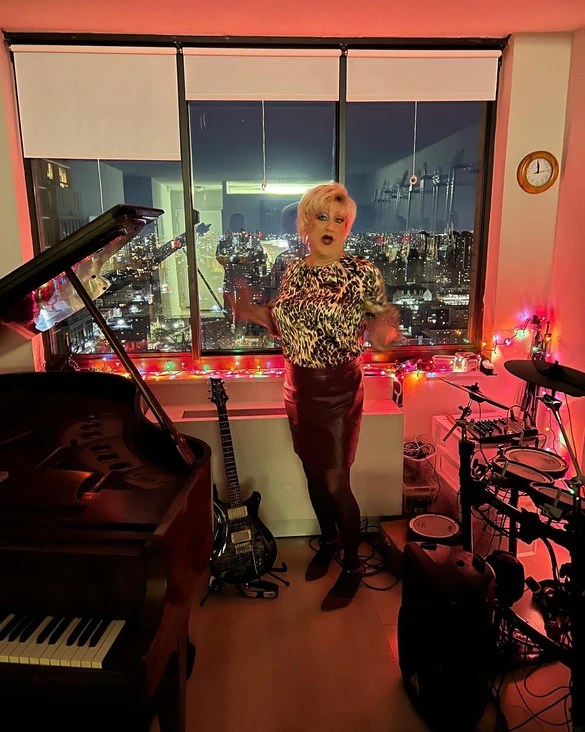
“I would call myself an entertainer. I’m a performing musician (piano, guitar, singing, song writing, script writing), but I’ve discovered the most important skill in being a good performer is to have a really good time and share that with the audience. You are there to entertain them. I found that I could do that by simply doing what I love to do and having a really good time, especially if I can do it with other performers. I cherish seeing other performers bringing it on and creating a shared experience together.”
“So in my case, I’m definitely NOT acting. I’m lucky in that I can play myself as a character (with some exaggeration!) and I have PLENTY of material for that! And I’m an entertainer more than a performer because when I play the piano for example, I’m not focused on precision or consistency, I’m focused on delivering my emotions though the music. There are plenty of other pianists who are technically much better than me, but I have no desire to be technically great and all the practice that goes along with it. I only want to learn new things if they can help me write a more novel song. I very rarely practice, I PLAY. And I’ll keep playing a song until my body just intuitively feels good and then I know it’s ready for showtime!”
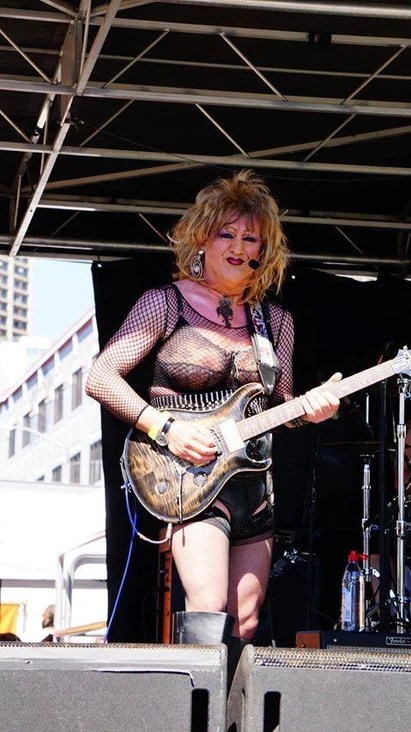
This talented entertainer took some lessons, observed other artists closely but mostly had the ambition to learn on her own. She made the commitment to acquire the skills that brings joy to her and others whenever she performs.
“I’m mostly self-taught but took lessons at various points and picked up techniques along the way as I played with and watched other musicians. I remember Paul McCartney saying that when he was young, he used to stand by the front of the stage on the side and watch guitarists hands to see what they were doing – and then when he was up on stage he saw young folks doing the same thing watching him! I was one of those young folks.”
Maria went on a safari of sound. She learned how to play multiple instruments both in the traditional manner and purely by feel. Her amazing analytical mind made connections between instruments and techniques. Once music was demystified for her, the floodgates opened and Maria was rocking and bluesing and rag timing and everything in between.
“I started playing the piano at around 7 years old because I saw my older sister taking lessons, and I just wanted to know how to read all those notes and make music. I told my mom I wanted to take lessons. For just over a year or so, I took lessons where I learned the basics – scales, fingering, how to read music. I learned to play mostly children’s music, rag time, and a little classical. But I quit because I got bored.”
“My mother pushed me into taking up a band instrument. I learned to play the saxophone in one day (but pretty badly) because I already knew how to read music. But I got bored with school band and quit that too. I was a bit of a geek and loved science, math, and did a lot of reading – so I got bored quickly. But then it all changed when my mother tried one last time and found me a jazz saxophone teacher who introduced me to chords, blues and improvision. He also dazzled me with his creative energy – I had NEVER seen an adult like him before! I immediately understand what improvision meant…I could play how I felt! Reading somebody else’s music was just a chore! Music is supposed to be a joy, even when you’re feeling down when it soothes you. Since he knew I could play piano he suggested I try some chords out on the piano, but within a few weeks he lost me as a sax student, because I was hitting that piano hard every day. I would spend hours in that back room rolling my fingers over the keys of that magnificent instrument trying out different chord voices until I liked the way they sounded. And then I would try different improv licks over it. And since I could read music, I started going through my dad’s old music books playing all those old songs, and I just loved learning so many ways chords were used to write songs. I wondered, “Who teaches people how to do this? Is this some kind of secret?”
“I started learning pop music by either listening to it and figuring it out, or buying the sheet music. I remember my first big purchase was the music to “Stairway to Heaven” – it had a black cover and was a 7+ page fold out. So exciting to open that up and play that for the first time!!! OMG, I’m playing “Stairway”….and learning all its secrets! I would pick the parts out the sheet music that made the song unique or that I liked, and then ditch the sheet music and improvise it after that. To me it wasn’t about playing it “right”, I wanted to feel it inside of me, and play it the way that made me feel good and connected to the universe. And soon I was introduced to the piano player Oscar Peterson and the band Steely Dan, which blew my mind of I thought, “who taught them how to do this!!!!!”. I had to try to figure out what they were doing!”
“I was obsessed.”
“In a suburban world which seemed to lack any soul or divinity, music was my ONLY lifeline to it. Going to Temple certainly wasn’t getting me there.”
“And one day in Junior High School, the music teacher gave us each an acoustic guitar…just for one session. I fiddled around with it in the back trying to figure out how to play it and when the bell rang, I panicked. Dammit, I need to figure this thing out. I asked my mom to PLEASE buy me a guitar, I NEEDED it! She bought me a cheap $50 guitar at Sam Goody’s at the mall, and after that my grades declined a bit as I spent hours learning how to play the guitar by comparing the guitar to the piano, and figuring out the guitar notation in the sheet music. Now I could play The Beatles Day Tripper properly! And then I discovered Heavy Metal and had to get an electric guitar – I worked a summer as a cabana boy to pay for it. Then I had to hang out with the kids on the “other side of the tracks” to play rock music. The rest is Maria history!”
For someone of Maria’s vast acumen, writing music and lyrics was simply a natural progression. While other people are watching episodes of Law and Order with a glass of wine in their hands, Maria is creating art that is personal and authentic.
“When I was young, I never thought of myself as a writer, but I found myself needing to do it first in school and then for work. So I figured if I’m going to do it, I might as well enjoy expressing myself. And I found out I was pretty good at it. People often complained to me about my writing style being too up front and honest, and I used to shrug them off thinking, you don’t understand me. Expressing myself was just too important. And then a friend suggested I try writing music with him, and I found I was pretty good at that – I had learned so much by playing so much other music across so many styles. And then I started writing on my own, including the lyrics. And I really enjoyed writing and recording. Much more interesting than watching TV or going to a bar to get drunk. I’d rather be with the divinity of music. I’d rather go to sleep thinking about something I created vs. having an alcohol or TV watching hangover.”
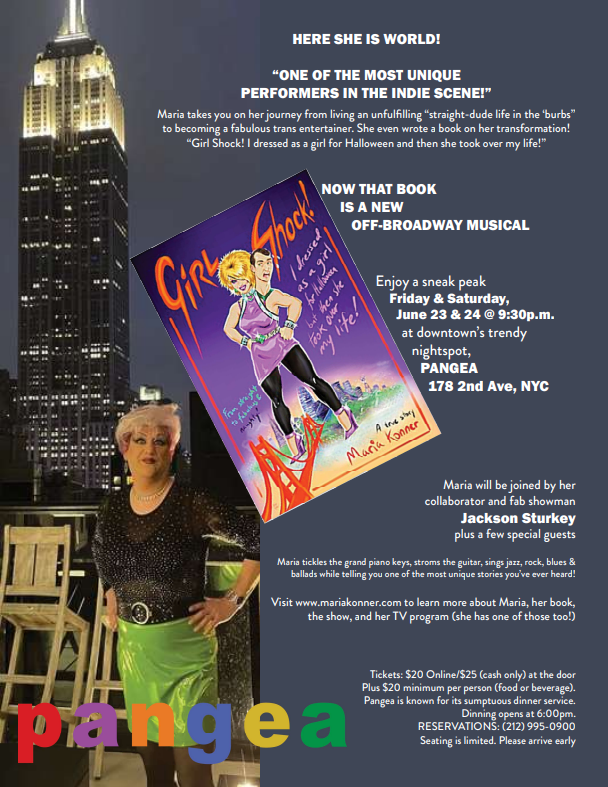
More at https://www.mariakonner.com/
The series concludes in OUTerStage.com

Rollin Jewett’s caper-comedy, OUR LITTLE SECRET premieres at Playwrights Horizons
Play and screenwriter Rollin Jewett returns to the Downtown Urban Arts Festival with a dark comedy involving breaking and entering. Lydia Kalmen & Thamer Jendoubi in OUR LITTLE SECRET with Vincent Ticali as Lt. Banks. Production directed by Jay Michaels.
Friday, June 16 @ 7:30 p.m. at the Peter Jay Sharp Theater @ Playwrights Horizons, 416 West 42nd Street, NYC. Tickets @ DUAFNYC.com.

Picture it: A lonely young girl decided to put on her sexiest nightie (just because) and sits in her apartment watching horror movies. There’s a knock on the door. On the other side of that door is a towering muscular stranger wearing all black and brandishing a gun. That’s only Page 1 of OUR LITTLE SECRET, a dark romantic comedy involving an unlikely relationship between Darlene (Lydia Kalmen) and Sam (Thamer Jendoubi) and a plot to save his son from an abusive stepparent. No crime is complete without the appearance of a clever detective (Vincent Ticali).
Rollin Jewett – whose forte is dark humor (American Vampire on film and Socky Tells All and The Big Dream on stage) supplies a witty script filled with red herrings and New York theater notable, Jay Michaels directs with fast-paced caper comedy.
The world premiere is presented by the Downtown Urban Arts Festival (DUAF), an annual multi-disciplinary arts event held in New York City, presenting new groundbreaking performance and visual art from storytellers from America’s burgeoning multicultural landscape and from around the world who share their stories that interpret our history and our times.
Theatre/Film/TV mainstay, Lydia Kalmen heads this cast. She was heard screaming and being possessed by demons in The Dark Offerings, the first horror movie to film during the pandemic (currently on Amazon). She won high-praise for her work in a recent New York revival of A Doll’s House as Nora. This is her second collaboration with Rollin Jewett and Jay Michaels as she created the role of Nurse Todd in Socky Tells All, which premiered on Theatre Row last year. She also appeared as Lucy in Dracula in New York.
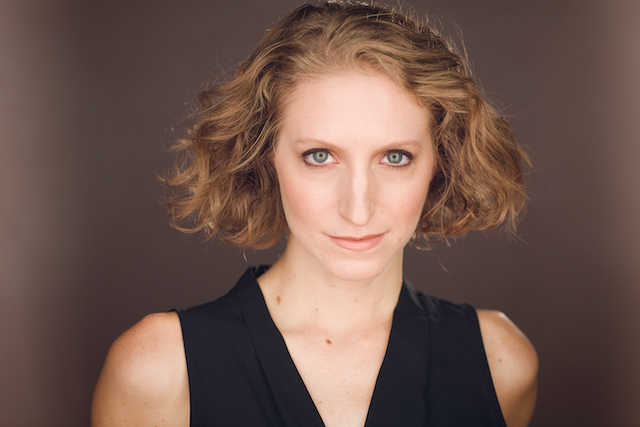


Thamer Jendoubi earned his MA in Acting from the Bristol Old Vic Theatre School in the UK and – upon returning to New York – continued his training with the Maggie Flanigan Studio in Manhattan. He created the role of Omar in Mohammed Saad Ali’s drama, A Lonely Night in Coney Island, in New York in 2017.
Vincent Ticali, a celebrated NY actor, singer and musician, recently appeared in the premiere of By Its Cover (benefit performance for Trevor Project) and Delta in The Sky With Diamonds (starring Austin Pendleton). Film: All the Little Things We Kill, The Forest Hills, Ali and the Queens, The Hat Man. Television – The Blacklist, Blindspot, Ways and Means (CBS pilot). Vinny also enjoys his work in front of a microphone as bassist/vocalist in the popular NY party band, Current Affair!
Jay Michaels is an award-winning director/producer with a specialty in promotion. His acclaimed series of wildly successful Shakespeare productions utilizing unique production schemes put him solidly in the New York theatre scene. As Event Producer: the Drama Desk Award-winning American Theatre Exchange and Broadway productions: Guys & Dolls (1992), Damn Yankees (1994) The Vagina Monologues starring Eve Ensler (2003) and Beginnings (2017) plus live events featuring James Earl Jones, David Canary, Tovah Feldshuh, Vera Wang, Jon Stewart, Heather Headley, Daryl Roth, Barry Weissler, Bill Oberst, Jr. and Hillary Clinton. As a National Tour Manager: Cats, Edwin Drood, Les Misérables. His boutique promotional firm, Jay Michaels Communications/Channel I creates visibility through an internal multi-level platform of content driven print and TV programs for independent artists and their productions in New York and nationally. Michaels is also a commentator for the FearCon Network, The Boston Sci-Fi Channel, and other programs.
Rollin Jewett is an award-winning playwright, screenwriter, singer/songwriter, poet, author and photographer. His screenwriting credits include “Laws of Deception” and “American Vampire”. His short stories, poetry and photography have been published in numerous literary magazines and anthologies and his plays have been produced all over the world including several premieres Off-Broadway. This is his third collaboration with Jay michaels at the DUAF. Mr. Jewett’s novels, poems and short stories are available on Amazon.com and his chart-topping tunes can be found on Spotify.com.
Carolyn Brown explores Storme DeLarverie
Carolyn M. Brown Interview Part I by Jen Bush
Storme DeLarverie is a pivotal figure in LGBTQ+ history. She was a singer, bouncer, MC and bodyguard who graced the stages of The Apollo and Radio City Music Hall. As a big band singer, she went under the name of Stormy Dale. Her Stormy Dale persona was a male impersonator of Harlem’s famed Jewel Box Revue which was America’s first racially integrated and gay-owned drag show. She is known as the “Rose Parks of the Gay Rights Movement”. In June of 1969, police raided a gay club in Greenwich Village, NYC called The Stonewall Inn. Storme’s scuffle with the police during that raid was said to have ignited the Stonewall uprising. Hers is a fascinating and important story to tell, and her legacy was honored by Carolyn M. Brown.
Staged Reading of Storme, 5/19/23 @ 7pm, 34 Marin Blvd., Jersey City, NJ 07302 (Ticket includes 1 free drink. Post show cocktail hour.)
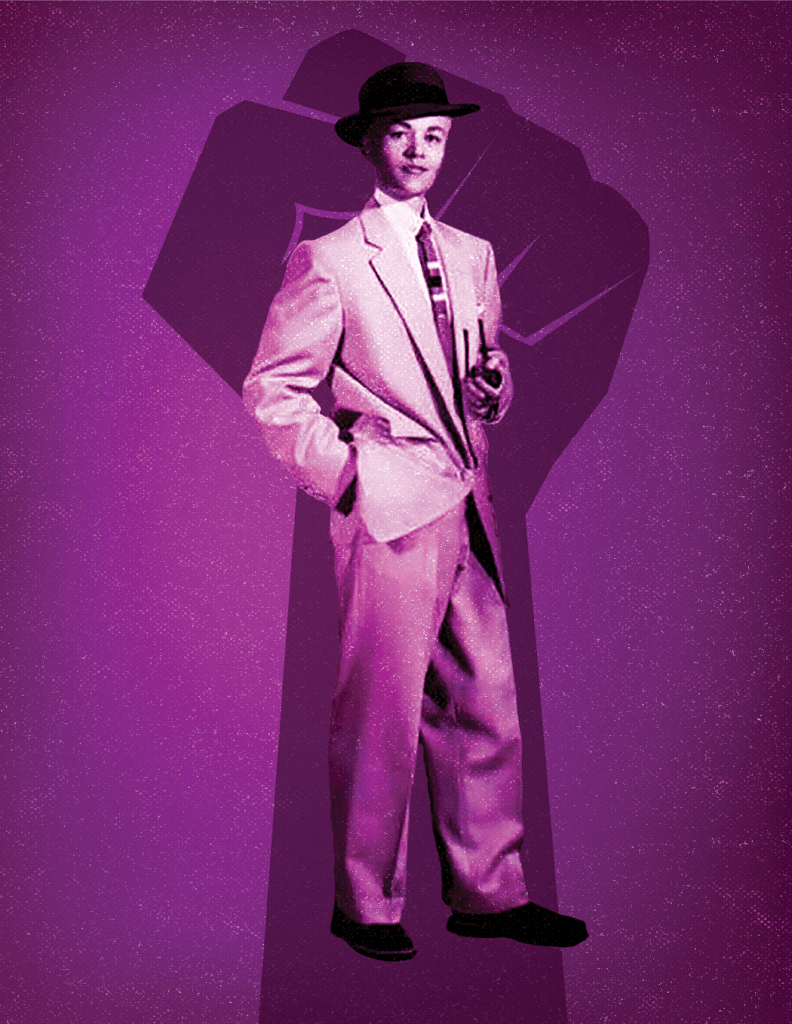
We had the wonderful opportunity to have an in- depth and insightful discussion with playwright and director Carolyn M. Brown who was incredibly generous with her information and time. In Part I of the interview, we delve into the work itself and how it came about. In Part II we get a more personal glimpse into the passionate and talented artist herself.
About Carolyn M. Brown
Carolyn M. Brown (she/her) is an award-winning journalist, magazine editor, non-fiction author, playwright, producer, and principal of True Colors Project LLC, a social enterprise that produces works by underrepresented artists. Brown’s career spans decades developing content via a portfolio of media platforms—print, digital, broadcast, and live events. Publication credits include Forbes, Inc., Essence, Diversity Woman, The Source, and Black Enterprise. She received the 2012 GLAAD Media Award for Outstanding Magazine Article, “Black & Gay In Corporate America” (BLACK ENTERPRISE) and is a 2013 GLAAD Media Award Nominee for Outstanding Magazine Article, “Why Gay & Lesbian Couples Pay More” (BLACK ENTERPRISE). She was one of the youngest playwrights to have a staged reading at the Schomburg Center in New York with her play Accessories. She was a Co-Founder of All In Black And White Productions LLC, a theatrical company with Equity Showcases and Off-Off Broadway productions performed from 2006-2011, including her marriage equality play The Engagement which enjoyed a six-week run. Brown alsoco-founded My True Colors Festival: Fighting For Social Justice and Cultural Diversity Through The Arts. She currently serves as vice president of All Out Arts/Fresh Fruit Festival, a nonprofit dedicated to fighting homophobia and prejudice through the arts. Brown is the co-author of CLIMB: Taking Every Step With Conviction, Courage And Calculated Risk To Achieve A Thriving Career And A Successful Life. She has penned two other books: The Millionaire’s Club and Nobody’s Business But Your Own. She also served as an ambassador for the “Many Faces One Dream” LGBT+ economic empowerment tour hosted by the U.S. Small Business Administration, the National Black Justice Coalition, and the National Gay & Lesbian Chamber of Commerce.
Being a New Yorker I’m familiar with the Stonewall riots and I’ve even been to The Stonewall Inn. I have never heard the name Storme DeLarverie. Ms. Brown was cognizant of the fact that many others had not heard that name either. That was part of the impetus for Ms. Brown to create this piece. It began as part of an art installation and grew from there. Ms. Brown wanted to crystallize the muddled facts and celebrate a brave heroine who deserves a place at the table of history.
“The idea for STORMÉ the play was sparked by a photo essay that I wrote thanking Stormé for her role in the 1969 Stonewall Rebellion, which accompanied a mural of Stormé DeLarverie by artist Rachel Wilkins for her 2020 “Shoulders of Giants” exhibit, a 30-piece multi-media body of work paying homage to the advocates, change-makers, and unsung heroes, who helped to bring about social and political progress for LGBTQ+ people.”
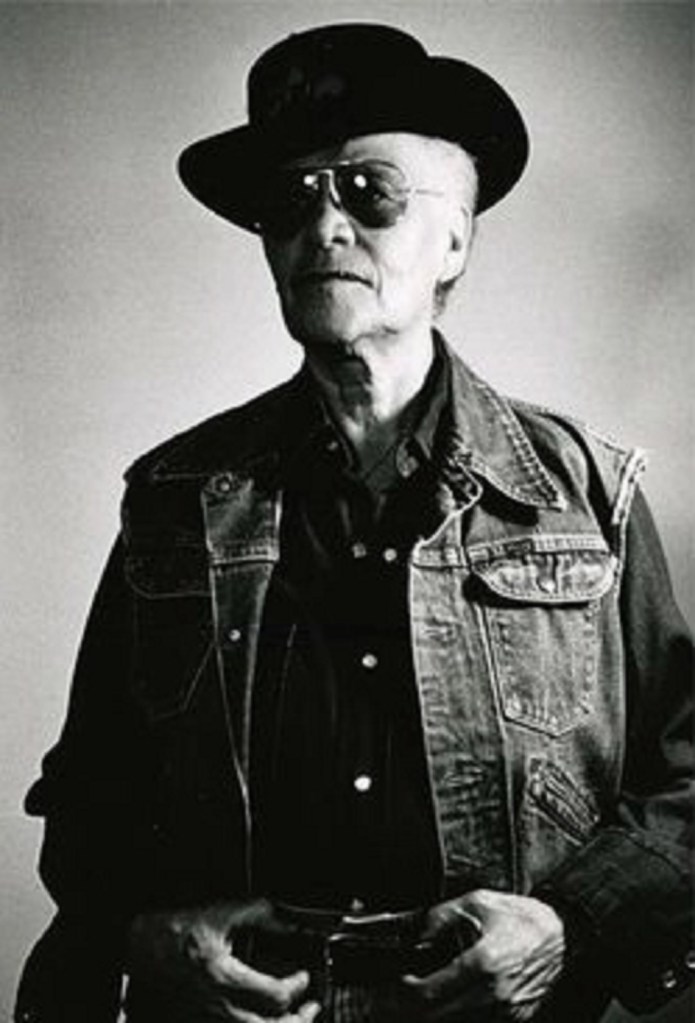
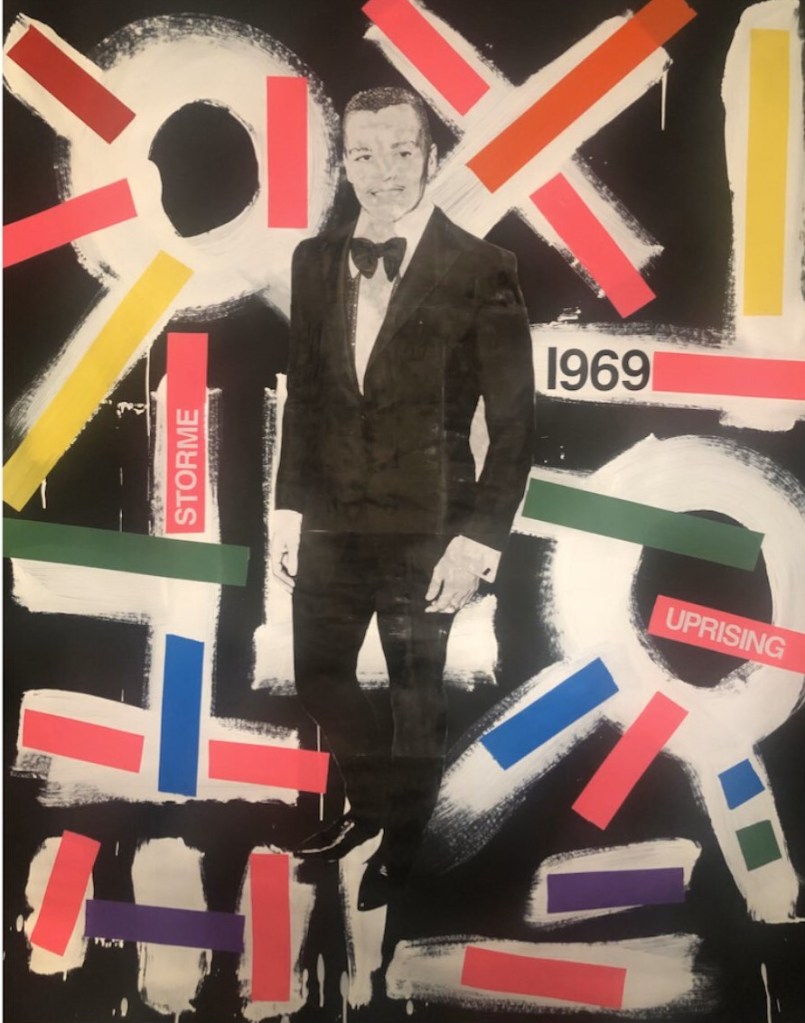
“What’s more, June 2020 marked the 50th anniversary of the Stonewall Rebellion of 1969 which stands as the watershed moment in LGBTQ+ history for galvanizing the modern-day LGBTQ+ rights movement. However, historical accounts of the Stonewall Rebellion practiced a tradition of whitewashing and gender washing by erasing key minorities and focusing on white gay men when talking about the Gay Rights Movement. Blacks and Latinos—butch lesbians and trans women—fought back against the police in 1969. Just the same, the contributions of Black LGBTQ+ activists like Bayard Rustin also have been downplayed or overlooked in the Civil Rights Movement. A fact that was underscored by Dave Chappelle when he released his $24 million 2021 Netflix stand-up comedy special, “The Closer,” in which he spends 50 out 72 minutes jabbing at the LGBT+ community and creating an “us vs. them” dynamic between Black and LGBT+ communities as though they’re mutually exclusive groups.”
“I wanted to write a play that explored the life and legacy of Stormé DeLarverie as a trailblazing LGBTQ+ activist, singer, male impersonator, bouncer, and loving partner (she was with the same woman for 25 years until her partner’s death). I particularly wanted to highlight Stormé’s legacy of throwing the first punch, a story that is both disputed and contradicted, but is nevertheless an essential part of LGBT+ resistance that deserves to be elevated and embraced. Additionally, I wanted share rarely depicted details about the Stonewall Rebellion and ensuing gay liberation activism, specifically the contributions of trans women of color.”
“Stormé died the day before Stonewall was made a national monument, and her name wasn’t mentioned once. Her story was diminished. And that’s by design. For too long, the narratives of queer, trans, Black, Indigenous, Asian, Latino, and gender-expansive people have been suppressed, silenced, and erased. That’s why it’s so important to tell stories like Stormé’s that celebrate our history, our identity, and our resilience. STORMÉ is a pivotal moment in speaking my truth. Gay Black civil rights activist Bayard Rustin said, “we need in every community, a group of angelic troublemakers.” I live by that mantra.”
In modern times, history is hyper-chronicled via cell phones and the widespread use of social media. In 1969 technology didn’t exist to capture moments in time accurately. This is one of the difficulties one faces when writing a show about history. Of course, one of the biggest challenges for any playwright is getting their work out there in the world in a fully realized production seen by the masses. It is Ms. Brown’s mission to make that happen.
“One of the challenges in creating this historical piece was knowing how to strike the balance between including too much or too little history in telling Stormé’s story. In general, history is full of mysteries, unanswered questions, and gaps in recorded documentation. That was even more so the case with this piece, because so little has been written about Stormé DeLarverie and the Jewel Box Revue. A primary historical record is the 1987 documentary film short “Stormé: “Lady of The Jewel Box Revue” by Michelle Parkerson.”
“In the wake of worldwide uprising and protest in support of Black Lives Matters, Justice for George Floyd and Police Reform during the summer of 2020, media outlets started to do a better job in telling a truer story of the Stonewall Rebellion. I wanted to show that much like Rosa Parks’ refusal to give up her seat on a Montgomery, Alabama bus in 1955 played a pivotal role in the Civil Rights Movement, Stormé’s scuffle with the NYPD in 1969 during a raid at the Stonewall Inn was instrumental in the Gay Rights Movement.”
“The biggest challenge in creating this piece is bringing this important production to the stage and sharing this story with even more people beyond readings and workshops as part of the development process. I remain due diligent in my efforts to raise adequate funding to mount a full stage production.”
Ms. Brown recognizes that creating a piece of theatre that reflects history comes with an extra sense of responsibility.
“The Stonewall Rebellion, which was referred to as a riot by homophonic news outlets, was not just one night, it was six days of civil disobedience against police brutality and discriminatory practices. Many of the protestors on the frontline were gender-nonconforming individuals such as Stormé DeLarverie and trans women of color, such as Miss Major Griffin-Gracy, Marsha P. Johnson, and Sylvia Rivera. Again, a fact that is often overlooked. The result is an erasure of the contributions of Black and Brown TGNC people in fighting police violence and unjust policies.”
“Today, immense violence and discrimination perpetuated by state legislators and polarizing political leaders against LGBTQ+ people, particularly against trans people, is escalating as evidenced by the current wave of anti-trans laws, misinformation campaigns, and transphobic and homophobic attacks. There are over 100 anti-LGBTQ+ laws proposed or passed in the United States. These laws include restrictions on transgender people’s ability to access healthcare, participate in school sports, and use public restrooms that align with their gender identity. In addition, there are so-called “religious freedom” laws that allow businesses and individuals to discriminate against LGBTQ+ people under the guise of religious beliefs. The reality is that these laws allow groups to weaponize religious freedom to erode our fundamental civil and legal rights. Legislators are banning content and diminishing First Amendment Free Speech while remaining steadfast against banning assault rifles to amplify the Second Amendment.”
“As historical and LGBTQ+ content came under attack in this country, a fire blazed in me to tell not only Stormé’s story, but also to give historical accounts of Black LGBTQ+ icons like civil rights leader Bayard Rusting, pianist-composer Billy Strayhorn, and genderbending blues singer Gladys Bentley. I am speaking of the growing number of state bills restricting what schools can teach about American history, race, politics, sexual orientation, and gender identity, which increased 250% from 2021 to 2022, reports PEN America. Over 1,800 books with LGBTQ+ content were banned in more than 5,000 public schools in 2002. A number of these books are memoirs, denying people the right to tell their own historical narratives.”
“In writing STORMÉ, it was important for me to acknowledge historical events pertaining to LGBTQ+ people of color and marginalized communities, because I believe in the adage “those who fail to learn from history” or “those who forget history are doomed to repeat it.” History will be repeating itself under state laws as LGBTQ+ people face a growing threat of being banned from public view. My concern, my fear is that we are heading toward an era of police arrests and brutality of LGBTQ+ people for violating laws that restrict our culture and our history.”
This piece is timely considering all of the government interference that is happening in LGBTQ+ communities all over the country. Progress is being rescinded.
“Anti-drag legislation was part of the impetus behind creating this piece. Honoring the life and legacy of Storme DeLarverie was another. “Tennessee is the first state to ban drag shows from being presented in public spaces. The new law criminalizes drag shows and classifies male and female impersonators as “adult-oriented performance” harmful to minors as defined in Tennessee’s obscenity law. Tennessee is not alone. There are dozens of bills moving through state legislatures across the U.S. designed to ban drag performances.”
“In the past two years, there has been an onslaught of state bills restricting LGBTQ+ rights that could have far-reaching consequences. For me this harkens back to unjust practices that led up to the Stonewall Rebellion of 1969 which galvanized the Gay Rights Movement. Police arrests of people (cross-dressers) for not wearing what was considered as three pieces of gender appropriate clothing (3-piece rule) was under the guise of violating the masquerade law, while police raids on bars serving LGBTQ+ patrons, who were deemed as disorderly by their mere presence, was under rule of the New York State Liquor Authority.”
“In part, this is why I wrote my musical play STORMÉ. I wanted to pay homage to the life of Stormé DeLarverie as a big band singer, a Stonewall Rebellion icon, and a male impersonator at the infamous Jewel Box Revue, America’s first racially integrated and gay-owned drag show that toured nationally and internationally. I also wanted to highlight the consequences of forcing certain social groups to live on the fringes rather than in the mainstream due to racism, sexism, genderism, heteronormatism, and classism.”
“Artists play a unique and important role in capturing and responding to what is happening culturally, socially, and politically. In times of social unrest and political turmoil, art has always been a powerful tool for providing a platform for marginalized voices to be heard. STORMÉ is a timely and important reminder of the resilience of LGBTQ+ people of color in the face of growing censorship that seeks to erase us.”
For Larry Daggett – there is no music without the message
Larry Daggett Interview
Bullet Points is a new work by Larry Daggett.
A staged presentation of this powerful new musical will take place on:
June 10 @ 7:00 p.m. & June 11 @ 2:00 p.m.
Theatre Row Theatre
as part of the New York New Works Festival
410 West 42nd Street, NYC
Bullet Points tells the story of one woman’s attempt to navigate her thoughts and feelings on both sides of the gun control issue – with the hope that this subject will resonate long enough in the American consciousness that both sides of the debate might begin to find a path toward ending gun violence in schools. This dark comedy focuses on Sarah, a Florida high school teacher who returns to work on the same day as a school shooting which sends her life spinning in wildly unpredictable directions – both tragic and comic. “The theme of the show concerns the “us versus them” mentality that cuts our country in half,” says acclaimed composer Larry Daggett, “It’s about learning to listen to people on the opposite side of an issue even if they disagree with your point of view.”
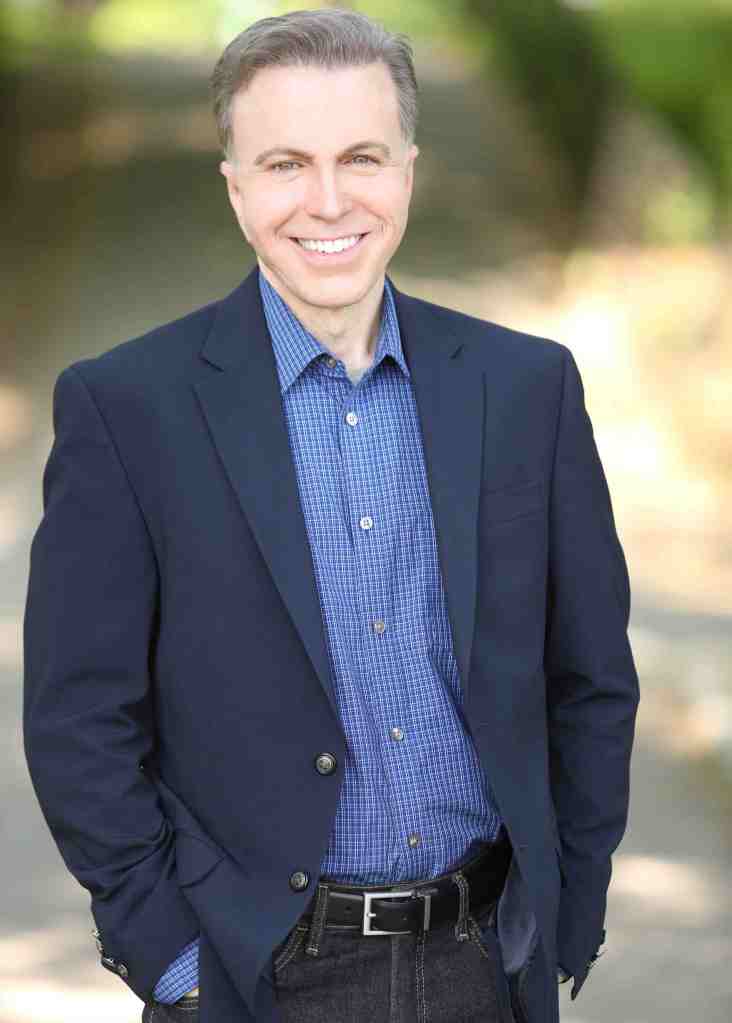
Larry Daggett is a multi-hyphenate powerhouse of an artist. He’s the whole package with the head of a businessman and the heart of an entertainer. His vast credits include Broadway, Off-Broadway, Opera and a multitude of work in regional theatres as an actor, producer, composer-lyricist, orchestrator and musical director. As a businessman he is the CEO for New Tune Entertainment, LLC. His award-winning company is dedicated to the development and production of original musicals on stage and film. He lives and breathes the arts. For his latest work Bullet Points, he wears the hats of book writer, composer, lyricist and director! It was a pleasure to chat with this talented individual about this work and his career.
When Larry Daggett was a small child, he took his bow in a community theatre production, said “see ya later alligator” and shed his reptile skin for the first and last time. While he might secretly be hoping to don a gecko costume, he grew up and made his indelible mark in the entertainment industry. “I grew up in Southern California where I started appearing in plays at the age of six. My first role was as an alligator in a community theatre production of the play “The Happiest Millionaire.” I’m sad to say that was my last appearance as a reptile, although hope springs eternal there might be another in my future! What inspires me most in the theatre is when a writer takes a risk. Musicals have the unique capacity to move an audience emotionally (through music) as well as intellectually (through lyrics). In an increasingly digitized world where we all communicate through texts, email, and cell phones, the theater is one of the last bastions of community engagement. Something magical can happen when everyone in the audience comes together to receive the message they see on stage as well as to feel the energy of everyone sitting around them. When an entire audience suddenly erupts in laughter or collectively chooses to become so silent that they can hear every word whispered by the actors on stage, they are no longer individuals watching a show, they have become a community focused upon a single goal.”
Mass shootings and gun control are unfortunately current hot button topics which Mr. Daggett was not afraid to tackle in this production for many reasons. “There are multiple reasons I wrote this show, some obvious, others not so. Firstly, we should not live in a country where students are more concerned about coming home alive than they are about passing a math test. The right to bear arms and the right to survive school should not be at odds with each other, yet they have become so. I went to a high school with a long history of violence from guns and gangs. I know the effect that can have upon a person’s life and how it can alter your view of the world. Another reason I wrote the show is because our society and our politics have become so polarized that getting anything productive accomplished has become next to impossible. Today the idea of two sides of an argument meeting each other half way and coming to an agreement seems outside the realm of human possibility. We’ve become so determined to pull in opposite directions that having meaningful legislation passed In Congress has become a unique occurrence rather than the norm. A third reason I wrote this show happened by accident when I discovered that a person who I believed to be open minded and liberal was in fact as closed minded and rigid as this side she railed against. Without going into lengthy detail I saw that she was perfectly willing to forgive anyone on her side, even if they committed mass murder, than she was to allow someone on the opposite side to disagree with her point of view. When I heard that, my eyes were opened to the fact that proving your side is right and the other side is wrong has often become more important than saving students’ lives.”
Mr. Daggett’s creative process is meticulously detailed. He recognized a paradigm shift in musical theatre which is reflected in his songwriting in service to the audience. “Writing a musical is an extremely difficult task. It requires you to be at two locations simultaneously, which is physically impossible. As the book writer it requires you to see the story from 30,000 feet in the air, and by that I mean you must be able to see the direction in which the show is moving and to ensure that the plot does not get entangled in minutia or lose its focus. At the same time, you must also see the show from two inches off the ground, meaning when you are writing the lyrics and the music for a song you must be concerned with every detail: every syllable of a lyric, every note on the page. All these details matter enormously, but it is almost impossible not to become so engrossed by them that you lose sight of the direction in which the story should be traveling. I usually start out with an outline of the entire show and then I make an outline of each song. Each song should have an arc: by the end of the song the characters and the plot should be at a different place than where the song began. The days of songs being put in a show purely for the purposes of entertainment have pretty much vanished. Audiences nowadays don’t have the patience for big production numbers that have nothing whatever to do with the story. They can feel their cell phone buzzing in their pocket and are itching to pull it out to see who was trying to call them. If you don’t keep their attention by constantly moving the story forward, you’ve lost them. That wasn’t true 50 years ago when composers could insert songs simply because they were beautiful or clever. I think of shows like The Most Happy Fella, which has one of the most glorious musical theatre scores ever written with long sections of resplendent music, most of which would be cut if it was written today because it’s not necessary for the plot. These days, when many shows are 90 minutes long with no intermission, every second on stage counts.”
Being that Bullet Points addresses school shootings which is currently a big problem in the U.S., Mr. Daggett had some insights on the topic. “For the past 30 years the side that would like to see stricter rules for gun ownership has met increasing resistance from the side that would like to see no rules for gun ownership. The side that would like to see logical legislation such as background checks, raising the minimum age to own a weapon, closing the gun fair loophole (where anyone at any age can buy a weapon without a background check) have all met increasing resistance from the side that believes in the “slippery slope” philosophy that if they give in, even an inch, to the most logical gun legislation, that their weapons will be confiscated by the federal government. While I agree that such measures as background checks and closing loopholes would be highly effective, I seriously doubt they will ever get passed. For one thing, they attack the problem head on, which only strengthens the resolve of resistance from the opposite side. More importantly, they don’t address the source of the problem, which, in my opinion, is how much money the gun lobby is able to funnel to candidates who support their cause. In my opinion, many of America’s problems could be improved if we changed the way our campaigns are financed so that lobbying groups would no longer able to contribute millions of dollars to their chosen candidates. Every contribution comes with access to the candidates and the understanding that if their candidate doesn’t vote the way the lobbyists want them to vote, that come the next election cycle the millions of dollars spent toward their campaign will go the candidate’s opponent. It’s obscene that TV pundits can proclaim without fear of contradiction that the candidate who has the biggest financial war chest is probably going to win, even if that candidate has no political knowledge or experience. This completely betrays the principles upon which this country was founded.”
Mr. Daggett is hoping audiences walk away from this show with a collective impetus to take action against school shootings by engaging elected officials. “We’ve gotten to the point in our country where there have been so many school shootings that many people think nothing can be done about them. This is not true. America is a country of great energy and great potential. If enough of us come together to insist that this problem be eradicated and make it clear to our elected officials that if they don’t take action to do so they will be voted out of office, then this problem could begin to be rectified.”
Bullet Points is a work in progress that has come far in its development. Mr. Daggett will continue to adjust it as needed and is hoping that this reading will be the launching pad for a full theatrical production. “This reading at Theatre Row will be the first time I’ll hear the show read out loud in front of a live audience. Although the show has already been rewritten more times than I can count and has had numerous virtual readings on Zoom, once I hear a live audience ‘s reaction I’ll go back and reevaluate those points in the show which need clarification or trimming. After that, the process begins of getting the show produced at a theatre which has a history of producing new works that address cutting edge issues. There’s certainly nothing wrong with a theater choosing to do some shows whose entire purpose is to leave the audience feeling cozy and comfortable. The problem with those shows is the audience often forgets about them by the time they reach the parking lot to drive home. The issue of gun violence in schools is not going away. In fact, it has only gotten worse as time progresses. Somewhere along the line we have to collectively face this problem and seek solutions to end it. So, if anyone reading this article knows of a theater which would be willing to take a risk on producing a new musical that deals with a topic so timely that barely a week goes by without it raising its head again, I hope they will contact me about producing the show at that theater.”
Mr. Daggett has some wise parting words that hold out hope for positive change. “Americans have solved seemingly insolvable problems in the past. We have fought wars to end oppression overseas and a war to end slavery here at home. We have the energy and ability to address this problem. No parent, even the most ardent supporter of the Second Amendment, wants to hear that their child has been killed in a school shooting. I think if we all keep our eyes focused on the direction in which we want to move, namely zero school shootings, and put aside our need to proclaim that our side is right and the other side is wrong, I think we could finally find a way to solve this problem.”
Get to the point by getting your tickets to Bullet Points

June 10 @ 7:00 p.m. & June 11 @ 2:00 p.m.
Theatre Row Theatre
as part of the New York New Works Festival
410 West 42nd Street, NYC
Latest Posts
-

“Is It Better to Rule in Hell?” Jim finds out at the ATA with Anne L. Thompson-Scretching’s “The Fall From Grace”
Anne L. Thompson-Scretching’s The Fall from Grace Explores Paradise—and Innocence—Lost “I am coming, mortal… enjoy this strange light that illuminates your world. It cannot protect…
-

The Rhythm of Survival: Andy Teirstein on Scoring BROKE and Honoring a Vanished New York
Before Hell’s Kitchen became synonymous with luxury high-rises, it housed St. Clare’s—a haven that was chronically underfunded, defiantly kindhearted, and open to anyone the rest…
-

Jim Catapano learns “Don’t Die with Your Music Inside You” from The Laros Theatre Company’s My Ghosts
The Laros Theatre Company’s My Ghosts Provides a Fine Haunt at The Manifestival It’s not easy to create when your inner critics are Christopher (Kit)…
-

Jim attends Sad Stories of the Death of Kings: Richard II kicks off the Classical Initiative at the ATA
Director James Jennings has gifted American Theatre of Actors aficionados with another successful Shakespeare production at the John Cullum Theatre with this season’s Richard II.…
 Arts Independent